Lala Lala, the Chicago-based indie rock project of Lillie West, has released a video for the song “Scary Movie” off her album The Lamb, released September. 28th, through Hardly Art Records.
“Scary Movie” is full of the sort of waterlogged beauty that West provides in spades on The Lamb. The song is a gentle, wistful conversation with herself about herself, but the video re-contextualizes it into a love letter from the past. The video features 16mm footage of West’s parents, taken before she was born, flying kites on a beach. That’s it. The entire video is the two of them, the beach and the kite. It’s insanely beautiful.
Watching them frolic while their daughter’s voice serenades them from the future is really something—at times, the setting is eerily reminiscent of the cover art for The Lamb, and the kite’s errant flight pattern feels tailor-made for the song. But it’s not. It’s something that actually happened, which is a theme that West grapples with all over the record. She’s stated before how The Lamb came from a period of trauma in her life, and how it’s a method of reckoning with lost loved ones. In that way, this video feels like an encapsulation of what West was working through on The Lamb. It’s about the past and the way it moves in tandem with the present, even if you can no longer see it.
West herself said something similar in a statement about the video: “I wanted to use this 16mm footage my parents took of each other before I was born because although I didn’t exist yet, their experience is in some way a part of me … This is where I came from, but if I view it as memory, I am technically wrong. It feels real and fake at the same time, which is how every day feels sometimes, and is what the song is about.”
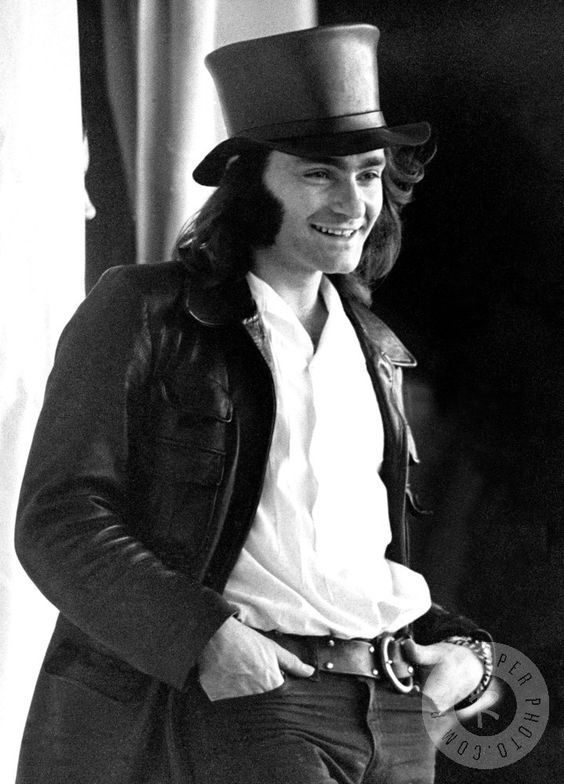
Marty Balin, whose tenor voice provided hits for the ’60s psychedelic rock band Jefferson Airplane, has died,
The family said Friday: “Marty’s fans describe him as having had a substantial impact for the better of the world: ‘One of the greatest voices of all time, a writer of songs that will never fade, and founder of the quintessential San Francisco band of the sixties.’ His music is known for being the soundtrack to all of life’s monumental moments.”
Balin’s songwriting credits for the Airplane included “It’s No Secret,” “Today,” “Comin’ Back To Me,” “PlasticFantastic Lover,” “Share a Little Joke,” and “Volunteers” the latter sung at Woodstock.
Another co-founder, Paul Kantner, died in January 2016, the same month the Recording Academy named Jefferson Airplane one of its annual Lifetime Achievement Award recipients at the Grammys.
Balin and the Jefferson Airplane were pioneers of psychedelic rock — their sound fused fuzzy, distorted, reverb-filled tones with influences from folk, rock and the blues.
The Airplane helped define the San Francisco music scene in the 1960s, debuting at the Matrix nightclub in 1965, about a year before its first album, “Jefferson Airplane Takes Off,” was released.Jefferson Airplane formed in 1965 when folk artist Balin decided to create a rock group in response to the Beatles-led British Invasion. The band quickly attracted a local following – and when fledgling promoter Bill Graham opened his legendary Fillmore Auditorium, Jefferson Airplane served as the first headliner.
Signed to RCA Records for the then-princely sum of $25,000, the band scored five gold albums in the US, including 1967’s Surrealistic Pillow and 1968’s Crown of Creation in their first run of success.
Marty Balin wrote and sang some of the best-loved songs of both Jefferson Airplane and Jefferson Starship. In memory of the singer, who passed away on September. 27th, 2018. Here are some of the great songs.
Marty Balin started his musical journey as a pop singer in the style of Gene Pitney or Paul Anka. In 1962 he signed to Challenge Records, releasing two singles that went nowhere. He then immersed himself in the folk music scene, fronting a group called the Town Criers, which also failed to ignite. While Balin re-thought his musical path, a business opportunity opened up that would tie this all together. He and friend Elliot Sazer took over a failing pizza shop called the Syndicate, and relaunched it as the Matrix, which would become a new music venue for San Francisco’s up-and-coming rock and rollers.
It was during this that he connected with like-minded guitarist Paul Kantner. The two would soon form what would become one of the most important bands of the ’60s. Jefferson Airplane would break every rule in the book, and be all the better for it. “One night we were playing this gig and Jorma [Kaukonen] just suddenly took off, you know,” Ballin recalled in the documentary Fly Jefferson Airplane. “He just flew away and played the hell out of this song. We never heard that before. So the next night, Jack [Casady] and Jorma took off, you know, and it was just great. So the next night, we all just took off and we played the song however we wanted, whatever we thought. So that became our approach.”
Balin, along with Signe Toly Anderson, would share lead vocals in the original lineup. Balin wrote and or co-wrote most of the songs on their stunning 1966 debut, “Takes Off”. Within the year, Anderson left the band to raise a family, leaving the door open for Grace Slick who would take the band up the charts with “White Rabbit” and “Somebody to Love.” It would be, however, Balin who remained the heart and soul of the band over their often tumultuous life span.
Grace Slick, whose powerful vocals added another unique element to the band’s sound, joined the group in 1966, bringing those two songs with her from her previous band, the Great Society.
Those songs, “Somebody to Love” and “White Rabbit,” became Top 10 hits the following year on “Surrealistic Pillow,” one of the defining rock albums of the late ’60s.
Multivocal harmonies were a staple of the Airplane, with Balin and Slick soaring over one another and Kantner weaving in. In a 2011 interview, Kantner said this interplay is “maybe the best thing I do in the bands that I’ve been in.”
The band performed at three of the legendary music festivals of the ’60s, including the Monterey Pop Festival, Woodstock and the ill-fated Altamont. Balin was brutally beaten by the Hells Angels after he dove into the audience to help an audience member in distress. “I woke up with all these boot marks all over my body,” he told Relix in 1993. “I just walked out there. I remember Jorma saying, ‘Hey, you’re a crazy son of a bitch.’”
As Kantner and Slick would get farther out in their concepts, Balin would remain the more grounded voice in the band, but would often be out-voted by the others. His input into the band became less and less, but still potent with songs like “Volunteers” and “Share a Little Joke.” Though he left in 1971, he later would once again hook up with Slick and Kantner in Jefferson Starship in 1974, writing the band’s biggest hit “Miracles” in 1975.
“Marty and I are like totally different creatures, we make different kinds of music,” said Kantner in Fly Jefferson Airplane. “Marty is extraordinarily good, particularly at writing simple songs that connect and touch you. I can’t write a simple song to save my life.”
Balin had a warm, pure and honest voice, which worked as a perfect counterpart to Grace’s more brash style. He took part in various reconfigurations of the group over the years, but never really receiving the respect he was due for starting and steering the band at the start. In addition to his strengths as a singer, Balin was an accomplished songwriter as well, and he contributed several key numbers to the Airplane’s canon early on and later supplied several successful songs to its designated successor, Jefferson Starship. Although Starship was Slick and singer/guitarist Paul Kantner’s vehicle after the mothership’s demise, Balin’s loyalty to his former flightmates helped give that band its first hint of commercial success. Here a mere handful of Balin’s finest moments here to enjoy. There will never be another band like Jefferson Airplane.
“It’s No Secret” From: ‘Jefferson Airplane Takes Off’ (1966)
Issued as the band’s debut single, “It’s No Secret” was the sound of Jefferson Airplane circa 1966. Balin at the front with backing from Signe Toly Anderson and Paul Kantner and a straight-ahead folk-rock track. Still, despite being on similar ground to bands like the”Byrds, they couldn’t help but sound like anyone but the Jefferson Airplane. It was an understated start to an amazing catalog of music. “It’s No Secret”
One of Balin’s most indelible contributions to the initial Airplane album Jefferson Airplane Takes Off, “It’s No Secret” helped define the Airplane’s oeurve, a striking sense of defiance coupled with an emphatic emotional investment. Balin seems to teeter on the brink of desperation in trying to convince a skeptical lover that he’s all in as far as their relationship is concerned (“It’s no secret, How strong my love is for you/ It’s no secret, when I tell you what I’m gonna do/ ‘Cause I love you, yes I love you”), and indeed, by the time the song reaches its soaring conclusion, it becomes a notion that shouldn’t be taken for granted.
“Young Girl Sunday Blues” From: ‘After Bathing at Baxters’ (1967)
Most of the band’s third album, After Bathing At Baxters, was under the hands of Kantner and Slick, but Balin got this one gem into the mix. A stomping rocker co-written with Kantner, its style slots in between the more psychedelic start and end of side one of the album. Balin was a brilliant balladeer but could deliver on a rocker as well.
“Comin’ Back to Me” From: ‘Surrealistic Pillow’ (1967)
Balin wrote and sings solo on this incredible, haunting ballad. Perhaps more than any other song on our list of the Marty Balin Songs, this captures him at his truest. The timber and tone of his voice fully in force is a thing of beauty. This song sounds even more striking today than it did in 1967.
“With Your Love” – From “Spitfire”
Written with drummer Joey Covington and an occasional collaborator Vic Smith,“With Your Love” was one of the final significant songs in the Airplane’s last years. It made its appearance on the album Spitfire shortly before their initial break-up. While the subject matter may have been of a more mundane variety, a style the group turned to in their final desperate grasp for commercial success, Balin’s vocal remains as impassioned as ever. Here was proof that even as the Airplane’s other engines were failing, he could still help them takeoff.
The album closer on the classic Surrealistic Pillow, “Plastic Fantastic Lover” is a “pounding rant inspired by the most pervasive American addiction of all, television” according to the Jeff Tamakin bio Got a Revolution. While the studio version is a concise rocker clocking in under three minutes, the version the band let loose at Woodstock Festival is an amphetamine-fueled juggernaut of rock and roll fire. Showing what a great band, They could be so fierce live.
One in a series of searing duets with Grace Slick, and another highlight of the landmark “Surrealistic Pillow” album, this song was widely believed to be a euphemism for a sex toy, although Balin later insisted that it was written in praise to his new stereo set-up. The staunch drive and determination inherent in the song’s emphatic performance set a standard for the banshee wail that would come to full fruition on later albums Crown of Creation and Volunteers in particular. The song itself was ensured immortality when it was tapped as the B side of the band’s most immortal anthem “Somebody To Love.”
“Crown of Creation” From “Crown of Creation”
Sung in the manner of a tribal chant, “Crown of Creation” finds Balin soaring above Slick and Kantner’s insistent wail, adding to the song’s irrepressible urgency and forward thrust. Taken from the album of the same name, its militancy and unapologetic verve made it a standout of their early sets and another example of their populist platitudes. Here again, there’s a menacing sense of irony and insistence at play (“You are the crown of creation/ And you’ve got no place to go”), seemingly assuring its subject that “the stability you strive for” will be found, but only in barren environs they refer to as “a place among the fossils of our time.” It’s a dismal assessment indeed.
“Miracles” From: ‘Red Octopus’ (1975)
By 1975 the Airplane were long gone and the Jefferson Starship had taken on a life of its own. Though Balin first connected with them in a somewhat tentative fashion, he soon slid right into place, providing them with their biggest hit as Jefferson Starship. “Miracles,” a three-minute edit of the seven-minute album track, hit No. 3 on the Hot 100 in early 1975 thanks to Balin’s beautiful lyric and vocal.
“Caroline” – From ” Dragonfly”
In many ways “Caroline” was Balin’s audition contribution to Jefferson Starship. Balin hadn’t yet committed to joining the band on a full-time basis, but this dynamic ballad, recorded for the album Dragonfly, helped transform the group from a loose conglomeration of fellow travelers with little commercial intent into a viable radio-ready entity that was well worthy of taking on the Airplane’s legacy. Shedding the psychedelic sheen for a sound well in keeping with the early ‘70s AOR, Balin helped the band make the leap.
“Come Up the Years” From: ‘Jefferson Airplane Takes Off’ (1966)
Though never released as a single, “Come Up The Years” still sounds like a hit, on which Balin and Kantner harmonize on this tale of new love. Like so much of the band’s early material, its simplicity is the key to its success. Throw in a glockenspiel for the solo and we have a song that, like so many of theirs, defines the era from whence it came.
“3/5 of a Mile In 10 Seconds” From: ‘Surrealistic Pillow’ (1967)
This rocker opens side two of the 1967 classic Surrealistic Pillow. As strong lyrically as musically, “3/5 of a Mile In 10 Seconds” was all Balin. With lines like “Do away with people laughin’ at my hair / Do away with people frownin’ on my precious cares / Take me to a circus tent where I can easily pay my rent / And all the other freaks will share my cares.” Though that may seem rooted in ’67, it sounds just as applicable well after the end of the Flower Power movement.
“She Has Funny Cars” From: ‘Surrealistic Pillow’ (1967)
Arguably one of the greatest opening tracks to an album, “She Has Funny Cars” was co-written with lead guitarist Jorma Kaukonen and still packs a punch like no other. The galloping drums give way to a monster guitar riff before Balin sails in on lead vocal. Soon joined by Grace Slick, this song pretty much defines Jefferson Aiplane stylistically.
“Volunteers” From: ‘Volunteers’ (1969)
The 1969 album Volunteers certainly ranks right up there with the band’s finest material. From the opening call to arms of “We Can Be Together” through the title cut that closes the LP, it’s one hell of a ride. The song “Volunteers” was supposedly first inspired by Balin hearing a Volunteers of America donation truck out in the street. He jotted down some lyrics and, with the powerhouse guitar riff from Kantner, created a genuine anthem for the end of the ’60s.
The title track from the Airplane’s most insurgent effort of their collective career, “Volunteers” was exactly the anthem needed when dissent and desperation raged across the country throughout the Nixon era of the late ’60s and early ’70s. The emphatic rallying cry, “Up against the wall mother fucker,” emphasized the outrage and intent inherent in Balin and Slick’s banshee wail. This was indeed protest with both passion and purpose.
“Today” From: ‘Surreaslistic Pillow’ (1967)
“Today” stands as one of the most beautiful love songs ever written. A simple guitar riff dripping with haze and minimal percussion are all that is needed to accompany Balin here. Marty’s voice is so pure and bare. Eventually Slick comes in to harmonize, making it all the more beautiful. Like most of the album, it is drenched in reverb, which only adds to the ethereal nature of the songs. Legend has it that this arch ballad, which made its initial appearance on the Airplane’s defining album Surrealistic Pillow, was written on spec in hopes of securing a cover by Tony Bennett. That never happened, of course, although Balin’s emotive delivery made it an unlikely addition to an album known mostly for psychedelic suggestion. Jerry Garcia’s simple repetitive guitar figure adds to the track’s poignancy and design, but it’s Balin’s heart-wrenching vocal that ensured its searing embrace.
“The Other Side of This Life” From “Bless Its Pointed Little Head”
A staple of the Airplane’s set during their prime, this Fred Neil composition was radically transformed as a fiery rocker by the time it made its appearance on the band’s early live album Bless Its Pointed Little Head. Another dynamic vocal duel between Balin and Slick, it acquired an undisputed urgency that turned it into one of the band’s most memorable rallying cries. “Would you like to know a secret just between you and me?” they ask in unison. It’s an entreaty the listener dared not resist.
—————————————————————————————————————————–
“RIP Marty Balin, fellow bandmate and music traveler passed last night,” Jefferson Airplane bassist Jack Casady said in a statement. “A great songwriter and singer who loved life and music. We shared some wonderful times together. We will all miss you!!!!”
“Marty and I were young together in a time that defined our lives,” Jefferson Airplane guitarist JormaKaukonen wrote on his blog. “Had it not been for him, my life would have taken an alternate path I cannot imagine. He and Paul Kantner came together and like plutonium halves in a reactor started a chain reaction that still affects many of us today. It was a moment of powerful synchronicity. I was part of it to be sure, but I was not a prime mover. Marty always reached for the stars and he took us along with him.”
Billy Squier‘s 1981 second solo album “Don’t Say No” sold over three million copies because of songs “In the Dark”, “My Kinda Lover”, “Lonely Is the Night” and the big hit “The Stroke”. Billy Squier grew up in the Boston suburbs as an only child (“Life isn’t easy from the singular side” he sings in the opening to “In the Dark”), the son of an executive of the Converse Shoe Company. So in the Squier household growing up, it’s safe to assume that Buddy Holly shared star billing with Bob Cousey, Bill Russell and John Havilcek of the Boston Celtics.
Billy Squier was introduced to John Mayall’s Bluesbreakers at age 14, which introduced Billy to guitarist Eric Clapton, changing everything for the young adolescent American. Squier’s desire got him first to Boston University. Then his talent got him into the prestigious Berklee College of Music, but the first half of the Seventies were spent pretty much shuffling in and out of bands in Boston and New York City.
Then Billy Squier got his first taste of the record business, recording two albums on a major label fronting the band Piper in 1976 and 1977 before splitting up. Undeterred, Squier landed a lucrative solo deal and debuted with 1980’s The Tale of the Tape, containing “The Big Beat” which I played to great response on ROCK 103/ Memphis. So it was with eager anticipation that Don’t Say No was received in April 1981.
Intervention Records is thrilled to present Billy Squier’s 1981 rock anthem, “Don’t Say No” in a brilliantly remastered Artist-Approved Edition. The classic rock staple catapulted Squier’s career to new heights. His live shows became arena rock sensations and four tracks from this album became classic rock radio staples in heavy rotation today: “In the Dark,” “The Stroke,” “My Kind of Lover” and “Lonely is the Night.” The original LP art has been restored by IR’s Tom Vadakan to a beautiful single-pocket gatefold and the Old-Style, “Tip-On” LP jacket is film-laminated and printed by Stoughton.
Don’t Say No is the second album by Billy Squier, Released on April 13th, 1981. It stands as Squier’s biggest career album, including the hits “In the Dark”, “Lonely Is the Night”, “My Kinda Lover” and “The Stroke”. The album hit the Top Five on the Billboard album chart and remained on the chart for over two years (111 weeks)
“The Stroke” was the first single, reaching number 17 and an even bigger hit at rock radio, hitting number 3 on the Mainstream Rock chart. The song even dented the British Pop charts, rising to number 52. The video for “The Stroke” — as most of the music videos from both Don’t Say No and its follow-up, Emotions In Motion is a straight-ahead performance piece, featuring Squier on an arena stage. Billy’s many videos were staples on the then brand-new channel MTV Channel which brought him increased popularity.
The album is a near-perfect example of early-’80s melodic hard rock, and even less enduring (but hardly inferior rockers) such as “You Know What I Like” and “Lonely Is the Night” keep up the intensity. And Squier also finds time for the occasional ballad, like the disarmingly gentle “Nobody Knows.” Completists may want to review his mid-’90s double-disc anthology, but as far as studio albums are concerned, Don’t Say No is undoubtedly his best and a pure classic.
“In The Dark” followed “The Stroke” into the Top 10 of the Album Rock Tracks chart. “Lonely Is The Night” and many other tracks from the album were hugely popular on AOR (Album Oriented Rock) radio stations.
Don’t Say No belatedly received a Triple Platinum award in 1992, certifying sales of over 3 million US copies. In early 2018, Intervention Records reissued Don’t Say No on 180-gram vinyl .The reissue is Artist-Approved and according to Squier “arguably the best-sounding version ever.
Matthew Sweets Essential 90s Albums Artist-Approved Expanded Edition 180-Gram Vinyl Double LPs!
You definately need these Artist-Approved 180-gram vinyl double LP reissues*. Loaded with extra tracks 100% Analog Re-mastered from THE ORIGINAL MASTER TAPES by Ryan Smith at Sterling Sound. Packaged in “Old-Style” tip-on deluxe gatefold jackets printed by Stoughton featuring faithfully restored original album art!
“Altered Beast” is available in late August. “Girlfriend” and “Son of Altered Beast” are shipping in late autumn 2018. 100% Fun available now! ,*Son of Altered Beast is a single not double LP. All fully artist-Approved Expanded Editions. Intervention Records and Matthew Sweet are proud to introduce an amazing NEW Artist-Approved reissue series, Matthew Sweet 1991-1995!
In 2018 Intervention is releasing 2-LP Expanded Editions of Sweet’s 90’s power-pop classic Trilogy, Girlfriend,Altered Beast and 100% Fun, plus the Son of Altered Beast 7-song EP, which appears on vinyl for the very first time!
Each Expanded Edition double-LP set of the three classic studio albums is loaded with extra tracks. So many of these songs are either appearing on vinyl for the very first time or seeing official release for the very first time. And for Sweet completists, these LPs are the most extensive collection of extra tracks compiled and packaged with the studio albums the songs were recorded for!
The original 15-song repertoires for Girlfriend and Altered Beast are for the first time spread across three LPs sides for maximum sound quality and the ability to PLAY LOUD!
The jacket art for Matthew Sweet 1991-1995 has been faithfully restored by IR’s art director Tom Vadakan. The three Expanded Editions feature beautiful “Old Style” gatefolds printed onto heavy blanks and film laminated by the wizards at Stoughton Printing. Son of Altered Beast features a single-pocket “Old Style” GATEFOLD jacket by Stoughton as well.
With the wind in his sails stirred up by the success of his previous album Girlfriend, Matthew Sweet did what any young musician in his position would have with the follow up: he went for broke. He wrote more daring arrangements that brought in a country element to his power pop attack, dove deeper lyrically and, most importantly, roped in a bunch of his musical idols to join in the fun. The liner notes for Altered Beast read like a who’s who of the pop and post-punk universe with regular collaborators Ivan Julian and Richard Lloyd joined by Big Star’s Jody Stephens, Mick Fleetwood, pianist Nicky Hopkins and Elvis Costello’s drummer Pete Thomas.
Their collective work has never sounded better than it does on this remastered vinyl pressing from the ever-reliable Intervention Records. The album is wisely stretched out to a double LP, with the fourth side taken up by a batch of studio outtakes, some previously unavailable here in the States. They flesh out the story nicely, with even more of Sweet’s ‘70s rock acumen and ‘80s punk playfulness coming to the fore. It all sounds more remarkable than ever thanks to the work of mastering engineer Ryan K. Smith. Every song sounds like it is bursting out of its seams and ready to flatten a major metropolis.
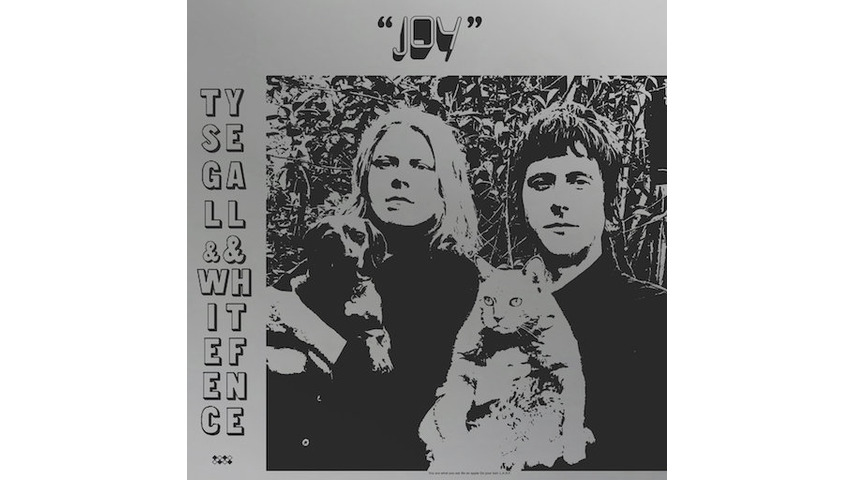
Once again, Ty Segall and White Fence‘s Tim Presley have slipped the madness of the straitjackets they were fitted for years ago, and made a record not just of songs, but of climactic essence – a stretch of sequential time organized for entertainment’s sake! Behold, Joy—their mind-meld complete, fizzy experimentations and sonorous bangers alike. Joy unrolls from within and in between them and electricity takes many forms, plunging from rock trips to acoustic strollers to poppy reveries to freak-downs at side’s end.
These sounds are too big to be confined just on some wax or your shitty headphones; Ty and Tim are also taking the show on the road! With select West Coast dates in the near future, total joy-ination is imminent. Fellow DC-ites The Peacers will be opening some gigs, as well, so you know it’s going to rule! Who knows what else the future holds?
So another month and another Ty Segall album. the prolific king of California psych/garage/punk-rock is arguably THEE most prolific major musician working right now, and the level of quality he achieves across his releases is incredibly high. The guy is quickly putting together an all-timer of a catalog in such a short time.
The latest entry in said catalog is Segall’s second collaborative album with veteran Los Angeles psych-pop experimenter White Fence, aka Tim Presley, formerly of The Nerve Agents and Darker My Love, and more recently Cate Le Bon’s partner in the project DRINKS. The two men joined forces in 2012 to produce a fun and fuzzed-out collection of songs called Hair, a “glorious mess of an album” .
Joy is a little more messy but almost as glorious. With track times mostly clocking in under 120 seconds, it’s a series of quick hits that are warped but relentlessly tuneful, like a Beatles LP that’s spent a blazing hot afternoon lying on a busy freeway. As songwriters, Segall and Presley complement each other nicely: Segall certainly knows his way around a catchy tune, but Presley’s a more natural melodicist, and while Presley definitely has his own rough edge, Segall’s a prodigious shredder. In the form of…the fucked-up pop song!
Highlights on Joy include “Body Behavior,” a pulsing acoustic rocker that snakes in the verses and sparkles in the chorus; “Other Way” a dead-eyed noise excavation that feels like it fell off the Incesticide tree of influence; and “A Nod,” another rhythmic strummer that may just boast the prettiest melody on the album. It also features one of the least abstract lyrics on Joy:
Tried to please my mother
Tried to please my father
Tried to please everyone but me
Bank says I need money
My friends say I need followers
But I want to believe in me
Me
There are other great songs here: the occasionally jazzy “Good Boy,” the beautiful and Neil Young-ish “My Friend,” and the propulsive “Do Your Hair,” which is powered by a bouncy bass line and uses its 95 seconds with impressive efficiency. The opposite is true for a couple of tracks that show up near the end of the album, “She Is Gold” and “Tommy’s Place,” two silly and/or stoney studio experiments that go nowhere, really. Joy would’ve been a tighter overall package if they’d been cut.
With Segall, though, it’s worth hearing a couple of clunkers if it means he’ll keep making music at his preferred dizzying pace, because his hit-to-miss ratio is so high. And collaborating with Presley doesn’t dent that ratio. In fact, it brings out good things in both men. Here’s hoping their next album isn’t another six years away.
Pinegrove have released their new album Skylight through Bandcamp. The album is available in a pay-what-you-want format. All proceeds from the album will be split between three charities: Musicares, the American Foundation for Suicide Prevention and the Voting Rights Project.
The album was announced on Wednesday as part of a Pitchfork profile on frontman Evan Stephens Hall, who was accused of “sexual coercion” in 2017. The Pitchfork piece delved into the accusation and resulting fallout, and gave Hall, as well as a mediator for the alleged victim, a chance to elaborate on what had happened.
Reactions to the piece were divided. Some were happy to see the band emerge from a murky, ill-defined situation, but others felt that the redemption was unearned. Near the end of the profile, Hall revealed the band’s plans to self-release Skylight, and that all Bandcamp profits would benefit charity.
Released September 28th, 2018
Songs by Evan Stephens Hall
Evan Stephens Hall – vocals, guitar, percussion
Zack Levine – drums, percussion
Adan Carlo – bass
Josh Marré – guitar, dobro, lap steel, vocals
Sam Skinner – guitar
Nick Levine – guitar, pedal steel
Nandi Rose Plunkett – synth, keyboard, vocals
Doug Hall – piano & vocals on Light On
All proceeds will be split evenly between Musicares, the American Foundation for Suicide Prevention, and the Voting RightsProject.
A strong contender for 2018’s fastest rising newcomer, it would be fair to say Amsterdam-native Pip Blom is having a very good year. Pip’s supported the likes of The Breeders & Franz Ferdinand, garnered radio plays and playlists from every station in the land, and generally made some utterly wonderful records. As we all await the hotly anticipated debut album, Pip continues to tease with next months release of another EP, Paycheck.
This week Pip has shared the latest track from the EP, in the shape of Come Home. Quite possibly her darkest and most angular-release to date, the track builds around twangy-guitars and rumbling bass, before an almost Radiohead-like drum beat adds some winning propulsion. It’s a track that bristles with tension, Pip’s voice, fuzzy, at times engulfed in the music as she seems to dissect a failing relationship, “I’ve tried hard to keep a distance, not to get too much involved, think that you’re indecisive, I know I have had enough”. It’s a different Pip Blom, a darker, arguably less accessible version than we’ve heard on record before, and she sounds all the more intriguing for it.
Paycheck EPis out October 5th via Nice Swan Records.
Night Beats perform tracks from new album ‘Myth Of A Man’ Fronted by Texan native Danny Lee Backwell,Myth Of A Man is their fourth studio album, and their second for Heavenly Recordings following the release of Who Sold My Generation in 2016.
The band have shared the first track from the record ‘Her Cold Cold Heart’ that evokes the noxious feeling and hypnotic state of toxic love.
‘Her Cold Cold Heart’ is from the Night Beats upcoming fourth studio album “Myth Of A Man,” out January 18th, 2019 via Heavenly Recordings / [PIAS] Recordings
Something of a lo-fi underground super-group, Cheerbleederz have this week put out their debut EP, Faceplant, on the ever reliable Alcopop! Records. The London-based trio, comprising members of Fresh, Happy Accidents and Finish Flag, bonded over a shared experience of being, “the only women in our main bands”, and formed Cheerbleederz, “to make a band that explores being women together”.
Ahead of the EP’s release the band shared the first single from it, Cabin Fever. A reflection on, “being unable to tell someone how you feel, and in turn feeling trapped by that situation”, Cabin Fever is an emotive blast of harmonies, pulsating bass and clattering guitars. The whole things builds to a wonderfully melancholic outro as the members chime in unison, “I think that we’re all doomed”, in disarmingly harmonic unison. On their debut EP, Cheerbleederz seem to have hit on something hugely promising; at once reminiscent of their other projects, yet different enough to sound fresh and exciting, it’s a hugely promising place to start.
Folk/alt-country duo Ferris & Sylvester are a London-based band preparing to release their debut EP The Yellow Line. Ferris & Sylvester are songwriters – With clear references in their catchy setup to the mid-60s sounds of Greenwich Village combined with their meatier blues tones, Ferris & Sylvester sit somewhere between Jack White and First Aid Kit. Their clever combination of blues, folk and rock n roll has created a distinctive genre of their own.
The London-based pair met two and a half years ago and have since won over the capital with their ever-growing live presence and songwriting. This year, the duo released their highly anticipated EP ‘Made In Streatham’ which they self-produced in their South London flat. Released through their own label ‘Archtop Records’, the EP has clocked up over 2 million Spotify streams, rose to No.1 on the iTunes Singer-Songwriter chart and received widespread praise across the board.
They’re the first signing to legendary producer Youth [Killing Joke, Crowded House, Paul McCartney, The Verve]’s new publishing company Painted Word Music, and recorded their EP at his Space Mountain Studios in Spain.
The Video featurs a stunning animation of ‘Sometimes’ by Neil Pymer & Shinyeye
We’re also premiering the beautiful video for their new single ‘Berlin’ which was filmed at Battersea Arts Centre in London