Last night in Los Angeles I held a free screening for this video. a few hundred people came to a cinema to watch the clip and ask questions, and passed the mic around. many women – and it is really important to add, also men – shared painfully personal stories of their own experience with rape, assault, surviving, and their anger at what is happening in our country right now. I hugged a lot of people. there were tears. if you were there, thank you for coming and holding the space. it was a much-needed collective howl.
and now: It’s time. I‘ve been working on this video project for months and it is with a strangely heavy heart that i admit: the timing is uncanny. we set the release date for today – October 5th – because it was the one year anniversary of the new york times exposé on Harvey Weinstein.
as i sit here typing this, we await the decision of the senate to confirm Brett Kavanaugh, and the news isn’t looking particularly promising. in fact, it’s looking pretty appalling. and I feel like i’ve been holding my breath for 42 years.
Amanda Palmer
over 60 women – cast and crew – were instrumental in the creation of this video. i wrote a massive blog about the origin of the song and the process of making it,
Matt Nicholson, aka sketch & dodds, helped write and arrange this entire song. those gorgeous cinematic strings and piano are his doing. Jasmine and i wrote the lyrics, and we sang our guts out, but Matt helped provide a container. he should not get cut out of this narrative, and i find it important – and not unpoetic – that a man helped to midwive this song into being.
if you look closely at the credits, you’ll see that – beyond the director, Noémie, and the producer, Natalie – almost all the crew on this film production were women – including the steadicam operator, Lisa Sene, who literally got a round of applause from the cast and crew at the end of a very, very long day of carrying around a 60 pound thing.
Elvis Costello is a conceptual band-leader (The Attractions, The Confederates, The Imposters etc), and apparently innately turned his short stories ,lacerating tales of romantic frustrations, political expediency, hapless social climbing and all the rest into any form he wanted to. His first half-a-dozen records are almost concept albums, with Costello moving through genres as though they were time zones. Confident of his instincts and virtuosity, he has continued in this vein for more than 40 years, happy to dip in and out of styles and collaborate at will with Burt Bacharach on 1998’s Painted From Memory and Allen Toussaint on 2006’s The River In Reverse.
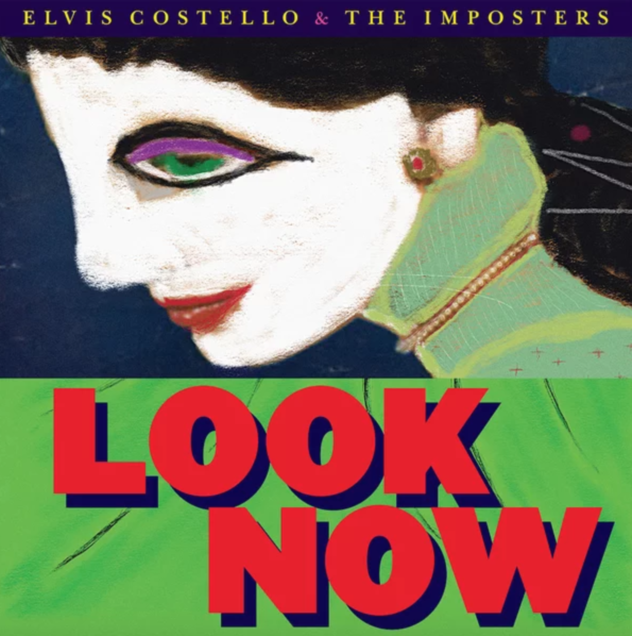
He’s been quiet of late, not helped by a recent cancer scare, which was an unnecessary interruption to his almost relentless touring schedule. Next month sees the release of a brand-new album, Called Look Now (probably because you should), it’s his first record he’s made with The Imposters since 2008 and his first new album since the well-reviewed 2013 Roots collaboration, Wise Up Ghost.
The last time Elvis Costello put out an album, he was backed by The Roots on 2013’s largely underrated and flat-out spectacular Wise Up Ghost! It saw the songwriter opening up his repertoire to a collaboration with hip hop’s most famous live band. Now five years later, Costello returns to the form that made him one of the most well-respected names in music. In tow, are The Imposters, a band whom he most recently recorded 2008’s Momofuku with, as well as legendary songwriter/pianist Burt Bacharach, a longtime collaborator of Costello’s who helped thread multiple tracks on the album. “I had all of the orchestrations and vocal parts in my head or on the page before we played a note,” the ever-methodical Costello said in a press release. And if latest single “Suspect My Tears,” is any indication, Look Now (out on Concord Records) promises more of Costello’s timeless lyricism through and through.
Costello says that he decided to make the record while touring last summer with the band, largely playing songs from his Imperial Bedroom album, and having spent a weekend with Look Now it’s easy to see the connection. The songs here are dense but ornate, complex but forthright, and every one of the 12 songs has a melody that you won’t be able to slip. Costello has been criticised in the last decade or so for failing to address his audience and by trying to distance himself from his past. And whether you subscribe to that or not, this new record is good enough to appeal to any Costello fan, regardless of when they joined his train.>There are co-writes with Bacharach, while one song – “Burnt Sugar Is So Bitter”, written with Carole King – sounds like the best thing that Steely Dan have written since Katy Lied.
“Unwanted Number” from the forthcoming album Look Now
Elvis Costello has released a new video for his ballad “Suspect My Tears,” off his forthcoming album Look Now, out October. 12yj on Concord Records.
The artistic new video features a tragic love story told via a black-and-white, animated storyboard, which introduces limited colors by its closing.
“Suspect My Tears” was recorded by Grammy-winning producer Sebastian Krys with The Imposters, who include Steve Nieve (keyboards), Davey Faragher (bass) and Pete Thomas (drums). The track is augmented by jazz-bassoonist Michael Rabinowitz, and vocalists Kitten Kuroi and Brianna Lee.
Look Now is the first album Costello has made with The Imposters since the 2008 release of Momofuku, and his first new album since his 2013 collaboration with The Roots, Wise Up Ghost.
Costello will kick off an extensive U.S. tour with The Imposters next month.
Wand are constantly on the move – if not writing or recording, they’re on tour in some country on some continent, heating up and burning down venues with their scorched-torch songs and inventive and propulsive take on rock. Earlier this year was the release of “Perfume” and a tour of the USA; come November, they head to Europe. In the meantime, they make stops at some of the finest radio stations that will host them, like they did last month at KEXP in Seattle. That session just went online today so all of us the world over can enjoy live Wand, right now, and whenever we want! Watch Wand rip it up in session at the KEXP Studios,.
Wand performing live in the KEXP studio. Recorded August 2nd, 2018.
Songs: High Rise White Cat The Gift Bee Karma Blue Cloud
Greta Van Fleet have released “Anthem,” a new song taken from their upcoming debut album “Anthem of the Peaceful Army”, which will be released on October. 19th.
The LP follows the two EPs that came out in 2017, and it wound up not being the album the band had expected it to be. “We had all these songs we wrote three to five years ago that we were just going to put on the album,” bassist Sam Kiszka said recently.
“It very quickly became all new material, so I’d say about three-quarters of the songs are songs we wrote in the studio. It just happened very quickly. We got everything done in two weeks. We were aching to make this album.”
The band has drawn comparisons to Led Zeppelin since its outset – but guitarist Jake Kiszka said they hadn’t been heavily influenced by the British icons. “I don’t think before we ever really realized, in a lot of senses, the similarities or the commonalities that we share with that group,” he explained.
“But I think that we’ve become more conscious of the similarities and I think we’ve taken some time to go back and almost identify with it,” he added. “‘Oh, It’s interesting, because there is a lot of those commonalities.’ Even if it exactly wasn’t an overwhelming influence of ours, it still was influential and we can certainly see it. But overall, it doesn’t really affect the writing of our music.”
Greta Van Fleet are currently on tour, with three U.S. dates remaining this month, followed by shows in Europe and the U.K.
The song that burst Blondie out of the streets of the Bowery to No #1 on the charts almost everywhere, “Heart of Glass” was the pivotal moment in punk’s choreographed slamdance with the mainstream. Inspired by Kraftwerk and Giorgio Moroder, Blondie transformed their campy “Once I Had A Love” into a Roland-driven juggernaut and never looked back. Explored and exploded via six distinct versions remastered from the original analog tapes, the history of “Heart of Glass” is documented here in a copious essay and it’s art reimagined by noted American illustrator Shepard Fairey.
Available in a limited edition of 10,000 on October 26th, 2018.
From the time they came together as a trio at the end of 1968, to the fall of 1973 when they turned in this impromptu set at Winterland, the three voices comprising Crosby, Stills and Nash had all seen their share of changes: they triumphed with their 1969 self-titled debut, Then joined forces with Neil Young for the follow-up Déjà Vu in 1970, which took their show on the road; by the end of that run, they’d weathered the kind of wear and tear on their hearts and souls that could throw any band off course for good. And yet, whether performing songs from those first two albums or the solo albums like David Crosby’s “If Only I Could Remember My Name”, Graham Nash’s “Songs for Beginners”, Crosby and Nash’s heralded duo album, or StephenStills‘ solo albums and the works with Manassas.
In the Fall of 1973, Crosby, Stills and Nash were still slightly reeling from a busy period that followed recording in Hawaii with Young and the passing of CSN&Y roadie Bruce Berry (famously eulogized by Young on “Tonight’s the Night”). Stills had been on the road with his band Manassas, and Crosby and Nash were playing their own shows with an electric band. But when Manassas booked a couple of dates at Winterland on October 4th and 7th of 1973, it was reunion time when Crosby and Nash pulled a walk-on and the trio appeared onstage together for the first time since 1970.
Between the banter and tuning up, the three manage to turn in some prime vocal shots, from a version of the Beatles “Blackbird” to a handful of their group’s and solo works. Nash takes the lead on “Southbound Train” and retreats to piano for “Prison Song,” his protest of tough marijuana laws on the poor population. Stills sings Young’s “Human Highway,” which Crosby characterizes as a song by “our skinny friend;” the live version isn’t quite worked out the way we’ve come to know it, but that’s part of the excitement of this off-the-cuff set. “Wooden Ships” is dedicated to Crosby and Stills‘ co-writer, the Jefferson Airplane/Starship’s Paul Kantner, before the evening is crowned with the vocal trio tour de force with a wonderful version of “Helplessly Hoping.”
These Winterland shows foreshadowed a proper reunion on the horizon: a couple of months later, Young would join Nash and Crosby at an appearance at the San Francisco Civic Arena and, the following year, CSN&Y would be on the road again, playing to their largest audiences ever as a throwback to their early days when the vocal giants were just a trio, this Winterland night is a historic footprint on CSN’s trail of rock & roll.
Crosby, Stills & Nash started off their October. 2nd, 1973 concert at San Francisco’s now-defunct Winterland venue as a trio. But, again, mirroring their career trajectory, they were joined by none other than Neil Young halfway through the show, to the crowd’s uproarious delight. The first show of an impromptu two-night stint at Winterland, which hauled double duty as an ice skating rink and music venue in its seven-year lifespan, the October. 2nd show saw the trio reunited on stage for the first time since 1970. It was an unexpected reunion, as Stills’ newly formed band Manassas had booked The Winterland for dates on October. 2md and 7th, but, as the run’s commence, Nash and Crosby piled on stage (only later to be joined by Young).
The three friends spend the show cutting up on stage, exchanging pleasantries with the crowd and serving up their solo hits and band numbers alike, Informal, joking, and pleasingly loose, the three friends seemed to truly enjoy singing together, despite the occasional onstage bristling and ropy moments. Crosby sarcastically refers to “our usual slick Hollywood show,” explaining away the presentation’s unrehearsed nature as “more fun this way for us.” Stills answered his band mate’s quip drolly with, “Anything you say, David, anything you say.”
They opened the show with a pair of songs from Crosby, Stills & Nash’s 1969 debut, “Helplessly Hoping” and “Wooden Ships,” Then they played The Beatles’ “Blackbird” and Stills’ “As I Come Of Age” before Young appears as if out of thin air, joining the band for renditions of his own “Roll Another Number (For the Road)” and “New Mama” as well as a few more CSN hits. Young’s cameo would foreshadow a CSN&Y tour the following year, in which the quartet played to some of their biggest crowds ever.
Again, watch the video of Crosby, Stills & Nash performing “Wooden Ships” Crosby, Stills & Nash – Lee Shore Recorded Live: 10/7/1973 – Winterland – San Francisco, CA
Kurt Vile has become known for his unmistakable nasal drawl and classic rock and folk sensibilities, but his musical origins leaned on a more lo-fi, psychedelic sound with record releases like 2008’s Constant Hitmaker and 2009’s Childish Prodigy. Now, a decade later, Vile says there’s another clear distinction in his mind between then and now. “The one big difference now is my religion is literally ‘Don’t force it,’” he says.
His latest album, “Bottle It In”, certainly doesn’t sound forced as it’s got plenty of breathing space. The tracks that make up the album’s hour and 20 minute length are chill, melodic and perpetually locked into a head-bobbing groove. Mind you there’s still distorted and twangy riffs on tracks like “Loading Zones” and his Charlie Rich cover, “Rollin With The Flow,” and these riffs often interact with his measured grooves, but the grooves humbly take center stage, and it doesn’t take very long for them to become fixed into your mind, body and soul.
The Philadelphia rocker Kurt Vile is back alongside his band, The Violators, for his seventh solo album and his first since 2015’s “b’lieve I’m goin down”. Two tracks have already been released: “Bassackwards” is a sprawling, hypnotic foot-tapper, and “Loading Zones” is a distorted guitar assault with a playful lyrical ode to the humdrum exercise of parking. Across the album’s hour and 20 minutes, the record captures the bare bones beauty of Smoke Ring For My Halo, the guitar prowess of b’lieve I’m goin down and the lyrical transparency of Childish Prodigy. Vile doesn’t shy away from eight- to 11-minute track lengths, and he creates enthralling grooves at the center of each track as other instruments weave in and out, creating a dreamy, sonic transcendence.
Four tracks fall around the eight-to-10-minute range and unlike many songs that long, Vile evades bombastic, over-indulgent territory. Rather, on tracks like “Bassackwards,” “Check Baby” and the title track, he leads these seemingly simple grooves that sneakily weave their way into the listener’s consciousness and lull you into a misty dream with each additional musical element snaking in and out of the song’s strong melodic foundation. “I’ve always had a soft spot for repetition,” sings Kurt Vile on the compassionate “One Trick Ponies,” and these songs reflect that with their hypnotic, circling instrumental interplay.
Vile says he wasn’t concerned about the length of the tracks as he’s got a pretty good feel for when to pull the plug. “I know when not to cut something down if I’m still bobbing my head into the track,” he says. “As opposed to all of a sudden thinking about something else and not paying attention anymore—that’s when I know you gotta cut it out or try again.”
‘Loading Zones’ is the newest single by Kurt Vile, out now on Matador Records.
There’s a whole album’s worth of outtakes. They didn’t fit on the record, but there’s still contenders for another album or EP. I would say the one song that maybe I didn’t expect would make the record because I recorded it a little later was ‘Come Again,’ the banjo song. That’s a lot of people’s favorite.”
In addition to his backing band, The Violators, this album is chock full of guest musicians: Kim Gordon, Warpaint’sStella Mozgawa, Mary Lattimore, Lucius and Cass McCombs. Gordon, who’s become a good friend of Vile’s, contributes ephemeral guitar feedback on the outro of “Mutinies.” “I went to see my friend SteveGunn who happened to be playing at the Echo in Los Angeles,” recalls Vile. “So I went and saw him. Mary Lattimore was actually opening up. I saw Kim in the audience and we were hanging. I told her what I was about to do and she said, ‘Let me know if you want some acoustic guitar feedback,’ which was her words. It came together nicely for sure.”
While Lucius contributes backing vocals to “Come Again,” the other three musicians all guest on the album’s centerpiece and title track. “Bottle It In” includes drums from Mozgawa, harp from Lattimore and vocals from McCombs. The nearly 11-minute track is the album’s most striking cut with its simple yet breathtaking keyboard riff that mingles with Lattimore’s harp for a divine, melancholy effect.
“That’s one of my favorite tracks,” says Vile. “I wrote it on this weird keyboard at my house. The same keyboard I wrote ‘Cold Was The Wind’ on. You can hear it’s really kind of scratchy and weird. I prerecorded the basic track, which was 11 minutes long and I definitely thought I would cut it down. We listened back and it was very hypnotic and beautiful, just the right amount of all the things—a little bit sad, a little bit beautiful—sort of a song about rejection. A song about getting your feelings hurt a little bit. Normal human emotions.”
“It’s only a few chords really. It’s sort of open to reacting melodically, vocally, all those things, as long as you don’t overplay, as long as you’re in the groove. That’s basically why it’s the title track because I don’t want it to go unnoticed or I don’t want it to be taken too lightly like, ‘Oh this is a weird, minimal orchestral song.’ It’s so much more than that. That’s definitely a different type of song for me. Not out of left-field really but something special.”
The lyrics on this album are up in the clouds—sometimes literally (“Hysteria”) and other times metaphorically. The album is a generous, thoughtful dialogue with himself as he reaches for both abstract musings and level-headed professions. While the bittersweetness and ruminative nature of his predecessor, b’lieve i’m goin down, still lingers, Vile’s playful side is still apparent, most visibly on the lead single, “Loading Zones”—perhaps the most epic rock ’n’ roll song about the humdrum exercise of parking. In fact, the song was actually written during the b’lieve sessions, but Vile felt he wasn’t ready to release it yet.
“It was just I’ve been more one with playing it on the guitar,” he says. “It came off more confident. I had the basic chords written but you know how the words spew—it’s pretty psychedelic and humorous—definitely not absurd, it’s just a little weird. I didn’t think I earned the right to put out such a weird song. I don’t think it would’ve made sense. I’m glad I waited and put out ‘Pretty Pimpin’ or something that people would connect with more.”
The album was written and recorded over roughly a two-and-a-half year period at multiple studios, mostly between touring and family vacations. It features a clown car of guest musicians and producers and it also includes a plethora of instrumental elements: various keyboards and synths, banjo and harp. To the non-musician, it sounds like a steep task to make a cohesive body of work in such conditions, but Vile wouldn’t have it any other way. “I’ve really always been doing that,” he says. “That’s just me having a little experience to take it a little further,” he explains. “Even in the old days, I was at least recording at different people’s houses and various studios. You’d be surprised. I think things would sound weirder if you recorded all in one spot. I think it’s better to record all over the place because you get all kinds of different dimensions and perspectives as opposed to just the same sound of the same room. The same exact guitar and drum sound. That’s not really me.”
Vile’s guitar playing on this record truly runs the gamut. On “Loading Zones,” he uses the same wah-wah pedal as Sonic Youth on their 1995 single, “The Diamond Sea.” “Bassackwards” sounds straight out of Kevin Shields’ playbook. “Yeah Bones” has a cascading, acoustic country jangle. And on “Rollin With The Flow,” Vile’s guitar cries out and reverberates with flare. “I’m kinda like a space cadet,” he says. “I’ll usually never fully master a pedal use it to its full possibilities, but I’m definitely into them. I like filters, warm, analog, weird synthy kind of tones. Vintage guitars for sure—the more beat up the better. Tremolo bars. Anything that kind of bends but in a really dreamy, melodic way. I like vibrato a lot too.”
Though Vile doesn’t consider himself a gear head, he has a certain level of appreciation for vintage instruments. “I’m into old synths that look cool or keyboards that sound fucked up and guitars, weird amps and old pedals—vintage things. Of course they have to sound good, but they also have to look cool. You have to be drawn to them,” he says.
The album artwork for Bottle It In also reflects Vile’s love for all things vintage. The cover features a worn-in black background, a square rainbow border, ’60s typography and a photo of Vile with an Elvis lip curl—though Vile’s retro vibe is, hilariously, nearly sabotaged by his Planet Fitness t-shirt. “You’re dealing with modern fonts,” says Vile, “I always thought like a real typewriter looks better or something beaten up a little. I basically found an old record that I liked and had it morphed and used the wear of that record. I wanted it to look used and worn in. I always think things look a little strange, when they’re super crisp and modern.”
Some artists consider their earlier work immature and are quick to run away from their previous sound, but Vile doesn’t align with those sentiments. Like his lo-fi beginnings, he’s planning to go back to home recording some time in the future and he’s not fearful of repeating himself. “I’m in a super nostalgic phase right now,” he says. “I’m listening to a lot of things that I love in the ’90s like Drag City music and stuff like that. I think that I’m always trying nostalgically to get to my roots. I think I’d be really into this record as a teenager because I’m just trying to sound like what I was into in my teens. Ideally, I think I’m always gonna evolve and fine-tune my craft, but it’s always going to sound like me.
From Kurt Vile’s new album, ‘Bottle It In’ available October 12, 2018 via Matador Records.
Since debuting in 2008, Titus Andronicus has been conditioning faithful listeners to always expect only the unexpected, consistently zigging where others would zag and maintaining a steadfast dedication to fearless ambition.
Earlier this week, TITUS ANDRONICUS surprised fans with the digital release of MRG666, a.k.a. their Home Alone on Halloween EP. It features three tracks recorded concurrently with A Productive Cough, the group’s most recent full-length. Today, you can find the pumpkin-orange 12-inch version at your neighborhood record store available through Merge Records .Celebrate the spookiest of the seasons by staring into the abyss and confronting the bone-chilling terror which lies at the haunted heart of our human experience.
Personnel:
Liam Betson: electric guitar
R.J. Gordon: the bass guitar, vocals
Cary Kehayan: vocals
Kevin S. McMahon: vocals
Matt “Money” Miller: lead vocals [“Home Alone (On Halloween)”]
Alexander Molini: piano, organ
Jane Scarpantoni: cello
Rick Steff: Hammond B-3 organ
Patrick Stickles: lead vocals, electric guitar, harmonica, percussion
Chris Wilson: drum set
released October 1st, 2018
Written, directed, and edited by Patrick Stickles*
Last year, this neurobiology-trained folk-gazer released her stunning debut “Night Night At the First Landing”, which showcased her penchant for flipping the pop script. Her second album, which she recorded with Wye Oak’s sonic scientist Jenn Wasner, is full of strong writing and headphone-worthy details; the skip-stepping central riff of “Cut Me Off” is tethered to earth by resolute drums and a crosswalk signal’s barked “Wait!”; “The Flavor of the Fruit Tree” pairs the wow and flutter of an analog synth with hovering-in-midair harmonies and julienned vocal samples; and the simmering “Your Art” recalls Built to Spill at its most inviting, then blasts off into space on its coda, on which shooting-star guitars and a gently blown trumpet trade lullaby verses until they’re both safely ensconced in dreamland. Wriggling against expectations and bursting with ideas, Perfect Shapes is restless and smart, taking often-surprising, always-pleasing paths to pure pop bliss.
“Perfect Shapes” is the fourth single taken from Madeline Kenney’s forthcoming album, “Perfect Shapes,” out October 5th.
Very proud to announce the release of our new studio album, Evening Machines, available October 5th. A lot of love and care went into this one, and we are so thrilled about how it came out. Listen to the first single, “Chemicals,”
The South African-born troubadour’s first album of originals since 2013 adds an array of new textures to the hushed-indie-folk template he perfected on “Big Black Car” and “The Stable Song.” Lead single “Chemicals” pits the singer’s Zach Condon-esque croon and airy falsetto against faint string drones that recall his 2016 collaboration with the Colorado Symphony; “Caves” mixes electronic static, wordless harmonies and heavily reverbed instruments for an intoxicating rush, one of the few moments where Evening Machines hints at “rock.” But Isakov largely sticks to dreamy, hypnotic soundscapes like the layers of feedback on “Powder” or the reverse effects and ghostly vocals of “Where You Gonna Go” beautiful collisions of acoustic instruments, Isakov’s soothing vocals and otherworldly noise.
Chemicals, the first single from the new album “Evening Machines,” available October 5th.