Seven albums in and WhiteDenim still know how to rock. Their latest album, Side Effects, comes 11 years into a career that has kept their supercharged and wired guitar sound at the forefront of their music, More in line with the experimental, freewheeling spirit of their fan-favourite record Last Day of Summer than anything else they’ve done since, Side Effects is a record that captures the essence of the band’s full-throttle live shows.
White Denim is an Austin institution, but they’re the rare group to have emerged as a national act while simultaneously gigging around town. Their early efforts landed them a deal with Downtown Records, but after 2016’s Stiff they left the label, built their own studio (Radio Milk), and released two more albums in as many years. 2018’s Performance was their first effort at their own spot, and their first for the label City Slang. Like most White Denim albums this decade, this new iteration of the group revolved around core members James Petralli and Steve Terebecki.
Performance and the recently released Side Effects are a tandem of sorts, separated by about seven months. In an era when release schedules can so often be determined by everything but the music itself, White Denim have set up an infrastructure in which they dictate how their music enters the world. It’s a strikingly independent move from a rock band, and their story gives hope to artists: Weird, interesting bands can get to a place where they have their own studio named after their own song and still stand with dignity, intact. They’re no longer just an Austin band, but a way forward.
If you’re coming back to White Denim after a few years away, Side Effects most likely picks up exactly where you left off: a record showcasing a hugely energetic band bursting at the seams. And if you never checked out, then Side Effectsis instead a wholly rewarding record – one that celebrates every form of White Denim to date and sets the stage for a brand-new chapter.
Ride opened a fresh chapter with 2017’s ‘Weather Diaries’, a terrific album that found the shoegaze band re-igniting their essential creative chemistry. Produced by Erol Alkan – a long time advocate for the band – it was followed by a lengthy international tour, including some landmark shows.
Recently hinting that they were once again in the studio, Ride have now detailed plans for their next album. Once again produced by Erol Alkan, ‘This Is Not A Safe Place’ will be released on August 16th, through the band’s home Wichita Recordings.
New song ‘Future Love’ is the ideal comeback, a stunning, completely unguarded track that speaks of pure, unashamed optimism. Driven by the positive energy coursing through the band’s veins, this is pristine Ride, managing to recall their fine early work without emulating it.
Hannah Cohen will release her third album “Welcome Home” on 26th April via Bella Union Records.
“It was the beginning of September and NYC was in the midst of a big heat wave.” Cohen says of the track. “I was staying with my partner at the time and had locked myself in the bathroom to work on this song. It was very early in the morning, the air conditioner was buzzing away. At the time we were searching for our first apartment together, and had seen about 27 apartments in person. All were gross or out of our price range. It was definitely a catalyst for wanting to move out of the city – and it all came rushing at me. I really needed a change. Locked in a boiling hot bathroom, playing my nylon-string guitar, I realized that this is it… my life is crazy, it’s time to make a big move.”
Hannah Cohen has arrived home. From the title of her new album to the depth and beauty of the music, the Woodstock, NY-based singer-songwriter’s third album, “Welcome Home”, displays a new level of confidence and comfort with the many creative tools at her disposal. Cohen’s remarkably evocative voice is surrounded by dreamy, swooning incantations, from the rippling ‘This Is Your Life’ and the slow-burning, forthright statement of ‘All I Want,’ to the soul swagger of ‘Get in Line’ and dramatic vocal leaps of ‘Wasting My Time.’
With Welcome Home, “I don’t feel I have to cover up anything, or not be able to share,” Cohen says. “There’s less to interpret, I’m more visible. And as to reflecting on the past when things didn’t go well, I’ve left that behind. It was all worth it, to make my way to this point.”
Produced by Cohen’s partner Sam Owens, the producer/writer who performs as Sam Evian, the artist began developing the material that became Welcome Home in 2017. Taking her time with the songs, she wrapped herself in the fulfilling quiet of a new home, and a new creative partnership that supported finding a clarity in her writing and vocals. Many of the songs were written on an old, nylon-string guitar painted with Hawaiian scenes of beaches and palm trees (which can be heard on ‘This Is Your Life’), that, no matter the final arrangement, gives the songs a lighter touch, a warming glow that suffuses the whole album. Listeners may find echoes of folk and R&B, radiating with vocal-powered pop production, electronic accents, and bursts of pulsing guitar/bass/drums energy. Irresistible echoes of soul enchanters such as Carrie Cleveland (an early touchstone for Cohen and Evian), Marvin Gaye, Bill Withers and their friend and sometime collaborator Nick Hakim blend with the reflective shadings of singer/writer forebears such as Carole King and Harry Nilsson.
Welcome Home is almost brutally honest in its self-examination, as Cohen couches home truths in velvet-lush settings. As she explains, “A lot of the album is about checking in with reality and taking the wheel, being honest with myself and my intentions. Being transparent as much as possible. They’re about exploring why I’m here. And the songs question love – if it’s real or something else, finding love that’s healthy, mature and supportive.”
All of Cohen’s new material was crafted in Brooklyn except ‘Big House,’ which was written in an isolated stone farmhouse in upstate New York where they sometimes recorded, preserving the intimacy at the core of Welcome Home. The album was mostly tracked with a live rhythm section: bassist Brian Betancourt (from Evian’s live band) and drummer Vishal Nayak (Nick Hakim). Says Cohen, “We wanted to capture the essence of the song, quickly, and not toil over details for two years.”
That straightforward immediacy marked an important change in Cohen’s relationship with her music and the recording process. After growing up around professional musicians, she moved to New York from the Bay Area at 17, an intrepid adventurer who was drawn to New York’s singer-songwriter world. “New York became my world and my community, and formed me as a person, though I have never felt settled here until the last two years.” Her first two albums, Child Bride and Pleasure Boy, document the sound of a young artist finding her feet on a stage populated by established performers, a very public evolution toward the lived-in experience and command of Welcome Home. The desire to live on her own terms has recently led her to the less-crowded vistas of Woodstock, NY, a no-less iconic musical destination.
‘Old Bruiser’ documents that feeling of escape, specifically a west coast road trip (“Made it back to the city by daylight and we turned to each other as if to ask why /did we make something special just to go and leave it all behind?”). ‘Build Me Up’ also reflects Cohen’s desire to move: “Living in the city has such extreme effects on your body, your nervous system, the constant grind, living on top of people and never really having any true personal space. I am naturally a very sensitive person, I feel a lot of energy and people are really intense in NYC. I have been inspired by that energy but after fifteen years it became exhausting trying to keep up with the grind and hustle. I wanted a change of scenery and a new pace. It was hard to let go after putting so much time and work into building my life and community, and in a way I went from one extreme to another. But I felt I needed to make a big move to break free from all the noise. Welcome Home chronicles my last year in New York City before moving on. Onward and upwards.”
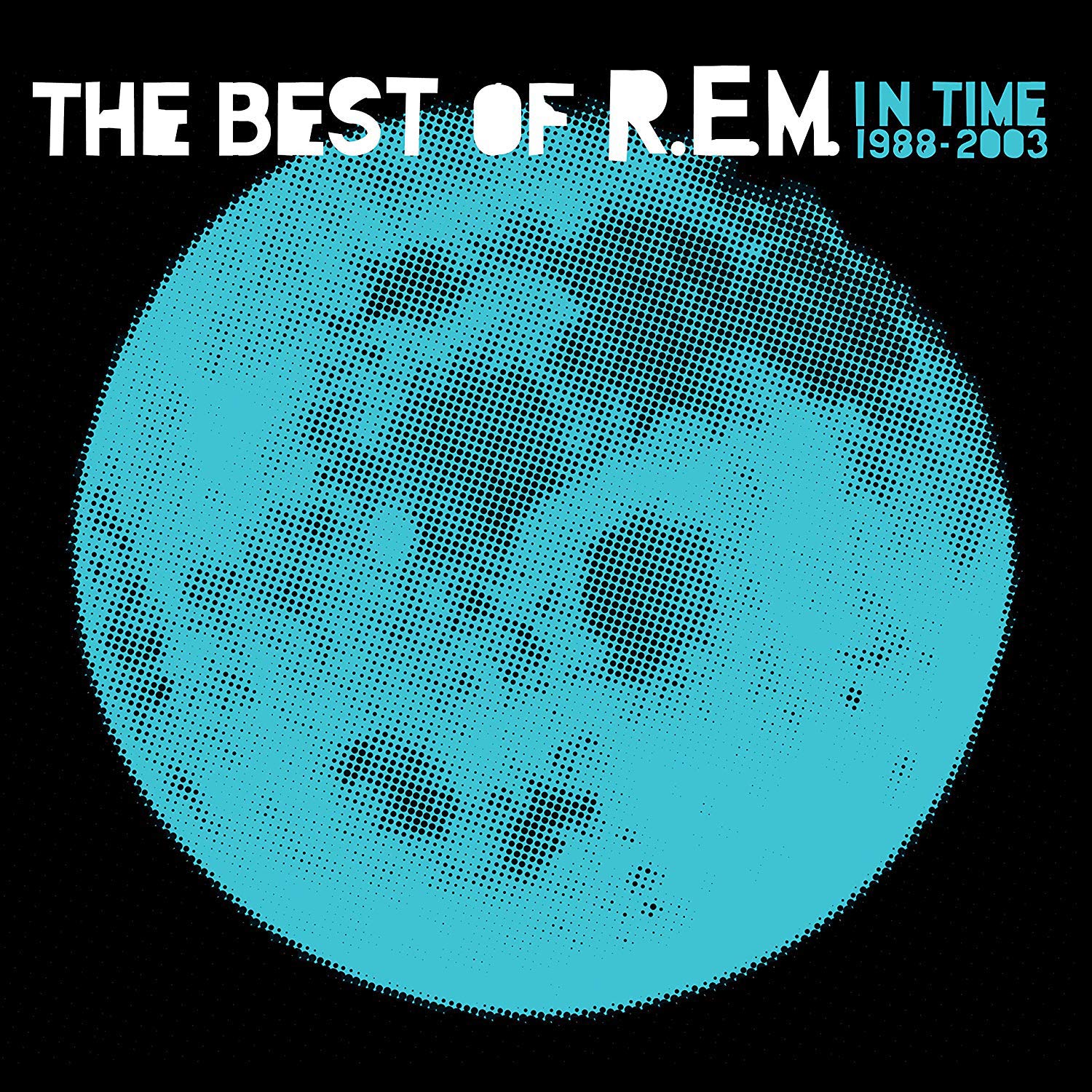
We’re pleased to announce the vinyl reissue of In Time: The Best of R.E.M.1988-2003. Spanning 1988’s “Green” to 2001’s “Reveal”, plus two previously unreleased tracks, the album charts the evolution of one of America’s most critically and popularly acclaimed rock bands. In addition to the wide reissue of In Time, a special translucent blue version of the 2-LP set will be available exclusively at Barnes & Noble.
Originally released in late 2003, In Time serves as an opportunity to reflect on the astonishing creative and cultural influence that R.E.M. offered during the height of their 30-year run together. One of the most revered groups to emerge from the American underground, singer Michael Stipe, guitarist Peter Buck, bassist Mike Mills and drummer Bill Berry—who amicably retired from the band in 1997—helped originate college rock during the post-punk scene of the ’80s, and went on to become one of most popular and critically acclaimed bands in the world; their idiosyncratic blend of brash tunefulness, poetic lyrics, chiming guitars and evocative vocals served as a soundtrack to the cultural tide of the late ’80s and ’90s.
Available for the first time on vinyl in over 15 years, the album includes 18 hits, Out June 14th.
Pink Floyd’s “The Division Bell”, released in March 1994, became the band’s first album since 1975’s Wish You Were Here to reach No.1 in both the UK and US. Their 14th studio release also went multi-platinum and turned out to be a lone victory for prog rock. In October 1985, three years after Floyd’s The Final Cut, founder member/bass guitarist Roger Waters had took out a High Court application to try to prevent the Floyd name being used again. In December, he informed the group’s record company that he was leaving the band, and that Pink Floyd were no more.
Unfortunately for Waters, David Gilmour had no intention of laying Floyd to rest. “Dave absolutely saw red, and finally got it together to go back to work,” wrote drummer Nick Mason in his memoir, Inside Out. A year later, the Waters-less Pink Floyd made their debut with “A Momentary Lapse Of Reason”. The album had an arduous birth. Gilmour worked briefly with several outside songwriters, and the process was frequently interrupted by calls from lawyers tasked with defending the band’s decision to continue. Waters even tried to stop the new Floyd from touring. But his protests failed to halt the band.
A Momentary Lapse… was denounced by Waters as “a fair forgery”, but still it reached No.3 in Britain and America, and was promoted with a tour that turned Pink Floyd into the second highest grossing act of 1987. “I didn’t think it was the best Pink Floyd album ever made,” said Gilmour.
Rick Wright, who’d left the group under duress in 1979, had returned midway through the sessions, but wasn’t made a full-time member again. Instead, Wright’s name topped a list of 16 session musicians and backing singers deployed to help bring the band back from the dead.
The Division Bell should also be remembered for its music rather than the intra-band bickering that had blighted the previous nine years. But it proved that Floyd could still be a commercial success without Waters, the man who’d devised the concepts for The Dark Side Of The Moon, Wish You Were Here and The Wall. By spring, Gilmour had moved the operation to his houseboat-cum-studio, Astoria, on the Thames, and he brought in The Wall and A Momentary Lapse… co-producer Bob Ezrin. Having amassed around 65 of what Nick Mason described as “riffs, patterns and musical doodles”, “we had what we called ‘the big listen’,” explained Gilmour, “where everyone voted on each piece of music.”
The first steps towards making The Division Bell began in January 1993 with Gilmour, Mason and Wright jamming at the Floyd’s own Britannia Row Studios in North London. Before long, Guy Pratt, who’d played on the Momentary Lapse… tour, joined them. It was a dream come true for the bassist who, as a teenager, had watched Floyd play The Wall at Earls Court. “It was thrilling to know you were playing on a Pink Floyd record,” said Pratt, who recalled Gilmour gently instructing him to lose “90 per cent of the notes I was playing”.
Ideas were merged or discarded. But so much material was left over that the band briefly considered, then rejected, the idea of releasing some of it on a separate album, “including a set we dubbed ‘The Big Spliff’,” wrote Mason, which was, apparently “the kind of ambient mood music being adopted by bands like The Orb”.
The whittling-down process continued, but Floyd’s voting system was abandoned when the others discovered that Rick Wright was awarding his ideas the highest possible score, and everybody else’s the lowest. Part of the problem was that Wright still wasn’t a full Pink Floyd member: “It came very close to a point where I wasn’t going to do the album, because I didn’t feel that what we’d agreed was fair.” In the end, Wright was fully reinstated, and had a credit on four of the final album’s 11 tracks. joined by Guy Pratt and fellow touring Floyd musicians, guitarist Tim Renwick, percussionist Gary Wallis and keyboard player Jon Carin – entered Olympic Studios in Barnes, West London, and recorded a handful of new songs.
High Hopes was partly inspired by Gilmour’s childhood and adolescence in Cambridge. Its beautiful lap steel guitar solo evoked Shine On You Crazy Diamond, while composer Michael Kamen’s orchestral arrangement flashed back to the strings and woodwind he’d used on Comfortably Numb. In the meantime, Floyd dragged some of their vintage keyboards out of storage and sampled their sounds on Take It Back and Marooned. Rick Wright was delighted: “My influence can be heard on tracks like Marooned. Those were the kind of things that I gave the Floyd in the past and it was good that they were now getting used again.”
In fact, the whole album was full of familiar motifs. Dark Side… and Wish You Were Here saxophonist Dick Parry returned to the fold. But so too did Dark Side… mixing supervisor Chris Thomas, who helped oversee the final mix instead of Bob Ezrin. “That was disappointing,” understated the producer. On the final album, High Hopes’ themes of nostalgia and reflection were reprised in the Gilmour/Samson/Laird-Clowes composition Poles Apart. Its first verse was apparently inspired by Syd Barrett; its second by Roger Waters. What Bob Ezrin called “the broader concept” of The Division Bell was communication and the difficulties thereof: between friends, wives and lovers, and former bandmates.
The clues were there in titles such as Lost For Words and Keep Talking, the last of which sampled scientist Stephen Hawking’s voice. “It’s more of a wish that all problems can be solved through discussion than a belief,” said Gilmour, who was well aware of the irony considering Pink Floyd’s poor track record in communicating with each other.
However, The Division Bell also seemed to have a subtext: rebirth. On Wearing The Inside Out, Rick Wright cast himself as a man venturing back into the world after years of isolation. “There’s a lot of emotional honesty there,” said Ezrin. “Fans pick up on a sad and vulnerable side of Rick.” Wright wasn’t the only one being emotionally honest. Gilmour talked about ‘killing the past’ on Coming Back To Life. Many took this as a reference to embracing his relationship with Polly Samson (whom he’d marry in July ’94) and rejecting the hedonistic lifestyle he’d been enjoying for the past few years.
Warner Music Group in association with Pink Floyd Records is releasing a 25th anniversary edition of ‘The Division Bell’, the band’s 1994 multi-million selling album that included the Grammy Award winning track “Marooned” (Best Rock Instrumental Performance) on June 7th. This Limited Edition 25th anniversary edition will be available on translucent blue vinyl (echoing the original limited blue vinyl release in 1994).
‘The Division Bell’ was the last studio album to be recorded by the band: David Gilmour, Nick Mason and Richard Wright. The album debuted at No 1 in the UK, the USA, Australia and New Zealand, staying at the top of the US charts for 4 weeks; it also went to No 1 in six other countries and, to date, has reached total album sales of over 12 million. The album was recorded by the band at Astoria and Britannia Row Studios with the majority of the lyrics being written by Polly Samson and David Gilmour. ‘The Division Bell’ contains Pink Floyd’s only Grammy-awarded track, the instrumental ‘Marooned’. A video for Marooned was made for the 20th Anniversary Immersion release of the album and has now had almost 25 million views
‘The Division Bell’ sleeve artwork was the first Pink Floyd image to be featured on a Royal Mail stamp, in an issue of ‘Classic Album Covers’. The iconic album artwork of the two huge metal heads in profile talking to each other (and in turn, creating a third forward-facing head) was provided by long-time Floyd collaborator Storm Thorgerson.
The album was remastered for the release in 2014 by James Guthrie, Joel Plante and Doug Sax at The Mastering Lab from the original analogue tapes. Bob Ezrin and David Gilmour produced the original album, with orchestral arrangements by the late Michael Kamen.
Track Listing: Disc 1 Side 1
Cluster One (Richard Wright, David Gilmour)
What Do You Want From Me (Music: David Gilmour, Richard Wright – Lyrics: Polly Samson, David Gilmour)
Poles Apart (Music: David Gilmour – Lyrics: Polly Samson, David Gilmour, Nick Laird-Clowes)
Disc 1 Side 2
Marooned (Richard Wright, David Gilmour)
A Great Day For Freedom (Music: David Gilmour – Lyrics: Polly Samson , David Gilmour)
Wearing The Inside Out (Music: Richard Wright – Lyrics: Anthony Moore)
Disc 2 Side 1
Take It Back (Music: David Gilmour, Bob Ezrin – Lyrics: Polly Samson, David Gilmour, Nick Laird-Clowes)
Coming Back To Life (David Gilmour)
Keep Talking (Music: David Gilmour, Richard Wright – Lyrics: Polly Samson, David Gilmour)
Disc 2 Side 2
Lost For Words (Music: David Gilmour – Lyrics: Polly Samson, David Gilmour)
High Hopes (Music: David Gilmour – Lyrics: Polly Samson, David Gilmour)
A setlist is one of the rarest items you can take home from a concert, usually going to the few lucky fan’s who gets a roadie or stage manager’s attention. But starting today, getting one is a little easier – you can bid on more than 100 of them as part of Setlists for Young Voices, a charity benefiting international youth writing and activism centers. The project was launched by Nick Hornby and supported by fellow authors Dave Eggers and Michael Chabon.
There are setlists from R.E.M.’s first big tour in 1989, including Wembley Arena, signed by the entire band. There are several recent handwritten Patti Smith setlists, and a Pete Townshend-signed Who set from their Mexico City show in 2016. Also available are a Rush 2013 Clockwork Angels tour set, Janelle Monáe’s Coachella set and a lot more, including Dixie Chicks, Wilco, Nine Inch Nails, Sigur Ros and Jim James.
Hornby, who also paid tribute to record store culture in his 1995 novel High Fidelity. “So this is a way to satisfy your music-geek side without aggravating your favorite musicians.” He adds they are hoping to raise $50,000, which will help more than 150 students.
After a four year wait, Eels released their highly-anticipated new album “The Deconstruction” via E Works. “Here are 15 new Eels tracks that may or may not inspire, rock, or not rock you. The world is going nuts. But if you look for it, there is still great beauty to be found. Sometimes you don’t even have to look for it. Other times you have to try to make it yourself. And then there are times you have to tear something apart to find something beautiful inside.” Eels singer-songwriter E (Mark Oliver Everett).
EELS – “You Are The Shining Light” – from “THE Deconstruction”, EELS 2019 Tour starts April 21st.
Next month, BMG will issue a “Feel The Noize: The Singlez Box!” a new Slade vinyl box set filled with 10 seven-inch singles in a box set . This is a ‘strictly limited edition’ vinyl box which features ten ‘internationally released’ seven-inch singles with the artwork from the respective European country where it was released.
The singles start with the band’s first UK number one, ‘Coz I Luv You’ which was issued in 1971 and in fact five of the first six singles in this box set all hit the top of the UK chart (‘Gudbuy T’Jane’ peaked at number two) which is a reminder, if one was needed, at the phenomenal popularity of Slade in the early 1970s
The next three songs included here – ‘My Friend Stan’, ‘Everyday’ and ‘Far Far Away’ – were all top three singles and the seven-inch box then skips forward six years to recreate the rare 1980 promo single of ‘Night Starvation’. This was one of three new songs on the Six of the Best EP of the same year (the B-side of this promo single ‘When I’m Dancin’ I Ain’t Fightin’ was also a new track that featured on the same EP).
“Feel The Noize: The Singlez Box!” will be released on 31st May 2019.
Gang Of Four Release New Video/Single “Change The Locks” From their upcoming Album, the Pioneering post-punk band new single out on 26th March 2019. A standout cut from their forthcoming new album ‘Happy Now’ (19 April), ‘Change The Locks’ is a synth propelled, mutant funk shapeshifter.
Gang Of Four were formed in the punk rock fallout culture of late seventies Leeds – a place where art was a mirror and guitars were machine guns. Gang of Four tore up the template and made sense of the question marks thrown up by year zero.
They redesigned rock in the punk aftermath, taking the incendiary energy of the form and crisscrossing it with funk, stripping away the baggage of rock excess and creating a new stripped-down music that was full of agit energy, heavy grooves, shrapnel guitars and politically charged lyrics matching the fervour of the times. Swerving trad rock rhythms, the beats were invented from scratch and every instrument played a pivotal role in the sound in a non-hierarchical structure. In short, they came up with post punk.
As Gang Of Four prepare for the release of their latest album “Happy Now” this Friday, April 19th, 2019 via Gillmusic Ltd., they are releasing their new single and video “Change The Locks” to ramp up the excitement.
More recently, the band’s influence has become almost universal—now everybody talks about Gang of Four. From Franz Ferdinand to St Vincent, from Sleater Kinny and James Murphy of LCD Soundsystem to Nine Inch Nails: today’s creators of angular rock music have GO4’s influence and imprint all over them. The band is reaching an urban audience with Frank Ocean sampling them on his latest album and Pharrell name-checking the band in his interviews.
Inevitably GO4 disbanded in 1984 but reformed later that decade, since then releasing a series of albums that emphatically demonstrate their capacity for invention and twisting energy. The line-up now includes Thomas McNeice—the bass player joined in 2008—and John ‘Gaoler’ Sterry, who has supplied vocals since 2011. The new album is full of subversive blasts of hook-heavy pop-inclined songs.
Cure frontman Robert Smith turned 60 years old (April 21st) fans have been sending their best wishes to Smith as well as sharing photographs of Smith through the ages.
One fan said “Happy 60th Birthday…without your music I’d be lost.” Another said “Happy 60th birthday to this legend” before sharing pictures of Smith at gigs she’d been to from The Cure’s beginnings to the current day. So we thought I would check out some of their best videos.
It all began in 1976, when schoolmates Robert Smith, Michael Dempsey, Lol Tolhurst and Porl Thompson formed Easy Cure in Crawley, West Sussex. By 1978, both “Easy” and Thompson were dropped from the band, and The Cure signed to Fiction Records, releasing their debut album, “Three Imaginary Boys”, in May 1979. It was the start of a career both musically and visually mysterious, and Cure videos combined both to unforgettable effect.
‘A Forest’ (1980)
The band’s first promo video, ‘A Forest’ sees a very different Robert Smith to the one most fans picture when they think of Cure videos. The Cure were allegedly very anti-image to begin with, until the day Robert Smith daubed himself in hairspray and lipstick, and knew his face would never be the same again. “We had to get away from that anti-image thing, which we didn’t even create in the first place,” he later said. “And it seemed like we were trying to be more obscure. We just didn’t like the standard rock thing.”
‘The Hanging Garden’ (1982)
“Pornography” was The Cure’s fourth studio album, and was followed by the Fourteen Explicit Moments tour, during which the band finally shook off their anti-image look, teasing out their hair and adorning black clothes and smudged makeup. The video for the only single to be lifted from Pornography, Smith said, “For ‘The Hanging Garden’ video we got two people who did Madness videos, but it was a really awful video. They wanted to make us look serious and we wanted them to make us look like Madness.”
‘Let’s Go To Bed’ (1982)
A landmark among Cure videos, ‘Let’s Go To Bed’ marked their first collaboration with director Tim Pope, who went on to direct many videos for the band. Three years later, during an interview on the set of the ‘In Between Days’ video (also directed by Pope), Robert Smith recalled meeting the director for the first time: “As soon as he walked through the door, I thought, Brilliant, because he had on a really horrible shirt and a really horrible, ill-fitting pair of trousers. One eye was going up there and one eye was going down there and I thought, This man must be a brilliant video director to get away with it. We’ve been with him ever since.” ‘Let’s Go To Bed’ also marks the only instance where the band’s line-up consisted of only two members, Robert Smith and Lol Tolhurt.
‘Close To Me’ (1985)
Probably one of the most famous Cure videos, ‘Close To Me’ is set inside a wardrobe on the edge of a cliff. Another Tim Pope creation, the director said that he wanted to shoot the video in a confined space, in order to mirror the claustrophobic feeling of the song. Interestingly, his treatment actually ended up influencing the song, as The Cure remixed ‘Close To Me’ for the video, making it sound even denser.
Smith later claimed it was the most unpleasant video experience he’d had, as the band spent six hours shoved inside a wardrobe with freezing cold water. “It was a bizarre endurance test to see who was going to crack first,” he later recalled. “I absolutely hated this day.” The scene where the wardrobe fell off the cliff also proved difficult, with Smith recalling how “they only had one shot to do it because I don’t think they had permission, so they turned up with this wardrobe, threw it over the cliff, then drove off”.
‘Boys Don’t Cry’ (1986)
Another Tim Pope creation, the ‘Boys Don’t Cry’ music video featured three boys miming along to the song, with shadows of The Cure projected onto the background. As the younger version of the band were filmed live in front of a blank screen, Pope couldn’t see if their actions were even matching up. Speaking about the video on TV documentary series Video Killed The Radio Star, Pope revealed that the three boys from the video still collectively attend various Cure gigs and meet up with Robert.
‘Why Can’t I Be You’ (1987)
The first single from Kiss Me, Kiss Me, Kiss Me, ‘Why Can’t I Be You’’ video stood out for its radical overhaul of what people had come to expect from Cure videos – though some aspects have dated less well than others. Featuring the band as a variety of characters, the dance routine was choreographed in a single night at the Westbury Hotel bar in Dublin. Robert Smith later said it was mostly about not taking themselves too seriously: “It took five days to teach us 30 seconds of dancing. This is probably as far out as it got for us; as far away from what I thought The Cure was all about. A lot of die-hard Cure fans were actually really, really upset about this video. We got a lot of disgruntled murmurings from people saying, ‘Why are you doing this? You’re ruining what the band means.’ But I always felt if we couldn’t take the piss out of ourselves at the same time as taking the piss out of other people, then there was very little point in making a video.”
‘Catch’ (1987)
Also from Kiss Me, Kiss Me, Kiss Me, the ‘Catch’ video was shot at the home of Lady Kildare in Cap Camarat, France. “The whole location in Nice, France, stank of dog shit,” Tim Pope later recalled. “Tortoises were everywhere, cooking in the sun like boil-in-a-bag crustaceans, and we found another room that was just like something Miss Havisham would have lived in. It was filled with rotting ballerinas’ dresses and rag dolls with maggots in. The elderly lady who owned the joint came down the spiral staircase, like Gloria Swanson in Sunset Boulevard.”
Smith, meanwhile, said he liked the video, apart from one scene: “Lol [Tolhurst] ruined it. We made this beautiful video and this old bastard in coal miner’s jeans wanders down the spiral staircase not even bothering to pretend he’s playing the violin.”
‘Just Like Heaven’ (1987)
Filmed in Pinewood Studios, ‘Just Like Heaven’ was yet another Tim Pope creation set on a cliff. Robert Smith said the song was about “something that happened to me a long time ago” and directed fans towards the video for more.
In it, Smith’s wife, Mary Poole, appears dressed in white and dances with the singer. Revealing that she was the girl he was singing about, Smith said, “I wanted a girl to be in it [the video] and I didn’t want someone I’d feel uncomfortable with, and I can’t imagine grabbing hold of anyone but Mary.” Tim Pope later added that she “can honestly lay claim to being the only featured female in any Cure video, ever”.
‘Hot, Hot, Hot!!!’ (1987)
The fourth and final single taken from Kiss Me, Kiss Me, Kiss Me, ‘Hot, Hot, Hot!!!’ was typically unpredictable. Filmed in black-and-white, it features The Cure disguised as dwarves in 50s clothing. Robert Smith later described how his ideas for the video got somewhat lost in translation: “I told Tim Pope I wanted us to look like a lowdown funky soul band. He translated ‘lowdown’ as ‘dwarf’ and ‘soul band’ as ‘black-and-white’. Polydor said it wouldn’t get shown. It didn’t.”
‘Friday I’m In Love’ (1987)
It would be impossible to list the Cure videos without including what Robert Smith himself said was the best one they ever made. In homage to silent filmmaker Georges Méliès, ‘Friday I’m In Love’ features the band performing on a soundstage in front of various backdrops, with a variety of props and costumes. There are several cameos, including director Tim Pope, who is seen riding a rocking horse and shouting stage directions, as well as producer Dave M Allen, who can be seen holding props in the background. A particular quirk is the logo on Boris Williams’ kick drum, which reads “The Cures”. Filmed in just under three hours, the video went on to win MTV Europe viewers’ vote for Best Video Of The Year.