Enter Networker, the new album by Omni and first with indie giant Sub Pop Records. Their sound is still defined by sparse drums, locked-in bass, blistering guitar, and nonchalant, yet assured vocals, but from the first notes of “Sincerely Yours” you’ll immediately notice that Networker sounds much cleaner and more “HI-FI” than their prior two albums, Deluxe (2016) and Multi-task (2017). The departure in fidelity suits the new record and allows the listener to enjoy the nuances of their meticulous arrangements. Don’t worry, the riffs of Gang of Four and Wire are still present, but the production is more lush and the harmony is even more expansive.  Despite nods to the sounds of the ’70s and ’80s what comes through is a record fully rooted in the here and now. Thematically, this is apparent on the title track “Networker” taking a candid snapshot of the “digital you” aspect of life in the age of the internet. The otherwise fun romp “Skeleton Key” also acknowledges the “direct message and obsessive” side of social media with lines like “if you don’t like what you see, the pretty face on the screen, scroll on by…”

Networker was written half between tours and half during recording sessions. The band, Philip Frobos on bass/vocals and Frankie Broyles on guitars/drums/keys, returned with longtime collaborator Nathaniel Higgins to the studio in South Georgia where they also recorded Multi-task and most recent single “Delicacy.” In this case, the “studio” is a cabin near Vienna, GA (pronounced Vye-anna) that was built by Frankie Broyles’ great-grandparents in the 1940s. The band completed four sessions between November 2018 and April 2019.

Omni hit their stride in the cabin with songs such as “Moat,” which cruises along at a nice mid-tempo clip with sounds that are maybe piano or maybe the “behind the bridge” strings of a Jaguar a la Sonic Youth or This Heat.  “Blunt Force” provides a nice contrast to some of the more upbeat cuts, getting jazzy with it’s less traditional arrangement and psychedelic outro.

SEATBELTS – ” Black Spring “

Posted: October 31, 2019 in MUSIC
Tags: ,

Liverpool based band Seatbelts are back with this mellow, warm-sounding ‘Black Spring,’ with lyrics claiming to be inspired by the writings of Henry Miller and an undercurrent of subtle dissonance running through it, providing it with an unlikely backbone. It’s a track you could almost dance to, albeit with a feeling of vague unease, like something is not exactly right but it’s hard to pinpoint what – a feeling achieved with an expert treatment of a sound that is always somewhat warped in some non-obvious way. With its 3.40 minutes, the track is just as long as it has to be; this type of suggestion-based mood works best when it is contained in a relatively short space, so that its effectiveness doesn’t lose strength through repetition.

Musically, it’s not a departure from Seatbelts’ previous output, but it does incorporate some fresh and intriguing suggestions. The intro has somewhat of a country twang to it – the opening bar immediately evoked in my mind something by The Handsome Family – which resurfaces here and there mixed with a hint of old-style ballroom dance; the result is a not-quite-ballad with nothing to serenade, feeling classic and experimental at the same time. The mixing of the vocals is effective and gives the middle section of the track a haunting quality which is perfect for the low light of late Autumn afternoons, but it is in the instrumental bridges that the song is at its most interesting. The way the music drags towards the end echoes the lilting quality of the vocals, tapering towards a suspended, almost tense ending.

http://

The song is presented as a reflection on Brexit, and anyone who has lived through the political climate of this last couple of years will easily recognise the mood: “I’ve sat around for a week, now I’m beginning to think there’s no choice to be had here,” the lyrics bluntly suggest – something we may all have thought at some point recently watching the news. “Can we really take another year of this?” ‘Black Spring’ asks; in the often worn-out mood we are experienced, the question feels poignant and almost taunting. What we most certainly can take is another listen of this song, which seems to almost beg to be played on repeat. It has the ability to soothe and haunt at the same time, and that is strength in and of itself.

Tame Impala almost single-handedly brought about a psych revolution as soon as their track ‘Elephant’ dominated the airwaves in 2012. It wasn’t long before just about every other guitar band started experimenting with effect pedals and tried to mimic the production genius that is the bandleader Kevin Parker.

Many people have put Tame Impala’s unique sound down to the fact that their hometown of Perth is the most isolated major city in the world. But the band grew out of the vibrant Perth scene that also produced other notable Australian bands like Pond and GUM.

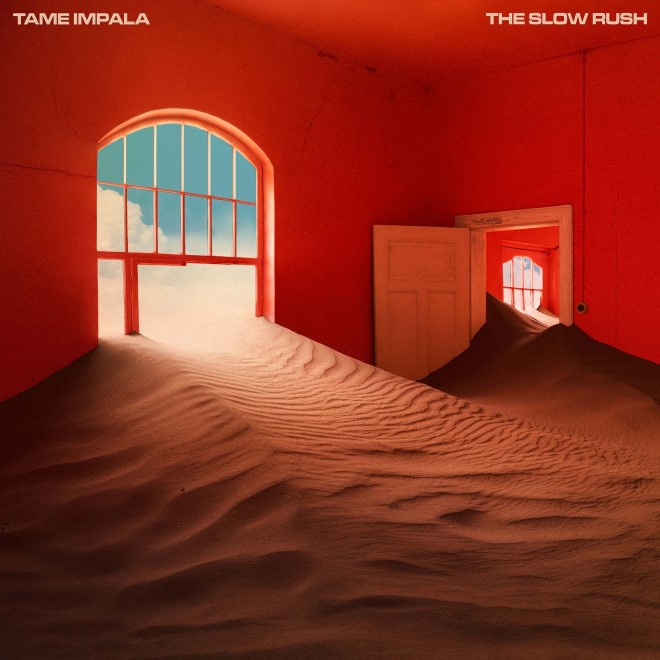
“The Slow Rush” was recorded between Los Angeles and Parker’s studio in his hometown of Fremantle, Australia. The long-awaited 4th full-length album from Tame Impala

The twelve tracks were recorded, produced and mixed by Parker. “The Slow Rush” is Parker’s deep dive into the oceans of time, conjuring the feeling of a lifetime in a lightning bolt, of major milestones whizzing by while you’re looking at your phone, it’s a paean to creation and destruction and the unending cycle of life. Parker told the New York Times earlier this year, “a lot of the songs carry this idea of time passing, of seeing your life flash before your eyes, being able to see clearly your life from this point onwards. i’m being swept by this notion of time passing. there’s something really intoxicating about it.” the album cover was created in collaboration with photographer Neil Krug and features a symbol of humanity all but swallowed whole by the surrounding environment, as though in the blink of an eye. in the last six months Tame Impala have headlined multiple major festivals including Glastonbury, Coachella, Primavera, Lollapalooza, Acl and more. he debuted two new songs on Saturday Night Live and sold out arenas around the world including two nights at New York City’s Madison Square Garden.

“A lot of the songs carry this idea of time passing, of seeing your life flash before your eyes, being able to see clearly your life from this point onwards. I’m being swept by this notion of time passing. There’s something really intoxicating about it.” – Kevin Parker

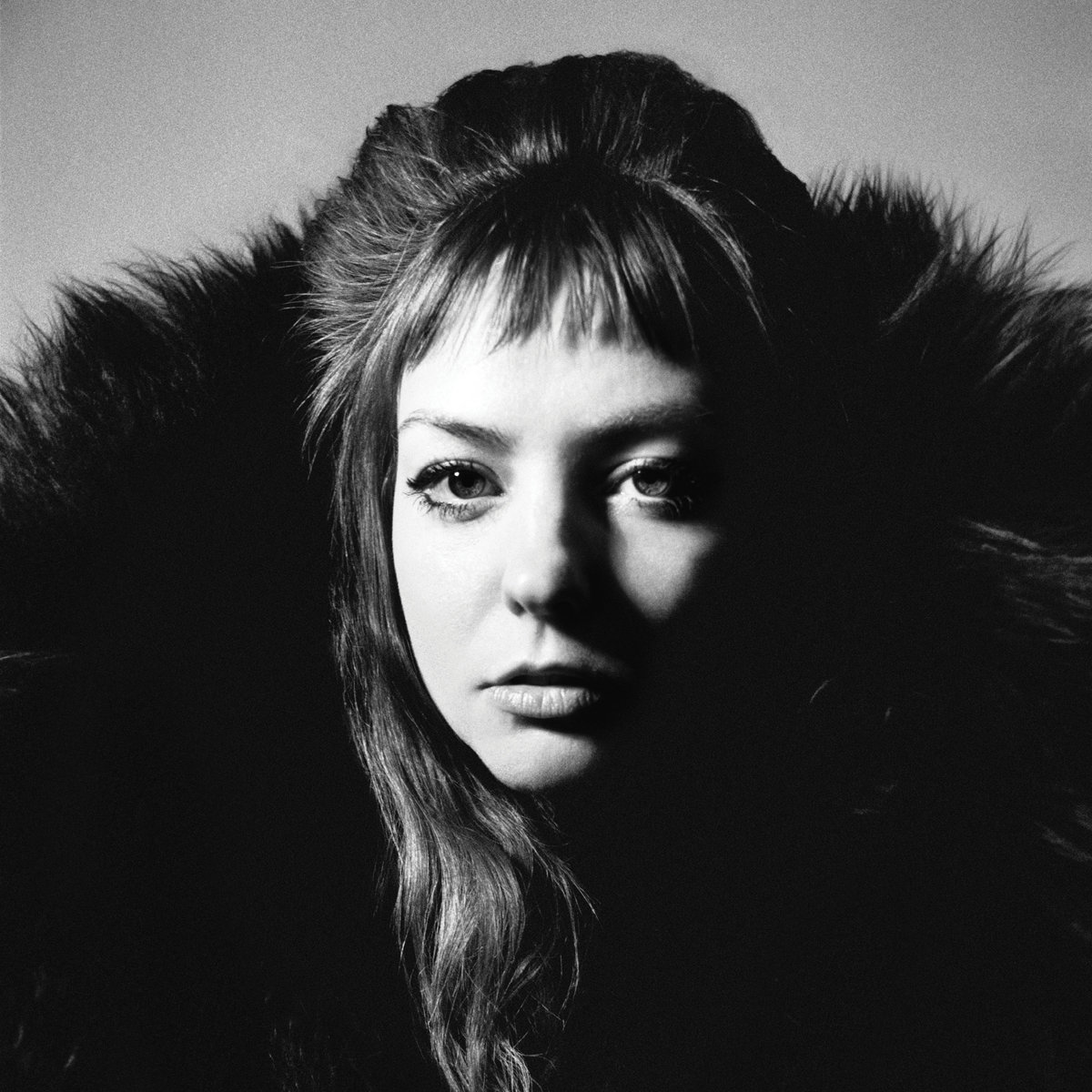
Angel Olsen  “All Mirrors”, her fourth and quite possibly most anticipated release to date. Described by Angel as a record about, “owning up to your darkest side, finding the capacity for new love and trusting change”,

“Lark” Clocking in at over six minutes, and featuring an 11-piece string section, could easily be mistaken for Angel at her most bombastic and impersonal, yet there’s another side to Lark hiding beneath the dense arrangements. “Hiding out inside my head, it’s me again, it’s no surprise, I’m on my own now”, for all the grandeur, this is Angel at her most personal and insular. It’s a track that almost feels like being trapped in your own head, there’s a claustrophobia to the strings and the repetitive pounding drums, yet at the centre of it all is a singular voice, whether accompanied by John Barry-like strings or a meditative Velvet Underground-like pulse, it’s always that voice, above all else, that demands your attention. It may lack the instant sugary thrills of Shut Up Kiss Me or the raw angsty charms of Hi-Five, yet as Lark slowly worms into your brain, it already feels like Angel’s finest work to date.

From her very earliest recordings, Angel Olsen has mined drama from her relationships with physically present but psychologically absent partners. Across her often-brilliant catalog, the Asheville singer/songwriter has sung candidly about staying with these partners despite recognizing their awful qualities.

“All Mirrors” is out October 4th via Jagjaguwar Records.

“Lark” by Angel Olsen from ‘All Mirrors’ out October 4th on Jagjaguwar Records.

No photo description available.

Caroline Polachek, formerly of the band Chairlift, has released her first record under her own name, “Pang”, following albums in 2016 and 2017 as Ramona Lisa and CEP. Singles, “Door,” “Parachute” and “Ocean of Tears,” take her elastic voice to new heights, leaning into an experimental-pop aesthetic with the help of PC Music producers A. G. Cook and Danny L Harle.

After a handful of pop songs in the past decade—think “Teenage Dream” or “Run Away With Me”—bottle the lightning feeling of whirlwind love perfectly, the sound of a saxophone horn or a vocal swell sublimating the yearning of a new romance. “Pang”, Caroline Polachek’s first solo album under her own name, stretches out that feeling, eking out the intricacies of feeling simultaneously liberated and trapped by the feeling of being overwhelmed by someone else. It’s a big task, but Polachek might be the ideal candidate, an indie darling who shaped her last band Chairlift’s pop origins into big-budget, emotional cinema to brilliant effect.

Polachek’s vision of pop is a sprawling bricolage that unifies and distorts Kate Bush’s singular baroque pop, PC’s poreless, glistening electronic experiments and an immense, nearly overwhelming spaciousness takes over Pang, which is intricately produced and layered with resplendent, noise and sound unspooling around Polachek, whose vocals, immaculate and exacting, are amplified and crushed by reverb and vocoder.

On Pang, the heart is an unexplored cavern begging to be mapped out and illuminated: Its gems, crevices and fault lines are on full display. At times, Pang is bogged down by the sheer volume of remorse in venturing toward Joni Mitchell’s Hejira. A spare marimba amplifies the melodrama of abandoning a just-fine, otherwise-stable commitment in the plaintive, acoustic waltz of “Look at Me Now.” She sings of feeling like “a butterfly trapped inside a plane” on trap-pop offering “Hit Me Where It Hurts.” Moments later on “I Give Up,” Polachek is leaden and weighed down with a partner who gives her a “list of things about myself to change.”

It’s a far cry from “New Normal,” itself a paean to a new spark, which skitters from country steel pedal to dembow to Mustard-esque vocal echoes, as if itself modulating in real time to adjust to the realm of possibilities that could take place that evening, that week, that year.

The most sublime moments on Pang match the all-cylinders feeling of falling into new love, each neuron so stimulated by the feeling that they threaten to overload and collapse entirely. The divine title track is, at once, twee and lustful, as if The Postal Service were tasked with making a quiet-storm track—the base feeling of unexplored love compounded with each touch of the skin.

Often, the bliss is tempered by Polachek’s neuroticism. The thirst of the immaculate “So Hot You’re Hurting My Feelings” is counteracted by the fear of being too obsessive: While she’s counting the days after her last encounter with a new fling and crying on the dancefloor while their song plays, she brushes it off with a “banana” non-sequitur. Elsewhere, such as on the robot doo-wop in “Caroline Shut Up” and on the harpsichord-meets-two-step of “Hey Big Eyes,” she’s too worried about tripping over herself as she navigates feeling too much with feeling nothing at all

By the end of Pang, Polachek has fully opened up to the headrush of new love—both in the chance that it could devastate, and the very real possibility that it could result in something transcendent. “The parachute, I’ve got to trust it now,” she sighs on album closer “Parachute,” her voice weightless, at ease.

Image may contain: 1 person, text

Halfway through Vagabon’s 2017 debut Infinite Worlds, Lætitia Tamko stepped away from her guitar. The song, “Mal a Laise,” was an exercise in atmosphere, with droning synth loops layered over reverb-heavy vocals murmured in both French and English. It stood at odds with the guitar-centric indie rock production that defined the rest of the record: It was a detour, but it almost felt like a homecoming. Maybe it was. Tamko’s sophomore effort, the self-titled, self-produced Vagabon, is a more formless affair, a cosmic journey through synthetic sounds, lush orchestral suites and lyrical self-realization.

The result is an ambitious album overflowing with generosity and empathy, warm in production and rich in theme, even if it largely lacks the punch that made Infinite Worlds so immediately memorable. But homes are made to shelter aspirations, dreams, fears, anxieties, hopes, doubts. Homes are sanctuaries, and that’s what Tamko has created with Vagabon

Vagabon’s “Every Woman,” from her self-titled album, out now on Nonesuch Records; vinyl out soon:

Image may contain: 8 people, shoes

The New Pornographers new album, “In the Morse Code of Brake Lights”, sharing its first single, “Falling Down the Stairs of Your Smile.” In the Morse Code of Brake Lights released September 27th via the band’s own Collected Work imprint, in partnership with Concord.

The band’s last album was 2017’s Whiteout Conditions, also released on Collected Works/Concord. In a press release the band’s frontperson and songwriter Carl Newman (who also produced the album) says In the Morse Code of Brake Lights is an accidental concept record.

“I was about two-thirds of the way through the record when I began to notice that lyrically so much of it was pointing toward car songs,” he says. “The opening track is ‘You’ll Need a Backseat Driver,’ and that was a metaphor that seemed to be running through other songs, too. Next to the love song, I feel like the car song is one of the most iconic kinds of songs in pop music, from Chuck Berry to the present. There was so much of that throughout it that I started thinking: ‘Oh, no, there’s too many references to cars on this record!’ And then I thought, ‘No, that’s good-people might think it’s a concept album.'”

Of “Falling Down the Stairs of Your Smile” Newman had this to say in the press release: “There are so many songs like ‘the something of love’-you know, there’s ‘The Book of Love,’ ‘The Freeway of Love’…Then I thought of ‘falling down the stairs of your love,’ and I thought, that kind of works. I think it has that element of how do you deal with the ideas of love and happiness in this world right now? When current events are stressful, that makes a stress on people’s relationships, and you’re trying to figure out how to be happy in this loving relationship in this world that seems ugly at every turn, which is not as easy as it seems. So I like the metaphor of love as something that you fall down.”

Almost 10 years ago, The New Pornographers, the band behind one of the best recorded catalogs of the 2000s, released its least enjoyable album, Together. After three near-perfect records out of the gate (2000’s Mass Romantic, 2003’s Electric Version and 2005’s Twin Cinema) and another that’s still really good (2007’s Challengers), the forgettable back half of Together (and a couple clunky arrangements) felt like a potential first step into a downhill slide. So a decade later, The New Pornographers are back on an upward trajectory as the 2010s come to a close. Carl Newman and his motley assemblage of power-pop heroes have not only just released their third straight outstanding album, In the Morse Code of Brake Lights, they’ve continued a killer second act and cemented themselves as one of the great bands of the era. In the Morse Code of Brake Lights is the second consecutive New Pornos album without a handful of songs written and performed by Destroyer’s Dan Bejar, who contributed tunes to each of the band’s first six records. Some will argue his presence is missed—that the band now lacks the variety it once had. That may be true, but the trade-off is worth it: After years of feeling like an experiment, then a hobby (albeit a very productive one) and then a band pulling in a couple different directions, The New Pornographers now have coalesced around Carl Newman and his singular vision. Twenty years into their existence, they seem stronger than ever.

New album ‘In The Morse Code Of Brake Lights’ out September 27th, 2019.

Image may contain: 1 person, standing and outdoor

Although Common Holly’s sophomore album, “When I say to you Black Lightning”, is engaging from its very opening notes, its thesis statement doesn’t arrive until four songs in: “I think we’ve been measured out for pain since birth,” Brigitte Naggar sings on the woodwind-flanked folk rumination “Measured”.

The album, a thrilling experiment in shattering the boundaries between folk, rock and occasionally punk, examines the human capacity to receive, cope with and deliver trauma. A huge leap from Naggar’s 2017 debut, Playing House, Black Lightning is rife with minimally detailed yet fully rendered character sketches, and Naggar’s deftness at seamlessly weaving dissonant guitar lines into her riveting stories elevates her music well above much of the crowded folk-adjacent field.

“When I say to you Black Lightning” out October 18th. This project is funded in part by FACTOR, the Government of Canada and Canada’s private radio broadcasters.

Image may contain: 6 people

Chicago rockers Post Animal have returned with their brand new song “Safe Or Not,” just ahead of their upcoming US tour with Cage The Elephant. This is their first new song since 2018 and brings their guitar-heavy prog-rock sound it’s a slightly more dance-friendly and electronic direction that expands their sonic-palette into new uncharted territories that feel like a natural evolution for them.

Here’s a little bit about the song from the band themselves:

“We wanted to leave the content more open ended for the listener to navigate, but it’s about self reflection. We played around with more somber, serious lyrical content over a particularly dance-oriented song to juxtapose how one may feel internally versus how they’re outwardly portraying themselves in the moment.”

Enjoy a listen to “Safe Or Not” below

“Safe or Not (Extended Mix)” is the new single from Post Animal, out everywhere October 30th, 2019.

DIIV have just released a new album, “Deceiver”, on October 4th via Captured Tracks. This week they shared another song from the album, “Blankenship,” via a video. The tight track is akin to a shoegaze version of Sonic Youth’s “Titanium Exposé,” especially in the guitar sounds. Stout directed the video, which intercuts between the band performing the song indoors and a woman (Savannah Macias) seemingly lost in the desert.

Previously DIIV shared Deceiver’s first single, “Skin Game” . Then they shared another song from it, “Taker,” a somewhat languid shoegaze cut that grows with intensity as the track ends.

Deceiveris the band’s third album and the follow-up to 2016’s Is The Is Are. The band’s current lineup features Zachary Cole Smith (lead vocals, guitar), Andrew Bailey (guitar), Colin Caulfield (bass), and Ben Newman (drums). The album was recorded in Los Angeles in March 2019 with producer Sonny Diperri (My Bloody Valentine, Nine Inch Nails, Protomartyr), which is the first time the band has used an outside producer.