Holly Herndon operates at the nexus of technological evolution and musical euphoria.
On a record of countless voices (both human and AI) and instruments (both real and virtual), Holly Herndon fused the ancient and futuristic to form a hopeful vision for our present. There are crystallizations of her club music on “Alienation” and “Eternal,” stunning chorales like “Frontier” indebted to both gospel and Medieval church music, breathtaking electro-acoustic sound design on “Fear, Uncertainty, Doubt,” and remarkable snapshots of Herndon’s process with glimpses at the AI’s “live training.” At a time when machine learning is viewed mostly with fear, Herndon depicts it more accurately as something young and innocent, something we created — in need of guidance, community, and, yes, love. mind-bending arrangements and ideas that really test the stretch of the imagination.
For the album, she assembled a contemporary ensemble of vocalists, developers, guest contributors (Jenna Sutela, Jlin, Lily Anna Haynes, Martine Syms) and an inhuman intelligence housed in a DIY souped-up gaming PC to create a record that encompasses live vocal processing and timeless folk singing.
Can’t get enough of this album. Holly is a true innovator, and this is one of her most innovative releases.
At first listen, “The Practice of Love”, Jenny Hval’s seventh full-length album, unspools with an almost deceptive ease. Across the eight tracks, filled with arpeggiated synth washes and the kind of lilting beats that might have drifted, loose and unmoored, from some forgotten mid-’90s trance single, The Practice of Love feels, first and foremost, compellingly humane. Given the horror and viscera of her previous album, 2016’s Blood Bitch, The Practice of Love is almost subversive in its gentleness—a deep dive into what it means to grow older, to question one’s relationship to the earth and one’s self, and to hold a magnifying glass over the notion of what intimacy can mean.
As Hval describes it, the album charts its own particular geography, a landscape in which multiple voices engage and disperse, and the question of connectedness—or lack thereof—hangs suspended in the architecture of every song. It is,an album about “seeing things from above—almost like looking straight down into the ground, all of these vibrant forest landscapes, the type of nature where you might find a porn magazine at a certain place in the woods and everyone would know where it was, but even that would just become rotting paper, eventually melting into the ground.”
“Look at these trees/ Look at this grass/ Look at those clouds … Study this/ And ask yourself/ Where is God?” Leave it to Jenny Hval to open an album with words that could’ve been lifted from a self-help mindfulness exercise and turn them into an existential reckoning. The Practice Of Love grapples with all kinds of questions, as any of Hval’s work does. But at the same time as Hval remains thought-provoking, she’s now housed these meditations in futuristic pop songs like “High Alice” and “Ashes To Ashes,” locating an accessibility and infectiousness we might not have ever expected from her. The Practice Of Love is a thing of shimmering beauty throughout, but perhaps this is its most moving takeaway: constant searching leading to new thoughts and new sounds, history and memory and life lived stoking yet another evolution.
From ‘The Practice of Love,’ out September. 13th, 2019. Sacred Bones Records
Among sparsely arranged, deeply personal albums that revolve around the death of a loved one, Mount Eerie’s A Crow Looked at Me got a lot of attention this year, and deservedly so. But do not miss out on If Blue Could Be Happiness, the 2017 LP by Florist, a New York-based “friendship project” (not band) fronted by Emily Sprague, who lost her mother recently and suddenly. It’s not just a mournful collection of gentle indie-pop songs, it is a tiny, welcoming sound world where anyone can enter and feel loved and supported and understood.
It is sonic salve for a heart roughened up by life’s challenges. It is beautiful and calming and necessary. Thank you, EmilySprague. Thank you, Florist.
“If Blue Could Be Happiness” by Florist off the LP/CD/Cassette/Digital album ‘If Blue Could be Happiness’ out on Double Double Whammy September 29th, 2017.
Philadelphia four-piece Empath aren’t your everyday noise-pop band. They masterfully and curiously juggle bubblegum pop sweetness, ear-splitting noise guitar tornadoes, off-kilter synths and ambient nature sound effects. Last year’s cassette EP “Liberating Guilt and Fear” made Paste’s list of the 10 Best EPs of 2018. They intentionally overwhelm with discordant noise-punk rumbling and charm with tuneful pop melodies. You can hear three songs from their highly-anticipated debut album Active Listening: Night on Earth right now, each of them mystifying weirdo symphonies that defy all previously existing musical states of matter—”Soft Shape,” “Hanging Out of Cars” and “Roses That Cry.”
Empath – Roses That Cry ℗ 2019 Get Better Records Released on: 26th April 2019.
“Covert Contracts” rule our world: manipulative relationships, encoded social norms, opaque technologies. “With a covert contract, the trick is that the agreement is only known by the person who makes it,” says Ali Carter, singer and bassist of Philly post-punk trio Control Top. “The other person is oblivious. Consent is impossible. A void of communication opens up a world of misunderstanding.”
In an era of such impossibilities, Control Top—Carter with guitarist Al Creedon and drummer Alex Lichtenauer—rip open space for catharsis. Their explosive songs are a synthesis of varied interests and backgrounds: Carter’s innate sense of new wave melodies, Creedon’s sirening noise guitars, Lichtenauer’s feverish hardcore drumming.
On their debut full-length “Covert Contracts”, the songwriting is fully a collaboration of Carter and Creedon. Carter’s voice thumps and screams and deadpans while her driving, hooky basslines play out like guitar leads. Creedon, also the band’s engineer and producer, balances composition and chaos, equally inspired by pop and no-wave.
With her lyrics, Carter responds to feeling trapped and overwhelmed in a capitalist patriarchy, offering indictments of wrongdoing and abuse of power, odes to empathy and ego death, as well as declarations of self-determination.
These songs hit even harder when you consider how close this band came to not existing at all. Despite being involved in underground music communities for years, Carter didn’t start Control Top (her first band) until age 25. Disillusioned by punk, Creedon had all but abandoned guitar. But Control Top felt exciting, a chance to experiment: to rethink the relationship between guitar and bass and use samplers to add new dimensions. Meanwhile, Lichtenauer had quit playing drums after an abusive situation in a previous band that had ruined playing music for them, and joining Control Top was an opportunity for rebirth.
At once anthemic and chilling, Covert Contracts puts words to today’s unspoken anxieties. Brimming with post-punk poetry for 2019, it’s the sound of agency being reclaimed.
CONTROL TOP is: Ali Carter – bass/vocals Al Creedon – guitar Alex Lichtenauer – drums
As on Side 1, the mics open up into the moment preceding the music, letting our ears wander into the room seconds before the song starts. The light that was dappling on “Morning Is My Godmother” is seen from higher up at the top of the flip, as Bill gives us an airplane song in the grand tradition of Lightfoot and Denver, Chuck Berry and Steve Miller. “747” slips easily into cruising altitude, a staunch full band collaboration, while Bill wanders absently through yearning visions of selfhood before landing us on the moon, “like flies on a mule.” The baby’s head first appears here. “Watch Me Get Married” fills in the patchwork like we’re flipping through a scrapbook. This particular marriage is to cosmic oneness (always the best bet to avoid the divorce courts) sounding like the swelling of true happiness, with the gentlest of oom-pah-pahs suggested in the backdrop. Throughout the side, the twinklings of the firmament are represented by instrumental comings and goings, adding shading and color on an almost line-by-line basis. Never one to dwell overlong on a sweet moment, Bill‘s attention turns to “Young Icarus”, whose fate we thought we knew. Here, the story sounds similar to what Bill once wryly termed “the pornography of my past” or, even further back, the tale of “a teenaged Smog.”
Odd details and signature changes trace this path, a synth flashing peripheral commentary as the old ways of “Ballad of the Hulk” are glimpsed in their death poses. The brevity of these melodies are a microcosm of the album; flowing moments of honey that turn, smoothly abrupt, into other sweet moments, leaving a track in the listener’s mind that grows wider with time. Suddenly, dark clouds blow in. Like a flashback within a flashback, “Released” cracks and groans with mounting angst, a struggle in vacuous space, with Bill spitting out a sharp and disgusted “get fucked” as he silently watches the horsemen of the Apocalypse advance on their trail of corruption.
The acoustics palpably breathe: keyboards suddenly appear, hang translucent in the air, then wink out, and the stretching and crackling of skin acts as a part of the arrangement. At 2:22, this would be the shortest song on a Bill Callahan album, but on Shepherd In a Sheepskin Vest, it is one in a series of epic miniatures; small moments composed of even smaller moments, all fluidly sliding into the next. Bringing us to quintessential side-ender, and one of the barest moments on the album, “What Comes After Certainty.” Over a guitar duet, Bill ruminates on love, lyrically revolving on a carousel that touches on his honeymoon and the dreams of his life and career, opining that they are not magic, but a part of unknowable destiny, and adding, “God’s face on the water/though plain to see/still hard to read.” When the honeymoon is over, this is what we’re left with at best. And for anyone who’s married well, it is very good.
Released in mid-August, Oso Oso’s third full-length could not have arrived at a more opportune moment, brilliantly evoking the lazy afternoons and blazing dusks of a coastal summer’s waning days. Occupying either the lo-fi end of the emo spectrum or one of pop-punk’s scuzzier bandwidths, Jade Lilitri’s songs meander through gorgeously tossed-off chord progressions before settling in as inescapable earworms. The luminescent album intro gradually builds into “The View”’s glorious melody, submitting “Basking In The Glow’s” coming-of-age touchstones. Lilitri’s lyrics capture a young man trying to figure things out at his own pace, and his writing nestles earnest portraits within a relatable universality.
In the title track’s hooky punk there are shades of Ocean Avenue, if Yellowcard were from the tri-state area and less self-pitying; “Dig” conjures early Death Cab, if Death Cab were less self-impressed. The record’s unobtrusive engineering sands down Lilitri’s nasally voice, lending the effect of a vocalist slightly more grizzled than his twenty-six years. “A Morning Song” is perhaps the track which best captures the greater album’s wide-eyed yearning, but in Oso Oso’s case, the journey appears to be the destination.
Oso Oso’s ‘basking in the glow’ is out everywhere.
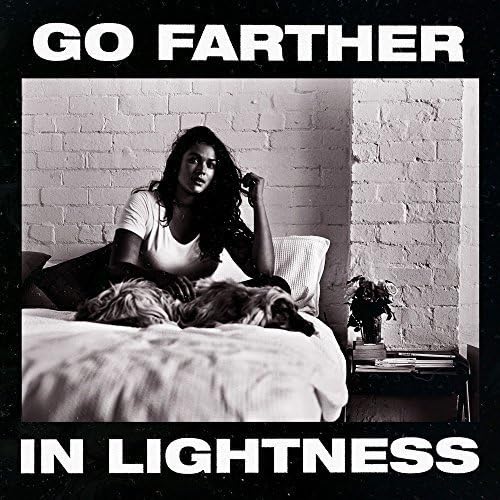
It took me just 37 seconds to realise how great Gang Of Youths when they released their second studio album,album “Go Farther In Lightness” was. that it would be the album of the year. This album was a game-changer for me and this band. With a nod towards the optimism and kindness the band have found by surviving their various ordeals, this record continues the work that has already so indelibly imprinted on fans across the world. Go Farther In Lightness bears the scars of the bands painful history, flashing their wounds with the same candor as The Positions but seeking to draw new lessons from their struggle to endure. Attempting to compartmentalise the past five years into 16 tracks is no mean feat, but the band come away with songs which encourage listeners to persevere as theyve tried to, empathising with those whove brushed up against death, suffering and loss every step of the way.
Before Go Farther In Lightness, I hadn’t really paid Gang Of Youths a whole lot of attention but as soon as I heard the opening lines of Fear & Trembling and Dave Le’aupepe’s vocals I knew they were a band for me. At the album’s heart though, it’s Le’aupepe’s candour that draws listeners in and holds them tight. This is the type of music that makes you want to keep living. Even when you feel like all hope is lost.
“Go Farther In Lightness” will also prove that frontman Dave Le’aupepe as one of Australia’s foremost songwriters” and it’s a sentiment I stand by. It’s also become very apparent given the attention the group have received since the album’s August 2017 release. Foo Fighters and Mumford & Sons don’t pick you as stadium tour supports without good reason, you know? Counting Crows’ Adam Duritz also called them the “best fucking band in the world right now”.
This an album of earnest, honest and vivid lyricism from Le’aupepe, paired with striking and varied arrangements from guitarist Joji Malani, keyboardist Jung Kim, bass player Max Dunn and drummer Donnie Borzestowski that draw on everything from Bruce Springsteen to classical music.
”The whole point of Go Farther In Lightness was to make, and is to make, the arc of my life, more or less, about the process of repairing, the process of being more human, more empathic, more authentic to myself, more aware of the people around me, more aware of the world. To open myself back up to love and back up to life and try to negate the things in me that are life negating.”
Last year they broke venue records in Australia with their epic Say Yes To Life tour, which saw 21 shows, the launch of their own festival and thousands of people in attendance.
Whitney’s debut album, “Light Upon the Lake”, came out on June 3rd, 2016. It was the kind of record perfectly suited to early June, its sunny guitar riffs personifying the promise of summer: the parties, the road trips, the romances. The now indie classic began with an ode to loneliness on “No Woman,” but it quickly transitioned into something more hopeful, the search for golden days on the open road in a “trash heap two-seat” with nowhere to go. The duo, made up of Max Kakacek and Julien Ehrlich, reveled in the unknown and found happiness in spontaneity.
This year Whitney has returned to delight us with its delicate indie folk ambient sound. Its soft and enveloping music seems to be designed for rainy afternoons of tea and blanket. In his album time seems to pass slowly between very bright everyday places. Although critics agree that this new work has been little risky and has lost some of the freshness of its first album, it is still an exquisite album.
In contrast their new album, “Forever Turned Around”, is the Chicago band’s follow up (which finally sees the light of day on August. 30th embodies the very end of summer.
That auspicious romance didn’t quite work out the way they had envisioned it when pulling out of the driveway—it’s now dissolving right in front of them. Lyrics like “You’re still a friend of mine while you’re drifting away” (“Friend of Mine”) or “Tears are falling one by one / I can feel you giving up” (“Giving Up”) have replaced the wide-eyed optimism of their debut. Forever Turned Around is the reality to Light Upon the Lake’s expectation—summer is over and with it, the fling that defined it.
Forever Turned Around is like the return of a good friend you’ve not seen for some time – but there’s something lost or broken.
There’s always been a wistful melancholy coursing through vocalist/drummer Julien Ehrlich and guitarist Max Kakacek odes but where Light Upon The Lake was a wide-eyed love letter to the future Forever Turned Around seems more of sigh to what’s gone, and will never be rekindled.
There’s genuine sadness and longing in Ehrlich‘s beautiful falsetto. See the way he coos desperation in Valleys (My Love), “There’s gotta be another way, I’ve been on my own all day, pretending everything’s alright, we’ve been drifting apart sometime.”
This feeling is echoed right across Forever Turned Around‘s instrumentation as their folksy-pop doesn’t effuse the bright spark of their debut, instead it is replaced by a pensive, mournful or downright sorrowful tone – see intro and lead single’s Giving Up‘s tearful waltz before their characteristic introduction of brass brightens up the narrative in the final third.
Equally downbeat are the final three tracks which neatly segue into a triptych of soulful blues; Day & Night with it’s swoonsome guitars aligned to lyrics about drifting and feeling strange, Friend of Mine which takes The Band‘s template of Americana wrapping delicious harmonies around a longing ragtime tune before the title track’s closing statement: “Has your heart grown heavy by now, because mine’s already on the ground,” sums up the album’s over all feel.
There are, however, brighter notes – the brass-to-the-fore instrumental of Rhododendron plays on their superlative nature as a tight-ass live outfit before fading out way too soon. While Before I Know It is a simply gorgeous track uplifted by a final flourish of lush sweeping orchestration.
By taking the same approach as their quite magnificent debut, Whitney have repeated that blueprint, yet with thinly layered woe Forever Turned Aroundis a without a doubt a more difficult listen which will inevitably underwhelm some of their fan base.
That said, there’s few bands out there who can create such beautiful timeless music as this and make it seem so easy. Expect tears.
Forever Turned Around, the new album from Whitney, out August 30th, 2019 on Secretly Canadian Records.
Perfectly imperfect – that’s one way to describe Los Angeles based punk act, The Regrettes. Writing songs that proudly bear a brazen and unabashed attitude in the vein of acts Courtney Barnett or Karen O – with a pop aesthetic reminiscent of 50’s and 60’s acts a la the Temptations or Buddy Holly – the LA based four piece create infectious, punk driven tracks.
Lead by outspoken frontwoman, Lydia Night, and comprised of Genessa Gariano on guitar, Sage Nicole on bass and drummer Maxx Morando, the group have left the LA rock scene floored, managing to capture the hearts of jaded rock critics while opening for acts like Kate Nash, Jack Off Jill, Bleached, Pins, Deep Vally and more. With nothing but demos available online, the group are already beginning to generate hype, from outlets like NPR, and with NYLON already heralding them them as a “punk act you should be listening to”