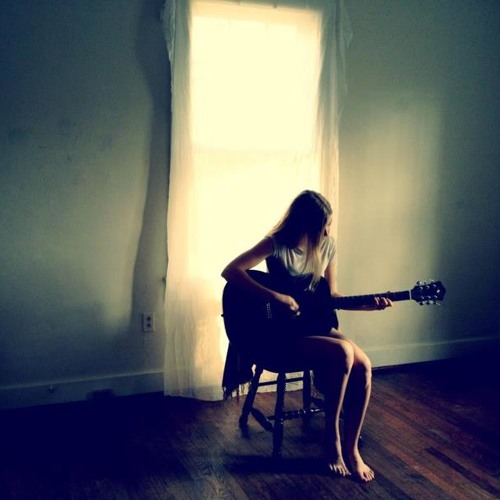
Deradoorian (full name Angel Deradoorian) is releasing a new album, “Find the Sun”, on September 18th via ANTI-Records. She shared another song from it, “It Was Me,” via an animated video for the track. Rebecca Hac directed and animated the video.
Find the Sun was originally due out May 22nd, but in April it was pushed back to September 18th due to COVID-19 Virus.
Previously Deradoorian shared Find the Sun’s first single, the seven-minute long Krautrock-inspired “Saturnine Night.” She also shared a video for “Saturine Night.” Then she shared another song from the album, “Monk’s Robes,” via a video for the track.
Deradoorian was formerly the bassist/vocalist for Dirty Projectors. Find the Sun is the follow-up to her debut solo album, 2015’s The Expanding Flower Planet, and 2017’s Eternal Recurrence EP.Find the Sun was recorded with Deradoorian’s friend and percussionist Samer Ghadry, along with Ghadry’s frequent collaborator Dave Harrington.
“Overall, a lot of these songs are about trying to reach yourself – how to be your most
brilliant self,” Deradoorian said in a previous press release about the album. “Because we come from a culture that doesn’t actually support this. We are so deeply programmed to obey societal boundaries that we don’t even know the power we contain within.”
The previous press release further describes the song of the album: “Inspired by the freedom of Can and the singing style of Damo Suzuki as well as the influence of Indian spirituality on free jazz masters like Pharoah Sanders and Sun Ra, Deradoorian gravitates to transportive, shamanic sounds on this record, wielding bells, flutes, and gongs in service of a rock record guided by the spirits.”
Summing up the album, Deradoorian said: “Find the Sun is a record to sit and listen to, and ask yourself about your Self.”
Sad13, the new project led by Sadie Dupuis of Speedy Ortiz, shared a new song “WTD?” via Adult Swim Singles. It is the first Sad13 song in three years and the thirteenth entry in this current Adult Swim Singles series.
“WTD?” stands for “what’s the drama?” Quite frankly, it seems like quite a few things.
“It’s about eco-fascism, climate gentrification, and the depopulation of species, caused by human selfishness and industrial greed,” Dupuis says in a press release.
The glittery pop song finds Dupuis playing her first ever sitar solo over buzzy synth layers and gnarly guitar riffs. Zoë Brecher bangs drums on the track while Audrey Zee Whitesides lays down the bass, making it the first Sad13 recording to feature the two members who have previously performed in the live band. The song was tracked at Studio G in Brooklyn with engineer Erin Tonkon (David Bowie, Esperanza Spaulding) and mixed by Sarah Tudzin (Weyes Blood, Illuminati Hotties). Sad13’s last song was 2017’s “Soo Bad” and the project’s last album was its 2016 debut, Slugger (which was considered more of a Dupuis solo album).
Drums by Zoë Brecher
Bass guitar by Audrey Zee Whitesides
Produced & written by Sadie Dupuis, Guitar, synth, sitar, toy piano, cowbell, vocals, etc
WTD?:
Released by Adult Swim Singles, May 18th 2020
Sometimes it takes just one song to be hooked on a new artist. This applies in the case of Los Angeles-based Odessa, a talented singer/songwriter that should definitely be on your watch list.
Her lone track available, “I Will Be There”, has been featured in a couple of commercial and T.V. spots over the past year. In fact, if you search the lyrics, you’ll find a number of people frantically trying to figure out who the artist is, whether they stumbled across it from a Subaru commercial or an episode of ABC’s Mistresses. There just wasn’t much out there on Odessa.
Fear not, the talented singer will finally put forth her debut EP on Aug. 26. “I Will Be There” on its own merits is enough to warrant a purchase of the EP, and there’s no doubt the 27-year-old will pack a vocal punch elsewhere on the release. Once the lead-singer of folk bluegrass group Bearfoot, but her solo stuff has much more of a wider appeal. Her soulful voice is what sets her apart from others and it immediately strikes a chord in “I Will Be There”. There’s no doubt she helped move a number of Subarus.
Interesting Tidbit: She got her first introduction to music by playing the violin and didn’t pick up a guitar until more recently. She played violin on the Railroad Revival Tour with acts like Mumford & Sons, Edward Sharpe and The Magnetic Zeros, and Old Crow Medicine Show. She subsequently toured as a member of Edward Sharpe’s band on violin.
Buttertones get cinematic with new video for “Denial You Win Again” The post-punk ballad is one of 10 tracks featured on the Buttertones’ new album, ‘Jazzhound’. It sounds like something you would hear Morrissey serenade with sexy sadness. There is a charming romanticism in the song, similar to the video that accompanies it.
“We focused the video around two concepts. The first being the state of denial, its duality, as in its ability to make complete and no sense at the same time. The second being that rain looks cool.”
Directed by the Mac Demarco team William Sipos + Sean Campos (aka Distractor), the video plays like a strange art film. You don’t know what the hell is really going on, but there’s some serious feels and well, everyone is quite easy on the eyes.
Without a doubt, the Buttertones’ video for “Denial You Win Again” is full of mood and an alluring cinematic tone. Vocalist / guitarist, Richard Araiza’s sullen croon comes to life and makes your heart skip a beat, while “soaking in that sweet summer rain.” The Buttertones’ new album ‘Jazzhound’ is out now via Innovative Leisure. Truly a fantastic album with the Buttertones reaching new heights and keeping us fully engaged, track-after-track
Soccer Mommy launches the Soccer Mommy & Friends Singles Series, with contributions from Jay Som, MGMT’s Andrew VanWyngarden, Beabadoobee and Beach Bunny. Pre-order the full album and receive each volume as it releases, or purchase each track ad hoc.
All net profits from Bandcamp sales of the Soccer Mommy & Friends Singles Series will be donated to Oxfam’s COVID-19 relief fund. Oxfam is working with partners to reach more than 14 million people in nearly 50 countries and the US to prevent the spread of the COVID-19 in vulnerable communities and support people’s basic food needs and livelihoods. Women and girls usually bear a disproportionate burden of care in a crisis like this one, and Oxfam has a proven record of helping women cope during and recover after these crises in ways that allow them to be safer and stronger than ever.
This is a 2 disc set (Calling Hard Part 1 and 2) that was authorized as an official release as part of the G-Men Bootleg series Volume 1 (Castle Music). The overall package included the 2 calling hard discs as well as the Bullfrog Interlude disc as well. The set was released in 1992 and since it was volume 1 it would imply there was to be more in the series. Sadly Rory’s death in 1994 probably put an end to that. I give these recordings all 5 stars. I’m a huge Rory fan and I’ve heard a lot of his music both officially released and bootlegs and these recordings really capture the live feel of a Rory concert.
The energy is high and his playing is fantastic. I was fortunate enough to see him 3 times before he passed and when I feel like listening to a live recording of his shows these are the ones I go to first. The sound quality is very impressive. I don’t know if they are soundboard recordings but they are of a very high quality. They’re not as slick as his live recording “Stage Struck” which was obviously done for commercial release but any flaws are part of the experience like going to one of his shows. I would compare these to his “Live in Europe” release from 1972, but there’s so much more music. I always love “Live in Europe” but when its done I feel like I want more.
Rory Gallagher – Calling Hard 1 & 2
Recorded Live At Golden Green , April 14th,1974 London
1-1 Messin’ With The kid
1-2 Craddle Rock
1-3 I Wonder Who
1-4 Tattoo Lady
1-5 Stampin’ Ground
1-6 Who’s That Coming
1-7 Bullfrog Blues
Recorded Live At Hammersmith Odeon , June 22nd,1977 London
1-8 Do You Read Me
1-9 Secret Agent
1-10 Calling Card
2-1 Bought And Sold
2-2 Too Much Alchool
2-3 Going To My Hometown
2-4 Country Mile
2-5 Bullfrog Blues
Recorded Live At Middlesex Polytechinic , May 15th,1979 In London
2-6 Shin Kicker
2-7 Mississippi Sheiks
2-8 Do You Read Me
2-9 Brute Force And Ignorance
2-10 Tattoo Lady
2-11 Shadow Play
2-12 Cruise On Out
These discs deliver. I highly recommend this and even though they are hard to find they are worth the effort and the money. If your a Rory fan you wont be disappointed.
Lauren Ruth Ward serves us major psychedelic angst with her sophomore album Vol. II, which dropped with a bang last Friday. After her debut album Well, Hell was consistently praised by the media and fans alike, Ward built high expectations for herself – and then double-downed on them with a killer 1970s inspired alt-rock record. Lauren Ruth Ward‘s Vol. II also differs from Well, Hell in that it was recorded analogue to tape, adding more sonic depth and colour to Ward’s timeless energy. The record’s opening track, “Vahalla”, embodies this tone, with its anthemic rock ‘n’ roll melody elevated by captivating vocals that explode with nostalgia.
Lauren Ruth Ward’s voice might shine most, though, on “Wise Gal”, another headbanger filled with howling female rage that channels the range and attitude of a contemporary Janis Joplin. Both tracks contain a controlled chaos and an immense poignancy that make me sentimental for my peak teenage angst, which apparently never fully dissipated.
That being said, “We Are Grown Ups” reflects Ward’s wide-reaching scope, the song epitomizing folk – but make it punk rock – featuring sweet acoustic harmonies contrasted with powerhouse drums that roll like thunder.
Lauren Ruth Ward fuses so many different styles that her sound is uniquely of the moment and also simultaneously nostalgic. It’s clear why fans and bands alike fell for Ward when she emerged in the Echo Park music scene. Ward was and continues to be a true member of the community, taking time to promote the shows of bands she likes – hailing a diverse group of artists from all walks of the east side. Echo Park folk powerhouse Alicia Blue even released a song about Lauren Ruth Ward titled “The Queen of Echo Park”.
Ward has played to sold-out crowds in the U.S. and overseas, sharing stages with artists ranging from the Yeah Yeah Yeahʼs, Shirley Manson, Eddie Vedder, LP, Shakey Graves, and Liz Phair to Keith Urban. When sheʼs not on the road, sheʼs either recording with her new side project, Aging Actress, formed with Chris Hess, singer of LA band SWIMM, or cutting and dyeing hair.
Lauren Ruth Ward has brought a new life to the alt-rock genre, providing a much yearned voice during a lawless time in which we’re all erupting with emotion. While Ward’s U.S. headline tour has been *cancelled* due to the current global health crisis,
Lyrics written by Lauren Ruth Ward, Guitar written by Eduardo Riviera
Since the announcement of her upcoming new album, ‘New Truth,’ musician Jenny O has released a new single every two weeks, dropping most recently “Even If I Tried,” a 60s pop adjacent banger that revels in its newfound confidence as the single captures the sentiment of a person whose finally said “F You” to all the nonsense and toxic people.
“I’m in mono now forever / It was there and now it’s gone” Jenny O. sings on the opening track to, and debut single from, New Truth, her first LP since losing hearing in her right ear. This shrugging happenstance tends to populate much of the rest of the album, which often touches on the recent memory of a soured relationship, as well as the performative and totally meaningless conversations we suffer through on a daily basis.
In spite of this state of resignation, though, New Truth has a much-needed calming tone to it, with O. delivering smooth layered vocals over chilled-out guitar solos. Even if the playful details were omitted from the final recordings—such as the “Muppet background harmonies” on “God Knows Why” detailed below—the songs all still feel breezy, especially with the help of the newly published “Old Habits” video.
Finding the perfect balance between an upbeat melody and more serious lyrics, “Even If I Tried” sounds at first like a tune that could have been pulled right from the feel good catalogue of a California coast band straight out of the 1960s. Dig deeper, and this psychedelic pop song unfolds as it follows one person’s realization that the people letting her down will never change.
“Everyone knows somebody who is always a critic and just won’t listen. Often those with the strongest opinions have the most uninspired lives,” O says. “People exist this way for years, decades, generations. Fortunately, you can ditch them for supportive friends and a life of curiosity and fun.”
Jenny O’s latest string of singles and subsequent upcoming album come after a label change — O is now with Mama Bird Recording Co. — and since the loss of hearing in one ear. Personal and uninhibited, O notes she is back doing what she loves as she continues to push her music to new places.
1. “God Knows Why”
Well, I lost most of the hearing in my right ear so I wrote this after that happened. Each verse is about a different inexplicable event. Originally it had really funny Muppet background harmonies, but they were fighting with the guitar so in the end I took them out. They still make me laugh in their absence and I can’t wait to do them live sometime.
2. “I Don’t Want to Live Alone Anymore”
I had been living alone for a few years when I wrote this. I’m amused by the effects of solitude and obsessed with the arrangement of my few possessions.
3. “Color Love”
I want this song to feel like getting in a small boat with a partner and rowing all night through a dimly lit, rainforest-river kind of Disney ride, with creatures and plants and thousands of stars. I imagine we both have to work in the morning, but we’ve managed to have this night for ourselves. It’s about growing-old-together love, and how lucky that is, and how important it is to always be maintaining it and not take it for granted.
4. “Old Habits”
This is the crux of it all, the journey. Trying to improve or connect, missing, trying again with insight, missing differently, and on and on. We can transform, and decades later we can still mess up. The key is to enjoy and be in awe of the unending process. Also, what’s funny to me is while I was first writing it, it felt like a distraction. I was trying to finish all the songs for New Truth and I kept hearing this one and playing it, just chords and melody, searching for lyrics, but felt like I should be working on another one that was closer to being finished. It was weeks before I realized it was important for the record and, in fact, a favourite. How stupid it is to feel guilty when working on one song over another.
5. “What About That Day”
This is about looking back at a romantic day after a relationship has soured. It’s over—the actual day-to-day has been wrought with conflict. The only reason it went on so long was because of the magic of that one day. We’ve repeated its memory over and over again.
6. “Not My Guy”
I gave this one a long guitar solo in elegy to the twentieth century (RIP). I can’t wait to play it live with my band.
7. “Even If I Tried”
I wrote this chorus for my last album, Peace & Information, but I couldn’t figure out the verse lyrics until I was writing New Truth. I was excited about achieving my second song ever to start with the chorus. This was, for me, an accomplishment, as I love a pop song that starts with the chorus, but it just never comes together that way. I was crying over a breakup while I recorded the guitar solo, but had to finish the final session—that’s funny to me now.
8. “Small Talk”
I’m awful at small talk. If I don’t simply excuse myself and walk away because I’m overcome with nerves and have a flight response, I try to find something I really do want to discuss, which takes a second, so sometimes I’ll say nothing. I don’t want to just fill space. I find many typical entry questions problematic, so I’ll try to keep some good questions at hand. Everybody is suffering, and I heard that a truly uniting question could be, “In which ways do you suffer?”
I actually tried it a few times with near-strangers. I tried mentioning suffering a couple times on stage, it didn’t work, so I stopped doing it. I still don’t know what to say to an audience. It’s just so absurd to say to a group of people at a concert, “How is everybody doing?” And then everyone goes “Wooo!” Because it’s like, man, someone in here just lost somebody. Someone in here is fighting cancer. Definitely. But we all go “Wooo!” and that’s the same as the cashier asking how you are and you say, “Good how are you?” because what are you going to tell them, “I’m depressed, actually”? I’ve tried that too. It’s all completely fascinating to me. So that’s what this song is about. I want to deepen the conversation. Let’s get into it. I mean, with friends and family. I actually just prefer not to talk to strangers.
9. “Psychedelic Love”
I didn’t really want to put this one on the record, but other people liked it. I was seeking a major love, and at this point I was able to be very specific about what I wanted in a partner. Everybody has different dynamics and desires, but this was a personal spell for me and it worked.
10. “A Different Kind of Life”
Sometimes we spend too long in a situation trying to figure it out—exactly why it doesn’t work, trying to solve some riddle or move mountains, and I am here to say stop doing so much math. Some things line up and others don’t. Things can just flow, and you can expend energy more efficiently. An easier, more peaceful life is around the corner.
11. “Hard to Say”
This is written about finding oneself around someone new while still hurting over something else that just ended. Trying to describe that—not quite heartbroken, I wouldn’t really call it “love” because it never really got there, it was something else. And now it’s over, and I’m hurt, but there’s this new person (that’s who I’m singing to). And I’m struggling to be present but I don’t want them to leave. It’s sort of an emotional purgatory. Moving on can heal us, but if we haven’t sorted out or learned from what just happened, we might destroy the new thing.
12. “Seek Peace”
This is a meditation for trying to do right in the world while trying to survive. Asking some questions I have to keep asking. I was pretty blissed out after recording all the vocal parts. New Truth is coming to terms with my deaf ear,” shares Jenny O. “It’s any new accepted reality. It’s the hilarious way I wore my hair for a week before cutting it away from my face,” says O. The songs are as personal as ever–continued misadventures of an introvert in Hollywood. I think it’s relatable – heartache and epiphany – I hope people like it?”
The official music video for Jenny O.’s“I Don’t Want to Live Alone Anymore”, the second single off her forthcoming album ‘New Truth’, out June 19th on Mama Bird Recording Co.
No Age have shared a new driving, blissfully energetic punk anthem in their new single “Head Sport Full Face.” The song is accompanied by a video that uses archival footage shot by Aaron Rose (director of 2008’s Beautiful Losers) of the band from a decade ago—stitched together into a nostalgic ode to the blistering, anxious sentiments that still pulsate in their music.
“Head Sport Full Face” finds some cathartic escape in its virulent riffs and raw percussiveness, while singer Dean Spunt’s fading cries dip in and out of a pining dreaminess.
Based in Los Angeles, No Age is the noise rock creation of guitarist Randy Randall and drummer/vocalist Spunt, the former being the one who first pieces together the video when Rose emailed them out of the blue the archived video clips. The result is a poignant blending of the band’s past antics and the current uncertainty of pretty much everything around them—and yet the shots of them blasting through punk tracks under dim venue lights to equally voracious crowds is exactly the kind of tonic for such a mess.
“Head Sport Full Face” is already delirious with grimy-meets-melodic soundscapes, but the newly “discovered” video attached to the song pieces together an appropriate reminder of the kind of energy now missing from the world—of crashing together against the heady weight of that wall of sound with a crowd of people around you.
“He said he was going through old hard drives and he found a folder labeled “No Age”. He opened it and found all this footage from 10 years ago. Maybe he was thinking of making a video for us but never did? He sent us a a link to a whole bunch of footage and he had shot on a small hand held digital video camera. I edited it together for the video. After a few round of notes from Dean and Aaron, this is the video.”
How “Head Sport Full Face” music video was made:
Dean and I have known Aaron Rose for years, we played the wedding procession at his wedding.
A few weeks into the Covid 19 quarantine we got email out of the blue from Aaron. He said he was going through old hard drives and he found a folder labeled “No Age”. He opened it and found all this footage from 10 years ago. Maybe he was thinking of making a video for us but never did? He sent us a a link to a whole bunch of footage and he had shot on a small hand held digital video camera. I edited it together for the video. After a few round of notes from Dean and Aaron this is the video.
Los Angeles noisepunk duo No Age will release their new album, “Goons Be Gone”, on June 5th via Drag City and here’s the Fall-esque “War Dance” that may leave your ears ringing till the record’s actually out.
Drag City Inc. Track from “Goons Be Gone,” available on LP/CS/CD/Digital from Drag City on June 5th, 2020.
Jackson Browne has written and performed some of the most literate and moving songs in popular music and has defined a genre of songwriting charged with honesty, emotion and personal politics. He was inducted into the Rock and Roll Hall of Fame in 2004 and the Songwriter’s Hall of Fame in 2007.
Except for a brief period in NYC in the late 1960s, Jackson has always lived in Southern California. His debut album came out on David Geffen’s Asylum Records in 1972. People may talk about Late For the Sky or Running On Empty, but Jackson Browne’s career starts right here with “Saturate Before Using”. In this, his first album, Browne proves to be a mellow musician, but an imaginitive and thoughtful writer.
It’s not often that a single album is sufficient to place a new performer among the first rank of recording artists. Jackson Browne’s long-awaited debut album chimes in its author with the resounding authority of an Astral Weeks, a Gasoline Alley, or an After the Gold Rush. Its awesome excellence causes one to wonder why, with Browne’s reputation as an important songwriter established as far back as 1968, this album was so long in coming. Perhaps Browne acquired performing abilities worthy of his writing skill only after much hard work. Whatever the reason, Jackson Browne is more than worth the years it took to be hatched.
I mention the possibility that Browne has honed his performing skill mainly because of a vocal style that bears a certain resemblance to Van Morrison’s. Browne may well have used Morrison as a model, because that singer’s dynamic phrasing and syntax — with those mid-phrase halts, work-packing and spreading, and drawn-out syllables — are integral parts of Browne’s style, too. The Morrison influence is most audible in “Rock Me on the Water” and “Under the Falling Sky,” with their lilting, gospel-like movement (these two would make excellent singles) but it comes across in subtler ways in several other songs.
But what might have seemed uncomfortably derivative in other hands becomes merely a sound starting point for Jackson; his artistry takes the Morrison elements to a place completely his own. For one thing, Browne’s voice is uncolored except for a bluegrass-nasality; it’s not a particularly powerful voice, either, but it’s quite flexible. That straight-faced, country-boy sound — somewhat akin to Clarence White’s in tone — lends his vocal style an endearing, innocent earnestness that enables Browne to deal with overtly romantic themes without ever coming across as self-conscious or precious.
The songs themselves reveal Browne as a classic romanticist; they’re possessed of that same earnest intensity found in his voice, and their prevailing moods are so strong that singers as diverse as Tom Rush, Johnny Darrell, Nico, and Clarence White can sing them without significantly altering their tone or substance. Browne’s songs, no matter who sings them, seem to have a life of their own. After hearing this LP, it’s clear to me that no one has done them nearly as well as Jackson himself, and it’s not likely that anyone will.
“Jamaica, Say You Will,” the opening track, is an exquisite love song, and it perfectly embodies Browne’s writing and performing approach. This narrative of the relationship between the singer and Jamaica, the daughter of a long-absent sailor. A full-chorded grand piano gives the song a rolling, even motion and a certain austerity of mood. Browne plays his voice off the piano’s restrained tone, soaring up from his own basically understated vocal in mid-verse and chorus. While the music sets the tone, Browne deftly tells the tale, his imagery charged with vivid suggestion. Jamaica and her lover share an idyllic, youthful romance in the high grass of a coastal village, but the singer feels a twinge of apprehension cut into his bliss: “Her father was a captain on the rolling seas,/She would stare across the water from the trees./The last time he was home, he held her on his knee/Told her next time they would sail together, just where they pleased…”
Inevitably, the time comes; the singer laments that one day they’d been hiding from the world together, and on the next, without warning, “They had brought her things down to the bay./What could I do?” And his callow plea in the first chorus to “Fill my empty hours” becomes a plea of teeth-gritting urgency in the third to “Fill my sails/And we will sail until our waters have run dry.” But there’s no chance of his fulfilling his dream, as he’s known all along.
Much of the dramatic force of “Jamaica” derives from its gorgeous choruses. Each chorus builds tension by offsetting its lyrical meter from the movement of the music, so that the first part of each line is packed tightly and the second part is stretched out, as here, in the second chorus:
Harmonies enter at the “Sayyy” section of each of the first three lines, accenting the rush of words that precedes them. All the tension built up by the struggle for balance between the lyrical and musical structures resolves itself gracefully in the even last line. Naturally, Browne’s single-minded delivery drives the tension to even greater heights, and the song soars. It’s as moving a love song as I’ve ever heard.
What’s astounding about this record is that there are a half dozen tracks of “Jamaica”-beauty (“Song for Adam” and “From Silver Lake” are especially affecting), and none of the ten songs is any less than brilliant and lovely. Each has the immediacy of a touch, due in part to Jackson’s first-person approach.
The music is as direct and fluid as the lyrical content. It’s arranged and played with appropriate restraint by a dozen Los Angeles session favorites, among them Sneeky Pete, Craig Doerge (his piano playing is particularly sensitive), Lee Sklar, and Russ Kunkel. David Crosby’s harmonies haven’t sounded this real since he left the Byrds. And although you’ll hear, aside from the standard acoustic guitar, piano, and bass, the sounds of electric guitar, organ, mouth harp, pedal steel, and viola, these instruments are subdued and spread carefully through the ten songs. No one get’s in Jackson’s way — it’s completely his album.
Jackson Browne’s sensibility is romantic in the best sense of the term: his songs are capable of generating a highly charged, compelling atmosphere throughout, and — just as important — of sustaining that pitch in the listener’s mind long after they’ve ended.
Jackson Browne’s sensibility is romantic in the best sense of the term: his songs are capable of generating a highly charged, compelling atmosphere throughout, and-just as important-of sustaining that pitch in the listener’s mind long after they’ve ended.
Don’t miss it.
One of the reasons that Jackson Browne’s first album is among the most auspicious debuts in pop music history is that it doesn’t sound like a debut. Although only 25, Browne had kicked around the music business for several years, writing and performing as a member of the Nitty Gritty Dirt Band and as Nico’s backup guitarist, among other gigs, while many artists recorded his material. So, if this doesn’t sound like someone’s first batch of songs, it’s not. Browne had developed an unusual use of language, casual yet full of striking imagery, and a post-apocalyptic viewpoint to go with it. He sang with a calm certainty over spare, discretely placed backup — piano, acoustic guitar, bass, drums, congas, violin, harmony vocals — that highlighted the songs and always seemed about to disappear. In song after song, Browne described the world as a desert in need of moisture, and this wet/dry dichotomy carried over into much of the imagery. In “Doctor My Eyes,” the album’s most propulsive song and a Top 10 hit, he sang, “Doctor, my eyes/Cannot see the sky/Is this the prize/For having learned how not to cry?” If Browne’s outlook was cautious, its expression was original. His conditional optimism seemed to reflect hard experience, and in the early ’70s, the aftermath of the ’60s, a lot of his listeners shared that perspective. Like any great artist, Browne articulated the tenor of his times. But the album has long since come to seem a timeless collection of reflective ballads touching on still-difficult subjects — suicide (explicitly), depression and drug use (probably), spiritual uncertainty and desperate hope — all in calm, reasoned tones, and all with an amazingly eloquent sense of language. Jackson Browne greater triumph is that, having perfectly expressed its times, it transcended those times as well. (The album features a cover depicting Browne’s face on a water bag — an appropriate reference to its desert/water imagery — containing the words “Saturate Before Using.” Inevitably, many people began to refer to the self-titled album by that phrase, and when it was released on CD, it became official — both the disc and the jewel box read Saturate Before Using