Dublin 4-piece Inhaler their second single of 2020 ‘Falling In’. The track was released at the beginning of the year following ‘We Have To Move On’ but unfortunately it got pushed back due to lockdown and the ongoing pandemic, as did their Irish tour and plans to play some of this summer’s festivals like This Is Tomorrow and Neighbourhood Weekender.
Fortunately, they dropped noisy new track ‘Falling In’, which is taken from their upcoming debut LP and provides some insight into the bands approach to keeping their egos in check with all of their new found glory and success. This theme is showcased in the tracks honest and straightforward lyrics, as well as frontman Elijah’s distinct and familiar voice which shows off his range nicely.
“A shot in the chest / Couldn’t wake you up / You need a human touch / It’s never enough” The track’s sound is more mature, intricate and elaborate than some of their previous releases. ‘FallingIn’ starts off simply with Elijah’s powerful voice over a lively drum beat, then jumps into life with electrifying guitar synths and a muffled chorus. ‘Falling In’ sounds pretty influenced by U2 with its 80’s grooves and euphoric vocals, which is definitely a good thing. The track shows Inhaler’s maturity as they grow together as a band and push the boundaries of guitar lead indie rock.
The soaring single marks another step in the right direction for Irish breakthrough act Inhaler, who have proved their talent and success as a young band without yet releasing a debut album. ‘Falling In’ is infectious and catchy but also proves that Inhaler are evolving with every release, personally I can’t wait to hear what they do next!
Music video by Inhaler performing “Falling In”. Universal Music Operations Limited
With all the crazy stuff going on in the world right now, it feels kinda weird having to make this announcement. We weren’t even sure if we’d be able to. This photo was taken the first time we saw each other in 3 months because of quarantine. But the show must and will go on again someday, and we hope this will resonate with you during these strange times. Can’t wait to share the Album2‘Play With Fire’ coming August 21st, 2020 on Suicide Squeeze Records.
When asked about the meaning of the new album’s title Play With Fire, front woman Sade Sanchez said “Don’t fear mistakes or the future. Take a chance. Say and do what you really feel, even if nobody agrees with your ideas. These are feelings that have stopped me in the past. I want to inspire others to be freethinkers even if it causes a little burn.” The fight against intellectual colonialism wages on, and Sade, Irita and Ellie of Los Angeles psych garage trio L.A. Witch are ready to do some damage. Their 2017 debut pulsed with dark, surfy undertones while maintaining a raw punky crunch in their guitar tones and vocal snarls, a surefire smash if you dug bands like Death Valley Girls, Dum Dum Girls and La Luz.
Their sophomore effort comes out mid-August and you can listen to their brand new single below. Suicide Squeeze has two coloured vinyl variants to choose from, a multi-coloured splatter version limited to 500 copies and a translucent yellow colourway limited to 1000. Smash that ‘buy’ button to get to the goods
The Monterey International Pop Festival and the Summer of Love. Today marks the 53rd year since the historic Monterey Pop Festival took place on the Monterey County Fairgrounds from June 16th-18th, 1967. It was a heady time indeed in San Francisco music history. Bill Graham was holding forth at the Fillmore and Jefferson Airplane’s album “Surrealistic Pillow,” had climbed to No3 on the national charts; the Grateful Dead’s self-titled debut album was riding high as well on the Billboard album chart, and Big Brother’s eponymous debut would be released in September.
Additionally, Quicksilver Messenger Service and the Charlatans were creating a stir with their galvanic live performances at the Chet Helms’ Avalon Ballroom and at the Fillmore. As if to signal the start of the Summer of Love in the City, Scott McKenzie’s anthem “San Francisco (Be Sure to Wear Flowers in Your Hair),” was released in May, a sign that something was happening in the City by the Bay. Suddenly, all eyes were focused on San Francisco’s music scene which had spread out across the country. June began auspiciously with the Beatles releasing their most celebrated record “Sgt. Pepper’s Lonely Hearts Club Band on June 2nd, the Doors’ single “Light My Fire” from their debut album, topped the Billboard Hot 100 chart on June 3rd, and Jefferson Airplane dropped “White Rabbit,” a Top 8 hit from their best-selling album.
There was truly magic in the air. On June 16th, the scene shifted to the Monterey County Fairgrounds for the three-day event called the Monterey Pop Festival, where the future of Rock music was unveiled and over time would take on legendary status. A future who’s who of Rock music anchored by the Big Four San Francisco bands: Jefferson Airplane, Grateful Dead, QuicksilverMessenger Service and Big Brother & the Holding Company, were among the 33 acts in all who performed over the three-day event. Spread out over the beautiful weekend were performances by Buffalo Springfield, Eric Burdon & the Animals, The Byrds, Steve Miller, Country Joe & the Fish, the Mamas and the Papas, Booker T. & the MGs and Otis Redding to name a few.
The signal event was on Sunday night with performances by the Who, Grateful Dead, and the Jimi Hendrix Experience, making its American debut. It was an eye-opening, jaw dropping near finale to climax a weekend of staggering musical importance. The Who opened with “Substitute,” then tore into Eddie Cochran’s classic “Summertime Blues.” After “Pictures of Lily” and ‘A Quick One (While She’s Away),” they closed with an epic performance of their anthem “My Generation,” with Pete Townshend smashing his guitar to bits in what seemed at the time an act of gratuitous violence.
The Dead followed with “Viola Lee Blues,” and a couple more songs and acquitted themselves well but were in the unenviable position of being sandwiched between a rock and a hard place. Jimi Hendrix followed with a performance spectacle of sight and sound, with the flamboyant guitarist and his trusty band, Noel Redding on bass and Mitch Mitchell on drums, creating a sonic assault during its nine-song set, the highlight of which was “Wild Thing,” taking the Troggs hit to another level. Hendrix’s guitar virtuosity had the crowd mesmerized with Mama Cass appearing to be gasping in wonder at what she was watching. Bob Dylan’s “Like a Rolling Stone,” was another highlight. Hendrix topped the Who by igniting his guitar on stage and watching it light up the night. A star was born then and there quickly rising like a meteor to the top! The Mamas and Papas were anticlimactic closing out the festival. But to be fair, no one, no one, could have followed Jimi Hendrix, the overnight sensation heard far and wide…The communal spirit and love vibe suffused the weekend; there was peace and harmony in the air. It was the signal event of the Summer of Love.
Eric Burdon was inspired to memorialize it in his hit “Monterey.” Although the Beatles and Rolling Stones were a no-show, Brian Jones attended as a spectator introducing Jimi Hendrix. And George and Pattie Harrison visited the Haight-Ashbury in August never to return.
The Monterey Pop Festival quickly became a memory, but the music scene in San Francisco was reaching new dizzying heights with virtually every major band passing through town in the next few years on their way to greatness, thanks to Bill Graham and Chet Helms. Cream, Jimi Hendrix, The Doors, Led Zeppelin, Jeff Beck, Jethro Tull, Santana, Rod Stewart, Creedence Clearwater Revival, Crosby, Stills and Nash were just a handful of the hundreds of bands who would appear on stages at Winterland, the Fillmore, the Avalon Ballroom and Fillmore West. San Francisco was the music mecca from which the Monterey Pop Festival sprang and would be celebrated for years to come. It was a heady time indeed, as the mantle passed from London to San Francisco as the place to be, the place to be part of a music explosion heard ‘round the world.
Fifty-three years ago, on 17th and 18th June 1967, Janis Joplin with Big Brother and the Holding Company played their now legendary set at the Monterey Pop Festival, a breathtaking appearance that set in motion the iconic singer’s extraordinary rise to fame.
Genesis Books are proud to announce, in partnership with the Janis Joplin Estate, the forthcoming official limited edition book, Janis Joplin Scrapbook 1966-68 (working title).
Shared for the first time, Janis Joplin’s handmade scrapbook from the years 1966-1968 reveals the singer’s personal record of her meteoric success and the fascinating period of history of which she was a part.
From Janis’s earliest intimate blues gigs in local coffee houses, to her first appearances with Big Brother and the Holding Company, to the band’s breakthrough performance at Monterey PopFestival in June 1967 – which made her a rock star overnight – Janis’s story is remarkable. Throughout it all, she collected posters, souvenirs, press clippings, photographs and records. In Janis’s scrapbook you can see the Port Arthur girl transform into a rock goddess, setting the world on fire with her talent.
In a strictly limited edition of just 2,000 estate-stamped copies, Janis’s scrapbook will be reproduced in facsimile alongside further pieces from her archive. Her memorabilia will be interspersed with quotes and stories from the people who really knew her during that period and beyond, from friends, family and bandmates, to musicians, writers and photographers.
“The harshness of life still weighs on our societies and sinks many young people into a dead end,” says the band in a unified statement. “’Worry’ is a positive energy that Songhoy Blues want to be a ray of hope for humanity. ‘Worry’ is about not stopping fighting because at the very end you will find the light.”
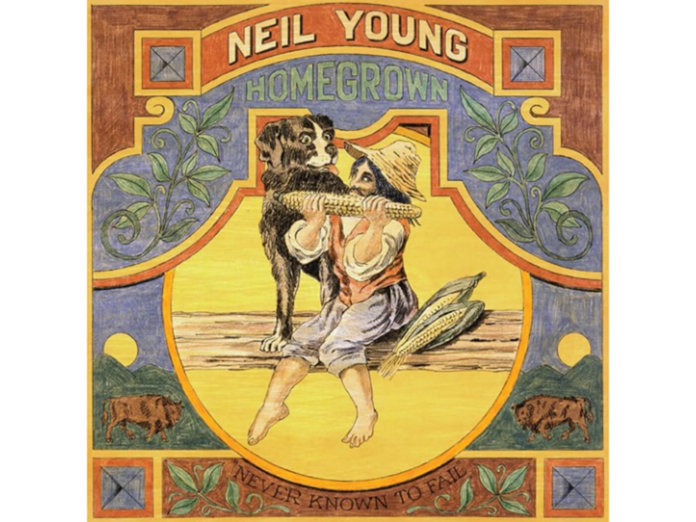
After a Crazy Horse barn tour was cancelled owing to coronavirus touring restrictions, Neil Young devised other ways to perform live music for the masses. Choosing to keep on streaming in the free world, Young envisaged the Fireside Sessions: a “down-home production, a few songs, a little time together” beamed live from his Colorado home. For the inaugural six-song acoustic set broadcast on March 19th 2020, Young pulled a couple of mouth-watering cuts from his sprawling catalogue. There was “Love/Art Blues”, debuted during CSNY’s 1974 tour, and the first solo outing for On The Beach’s “Vampire Blues” since 1974. Young closed the set with another deep cut: “Little Wing”, revived after an absence of over 40 years. A song about a benevolent bird that flies into town each summer, “Little Wing’s” inclusion felt especially timely. Although it appeared on 1980’s Hawks & Doves, its origins lie much further back, on “Homegrown” – one of Young’s legendary ‘lost’ albums, which finally arrives, 45 years late, in May.
Intended as a follow-up to On The Beach, Homegrown was pulled – apparently at the suggestion of The Band’s Rick Danko – in favour of a rehabilitated Tonight’s The Night. Young’s official reason for cancelling Homegrown was that its downbeat mood depressed him. Describing it now as “the sad side of a love affair”, at the time Young may have also felt uneasy about the number of songs about Carrie Snodgress, from whom he separated shortly before recording began. Five of Homegrown’s 12 songs later made it onto American Stars ’N Bars, Decade, Hawks & Doves and Ragged Glory. Among the other seven, several have only been played live a handful of times over the years, while three have never been heard until now.
Superficially, Homegrown resembles Hitchhiker – another ‘lost’ album from Young’s golden era that was finally released in 2017. But while Hitchhiker was a focused snapshot of Young’s creative process, recorded during one night in August 1976, Homegrown had more digressive beginnings. Sessions ran between June 1974 and January 1975 in Los Angeles, at Young’s Broken Arrow Ranch and even in England. The bulk of the work, though, took place at Nashville’s Quadrafonic Sound, where Young recorded Harvest along with producer Elliot Mazer. Reunited with Mazer and Harvest alumni Ben Keith on pedal steel and Tim Drummond on bass, Young also called on future International Harvester drummer Karl Himmel, Hawks/Band pianist Stan Szelest, Emmylou Harris, Levon Helm and Robbie Robertson.
More than just a trove of buried treasure from Young’s fecund ’70s – Homegrown is the missing chapter in his fabled Ditch Trilogy. Ben Keith’s exquisite pedal steel and Tim Drummond’s agile basslines provide a musical through-line; meanwhile, as Young picks through the debris of his relationship with Snodgress, Homegrown displays both the introspective qualities of On The Beach and the vérité nakedness of Tonight’s The Night.
Opener “Separate Ways” begins halfway through a chord, as if the band had started playing a split second before Mazer hit ‘record’. Sparsely arranged for a bare-bones ensemble, Young reflects on his split from Snodgress: “Though we go our separate ways/Lookin’ for better days/Sharin’ our little boy/Who grew from joy back then.” Keith’s pedal steel weeps sympathetically behind him as Levon Helm plays a slow, measured beat. The mood deepens with “Try”, a tribute to Snodgress’s mother, who committed suicide shortly after the couple separated. Here, Young incorporates some of her favourite expressions, including “Shit, Mary, I can’t dance”. Emmylou Harris harmonises on the chorus while Helm’s discreet fills and a lovely, rolling piano from the great Stan Szelest lift the final third of the song. The rainy days continue with the sorrowful “Mexico” – the first of three travelogues – where Young sits alone at the piano, asking, “Why is it so hard to hang on to your love?”
“Love Is A Rose” – familiar from Decade – opens with a supple bass run from Tim Drummond and a blast of Young’s harmonica before settling into the kind of palatable country-folk familiar from Harvest. Then it’s into “Homegrown” itself. Essentially a goofy jam about the pleasures of the herb, the version here is breezier and funkier than the Crazy Horse re-recording on American Stars ’N Bars. It’s welcome light relief before Young drifts back into his cursed fog. On the unreleased spoken-word piece “Florida”, he relates a macabre yarn about a glider crashing into a 15-storey building in the city centre. On this, Young is accompanied by what could either be a saw, a detuned violin or perhaps someone running a wet finger around the rim of a glass – or, more likely, all three.
After the strangeness of “Florida”, “Kansas” is a more conventional acoustic piece. The narrator wakes up to find a companion lying next to him in bed – “Although I’m not so sure if I even know your name.” With its world-weary delivery, “Kansas” resembles one of the more downcast moments from On The Beach, the harmonica motif seeming to reference “Ambulance Blues”. Thematically, it is another meditation on the hollowness of stardom – this transient romantic assignation takes place “In my bungalow with stucco/That the glory and success bought.” With the album’s temperament growing unstable, Young withdraws into “We Don’t Smoke It Anymore” – a strung-out blues vamp that wouldn’t sound out of place on Tonight’s The Night.
Sometime in September 1974, shortly before CSNY played Wembley Stadium, Young and Robbie Robertson recorded a song called “White Line”. You’ll know the electrified version from Ragged Glory, of course; but here, in a simple acoustic arrangement, it casts a note of wary optimism: “I’ve been down but I’m coming back up again.” The guitar interplay between Young and Robertson is warm, complementary – you might wish they’d collaborated musically more often. Meanwhile, whatever positive emotions Young had experienced on “White Line” have evaporated by the time the churning riffs of “Vacancy” start up. This is Young at his most fractious. “I look in your eyes and I don’t know what’s there,” he sings in a sarcastic jeer. “You poison me with that long vacant stare.” Is he addressing Snodgress directly? Or perhaps he’s expressing a broader disdain for the industry sharks and hangers-on around him?
The album winds down with two more acoustic songs: “Little Wing” and “Star Of Bethlehem”. If you squint hard enough, it’s possible to read the former as an allegory about Snodgress – “LittleWing, don’t fly away” – but “Star Of Bethlehem” rages with acrimony and betrayal. A crepuscular ballad, graced with elegant harmonies from Harris, it finds Young at his most merciless: “All your dreams and your lovers won’t protect you/They’re only passing through you in the end/They’ll leave you stripped of all that they can get to/And wait for you to co As with much of Homegrown, a heaviness crashes through the mellow musical vibes.
Had Homegrown been released in June 1975, as intended, would Young’s career be any different? Does this previously missing instalment of the Ditch Trilogy (now Quartet?) alter our perceptions of the releases around it? If Time Fades Away, On The Beach and Tonight’s The Night address the tragedies of Young’s recent past and his disillusionment with the limousine lifestyle Harvest bought him, Homegrown telescopes in on troubles at home – making it the most human of this run of albums. Young’s writing is unashamedly autobiographical in ways it has seldom been since (other unreleased songs from this period like “Frozen Man”, “Homefires” and “Love/Art Blues” further illuminate Young’s inner character). He is bereft, injured, cold – but he also experiences a certain karmic resignation. As he sings on “Separate Ways”: “Me for me, you for you/Happiness is never through/It’s only a change of plan/And that is nothing new.” There will always be heartbreak and loss. It’s the way things are and the way they will always be. It’s Young’s Chinatown moment.
Neil Young puts it best:
“This album is the unheard bridge between Harvest and Comes a Time”.
Recorded between June 1974 and January 1975, Homegrown was intended to come out in 1975 before Neil cancelled the release. The album has remained unreleased until now, achieving a legendary status among Neil Young fans in the process.
The album is made up of twelve Neil Young songs, of which seven are previously unreleased – “Separate Ways,”“Try,” “Mexico,” “Kansas,” “We Don’t Smoke It No More,” “Vacancy” and “Florida” (a spoken word narration). Also included are the first recordings of “Love Is A Rose,” “Homegrown,” “White Line”, “Little Wing,” and “Star Of Bethlehem” – different versions of which would all later appear on other Neil Young albums.
Neil plays solo on some tracks (guitar, piano and harmonica), and is joined by a band of friends on other tracks, including Levon Helm, Ben Keith, Karl T Himmel, Tim Drummond, Emmylou Harris and Robbie Robertson.
Recorded in analogue, and mastered from the original master tapes, this long-lost album is a wonderful addition to Neil’s incomparable catalog.
As made clear already by widely-spread preview track “Kill It In The Morning” and first single “Sick,” The Twilight Sad’s third full-length, No One Can Ever Know, marks a sonic shift for the band. Freshly inspired by a listening diet of Cabaret Voltaire, Can, Liars, Magazine, Autechre, and Public Image Limited, the band turn to a dark, synth-heavy sound for No One Can Ever Know; the resulting LP shares thematic and sonic space with the most innovative offerings from Depeche Mode, The Cure, or even Nine Inch Nails. “We wanted to be a lot more spontaneous, get outside our comfort zone – not to fall back into repeating what we’ve done previously,” explains guitarist Andy MacFarlane. “So we moved to London for a month to record at The Pool and got Andrew Weatherall involved to bounce ideas off and to generally reassure us of the direction we were already progressing in – toward a sparser sound, with a colder, slightly militant feel.”
Under the guidance of Weatherall the band experimented with vintage analogue synths – borrowed from producer Ben Hillier – to work on the core sounds they wanted, finding further inspiration in the distinctive production style of innovators like Factory Records’ Martin Hannett and Cluster‘s Conny Plank.
In recent weeks, musicians have come up with an impressive variety of ways to keep their fans amused during lockdown. There have been online listening parties and Q&As, free guitar lessons via Instagram, live performances beamed direct from bedrooms, DJ sets and kitchen discos. But no artist has risen to the task of keeping their audience occupied quite like Bob Dylan. A crowdpleaser only in sofar as the crowd he attracts would be pleased whatever he did – a significant proportion of his latter-day audience are so partisan you get the feeling they’d be sent into paroxysms of ecstasy if he stood on stage with a comb and paper for two hours, he simply released three new songs. An artist who’s quite literally said nothing new for the last eight years (his last three albums have been comprised entirely of covers from the Great American Songbook, the rest of his release schedule made up of archival recordings).
The first, “Murder Most Foul”, went on for 17 minutes and sounded unlike anything he had previously recorded, a recitation set to a haze of piano, violin and lightly struck drums. The second, “I Contain Multitudes”, was significantly shorter and more conventional – a delicate, percussion-free ballad – but still contained enough lyrical heft to provoke news stories: within a week of its release, the British press was triumphantly reporting that someone had cracked the mention of the Irish village of Ballinalee in its first verse, tapping a Harvard professor to attest that it was a reference to the work of a blind 18th-century poet called Antoine Ó Raifteirí. The third, “False Prophet”, was a ferocious blues song, the latest in a series of adaptations of other artists’ material that stretches back to the dawn of Dylan’s career: this time a 1954 B-side by Billy “The Kid” Emerson, an obscure R&B singer-songwriter once signed to Sun Records. In the lyrics, meanwhile, the search for the Holy Grail jostled for space with characters from old rock’n’roll songs – Ricky Nelson’s Mary Lou, Jimmy Wages’ Miss Pearl – recast in the role that Virgil played in Dante’s Inferno: “fleet-footed guides from the underworld”. Clearly, the task of unpicking everything that was going on in the lyrics would keep Dylanologists indoors long after lockdown ended.
Perhaps more importantly, they were the kind of Dylan songs that brooked very little argument about their quality, the kind of Dylan song you could play to a Dylan agnostic as testament to his continued greatness. This is a category of material that’s been a little thinner on the ground on his latest albums than their more hysterical reviews would suggest: for all the hosannahs thrown in its direction, it was entirely possible to listen to 2012’s Tempest and be alternately thrilled by the furious power of Pay in Blood and faintly mortified by Roll on John, a Lennon tribute that strung Beatles lyrics together in a way that would make Noel Gallagher blush.
Happily, the standard set by the three tracks that heralded its arrival is kept up all the way through Rough and Rowdy Ways. The musical abstraction of Murder Most Foul turns out to be a feint: tellingly it occupies a separate disc to the rest of the album when the whole thing could easily have fitted on one CD. The rest almost exclusively deals in music that hails from the era before Dylan showed up and changed everything: with the possible exception of the lambent penultimate track, Key West (Philosopher Pirate), which carries a faint hint of The Basement Tapes about its sound – albeit with an accordion filling the space Garth Hudson’s organ would have done – everything else feels directly rooted in the 50s or earlier.
There’s a lot of rhythm and blues, while I’ve Made Up My Mind to Give Myself to You sets its utterly beautiful descending melody to a sound that carries traces of both small-hours doo-wop and pre-rock’n’roll pop. The musical inspiration behind Goodbye Jimmy Reed is obvious from its title, but by the third verse, Dylan doesn’t seem to be talking about the titular bluesman so much as himself when forced to face down the various expectations that audiences have attached to him virtually from the moment he first appeared: “They threw everything at me, everything in the book … they had no pity, they wouldn’t lend a hand, I can’t sing a song I don’t understand.”
These are musical areas in which Dylan has worked for years. What sets Rough and Rowdy Ways apart from Tempest or 2006’s Modern Times is the sheer consistency of the songwriting; there’s nothing here that sounds like dashed-off filler, nothing that doesn’t hit home. Dylan nuts have a great line in telling you how hilarious lyrics that seem capable of raising at best a wry smile are – “Freddie or not, here I come”, “I’m not dead yet, my bell still rings” etc – but My Own Version, in which the protagonist turns Frankenstein and builds himself a lover out of bits of corpses, is packed with genuinely funny lines amid the references to Shakespeare, Homer’s Iliad, Bo Diddley and Martin Scorsese, as well as a curious interlude during which Freud and Marx are depicted as “enemies of mankind” burning in hell: “All through the summers into January, I’ve been visiting morgues and monasteries … if I do it right and put the head on straight, I’ll be saved by the creature that I create.”
This is obviously humour of a dark hue: if Tempest’s prevalent mood was one of murderous fury, then here it’s brooding menace and imminent doom. It’s there in the music – the weird tension in Crossing the Rubicon’s muted R&B shuffle and the way the backing on Black Rider keeps lapsing into ominous silence. You lose count of the lyrical references to judgment day and Armageddon, of the mysterious characters that keep cropping up with malevolence on their minds: “I can feel the bones beneath my skin and they’re trembling with rage, I’ll make your wife a widow, you’ll never see middle age,” he sings on Crossing the Rubicon. Of course, grouchily informing the world that everything is turning to shit has been one of Dylan’s prevalent songwriting modes for a quarter of a century – it’s the thread that binds Not Dark Yet, Things Have Changed, Ain’t Talkin’ and Early Roman Kings, among others – but this time the message seems to have shifted slightly: if you think everything has turned to shit now, Rough and Rowdy Ways keeps insisting, just you wait.
This isn’t perhaps the most comforting communique to issue in the middle of a global pandemic, but then the man behind it has seldom dealt in soothing reassurance. And besides, it doesn’t matter. For all its bleakness, Rough and Rowdy Ways might well be Bob Dylan’s most consistently brilliant set of songs in years: the die-hards can spend months unravelling the knottier lyrics, but you don’t need a PhD in Dylanology to appreciate its singular quality and power.
Rough and Rowdy Ways is released on Columbia on 19th June.
I can’t believe it’s been 22 whole years since my self-titled debut album was released into the world!, I see my upcoming album “Unfollow The Rules” as the bookend of sorts to this record. “Unfollow The Rules” was even recorded in some of the same studios as my first album. My new single & music video are out now “You Ain’t Big” is poking fun not only at myself but also the music industry in general. It is straight to the crux of the matter, in terms of being an American Artist in particular.
“You Aint Big” The video uses vintage footage to reflect the classic sound of American country music of the 40’s and 50’s. The opposing images in the video serve to show how different life was for black and white Americans in the 1950’s as it has sadly remained. I think it rings appropriate for this time and professes a certain truth to today. “I originally wrote the song “You Ain’t Big” about the strange fact that in the music business worldwide until recently (our estimation has fallen considerably) no matter how well you’ve done anywhere else, if you couldn’t make it in the heartland of the US you weren’t really considered a true star. Think Little Richard, Elvis, the Beatles and Julio Iglesias. However, in releasing this song now which references states such as Alabama, North Carolina, Kansas (where I have had the pleasure of playing shows) and even New York and California, all troubled places during this tremendously turbulent time nationwide, the term “You Ain’t Big” has taken on additional meanings. The song at heart is apolitical. Its vintage sound harkens back to the classical American country music sound of the 40s and 50s and with the help of opposing images in the video of how different life was for white people compared to black people in the 1950’s, as it has sadly remained, I think it rings appropriate for this time and professes a certain truth.” – Rufus Wainwright
Unfollow The Rules album is right around the corner and there is so much more on the way.
’Damsel In Distress’ is an homage to Joni Mitchell in some ways,” says Wainwright, “particularly the structure. My husband and I now live in Laurel Canyon. I wasn’t that familiar with Joni’s music but Jörn became obsessed and took me on a journey into her music. We ended up hanging out with her and I get now why she’s one of the greats. So it’s part Laurel Canyon, part a song about a personal relationship that I’m trying to come to terms with, but mostly my Mitchell virginity being broken.”
Start the countdown! My new album “Unfollow The Rules” is out in exactly one month! The wait is almost over and I can’t wait to share this full body of work with you.
Rufus Wainwright under exclusive license to BMG Rights Management,Blake Mills appears courtesy of New Deal Records / Verve Records
Recorded at Sound City, United Recording, Mama Froom’s Studio