Archive for the ‘MUSIC’ Category

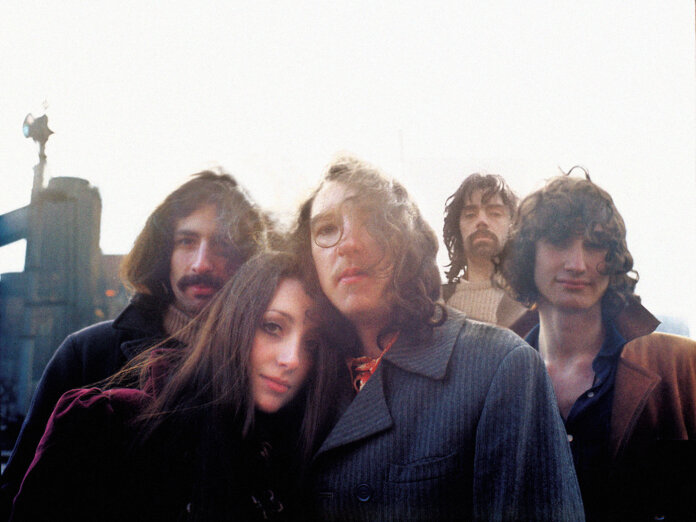
Trad-arr opportunists with freeform tendencies, Trees’ in-concert freakouts often left their cut-crystal-voiced singer Celia Humphris at a loose end. “I used to ‘wiggle’, or dance on the spot, during the long breaks,” she remembers in the sleeve notes to this 4CD anthology of the band’s brief career. “But when we played at Wellington College Boys’ School, one of the masters asked me to stop wiggling as it was ‘upsetting’ the boys. That was when I started to lie down on stage instead.” It was a novel way of shifting the focus to her bandmates, but one fraught with pitfalls: one live extemporisation on the traditional “Streets Of Derry” proved so enthralling that Humphris actually fell asleep.

Enthusiastic – often to a fault – Trees blundered excitably into the new Anglo-weirdy terrain cleared by Fairport Convention’s Liege & Lief, an album that fused a profound knowledge of traditional English folk song with an appreciation for the newly electrified roots sounds of The Byrds, Buffalo Springfield and The Band. Trees, by contrast, were all instinct; they had a cursory flick through the Child Ballads, turned everything up to 11 and exploded into the moment. Founded after guitarists David Costa and Barry Clarke met in 1969, Trees accumulated members quickly; bassist and songwriter Bias Boshell was Clarke’s housemate; drummer Unwin Brown was a Bedales school chum of Boshell’sHumphris was the sister of one of Costa’s workmates. A drama student who had studied opera, she didn’t know much about folk music, but with a piercing voice that could pass as Sandy Denny-ish, she made the grade anyway. By the end of that summer, Trees had a two-album contract with CBS.

Evidently recorded before most of it was written, their debut album The Garden Of Jane Delawney feels like a musical blind date, Trees getting to know each other in real time, and not always getting on. Humphris’ consumptive keen and Clarke’s strident guitar trip over each other as they battle for centre stage on opener “Nothing Special”, while Costa and Clarke deliver competing guitar solos on the trad-arr “Lady Margaret” with Brown absent-mindedly auditioning for Traffic somewhere in the background.

The lyrics to the séance-like title track came to Boshell during his school days, its ‘nothing is real’ sentiment (“The ground you walk upon might as well not be there”) and Genesis-like evocation of toxic Victoriana earning cover versions from Françoise Hardy and ’80s goth softies All About Eve. However, the tinkling harpsichords and sparing accompaniment are atypical of a band that – at this stage – didn’t really do restraint. Their kiss-off “Snail’s Lament” rustles up a collegiate getting-it-together-in-the-country vibe (“Everybody’s got to build a house,” sings Humphris, finding the bottom end of her register) but still fades out with every member trying to snatch the last word.

The Garden Of Jane Delawney was released in April 1970, but Trees were back in the studio to record the follow-up within five months, the intervening time seemingly spent listening to Steeleye Span’s debut album Hark! The Village Wait (released that June) and – at least occasionally – to each other. Having jostled for position a little inelegantly over the course of the first record, Trees benefited from a Bedford-van boot camp, gigging giving them a better command of group dynamics. All Phil Manzanera acid flash on the first album, Clarke’s contributions take on a more measured, Quicksilver Messenger Service tone, his guitar flickering around the edges of songs rather than screaming into centre stage. Humphris also finds a new range, and if she cannot do traditional warhorses like “Polly On The Shore” and “Geordie” with the same conviction as a Shirley Collins or an Anne Briggs, she no longer sounds like she is just impersonating a folk singer

Her two-layered vocal helps make “Murdoch” by far the best of Trees’ self-written songs. Boshell reckons his tale of a mysterious awful up in the mountains came to him in a dream. With a subtle, insistent guitar and keyboard refrain, it’s certainly a piece that burrows into the subconscious, Trees discovering the passage behind the cupboard that leads from After Bathing At Baxter’s-era Jefferson Airplane into Stevie Nicks-age Fleetwood Mac.

However, if their compositions are tighter (opener “Soldiers Three” is a stylish fake medieval round), Trees still yearned to stretch out; their take on Cyril Tawney’s “Sally Free And Easy” bursts its banks to become a 10-minute guitar sprawl, but it’s a mark of their new-found unity that Costa and Clarke queue up in an orderly fashion to decorate “Streets Of Derry”, another spectacular journey from rustic inner space to the wild West Coast.

Thanks in part to its creepy Hipgnosis sleeve, genre perverts tend to rate On The Shore as Trees’ defining statement, but it doesn’t always wear its sophistication lightly; Tolpuddle Martyrs tribute “While The Iron Is Hot” sounds a bit Les Misérables in hindsight, while the inelegantly countrified “Little Sadie” still draws winces from band members five decades on.

Contemporaries, meanwhile, seldom discussed whether On The Shore was a better record than The Garden Of Jane Delawney, CBS unable to drum up much interest in either. Never given another opportunity to record their own songs, Trees soldiered on and off until finally expiring in 1973. Costa stayed in the business as an art director while Boshell found success with the Kiki Dee Band, writing their 1974 hit “I’ve Got The Music In Me” before joining latter-day line-ups of the Moody Blues and Barclay James Harvest. Humphris, for her part, was a big hit on the underground, voicing pre-recorded announcements on the Northern Line.

However, if the individual Trees had more tangible successes later in life, their juvenilia is compelling still. Like the equally ill-starred Mighty Baby, Trees absent-mindedly fashioned a fusion of folk-rock and San Francisco psychedelia. Unsure of whether to be Fairport Convention or the Grateful Dead, they contrived to be both at once: earthy, adventurous, loud. Their more excessive moments may have tested Humphris’ patience, but this is music that makes sense in large, languid doses. Lie back. Think of England. Enjoy.

Extras: 7/10. A hitherto unheard demo of “Streets Of Derry” (with a rather abrupt ending) represents a nice bonus, along with live recordings from Costa and Boshell’s 2018 return to the stage as the On The Shore Band. Other ‘rarities’ are more familiar, though the otherwise unreleased “Forest Fire” – seemingly salvaged from a home recording of a 1970 BBC session – and the more whimsical 1969 demo “Little Black Cloud” are significant additions to Trees’ small canon. Another lost song, “Black Widow”, stems from a brief reunion in the 2000s.

What a record! Every track a noisy gem!,  That raw guitar vibrating my soul like a sonic drone strike into my aural cavity. Since cropping up on the East Coast DIY circuit in 2009, amassing the sort of fervent cult fanbase that gets tattoos in their honour, Ovlov have had to break up a number of times in order to keep it together. Their most recent disintegration, in March 2015, seemed to suggest a greater degree of finality, however, with Hartlett expressing his uneasiness with demanding a full-time-band commitment from the revolving roster of friends and family members that have helped him realize his creative vision. But after redirecting his energies to his other solo project Stove, he returned to Ovlov’s Facebook page in early 2016 to sheepishly announce an intention to reunite the band, “sometimes but not all the time.” Ironically, that commitment to be non-committal has since yielded two years of steady touring, a vinyl compilation of their early EPs, and now, Ovlov’s first proper album in half a decade.

http://

The Band:

Steve Hartlett sang, played guitar, bass & synth on the best of you
Theo Hartlett played drums, sang on stick, guitar soloed on grab it from the garden
Morgan Luzzi played guitar
Michael Hammond Jr. played bass, guitar on best of you
Erin McGrath sang on baby alligator
Michael John Thomas III played a guitar solo on grab it from the garden

Mercury Music Prize nominated Brighton band Porridge Radio have covered Leonard Cohen’s ‘Who by Fire’, which comes from his ‘New Skin for the Old Ceremony’ album. 

“I’ve loved Leonard Cohen since I was a teenager, and when he died we learnt this song in tribute to him,” says vocalist Dana Margolin. “It’s always been a favourite of ours so we were really happy to record it for our session at St Giles’ Church, Camberwell. The lyrics are from the Jewish liturgy for the new year (Rosh Hashana), and this was filmed the same week as Rosh Hashana this year.”  Porridge Radio grew out of Dana Margolin’s bedroom, where she started making music in private. Living in the seaside town of Brighton.

Porridge Radio cover “Who By Fire” by Leonard Cohen, live at St Giles’ Camberwell. Porridge Radio album ‘Every Bad’ out now everywhere

These songs are about mental health and queer struggles. Stand by your friends that are hurting. Harm reduction is the key to safety. Often pinned as a band that has a lot going on,” Teenage Halloween has crafted a sound rooted in abundance. Luke Henderik’s rare and universal lyrics, and the precise ear of engineer Evan Bernard, this newest collection of songs is full of surprises that humbly aims to redefine the modern DIY punk scene.  A joyous vibe of Replacements/Springsteen/The Hold Steady, but young, beautiful and a little punk. It’s short in that good way where you think ‘aaaww, already?’ when it’s over and silence takes over.

Predominantly a gay identifying band, the songs reflect this experience holistically with lyrics that grapple with vulnerability, community, extreme existentialism, mental illness, and gender euphoria. Accompanied by the band’s explosive energy, each song functions as a politically charged anthem. The album maintains constant energy, and that energy also celebrates the bravery of being a queer band. Further, the songs speak in narratives, making sure people are held accountable for their actions and in the same vein, given the opportunity to communicate that self-reflection.

http://

The self-titled debut album Teenage Halloween was recorded by Bernard in Big Mama’s Recording Studio and will be released by Don Giovanni Records in September. Liberated and alive. You can really tell that they’ve developed their chemistry through hard work in the course of playing hundreds of live shows. I guess it’s just a matter of time now before Teenage Halloween are traveling the globe playing their inspiring songs to the appreciative weirdos, outcasts, and societal rejects of the free-thinking underworld. Exciting, hopeful music for challenging times.

The Band:

Luke Henderiks – guitar / vocals / lyrics / composition
Eli Frank – lead guitar / composition / production
Tricia Marshall- bass / vocals / keys
Brandon Hakim – saxophone
Peter Gargano- drums
Jane Lai – piano
Evan Bernard- tambourine / guitar

Released September 18th, 2020 Don Giovanni Records 2020

It probably hasn’t escaped your attention that there was an election in the USA. Justin Vernon’s home state of Wisconsin is one of those crucial swing states, and he’s heavily involved in an initiative called ‘For Wisconsin’ that’s been persuading people to get out and vote.

For today’s final push, Vernon’s  alt project Big Red Machine have released a cover of Aimee Mann’s highly apposite “Wise Up”, fronted by Aaron Dessner and featuring most of the rest of The National, as well as Mina Tindle.

“We recorded this cover of Wise Up,  one of my very favourite Aimee Mann songs, for beautiful Wisconsin. Her lyrics keep coming into my brain these days. The stakes couldn’t be any higher in this election and it may come down to a handful of votes. Text 56005 to VOTE. Thanks so much to Ben, Bryan, Bryce, Mina, Jon, Scott and Justin for joining me.” Aaron Dessner

Rob Moose and I made an EP of songs from “Punisher” with just strings and vocals. Our version of “Kyoto” that Rob says should be played at my funeral is out today, the whole thing is out digitally November 20th, and physically November 27th at Rough Trade records.

The new EP featuring reworkings of four songs from this year’s excellent Punisher album, created with in-demand string arranger Rob Moose (Bon Iver, Paul Simon, Alabama Shakes, The National, Vampire Weekend, Moses Sumney et al).

Copycat Killer is out next Friday (November 20) with the limited-edition vinyl 

.

Limited Edition, Signed & Numbered Live At World Cafe Tiger’s Eye Vinyl (500 available)

Best Coast have a new live EP from a show we played at World Cafe in Philadelphia in early 2020 before “Always Tomorrow” came out. It was the first time we played new songs for fans and the first time we stepped on stage as a full band in a really long time. 2020 obviously went a lil crazy and we were forced to put everything on pause, but we hope this Live At World Cafe EP will make you feel like you’re hanging with us. We have 500 limited-edition signed, numbered vinyl for sale as well as some leftover tour merch, so after listening to the live EP, don’t forget to stop by the virtual merch table lol. found.ee/BC-WorldCafe

Recorded live in February 2020, the album showcases songs off Always Tomorrow, recorded live for WXPN in Philadelphia. Featuring the single “Everything Has Changed”, the album also highlights other cuts from Always Tomorrow, as well as fan favourites “Feeling OK” and “Heaven Sent”.

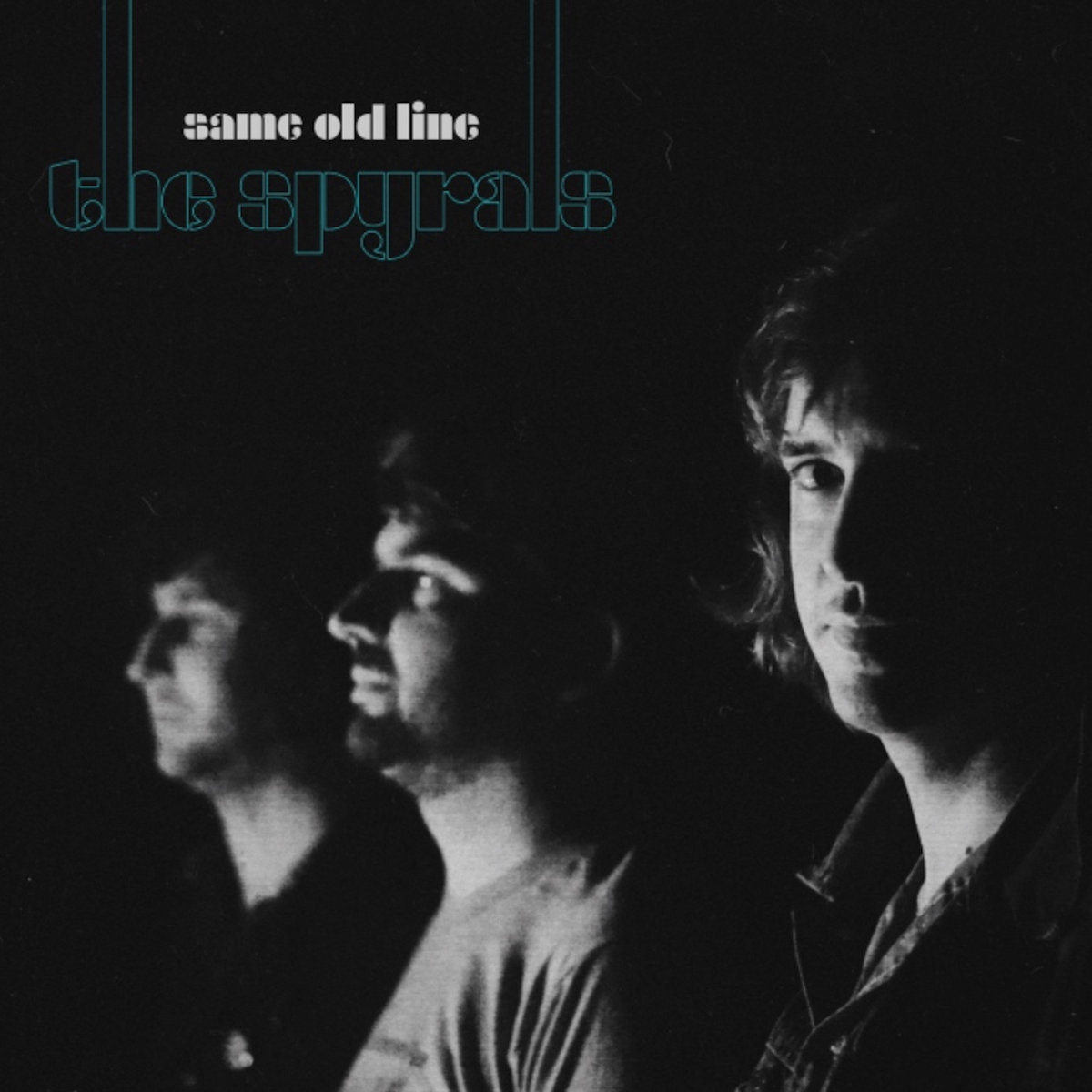
Los Angeles-based group The Spyrals are gearing up to release their new album ‘Same Old Line’ on October 30th. Taking cues from The Velvet Underground, 13th Floor Elevators and The Stooges by way of Neil Young, Bob Dylan and Muddy Waters, the record sees the band carve out eight songs of raw, back-to-basics rock’n’roll that marries white-knuckle garage-blues, psychedelic repetition and sun-baked alt-country to create “something new with an old soul”. The record is their fourth full-length to date and their first since signing to London-based label Fuzz Club.

Armed with a guitar, harmonica and fuzz pedal, band-leader Jeff Lewis formed The Spyrals when he was living in San Francisco in the early 2010s. Now, though, he’s based in Los Angeles and finds himself backed by a new line-up of musicians. ‘Same Old Line’ was cooked up in new drummer Dash’s garage and recorded over the course of a few days and nights straight to a Tascam tape machine. Jeff recalls: “This is the first album recorded with a new line-up after I moved from San Francisco to Los Angeles. At the time of recording we werenʼt sure if this would be a Spyrals album or something under a different name. At some point during the mixing process I decided to keep moving on under the Spyrals name, so to me this album is a real turning point in the band’s history.” The result is a record that’s just as rooted in the sounds of Nashville and the Mississippi Delta as it is the band’s West Coast garage-rock forebears. 

http://

“Same Old Line is a great addition to the blues canon and sits well up against some of the great records of the genre, both by the past masters and their modern acolytes” – Louder Than War

“The latest offering Same Old Line features influences from The Stooges, The Stones and classic era Creedence all distilled through a haze of Crazy Horse smoke and mirrors.” – Shindig Magazine

Nothing like a bluesy thrasher to lift you up and rock your spirits back to life. … The Spyrals are coming in hot with the thrasher blues tunes, their fresh take on a vintage rock ‘n’ roll sound. “ – Backseat Mafia 

released November 14, 2020

20 years ago, Songs: Ohia’s “Ghost Tropic” was released. Here is the original words from Secretly Canadian on the release: The sound movement on Ghost Tropic will seem sudden to some; without warning. To others, it’ll seem a very logical step in a very foreign direction. On its fifth proper full-length, Songs: Ohia has stepped outside the box and has delivered its most subtle record of fantastic depth to date. Indeed this is the most cohesive and “album-like” Songs: Ohia has ever been. The eight songs on the record sprawl out into one another, telling one long sonic tale, allowing very little room for chapter breaks or piss stops. In this regard, Lou Reed’s moody classic Berlin comes to mind as a worthy fore-bearer.

But it’s the strange ethnic flavour in which Ghost Tropic is steeped that makes it stand apart from its predecessors, albums which were all received as crossing guards for the Great American lost highway. Surely this album will leave those expecting such fare scratching their heads. Blending the electro-acoustic minimalism of the David Bowie and Brian Eno Trilogy with the percussive worldliness of Tom Waits’ Swordfishtrombones, the group seems to hop the globe from a British Isles folk rock influence to an Ennio Morricone-like Spaghetti Western feel to the faintest echoes of the Chinese Classical ringing like a death murmur in the distance. And the songs, they build in a slow, unconscious manner, pulsing with an intensity, but never betraying their most simple core with too much instrumentation or calculated progression. Yea! Ghost Tropic is the first album which reveals Songs: Ohia’s own Tropicalia Blues in full bloom.

But what has brought Songs: Ohia to this critical juncture? Perhaps it is purely circumstance — that four men were brought together to play as bedfellows for a week on the great plains of Nebraska. Acted out and recorded at the Dead Space Recording Studio in the state’s capital of Lincoln, Ghost Tropic was performed by principle Songs: Ohia songwriter, singer and guitarist Jason Molina; Appendix Out principle and Ohia alumnus (having played on The Lioness) Alasdair Roberts of Glasgow, Scotland; Lullaby For The Working Class drummer and new Ohia recruit Shane Aspegren; and engineer Mike Mogis of Lullaby For The Working Class and Bright Eyes.

Ghost Tropic is the fifth regular studio album by Songs: Ohia. It was recorded by Mike Mogis at Dead Space Recording Studio in Lincoln, Nebraska. The album’s name refers to two short instrumentals that are surrounded by six vocal tracks of at least five and up to twelve minutes length. The reviews noted the sombre and dark mood permeating the album. According to Pitchfork Media, “Ghost Tropic” sounds as though it were recorded live in a haunted hut somewhere in an Ecuadorian rainforest. At night.” AllMusic was less sanguine: “Everything moves as slowly as a three-legged dog, and anyone neither patient enough nor attuned to Molina’s style of songcraft might very well be put to sleep.”

Bats %e2%80%93 foothills

The Bats release their 10th full-length album, “Foothills”. Spanning the last 38 years, The Bats have clocked nine incredible albums; each one seeing the band evolve with new material from the prolific songwriting hand of Robert Scott. Add to that tally the extra singles, b-sides, EPs, compilations and tribute songs they’ve recorded, creating a succinct setlist is a nearly impossible task. Foothills was recorded in Spring 2018 at a country retreat pop-up studio. At that time, 15 songs were captured and immortalised in the Canterbury foothills of the Southern Alps, Aotearoa (New Zealand). Only too well, The Bats know the possibilities, potentialities and sonic vistas that arise when one takes the reins for the recording process in a beautiful place that’s on home turf.

The Bats must hold a record in New Zealand (perhaps the whole world, once The Rolling Stones throw in the towel) as a band that has survived with the same line-up for 38 years. No split ups, no reforming for nostalgia’s sake. So far, half the band have spots in The New Zealand Music Hall Of Fame, vocalist/ guitarist Robert Scott (The Clean) and bassist/producer Paul Kean (Toy Love), and it’s only a matter of time before lead guitarist Kaye Woodward and drummer Malcolm Grant find themselves in there too. The four-piece has created twisted wistful folk, psychedelic rock, bouncy twee pop, and everything in between, but whatever the genre, their sound is always distinctively, unmistakably The Bats.