Adult Mom will release their third studio album “Driver” on March 5 via Epitaph Recordings. In celebration of the announcement, they have shared the new single “Sober.” The track examines how people’s perceptions of each other change and deteriorate over time, especially in the wake of a relationship gone sour.
On Driver, co-produced by Stevie Knipe and Kyle Pulley (Shamir, Diet Cig, Kississippi), Knipe delves into the emotional space just beyond a coming-of-age, where the bills start to pile up and memories of college dorms are closer than those of high school parking lots. Ultimately seeking the answer to the age-old question posed by every twenty-something; what now?
Over the course of 10 tracks, Knipe sets out to soundtrack the queer rom-com they’ve been dreaming of since 2015. Driver incorporates an expert weaving of sonic textures ranging from synths and shakers to ’00s-inspired guitar tones which convey a loving attention to detail. Lyrically, Knipe radiates an unmistakable honesty mixed with a level of wit and a sense of humour producing intimate yet relatable indie pop songs.
Adult Mom began as the solo project of Stevie Knipe at Purchase College. Adult Mom now falls between the playful spectrum of solo project and collaborative band with beloved friends and musicians Olivia Battell and Allegra Eidinger. Since forming in 2012, Adult Mom has released five EPs and two full-length albums; Momentary Lapse of Happily (2015), and Soft Spots (2017). Knipe writes clever and intimate indie pop songs that offer a glimpse into the journey of a gender-weird queer navigating through heartache, trauma and subsequent growth.
Rhythm Guitar, Keys, Vocals, and Songwriting by Stevie Knipe Drums and Percussion by Olivia Battell Lead Guitar by Allegra Eidinger Bass by Kyle Pulley
Like a shaken can of soda; post-punk/noise-rock from Kaurna Land, Through a juxtaposition of experimental feedback, dissonance and rich vocal harmonies, Placement deliver a ferocious and often partially improvised live show, influenced by performance art. The debut single from Kaurna Land/Adelaide-based group Placement. ‘Harder‘ is an excellent song to introduce us to the band,‘Harder’ bleeds with that “fuck off” attitude we love to hear, with the song written about the unwanted conversations customer service workers have to go through on a day-to-day basis. “At work you often can’t respond as you may want, but instead must provide the customer with a sanitised response to whatever they talk at you. I might not ever have said what I wanted to their face, but I’m saying it now” vocalist and guitarist Malia said of the song.
My favourite part of the song embodies this, coming right after the first chorus – “Get stuck into your daily tour of all the people who can’t say ‘fuck off’ to your advice” followed by the melodic chemistry of the guitars, bass, and percussion that play so well together to drive the themes of the song home. It’s a song to listen to on the way home from work on the busy roads, thinking about all the dense interactions you’ve had that day.
The song seemingly comes to a close at the two-and-a-half minute mark in a crash of feedback guitars and cymbals, before the band bring us back for one more finale, getting you all excited for what the band will bring us next. The track has a post-punk frenzied guitar attack that has an interesting mix of spoken word vocals and a more art-rock vibe, like a cross-between U.S. Girls, Protomartyr, and Dry Cleaning.
Released January 8th, 2021
Vox/guitar: Malia Wearn Guitar/backing vox: Alex Dearman Bass/backing vox: Kim Roberts Clarinet/Sax: Stu Patterson Drums: Braden Palmer
Firestations continue their Automatic Tendencies project with the release of brand-new track ‘The Circular’, which is available on digital services now as well as included as part of Lost Map’s PostMap Club subscription service in February together with two exclusive bonus tracks (‘No Commonground’ and ‘Phantom Fire’). ‘The Circular’ is taken from the forthcoming EP Melted Medium, which will be released on limited-edition CDR with exclusive hand-made artwork as well as via digital services on March 5th, 2021. It represents the second instalment in a trilogy of three EPs, following the release last November of the Automatic Tendencies EP
In 1965, a new band called Jefferson Airplane was making waves in the San Francisco Bay Area. Word reached a famous record producer down in Los Angeles. The following story has never before been published in its entirety. With the news that Phil Spector has passed away, The Airplane recall the full tale of their meeting for the first time.
Marty Balin, one of Jefferson Airplane’s lead singers and the band’s co-founder, had arranged—without the knowledge of the Airplane’s’s then-manager, Matthew Katz—for the band to audition for Phil Spector in Los Angeles. Spector’s sister had heard the commotion about the group up in San Francisco and had called Balin to see if they might be interested in playing for Phil Spector. Being a brand-new band, of course they were!
The call had taken place in the late summer of 1965, barely a month after the group’s first public performance, and just a week after Ralph J. Gleason’s column in the San Francisco Chronicle raving about this new band. A number of record executives were already looking at the group as a possible signing, but none were as high-profile in the industry as Phil Spector. The New York native was still considered the finest pop record producer in America, maybe the world, and had been for a few years. His string of successful records with the Ronettes, the Crystals and, more recently, the Righteous Brothers, was lauded as monumental, and his trademark “Wall of Sound” technique was emulated by dozens of competitors, among them the massively successful Beach Boys and Four Seasons. To be taken under Spector’s wing could be a major coup for the band.
The Airplane, accompanied by Katz, flew to L.A. to meet Phil Spector. What they weren’t yet aware of when they boarded the plane was that Spector was also known to be something of an eccentric, a reclusive character who was notoriously difficult to deal with. In later years, several of the artists he worked with, among them his then-wife Ronnie Spector of the Ronettes, would tell tales of brutal treatment by their mentor. According to recollections from those who knew him, Spector was always surrounded by bodyguards, was rumoured to flash around firearms, and was a taskmaster in the studio. (He would, of course, famously spend his final years in prison, having been convicted of murdering actress Lana Clarkson.)
But here, on September 20th, 1965, was the new sound out of San Francisco, mild-mannered Jefferson Airplane, unproven, unknown and waiting for Phil Spector to size them up. The band members remembered it well. In interviews conducted by this author for his Jefferson Airplane biography, Got a Revolution!, they flashed back to their memorable meeting with the so-called “Tycoon of Teen.”
Jorma Kaukonen (lead guitarist): We went to Phil’s place and of course Phil Spector was [acting like] Phil Spector. We set up in his huge house in Beverly Hills, and I remember he had his bodyguards and the whole deal. He had a…I don’t remember if it was a pellet pistol or a real pistol. Probably was a pellet pistol. He was shooting and stuff. Made me uncomfortable and I left after we played.
Marty Balin: When Jorma and I tried to leave and his bodyguard showed us his gun, we said, “Get out of the way. What are you gonna do? Shoot us?” He [Spector] was a little strange. He was always looking in the mirror and while he was talking to us he was looking at the part in his hair. And then, under this stairway, he had all these drawers that came out, full of all this great grass. And he never offered us one joint. So I looked at Jorma and said, “Man, let’s get out of here.” So he and I walked out. I said, “We can’t take this guy.”
Bob Harvey (original bassist): Matthew wanted him to produce the band. I’ve never seen a more paranoid bastard in my life [than Spector]. I mean, heavies with 45s. He’s out there in space! He didn’t want us in the room where he was at, in the big room, so he had us play out in the hall. And it was pretty strange. But he and [guitarist/singer/songwriter Paul] Kantner hit it off. They talked and talked and talked. The rest of us went back to the cars and packed up the instruments and everything, and he and Kantner talked for another 45 minutes, inside there alone. And it seemed like just because of the rapport that he had going there with Kantner that maybe something was going to happen because of it. If you could put up with his insanity, good things could come out of it. As long as you could cope.
Paul Kantner: It was interesting, given his reputation. But he didn’t like us.
Signe Toly Anderson (original female lead singer): I remember his stone-cold entrance hall. I had to sit there for two hours while we waited for him because he wasn’t available. Excuuuse me.
While they were in L.A., the Airplane also auditioned for several other labels, including Capitol, Columbia and Colpix. Ultimately, they signed with RCARecords, beginning a relationship that would last more than two decades, through changes of style, personnel and even band names. They never saw Phil Spector again.
Another delicate and devastating piece of music from the pen of Big Thief’s Adrianne Lenker. Her deeply affecting, evocative lyrics are potent as ever on the Brooklyn band’s third album, and the music has that same free and unencumbered spirit as their best work in the past.
Adrianne Lenker is here for the journey. On rare breaks in her touring schedule, she travels. It’s a willing itinérance that confirms the singer-guitarist’s rapport with the unknown. “I’ve become very translucent,” she says. “I allow things to pass through me, rather than feeling them hit me, like a defense mechanism.”
Lenker and her band Big Thief has built their reputation on a transcendent live show, where the boundaries between performer and audience evaporate in the wake of Lenker’s vulnerability, words sprouting from her harrowing and beautiful depths. The folk-steeped indie-rock quartet has toured relentlessly since their 2016 debut Masterpiece and its 2017 follow-up Capacity became hits for Saddle Creek, playing hundreds of shows across North America, Europe, and Australia.
“I’m living out of my truck,” Lenker explains. Speaking from that vehicle, parked outside a café in Los Angeles, Lenker explains that life without a permanent home is freeing, but also has its drawbacks. “I’m driving this truck, and it’s a gas guzzler,” she says. “If I could afford it, I’d get an electric car, and I’ve been thinking about converting this one.”
The band’s third album, U.F.O.F., marks their debut for indie stalwart 4AD. Recorded with long time producer Andrew Sarlo at Bear Creek Studios near Seattle, the record showcases the locked-in nature of the band whose communal instinct has been honed by the intimacy of its live show, and the tacit bonds formed from an aggressive touring schedule. Capturing this spirit was essential in the recording process, and the band largely played live in a cozy, rustic room. Big Thief, which includes guitarist Buck Meek, bassist Max Oleartchik, and drummer James Krivchenia. The group will live here together for a month, and eat, sleep, and rehearse for their upcoming tour. But today, the mountaintop hideaway is Lenker’s alone—one in a long line of interim homes for the songwriter, who ditched her Brooklyn apartment three-and-a-half years ago in exchange for a life on the road. “We basically set out on tour and kind of never went back,” she says. “When I’m not touring, I’m just visiting with people, or renting, staying in an AirBnB or a motel. I like it, but the grass is always greener in a way. I think I’m craving a space where I can be still. But I imagine if I had the stillness, I’d be longing for the road.”
“We wanted it to be one big moment of energy with lots of passions,” recalls Krivchenia. Many of the tracks on U.F.O.F. were recorded live—some in just one or two takes—in the studio’s cabin-like main room. “Dom had this focus on the microphones and capturing the sounds of our instruments, so we were able to dance a lot more,” recalls Lenker.
Lenker’s complicated relationship with her life in perpetual motion is one of the many inspiration points behind Big Thief’s latest record, U.F.O.F. Anchored by Lenker’s vocals, U.F.O.F. (the last F stands for “friend”) sounds as expansive as its title implies—a shimmering collection of songs about “the blood and the guts of the human experience and the outward wondering about the mystery of it all,” says Lenker. It’s the most ambitious music Big Thief have ever made. Compared to the band’s last two records, U.F.O.F.’s arrangements are fuller, brighter, and harsher, delivered with the kind of ease that can only come from years of living, working, and creating side-by-side.
“There’s always some element of that alchemy of us playing together in real time, rather than stacking everything,” Lenker says. “It’s important. When a band is actually playing together you can feel it in the recordings.” Though U.F.O.F.is sharp in its instrumentation—drums, bass, and guitars passing through one another with a patterned fluidity—it also exudes spontaneity. Ambient sounds and textures punctuate the songs, and Lenker’s vocals growl and skitter.
Led by Lenker’s stunning, vulnerable lyrics, Big Thief’s songs have the keen ability to command attention. Few do that as well as U.F.O.F.’s opening track, “Contact.” The song begins with Lenker’s trance-like voice and Meek’s droning atmospherics. “It started as this exercise about the movie “Contact,” says Lenker. “I was looking at this heroine [played by Jodie Foster] who was so brave and so passionate, but didn’t receive much recognition, and had to fight through life. She had this deep longing for contact with the unknown—she was so committed to it. I thought it was so inspiring. That’s what I want to be like. Sometimes I feel like I get there, but then sometimes I’m so far from that—I’m caught by the traps of my ego, or all these things that make me feel smaller. That whole beginning section [of the song] is this brooding, numb state—a state I’ve been fighting my whole life. When you’re depressed, you can go to this place where you could be run over and not even feel it. There’s this disassociation from the body. But at the same time, you can see the sun, you can see the wind, you can see all the life around you. You can recognize that there is life being breathed through everything, but somehow you just can’t feel yourself connected to it.”
Around the three-minute mark, “Contact” is jolted from its slow, languid rumination on depression by a jarring onslaught of noise, accompanied by Lenker’s big, blood-curdling scream. “The idea was this person who could sort of see the sunlight through the water, and suddenly they feel this hand on their arm and they get pulled up. Their lungs fill with oxygen and they can feel the joy, they can feel the loss, they can feel the beauty, they can feel the nastiness—they can feel everything suddenly because they’re alive. That scream is suddenly feeling the deepest and oldest wounds. It’s the scream of birth—of being knocked back into life.”
There’s an unexpected bite when she sings the phrase “screaming sound” on the fourth track, “From” (a song that also appeared on Lenker’s 2018 solo album abysskiss). The heart-rending enunciation poured out unexpectedly, and was a point of discomfort at first. “I’ve been practicing trusting the band, even to the point where I don’t always choose my vocal takes,” she says. “Even if I don’t like something, I let go of it if the collective thinks that it’s good. I’ve realized that I’m not a good judge of my own singing.”
Whether you’re losing your mind in the dizzying ‘From’, stomping your feet to the down-home Americana of ‘Cattails’, or bawling your eyes out to the title track – you’re not gonna get through this record without feeling some feelings.
Though her life isn’t tethered to possessions, there are aspects of keeping a home that she misses. “I imagine that if I lived in one place I would have a compost toilet, and would be gardening and cooking my meals, and biking around a lot,” she says. She’s also not remiss about the volume of disposable wares commensurate with life as a working musician. “It’s a pretty wasteful industry that we’re a part of, even making records,” she says. “All the paper products and fliers and water bottles and driving. Not to mention when you play festivals, there are all these products that are offered to you.”
This macro view of the music industry can feel staggering, so for now Lenker is focused on more easily attainable and conscious decisions when it comes to avoiding waste. “When I bring my little ceramic mug made by my friend into the coffee shop, and ask them to please put the coffee in there, I feel more myself,” she says. “It’s little things, like turning off the water when I’m brushing my teeth.” Though it can be easy to abandon these principles when rambling from green room to green room, she feels more grounded when honouring them. “I feel part of the earth in some small way,” she adds. “You can ignore these tiny thoughts, or you know, you can turn off the lights when you leave the room. The small things are really important.”
This spring, Lenker begins playing in support of U.F.O.F., marking the start of fifty tour dates at mid-sized clubs and European festivals stretching into November. She’ll have only July and September off to recharge, and admits that this amount of travel and outpouring of physical and emotional expression can be depleting—but to her, it’s mostly a blessing and an opportunity to connect.
“The only way we can do this is to try to knock walls down with our music,” she says. It’s in this open posture, on the road and in performances, that she’s found her greatest sense of self. “That’s Big Thief in a nutshell,” she says. “We’re digging through all these layers that separate us.”
Listen deeply and allow yourself to be taken by its subtle charms.
We’re excited to announce our new album ’Distractions’ out February 19th on City Slang Records,
A new album on its way, it’s called ‘Distractions’ and we are pretty excited by it. More details to follow but in the meantime here is the first song – A cover version of The Television Personalities‘ ‘You’ll have to scream louder’ from their classic album ‘The Painted Word’ “Late May, early June 2020 was a twitchy and angry time for many of us. There was a growing agitation inside of me.
I woke on a Saturday morning with no plans but just this Television Personalities song going round in my head, it pushed me into the studio.4 or 5 hours later I had made the basis of this recording, though I had to wait for windows of opportunity within our confinement to work with the band to bring it to a conclusion. I have loved the TVPs since buying the Bill Grundy e.p. with its photocopied sleeve on one of my regular after school bus trips to the Virgin record shop in a basement on King Street, Nottingham. Some years later, in 1984, I was living around the corner on the 17th floor of Victoria Centre flats, they swayed in the wind. I was working a few days at a local record shop and The Painted Word was released. It became at the soundtrack to that semi-slum, those times. I was 19. To be young in the early 1980’s there was much to be angry about, battles to be fought – Thatcher, racial and gender injustice – and (one of the motivations for this song) nuclear disarmament. Although we may not have thought those battles were ever won, we believed we had helped push things in a different direction, that changes were made. In the spring of 2020 we were shown painfully that these battles are ongoing.” ‘Hope you enjoy
“Man Alone” was always a journey but I wasn’t expecting it to be such a long one. We made a 6 minute version but it felt like it pulled off and stopped half way to its destination. This was the beginning of a long journey in itself, to find the route needed to complete itself – Probably the biggest challenge a song or piece of music has given us. It was delicate and slippery right up to the final mix – which lasted a week! The song has a strange connection for me to the drum machine, bass guitar and voice combination of ‘Indignant Desert Birds’ – mine and Neils first band when I was 17.
In the back of a London cab driving through the city at night is a very special space for me. It has a particular kind of aloneness. This fascination grew over hundreds of nights leaving the the studio exhausted at 1 am – Ladbroke Grove or St Johns wood, through the city and over the river to South East London in an almost dream state. Retracing that journey, this film became a way of touching the city and the feeling of being both a part of and apart from it. S.A.Staples
Roger Waters has unveiled a new recording of Pink Floyd’s1984 “The Final Cut” track ‘The Gunner’s Dream.’
The track arrives with a brand-new music video. The luscious, black-and-white footage captures Waters playing the piano solo and singing in his home studio, indispersed with footage of his fellow bandmates at their respective studios. The track chronicles the final thoughts of an airman gunner falling to his death during a raid as he envisions a world without war. Roger Waters drew inspiration from a number of real-life events like the bombings of Hyde Park and Regent’s Park.
“Last night I watched the 2013 documentary film The Man Who Saved the World. The man’s name is Stanislav Petrov. The year before Stanislav saved the World in the year 1982 I wrote a song ‘The Gunner’s Dream,’” Rogers shared in an Instagram post. “It’s weird to think that had Stanislav not been in the right place at the right time none of us would be alive, no one under the age of 37 would have been born at all.”
He continued, “It is acknowledged by all but the cretins amongst us that nuclear arms have no value. It is also acknowledged that they are a ticking bomb and we ignore them at our peril,” he continued. “Accidents happen. The Stanislavs of this world are a rare breed. We’ve been extraordinarily lucky.
“If I ruled the world, I would heed the words of the wise. I would get rid of nuclear weapons. First thing tomorrow morning. On Dr. King’s name day. Of course no one can rule the world. The world cannot be ruled. It can only be loved and respected and shared. If we’re still here in the morning.”
Roger Waters: Piano and Vocal Dave Kilminster: Guitar Joey Waronker: Drums Lucius- Jess Wolfe and Holly Laessig: Vocals Gus Seyffert: Bass Jonathan Wilson: Guitar Jon Carin: Piano and Keys Bo Koster: Hammond Wrangled together by Sean Evans & Roger Waters
“dirt” is the latest EP from Hand Habits, the song writing project of Meg Duffy. Sometime guitarist with Kevin Morby
Comprised of two songs, “4th of July,” a simmering swell of chaos and beauty and “I Believe in You,” a favourite of Duffy’s from the Neil Young canon, the EP finds the songwriter exploring themes of growth and finding ways to let go of the parts of their past that no longer serve them.
After cutting their teeth in the upstate New York d.i.y. music scene and several years of session and touring guitar work for Kevin Morby, and a long list of other artists, Duffy released their debut album “Wildly Idle (Humble Before the Void)”, a home-recorded, self-produced work that announced the project as a full-time affair.
While their follow-up album “placeholder” saw them working with producer Brad Cook at Justin Vernon’s April Base Studios and garnering praise from such outlets as NPR which called the work “their most fully realized statement” and the Los Angeles Times which praised the work as a “virtually seamless country rock album, with verses moving fluidly into choruses that travel unimpeded across sparkling, architecturally sophisticated bridges.” dirt showcases an artist returning to the fertile creative ground of their home.
However, this time around home-recording didn’t necessarily mean working in isolation. Duffy had relocated to a shared living situation in Los Angeles with musicians Sasami Ashworh and Kyle Thomas (King Tuff), which also housed Thomas’ studio. The resulting songs showcase this creatively collaborative environment, with Ashworh co-producing the lead single and Thomas co-producing “I Believe in You.” Such is the strength of this relationship, in fact, that this new single just may serve as a bridge toward a greater body of work the three will ultimately create together.
The resulting EP illuminates the songwriter’s attempts to evolve beyond the confines of their past. As they put it, “‘4th of july’ feels like trying again, rolling around in the wreckage of the past and finding new ways out of the maze of memory.”
The sonic texture of the song complements this lyrical journey, with a simple and sparse introduction marked by a slow burn crescendo hinting at the rupture to come, followed by an ecstatic wail of transcendent emotion. Fittingly, it concludes with a reprise of the beginning but this time altered by new sounds, suggesting a new perspective.
Similarly, Duffy breathes new life into the Young staple, adding a foreboding weight and impact to the long-familiar words. For Duffy, the process of recording and the song’s themes of growth through trust dovetailed perfectly.
As they note, “There’s a foundation, and when there’s a foundation there’s opportunity to reimagine structures; physical and otherwise.”
Also check out this Session Meg Duffy performed for “Aquarium Drunkard’s Lagniappe”
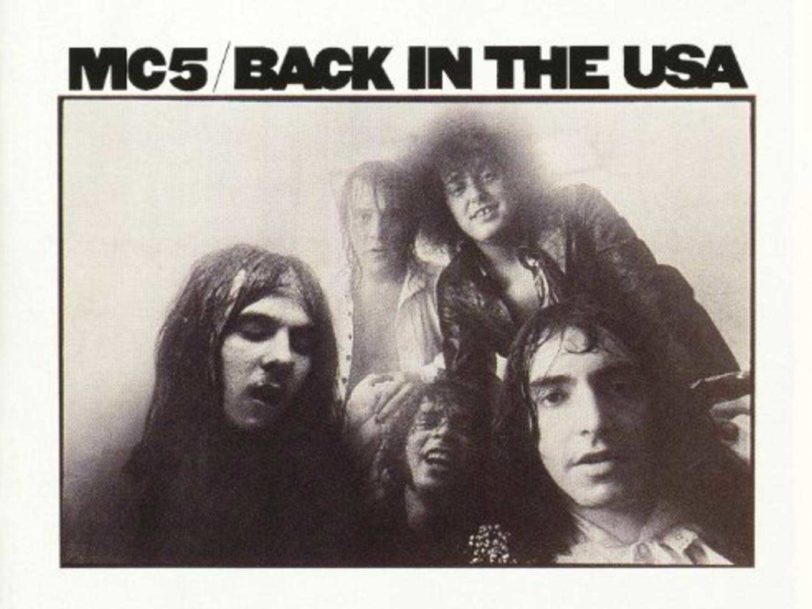
The LP was no longer just a collection of songs, it had a purpose, a message – and fans triumphantly carried their favourites from party to party. Connecting rebellion with the counterculture, and blazing a trail for punk rock years ahead of schedule, were MC5, the Michigan band whose second album, “Back In The USA”, hit the shelves smack-bang at the start of the decade, on 15th January 1970.
Released a year after their frenetic proto-punk debut, “Kick Out The Jams”, Back In The USA marked a new direction for a group whose opening call-to-arms caused no small amount of controversy. A mixture of pop tunes and deep blues riffs, it found them matching their rebellious stance to catchy song writing, becoming the blueprint for something else entirely: pop-punk. The opening track is a cover of the classic hit “Tutti Frutti” by Little Richard. “Let Me Try” is a ballad. “The American Ruse” attacks what the Detroit quintet saw as the hypocritical idea of freedom espoused by the US government, and “The Human Being Lawnmower” expresses opposition to the US involvement in the Vietnam War. The last song on the album, which is the title track, is a cover of Chuck Berry’s 1959 single “Back in the U.S.A.”
Every strain of this combination of punk and pop music has produced some of the most iconic party tracks in history while offering an aggressive release that skirts some of punk music’s more anti-social aspects. It’s a deadly combination, and one that MC5 lit the touch paper for with Back in The USA. What distinguished the band was not only its fiery political content-inspired by the militaristic, anti-establishment ideology of manager John Sinclair’s White Panther Party-but the furious, free-jazz energy of the music. Guitarists Kramer and Fred “Sonic” Smith engaged in long exchanges that suggested Sun Ra and John Coltrane.
Where Kick Out The Jams was a fast, messy live album that felt experimental while heralding the punk scene to come, Back In The USA was immaculately recorded, with a tight production suggesting how much rehearsal time must have went into creating it. They hadn’t let go of their revolutionary aesthetic, they’d just acquired the musicianship to match. With short, memorable riffs and a greater use of vocal harmonies, Back In The USA showed the world that a radio-friendly rebellion could be a great recipe for success. With lyrics that combined themes of partying with those of finding confidence as a teenager, it captured the spirit of youth in revolt, while the use of pronouns in the lyrics ignited a feeling that the album was written for the listener alone.
Producer Jon Landau doubtless had a hand in the band’s new direction. A former music critic who would go on to work with Bruce Springsteen, Landau had a natural instinct for pop-rock; dissatisfied with psychedelia’s lack of focus, he was drawn to MC5’s raucous energy, helping them channel it into a bluesy, catchy bubblegum-pop record that rolled party and rebellion into one.
The problem was: the audience. MC5 had already announced themselves as punk trailblazers almost a decade ahead of schedule. Their turn towards a cleaner, more mainstream sound turned off a fanbase interested in revolt over record sales, peaking at No.137 in the US – over 100 places lower than Kick Out The Jams. Long-term, however, Back In The USA opened up a world of airplay and mainstream acceptance, if not for the group (who split in 1972, after the release of their third album, “High Time”), then for anyone willing to combine anarchy and danceable pop music in the years that followed.
The MC5 also happened to be making some of the greatest rock’n’roll music ever committed to tape. Post-Elektra, the band managed to record two raucous LPs for Atlantic. The first, ‘Back In The USA’, is often considered to be their weakest – and while it suffers both from a dearth of political focus and a thin, edgy sound (it was recorded by rock critic Jon Landau, who’d never produced a record before), its concise, commercially skewed sound was a profound influence on punk groups like The Clash, while songs such as ‘The Human Being Lawnmower’ offered a radical rewiring of the old bubblegum rock blueprint.
Though the album was viewed as a flop early on by most fans, and lacked the commercial success of their previous release, it would later be considered highly important due to the album’s absolute projection of MC5’s core sound and earliest influences.
In hindsight, MC5 were greatly ahead of their time in terms of both the radical changes they made to their sound and template they laid for a whole new musical genre. The group have been nominated – and overlooked – for entry into the Rock And Roll Hall Of Fame on numerous occasions, but their true reward is that the collective consciousness of the pop-culture-loving world now know them as this: punk pioneers who became something so much more – a band that showed the way for forging aggressive catharsis with infectious pop music.
MC5
Rob Tyner – vocals
Wayne Kramer – guitar, vocals on first & third chorus of “Back in the USA”, guitar solos on “Tutti Frutti”, “Teenage Lust” and “Looking at You”
Fred “Sonic” Smith – guitar, guitar solo on “The American Ruse”, lead vocals on “Shakin’ Street” and second chorus of “Back in the USA”
When Big Thief guitarist Buck Meek asked the band’s go-to producer Andrew Sarlo to oversee his second solo album Sarlo agreed, but there were some non-negotiable conditions. Everything would be recorded live using just eight dynamic mics, there could be no overdubs and headphones were banned.
It’s a familiar rootsy, organic approach to that which enabled Big Thief to release four beguiling indie-folk albums in their first four years, and it works a charm on Two Saviors, recorded on a humble Tascam 38 eight-track at the humid height of a steamy New Orleans summer. Set up in a Victorian house one block from the Mississippi, Meek taught his band these gentle, unpolished country arrangements on the fly, recording everything inside a week. The songs had been written while Meek was on downtime following Big Thief’s pair of 2019 releases, Two HandsandU.F.O.F., following the end of his marriage to the band’s lead singer Adrianne Lenker a year earlier. The mood is pastoral and reflective, Meek looking back with fond perspective on a past chapter of his life.
Buck Meek’s new album, “Two Saviors”, one of the first records released this year, and I wouldn’t bet against it being one of the best. Recorded by Buck, alongside producer and engineer Andrew Sarlo, who also worked with Buck on a number of Big Thief records, “Two Saviors” marks a change of tone for Buck’s solo material. While his self-titled debut was a character driven snapshot of the American Dream, here Buck seems to tap into something more personal, with these almost cathartic confessions spilling out of him.
Ahead of the record’s release, Buck this week shared the latest track from the album, “Candle”, co-written with Big Thief bandmate Adrianne Lenker. Lyrically, the track is a somewhat troubling affair, a song that seems to always be attempting to run, yet keeps getting drawn back; the sweetness of, “the same love I always knew” contrasted with the sighing inevitability of, “I guess you’re still the first place I go”. The lyrical juxtaposition is set against a musical backing that seems to murmur along with the words, the slide-guitar that seems to exist like an exhale of sadness atop the warmth of the Rhodes-piano, as Buck’s vocal is at times joined by bandmate Mat Davidson, before he leaves again to let Buck travel on alone. This really feels like a master-craftsman at work, a songwriter who knows exactly how to ring every drop of magic out of a track: this is something truly special.
Guitar performed by Buck Meek and Adam Brisbin Drums performed by Austin Vaughn Pedal Steel and Bass performed by Mat Davidson Produced and Engineered by Andrew Sarlo



 The Fat Angel Sings