Existing in a kind of dream world stretched between reality and fiction, Manchester Orchestra’s sixth full-length is a beautiful and at times harrowing rumination on existence and death, and what happens when the latter cancels out the former. Initially conceived as a concept album that follows one man’s journey with the Angel of Death, life started to imitate art when the father of multi-instrumentalist Robert McDowell lost his battle with cancer.
The resulting record is a deeply melancholy yet strangely soothing collection of sophisticated indie rock that wrestles, as Manchester Orchestra albums always have, with the big questions—not just life and death, but faith, purpose, love, and the meaning of all those things. Frontman Andy Hull’s vocals are as radiant and rich as the melodies and layers of instrumentation that carry it, drawing you into the record’s distinctive otherworld—a parallel universe that contains an elucidation of all your hopes and dreams and fears in gloriously gloomy technicolour.
Torres the moniker of Mackenzie Scott released her new album, “Thirstier”, on 30th July on Merge Records. “Thirstier” revolts against the grey drag of time, a searing and life-affirming eruption of an album that wonders what could happen if we found a way to make our fantasies inexhaustible.
She presents its title track, a thesis statement for the album as a whole that highlights its strive towards abundance. Scott sings of love that never knows scarcity: “The more of you I drink / The thirstier I get.” Following a stretch of melancholy guitar, thunderous percussion crashes in along with Scott’s voice: “Keep me in your fantasies / Even though you live with me.” It’s an urgent and intense encapsulation of desire.
“For a while, I was sinking/ But from here on out, I swear I’m swimming,” TORRES’ Mackenzie Scott declares on ‘Don’t Go Puttin Wishes in My Head’, a standout track from her latest album “Thirstier“. It’s a moment that could’ve been lost between the song’s titanic choruses, but Scott delivers the line with such fervour that it’s impossible not to believe her, let alone pay attention. It’s this rock-solid, wide-eyed conviction that marks the Brooklyn-based artist’s third album under the moniker, which is packed with one anthemically bombastic song after another, save for a few welcome electronic experiments. Thundering, exuberant hooks become a vehicle for Scott’s outsized ambition, but it’s the yearning that persists and powers her performances, taking the songs to another level: “The more of you I drink, the thirstier I get,” she admits on the title track. Scott’s song writing has rarely sounded more potent, or joy more restless.
Recorded in the Autumn of 2020 at Middle Farm Studios in the UK and co-produced by Scott, Rob Ellis and Peter Miles, “Thirstier” marks a turn towards a bigger, more bombastic sound for Torres. The anxious hush that fell over much of Scott’s previous music gets turned inside-out in songs tailored for post-plague celebration. Guitar-driven walls of sound surge and dissipate like surf in high winds, carrying Scott’s commanding voice to the fore, as displayed in the album’s first two singles “Hug From a Dinosaur” and “Don’t Go Puttin Wishes in My Head.”
Never one to be afraid of doing things her own way, TORRES once again shook things up for this, her fifth full-length. Ostensibly, it’s a relationship record, but one that celebrates love rather than laments its loss. That attitude is enmeshed in the generally upbeat nature of its confident, anachronistic songs. They look both forward and backward at the same time, and fizzle with the excited energy of lasting love and companionship, as well as the ups and downs that come with that.
Full of stadium-friendly pop hooks and electronic undercurrents, “Thirstier” is a powerful and bold record that feels like it exists both in the past and the future.
Thirstier is out July 30th, 2021, on Merge Records
The electric guitar never sounds quite as warm and welcoming as it does when it’s run through a distortion pedal and comes out feelin’ real fuzzy. Ovlov know this. Listening to the Connecticut indie-rock band’s first two albums—2013’s “Am” and 2018’s “Tru”—is like drinking from the fuzz-guitar firehose; the swirl of distortion is so thick at times, it feels like you could drop into it and disappear. And yet the songs always feel bright and buoyant, a testament to main Ovlov-er Steve Hartlett’s skill as a composer. Like Built to Spill and/or Dinosaur Jr.’s, his tunes are never overwhelmed by the sound. On their third album “Buds”, Ovlov scale back the squall a bit and bring those tunes to the forefront. Don’t misunderstand: Hartlett and his crew still know how to dial up the fuzz, as they do with great gusto on the album’s punky, 98-second opening track, “Baby Shea.” But on “Buds“, they deploy it with more restraint, giving space to cleaner tones that jangle and chime, and to Hartlett’s charming melodies.
This album with it’s alluring composition has straight up set up a home in my mind and it’s not leaving anytime soon.
Released November 19th, 2021
The Band
Steve Hartlett* played guitar and sang Theo * played drums Jon * played bass Morgan Luzzi played guitar
“Land of Steve-O” is the first single from Ovlov’s new album “Buds” out November 19th, 2021 on Exploding in Sound Records.
The Sydney-based three-piece Middle Kids released their second album, “Today We’re The Greatest”via Lucky Number. Recorded and produced in Los Angeles by Lars Stalfors (St. Vincent, Soccer Mummy, Purity Ring), the follow-up to the band’s award-winning 2018 debut, “Lost Friends“, is their most personal and courageous effort to date. Moving away from lyrics of a more conceptual nature,“Today We’re The Greatest” is the open, uninhibited product of fearless collaboration. Showing a real vulnerability, Joy is pulling directly from her own experiences and breaking down barriers she had previously set for herself.
The album includes “nervy Strokes-esque floorfiller” (The Guardian) “R U 4 Me?” and their monumental new single, “Questions”, a charged three-minute odyssey which sees Joy struggle poetically with concepts of honesty and intimacy over an explosive rhythm section and a stunningly orchestrated brass-filled climax.
Other tracks like “Run With You”, were written when Joy was a few months into pregnancy with her and Tim Fitz, her husband and bandmate’s, first child. They recorded her 20-week sonogram, and wove the gentle, rapid thump of their baby boy’s beating heart into the last 20 seconds of the track -an exuberant declaration of devotion. Joy’s journey to motherhood and her marriage with Fitz has imbued her songs with a vibrancy that’s unabashedly romantic yet free of clichés.
There’s also “Stacking Chairs,” with its unique allegories and Joy’s sunny vocals, that strikes this delicate balance beautifully: it’s a testament to her deep connection with Fitz and the new, “infinitesimal” love that transformed their lives with their son’s arrival.
from the new album ‘Today We’re The Greatest,’ out now:
The indie rock superhero duo of the year, starring two of the sharpest songwriters in the game, Jay Som’sMelina Duterte and Palehound’s Ellen Kempner. The guitars slither in Elliott Smith/Mary Timony mode, while both women whisper and growl about twisted love in “Back of My Hand” and “Stay in the Car.” Best of all: “Sand Angel,” about dreaming about somebody you miss, then grinding your teeth all night, knowing you won’t fall back to sleep. Both songwriters know this emotional turf inside out, as in Palehound’s Black Friday or Jay Som’s Everybody Works. But together, they reach somewhere new.
“Back Of My Hand” was the final single from Bachelor (Jay Som & Palehound) The debut full-length ‘Doomin’ Sun’, came out May 28th on Polyvinyl Records, Lucky Number, and Milk! Records.
Bachelor, became the new project from Melina Duterte (Jay Som) and Ellen Kempner (Palehound), it is not a band, it’s a friend-ship. After being mutual fans for years, they finally met when sharing the bill at a show in Sacramento in 2017. Keeping in touch over text and Instagram posts, Duterte and Kempner started recording together for fun in 2018, resulting with what would become “Sand Angel”, the seductive slow-burner that convinced the pair to write an album together.
Reconvening in January 2020, the duo packed the entirety of Duterte’s recording equipment into two cars and headed to a rental house in Topanga, CA. In this space Kempner and Duterte hybridized their individual song-writing talents, producing a collection that slips between moods with ease and showcases their lyrical prowess. Arriving with almost no songs written and no solid plan, they finished the 10 songs that make up “Doomin’ Sun” after two short weeks. That much work in so little time may sound exhausting, but it wasn’t, it was blissful and freeing.
There was a lot of pain that went into the record, especially around themes of queerness and climate change inspired by the red skies and wildfires subsuming Australia at the time. However, when the duo did shed tears during the creative process, they weren’t tears of sadness, they were tears of laughter. When Kempner and Duterte look back on those weeks, what they remember first is shortness of breath and the inability to track vocal takes without falling to the floor howling. They couldn’t remember a time they’d ever been so delirious with creativity, so overwhelmed with joy.
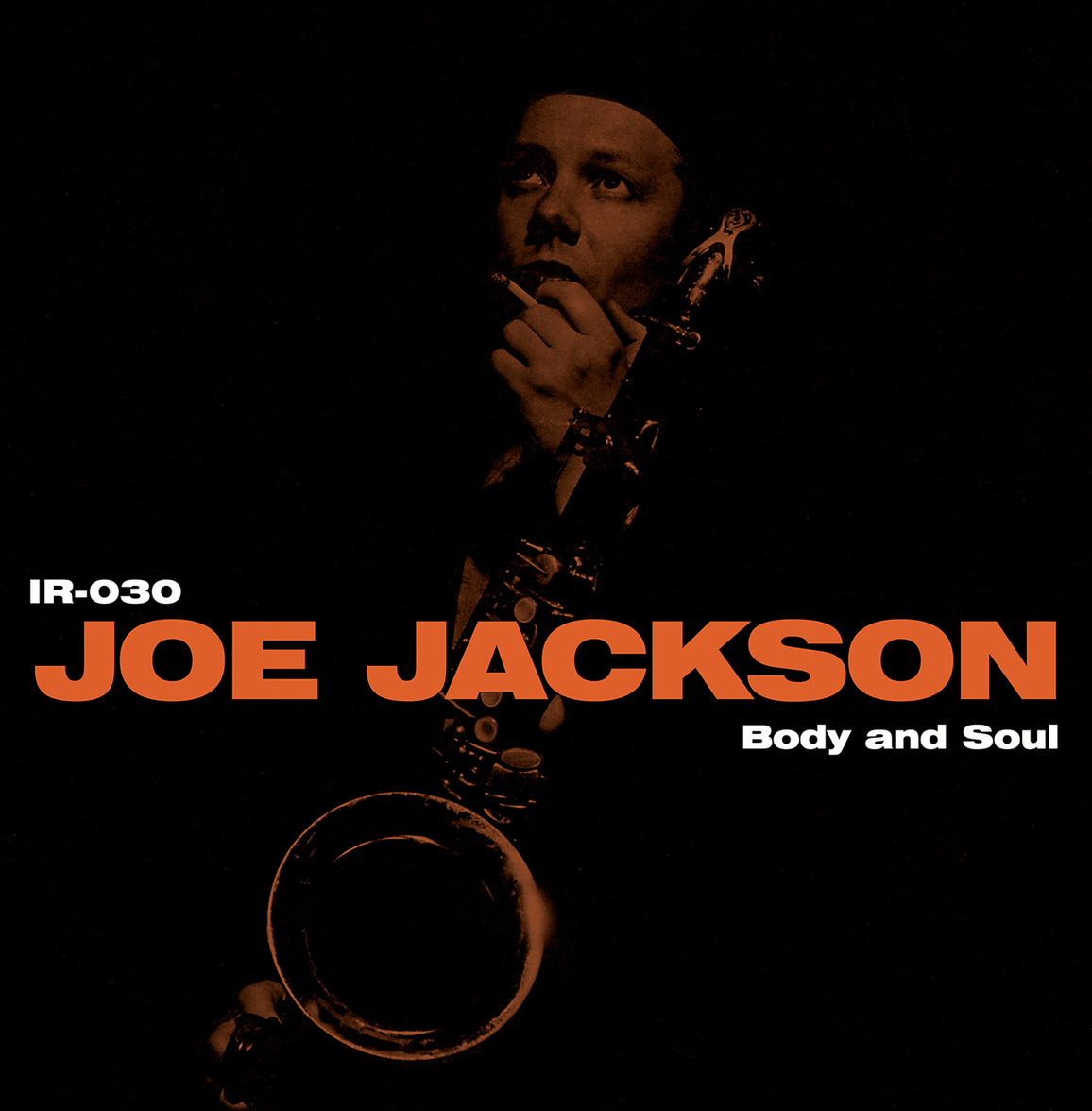
Joe Jackson’s stunning 1984 classic album, “Body and Soul”is the jazz-infused follow-up to his 1982 smash “Night and Day”. It features two of Joe’s most cherished compositions, “You Can’t Get What You Want (Till You Know What You Want)” and “Be My Number Two. “Body and Soul’s” original PCM digital files are remastered to DSD by Kevin Gray at CoHEARent Audio. The results are amazing! “Body and Soul” has never sounded so big and full-bodied. The reverberant space of the hall is beautifully drawn, and more three-dimensional and holographic than ever, and the band more dynamically explosive. The Blue Note-inspired album art is beautifully restored by IR’s Tom Vadakan and housed in a gorgeous “Old Style” gatefold by Stoughton Printing. Front and back cover are film-laminated for beauty and longevity, and gorgeous gatefold art is wrapped on heavy “brown-in” blanks like the records of the 1950’s, 60’s and early 70’s. Archive quality!
What if a skinny-tie wearing late-1970s garage bandster – like, say, Joe Jackson – decided to transfer those same dark insights into the bracing, sophisticated context of a large-band jazz record? “Body and Soul” arrived on March 14th, 1984 with cover art in the familiar, almost sepia-toned style of Blue Note. It had the look of an instant classic, this Joe Jackson album lived up to that promise in almost every way possible.
From the towering horns of “The Verdict” sparked by a contemporary film starring Paul Newman, to the smaller insights on good-love-gone-bad in “Not Here, Not Now,” Body and Soul stands as a soul-searching counterpoint to the angry-young joys of Joe Jackson’s signature debut from half a decade before, “Look Sharp”,The black humor and smart musical sensibility that made that initial release so memorable.
Recorded with two mics in a now-lightning quick pace of five weeks, and in a warm style more associated with the mythical jazz recordings its cover references, “Body and Soul” is about what we talk about when we care to look inside our own hearts: “We don’t know what happens when we die,” Jackson sings in this album’s shattering opener, “we only know that we die too soon. But we have to try or else our world becomes a waiting room.”
Throughout, there remains a grounded sensibility. Joe Jackson begins side two with a cinematic overture titled “Loisaida,” this prosaic sounding title that is actually a Spanish translation of New York’s Lower East Side – and a tune that matches this street-level annotation with a mighty saxophone turn. Even the upbeat Latin number “Cha Cha Loco,” with its cool Dizzy atmosphere, and – perhaps no surprise here, the propulsive “You Can’t Get What You Want (Till You Know What You Want)” reveal moments of hard-eyed acceptance, refreshing irony and well-earned cynicism.
That end-of-the-millennium sense of innocence lost would have found its apex in “Happy Ending,” a duet with Elaine Caswell, on any other album. This sounds like a 1960s pop song about love’s celebrated and hoped-for finale, but is actually about the rarity of such a thing: “Do I think about the end,” Caswell sings, “when it’s only just the start?”
Only then comes the painfully poignant “Be My Number Two” a simple track – primarily just Jackson’s voice and piano – that holds more self doubt and deep insight than anything the well-known “Is She Really Going Out With Him” from his first record could have dreamt of. “I know it’s really not fair of me, but my heart’s seen too much action,” Joe Jackson sings, with a quiet, damaged voice. “Every time I look at you, you’ll be who I want you to – and I’ll do what I can do to make a dream or two come true. If you’ll be my number two.”
The only knock (and it’s a small one) on Body and Soul is, in fact, the moments when Jackson tries to leaven things. “Go For It,” which closes side one, and “Heart of Ice,” the album’s final cut, try a bit too hard to tack on a smile at the end. Otherwise, this is a grand, almost Spectorish (in a good way) record, and all the more shocking (at the time) considering where it came from.
Jackson had built on the smaller successes of his previous Night and Day record, which produced the poppy smash “Steppin’ Out” but should be best remembered for the introspective “Real Men” – and he did it within a brassy, age-old musical context. Who knew this guy could use these well-worn tools to fashion something so uniquely modern?.
Half Waif, the project of Nandi Rose, returns with the new album, “Mythopoetics”. It’s a record about processing past traumas in the quest for a new, sun dappled pathway, and the transformation that takes place as we take each tentative step. Here, Half Waif is shunning the shadowed mass of generational trauma and the patterns passed down to her. Instead, she plants a seed, urging the orange blossom to sprout through the cracks in the concrete. To bring together the world of “Mythopoetics”, Rose once again collaborated with multi-instrumentalist, film composer and producer Zubin Hensler.
On her fifth record as Half Waif, “Mythopoetics”, Nandi Rose performs her artistic hat trick. Not that much time has passed since her 2018 breakthrough, Lavender, and much less time has elapsed since last year’s “The Caretaker”. Nevertheless, she has proven herself a formidable force. Rose is consistently productive, but the quality of her music has never wavered; it has only blossomed. It’s rare for an artist with this much creative output to be this consistently excellent, and the streaming industrial complex has only incentivized quantity over quality. Rose, however, is on a streak, and she continues that thread with Mythopoetics.
She’s once again reunited with her frequent collaborator since Probable Depths, film score composer and producer Zubin Hensler. The duo worked together on Lavender, and the melancholia that permeated that record resurfaces on Mythopoetics, albeit in a different form. Where Lavender felt despondent, especially on tracks such as “LavenderBurning” and “Back in Brooklyn,” Mythopoetics imbues that loneliness with a sense of triumph.
This album finds Rose at her most revelatory with swooning, resplendent compositions like “Midnight Asks” and the stunning closer, “Powder.”
Half Waif from the album ‘Mythopoetics’, available now
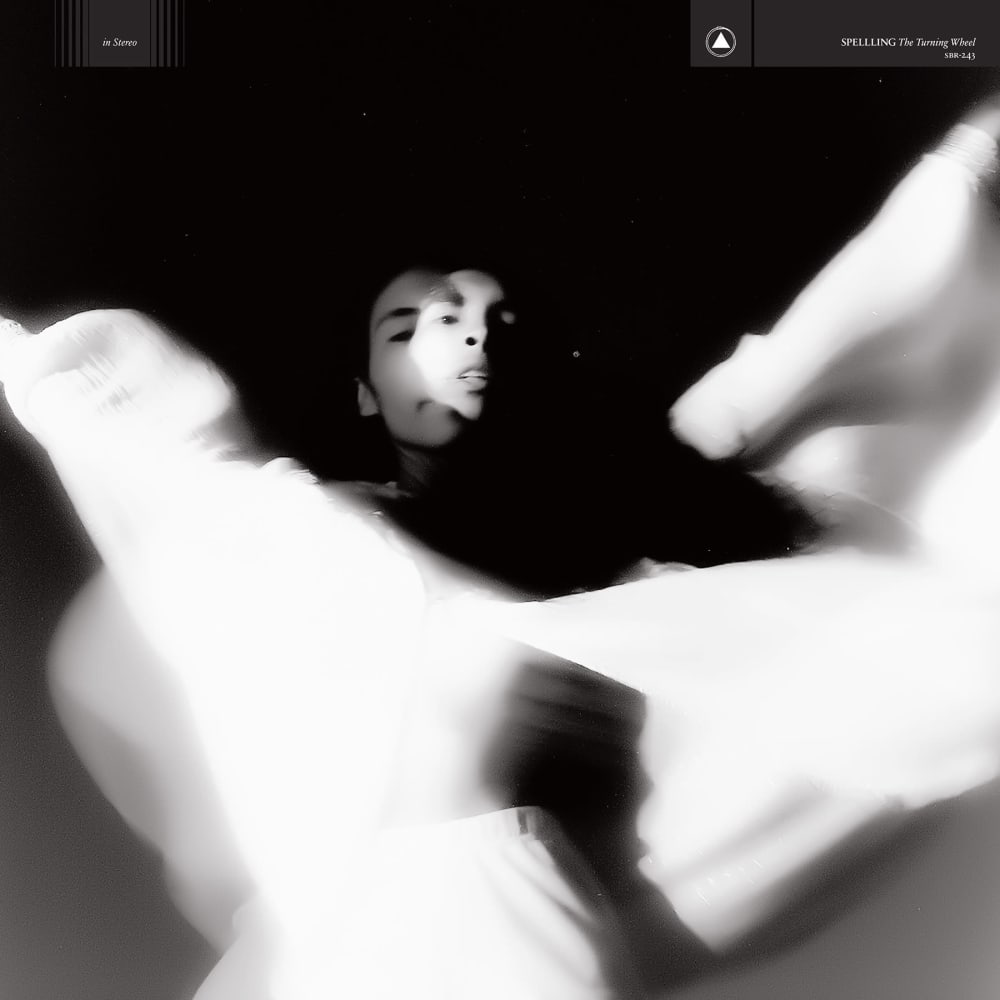
Spellling (aka Chrystia Cabral) is releasing her third studio album, “The Turning Wheel” on June 25th via Sacred Bones. She has shared another song from the album, “Boys At School”. The Turning Wheel incorporates a vast range of rich acoustic sounds that cast SPELLLING’s work into vibrant new dimensions. The double LP is split into two halves — “Above” and “Below” Lush string quartet shimmer combines with haunting banjo and wandering bassoon leads, as the album progresses from the more jubilant, warm, and dreamy mood of the “Above” tracks to the more chilling and gothic tone of the “Below” tracks. This progression is anchored by SPELLLING’s familiar bewitching vocal style that emphasizes the theatrical and folkloric heart of her song writing.
In a press release Cabral explains that the new song “steps back into my younger self, my teenage self to voice my angst, desires and disillusionments. I knew when I created the main motif on the piano that it was striking something really raw and both delicate and fierce. The notes just immediately transported me to the era of my youth, of this time when you are really beginning to confront the mirror of yourself to the outside world.”
The Turning Wheel, the third full-length by the Bay Area artist SPELLLING (Chrystia Cabral), revolves around themes of human unity, the future, divine love and the enigmatic ups and downs of being a part of this carnival called life.
Cabral the album’s first track and lead single “Little Dear” (which was inspired by the Frida Kahlo painting Wounded Deer). “Little Dear” . The Turning Wheelis described in a press release as revolving around “themes of human unity, the future, divine love, and the enigmatic ups and downs of being a part of this carnival called life.” The album, orchestrated and self-produced by Cabral, features an ensemble of 31 collaborating musicians.
The Turning Wheel is a manifestation of this considerable effort, time, and collaborative energy and will surely become a classic for its elegance. And while the artist’s eclectic influences, from soul to psych to pop to noise, remain present, something entirely new has also been born in the cosmic soup of this massive undertaking: a grand and genreless adventure. One that allows the artist’s authenticity to shine and also marks her as a conduit for something with a magic of its own.
Cabral’s her last album, “Mazy Fly” came out in 2019 on Sacred Bones Records. It was her second full length Mazy Fly saw great support from the likes of Pitchfork (“it’s the sound of an artist’s vision sharpening, pointing outward.”), Stereogum (“It’s a gorgeous and evocative and provocative record, and it points to a future where Cabral could pretty much do anything.”), Paste (“too appealing to resist”) and once again found its place in The Best Albums of 2019 at Bandcamp.
From the album The Turning Wheel Out 25th June on Sacred Bones Records.
Reciting mantras is a form of teaching — leaning into the repetition, retraining your brain, learning new realities. For Jilian Medford, it was a way to fight through her anxieties. And here, on “Show Me How YouDisappear“, through a haze of tangled, inverted pop, her new truths push their way to the surface.
Mesmeric and kaleidoscopic, shimmering with electrified unease, “Show Me How You Disappear” is both an exercise in self-forgiveness and an eventual understanding of unresolved trauma. Medford’s third record as IAN SWEET unfolds at an acute juncture in her life, charting from a mental health crisis to an intensive healing process and what comes after. How do you control the thoughts that control you? What does it mean to get better? What does it mean to have a relationship with yourself?
The inklings for the record began slowly. In 2018, Medford wrote “Dumb Driver” on an acoustic guitar while living in a “hobbit hole” back house in Los Angeles. Skeletal, stripped-back versions of the undulating, amorphous “My Favorite Cloud” and “Power” emerged next. Mentally she was in a dark place. By January 2020, following increasingly severe panic attacks, Medford began a two-month intensive outpatient program, including six-hour days of therapy. It yielded an unprecedented level of self-reflection for Medford, who already plumbs the depths of her emotions for her song writing. She took a step back from music to completely immerse herself in the program, and once she felt ready to move on at the end of February, the rest of the songs poured out of her.
Recorded with Andrew Sarlo (Big Thief, Empress Of), Andy Seltzer (Maggie Rogers), and Daniel Fox, among others, Medford approached this album as a curator. She handpicked the producers that fit each song, which explains the range and experimentation showcased. Medford then recruited Chris Coady to mix and tie everything together into one cohesive piece.
The resulting record envelops both Medford and the listener like water: its ebb and flow, the ease with which it can switch from nourishing to endangering you. Fully immersive, with guitar lines as quick to sound grungy as they are to ascend to astral distortion, it’s a lush cacophony of experimentation. While writing the record, Medford revisited the discography of her forever favourite band, Coldplay and noted inspiration from Young Thug’s bizarre and magical vocal delivery. With these influences and many more, Medford’s pop melodies are inverted by the freak world she builds around them.
The cyclical nature of obsessive thought patterns shapes “Show Me How You Disappear“. It’s self-referential, each song in conversation with one another, tracing the same relationship and the desire to be an escape artist from your own life. But there’s also the repetition Medford learned to help herself via Emotional Freedom Technique tapping, which involves tapping pressure points on the body and repeating mantras to curb anxiety.
“Since I learned that method in therapy, it has saved my life and seeped into my music,” she says. “Songwriting has always been a tool for me to process my emotions. But this technique has allowed me to apply more intention to that practice.”
For her, the refrain of “Get Better” hits that hardest, a sort of emotional thesis of the album. She explains, “This song came from being stuck in an infinite loop of destructive thoughts and the only way to get out of my head was to repeat my goal over and over. By saying ‘I want to get better, better, better’ out loud, I started to feel something.”
“Show Me How You Disappear” also offered a certain liberation to Medford. As personal as it is — like preceding albums Shapeshifter and Crush Crusher — here, post-therapy, Medford was able to approach her song writing in a new way. She learned how to distance herself from the immediacy of her work, to put space between her personal identity and her art. There was less concern about fitting every piece of her story into the lyrics. Instead, this time, she held back. “I think there’s something to be said for leaving things out,” Medford says. “This is the first record that I leave that space for myself. I feel a freedom on this one that I haven’t felt with the others. People always say ‘I put all of me into this’, but I actually didn’t this time — I left space.”
Dizzying and enthralling, “Show Me How You Disappear” is the sound of someone coming apart and putting themselves back together — the moment an old mantra, repeated into the mirror time and time again, finally clicks. To look at your reflection, and finally feel seen.











 The Fat Angel Sings