Archive for the ‘CLASSIC ALBUMS’ Category

An apocalyptic, “end-is-nigh” rolling, country rock anthem. Pure poetry with the best coda to a song I heard all year, “shed a tear for the books I shoulda read“. Quiet Hollers are a cult/gang/band from Louisville, Kentucky. New The album is out now. Buy it at quiethollers.com

We’ve got an premiere of Quiet Hollers’ new video for “Mont Blanc” off of the band’s recent self-titled album, released back in October. The video, shot in rural Kentucky, features lead singer/songwriter Shadwick Wilde trying to survive in a post-apocalyptic world, along with his real-life partner and daughter. Watch “Mont Blanc” above. It’ll make you want to gather your loved ones together and build a premium bomb shelter…just in case.

http://

Quiet Hollers’ members went ahead with a recording session at Kevin Ratterman’s legendary funeral home studio, despite their drummer’s broken neck. But the funny thing about Quiet Hollers is that they’re not ostensibly a punk band. In fact, they’ve drawn so broadly from the well of American music- their influences span 90s college rock, alt country and post punk- that you’re just going to have to take an auditory dip into front man Shadwick Wilde’s ocean-sized imagination on Quiet Hollers’ newly-released eponymous LP to form your own notions of what he’s doing here. Whatever it is, it’s mellowing coherent and purposeful.

With his subtle drawl by turns heartening and nonchalant, Louisville native Wilde’s even keeled vocal persona vibrates with subtlety and emotional intelligence as his delivery clings to the album’s winding trajectory. Here is an artist who compels us to “shed a tear for the books [he] shoulda read” and then drives the point home with heart swelling, ghostly violins in an ode to innocence lost on the the bucolic “Mont Blanc,” and leads us ever further down a pensive road in the band’s 21 year old van with musical choices both melancholic and driven.

http://

another standout track “Aviator Shades” will tug at the heartstrings of any Americana lover, though its reach- along with other tracks on this meaningfully low key voyage- still manages to extend far beyond reassuringly old-hat (and effective) instrumentation.

Those partial to The Shins, Pixies and even Beach Boys’ vocal timbre will take a shining to Wilde’s aching inflections and how he lilts his way through reassurances like, ‘If we can make it thought this one I think we’ll be alright.’

This is a gathering of songs for people who’ve experienced the pang of a ruptured adolescent friendships . Muses Wilde, “Living in a hotel room ain’t hard/If it gets too lonely you can break into the mini bar/Put it on the company card.” This is an ingrate conversation to carry you through the approaching winter, and the Quiet Hollers creep up like a slow burn, running arrestingly deep.
http://

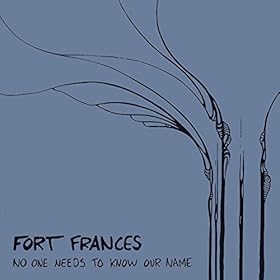
No One Needs to Know Our Name

With that line Fort Frances’ new EP reaches its climax, in the middle of the first single “Anonymous,” and the band announces-without question-their plans to continue evolving. No One Needs To Know Our Name is a leap forward for the Chicago trio, leaning more toward rock than their folk beginnings. Traces of Spoon and Dawes ooze out of every song while singer David McMillin maintains his pop radio-friendly voice.

The biggest similarity between this new EP and some of their older work is the idiosyncrasies that you find all throughout. There’s some phrasing in the lead track “Days Get Heavy” that you don’t hear very often (reminds me a bit of Fiona Apple’s Extraordinary Machine) that betrays the campfire feel produced by the pretty three-part harmonies.

“Best Of Luck” sounds like it could’ve been a Good News For People Who Love Bad News song that just missed the cut. The music overpowers the lyrics a bit, but I like the line at the end, “Your mind takes pictures of everywhere you’ve been, and everything that’s lost can be found again.”

The record may be called No One Needs To Know Our Name, but I think people will want to know Fort Frances once this EP hits. These are five well-crafted tunes performed by guys who’ve been making hits flying under the radar for years. Take some time to listen to The Atlas and Harbor before everyone knows their name.

No One Needs To Know Our Name was released on May 12th.

http://

The second single from the new Fort Frances EP “No One Needs to Know Our Name.”

Lou Reed Live Set of the album “Berlin” 

Lou Reed’s controversial concept album Berlin – his third solo outing after the break up of The Velvet Underground – first saw the light of day in 1973 and was almost universally denounced. Rock bible Rolling Stone declared it a career-finishing ”disaster” that was so bad it merited perpetrating ”physical vengeance” on its creator before signing off with ”Goodbye, Lou”. Hardly surprising, then, that Lou Reed should have stepped away from the work and ignored for so long, only returning to it in 2006 to resurrect it in a 30-date tour that has already spawned a DVD (directed by Julian Schnabel) and now this live recording, taken from two nights in mid-December that year at St Ann’s Warehouse in Brooklyn, New York.

Critical appreciation of Berlin has been building since its damned and doomed debut, and in this super-charged performance, complete with 30-piece band and 12-strong choir, it’s easy to hear and appreciate why. As a concept, the piece still suffers from its own flawed ambition. Whatever else it is, Berlin is not a rock opera, or any sort of opera, for that matter. Yes, there’s a narrative – two drug-addled lovers take a lethal walk on the German capital’s wild side – but the structure supporting it is so loose and the songs so arbitrarily connected that calling it an opera is nothing more than a fanciful affectation.

But there are magnificent moments contained within that bare comparison with the best of Reed’s solo work. Equally, there are some excruciating moments, too, not least an horrendously awful take on The Bed.

While it lacks the clinical studio intensity of the original, this live performance carves its own muscular drama and dark poetry out of Reed’s dystopian lyrics and coruscating music, the latter helped by the return of original collaborator Steve Hunter on electric guitar. Reed himself remains his timeless self: dour, po-faced, emotionally underplayed and vocally colourless but acutely acerbic and astringent.

Three other songs – Candy Says, in a duet with Antony ‘And The Johnsons’ Hegarty; Rock Minuet from Reed’s 2000 long-player Ecstasy; and Sweet Jane from the Velvet’s fourth album, Loaded – are offered as encores, cleverly if a little too subtly attempting to re-thread Berlin back into a wider context.

Lou Reed / The Sire Years: Complete Albums box / 10CD set

Lou Reed / The Sire Years: Complete Albums box / 10CD set, Rhino are to release a new Lou Reed CD box set that collects the eight albums released on the Sire label during a period that spanning almost a quarter of a century.

The Sire Years: Complete Albums box kicks off with 1989’s spectacular New York album, and the rather underrated follow-up Magic and Loss. Sandwiched in between is Songs For Drella, Reed’s collaboration with Velvet Underground mucker John Cale.

That trio is the rock solid foundation for a set which also includes the last two ‘proper’ studio outings (Set the Twilight Reeling and Ecstasy) but also takes in Perfect Night in London – Reed’s acoustic live album recorded during the Meltdown ’97 festival – and the two-disc version of The Raven. Another live album, Animal Serenade (also double disc) completes the box set.

The Sire Years: Complete Albums is packaged in a clamshell box and is good value at under £3 per disc. No remastering for this set – it uses the most recent masterings available and no bonus tracks.

If you are looking to explore Reed’s solo work of this era, but aren’t interested in live material (and can live without The Raven) then the five-CD Original Album Series set highlighted here might be a better option. And it’s about 50 percent cheaper in terms of per-disc price. The packaging will be inferior though.

The Sire Years: Complete Albums is released on 30th October 2015.

A live radio broadcast from Ultrasonic Recording Studios–first transmitted on New York’s WLIR FM–American Poet boasts excellent sound quality, frenetically high-tensile rock accompaniment from his then backing group The Tots, awesomely passionate versions of “Heroin”, “White Light” and “Rock and Roll” and an interview in which Lou Reed talks–with typical verbal economy–about Mick Ronson (“he’s naughty”), David Bowie (“empathy… [audience giggles]… no, not in that way”) and the Velvet Underground’s Doug Yule (“Dead, I hope”). Icy of demeanour, fiery of rock & roll heart, this is the Ziggy-esque leather-and-eyeliner Lou Reed, returning to home soil on the back of his recently released second solo album–the Bowie/Ronson produced (and influenced) Transformer.

This Solo concert of Lou Reed 1972 in New York, titled American Poet became a sought after bootleg ,quite possibly the best Lou Reed (unofficially released) live album of the lot. Unlike the excessive ‘Rock n Roll Animal’ and ‘Take No Prisoners’ ‘American Poet’ strips Lou’s sound down to reveal what lies at the heart of his music. The mixture of Velvet Underground and solo material here reveals Lou to be a first rate songwriter and his crisp and clear vocal style shows him to be a fine vocalist also.

The versions available here are all very strong. I particuarly love Lou’s slowed down version of ‘I’m Waiting For My Man’ and also ‘Berlin’. I’ve never heard ‘Berlin’ sound so good.

It was recorded in 1972 around the time of the release of ‘Transformer’ and was only available in bootleg form up to more recent years.
Shortly after his separation from the Velvet Underground and immediately after the completion of his second solo album “Transformer”. Contained in the middle of this CD is also a short radio interview with Lou Reed, which doesn’t disturb at all, but fits in very well. Lou Reed is at his best. Obviously he never plays a song twice in the same way, which makes his live albums very interesting. In my opinion each song on this CD is excellent, and I don’t want to highlight any one of them especially.

‘American Poet’ does perhaps lack some of the technical proficiency musically that can be found on Lou’s later live albums but it does reveal the core of his musical talent to a much greater degree.

Lou-Reed_1972

The day after Christmas, December of 1972: Lou Reed and band (The Tots) in Hempstead, NY, recording live for radio at Ultrasonic Recording Studio. Recorded just a month after the release of Transformer, the set finds Lou Reed pulling from the new record, riffing on five Velvets tracks and the penultimate “Berlin” – the track that would title his next release six months later.

Tracklist
White Light White Heat
Vicious
I’m Waiting For The Man
Walk It Talk It
Sweet Jane
Heroin
Satellite of Love
Walk On the Wild Side
I’m So Free
Berlin
Rock N Roll

Finally back in print!  Second classic live performance from Lou Reed (first being American Poet), this one totally unreleased and not bootlegged before combining key classic tracks from his previous solo albums ‘Transformer’ , ‘Berlin’, ‘Sally Can’t Dance’ and ‘Coney Island baby’.  Presented in full colour glossy deluxe gatefold sleeve with shots of Lou Reed from the tour and liner notes by Nina Antonia.

Finally back in print! Second classic live performance from Lou Reed on Easy Action (the first being American Poet (EARS012)), this one is totally unreleased and not bootlegged before, combining key classic tracks from his previous solo albums Transformer, Berlin, Sally Can’t Dance and Coney Island Baby. This is an FM Radio broadcast from Lou Reed’s 1976 Rock N Roll Heart Tour fully restored and remastered in 2006, presented in full colour glossy deluxe gatefold sleeve with shots of Lou Reed from the tour and liner notes by Nina Antonia. Rock and Roll Heart was the seventh album by Lou Reed, released in 1976. It was his first album for Arista Records after record mogul Clive Davis reportedly rescued him from bankruptcy. ‘A Sheltered Life’ (included in this set) dates back to 1967, when the Velvet Underground recorded a demo of it (available on Peel Slowly and See). Lou’s band Michael Fonfara – keyboards, Bruce Yaw – bass, Marty Fogel – sax, Michael Suchorsky drums. Recorded at the Civic Theatre, Akron, Ohio, October 23rd, 1976

Lou is on fine vocal form and is actually SINGING, instead of his usual trick of just reciting his lyrics, my fave track has to be the run through “The Kids”, this version is at times very nasty and visceral and splenetic in its rage, but also tender. This would have been a great show to have witnessed in America’s home of Rubber and Tyres. Plus, the back cover also states this was licensened from Lou’s own Sister Ray Enterprises Production Company. So all in all it is a fine snapshot of a night where Lou was focussed and on fire and burning with real passion.

Lou Reed’s momentary departure into pop with the mould-breaking New Sensations is naturally made with bold intentions and with dark wit intact, but ironic? no, simply pop in the hands of a master craftsman. As well as marking Lou Reed’s fourteenth solo studio album, New Sensations was also a statement of intent whilst similarly bearing the trademark parallels of transgressive wit and intelligence that accompany his historic path to solo artist. The album was a potent mix of anxious pop that found little room for the distorted, exotic mongo that guitarist Robert Quine honed in previous works with Reed. Accompanied by Fernando Saunders on bass, Peter Wood on keyboards and the return of drummer Fred Maher, Reed’s perverse new structure in steroid sound was taken on the road including a midday show at the Agora Ballroom in Cleveland, Ohio Klondike proudly celebrates the posthumous performing career of the late Lou Reed with the entire WMMS-FM broadcast from his Coffee-Break performance at the Agora Ballroom on 3rd October 1984.

One of the better “bootleg” releases that we’ve seen Lou Reed shuffled off from this mortal. with a great band and Lou is pretty upbeat. The liner notes suck the writer doesn’t even know his topic. A lot of tracks from New Sensation album era.

Agora Ballroom, Cleveland, Ohio
10/03/1984

01 00:00 (DJ Intro) 0:42
02 00:42 Sweet Jane 4:08
03 04:50 Waiting for the Man 3:41
04 08.32 Martial Law 5:04
05 13:36 Legendary Hearts 3:42
06 17:18 Turn out the Lights 4:25
07 21:43 (Interview) 1:25
08 23:09 Sally can’t Dance 5:06
09 28:15 Walk on the Wild Side 5:18
10 33:33 Satellite of Love 6:25
11 39:59 (interview / Band Introduction) 1:23
12 41:22 My Red Joystick 5:10
13 46:33 New Sensations 7:11
14 53:44 Turn to Me 4:44
15 58:28 I Love You Suzanne / (DJ outro) 3:38

Lou Reed Band
Robert Quine (guitar)
Fernando Saunders (bass)
Peter Wood (keyboards)
Lenny Ferarri (drums)

The ethos of My Morning Jacket – those American indie rock stalwarts – is found in the lyrics of “Compound Fracture” from this year’s album release, The Waterfall: “There is life in love and sound / Get as much as you can keep around / Before they put you into the ground.” This encapsulates both their philosophy and the pervasive theme of the album. The band’s focus, lyrically and melodically, is about fully embracing life and living in the moment. Such philosophical pragmatism from any other band might seem contrived, but in the talented hands of this Kentucky quintet, it’s effortlessly compelling. This seventh album reflects the cohesion built over their 17-year history: they’re at peak form, proving yet again what makes them one of the most dynamic groups in music.

http://

Every song is a testament to their uncanny ability to excel individually while bringing out the best in each other as a collective unit. The Waterfall shimmers as a whole with multi-faceted nuance at every turn. Where the opener, “Believe (Nobody Knows)”, surges as a big, unapologetic crowd-pleaser, gentler songs (“Like a River” and “Thin Line”) showcase Jim James’ honeyed vocals. There’s even a Zen-like calm to the album’s break-up song (“Get the Point”) that finds James facing the end of a relationship not with remorse but an accepting shrug. This is where the production from Tucker Martine (who worked on some of 2015’s top albums – The Decemberists, Sufjan Stevens, Modest Mouse) shines. The songs flow seamlessly through the peaks and valleys of emotions, from jubilation to introspection. Unlike previous albums recorded in their Louisville hometown, The Waterfall reflects its California origins with more ‘70s-rock influences (Fleetwood Mac and Yes), especially evident on the penultimate track, “Tropics (Erase Traces”). It’s one of the most stunning songs on the album with guitarist Carl Broemel adding depth to an already hypnotic tune with his arpeggiated picking on the intro and his backing vocal harmonies throughout. The wistful sunset vibe of the final track, “Only Memories Remain”, offers this parting thought: “Our earthly bodies will surely fail / But the love we share outlives us all.” What a perfect wrap to one of 2015’s very best albums.


http://

After Fat Creeps called it quits last year, Gracie, the moniker for Massachusetts native Gracie Jackson, is finally pursuing solo work. Their lo-fi grunge is out the window. Now, she’s focused on brooding, lethargic, smoky alt-rock somewhere between the hopeful sighs of Karen O and the troubled thoughts of Elliott Smith, most recognizable through her off-kilter guitar. “It was never intentional; I just like to play with weird tunings,” she laughs. “I used to bring two or three guitars onstage, but that was such a hassle. I’m trying to simplify things while still using various de-tunings.” The tuning on ‘Jesse’, one of the first songs she ever wrote, lends this dark vibe. “It set the mood for the record as a whole.”

http://

The majority of the record’s songs were written during her time at Salem State. After growing up listening to Ravi Shankar records from her parents’ collection, classic country singers, and then tides of Sonic Youth in college, Gracie tried to mimic the hollow drone sound of Indian music and detached address of the others in her own songwriting.

“I can express myself easier with guitar, and singing came with that,” she says. “My band in high school needed a singer so we got all these singers but everyone was so bad. I figured I would step up and sing. I guess I just learned how to sing in a band through that.”

That rush of confidence found its true voice after Fat Creeps ended. “I’ve recorded with or played with so many bands, but my work has always been on the side,” she says. “I wasn’t confident enough to do my own thing so I would always sit in the back as support for someone else. I never wanted to be the main musician. Now, I’ve definitely always done my own thing, but I’ve never released it officially. I never made it a big deal. When Fat Creeps broke up, I figured I had all these songs and had to keep going.”

Between working as a nurse at McLean Hospital for the last three years and trying to get by as a social human, Gracie has crafted a set of songs so strong that Ghost Ramp Records, the label of Wavves’ Nathan Williams, sought her out for an official record deal — attention she’s long since deserved. “It’s nice,” she laughs, somewhat embarrassed. “Ben Katzman’s BUFU Records put out some releases and now Ghost Ramp is doing this. Everyone is being so kind to me and I’m usually a bit more reserved. I appreciate it.”

Even though the songs harp on dissonance and gloom, Gracie’s music still ends with a smile. Like those she listens to on repeat–Angel Olsen, Patsy Cline, Sibylle Baier–her music is for submerging. “I’ve always been drawn to minor keys and I’ve always written songs that aren’t the most happy-sounding,” she explains. “Even if I do write a song I think is upbeat, people always tell me it’s so sad. I don’t consciously realize it, but I guess that’s the work I churn out. Maybe I’m motivated by darker things.”

As fall starts to show its face, don’t be afraid of parting with summer. Gracie’s music makes that an easy transition. “The lyrics aren’t always depressing. In fact, they’re rather hopeful,” she says,

http://

Tinged with a lush, psychedelic sound and clever lyricism, Sarah Bethe Nelson‘s debut album, Fast-Moving Clouds, is not just one of the best kiss-off albums of the year but in the past five years. Nelson’s delicate, whispery voice provides a bedroom intimacy to her stories of heartbreak and infidelity. The brilliant “Paying” highlights the album with its forthright lyrics and the vulnerable state of the protagonist. Not all the tracks, however, are downtrodden. On the exhilarating and anthemic “We’re Not Dead”, there is a sense of redemption and hope. It is a fitting end to a terrific album.

http://