

This band falls into the category of California rock&roll with a 60’s tone. A true pearl pulled from the depths of a psychedelic time warp. powered by a mixture of psychedelia, garage and R&b. Fueled and fronted by a wild mans haunted soul
This band falls into the category of California rock&roll with a 60’s tone. A true pearl pulled from the depths of a psychedelic time warp. powered by a mixture of psychedelia, garage and R&b. Fueled and fronted by a wild mans haunted soul

English hard rockers, Bad Company’s live concerts rivalled some of the best, bringing primal, menacing riffs with shades of light and dark. Their “Live In Concert 1977 &1979” is stacked with classic gems in the two-and-half hours of music, taken from two concerts – The Summit in Houston, Texas on May 23rd, 1977 and the almighty Wembley Arena in London on March 9th, 1979. This is the kind of set that would inspire an arena full of people to spark their lighters and sway as one.
You’re listening to tracks off of Bad Company’s album, ‘Live In Concert 1977 & 1979’. The first-ever official live album to spotlight the original Bad Company line up: Paul Rodgers, Mick Ralphs, Simon Kirke and Boz Burrell is out April 29th. This archive collection includes more than two-and-half hours of unreleased music taken from 24-track tapes in Bad Company’s vault. The music heard on this live collection features absolutely no enhancements or overdubs — nothing but the band as they performed live on the night of the concert.
Formed out of the ashes of British blues-rockers Free, Bad Company saw singer Paul Rodgers and drummer Simon Kirke unite with Mott The Hoople guitarist Mick Ralphs and King Crimson bassist Boz Burrell to form a hard rock supergroup that released classic albums in the shape of 1974’s Bad Company and the following year’s Straight Shooter. They now continue to tour, maintaining their reputation as one of the finest live acts on the circuit.
Amazingly, however, they are only just getting round to releasing a live album that features their classic original line-up. Live 1977 & 1979 is a double-disc set that features two entire concerts taken from the band’s original 24-track tapes and faithfully represented with no overdubs or additional enhancements added to what was captured in the moment.
Due for separate vinyl releases later in the year, Live 1977 & 1979 presents an entire show from Houston, Texas, on 23rd May 1977, and a show captured in London on 9th March 1979 (with the inclusion of a single track taken from Washington, DC, on 26 June 1979).
The full tracklisting is:
CD1 (The Summit, Houston, Texas, 23 May 1977)
‘Burnin’ Sky’
‘Too Bad’
‘Ready For Love’
‘Heartbeat’
‘Morning Sun’
‘Man Needs Woman’
‘Leaving You’
‘Shooting Star’
‘Simple Man’
‘Movin’ On’
‘Like Water’
‘Live For The Music’
‘Drum Solo’
‘Good Lovin’ Gone Bad’
‘Feel Like Makin’ Love’
CD 2 (The Empire Pool, Wembley, London, 9 March 1979)
‘Bad Company’
‘Gone, Gone, Gone’
‘Shooting Star’
‘Rhythm Machine’
‘Oh, Atlanta’
‘She Brings Me Love’
‘Run With The Pack’
‘Evil Wind’
‘Drum Solo’
‘Honey Child’
‘Rock Steady’
‘Rock’n’Roll Fantasy’
‘Hey Joe’ [from Capital Center, Washington, DC, 26 June 1979]
‘Feel Like Makin’ Love’
‘Can’t Get Enough’


Following last year’s Ride compilation, The Blog That Celebrates Itself have now released a new tribute album covering The Boo Radleys.
The album covers the early part of the bands career starting with their debut Ichabod and I from 1990 through to their 1993 breakthrough album Giant Steps with tracks from 93MillionMilesFromTheSun, The Death of Pop and many others…

Born and raised in New York City, the original members of The Ramones, Joey, Johnny, Dee Dee and Tommy, burst onto the scene in 1974, becoming the quintessential punk band of the decade. On February. 4th, 1976, they released their debut single “Blitzkrieg Bop,” which had a profound influence on the punk movement in both the U.S. and U.K. Then a few weeks later the First real punk album ever? dangerous discussion. I don’t know and to be honest I don’t care. For me it’s one of the most memorable LP’s ever and that’s what counts . 14 bubblegum pop punk blitzkrieg tracks in 29 explosive minutes generated by 4 bored looking dudes with lousy haircuts, leather jackets (probably stolen) and dirty jeans.
No useless guitar solos. No expensive special production effects.
The instruments were recorded in three days, the vocal parts were in four days.
Producer Craig Leon admitted that they recorded the LP quickly due to budget restrictions,
but also that it was all the time they needed. The final result was just smashing. Loud. Fast. Primitive. And an unforgettable motto: 1-2-3-4! The songs were stripped to the bone with wicked, nihilistic lyrics like never before. The unfamiliar tumult was confrontational .
But its all good old rock ‘n roll. Back to the dangerous alleys in dark suburbs of great cities.
Original drummer (and later producer) Tommy once said that the band was just an idea. I believe him. I can imagine that the choice was quite simple for these four no future teenagers: music or jail. GABBA GABBA HEY!.
let’s have some dazzling fun at high-speed…
On April 23rd, 1976, punk decided it was here to stay. It was on that day that The Ramones released their self titled LP “The Ramones”. After Hit Parader editor Lisa Robinson saw the band at a gig in New York City, she wrote about them in an article and contacted Danny Fields, insisting he be their manager. Fields agreed and convinced Craig Leon to produce Ramones, and the band recorded a demo for prospective record labels. Leon then persuaded Sire president Seymour Stein to listen to the band perform, and he later offered the band a recording contract. The Ramones began recording in January 1976, needing only seven days and $6,400 to record the album. They used similar sound-output techniques to those of the Beatles, and used advanced production methods by Leon.
The album cover, photographed by Punk magazine’s Roberta Bayley, features the four members leaning against a brick wall in New York City. The record company paid only $125 for the front photo, which has since become one of the most imitated album covers of all time.
So Forty years ago this month, this was the album that created punk rock’s template, recorded in New York. The budget was minimal (about $6,500), the session was brief (a week), the songs were flowing (14 were recorded; many more would have to wait), and the sound was fast and fresh (stripped-down, with buzzsaw guitars set against melodic pop vocals).
The band was the Ramones, and while their self-titled debut didn’t sell many copies at the time, it is now considered one of the most influential albums ever recorded. It’s even part of the Library of Congress’ National Recording Registry, added in 2012 and thus preserved for future generations to contemplate. Ten years prior to that, the band was inducted into the Rock and Roll Hall of Fame. Gabba Gabby Hey!
I recall that first Ramones album getting home and playing it loudly at home, much to my father and mother’s dismay. One song in particular, the tongue-in-cheek “The KKK Took My Baby Away”, caught her ear. “Who writes songs about the KKK?” she protested. “And I’m like, ‘The Ramones! That’s who!’ ”
The Ramones formed in 1974 in Queens, New York Production cost of the album: $6400 with producer: Craig Leon – also famous for his work with Blondie , later on he focused more on classic music and worked with Luciano Pavarotti, Andreas Scholl, Sir James Galway and The London Chamber Orchestra among others
The Front cover of the LP was a photo of the band in front of a brick wall in NYC – the record company paid only $125 for the now legendary picture taken by Roberta Bayley… released by the Record label: Sire Records with the Speed of: most tracks averaged more than 160 beats per minute
The album was certified as gold by the Recording Industry of America – 38 years after first release date – on 30th April 2014 , having sold more than 500,000 copies by then..
thanks to JL for some facts and words

The Doors are continuing their campaign to expand their studio output with the September 1st, 2021 announcement that their 1971 album, “L.A. Woman”, will receive a deluxe edition for its 50th Anniversary. The new 3-CD/1-LP collection, coming December 3rd via Rhino Records, will include more than two hours of previously unreleased session outtakes.
The Doors had crammed several lifetimes into just five years as band, and by late 1970, the psychic toll of Jim Morrison’s addiction and legal hassles threatened to overwhelm the group. Any attempts at making an album under these conditions should have met with unmitigated disaster, but on L.A. Woman – the final Doors LP released during Jim Morrison’s lifetime – the band succeeded almost in spite of themselves. Self-produced and recorded in their private rehearsal space, the album was a homecoming in both a musical and spiritual sense. “Our last record turned out like our first album: raw and simple,” drummer John Densmore reflected in his autobiography. “It was as if we had come full circle. Once again we were a garage band, which is where rock & roll started.”
The Doors’ longtime producer quit the sessions, dismissing the songs as “cocktail music.”
L. A. Woman got off to an inauspicious start in November 1970, when the band played their new material for producer Paul Rothchild. They possessed only a handful of semi-complete tunes, and Rothchild was less than impressed. He dismissed “Riders on the Storm” as “cocktail music,” but reserved particular scorn for “Love Her Madly,” which he cited as the song that drove him out of the studio. “The material was bad, the attitude was bad, the performance was bad,” he said in the Morrison biography No One Here Gets Out Alive. “After three days of listening I said, ‘That’s it!’ on the talk-back and cancelled the session.”
They convened for an emergency meeting at a nearby Chinese restaurant, and Rothchild laid his cards on the table. “I said, ‘Look, I think it sucks. I don’t think the world wants to hear it. It’s the first time I’ve ever been bored in a recording studio in my life. I want to go to sleep.'” With that, the so-called “Fifth Door,” who had produced the band since their debut, walked out. Once the shock had worn off, the Doors turned to engineer Bruce Botnick, whose credits included all of their previous albums, as well as the Beach Boys’ Pet Sounds, and the Rolling Stones’ Let It Bleed. With his help, the reinvigorated band vowed to coproduce their new album. Gone were the days of Rothchild’s studio strictness, where it was normal to record 30 takes or spend hours on perfecting a drum sound. “Rothchild was gone, which is one reason why we had so much fun,” Robbie Krieger “The warden was gone.”
Jim Morrison recorded his vocal parts in a bathroom.
Eschewing the high tech luxury of Sunset Sound, the Doors decided to record in their unassuming “workshop” at 8512 Santa Monica Boulevard. “It was the room we had rehearsed in forever,” recalled John Densmore in the documentary Mr. Mojo Risin. “Our music was seeped into the walls. We were very comfortable. It was home.” Like a fraternity common room, the cramped space was littered with empty beer bottles, dog-eared magazines, an endless tangle of cables and assorted instruments – plus a jukebox and pinball machine. “It was tight,” says Botnick, who was ensconced in the upstairs office behind a portable mixing board. “It was like sardines.”
During takes, Morrison would grab his gold Electrovoice 676-G stage mic and sing in the adjoining bathroom, which served as a provisional vocal booth. The room’s tile provided impressive natural acoustics, and he ripped the door off its hinges to better commune with his bandmates.
The band called upon Elvis Presley’s bass player to add some extra funk.
The Doors famously lacked a bassist during live sets, instead relying on Ray Manzarek’s Fender Rhodes’ keyboard bass to lock into the rhythm with Densmore. For their studio albums, the band quietly supplemented their core lineup with session pros handling the low end. Some of these contributions were overdubbed separately from the band, but for L.A. Woman, they wanted the live sound of musicians playing together. Botnick suggested Jerry Scheff, fresh from backing Elvis Presley at Las Vegas’ International Hotel. Morrison, was a massive Presley fan, was thrilled. So was Densmore. “Jerry was incredible; an in-the-pocket man,, He allowed me to communicate rhythmically with Morrison, and he slowed Ray down, when his right hand on the keyboards got too darn fast.”
The band also called upon guitarist Marc Benno, who was making a name for himself playing with Leon Russell. He contributed the percussive James Brown-like rhythm guitar stabs on the title track, as well as “Been Down So Long,” “Cars Hiss By My Window,” and “Crawling King Snake.” Scheff played on all songs except “L’America.”
“L’America” was originally recorded for a Michelangelo Antonioni soundtrack.
The cartwheeling “L’America” predates the L.A. Woman sessions by more than a year. The track had been intended for inclusion in Antonioni’s 1970 psychedelic drama, Zabriskie Point. The Italian auteur had notably tapped the Yardbirds for 1966’s Blow-Up, and it appeared he might do the same this time around with the Doors. He visited the band in the recording studio, but their intensity – not to mention volume – proved too much for him to handle at close range. “We played it for him, and it was so loud, it pinned him up against the wall,” said Manzarek “When it was over, he thanked us and fled.” Predictably, the song was not included in the film. The Doors were in good company – Jerry Garcia, John Fahey and Pink Floyd also had work rejected from the soundtrack.
“Riders on the Storm” was inspired by an old cowboy song – and a real-life serial killer.
During one of the early rehearsal jams that fueled L.A. Woman, the Doors began riffing on Stan Jones’ galloping 1948 country-western hit “(Ghost) Riders in the Sky: A Cowboy Legend,” made famous by Vaughn Monroe. “Robbie was playing his twang guitar,”And Jim went, ‘I got lyrics for that!’ And he had ‘Riders on the Storm.’” The moody words fit the equally foreboding music, and Manzarek’s driving keyboard figure shifted the melody from a Morricone-esque “yippee ki-yay” to a lonely desert highway.
Characteristically, Morrison’s lyrics drew from a myriad of sources. The title was adapted from a passage in “Praise for an Urn” by poet Hart Crane, and other lines were inspired by his tumultuous relationship with long-term partner Pamela Courson. But the most memorable verse is culled from a self-penned screenplay inspires by the serial killer Billy Cook , who murdered six people – including a family – while hitchhiking to California in 1950. Though executed for his crimes, he is immortalized as the “killer on the road.”
“Love Her Madly” takes its title from a Duke Ellington catchphrase.
The lyrics for L.A. Woman’s lead single – the Doors‘ first to crack the Top 40 since “Touch Me” two years earlier – were born out of a particularly noisy fight between Robbie Krieger and his future wife, Lynne. “Every time we had an argument, she used to get pissed off and go out the door and slam the door so loud the house would shake,” he said in Mr. Mojo Risin. But the title borrows a signature phrase from Duke Ellington, who would end every concert with the sign-off, “We love you madly.”
The album was recorded in less than a week.
Aside from “L’America,” which was already in the can, the basic tracks for L.A. Woman came together in just six days spread between December 1970 and January 1971. Mixing took an additional week, but that’s still a blink of an eye compared to the nine months it took to complete the Doors‘ cumbersome 1969 work, The Soft Parade. The rapid pace ensured that the mercurial Jim Morrison, whose short attention span often led him towards destructive tendencies, remained focused and on his best behavior. During a single session, which the singer dubbed “blues day,” they enthusiastically tackled “Cars Hiss By My Window,” “Been Down So Long,” “Crawling King Snake” and several other loose jams.
“We just did a couple takes, on everything,” said Densmore. “There were some mistakes, and I would say, ‘Remember on Miles Davis at Carnegie Hall … there’s this horrible trumpet error? Miles said he didn’t care, because of the feeling.’ That’s what L.A. Woman is. Just passion – in our rehearsal room, not in a fancy studio. It was the first punk album!”
Jim Morrison used the L.A. Woman cover to get revenge on his record company.
Morrison was always contemptuous of his rock Adonis image, and by 1970 he had ditched his trademark leather pants, gained considerable weight, and obscured his handsome features with a bushy beard in an effort to direct fans away from his appearance and towards his art. But rock is built around image, and Elektra Records preferred the svelte Lizard King of yore. They used a much earlier photo of Morrison on the cover of 1970’s compilation 13, even after he consented to shaving his beard for photo sessions. The message was even more blunt on the cover of that year’s Absolutely Live, which superimposed an older photo of the singer over a contemporary shot of the rest of the band. Morrison was furious.
For L.A. Woman, he would do it his way – beard and all. Fed up with having his image emphasized on album covers, he insisted on a group shot, and crouched to appear even smaller alongside his bandmates. What you can’t see is a bottle of Irish whiskey just out of frame. “In that photo you can see the impending demise of Jim Morrison,
“Riders on the Storm” contains Jim Morrison’s last recorded contribution to the Doors.
When the band gathered at Poppi Studios early January 1971 to mix L.A. Woman with Bruce Botnick, they made some last minute embroideries to their epic album closer. Thunderstorm sound effects were added to “Riders on the Storm,” but Morrison had a more subtle contribution: two ghostly whispers of the song’s title on the fadeout. The eerie send-off is even more haunting in retrospect. “That’s the last thing he ever did,” said Ray Manzarek “An ephemeral, whispered overdub.” The song was released as the album’s second single,
Additional songs were recorded during the L.A. Woman sessions – and one remains unissued.
In addition to the 10 tracks that made up the final album, several additional songs were considered for L.A. Woman. “Orange County Suite,” which Morrison had recorded as a piano demo in early 1969, was ultimately rejected, as it had been from their previous album, 1970’s Morrison Hotel. It eventually was completed by the band posthumously and included in a 1997 box set.
A primitive bluesy medley called ““She Smells So Nice/Rock Me,” recorded early in the sessions and long forgotten, was rediscovered in the tape vault and issued on the expanded 40th Anniversary Edition in 2012. But perhaps most intriguing is the song “Paris Blues,” which remains unheard. The only known copy is a badly damaged cassette, on which portions have been accidentally erased. Lyrical fragments hint at a deeply personal song. “Goin’ to the city of love, gonna start my life over again,” Morrison sings. “Once I was young, now I’m gettin’ old/Once I was warm, now I feel cold/Well, I’m goin’ overseas, gonna grab me some of that gold.”
L.A. Woman: 50th Anniversary Deluxe Edition includes the original album newly remastered by The Doors’ long time engineer and mixer Bruce Botnick, two bonus discs of unreleased studio outtakes, and the stereo mix of the original album on 180-gram virgin vinyl.


THE COATHANGERS
NOSEBLOOD WEEKEND
When The Coathangers started up in 2006, their aspirations were humble. “I think all bands in their early twenties start for fun,” says guitarist / vocalist Julia Kugel when talking about their early years of cheeky no-wave and irreverent garage rock. But Julia and her bandmates Meredith Franco (bass / vocals) and Stephanie Luke (drums / vocals) were serious about their craft, and that combination of modest outside expectations and absolute dedication to their music made for exhilarating live shows and contagious records. Ten years later, The Coathangers are still going strong, and while their palette has expanded over the years to touch upon hip-shakin’ classic rock, soulful country ballads, and golden oldies pop, their primary attack strategy still relies heavily on the jagged hooks and boisterous choruses of their formative years.
Their fifth album ‘Nosebleed Weekend’ retains all the devil-may-care magnetism and serrated instrumentation of their debut, but it flourishes with a decade’s worth of songwriting discipline and chemistry. ‘Nosebleed Weekend’ kicks off with ‘Perfume’, a song that marries sultry pop vocals with toothy guitar riffs in a manner that would make Ann and Nancy Wilson proud. It’s hard to imagine The Coathangers writing a song this accessible in their early years, but in 2016 it fits perfectly into their canon. From there the band launches into ‘Dumb Baby’, which harkens back to the gritty neo-garage rock of Murder City Devils. Longtime fans who still clamor for their brash post-punk angle will be immediately satiated by ‘Squeeki Tiki’. And after hearing the noisy loud-quiet-loud bombast of ‘Excuse Me?’ it’s no wonder that Kim Gordon has become an outspoken fan of the band.
It’s an eclectic album inspired by life on the road, lost loved ones, and Kugel’s recent move to Southern California. “We always say that each record is a snapshot of our life at the time,” Kugel says. “As far as style… it’s just what came out of us at that point.” So whether it’s the foreboding garage rock of the title track, the post-punk groove of ‘Burn Me’, the stripped-down pop of ‘I Don’t Think So’, or the dynamic grunge of ‘Down Down’, The Coathangers command their songs with passion and authority.
LP – Housed in Gatefold Sleeve with Download. Initial copies are pressed on coloured vinyl.

About 1 year ago, Jack White embarked on an unusual, acoustic tour . Hitting the only five states in the US in which he had yet to perform — the wild environs of North Dakota, South Dakota, Wyoming, Idaho and Alaska — White and his acoustic ensemble of Dominic Davis,Fats Kaplin and Lillie Mae Rische delivered jaw-dropping performances to the previously JW deprived terrritories. Each show was announced only hours before curtains lifted and tickets were only available in the venue box office, 1 per person, for $3. “No tradesies.” Rampant online speculation, guesstimation and divining ensued, and those who were lucky and/or cunning enough to secure a seat were admired by all. The shows had several standards and rules set ahead of time by White: no amplifiers, only ribbon microphones used, and no monitors on stage.
The final performance of that tour was streamed live on tidal, but, as you know, we never pass up an opportunity to immortalize great music (it’s a complex, really), so, we ran tape and film for the entirety of the tour, and now You will reap the benefits of our obsession.
Vault Package #28 is a celebration of these unprecedented performances and the end of the era that they signified. Acoustic in Idaho showcases the performance at the Egyptian Theater in Boise and contains a career-spanning set with standards from the White Stripes, Raconteurs and Jack White solo catalog, reinterpreted for performance with no amplifiers. The performance was captured exclusively by ribbon microphones and is dripping with atmosphere. Including a cover of Howlin’ Wolf’s “I Asked For Water (She Gave Me Gasoline)” and ending with a rousing rendition of Leadbelly’s “Goodnight Irene,” what exists here is pure magic. This double LP set will be pressed on Icy Idaho Blue vinyl. Listen to “Sugar Never Tasted So Good” from Live in Idaho :
Jack’s performance from the Wendy Williamson Auditorium in Anchorage, Alaska is a gem in its own right. With the ethereal setting adding to the mystique of the circumstance, the show was one of the most thrilling in White’s twenty-plus-year career, and those who were there to enjoy it (who had waited all day in the snow), bore witness to a once-in-a-lifetime performance. We present that memorable show here, in its entirety, on DVD, with expertly engineered sound and editing by TMR’s in-house film guru Brad Holland. Acoustic in Alaska is truly spectacular.
Also borrowed from Swanson’s stunning photo archives and are two elegant Risographprints, both suitable for framing and evocative of the gilded settings of each one of these performances.
These items fits together perfectly in a soft-touch, silk-screened box that only further cements the exquisite collection as an item no music fan can deny. It may just be our best Vault package yet.
Live in Idaho setlist
Just One Drink
Temporary Ground
Hotel Yorba
You Know That I Know
Inaccessibly Mystery
Do
Alone in My Home
Carolina Drama
Love Interruption
A Martyr For My Love For You
Sugar Never Tasted So Good
We’re Going to Be Friends
The Same Boy You’ve Always Known
I Asked For Water (She Gave Me Gasoline)
Blunderbuss
You’ve Got Her in Your Pocket
Goodnight, Irene
Live in Alaska setlist
Just One Drink
Temporary Ground
Love Interruption
Machine Gun Silhouette
Offend in Every Way
The Same Boy You’ve Always Known
Alone in My Home
You Know That I Know
We’re Going to Be Friends
Entitlement
Carolina Drama
You’ve Got Her in Your Pocket
A Martyr For My Love For You
Goodnight, Irene


Kevin Morby speaks the language of records. His spare acoustic sound pulls from the late ’60s and early ’70s, particularly Bob Dylan in baroque country mode, Songs of Leonard Cohen, and Lee Hazlewood. But where the well-read novelist Cohen was comparing mythologies and Hazelwood held forth like a wizened industry cynic, Morby’s earlier work refracted meaning through the lens of his record collection. His debut album, Harlem River, featured one song about a slow train, another about walking on the wild side, and a third with a line about going down to the station with a ticket in your hand, as if were still possible to buy paper tickets ahead of time. But connecting directly to the real world isn’t exactly Morby’s point. His music comes from another place, one where you try and piece together meaning by tapping into a kind of collective unconscious, using whatever tools you have at your disposal. And his references add up to something more than their parts and when paired with his unerring feel for arrangement and style.
Morby’s own albums keep getting better, and some of this we can chalk up to experience. Though he’s not yet 30, he’s been involved with a lot of records—two in his band the Babies with Cassie Ramone from Vivian Girls, four as a bass player in Woods (Morby is to Woods what Kurt Vile is to War on Drugs: a kindred spirit musically whose quirky vision needed more room than a band could provide), and now three as a solo artist. Singing Saw is his strongest album because it shows a process of refinement, and because Morby’s songwriting has become less referential and more grounded. The basic ingredients haven’t changed, but Morby is figuring out how to retain and amplify his strongest points—his weary and wise voice, his understanding of how the musical pieces fit together—and leave everything else behind.
On his debut, Morby’s voice cracked in places, suggesting effort that transcended ability, but Singing Saw finds him cool and controlled at every turn, fully aware of his limitations but confident in what he can accomplish within them. His singing is simultaneously intimate and distant, part conversation and part stylized monologue. He’s got a nasally diction with a tendency to stretch vowels that didn’t exist in the world until Dylan first gazed at the Nashville skyline and a fondness for short, direct statements that could have been written a century ago. The most contemporary piece of technology mentioned on the album is a Ferris wheel; the songs feature gardens and earth and shadows and fire and tears whose prevailing downward trajectory, yes, brings to mind rain. Single lines don’t really stand out, but Kevin Morby’s commitment to such elemental concerns has a cumulative effect, and the album’s lack of specificity becomes a strength.
That confidence extends to musical choices, including Morby’s tendency to let the small details of the sound do the work—he would never play five notes if four could get the meaning across. And while the core elements of his aesthetic—his deep voice with just the right halo of reverb, gently plucked acoustic guitar— are a constant, subtle instrumental variety abounds, which Morby sometimes takes great joy in pointing out. On “Dorothy,” he sings “I could hear that piano play, it’d go like…” and the buzzing uptempo arrangement falls away leaving a beautiful tumble of keyboard notes, and he follows it a bar later with a paean to a trumpet player that a horn player answers. “Singing Saw” seems to say something about how a single tool can be used either creatively or destructively, and features the titular instrument prominently (and very beautifully).
For Kevin Morby, any day-to-day situation or mundane observation could spark something for his next album, and sometimes being that tuned-in can be a curse. “Got a song book in my head,” he sings on the album’s title track, and he climbs a hill past the houses to find somewhere quiet where he can leave them behind. He claims in press notes that he wrote the song about his neighborhood in Los Angeles, and his first album, Harlem River, was in part about his stint living in New York. But while many people in L.A. notice the traffic and the food and the sunlight and the celebrity culture, Morby hears the coyotes and sees the moon.

A track listing and release date for the deluxe reissue of Heartbreaker have finally started showing up online. Last April, Pax-Am released a 7″ single featuring an alternate take of “Come Pick Me Up” backed with an early version of “Don’t Fail Me Now” called “When the Rope Gets Tight”. The single was meant to be a precursor for this deluxe version that was slated to come out late last year. It never came out and I was a little worried, but not anymore. This appears to be more than worth the wait!. I saw Ethan Johns possibily nearly a year and half ago and he said they were working on a deluxe version.
Ryan Adams’ Debut Album ‘Heartbreaker’ Special 180gm 4LP/1DVD Deluxe Edition Box Set featuring the original album remastered, demos & unreleased outtakes plus a live DVD of unseen footage
As of right now there are 2 different sets available: a 4 LP/DVD package and a 2 CD package, but other options may also be available. the release date is slated for April 1st while the international release date is towards the middle of April.
Below is the track listing
Disc 1 – The Original Album
Disc 2 – The Remastered Version of the Album
Disc 3 – Outtakes from the Heartbreaker Sessions:
1. Hairdresser on Fire # (assuming this is a Morrissey cover)
2. To Be Young #
3. Petal in a Rainstorm #
4. War Horse #
5. Oh My Sweet Carolina #
6. Come Pick Me Up (Version from the 2015 Single)
7. Punk Jam #
8. When the Rope Gets Tight #
9. When the Rope Gets Tight (Version from the 2015 Single)
10. Goodbye Honey (Previously released – I’m assuming this is the same version on the 2002 Bloodshot Records compilation: Makin’ Singles and Drinkin’ Doubles)
11. In My Time of Need (Previously released – I’m assuming this is the version from The Rookie soundtrack in 2002)
# – unreleased
Disc 4 – Demos and Outtakes
1. Bartering Lines (demo)
2. Come Pick Me Up (demo)
3. To Be the One (demo)
4. Don’t Ask for the Water (demo)
5. In My Time of Need (demo)
6. Goodbye Honey (demo)
7. Petal in a Rainstorm (demo)
8. War Horse (demo)
9. Locked Away (unreleased outtake from the sessions)
DVD – Live from the Mercury Lounge, New York 10/20/00
1. Oh My Sweet Carolina
2. Gimme Sunshine
3. To Be Young
4. Amy
5. Call Me on Your Way Back Home
6. Just Like a Whore
7. Wonderwall
8. Damn Sam
9, Sweet Lil’ Gal
10, Come Pick Me Up
11. My Winding Wheel


This spring sees the release of PJ Harvey’s ninth studio album, The Hope Six Demolition Project.
The Hope Six Demolition Project draws from several journeys undertaken by Harvey, who spent time in Kosovo, Afghanistan and Washington, D.C. over a four-year period. “When I’m writing a song I visualise the entire scene. I can see the colours, I can tell the time of day, I can sense the mood, I can see the light changing, the shadows moving, everything in that picture. Gathering information from secondary sources felt too far removed for what I was trying to write about. I wanted to smell the air, feel the soil and meet the people of the countries I was fascinated with”, says Harvey.
The album was recorded last year in residency at London’s Somerset House. The exhibition, entitled ‘Recording in Progress’ saw Harvey, her band, producers Flood and John Parish, and engineers working within a purpose-built recording studio behind one-way glass, observed throughout by public audiences.

The second album from Minneapolis-based band Night Moves, ‘Pennied Days’ on Domino. Written and recorded by principle band members John Pelant and Micky Alfano, and produced by John Angello (Kurt Vile, Sonic Youth, The Walkmen), the album feels warm with feeling, tinged with a deep appreciation for rock and roll’s most storied songwriters. Ranging from traditionalist heroes like Leon Russell and The Band to r’n’b originators Curtis Mayfield and Sly Stone to pre-punk experimentalists Suicide. It’s distinctly modern and a great leap forward from 2012’s Colored Emotions. ‘Pennied Days’ was recorded following tours with Father John Misty, Lord Huron, Django Django, and Polica, in support of the previous album.
LP – Heavyweight LP with Download.
LP+ – Deluxe Heavyweight LP with a limited edition 10 inch with three bonus tracks and Download.
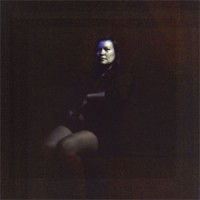
Hold/Still, the third studio album from Suuns, is an enigmatic thing: an eerily beautiful, meticulously played suite of music that embraces opposites and makes a virtue of cognitive dissonance. It is a record that does not give up its secrets easily. The 11 songs within are simultaneously psychedelic, but austere; sensual, but cold; organic, but electronic; tense sometimes to the brink of mania, but always retaining perfect poise and control. “There’s an element of this album that resists you as a listener, and I think that’s because of these constantly opposing forces,” says drummer Liam O’Neill. “Listen to the song ‘Brainwash’, for instance, “It’s a very soft, lyrical guitar song, existing alongside extremely aggressive and sparse drum textures. It inhabits these two worlds at the same time.”
From the beginning, Suuns (you pronounce it “soons”, and it translates as “zeroes” in Thai) have sought to do things differently. They formed in Montreal 2007, when singer/guitarist Ben Shemie and guitarist Joe Yarmush got together to work on some demos, soon to be joined by Liam, Ben’s old schoolfriend, on drums and Max Henry on synth. Their group’s first two records, 2010’s Zeroes QC and 2012’s Polaris Prize-nominated Images Du Futur – both released on Secretly Canadian – were immediate critical hits, and Suuns soon found themselves part of a late ’00s musical renaissance in the city, alongside fellow groups like The Besnard Lakes, Islands and Land Of Talk. Still, at the same time, Suuns feel remote from the big, baroque ensembles and apocalyptic orchestras that typify the Montreal scene. “We write quite minimal music,” thinks Ben. “They’re not traditional song forms, sometimes they don’t really go anywhere – but they have their own kind of logic.” Or as Joe puts it: “It’s pop music, but sitting in this evil space.”
After two records produced by their friend Jace Lasek of The Besnard Lakes at his Montreal studio Breakglass, Suuns decided Hold/Still demanded a different approach. In May 2015, they decamped to Dallas, Texas to work with Grammy- winning producer John Congleton (St Vincent, The War On Drugs, Sleater- Kinney). For three intense weeks, the four recorded in Congleton’s studio by day, the producer driving them to capture perfect live takes with virtually no overdubbing. At night, they returned to their cramped apartment and stewed. “Recording in Montreal, it’s more of a party atmosphere,” says Joe. “Here it felt like we were on a mission. We were looking for something to take us out of our element, or that might seep into our music.” Luckily, the effect was galvanizing. Under Congleton’s instruction, ‘Translate’ and ‘Infinity’, songs the group had been reworking for years, suddenly found their form.
The result is undoubtedly Suuns’ most focused album to date, the sound of a band working in mental lockstep, crafting a guitar music that feels unbeholden to clear traditions or genre brackets. From the haunted electronic blues of ‘Nobody Can Save Me Now’ to throbbing seven-minute centrepiece ‘Careful’, Hold/Still foregrounds the work of Max, a synthesizer obsessive who builds hisown patches and confesses to using cranky or budget equipment as well as top-of-the-range kit because “[good gear] does all the work for you, and that’s not always fun”. Certainly, this is a band as inspired by the dark groove textures of Andy Stott, the flourishing arpeggios of James Holden or the serrated productions of Death Grips as anything familiarly rock. “Things don’t feel right until they’ve been touched or cast over in an electronic light,” elaborates Liam. “It’s rare that acoustic drum kit, guitar, and bass comprise a finished product for us. For a song to be Suuns, it has to be coloured by electronics”.
Certainly this remains a band in love with the aesthetic of obscurity. The album cover is an image of Ben’s former workmate Nahka, who was captured by photographer Caroline Desilets using a pinhole camera with a four-minute exposure time – Hold/Still, indeed.
In another contradiction, this record finds Ben’s vocals far more enunciated and upfront than before. If there are themes that tie Hold/Still together, says Ben, they might be investigations “about sex… perhaps not the act specifically, just [themes] of a sexual nature. But there’s also a spiritual undertone that points to another kind of searching.” The sexual is illustrated in the dark romance of ‘Careful’, while longing becomes both sexual and spiritual in the thirsty pleas of ‘Instrument’: “I wanna believe/I wanna receive…” The spiritual takes over on the back half of the record. ‘Nobody Can Save Me Now’ evokes artist Tracey Emin’s ghostly invocation For You at the Liverpool Cathedral: “I felt you / and I knew that you loved me”, while side B opener ‘Brainwash’ wonders: “Do you see, all seeing? / Do you know, all knowing?”
In a cultural centre like Montreal, bands can get too comfortable playing to their peers. Suuns, though, feel like a band always looking to the nearest border. They found early audiences in France and in Belgium, where they curated the Sonic City Festival in 2012, booking acts as diverse as Swans, Tim Hecker and Demdike Stare. Meanwhile, the last couple of years have seen them tour as far afield as Mexico, Morocco, Beirut, Taiwan and Istanbul – sometimes with friend Radwan Moumneh of the multimedia project Jerusalem In My Heart, with whom they released a brilliant collaborative record, Suuns And Jerusalem In My Heart last year.
“We tour a lot as a band and we’ve been all over the map at this point,” says Ben. “There is a concerted effort on our part, when the opportunity arises, to do that. It’s like, this time, let’s try to go further east, let’s try to go further south. You find yourself playing in front of people who don’t get bands playing in front of them often, and that can be really fun.” In short, good things happen when you venture outside of your comfort zone – a truth that you could equally apply to Hold/Still itself: an album which derives its eerie power from simmering tensions and strange, stark juxtapositions, and in doing so, directs rock music down a new, unventured path.

This is a single disc version on 180grm Green vinyl. The ORIGINAL VERSION of this vinyl of this brand new EP was work of art collaboration between Anton Newcombe & Icelandic artist Jon Semundur Auoarson the double 12″ EP consists of 5 new tracks by the Brian Jonestown Massacre & double sided etched disc by Jon Semundur Auoarson & was strictly limited to 1,000 Units worldwide This VERSION is a single 5 track EP but with the same superb cover art as the original release . This was recorded after the extensive tour of Europe ,Australia , New Zealand & a few select dates in New York State (especially ATP supporting My Bloody Valentine et al ) in 2008 , Anton went to Berlin to focus on his next album ., 4 weeks before hitting the US tour in April 2009 ,Anton was bursting with ideas & went to Iceland where this 5 track EP was recorded . This album brings the traditional Brian Jonestown Massacre sound mixed with eastern influences & bringing it up to date with the benefit of all the additional weirdness that’s been discovered in the past 40 years.

Singing Saw is a record written simply and realized orchestrally. In it, Kevin Morby faces the reality that true beauty – deep and earned – demands a whole-world balance that includes our darker sides. It is a record of duality, one that marks another stage of growth for this young, gifted songwriter with a kind face and a complicated mind.
In the Autumn of 2014, Kevin Morby moved to the small Los Angeles neighborhood of Mount Washington. The move would shape Singing Saw, Morby’s first album for new label Dead Oceans. Previous tenants at Morby’s new home happened to leave an upright piano behind, with a few mysterious pieces of sheet music and an introductory book of common chords stacked on top. Thankful to finally be in one place for an extended spell, Morby, a beginner at the piano, immediately sat at the new instrument and began composing the songs that would form Singing Saw.
Alongside, he began taking long walks through the winding hills and side streets of the neighborhood each night, glimpsing views of both the skyline’s sweeping lights and the dark, dried out underbrush of the LA flora. The duality of the city itself began to shape a set of lyrical ideas that he would refine with the sparse accompaniment of piano and acoustic guitar.
What is a singing saw? It is an instrument that creates ethereal sounds, but it is also a tool: basic and practical while also being fearsome, even destructive. Morby watches the singing saw in its eponymous song; that instrument of eerie soft beauty cuts down the flowers in its path and chases after him, while his surroundings mock and dwarf him, Alice in Wonderland style. And in a singing saw, we can understand music as something more powerful than its inviting, delicate sound. No wonder Morby talks about a “songbook” in his head as something he needs to take up the hills so he can “get rid of it.” Heavy themes are nothing new for Morby, whose previous records (2013’s Harlem River and 2014’s Still Life, both released on the Woodsist label) dealt with their own eerie visions and damning prophecies.
Morby opens Singing Saw with “Cut Me Down”, a song of tears, debts and a prescient vision of being reduced to nothing. “I Have Been to the Mountain”, “Destroyer” and “Black Flowers” continue to explore beauty and freedom, seizing upon the rot that seeps into even the supposedly safest of realms; peace, family and romantic love. By the end of the record on “Water”, Morby is literally begging to be put out once and for all, like a fire that might burn all the visions away.
Travels beyond his mountain walks inform songs like “Dorothy”, which recounts a trip to Portugal, witnessing a fishing ritual and luxuriating in the aura of a bar light-tinged reunion with old friends The touching innocence of “Ferris Wheel” stands alone in stark simplicity amidst the lush sonic textures of the album. Here, the album is balanced by Morby’s signature sweetness and joie de vivre.
The arrangements of Singing Saw trace back to Morby’s experience playing in The Complete Last Waltz, a live recreation of The Band’s legendary last performance. There, Morby developed a fast friendship with producer/bandleader Sam Cohen (Apollo Sunshine, Yellow Birds), which led Morby to forgo recording in Los Angeles and take the nascent songs of Singing Saw to Isokon Studios in Woodstock, New York. There, in a converted A-frame house, they set about creating a record that would bring a sonic balance, intricacy and depth to match these songs and all that inspired them.
Sam Cohen added a multitude of instrumentation to the record (guitar, bass, drums and keyboard), and were joined by fellow Complete Last Waltz alum Marco Benevento on piano and keyboard, fleshing out Morby’s original compositions and upholding the vision for a cohesive piano sound that serves as a touchstone for the entire album. Backup vocalists Hannah Cohen, Lauren Balthrop and Alecia Chakor contribute soaring harmonies; Nick Kinsey (Elvis Perkins) adds drums and percussion; Justin Sullivan, a longtime Morby collaborator and staple of his live band, contributes drums; Oliver Hill and Eliza Bag lift numerous songs with string accompaniments, and Alec Spiegelman on saxophone and flute and Cole Kamen-Green on trumpet bring dramatic swells. Finally, John Andrews (Quilt) adds the eerie lilt of the album’s promise, providing saw on the “Cut Me Down” and “Singing Saw”.
In the end, Morby fulfills the promise many heard on his first two albums, bringing his most realized effort of songwriting and lyricism to fruition. The songs of Singing Saw reflect the clarity that comes from welcoming change and embracing duality, and the distillation of those elements into an entirely new vision.

After the critically acclaimed release ‘Deep Fantasy’ (2014), White Lung return with their fourth album ‘Paradise’. Vocalist Mish Barber-Way, guitarist Kenneth William and drummer Anne-Marie Vassiliou, reconnected in Los Angeles to work with engineer and producer Lars Stalfors (Health, Cold War Kids, Alice Glass). Mixed by Stalfors and later mastered by Joe LaPorta, ‘Paradise’ is their smartest, brightest songwriting yet. Coming in at 28 minutes, the album simmers with desire and pain, love and beauty, and a seething urgency, hurtling towards the album closer and title track Paradise at signature breakneck speed.
LP+ – Pressed on pale blue vinyl limited quantity worldwide includes printed inner sleeve and MP3 download card.
Tape – Limited edition cassette version of the album in a silver / blue / red tri-glitter shell, limited to 300 worldwide, includes MP3 download card.
CD – Digipack.
LP – Black Vinyl with printed inner sleeve and MP3 download card.

Love Letter for Fire is a collaboration between Sam Beam (aka Iron and Wine) and singer-songwriter Jesca Hoop. The thirteen-track album features the singles “Every Songbird Says” and “Valley Clouds,” and was written throughout 2014. Love Letter for Fire features Beam and Hoop on vocals and guitar along with Robert Burger (keys), Eyvind Kang (violin, viola), Glenn Kotche (drums, percussion), Sebastian Steinberg (bass) and Edward Rankin-Parker (cello). The album also features a cover photo by Sam Beam.
As Iron and Wine, Sam Beam recorded for Sub Pop from 2002-2007, releasing a number of highly-acclaimed albums, singles, and EP’s, including The Creek Drank The Cradle (2002), Our Endless Numbered Days (2004), Woman King (2005) and The Shepherd’s Dog (2007). He went on to record for Warner Brothers, Nonesuch, and 4AD. Recent releases include a covers album with Ben Bridwell from Band of Horses, and the two-volume Archive Series, which features material that preceded Sam’s Sub Pop-era recordings.
Jesca Hoop is an American singer-songwriter and guitarist. She is an incredible live performer, known for her wonderfully-eclectic take on folk, rock, and electronic music. Hoop has released five albums and two EPs, including the critic favorites Hunting My Dress and The House That Jack Built. Jesca has toured and collaborated with the likes of Shearwater, Willy Mason, Blake Mills, Andrew Bird, The Ditty Bops, Guy Garvey, and Elbow, and has recorded for Bella Union and Vanguard. Love Letter for Fire was produced, recorded and mixed by Tucker Martine (Modest Mouse, Decemberists, Neko Case) at Flora Recording & Playback in Portland, OR and mastered by Richard Dodd in Nashville, TN.

Late last year, Destroyer released ‘Poison Season’ – a treasure trove of mid-’70s Bowie-esque thumpers, string-laden laments and E Street horns – to universal acclaim. Recorded in the same sessions as ‘Poison Season’, the song ‘My Mystery’ was a huge favourite yet somehow felt like it didn’t quite fit on the album. Now it gets released as a stand alone 12″ backed by ‘My Mystery (DJ johnedwardcollins@gmail.com remix)’.

Tanya Donelly is a singer-songwriter and founding member of three of the most successful bands of the post-punk era. At the age of 16, she and stepsister Kristin Hersh formed Throwing Muses, which became the first American band ever signed to the influential British label 4AD. Not only did the Muses’ dreamy, swirling guitar sound prove highly influential on many of the alternative acts to emerge in their wake, but they also made any number of unprecedented advances into the male-dominated world of underground rock. Donelly later sidelined with Pixies bassist Kim Deal to form the Breeders, appearing on the debut LP, Pod. She later exited both the Breeders and Throwing Muses to form her own band, Belly. After issuing a pair of well-received EPs, Belly released their full-length debut, Star — a superb collection of luminous, fairy tale-like guitar pop songs — and for the first time in her career, Donelly earned commercial success commensurate to her usual critical accolades. Not only did the record go gold on the strength of the hit single ‘Feed the Tree’ but the band even garnered a Grammy nomination for Best New Artist. Donelly would eventually disband Belly to raise her two daughters. She still found time to write and record music as a solo artist — Beautysleep, Whiskey Tango Ghosts and This Hungry Life were all exceptional albums and enjoyed critical success. The Swan Song Series is a collection of songs in which Donelly collaborated with friends, musicians and authors such as Rick Moody, Robyn Hitchcock, John Wesley Harding, Damon Krukowski and Naomi Yang (Damon + Naomi/Galaxie 500), Bill Janovitz (Buffalo Tom), Tom Gorman (Belly), and Claudia Gonson (Magnetic Fields), and explored an impressive range that wasn’t always captured on previous albums. This exclusive collection includes the first 5 self-released digital EP’s + 7 brand new, previously unreleased, tracks on a 31 song set.

The first new music from Lush for 20 years, and the first the band have released since their single 500 (Shake Baby Shake), taken from their last album Lovelife, in July 1996.
The four tracks were recorded in the summer of 2015 with Daniel Hunt (Ladytron) and Jim Abbiss (Adele, Kasabian, Arctic Monkeys)
Talking about the recording of the EP, Miki Berenyi commented:
“It certainly took sometime to come together, but once we were in the studio, everything came together incredibly quickly. It was great fun!
It’s been a long time since I’ve written Lush lyrics, and I realised early on with this EP that what I wrote about then is not what I feel comfortable writing about now. My perspective, and what is close to my heart, has changed, and I think that’s conveyed in the songs.”
Bassist Phil King added:”I know I’m biased, but I work for a music magazine and so much of the music I hear played in the office sounds non-descript or derivative. Emma has this way of writing unusual chord changes and manages to weave lovely melodies over the top, and it immediately sounds distinctive, like Lush.”
Signed to 4AD in 1989, over the course of 3 full-length albums, an early mini-album and a number of EPs and singles, they went on to sharpen their pop sound, outliving and outgrowing the ‘scene’ with which they were initially associated.
4AD recently released, to much acclaim, both a vinyl reissue of Lush’s ‘best of’ compilation Ciao! and a limited edition five-disc box set titled Chorus.

Serving up a combination of Southern musicality and garage rock ferocity, Shreveport, Louisiana natives Seratones announce their debut album ‘Get Gone,’ released via Fat Possum Records. Led by powerhouse frontwoman A.J. Haynes whose thunderous vocals recall the grit of Janis Joplin and gospel of Mavis Staples, Seratones make a strong case with ‘Get Gone’ to be your new favourite alt-rock band of 2016. Recorded at Dial Back Sound studios in Mississippi, ‘Get Gone’ is all live takes, a portrait of Seratones in their element. Add the soul and swagger of a juke joint with the electricity coursing through a basement DIY show, and you’d begin to approach the experience of seeing this foursome live. Haynes’ powerful singing voice, first honed at Brownsville Baptist Church in Columbia, Louisiana at age 6, rings across every track. ‘Don’t Need It,’ which opens with a muscular swing and tight guitar lines, builds into a monster finish with a nasty corkscrew of a guitar line. ‘Sun,’ a brawny thrasher, courses with huge, raw voltage riffs. ‘Chandelier,’ a mid-tempo burner and vocal workout by Haynes, goes from croon to a crescendo that would shake any crystals hanging from the rafters. Shared history in Shreveport’s music scene brought the Seratones together a few years ago. All four had played together with one or another in various local punk bands, bonding through all-ages basement shows, gigs at skate parks and BBQ joints, and late nights listening to jazz and blues records. In a city of multiple genres, no fixed musical identity and a flood of cover bands, these adventurous musicians carved out their own path, personifying the do-it-yourself ethos. The band’s unwavering dedication to staying true to themselves is echoed throughout their debut; however you try to describe it, ‘Get Gone’ is unexpected and unbowed, a head-snapping showcase of the twin pillars of Southern music, restlessness and resourcefulness.
LP – Black Vinyl With Download.
LP+ – Limited Yellow Coloured Vinyl with Download.

Limited 7″ (200 copies) with CD (CD contains Stereo, Mono & Instrumental mixes), and digital download. We have 50 copies only !!! Alt pop super-group FIR combines the songwriting genius of Brent Rademaker from Beachwood Sparks and Matt Piucci from Rain Parade, with the extraordinary talents of Rob Campanella from The Brian Jonestown Massacre and Nelson Bragg from the Brian Wilson Band. On this record, the bittersweet combo is made complete by the smooth harmony vocals of the Allah-Las. Sounding something like a sugary, drugged out Beatles, FIR’s first 7″
Dedicated to all jangly indie/guitar/jangle-pop
Show a little faith there's magic in the night
Horror, Science Fiction, Comic Books and More
IN MEMORY EVERYTHING SEEMS TO HAPPEN TO MUSIC - Tennessee Williams
A Celebration of Thrillers, Noire and Black Comedy by Pamela Lowe Saldana
Join me as I listen to every single #1 single!
Two Guys In Search of Great Music
Hoping to make the world more beautiful
hear ye, hear ye!
Celebrating music craftsmanship
Favorite song lists, reviews, featured indie artists, and music commentary.
A Blog About Music, Vinyl, More Music and (Sometimes) Music...
Eclectic reviews of ambient, psychedelic, post-rock, folk and progressive rock ... etc.!
A transparent attempt to promote a writing career
Quality articles about the golden age of music
Slow molasses drip under a tipped-up crescent moon.
Click Header to Return Home
to Rock, Country, Blues & Jazz
A Glasgow view of Americana and related music and writings.
Rewind the Review
A stroll down memory lane through my music collection
the best music of yesterday today and the tomorrow, every era every genre

