‘Pacific Kiss’ is the fourth album from Australian musician David West’s underground pop band, Rat Columns. It was engineered by Griffin Harrison and DW in New York City and Perth, and mixed by Mikey Young in Victoria. ‘Pacific Kiss’ sees Rat Columns plunging headfirst into an azure sea of power pop, rock’n’roll and indie. The tones are bright and optimistic, though fans of confusion and gloom will still find solace in the album’s darker moments, of which there are a few.
Rat Columns emerged from San Francisco via Perth, Western Australia in the late 2000’s with the mope ’n’ jangle of their first self-titled cassette release, from which several tracks were drawn for their first vinyl release, a four-song 7” on the San Francisco based indie label, Smartguy Records. From that moment, David West and a constantly evolving troupe of friends and co-conspirators have forged a persistent trail of albums and EP’s on a number of interesting small labels such as RIP Society, Upset The Rhythm, Blackest Ever Black,Syncro-System, Adagio 830 and now the London-based Tough Love Records, who have also released many of David’s eponymous pop records. West has also found time to play in a number of other interesting outfits, such as Rank/Xerox, Lace Curtain, Liberation, Scythe, Total Control and Burning Sensation over the years.
‘Pacific Kiss’ was primarily recorded in a dingy but comfortable practice space in East Williamsburg, Brooklyn. The core of the record is West, bassist Max Schneider-Schumacher, drummer Dylan Stjepovic and keyboard wiz Joey Fishman. Additional fairy dust was sprinkled by Amber Gempton and Raven Mahon (vocals), Jef Brown (saxophone) and Mikey Young, who found time to contribute some off the wall guitar solos during the mixing process. ‘Pacific Kiss’ is a record for those astral voyages into the spheres conducted from bedrooms, kitchens, grassy fields and open car windows.
Dan Penn doesn’t hurry. It took him a full 26 years to deliver “Living on Mercy”, his sequel to 1994’s Do Right Man, a good stretch of time by any measure, so it follows that the album itself glides by at a relaxed pace. Occasionally, the record works up a head of steam — “Edge of Love” gets down and dirty with its gritty guitars and sweaty horns — but nothing on the album is revved up, which may be appropriate for a man just a few years shy of his 80th birthday. Penn does sound comfortable in his skin, possibly even a little weathered, throughout Living on Mercy, yet there’s a honeyed quality to his singing; he’s seasoned but he’s not old.
Dan Penn, writer of such classic hits as “Do Right Woman,” “Dark End of The Street,” and “I’m Your Puppet,” among them, shines in his first release of new original material since “Nobody’s Fool” in 1973 and his first full production studio album since 1995’s “Do Right Man.”
Recorded in Nashville and Muscle Shoals alongside their finest musicians, Penn, the pioneer of Country Soul, turns in a performance as timeless as the genre itself.
The same sentiment could be applied to the songs on Living on Mercy, some of which are new, some of which were handed out to other musicians over the years. When collected on Living on Mercy — and delivered by a crew of empathetic old pros — they feel of a piece, a sweet, soulful, and reflective effort from a masterful singer/songwriter that benefits from its mellowness and slow, assured gait.”
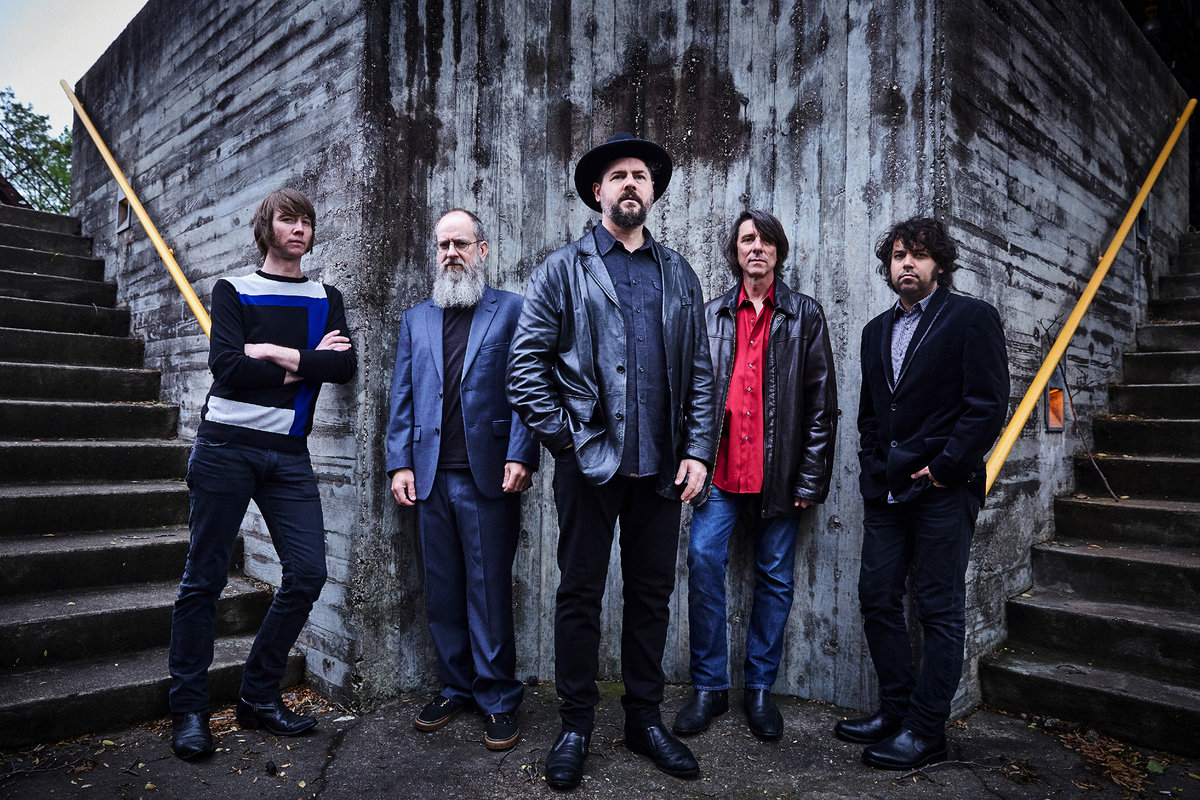
Drive by Truckers‘ penchant towards political observation and criticism is as evident as ever in “The New Ok”. The album’s title spins the ‘new normal’ cliché, often used to describe the apathy towards and acceptance of the dysfunction caterwauling from the politically powerful. Indeed, the album overtly opposes ICE and the caging of children at the border. More so, Drive by Truckers use their album to lend support to the Black Lives Matter movement while questioning white-identity politics and rejecting far-right discourses. Drive by Truckers are not content to examine contemporary political angst as a singular historical moment.
“Sarah’s Flame”, for example, contextualizes Sarah Palin’s role in paving the way for Trumpism, leading up to the white supremacist march through Charlottesville, North Carolina. The New Ok’s strength is derived from its overtness. Drive by Truckers do not hide their intent in symbolism or purple lyricism. By utilizing a conversation-style delivery, their purpose is apparent. Whereas The New Ok is decidedly a bleak portrait of the now, Drive By Truckers urge their audience to acknowledge the deceitful political artery that led society to 2020, then prevent the devastation from further continuing.
DBT released The Unraveling on January. 31st 2020 and set out for what was supposed to be a full year of touring. We completed the first leg of the tour at DC’s beloved 9:30 Club on Feb. 29th. We all went home for a brief break before resuming at Vogue in Indianapolis on March 12th. We were two songs into the soundcheck for that show when we were told that the entire tour was to be postponed indefinitely due to the Covid-19 pandemic. We packed up the trailer and headed home where we’ve pretty much been ever since.
To call these past few months trying would be a dramatic understatement. Our lives are intertwined with our work in ways that give us our best songs and performances. It is a life that has often rewarded us beyond our wildest dreams. Speaking for myself, I don’t have hobbies, I have this thing I do. To be sidelined with a brand new album and have to sit idly while so much that I love and hold dear falls apart before my very eyes has been intense, heartbreaking, anger provoking and very depressing. It has gone to the very heart of our livelihoods and threatened near everything that we have spent our lives trying to build.
The original idea for this album was to put out an EP utilizing some great tracks we had from the Memphis sessions that “The Unraveling” was culled from. We actually had a wealth of music recorded in those sessions. Not inferior outtakes, but songs we felt strongly about that didn’t further the narrative of the album we decided to release. We also wanted to include some new songs written during this endless summer of protests, riots, political shenanigans and pandemic horrors. We ended up with a full album that hopefully balances out the darkness of our current situation with a hope for better days and nights ahead.
I wrote “Watching the Orange Clouds” the weekend after George Floyd’s murder as I watched the whole country rise up in a chaotic firestorm of anger and calls for a righteous change. I wrote The New OK a couple of months later during the heat of the federal occupation in my adopted hometown of Portland, Oregon. We had to record them by sending each other tracks until we had all that we needed for David Barbe to mix the finished songs.
The Distance is a song I wrote in 2011. We had an unfinished demo from early in the English Oceans sessions that we took and finished for this album. Again, it’s a song I’ve always loved but it didn’t fit in with the album we were working on at the time. I kinda consider it an epilogue for our early days of touring in our 1988 Ford Econoline. You could almost call it a sequel to “Let There Be Rock”. “Sea Island Lonely” was written in the back of a car taking me to a super early flight after a show in Southern Georgia. It was one of my favourite takes from the Memphis sessions, a total accident that we completed with horns.
“Tough To Let Go” came to me in a dream. I woke up and immediately wrote it down. We also put horns on that sucker. When I dreamt it, Jason Isbell was singing it. I literally checked with him to make sure that I hadn’t actually stolen it from him. He said I hadn’t, but it was his favourite of my songs from the Memphis sessions.
Cooley wrote “Sarah’s Flame” in early 2019. I’ll let you guess yourself who this Sarah is whose metaphoric spark lit the tiki torches of Charlottesville. This national nightmare didn’t just happen overnight, that’s for sure. “The Unraveling” was a song I wrote several years ago and had always wanted to record but just couldn’t make it work with my singing voice. At some point during the Memphis sessions, I asked Bobby Matt if he would give it a try and he knocked it out of the park. At some point, when we decided to call the last album by that title, we thought it would be cool if we saved the actual title cut for a future record (shades of Led Zeppelin’s “Houses of the Holy”).
As we were finishing in Memphis, Barbe told us to go back in and track our cover of The Ramones’ classic “The KKK Took My Baby Away”. He said we’d be glad we did. That’s yet another reason why he’s been our producer for two decades now.
Finally, in putting it all together, in keeping with the timing of its creation and release, we decided to include The Perilous Night which I began writing on the day the Electoral College voted Trump into office and completed the week after the Charlottesville murder of Heather Heyer on the day that the sitting President said that there was blame on both sides. This is a radically different mix from the mix of the single we released in 2017.
Here’s to the hope that we can make 2021 a better year than this one has been. In the meantime, here’s to The New OK!. Patterson HoodThe DBT’s – September, 2020 Released October 2nd, 2020
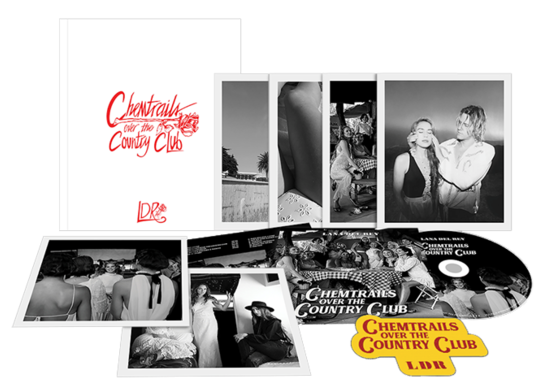
Lana Del Rey will release a new album, “Chemtrails Over The Country Club”, in March. Lana Del Rey is back with a brand new studio album, hot on the heels of last year’s audiobook and poetry collection, Violet Bent Backwards Over The Grass and her Grammy-nominated sixth Norman F**king Rockwell. If the first hints of new music is anything to go by, we’re back to what Lana does best – vintage pop with an overdose of nostalgia, but the melodies are timeless. The new single is the second offering off the upcoming album, following “Let Me Love You Like a Woman” and is a tender piano ballad that was produced by Jack Antonoff.
we are a big fan of Lana Del Rey’s 2019 album Norman Fucking Rockwell. The singer detailed the new project back in September during a feature in Interview Magazine. “I’ve been really stressed about this album,” she confessed at the time. “From the top, we knew what Norman was. But with Chemtrails, it was like, ‘Is this new folk? Oh, god, are we going country?’ Now that it’s done I feel really good about it, and I think a defining moment for this album will be ‘White Dress/Waitress.’”
It’s an 11-track album and is available as an Amazon-exclusive BEIGE-coloured vinyl (available in different regions), or an indie-exclusive YELLOW vinyl. There’s a standard CD in a jewel case but also a CD box set edition which looks a bit rubbish since it only contains a few artcards a 12-page booklet and a print – and costs a whopping £45!
The New Album ‘Chemtrails Over The Country Club’ – Out March 19th
Mighty Magnolias has released their third album, and it sounds like it was made in Laurel Canyon in 1974 and still manages to sound fresh and relevant. It is the best Norwegian album released in 2020 and they deserve international recognition. It almost sounds as if J.D. Souther at his best wrote songs with Jayhawks and Stevie Nicks … with a Rolling Stones type country guitar weaving in and out of the songs. The melodies, the singing and the musicianship are very strong.
It has never happened before, This year’s best Norwegian album comes from Os, and Mighty Magnolias. Two of my tentative favorites from the record are country-charged “Somewhere up the Way” and “Roots” rocker “Nothin’ is for Real”.
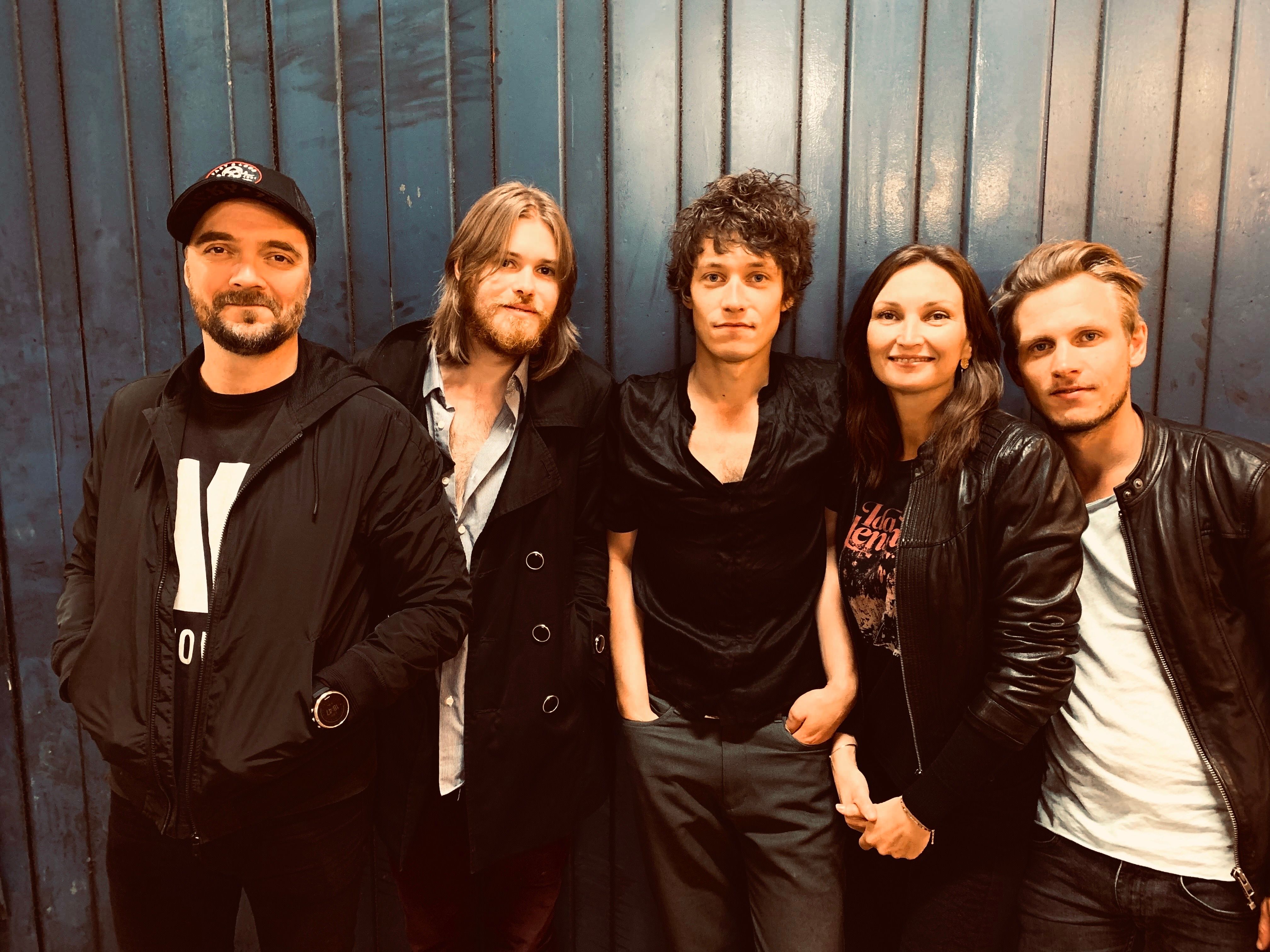
On their third album, Mighty Magnolias appears as a packed band that gets to show off its full and full potential. After two records recorded in Snaxville in the deep forests of Eastern Norway, they have this time made the trip to Havnelageret Studio in Bergen, where vocalist Emil Nordtveit uses everything he has learned – and takes the step forward as producer for the record.
This is a solid country rock record. As good as the songs are on the album (and they are great) they’re even better live.
They’ve made their best record, one of the best albums of the year, and one of the best Americana records made in this country.
Australian five-piece Mt. Mountain are today announcing their fourth album, ‘Centre’, and sharing the first single ‘Aplomb’. Hailing from Perth, Australia, Mt. Mountain deal in a sprawling, motorik psychedelic rock sound that journeys between tranquil, drone-like meditations and raucous, full-throttle wig-outs that’ll blow your mind as much as your speakers. Now signed to Fuzz Club Records, ‘Centre’ is due out February 26th check out the first cut, ‘Aplomb’, below.
Taking cues from Krautrock pioneers like Neu! and Can whilst existing in a similar world to contemporaries like Moon Duo, Kikagaku Moyo and Minami Deutsch, Mt. Mountain are formidable torchbearers of the minimal-is-maximal tradition. Out today, ‘Aplomb’ was one of the first songs written for the album and marked a conscious shift of focus towards more rhythmic patterns within their music. Stephan Bailey (vocals/organs/flute) reflects on the song: “‘Aplomb’ is essentially the voice that I hear in my head, reminding me to not rush and slow down, and to have the confidence to bring this into practice in everyday life. We wanted there to be this clear contrast here between the tempo of the song and the lyrical content, an approach which appears throughout the album.”
Mt. Mountain is : Steven Bailey (organ / vocals) Thomas Cahill (drums) Glenn Palmer (guitar/synth) Brendan Shanley (bass) Derrick Treatch (guitar).
News breaks today of a new album from Eric D. Johnson’s Fruit Bats. “The Pet Parade”, an album that emerges in troubled times, living within what Johnson refers to as the beauty and absurdity of existence, is due for release by Merge Records on 5th March.
Ahead of the album’s release, comes ‘Holy Rose’ a song that introduces itself as a ballad but soon blossoms with fuzzed-out guitars and organ. Johnson on this new song: “Holy Rose” is possibly the most “direct” song on The Pet Parade. I wrote this about the 2017 Tubbs Fire in Sonoma County and was finishing it up right when fire season was raging in California. My wife grew up in Sonoma County and just had to sit there and watch her childhood burn down. This is a love song to the native West Coasters.”
While many of the songs on The Pet Parade were actually written before the pandemic, it’s impossible to disassociate the record from the times. As an example, producer Josh Kaufman (The Hold Steady, Bob Weir, The National, and Bonny Light Horseman, in which he plays with Johnson and Anaïs Mitchell) was brought in for his deep emotional touch and band-leading abilities. However, Johnson, Kaufman, and the other musicians on The Pet Parade—drummers Joe Russo and Matt Barrick (The Walkmen, Fleet Foxes, Muzz), singer-songwriter Johanna Samuels, pianist Thomas Bartlett (Nico Muhly, Sufjan Stevens), and fiddler Jim Becker (Califone, Iron & Wine)—were forced to self-record their parts in bedrooms and home studios across America.
At times upbeat and reassuring and at times quietly contemplative, The Pet Parade marks a milestone for Johnson, who celebrates 20 years of Fruit Bats in 2021. In some ways still a cult band, in other ways a time-tested act, Fruit Bats has consistently earned enough small victories to carve out a career in a notoriously fickle scene.
And Johnson himself—who has played in The Shins, composed film scores, gone solo and returned back to the moniker that started it all, and recently earned two Grammy nominations with Bonny Light Horseman—doesn’t take this long route of life’s pet parade for granted. “I’m still really excited to make records,” he says. “Lucky and happy and maybe happier that things went slower for me. I’m savouring it a lot more.”
From the album The Pet Parade, out March 5, 2021 on Merge Records.
Citizen have always eluded definition. The Toledo, Ohio-based three-piece have been making dynamic, wide-ranging guitar music for over ten years, challenging expectations with each new album and refusing to fit neatly in a box. On their fourth full-length, “Life In Your Glass World”, Citizen have crafted their most singular work to date completely on their own terms—proving that only the band themselves can define their identity.
Since forming in 2009, Citizen—vocalist Mat Kerekes, guitarist Nick Hamm, and bassist Eric Hamm—have endlessly pushed themselves with each successive release, actively resisting the comfort zones that often plague bands as they grow. The band has fearlessly taken risks with their sound on each new album, and shown themselves capable of exploring impassioned post-hardcore, raw noise rock, shimmering indie pop, anthemic alternative, and more—often on the same album, and sometimes even the same track. But growth isn’t always painless, and the band has been navigating the fraught music industry from a young age—learning as they went and sometimes feeling pulled in different directions at once.
When it came time to make Life In Your Glass World, Citizen’s need to continue moving forward creatively went hand in hand with their desire to be fully in control of their creative destiny. NickHamm explains: “I don’t have a lot of regret but there have definitely been times when we felt powerless during the band’s existence. This time we really owned every part of the process. It’s easy to feel like you’re on autopilot when you’re in a band, but that’s not a good place to be this far into our existence. We consciously knew we wanted to break free.”
For Citizen that meant taking the entire album-making process home to Toledo (the Glass City) and creating everything in-house. Kerekes built a studio in his garage, a project that was both empowering and practical. “It’s super easy and convenient,” he says. “But I also felt like building the studio was a way to prove we don’t need anything but ourselves.” Hamm adds, “This is the first self-sufficient Citizen record. There was no pressure at all and moving at our own pace allowed the songs to be a little more fleshed out.” The looser recording process afforded the band time to focus on each song’s individual mood, making their signature blend of aggression and melody all the more pronounced, and even capturing appealing imperfections. The result is an album that represents the members’ vision in its purest form, something that feels distinctly Citizen while also marking the start of a fresh chapter.
One of the most immediately striking elements of Life In Your Glass World is the band’s attention to rhythm. Many of the songs feature undeniably danceable beats and sharply grooving guitar lines, which give both the barnburners and the brooding atmospheric tracks a pulsating heart. “When you write songs the same way for X amount of years, you start to want to try something new,” Kerekes says. “These songs were mostly built from drums and bass first, which was different for us. I’d start with a completely different beat every time to get a certain energy.” The band’s desire to assert themselves is palpable both in the music and Kerekes’ lyrics, mirroring not only their creative frustrations but also a long year of personal upheavals. “There’s a lot of anger in these songs and we wanted the music to communicate that,” Hamm says. “I think a lot of people expect bands to slow down or chill out when they get to where we are, but we consciously didn’t want to do that.”
The opening one-two punch of “Death Dance Approximately” and “I Want To Kill You” exemplifies the acerbic-yet-buoyant feel of Life In Your Glass World, and the latter sums up the album’s defiant themes. Kerekes puts it plainly: “Sometimes you feel like you’re being used. A lot of the lyrics are liberating, they’re reclaiming control.” The band wastes no time in showing their range, pivoting to the melancholy haze of “Blue Sunday” and the bounce of “Thin Air,” both of which meditate on the struggle to invest so much in something only to be let down and retreat inside oneself instead. Elsewhere tracks like “Call Your Bluff” and “Black and Red” showcase Citizen’s knack for big choruses, while “Pedestal” features towering drums and a distorted bass line that’s as malevolent sounding as Kerekes’ vitriolic words. “Fight Beat,” with its tense mix of otherworldly menace and memorable hooks, takes the band’s rhythmic-centric writing to its furthest point yet; lyrically, the song grapples with the realization that one has passed a point of no return, a sentiment that permeates the attitude of Life In Your Glass World. “This isn’t a baby step,” Hamm says. “It’s exactly what we want to do.”
Much of Life In Your Glass World deals with the bleak and challenging aspects of being human, and the album often feels like an exorcism of pent up negative feelings. But those feelings give way to a sense of hope with the closing track “Edge of The World.” Interweaving guitars rise around Kerekes’ voice as he considers past pain with the kind of clarity that can only come from time and distance—and finds promise in looking towards the future. The song builds to a soaring finale as the clouds part and Kerekes declares, “At the end of the day there was beauty in tragedy.” It’s one last turn, the kind of affirmation that makes you re-examine everything you just heard with a newfound perspective. It’s a fitting conclusion for Life In Your Glass World – borne of the confidence gained through years of trials, tribulations, and self reflection – and one that asserts that Citizen’s true identity is rooted in the raw energy of constant evolution.
Releases March 26th, 2021
Life In A Glass World is the new LP from Ohio-based four-piece Citizen. Really tight production, this is proper playlist guitar bangers. Very limited Blue & Green Galaxy Swirl Vinyl.
Recorded over the history of the world renowned psychedlica event, professionally mixed and mastered, this series represents a valuable moment in time for live music in Austin, Tx.
The bands showcased here are performing at their strongest and with something to prove. this series captures key moments in modern rock and roll history, and live music in Austin, Texas. The artists and sets showcased here are the best of the best, with key artists performing for a crowd of their peers and fans who gather at “Levitation” annually from all over the world. this specific album captures a slice of the early days of the festival, and the band as a psychedelic rock powerhouse with tracks from the Black Angels 1st two lps – with 6 tracks recorded at Austin Psych Fest 2010, 2011 and 2012.
The artists and sets showcased on Live at Levitation have been chosen from over a decade of recordings at the world-renowned event, and documents key artists in the scene performing for a crowd of their peers and fans who gather at Levitation annually from all over the world. The Black Angels’ Christian Bland explains, “Since the beginning… The Black Angels were meant to be heard live. This record captures the rumble of the drums and amps, and the very essence of the way it should sound. Now future generations and new listeners can now hear how these songs were meant to be heard.”
The Black Angels – “Live at Levitation” sees its release March 26th via The Reverberation Society on vinyl and digital formats. The LP has been given deluxe treatment, with three mind melting vinyl options available exclusively through the Levitation webstore, plus two Indie Store exclusive versions: one available at your favourite record stores in the USA and Canada, and one for the UK and Europe.
For an incoming ‘Live At Levitation’ album from the mighty The Black Angels.The Reverberation Appreciation Society has recently launched the “Live At Levitation” series. Recorded over the history of the world-renowned event, professionally mixed and mastered, this series represents a valuable moment in time for live music in Austin, TX. The bands showcased here are performing at their strongest and with something to prove. This series captures key moments in modern rock and roll history, and live music in Austin, Texas. Get a taste of the LP with a live cut of “Manipulation”, filmed at Austin’s Seaholm Powerplant and captures a hypnotic performance and collaboration with sitarist Rishi Dhir.
Levitation (formerly known as Austin Psych Fest) began as a simple idea in a Black Angels tour van in 2007 — let’s invite all our favourite bands and all our friends, for our version of a music festival. The first Austin Psych Fest was held in March 2008, and expanded to a 3 day event the following year. From there, the festival quickly developed into an international destination for psychedelic rock fans, with line-ups spanning the fringes of indie rock, from up-and-comers to vintage legends, and capped off with headlining performances from The Black Angels each year. The Black Angels and Levitation helped spark a movement, inspiring the creation of similar events across the globe and a burgeoning psych scene that would soon ignite.
“Austin’s importance as the breeding ground for psych is finally on people’s radars thanks to Levitation.” – The Guardian “The lineup is adventurous and well-curated… one of the best boutique festivals in the country” – Austin Statesman “Austin Psych Fest has developed from a 10 band bill of like-minded acts in a small venue, to a 3-day celebration of the finest mind-expanding sounds currently being made.” – Consequence of Sound “The annual Austin Psych Fest is becoming the All Tomorrow’s Parties of the South… with a lineup that traces a new psychedelic era.” – The Austin Chronicle
“Each year we get to see our friends and music community from around the world gathered in Austin, and we’ve been able to share the stage with many of our music heroes. Playing at Levitation is like playing at the psychedelic Olympics, and everyone walks away with a gold medal.” – The Black Angels’ Alex Maas
Due for release March 26th, this specific LP captures a slice of the early days of the festival, and the band as a psychedelic rock powerhouse with tracks from The Black Angels 1st two LPs – with 6 tracks recorded at Austin Psych Fest 2010, 2011 and 2012.
Reciting mantras is a form of teaching — leaning into the repetition, retraining your brain, learning new realities. For Jilian Medford, it was a way to fight through her anxieties. And here, on “Show Me How You Disappear”, through a haze of tangled, inverted pop, her new truths push their way to the surface.
Mesmeric and kaleidoscopic, shimmering with electrified unease, Show Me How You Disappear is both an exercise in self-forgiveness and an eventual understanding of unresolved trauma. Medford’s third record as IAN SWEET unfolds at an acute juncture in her life, charting from a mental health crisis to an intensive healing process and what comes after. How do you control the thoughts that control you? What does it mean to get better? What does it mean to have a relationship with yourself?
The inklings for the record began slowly. In 2018, Medford wrote “Dumb Driver” on an acoustic guitar while living in a “hobbit hole” back house in Los Angeles. Skeletal, stripped-back versions of the undulating, amorphous “My Favorite Cloud” and “Power” emerged next. Mentally she was in a dark place. By January 2020, following increasingly severe panic attacks, Medford began a two-month intensive outpatient program, including six-hour days of therapy. It yielded an unprecedented level of self-reflection for Medford, who already plumbs the depths of her emotions for her song writing. She took a step back from music to completely immerse herself in the program, and once she felt ready to move on at the end of February, the rest of the songs poured out of her.
Recorded with Andrew Sarlo (Big Thief, Empress Of), Andy Seltzer (Maggie Rogers), and Daniel Fox, among others, Medford approached this album as a curator. She handpicked the producers that fit each song, which explains the range and experimentation showcased. Medford then recruited Chris Coady to mix and tie everything together into one cohesive piece.
The resulting record envelops both Medford and the listener like water: its ebb and flow, the ease with which it can switch from nourishing to endangering you. Fully immersive, with guitar lines as quick to sound grungy as they are to ascend to astral distortion, it’s a lush cacophony of experimentation. While writing the record, Medford revisited the discography of her forever favourite band, Coldplay and noted inspiration from Young Thug’s bizarre and magical vocal delivery. With these influences and many more, Medford’s pop melodies are inverted by the freak world she builds around them.
The cyclical nature of obsessive thought patterns shapes Show Me How You Disappear. It’s self-referential, each song in conversation with one another, tracing the same relationship and the desire to be an escape artist from your own life. But there’s also the repetition Medford learned to help herself via Emotional Freedom Technique tapping, which involves tapping pressure points on the body and repeating mantras to curb anxiety.
“Since I learned that method in therapy, it has saved my life and seeped into my music,” she says. “Song writing has always been a tool for me to process my emotions. But this technique has allowed me to apply more intention to that practice.”
For her, the refrain of “Get Better” hits that hardest, a sort of emotional thesis of the album. She explains, “This song came from being stuck in an infinite loop of destructive thoughts and the only way to get out of my head was to repeat my goal over and over. By saying ‘I want to get better, better, better’ out loud, I started to feel something.”
Show Me How You Disappear also offered a certain liberation to Medford. As personal as it is — like preceding albums Shapeshifter and Crush Crusher — here, post-therapy, Medford was able to approach her song writing in a new way. She learned how to distance herself from the immediacy of her work, to put space between her personal identity and her art. There was less concern about fitting every piece of her story into the lyrics. Instead, this time, she held back. “I think there’s something to be said for leaving things out,” Medford says. “This is the first record that I leave that space for myself. I feel a freedom on this one that I haven’t felt with the others. People always say ‘I put all of me into this’, but I actually didn’t this time — I left space.”
Dizzying and enthralling, Show Me How You Disappear is the sound of someone coming apart and putting themselves back together the moment an old mantra, repeated into the mirror time and time again, finally clicks. To look at your reflection, and finally feel seen.











 The Fat Angel Sings