The St. Petersburg five-piece created something of a stir with their debut album Everything Else Matters in early 2015 and the interest in the release stemmed from more than the fact that nobody had heard a Russian shoegaze band before. Despite its obvious influences, there was a depth to the music that implied Pinkshinyultrablast were a band who weren’t afraid to take a step into the unknown and push at a few boundaries. Their new album “Grandfeathered” shows this indeed to be the case as it is more experimental and powerful than its predecessor, managing to be both exhilarating and captivating. Opener ‘Initial’ begins with a long drawn out single note that gives no hint at the multi-layered gem to come, the song throbbing like a dub remix whilst overlayered in Cocteau Twins’ shimmering vocals. ‘Glow Vastly’ follows in the same pattern, the vocals here just managing to keep to the surface while a heavily distorted barrage of guitars and drums attempts to submerge them, the whole occasionally infiltrated by light bursts of melody that tantalise briefly before disappearing into the depths. ‘I Catch You Napping’ flies backwards and forwards between pop serenity and frenzied distortion and is quite excellent, while ‘Kiddy Pool Dream’ opens to a squeal of feedback and embraces MBV noisescaping, something also witnessed in the crushing ‘Comet Marbles’ and ‘Mölkky’. The single ‘The Cherry Pit’ is also a headrush of contrasting forces, while the closing title track moves between tempos with uncommon grace. From a band who had found themselves embraced by supporters of a very precise genre, this is a brave album, a potent blend of force and fancy. All credit to Pinkshinyultrablast for stepping out of the comfort zone to deliver such a fiercely charged offering and all the more credit for producing one of such quality.
City Sun Eaterin the River of Light is Woods’ Graceland. This is the prolific band’s ninth album, but their first to explore East African rhythms—an odd but intriguing choice for a psych-folk group from Brooklyn. This introduction echoes Paul Simon’s incorporation of South African isicathamiya and mbaqangaon his 1986 masterpiece.
It’s an unexpected turn for the band, whose last record, 2014’s With Light and with Love, was a distillation of their most enduring qualities: meandering, kaleidoscopic riffs, bucolic melodies, and Jeremy Earl’s endearingly nasal voice. Woods’ Jarvis Taveniere tells me over the phone it was a sort of “best-of” album for the band. It wasn’t groundbreaking—in retrospect With Light and with Love was like a tune-up, a chance for them to perfect their mechanics before off-roading on City Sun Eater in the River of Light.
“For a lot of it we just wanted to go back to our earlier days, when we would just jam and have a few mics up,” he says. “We would put vocals on top of it and chop it up.”
Woods opens this newest effort with “Sun City Creeps,” a lush six-minute tableau of unease. It begins with ominous horns that loom overhead throughout the song like dark storm clouds. The band hasn’t abandoned psychedelia, but embroidered it with beats and instrumental elements inspired by Ethiopian jazz. The effect is a sinister grooviness, as Woods navigates complex interchanges between anxiety and solace.
Tracks like “I See in the Dark” are expansive and jammy but also precise and controlled—frenetic riffs and pulsing bass lines vibrate with nervous energy before being drowned by droning organ. “I just hit record on the tape machine and ran downstairs, picked up my bass, and we kind of found that groove,” Taveniere says.
Woods return to their dusty old wheelhouse on what seems like an accidental standout, “Morning Light.” It’s exquisite, but completely different from the rest of the album. For one song they cut the experimentation for four blissful minutes of Americana-psych, with nostalgia-inducing piano and the honeyed whinny of a pedal steel channeling the spirit of the Band, while Jeremy Earl’s airy vocals follow the melody like a feather dancing in the wind. “Morning Light” unfortunately serves as a reminder that, while their foray into East African-inspired rhythms is an interesting and well-executed diversion, Woods does psych-folk really well.
If there’s a Woods sound, Taveniere says it’s probably Earl’s voice—a trembling falsetto that’s somehow both the most and least distinctive quality of Woods’ music. His voice easily melts into the band’s songs, whether they’re rooted in trippy psychedelia, idyllic Americana, or complex East African beats. This is the link between the new and old on City Sun Eater in the River of Light, the one guarantee that, even if they decide to experiment with zydeco on the next record, Woods will probably always sound like Woods.
Bright Eyes have announced a new box set, collecting six of their records from the 2000s. It’s aptly titled The Studio Albums 2000-2011, and it’s out on vinyl and CD on September 16th via Saddle Creek. The Studio Albums includes 2000’s Fevers and Mirrors, 2002’s Lifted, or, The Story Is in the Soil, Keep Your Ear to the Ground, 2005’s I’m Wide Awake, It’s Morning and Digital Ash in a Digital Urn, 2007’s Cassadaga, and their most recent LP The People’s Key (2011). All of the albums have been remastered by engineer Bob Ludwig (at Gateway Mastering).
Formed in 1995, Bright Eyes have released nine studio albums (with another one on its way later this month) and each of their records explore different sonic territories—folk, emo, country, pop, indie rock. It’s a tough and almost unfair challenge to rank their albums, much less their songs, but it’s a task worth exploring.
Still, with every album, the distinguishing factors remain: frontman Conor Oberst’s shaky, despondent vocals, and his existential, often story-like lyricism. At the heart of every song is some kind of revelation, whether it’s about love, lust, pain, or existence. In Cassadaga, this happens in a magical setting with cowboy vibes and no laws; whereas Digital Ash in a Digital Urn exists within a morbid electro-pop atmosphere, like a realm of cyberspace.
Down in the Weeds, Where the World Once Was arrives August. 21st via Dead Oceans. The record travels through water and fire, life and death, sickness and health. It’s hard to place what territory Bright Eyes have not touched; and if there’s any space left over, they will be sure to explore it at some point.
The vinyl edition of the box set includes 10 coloured LPs, 12 8×10 photo prints by Butch Hogan, and an essay by Nathaniel Krenkel (who founded Team Love Records with Conor Oberst). Each record is “housed in a foil stamped linen-wrapped box.” In addition, each disc in the 6xCD edition is “housed in a foil stamped linen coated board slip case.” See the vinyl box set below.
The new remastered records will be available individually in November via Saddle Creek. Fevers and Mirrors and Lifted are out November 4th. I’m Wide Awake, Digital Ash, and Cassadaga are out November 11th.
Bright Eyes – The Studio Albums 2000 – 2011 Bright Eyes is largely the brainchild of Nebraskan song writer Conor Oberst and his long time collaborator/producer/multi instrument playing friend Mike Mogis. Cataloguing all of the bands studio works, this box set features some of, in our opinion, the most underrated albums of their time. This long awaited box set catalogues Conor Oberst’s song writing at its peak, beautifully put together on stunning coloured LPs with some lovely extras. It really hits the old cliché of being ‘a must for any fan’ which we hear far too much in press releases from labels trying to promote box sets like this, but it really is worth it!
“Lover I Don’t Have to Love” Reckoning with toxic impulses, addiction, love, and pain, this track is the most intense Bright Eyes song. It moves slowly, and Oberst’s vocals are close to whispers, but his words are raw and sharp: “I want a lover I don’t have to love / I want a girl who’s too sad to give a fuck.” There’s a powerful tension between darkness and love, and this storyline is specific but universal. Towards the end, Oberst proclaims: “But life’s no story book / Love’s an excuse to get hurt,” and it’s just one of his many despondent observations that make Bright Eyes so evocative and special.
“You Will. You? Will. You? Will. You? Will.” This beautiful acoustic track follows two lovers who consider each other to be “the re-occuring kind.” Oberst compares their love to a storybook, and reflects on the beginning: “We were just kids when I first kissed you / In the attic of my parents’ house / And I wish we were there now.” It’s a messy type of love, but Oberst paints it as romantic and meant-to-be, playing with ideas of destiny and fate. His voice is confident and enthused by the end, and the instruments are booming like an excited orchestra at a wedding.
‘Fevers and Mirrors’ and ‘Lifted…’ are two great examples of how to make beautifully crafted songs with darker subject matter like failed suicide attempts, and drug abuse. Both, are to some extent, reminiscent of the writing style of Leonard Cohen, and Nick Cave, these songs aren’t afraid to lay out Oberst’s misery, or unafraid to be called depressing by some, because if songs are as good as these early works, they can’t be depressing at all!. Bright Eyes, but make it rock ‘n’ roll.
This Fevers and Mirrors track best demonstrates the vague Victorian aura this album plays with. It samples the unsettling melody and some lyrics from the 1964 Fiddler on the Roof song of the same name, and Oberst’s haunting voice adds to the darkness. He sings of the cyclical nature of life, describing it as a trap we can’t escape without death.
The heartbreak ballad is best listened to during a breakup. Oberst wallows in self-pity to the fullest extent, showing it off like he’s proud. His voice trembles in the typical Oberst fashion, but at times it sounds as if he’s about to burst into sobs. He even breaks out in a yell, lamenting the betrayal of the one he loved the most: “You said you hate my suffering / And you understood / And you’d take care of me / You’d always be there / Well where are you now?” Even though he’s clearly being dramatic, it’s impossible to not sympathize with him and want to cry yourself.
The Calendar Hung Itself…This obsessive love song is an iconic emo anthem. Every line reads like a Tumblr poem about a toxic relationship between young lovers: “Does he lay awake listening to your breath / Worried that you smoke too many cigarettes?” Oberst is full-on playing a character, and he’s tangled up in something he knows will end up hurting him. It’s the second track on Fevers and Mirrors, and it sets up the scene for the self-pity and panic attacks to come.
The guitars on the song from 2011’s The People’s Key are almost generic, Charming harmonies and a keyboard are layered throughout the song, and an extravagant culmination of the two closes it out. Still, the best part is the beginning, with Oberst singing, “I loved a triple spiral / My maiden-mother-crone,” with a fun rhythm buoying the song along.
The band’s real mainstream breakthrough came with the 2005 release of two albums on the same day, ‘Digital Ash InA Digital Urn’ a slightly more experimental album with touches of Obersts early oddities, and what is seen by many as the bands high point ‘I’m Wide Awake, It’s Morning’. An album that fits in with some of the best modern Americana, with a real love of country and is almost a more career driven album, itching to fulfil the critics who referred to Oberst as a modern day Dylan.
Cassadaga carries on prefectly from where ‘I’m Wide Awake…’ with country inspired tracks at the start of the album, such as the single ‘Four Winds’, but flows through bits of everything the band had done before. The track ‘No One Would Riot For Less’ feels like an end of the world, anti war piece that wouldn’t be out of place at the end of the ‘1984’ film, that no one else could’ve written. Recounting a story about emotional affairs, religion and redemption, this extravagant song sounds at first as if it’s from Neutral Milk Hotel’s In The Aeroplane Over the Sea. Oberst is taking on the perspective of a wife whose husband cheated on her with a mistress, and she’s a vivid, complicated character: “Her bed beneath a crucifix / On guests performing miracles / With the Son of God just hanging like a common criminal.” But nothing in the song compares to Oberst passionately singing the unforgettable line: “Oh, I’ve made love, yeah, I’ve been fucked, so what?”
The heartwarming ballad “First Day of My Life” is Bright Eyes’ biggest hit, though it’s a bit misleading. Oberst is rarely this optimistic, but it explains why he’s so crushed when a relationship ends. His love is deep and committed, and his voice is tender as he recalls the blossoming of it all, quoting what his lover said to him: “This is the first day of my life / I’m glad I didn’t die before I met you.” It’s the tamest, most content part of I’m Wide Awake, It’s Morning—free of any sense of darkness, war or ache.
“When The President Talks To God” This political, country-folk song caught the audience of The Tonight Show with Jay Leno off guard. Bright Eyes were promoting the double release of “I’m Wide Awake, It’s Morning” and Digital Ash in a Digital Urn, and instead of performing songs from either of those albums, they used their platform to protest the presidency of George W. Bush. The song is confrontational enough to give you chills: “When the President talks to God, / Are the conversations brief or long? / Does he ask to to rape our women’s rights?” It gave context as to why Oberst is often cast as one of the most depressed voices of our generation—he’s haunted by the state of the world as much as he is by his own life.
“Middleman” is this evocative western track is an eccentric travelling song. Cassadaga itself resides in a weird world—one representing the town in Volusia County, Fla., known for its psychics, mediums and overall spiritual energy. “Middleman” creates this mystical aura best with careful strumming, poignant violin and what sounds like a bongo drum. Oberst is a mysterious narrator offering vague warnings: “Because I never know when it’s time to go / It’s too crowded now inside / The dead can hide beneath the ground / And the birds can always fly.”
“Land Locked Blues” This song is lyrically perfect down to every line, which is impressive for a nearly six-minute journey. Oberst harmonizes with Emmylou Harris again, and they reckon with a love that must end, wars that won’t stop and the urge to be free. These themes intertwine and interact with each other, most noticeably in this powerful image: “We made love on the living room floor / With the noise in the background from a televised war / And in the deafening pleasure I thought I heard someone say / If we walk away, they’ll walk away.”
“We Are Nowhere And It’s Now” Opening with the lines “If you hate the taste of wine / Why do you drink it ’til you’re blind?,” this song is full of personal, depressing accusations. In the same verse, Oberst asks: “Why are you scared to dream of God / When it’s salvation that you want?” Everything is colossal, though the guitar is tame, and Oberst and legendary country singer Emmylou Harris sing slowly and carefully.
The band’s final album, ‘The Peoples Key’, feels in some ways like a fitting end to the collection in this box, for the most part its a band that is still at its high point, but in moments like the stunning ‘The Ladder Song’ you feel like you’re right back with a ‘Fevers and Mirrors’ Conor. The beauty of all of these albums is how well Mogis can blend the ever changing collection of collaborating musicians that make up Bright Eyes with the bewitching vocals and lyrics from Oberst.
Australian based in Brisbane five-piece Sacred Shrines came screaming out of the gates this year.
Having only started playing together less than 12 months ago, they’ve already supported the likes of The Dandy Warhols, and have also spent that last year writing and recording their debut album ‘Come Down From TheMountain’. Moving through heavy grooves on the title track, to the drifting melodies of ‘Lights Are Green’, it’s an accomplished slab of psych-drenched rock.
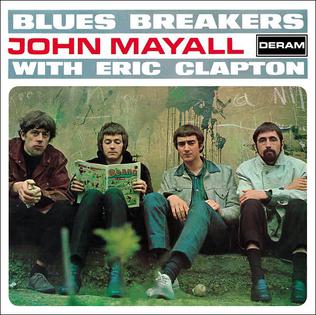
July 22nd 1966 saw the release of what has become the greatest British blues albums of them all, John MayallBlues Breakers with Eric Clapton. It was the first studio album and the second overall credited to JohnMayall, who teamed up for the first time in a studio release with the ex- Yardbirds Eric Clapton.
It is also known as The Beano Album because of its cover photograph showing Clapton reading The Beano a British children’s comic. Clapton stated in his autobiography that he was reading The Beano on the cover because he felt like being “uncooperative” during the photo shoot
The album set the benchmark for all blues albums that followed, cemented by Clapton’s explosive guitar tone thanks to the majestic bonding between a Gibson guitar and a Marshall amplifier. Not only is it the greatest British blues album but it’s also one of the great albums of all time, period. Recorded April 1966 at Decca Studios West Hampstead, London.
The guitar that Eric Clapton used during these sessions was a sunburst 1960 Gibson Les Paul Standard with two PAF humbucking Pickups . This guitar (which was stolen in 1966; its whereabouts remain unknown) is also called the “Blues Breaker” or “Beano” Les Paul and a replica of which was reissued by Gibson in 2012.
The band on this album includes Mayall on piano, Hammond organ, harmonica and most vocals; bassist JohnMcVie drummer Hughie Flint and Clapton. Augmenting the band on this album was a horn section added during post-production.
The album opens with the Otis Rush number “All Your Love”, a cracking way to begin. The song manages to capture everything great about the Bluesbreakers from John Mayall’s unique vocals, Clapton’s explosive guitar, McVie’s pounding bass and Flint’s driving rhythm that is the back bone of the entire song. It’s followed by “Hideaway” which has arguably become the standard version of the song, the original of course being by the late great Freddie King who Clapton was hugely influenced by at the time. Even though it’s a song largely dominated by Clapton’s guitar, the entire band shine brightly and showcase their abilities as Britain’s premier and best British blues band. The first Mayall penned track comes next in “Little Girl”. Apart from Mayall’s vocals, Clapton again takes centre stage with a blistering guitar solo over the ruthless rhythm section of John McVie and Hugh Flint, both of which really take this song to another level. “Another Man” is pure Mayall drenched with some of the best harmonica playing you’ll ever hear.
Things then slow down a tad with “Double Crossing Time”, a fantastic number written by Mayall and Clapton. It’s a wonderful slow blues which clocks in at just over three minutes in length which is the only downside as you feel it deserves to go on for at least another few minutes. The opening riff of “What’d I Say”, originally by Ray Charles, is next and this particular version remains one of the most exciting ever recorded. Mayall gives one of his best vocal performances and it’s the first time on the album so far where you’re able to bask in the magnificence of Hugh Flint’s drumming, as he plays a superb solo section halfway through the song. The rest of the band then return with a Day Tripper-esque riff to bring the song to a close. Next up is “Key To Love” which is another Mayall original. Flint is an abs0lute force of nature with some of the best drumming you’ll ever hear, and Clapton returns for another ear drum attacking guitar solo.
Released: July 1966 (mono) / December 1969 (stereo)
John Mayall: Lead vocals, piano, organ, harmonica
Eric Clapton: Guitar, lead vocals on “Ramblin’ on My Mind”, John McVie: Bass guitar, Hughie Flint: Drums, Plus: Alan Skidmore: Tenor saxophone, Johnny Almond: Baritone saxophone, Derek Healey: Trumpet
The great “Parchman Farm” comes next which was originally recorded by Bukka White in 1940 and then covered by a host of musicians including Mose Allison, Johnny Winter, Bobbie Gentry and Hot Tuna to name just a few. Mayall is a man possessed on harmonica here, arguably giving his finest musical performance of the entire album. The slow blues number “Have You Heard”then takes things in a slower direction, at least at first. When it comes to electric guitar solos this song certainly contains one of the finest ever recorded with Clapton showing exactly why the nickname “God” was so fitting. The things he managed to do with a guitar during this song are second to none in my opinion, firmly placing him as the greatest British blues guitarist of all time.
“Ramblin’ On My Mind” remains to this day as one of Robert Johnson’s most well known songs, helped by the legendary status of this version featuring Clapton on lead vocals. And it’s the fact that Clapton took lead vocal duties on this song that made it so legendary, after all this is the first time he ever sang lead on a song. Even though he used to sing backing vocals with The Yardbirds it’s a strong vocal performance with guitar accompaniment including a tasty solo, backed up by Mayall on piano. It’s probably the most pure blues song of the whole album and a song that opened up Clapton both vocally and musically, as he would go on to call Robert Johnson one of his main influences and as a eventually record Me & Mr. Johnson, a tribute album to his idol, in 2004. “Steppin’ Out” is the second guitar lead instrumental after Hideaway and a song Clapton would continue playing with Cream up until their final active year in 1968. It’s a superb number with Clapton yet again showcasing his guitar abilities fantastically. The final song is “It Ain’t Right” which sees the album end on a wonderful note. Originally recorded by Little Walter, Mayall lays down some fine harmonica while the rest of the band hit hard like a freight train. A perfect way to end the album.
Overall it’s a faultless album, A considerd Classic album. Not only do you get to witness the evolution of EricClapton but you get to listen to British blues at it’s very finest. The band as a whole were fantastic. John Mayall, EricClapton, John McVie, Hugh Flint.
Released this day July 22nd in 1977: Elvis Costello – My Aim Is True
On My Aim Is True, Elvis Costello’s’ raw energy comes through in a way that’s never completely recaptured on later records. While the songs range from mellow country twang to full-on, spitting assault, there’s a strange cohesiveness to the album simply by virtue of its rough, rushed feel. Although it’s a studio album, there’s a latent energy to Nick Lowe’s production that grants My Aim Is True all the immediacy of a live show. Recorded at Pathway Studios in London 1976-1977.
Elvis Costello’s debut album brought home to me just how timid Little Criminals really is. Costello’s best songs are anything but timid, but they’re as intelligent as some of Newman’s finest, as endearingly elusive in their meanings, and funny in the same bitter, self-deprecating manner. They are also, like Newman’s signature songs, very weird. Originally released on Stiff Records but reissued on various labels, Columbia, Demon Rykodisc, Rhino Records and Hip O, Singles released from the album
According to Costello’s own website, a second version of the album (with an identical track listing) was recorded over a 2-day period in July 1977. This second version was recorded by Elvis Costello and his new permanent backing band, The Attractions, with the intention of replacing the original tracks contained in My Aim Is True once the initial pressings had sold out. This never came to pass, however, and all released versions of the album continue to use the original recordings with members of Clover as the backing band. As well, although several reissues of My Aim Is True have featured various demos and 1977-era recordings as bonus tracks, the July 1977 album re-recordings have never been issued in any format.
On 8 November 2007, Costello reunited with the members of Clover from the original recording sessions to perform the songs from My Aim Is True. This marked the first ever (and to date only) live public performances of these songs by the original ensemble that recorded them. The event took place at the Great American Music Hall in San Francisco, and was a benefit for the Richard de Lone Special Housing Fund,
If one record perfectly encapsulated the ethos of Stiff Records, it is My Aim Is True. Combining Barney Bubbles’ iconic designs, JakeRiviera’s ingenious marketing slogans, Stiff’s irreverence and a unique artist, it did what the major labels had failed to do for years. It acknowledged that music fans deserved better and tapped into Britain’s deep-rooted culture of buying and collecting records. The Stiff template had been created and the bar set high.
Photographer Chris Gabrin had produced the black and white shots that had adorned the sleeves of ‘Less Than Zero’ and ‘Alison‘. However, it was Keith Morris who was invited to do the shoot for the album under Barney Bubbles’ direction. Bubbles reportedly threw Elvis Presley-like shapes around the room as the other Elvis struck a variety of poses against a pale backdrop. A picture of awkwardness in a jacket, open-neck shirt and tie, turned-up jeans, and National Health glasses, Costello was a geek years before it was chic. A vibrant yellow screen was placed over him for the initial run of 10,000, ensuring it would stand out in the racks and window displays of record shops. Then, when the album began to catch fire, Stiff made a discovery that would result in a collector’s dream. Riviera had gone with Bubbles to oversee the first run and found out that using different coloured inks wouldn’t cost more. He then demanded that every run of 5,000 copies be printed in a different colour.
Oakland’s Happy Diving make the kind of catchy, riffy sludge pop that should appeal to fans of Dinosaur Jr or Torche, or a newer band like California X. They’ve been around for a few years, with a album and a EP release under their belts, and they’re set to release their second album titled “Electric Soul Unity” on August 19th via TopshelfRecords. We’ve got the chance to hear “Don’t Be Afraid Of Love” from that album, which you can listen to below.
Ever since the band’s scintillating debut, they’ve been making frequent appearances on year-end lists from the Music Blogs and more importantly growing sharper with each successive release. Recently, there was a post that spotlighted “Holy Ground” a towering single from the band’s forthcoming , “Electric Soul Unity”. Opening with “Bigger World” a winking nod towards their outstanding debut album. The band makes no bones about the fact that they’ve dramatically increased the size of their scope. Everything from the production to the songwriting indicates the band’s set loftier goals for themselves from the very outset of this record. It’s an extraordinary effort from a band that’s more than ready to take on any challengers and it won’t go down without putting up an unforgettable fight. http://
There can be no discussion of I Love You, Honeybear—Josh Tillman’s sophomore album under the Father JohnMisty moniker–without first acknowledging just how problematic the persona appears to be. His ethos (and appeal) is extracted directly from a bit of that hazy Californian mysticism which so shaped the rock n’roll of the mid-70s. Legend has it that prior to the release of 2012’s Fear Fun, a listless Tillman left his home in Seattle, hopped in a van, and drove down the West Coast of the US equipped with ample quantities of existential angst and psychedelic mushrooms. It was at the end of this pilgrimage, in a shack in LA’s Laurel Canyon, that Father JohnMisty was born. And, just as his origins suggest, he is more archetype than alter-ego. I Love You, Honeybear is drenched in predictable debauchery and misogyny, but just when you think Tillman is method acting or keeping up appearances, he strays toward self-conscious profundity.
Gone are the days in which the lyrics of white, heterosexual, longhaired pseudo-gurus will go unexamined, and there is no way that Josh Tillman doesn’t recognise this. Father John Misty is too complex to be a pure anachronism. He is constantly toeing the line between frankness and insincerity; Honeybear is rich with sarcasm, flagrant in some places and barely discernable in others. It is impossible to take seriously, but too damn compelling to be dismissed.
The title track is a mid-tempo taste of melancholy Americana, complete with cinematic strings and bittersweet declarations of emotion. Tillman stages a scene featuring a couple deep in love, entirely detached from their surroundings: “I barely know how long a moment is/unless we’re naked getting high on the mattress/while the global market crashes,” he croons over an orchestral crescendo. When the album begins, we find Tillman cripplingly smitten (now-wife Emma is reportedly the muse in question, and the stranger he encounters in the parking lot in ‘I Went To The Store One Day’.) However, Honeybear is largely an out-of-sequence account of his indiscretions and dissatisfactions leading up to their meeting.
On ‘The Night Josh Tillman Came To Our Apt’, he lays into a nameless woman, enumerating her undesirable (read: assertive) traits. Convinced of her arrogance, he devotes three-and-a-half minute song to slating her while strings swell and a xylophone tinkles in the background. The figure in question embodies a lot of the stereotypes that one might associate with wealthy, Southern Californian women, he claims: “every insufferable convo/features her patiently explaining the cosmos.”
Father John Misty is a hypocrite: a megalomaniac disgusted by self-centredness in the opposite sex. For just a moment, it seems as though he might be placated by a relationship with a worthy woman, but Father John isn’t nearly earnest enough to let love overwhelm him. His dissatisfaction is written all over ‘Nothing Good Ever HappensAt The Goddamn Thirsty Crow’, and this time a plaintive acoustic guitar ballad provides the backdrop to a jealous lament. Months on the road leave Father John’s lady (presumably his muse, this time around) vulnerable to the attentions of other men. But who could blame them, apparently “it’s hard to believe that a good-hearted woman/could have a body that’d make your daddy cry.” There is just no pleasing Tillman— if Honeybear teaches us anything, it is that love is far from a cure for the anguish of an angsty white man.
Occasionally, Tillman takes a step back from his own predicament to ponder the hopelessness of 21st Century life. Lead single ‘Bored in the USA’ is an appropriately subdued piano ballad bemoaning hollow, soulless American consumer culture. In an ironic nod to the American Dream, he asks “is this the part where I get all I ever wanted?” Predictably, he is met with debt, subprime loans, and a prescription for antidepressants. On ‘Holy Shit’, Tillman takes to lyrical solipsism: “no one ever really knows you/and life is brief/so I’ve heard/but what’s that gotta do with this black hole in me?” It takes a special kind of narcissism to divorce your singular experience of suffering from the endemic experience of human discontent. No one has told Father John Misty that he isn’t the only person to have spied a flaw in the system.
Ultimately, Tillman utilizes a familiar, but perfectly executed, take on the folk-rock idiom to highlight the tensions within him. He’s a miserable and perma-stoned single man turned uneasy paramour whose act of love is dwarfed by the black hole that is the culture he lives in. You’d think that we might be as tired of dysfunctional heterosexual love narratives as we are of left-wing rockers hating on capitalism. The fact that I Love You, Honeybear is arguably one of the most anticipated albums of 2015 shows that maybe the joke is on us.
Persona or not, Father John Misty is an unabashed bundle of contradictions. It isn’t worth sitting around trying to piece together what is ironic here and what isn’t–insincerity is part of the package. But maybe it is worth asking yourself why we’re still interested in what Josh Tillman has to say. And maybe, just maybe, it is because some of his contradictions are yours, too–there are plenty of unhappy consumers out there seeking a mythical other as an antidote to their own boredom. Hell, there’s a market for that, it’s called “online dating”. At the end of the day, Tillman manages to acknowledge his own myopia and doesn’t feel the need to rectify it. If that isn’t privilege, I don’t know what is. Granted, Father John Misty is no everyman, but in highlighting his own hypocrisy, he might illuminate others’ along the way.
Dilly Dally’s debut LP “Sore” was released on 10/09 via Buzz and our buds at Partisan Records!From their debut album “Sore” comes the lead single “Desire” via Buzz Records and Partisan Records.
This blunt-force grunge album from Toronto’s Dilly Dally is more than a 90s throw-back. In fact, it strips the plastic wrap off of everything trendy about the 90s revival and reminds you what made grunge rock so good in the first place, and that’s pure, unadulterated angst. Even the screeching feedback that kicks off the record is no match for the fiery, deep-seated roar of new-comer Katie Monks: Her apathy is boiling and she’s a kettle to the mic. But it’s not just the sound of Monks’ voice or the piercing guitars that make Sore feel so raw. The lyrics grate at Monks’ vexed desires with verses like “I miss you, the ballin’ chain.” Every song on Dilly Dally’s powerful debut—starting with the explosive lead single “Desire” to the aforementioned “Ballin Chain”—scrapes against loving what might kill you in the end.
It’s hard to underplay the previous influence Yeasayer had on late 2000s indie psych-pop. All HourCymbals”(2007) and “Odd Blood” (2010) both helped pave the way for the proliferation of ’80s-indebted indie acts that cropped up everywhere in the last five or six years. So on later albums, including their most recent, Amen &Goodbye”, Yeasayer have been vying with a cohort that is, in some ways, of their own design. The competition hasn’t stopped them from releasing inventive, ambling electronic compositions that are spiked by Chris Keating’s distinctively yearning vocals. “Amen & Goodbye” is proof that doubling down on what you’ve already locked in isn’t necessarily a bad idea.