The Who… The vinyl reappearances of My Generation (the U.K. edition), A Quick One and the glorious The Who Sell Out simply catapulted me back to the age of 14 when these albums were the most important to ever come into my life. To revisit them they way I first heard them was as thrilling now as it was then – except now, I’m 50 years old, Keith and John are long-deceased and Pete and Roger are celebrating their 50th anniversary as The Who. Nonetheless, these three albums should be the cornerstone for teaching your children about rock & roll, about playing guitar, plus the first steps to songwriting and are for all time, essential listening:
Super Deluxe Edition featuring unreleased songs, demos, mixes, remasters, new notes from Pete Townshend, an 80-page book, rare memorabilia and much more!
5-CD Super Deluxe box set, 3-LP Edition* and 2-LP Edition*
In the half century since its release The Who’s debut album “My Generation” has lost none of it’s raw visceral power and still stands as the ultimate musical declaration of teenage rebellion. The title track alone has been covered innumerable times by the likes of Oasis, Green Day, Patti Smith, Billy Joel, Alice Cooper and Iron Maiden amongst many more. Back in 1965 the band were considered to be so dangerous that the tailors tasked with turning a Union Jack into a pop art mod jacket for the cover feared that they would be jailed for desecration of the nation’s flag.
Brunswick Records first issued My Generation in the UK in December 1965, and later in the US, under the title The Who Sings My Generation, in April 1966. It was produced by Shel Talmy who shot to fame with his work with The Kinks, a group that the teenage Pete Townshend admired greatly.
During a break in touring in 2015 Pete Townshend discovered tapes in his audio archive featuring previously unheard demos for the album which also included three totally unreleased songs that the other members of The Who hadn’t ever even heard, ‘The Girls I Could Have Had’, ‘As Children We Grew’and ‘My Own Love’.
The spectacular 79-track five disc super-deluxe edition features these unheard songs as well as unreleased demos, unreleased alternate mixes, new remasters and a stereo remix which was created using new overdubs from RogerDaltrey and Pete Townshend. For this mix Pete used exactly the same guitars and amps as the original album and Roger used the same type of microphone.
The super deluxe edition also features a stunning 80-page colour book with many rare and unseen period photos, candid and insightful new notes from Pete Townshend and period memorabilia.
Of the super deluxe box set Pete Townshend commented “Gathering these demos for this collection has been enjoyable; it’s wonderful for me to have these tapes made fifty-two years ago to listen to. I hope you enjoy them. They have a naiveté and innocence, a simplicity and directness, and an ingenuousness that reveals me as a young man struggling to keep up with the more mature and developed men around me. What an incredible group of strong, talented, young and engaging men they were!”
From the 5th January 1966 UK TV show, “A Whole Scene Going”.
This is their third studio release, and typically another great example of their talents’ without having that extra twinkle we were spoiled with on Jackrabbit.
San Fermin’s sound continues to be bolstered in equal parts by poetic lyrics (“Oceanica”) and a very specific indie rock grandeur (the enormous “Better Company”). With songs like “Sonsick” being the ones that put them on the map, it’s no wonder that they’ve opted to go bigger. More drums, more trumpet, more bass, more vocal harmonies courtesy of Tate and Charlene Kaye. When you think they can’t top each other anymore, the music continues to build.
It isn’t necessary to know the narrative attached to the promotion of the album is about Ludwig-Leone’s more personal approach this time around, but “No Promises” certainly reads that way once you’ve been told the demons he was grappling with. The song sets the background for a lyricist and composer concerned by the pressure of being responsible for this set of talented musicians – the rigours of touring and personal sacrifices rely on his direction, as a result he reasons, to a certain extent does their happiness. The song voices some insecurities about this position. “I won’t promise you that if you follow me around / I won’t let you down / I won’t let you down” Charlene Kaye sings. This creates a quasi-conversation, as of course Kaye voices the words that are, among others, directed at her. The “Open” to the record sets this out even earlier as who else can be “the ghost at the controls” but Ellis? As we discussed when reviewing “Jackrabbit” , although Ludwig-Leone plays the keys with the Brooklyn ensemble, he is primarily writing musical parts and lyrics to be performed by those around him.
However, this all feels a little neat and is not a pervading influence throughout. What is ever-present is the seductive cocktail that Allen Tate, Charlene Kaye, John Brandon, Stephen Chen, Tyler McDiarmid and MichaelHanf create together, Rebekah Durham having left the band recently. The orchestral wildness is reined in a little, but the second-half of “Palisades-Storm” is an electrical, well… storm of instruments and discord which is one of the signatures for the band. Their most notable hallmark is probably the shared lead vocals of Tate and Kaye who are still a treat individually, let alone in tandem. Tate sings with direct address on numbers like “Better Company”, “Belong” and “Happiness Will Ruin This Place” with his deep tones lending themselves to the confessional style, although the toe-tapping “Cairo” gives him freedom to open up too. If Tate is the grounding, Kaye does the soaring on “Dead” and during the vocal section on “Palisades-Storm”, but largely it’s a joint effort as they are very well suited to harmonising.
The particular standouts actually fall towards the end tracks as “Cairo” and “Happiness Will Ruin This Place” provide differing but exciting facets to the whole. The first, a rousing drum-driven, fast-paced lyrical piece should add to their great live spectacle and is perfect for crowds with its highly catchy refrain. Meanwhile, the latter is a clever little construct about the opposing faces to humanity’s coin – ‘the grass is greener’ is a massively reductive summary. There’s such poetry to it, the height of which is when “there’s a moment where he sees / in the chimpanzees / sympathetic eyes”.
Jackrabbit offers an obvious comparative, but had it not been for such a high watermark, Belong would still be getting outright praise along with their slightly more subdued self-titled debut. Previous work aside, this is still an intricate, technically awe-inspiring LP with many narrow pathways to explore.
San Francisco alt-rockers Third Eye Blind will celebrate the 20-year anniversary of their eponymous debut in June with 2CD and 3LP deluxe editions of the 1997 album.
Both new editions combine the original album with a unreleased demos and some new recordings. For example, for this anniversary release, the band recently recorded Alright Caroline and Scattered, two songs that were written for their debut, but were never fully realised in the studio, until now.
Among the demos is the band’s version of the Velvet Underground’s Heroin and an early version of Slow Motion, with lyrics. As can be seen above, this anniversary edition features black cover art.
Third Eye Blind“20th anniversary edition” will be issued on 9th June 2017.
The album will come out as a 180-gram vinyl LP, on CD and digitally and is available for pre-order beginning Friday.
In addition to Waters, who sings, plays bass and acoustic guitar on the album, the musicians include Godrich (arrangement, sound collages, keyboards, guitar), Gus Seyffert (bass, guitar, keyboards), Jonathan Wilson (guitar, keyboards), Joey Waronker (drums), Roger Mannning (keyboards), Lee Pardini (keyboards) and Lucius (vocals) with Jess Wolfe and Holly Laessig.
At the moment Waters has been tight-lipped about the album’s contents, In February he said that he has drawn inspiration from the antipathy he feels toward the Trump administration, as well as a dramatic radio play he had been writing before working on the LP about a man and his granddaughter investigating why children were being killed in faraway lands. “Two or three of the songs from that idea are on this album,” he said. “Nigel Godrich persuaded me that for the purposes of a rock & roll record, which is what this is, he felt my theatrical idea – I’d written the whole thing as a radio play was less than ideal.”
They reworked some of Waters’ ideas, though the singer-songwriter also looked outward for inspiration. The Is This the Lifetune “Wait for Her” was inspired by an English translation of “Lesson From the Kama Sutra (Wait for Her)” by the late Palestinian poet Mahmoud Darwish.
The album will come out shortly into Waters’ upcoming Us and Them Tour , which kicks off May 26th in Kansas City, Missouri. Gigs at arenas around the U.S. and Canada run through October 28th, when the tour wraps in Vancouver.
The tour’s concept will be built around his album title. “I will be making the point that we’re living the life that we don’t really want to live,” he said. But it also ties into the tour moniker, which comes from the Dark Side of the Moontrack of the same name. “I like to think that people would still like to live in a world where we might address the problems of climate change, where we might understand that if we empathize with others, it makes us feel happier,” he said. “Maybe we should start looking at happiness indexes rather than if we win and lose. And if we do that, then we may start to understand that the idea of ‘us’ and ‘them’ is actually an illusion.”
Is This The Life We Really Want?
Track List
1. “When We Were Young”2. “Déjà Vu”
3. “The Last Refugee”
4. “Picture That”
5. “Broken Bones”
6. “Is This the Life We Really Want?”
7. “Bird in a Gale”
8. “The Most Beautiful Girl”
9. “Smell the Roses”
10. “Wait for Her”
11. “Oceans Apart”
12. “Part of Me Died”
Cardinal Fuzz are proud to announce the release of the epic new album “Dust” via Perth quintet Mt. Mountain. Since forming in 2012 Mt. Mountain are already lauded and revered in Australia where they have built a reputation as one of the most compelling live bands, a distinction that has seen them share stages with myriad Australian and international heavyweights including Sleep, King Gizzard and the Lizard Wizard, Thee Oh Sees, Endless Boogie, Tortoise, Bardo Pond and Boris. On “Dust” Mt Mountain have laid down 4 tracks that capture the atmosphere of the red/orange landscapes that consume the Australian Outback. Opening with the mini slow burn epic “Dust” which builds with an incessant drone and flute to form a ghostly menacing and meditative rhythmic and repetitive throb that builds and builds before the release comes and the bands shatters into a heady and thunderous elliptical crunch. Over the entire LP Mt Mountain capture, a dreamlike mood of shimmering dust filled landscapes where slow strummed guitars and single note organ lines ebb and flow and bring to mind Dylan Carson’s ‘Earth’ as played by mushroom ingesting elf’s. ‘Dust’ is psych rock meditation music and It is utterly entrancing.
Newly signed to the Anti- label,Los Angeles-based Ryan Pollie – better known under his moniker of Los Angeles Police Department – sets out his second, self-titled album on April 28th.
The follow-up to his 2014 debut (also a self-titled effort), was produced by Foxygen’s Jonathan Rado (Whitney, The Lemon Twigs) and mixed by Rob Schnapf (Beck, Elliott Smith, Foo Fighters), Pollie describes the album – which addresses suicide and addiction, anxiety and bereavement – as “a coming-of-age story.”:
“You always think of coming-of-age stories as something that happens to kids, something like Stand By Me or Catcher in the Rye, but in my twenties I realized that I was always going to face this vulnerability and this anxiety. I’m never going to be that wise old person who’s cold-hearted and knows everything. So this record is about learning to face up to those fears and be emotionally responsible.”
With the original album remastered from the analog tapes (we’ve heard the test pressings and it does laps around the original), this deluxe re-issue does not disappoint.
In his new liner notes for this reissue, Rolling Stone’s David Fricke calls High Land, Hard Rain “ten songs of anxious yearning, romantic urgency, big hurt and hard-won learning, distilled into compact dramas of buckskin-folk jangle and skewed-pop elegance.” We call it one of the greatest debut albums in the history of rock ‘n’ roll. That it was written and conceived by mastermind Roddy Frame when he was just Eighteen Years Old, well… that just defies all logic and sense of fair play.
A half a century ago this year, the Velvet Underground released its debut LP, “The Velvet Underground & Nico.” This enduringly transgressive album would go on to earn the music-industry axiom, that although relatively few people bought it initially, everyone who did started a band.
The Velvet Underground — featuring Lou Reed, John Cale, Sterling Morrison and Maureen Tucker, with additional vocals from the German singer Nico — would enter Scepter Studios in New York to record its first professional demos of songs like “I’ll Be Your Mirror” and “Heroin.”
One night at a club in New York — described in The New York Times then as “the temporary cinema-discotheque that Andy Warhol , the apostle of Pop Culture, has installed at 23 St. Marks Place” it was all so new. Attendees, wrote, you could “grope their way to the dance floor in blackness that is broken only by hallucinatory flashes of multicolored lights in order to wriggle, writhe and tremble to the music of the Velvet Undergrounds, a four-piece band whose chanteuse is a fashion model answering only to the name of Nico.” The group was merely a detail in the story and getting its name right was not yet a priority.
The concert was part of Warhol’s traveling multimedia shows, known as the Exploding Plastic Inevitable, which mixed projected films, live music and dance. (The entry fee for the night: $2.) Gerard Malanga, a Warhol associate and Factory collaborator, can be seen shimmying onstage with the fresh-faced Velvets. “It was an ephemeral but everlasting experience,” he recalled in an interview this week.
While the images show a split between the squares seated, straight-faced, at clothed tables, and those letting loose on the dance floor, Mr. Malanga remembered the atmosphere as “one of participation and excitement.”
“The crowd looks like they were all grown-ups everybody looks so well-behaved,” he said. “I do remember it being younger and more lively.”
In the celebration of the 50-year anniversary of “The Velvet Underground & Nico” — plus the news that LouReed’s personal archive has now been acquired by the New York Public Library.
By now it’s a pretty famous story of how some guy found a one-of-a-kind acetate pressing of an early, 1966 version of what would become “The Velvet Underground and Nico” album on a New York City street for 75 cents, then sold it on eBay for 25 Grand. It’s known as “The Norman Dolph Acetate”,
The acetate itself was of course very scratchy. This bootleg vinyl released a couple years ago, apparently from Sweden but who knows, offers a beautifully cleaned-up version of the acetate. But you should also go to WFMU’s blog and get the original, scratchy version. For comparison at least. Or history. Apparently this recording was sent back from Columbia Records with a note that said, “You have got to be fucking kidding!” Note that this version of the LP starts off, audaciously, with an even noisier version of European Son, a whole minute longer at 8:49 and a whole lot more cacophonous than the final version which ended up at the opposite end, closing the LP. Also notable are very different versions of “I’m Waiting for the Man” and “Venus In Furs”.
That album was The Velvet Underground and Nico, a uniquely groundbreaking release from a band of arty New York misfits and marketed by the creative whims of one of the most iconic figures of the time:Andy Warhol . The cornerstone of the Velvet Underground’s image and sound was the songwriting of Lou Reed. A socially-awkward Jewish kid from Long Island, Reed’s musical voice, like so many others, was forged in pop and in pain. He taught himself how to play R&B songs on guitar by listening to the radio, eventually forming a doo-wopish group as a teen. Reed also began suffering panic attacks and after a mental breakdown following his first semester at NYU, his parents submitted him for electroshock therapy.
“Panic attacks and social phobias beset him,” wrote Reed’s sister, Merrill Reed Weiner, in 2015. “He possessed a fragile temperament. His hyper-focus on the things he liked led him to music and it was there that he found himself.”
But Lou Reed’s love of music became his guide, and rock ‘n’ roll became his voice. He eventually landed work as a pop songwriter, churning out middling hits for Pickwick Records while composing songs for himself on the side. His approach was to keep things simple and direct.
“I studied classical piano, and the minute I could play something I started writing new things,” Reed said in 2004. “And I switched to guitar and did the same thing. And the nice thing about rock is, besides the fact that I was in love with it, anyone can play that. And to this day anyone can play a Lou Reed song. Anybody. It’s the same essential chords, just various ways of looking at them. There is nothing special about it, and it only becomes special when I can’t do it. When I can’t do it I’m very impressed by the person who can, and when I can do it, it means nothing. But I would write new things from the day I could play anything.”
Reed had been inspired by as much as R&B as pop, and his edgy approach belied a music lover whose tastes were informed by a wide variety of influences.
“There were two sides of the coin for me: That kind of music—R&B, doo-wop, rockabilly. And then Ornette Coleman and Don Cherry, Archie Shepp, stuff like that,” Reed told rock journalist David Fricke in 1989. “When I was in college, I had a jazz radio show. I called it Excursion on a Wobbly Rail, after a Cecil Taylor song. I used to run around the Village following Ornette Coleman wherever he played. There was his song ‘Lonely Woman,’ Charlie Haden’s bass on that [he hums the riff]. Extraordinary.”
What would become the Velvet Underground started in 1964, when Reed met experimental instrumentalist JohnCale and formed a band called The Primitives. With Reed on guitar and Cale on virtually everything else, they eventually added guitarist Sterling Morrison and percussionist Angus Maclise. After a short stint as The Falling Spikes, the fledgling quartet dubbed themselves “The Velvet Underground” after Michael Leigh’s book about sexual subculture in the 1960s. After Maclise suddenly left the group prior to their first paying gig, Morrison brought in Maureen Tucker to play drums. With Tucker’s unique approach (she used mallets more than drumsticks and never played cymbals), the Velvet Underground’s classic sound began to come together.
Gigging around New York City, the band eventually was introduced to Andy Warhol and became fixtures at The Factory, his famous studio in the Decker Building on Union Square West. Warhol insisted on becoming their manager, and centered the Velvet Underground in his ambitious pop art roadshow, Exploding Plastic Inevitable, with the VU’s music combined in showcase with experimental films from Warhol and his associates. The exposure raised the band’s profile significantly—despite the fact that Warhol had little-to-no influence on their actual approach or sound and rarely operated as a traditional manager for the band.
“We needed someone like Andy,” John Cale has said . “He was a genius for getting publicity. Once we were in Providence to play at the Rhode Island School of Design and they sent a TV newsman to talk to us. Andy did the interview lying on the ground with his head propped up on one arm. There were some studded balls with lights shining on them and when the interviewer asked him why he was on the ground, Andy said, ‘So I can see the stars better.’ The interview ended with the TV guy lying flat on his back saying, ‘Yeah, I see what you mean.’”
“I loved him on sight, he was obviously one of us,” said Reed in 2004. “He was right. I didn’t know who he was, I wasn’t aware of any of that, amazingly enough. But he was obviously a kindred spirit if ever there was one, and so smart with charisma to spare. But really so smart. And for a quote ‘passive’ guy, he took over everything. He was the leader, which would be very surprising for a lot of people to work out. He was in charge of us, everyone. You look towards Andy, the least likely person, but in fact the most likely. He was so smart, so talented and 24 hours a day going at it.”
It was Warhol who famously pushed the Velvet Underground to add German model Nico as they worked on their first album—a move that the band resented.
“We were together as a band, and then Nico showed up at the Factory,” said Morrison in 1980. “Andy said, ‘Oh, here we have Nico. Would you like her to sing with you?’ We said, ‘Well, we couldn’t dis-like it.’ That’s how we became the Velvet Underground and Nico. She just came kind of creeping in. We knew that it couldn’t last, because we didn’t have that many songs she could sing. Lou and I cranked out some songs for her. ‘Femme Fatale’—she always hated that. Nico, whose native language is minority French, would say, ‘The name of this song is ‘Fahm Fahtahl.’ Lou and I would sing it our way. Nico hated that. I said, ‘Nico, hey, it’s my title, I’ll pronounce it my way.’”
“Lou and I were sort of startled,” Cale recalled “Moe didn’t know what to make of it. And Sterling was harumphing . . . But, y’know, after a little bit, you got to understand Andy, and that was really pure Andy. Everybody suddenly started looking at us in a different way.”
The VU began recording the album in the spring of 1966 at the ramshackle Scepter Studios in New York City. The original acetate was shopped around to labels and routinely dismissed, prompting the band to re-record several songs. To facilitate a more marketable approach to the music, producer Tom Wilson, who had produced Dylan and Simon and Garfunkel , was brought in to remix some tracks. In Los Angeles, the Velvet Underground would re-record “Waiting For the Man,” “Venus and Furs” and “Heroin,” a seven-minute composition Lou Reed had begun as far back as 1964. At Wilson’s urging, the band also recorded the more radio-friendly “Sunday Morning.”
“I’d been around studios before, writing and recording these cutout-bin kind of records, trendy songs that sell for ninety-nine cents,” Reed said in 1989. “But Andy absorbed all the flak. Then MGM said they wanted to bring in a real producer, Tom Wilson. So that’s how you got ‘Sunday Morning,’ with all those overdubs—the viola in the back, Nico chanting. But he couldn’t undo what had already been done.”
For all of its visceral feel and focus, the debut album from the Velvet Underground opens with this rather delicate ballad. “Sunday Morning” it features Lou Reed cooing in his most preciously girlie voice about “all the streets you cross not so long ago.” The song is a beautiful ode to paranoia (“Watch out—the world’s behind you”), and an early indicator that Reed was capable of remarkably simple melodicism that rivaled the more mainstream songwriters of the era while not directly emulating any of them. “Sunday Morning” was explicitly written to be a single, and is one of the most pop-friendly songs on the album. Wilson wanted the tune to be a showcase for Nico; nonetheless, it was Reed who sang the lilting lead vocal.
The jaggedly jaunty classic “I’m Waiting For the Man” sits somewhere between Bob Dylan, Lead Belly and glam rock, laying a sonic foundation on which David Bowie would build his church (Bowie recorded a live cover in 1972). The soundtrack for a white hipster’s travels uptown to score drugs, Reed’s crass “Hey white boy, what you doin’ uptown?” jive along with the strutting rhythm sounded more urban and streetwise than anything else happening in rock at the time. The declaration of “Man, you gotta split ‘cause he got no time to waste” captured the awkward hastiness of scoring some shit, with Reed’s chugging chords and Morrison’s Cropper-esque guitar lines swerving against the melody throughout.
The dirge-like “Venus In Furs” drips with sex and oozes doom. It’s an S&M-driven masterpiece that features Cale’s dissonant viola set against Maureen Tucker’s thumping drums. Reed’s lyrics are inspired by the novella of the same name—by Austrian author Leopold von Sacher-Masoch (“I didn’t write the book. But what a great book to throw into a song,” Reed would say in 1988), with declarations to “Strike dear mistress, and cure his heart” and references to “Sevrin” who “awaits you there.” The primary narrative of the novella describes the suprasexuality of Severin von Kusiemski, who is smitten with a woman named Wanda von Dunajew and longs to be dominated by her in degrading ways.
The forced addition of Nico adds an off-kilter element to the three songs on which she’s featured. Her icy vocal is best highlighted on the swirling midtempo “Femme Fatale,” a song inspired by Warhol superstar Edie Sedgwick. Warhol had requested Reed write a dedication to Sedgwick specifically, and “Femme Fatale” would be the first of many Reed compositions inspired by personalities he’d met at Warhol’s Factory. Reed’s observations of the people at Warhol’s Factory also inspired the Nico-led “All Tomorrow’s Parties.” Cale’s repetitive piano drives the melancholy feel, as the lyrics detail a sad woman who has lost her family. She was among the personalities Reed had encountered around Warhol.
Despite Reed’s declaration that “if anybody played a blues lick [in the band], they would be fined,” “Run Run Run” sounds like Slim Harpo sitting in with a garage band, with a driving rhythm turned on its ear and driven dissonant with Morrison’s jagged leads and Reed’s abrasive solo. It’s another song focused squarely on New York City junkie life, with lyrics that detail strung-out characters Teenage Mary, Margarita Passion, Seasick Sarah, and Beardless Harry, who need to “get a fix” and “rode the trolleys down to 47” to “get himself to heaven.”
“There She Goes Again” is the album’s most explicitly R&B-influenced track; the opening guitar rhythm is directly lifted from Marvin Gaye’s 1962 hit “Hitch Hike” and the backing vocals are straightforward harmonizing—or at least as close to it as the Velvet Underground got. Reed’s lyrics focus on the daily life of a prostitute: “She’s out on the streets again / She’s down on her knees, my friend / But you know she’ll never ask you please again.” The song never presents the woman as a tragic figure. In keeping with many of Reed’s characters, her life is just a reflection of reality—not a cautionary tale: “Now take a look, there’s no tears in her eyes / Like a bird, you know she would fly, what can you do / You see her walkin’ on down the street / Look at all your friends that she’s gonna meet…”
Nico’s vocals on “I’ll Be Your Mirror” became a source of frustration for Morrison and Reed. The German model seemed to be adamant in singing the song aggressively, which neither of the band members felt was suitable. After Morrison decided that they would scrap the song if she couldn’t get it right, Nico sang the final vocal in one take. It would be one of the first commercially available songs by the Velvet Underground—a single that was released in July 1966, almost a year before the album itself.
Cale’s experimentalism was at the core of “The Black Angel’s Death Song,” with dissonant viola and droning rhythms. The Chuck Berry-esque guitar riff repeats early on and slowly descends into avant-noise with feedback and distortion—as well as a crash of plates, courtesy of Cale—with Reed singing dismissive lyrics aimed at writer Delmore Schwartz, who was a mentor to Reed during the rocker’s time at Syracuse University. The lyrics don’t directly mention Schwartz, but original pressings of the album titled the track “European Son (Dedication to Delmore Schwartz.)”
One of the most harrowing and beautiful drug songs ever recorded, “Heroin” is an epic that seems to define the album. Opening with Reed’s distinctively melodic guitar lines and building into a cacophony of sound that evokes the rush of shooting up, it was a daring record—even during the “mind expanding” rhetoric of the 1960s. Hippie bands were singing about marijuana and LSD, but the darkness and danger of heroin was something else entirely. The element of release was there, but this was a harder addiction—something that the idealistic flower-power crowd hadn’t broached on record. Reed relished standing apart from what was supposedly the counterculture of the time.
In a 1987 interview, he told Joe Smith, “When [bands] did try to get, in quotes, ‘arty,’ it was worse than stupid rock ‘n’ roll,” he said. “What I mean by ‘stupid,’ I mean, like, the Doors. I never liked the Beatles, I thought they were garbage. If you say, ‘Who did you like?’ I liked nobody.”
The Velvet Underground’s “arty outsider” ethos and fiercely New York image went against the grain in 1967, but their association with Andy Warhol kept the band’s profile relatively high for an act that was never very mainstream. The weight of Warhol’s image over the band came to be something that the Velvet Underground chafed against—especially after The Velvet Underground and Nico was released with the “produced by AndyWarhol” tag on the sleeve.
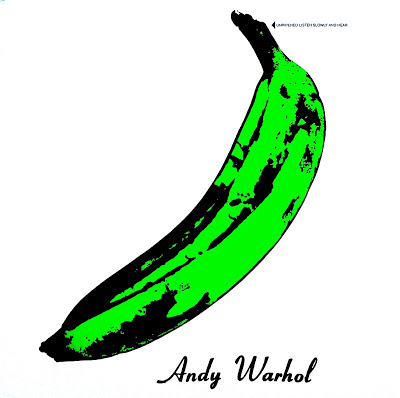
John Cale fully understood the power of Warhol’s vision when the he saw what would become the iconic album cover for The Velvet Underground and Nico. The inspiration was purely spontaneous and indicative of how Warhol saw high art in the everyday.Warhol had noticed a magazine in the waiting room at an earlier doctor’s appointment; there was an ad inside that featured a banana with a peel-away sticker that revealed the nutrients in a banana. “He called me over and showed me: this is the album cover,” Cale said in 2011. “He said ‘What do you think of this as an album cover?’ I thought it was amazing.”
The Velvet Underground and Nico was finally released on March 12th, 1967, but a pending lawsuit from actor Eric Emerson (his image was inadvertently featured in the background of the album’s back sleeve, in a photo of the band performing) led to it being shelved briefly and redistributed that summer. With the Summer of Love in full swing and much of the world fawning over Jimi Hendrix’s Are You Experienced? and the Beatles’ Sgt. Pepper…, The Velvet Underground and Nico barely made a commercial dent. Shortly thereafter, the band broke from Warhol. And Nico, always viewed as a temporary affiliate of the Velvet Underground as opposed to an actual member, went her own way. She would release six solo albums before her death in 1988.
The Velvet Underground, of course, would release three more seminal albums, White Light/White Heat, their eponymous 1969 album, and 1970’s Loaded, before ultimately deteriorating (Cale would leave after White Light/White Heat and be replaced by Doug Yule; Reed and Morrison left the band after Loaded.) Cale would become one of the world’s most highly-regarded experimental rock artists, and Reed would go on to a legendary solo career, becoming one of the most revered rock songwriters of his generation before his death in 2013.
The Velvet Underground and Nico now looked more like the future of rock music. With its embrace of dissonant sounds, unapologetically gritty subject matter and simplistic rhythms and songwriting, the album is a jumping-off point for virtually every form of “alternative” music that would take hold over the next 30 years. Glam, punk, noise rock, art rock, ’80s college rock—it all seemed to draw from something established on The Velvet Underground and Nico. There has never been a rock album more ahead of its time.
Tracks:
01. European Son
02. The Black Angel’s Death Song
03. All Tomorrow’s Parties
04. I’ll Be Your Mirror
05. Heroin
06. Femme Fatale
07. Venus In Furs
08. I’m Waiting For The Man
09. Run Run Run
Stevie Ray Vaughan celebrated his 30th birthday in style in 1984, turning New York’s Carnegie Hall into a blistering Texas roadhouse for a sold out audience. Backed by Double Trouble (bassist Tommy Shannon and drummer Chris Layton) and featuring an all-star guest list that included Dr. John on piano and organ, brother Jimmie Vaughan on guitar and horn players from Roomful of Blues, it’s easy to hear why Stevie Ray deemed the show his “best birthday ever, forever.” Live At Carnegie Hall is available as a limited 2LP opaque brown vinyl set, exclusively for Record Store Day 2017.
“Live at Carnegie Hall” was the ninth album (and third live album) by the AmericanBlues rock guitarist and his band Stevie Ray Vaughan and Double Trouble, originally released by Epic Records in July 1997. The album consists of live selections from their sold-out October 4th, 1984 benefit concert at Carnegie Hall . Backed by a ten-piece for the second half of the event.
Limited Edition Record Store Day 2017 pressing with individually numbered sleeves and pressed on red vinyl. This E.P. includes 5 brand new tracks and 1 album track that didn’t make the LP. Vanishing Twin present a limited edition 10″ EP of oblique psychedelia invoking strange visions and surreal states. Built around a series of improvisations, each piece soundtracks your adventures in dreamland.
On April 22nd we release Dream By Numbers, a limited edition 10″ EP. As the world becomes more and more dreamlike in its unfamiliarity and obfuscation, we find our fantasies increasingly self-regulated in the service of power. Built around a series of improvisations, each song is a soundtrack for the unsettling reality we find ourselves in. 1000 numbered copies on red vinyl
New music from Soundway’s cosmic psych shamans Vanishing Twin, Dream By Numbers sees the outfit return after the superb 2016 LP Choose Your Own Adventure. One of our tips for new music at this year’s Record Store Day.
We release Dream By Numbers, a limited edition 10″ EP. As the world becomes more and more dreamlike in its unfamiliarity and obfuscation, we find our fantasies increasingly self-regulated in the service of power. Built around a series of improvisations, each song is a soundtrack for the unsettling reality we find ourselves in.