“Is it Any Wonder?” is a six-track EP by David Bowie that was released in early 2020. It is composed mostly of older Bowie songs that Bowie re-recorded during his “Earthling” (1997) recording sessions and Earthling Tour rehearsals in early 1997.
BABY UNIVERSAL ’97
‘Baby Universal’ was initially recorded by Tin Machine for Tin Machine II and was regularly performed on Bowie’s “Outside” Summer Festivals Tour in 1996. The version now being released as ’Baby Universal ’97’ was originally re-recorded for the Earthling album however it was ultimately removed from the final album master, but David was very fond of this version and before the track was dropped was quoted as saying, “I thought ‘Baby Universal’ was a really good song and I don’t think it got heard. I didn’t really want that to happen to it, so I put it on this album… I think this version is very good.”
FUN (CLOWNBOY MIX)
‘Fun (Clownboy Mix)’ started out life as a modern revamp of the Bowie classic ‘Fame’ to be performed under the name ‘Is It Any Wonder?’ during David’s ‘club set’ on the Earthling tour.
The basic backing and sequencer tracks were worked at the Factory in Dublin docklands during the pre-tour rehearsals in early 1997. A live version of ‘Fame’ (‘Is It Any Wonder?’) was recorded at the Amsterdam Paradiso on 10th June, 1997, was further worked on by Mark Plati and Reeves Gabrels at Looking Glass Studios in New York and mixed at Sony Music Studios in New York in February 1998. Referenced in interviews by Reeves as ‘Funhouse’, the song further developed lyrically and musically and, by the time Danny Saber created the Clownboy mix in May 1998, it was a completely new piece of work written by David and Reeves and featuring no elements of ‘Fame’. The Clownboy mix has previously only appeared on a BowieNet subscriber exclusive CD-ROM in 1998 and on Virgin Records in-house CDR’s along with four other Clownboy mix variants.
STAY ’97
‘Stay’ originally appeared on the ’Station To Station’ album in 1976 and was released as a single in the US in August of that year. The previously unreleased 1997 re-recording of ‘Stay’ began at The Factory in the Dublin Docklands during the pre-Earthling tour rehearsals while David, Mark Plati and Reeves Gabrels were preparing the backing/sequencer tracks before the rest of the band arrived, and the rehearsals started in earnest. David wanted to ‘update’ some of his live show staples so they would sit well sonically with the Outside/Earthling material. The recording was completed later, potentially for use as a ‘B-side’, and mixed at Right Track Recording Studios, New York in May/June 1997.
I CAN’T READ ’97
‘I Can’t Read’ originally appeared on Tin Machine’s eponymous debut album in 1989, and was a staple in the band’s live set. In the autumn of 1996, during the mixing stages for Earthling, David re-recorded the track – which, at one stage, appeared on a mastered version of the album. ‘I Can’t’ Read ‘97’, was David’s preferred solo version, it was ultimately cut from Earthling and replaced at the last minute with ‘The Last Thing You Should Do’.
NUTS
The unreleased semi instrumental ’Nut’s’ was jointly written by David, Reeves Gabrels and Mark Plati. It was recorded during the final Earthling sessions in November 1996, the same session during which ‘The Last Thing You Should Do’ was written and recorded. Both songs were being recorded as bonus tracks but then, at the last minute David swapped out ‘I Can’t Read’ with ‘The Last Thing You Should Do’. However, ’Nut’s has remained unreleased until now.
’THE MAN WHO SOLD THE WORLD’ (LIVE ENO MIX)
A live recording was taken by Bowie collaborator Brian Eno into Westside Studios in London on 30th October, 1995, and reshaped with some overdubs and mixing. Eno wrote about the mix in his diaries saying: “I added some backing vocals and a sonar blip and sculpted the piece a little so that there was more contour to it”. It was previously released as a double A-side on a green vinyl 7” single and as part of a CD single in various territories with the Outside version of ‘Strangers When We Meet’ in 1995, this version is based on the fairly radical trip-hop reworking of the song as performed on the Outside World Tour.
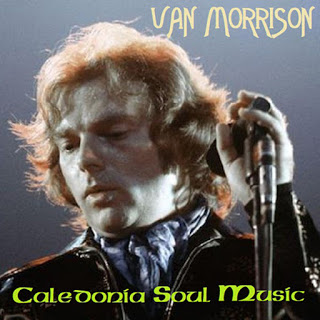
The Caledonia Soul Orchestra was the band created by Northern Irish singer-songwriter Van Morrison in 1973. The band was named after an eighteen-minute instrumental outtake on the His Band and the Street Choir album. Actually, Morrison could have released two more albums in 1973, because I’ve already posted an album he did of country standards recorded from 1971 to 1973, After the success of ”Astral Weeks” and “Moondance”, Van Morrison initially wanted his third album for Warner Bros, “His Band And The Street Choir”, to be a vocal album. “It was originally a concept to do an a cappella album. Street Choir was to be an a cappella group and I wanted these certain guys to form a group so I could cut a lot of a cappella with just maybe one guitar,” Morrison later told biographer Ritchie Yorke. “But it didn’t turn out; it all got weird.”
In the end, His Band And The Street Choir, released on 15th November 1970, contained plenty of sizzling brass sounds – with Morrison himself playing tenor saxophone on the tracks Crazy Face and Call Me Up in Dreamland – in an album full of funky, radio-friendly singles. Guitarist John Platania said that when they finally got down to recording the album at A&R Recording Studios, in New York City, in the spring and summer of 1970, Morrison “had designs on getting stuff played on radio”.
The album’s biggest hit single was the opening track, “Domino”, a potent mix of R&B and funk that is, in part, a tribute to Fats Domino. “Hey Mr DJ/I just want to hear some rhythm and blues music/On the radio” sings Morrison on a song that gained plenty of airplay, and which earned the Belfast-born musician a Top 10 hit in the US. The bass, drums and horns meld brilliantly on Domino and it quickly became a song Morrison would regularly perform live. On the single, he even starts one chorus by shouting words “Dig it!”
One of the key musicians on the album was drummer Dahaud Elias Shaar, who went on to become an essential member of Morrison’s Caledonia Soul Orchestra backing band. Shaar, who also sang backing vocals and played bass clarinet on His Band And The Street Choir, remembered “a positive vibe around that whole record”.
Few songs in Morrison’s career are as upbeat as Virgo Clowns, with its encouragement to “let your laughter fill the room”. The song was inspired by the memory of Morrison playing with his young daughter Shana. “We’ve become so serious, we get too heavy about what everything means,” Morrison told Melody Maker. “I was sitting one day feeling very heavy, and my daughter came up to me and started cracking up. And then I started cracking up when I realised it. I’m sitting here thinking that it’s all too serious and it’s not.”
Though “Give Me A Kiss” was a rather formulaic love song, the inventive “I’ll Be Your Lover Too” was sung with soulful intensity. You can hear Morrison ask “How’s that?” at the end of the tender love song. Crazy Face is about a man who pulls out a gun and announces, “I got it from Jesse James” – an appropriate song for Morrison, given that he had recently been nicknamed The Belfast Cowboy by The Band’s Robbie Robertson.
The splendidly infectious rocker I’ve Been Working was an out-take from Moondance, while Morrison sings some splendid falsetto on Gypsy Queen. When Jon Landau reviewed the album for Rolling Stone in February 1971 he was particularly impressed by “the powerful “Call Me Up in Dreamland”, which he described as “the singalong of the year”.
Landau also hailed the closing track, Street Choir, as one of the singer’s “two or three finest songs”. The plaintive chorus (“Why did you leave America?/Why did you let me down?”) was sung by The Street Choir, who comprised Shaar, Andy Robinson, Larry Goldsmith, Ellen Schroer (wife of the album’s saxophonist, Jack Schroer), Martha Velez (wife of trumpeter Keith Johnson) and Morrison’s then wife, Janet Planet.
Planet, who divorced Morrison a couple of years later, was living in Woodstock with the singer at the time the album was made, and she is the subject of the love song Sweet Jannie. Planet designed the His Band And The Street Choir album cover and wrote the original sleeve notes, on which she gushed: “This is the album that you must sing with, dance to, you must find a place for the songs somewhere in your life. They belong to you now, dear listener, especially for you.”
Morrison has sometimes expressed dissatisfaction over an album that he said he “cranked out”, but His Band And The Street Choir retains a real charm and features several Morrison classics, especially Domino and I’ve Been Working. One of the overlooked gems is the religious If I Ever Needed Someone, which features a stunning trio of backing singers. Morrison specially hired gospel stars Judy Clay and Jackie Verdell along with Emily “Cissy” Houston – the mother of Whitney Houston who, in her own right, won Grammys as a solo artist after having worked with Elvis Presley and Aretha Franklin – and they provided superb support for his heartfelt singing.
As for this album, the highlight has to be song from the session which was excluded on the album is this wonderful track “Caledonia Soul Music.” It’s seventeen minutes long and mostly instrumental.
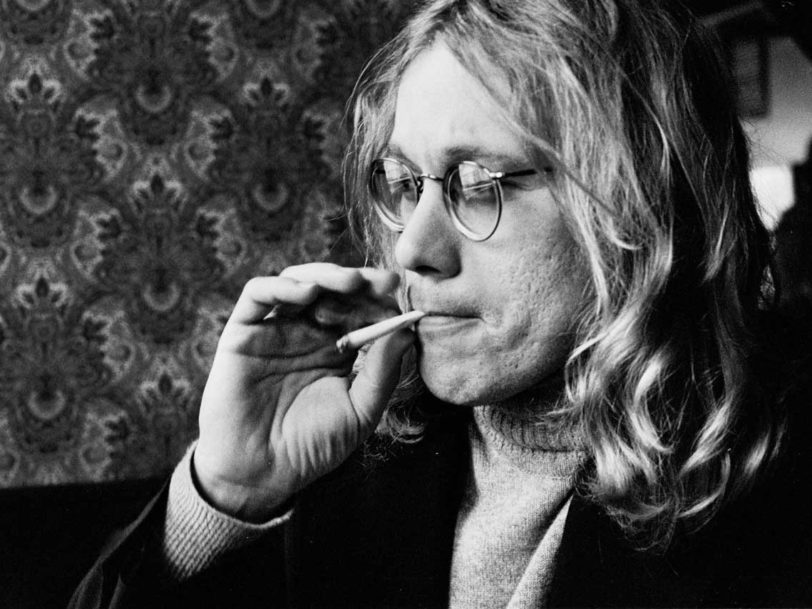
Warren Zevon (1947-2003) – 1970s – The excitable boy, Mr. bad Example himself, Warren Zevon, a songwriter with few equals who is best remembered for his 1978 hit “Werewolves of London,” But Zevon was so much more than his signature song. Beginning in 1976 with his debut album on Asylum Records, “Warren Zevon”, He captured the attention of Linda Ronstadt who recorded “Poor Poor Pitiful Me,” a Zevon penned tune which she turned into a Top 30 hit in 1978. Songs like “Mohammed’s Radio,” “Frank and Jesse James,” “I’ll Sleep When I’m Dead,” and “Hasten Down the Wind,” (also covered by Ronstadt), all on his debut album displayed Zevon’s penchant for history and a soft, sweet side. It was his second Asylum album “Excitable Boy,” (1978) that established Zevon as a writer of great wit, skill, and whimsy.
The disc was filled with Zevon gems: “Johnny Strikes Up the Band” “Roland the Headless Thompson Gunner” “Lawyers, Guns, and Money” and “Accidentally Like a Martyr” and had the added cachet of being produced by Zevon’s pal Jackson Browne. Although Zevon’s career didn’t have the upward trajectory of Browne’s, He was a cult favourite, knocking out crowd pleasers at his often unrestrained lives shows. With titles like “If You Won’t Leave Me I’ll Find Somebody Who Will” “Gorilla You’re a Desperado” and “Detox Mansion,” he endeared himself to his legion of followers. In the early 2000s, he was diagnosed with Mesothelioma, which cut his life and art short. But he began work on his final album “The Wind,” in early 2003, completing it in time to see it rise high into the Top 10 with songs like his cover of Bob Dylan’s “Knockin’ on Heaven’s Door,” and the heartbreaking “Keep Me in Your Heart,” Zevon was buoyed on the album by help from his friends including Bruce Springsteen on the barnburner “Disorder in the Court.” Jackson Browne, Don Henley, Joe Walsh, David Lindley, and Dwight Yoakam all lent their talents to the album as well. Zevon made appearances on the David Letterman show right up until the end when the talk show host and his friend turned over the entire hour to him. It was during this final appearance on Letterman on October 30th, 2002, that Zevon repeated his oft-quoted advice on dying: “Enjoy every sandwich,” Zevon’s acerbic wit, great sensitivity, and writing prowess will keep him in the hearts of those who loved his style for a long time to come.
Warren Zevon’s “Stand In The Fire”, recorded over a five-night period at the Roxy Theatre in West Hollywood in August 1980, is not only one of Zevon’s best albums, it is also one of the most affecting live albums of the decade.
After more than ten years of drink and drugs excesses, the newly-sober Zevon, then 33, was in a better place when it came to this run of summer gigs. He was in jocular form, joking that the concerts should be called “The Dog Ate The Part We Didn’t Like Tour”, and said he was happy to be back performing in Los Angeles, the city where he had grown up. Asked by Rolling Stone magazine how it felt to be on stage in front of an enthusiastic home crowd, Zevon replied, “Let’s just say that it was like rescuing the little boy who’d fallen through the ice. Rescuing him while the whole world was watching.”
Stand In The Fire, which was released by Asylum Records on 26th December 1980, carried the dedication “For Marty”, in tribute to Zevon’s friend, the film director Martin Scorsese. The album opened with the previously unreleased title track, which was immediately followed by “Jenny Needs A Shooter”, a song co-written with Zevon’s friend Bruce Springsteen.
Though Zevon was taking prescription painkillers and steroids for a strained nerve in his back, the singer-songwriter was remarkably full of energy for the gigs, in which he displayed his usual mordant wit. For the live version of On “Mohammed’s Radio”, Zevon altered the original lyrics from “You know the sheriff’s got his problems, too/He will surely take them out on you” to “Ayatollah’s got his problems, too/Even Jimmy Carter’s got the highway blues”, in a tongue-in-cheek reference to the Iran hostage crisis that was dominating the news at the time.
Despite being harvested from multiple performances, “Stand In The Fire” feels cohesive, which is partly down to the excellence and consistency of the terrific backing musicians, who were largely unknown at the time. The band, who called themselves Boulder, comprised Zevon on vocals, piano and 12-string guitar, Roberto Piñón on bass and backing vocals, Marty Stinger on drums, Zeke Zirngiebel on rhythm, lead, and slide guitar, Bob Harris on synthesiser and piano, and David Landau on lead guitar.
The shows were produced by Zevon and Greg Ladanyi. During the rocking performance of “Poor Poor Pitiful Me”, one of the stand-out songs from Zevon’s self-titled debut album, Zevon halts midway through the track and drags George Gruel, his then “road manager and best friend”, on stage to fire up the crowd. Gruel grabbed the microphone and gleefully announced, “Get up and dance, or I’ll kill ya. And I’ve got the means!”
Zevon’s version of his perennially popular “Werewolves Of London” is peppered with witty ad libs about the musicians Jackson Browne and James Taylor, and director Brian De Palma, whose violent film Dressed To Kill had been one of the most talked about releases that summer. Zevon also performed a slowed down version of “Lawyers, Guns And Money” along with high-energy versions of “Excitable Boy” and “The Sin”. He also growled his way through the autobiographical song “I’ll Sleep When I’m Dead”, before the album ended with a cover of Bo Diddley’s “A Gunslinger”, which had been a R&B hit in 1960 for an artist that Zevon admired deeply.
There were ten tracks on the original 1980 release of Stand In The Fire, but when Asylum/Rhino remastered the album in 2007, they added four additional songs: “Johnny Strikes Up The Band, Play It All Night Long, Frank And Jesse James” and “Hasten Down The Wind”.
On the final two tracks, Zevon played piano and first delivered a poignant, reflective version of a song about two cowboy legends before launching into one of his most affecting compositions about love, “Hasten Down The Wind”. Zevon first recorded the song in 1976.
Zevon’s version at the Roxy was preceded with a moving speech, in which he explained the song’s meaning to the audience. “This is a song that I’d like to play for you that I wrote a decade ago, just about. This is the song that came along and intervened between myself and starvation, thanks to Miss Ronstadt. In those days, you know, when I wrote this song, I was not a very happy fellow. I was poor and strung out and screwed up… and now I’m just screwed up. No, I’m very happy, thank you, thank you very much. Because everybody gotta change sometimes. Speaking as one who has abused privilege for a long time, I tell you, it’s great to be alive. Thank you.”
It was a fitting way to close a splendid live album that captures all that is great about Warren Zevon, who died at the age of 56 in 2003.
“Station to Station” is an odd album for me, in that I feel I would probably have a higher opinion of it than I do were it not for the album that immediately preceded it. It’s not that I prefer “Young Americans”, far from it, but I feel that if Bowie had been able to make a smooth transition from the Glam-flecked dystopia of Diamond Dogs to the disconnection of Station to Station, I may have a far higher opinion of Bowie’s late 70s work.
As it is, Station to Station is a vast improvement on the shiny and disposable Young Americans, but there’s nothing on it to lift it to the level of anything from his early 70s hot-streak. That said Station to Station does have its moments, none more so than its epic title track, which brilliantly re-establishes Bowie as an artist of genuine depth after his previous stumble from greatness. “Golden Years” follows up the title track with a sprits of the type of funk soul that Bowie had dabbled with previously, but was an enjoyable single nonetheless.
The thing about Station to Station though is that while it gave notice that Bowie hadn’t totally lost his marbles, it also simultaneously marked the point where he traded ‘entertainment’ for ‘serious artistic statement’, and to me at least, became a lot less fun. That’s not to say that the albums from this era are without charm, but for me they suffer in comparison to his earlier work which managed to juggle rock, artistic statements, great song writing and brilliant entertainment. For me Bowie’s albums from Station to Station through to Lodger just took themselves to damn seriously.
Legend has it that David Bowie was so lost in a vortex of cocaine and ego during the making of this record to such a degree that he now can’t remember anything about its creation at all. Typically though, in the midst of all this madness he created a masterpiece, and arguably his greatest album of all. With a hint of the funk of influence of ‘Young Americans’, yet filtered through a glacial European sensibility, it’s a genre-transcending tour-de-force of boundless scope and imperious swagger. Forty-one years on, this record still sounds like the future.
David Bowie’s masterpiece or not, “Station to Station”, was released this week in 1976, its creation fuelled by “astronomic” cocaine, peppers and milk, an Aryan zombie alter-ego, a mental breakdown with a Hollywood backdrop, the Kabbalah, and finally a desperate search for love and meaning amid profound spiritual confusion.
It’s also a sonic masterpiece on a level un-attempted before or since, having been variously described as the merger of “Lou Reed, disco and Dr. John,” “space funk,” “alien dance music” with “a wail and throb that won’t let up,” “a masterpiece of invention” and, according to long time Bowie collaborator Brian Eno (who was not involved with Station to Station but would produce his imminent Berlin trilogy), “one of the great records of all time.”
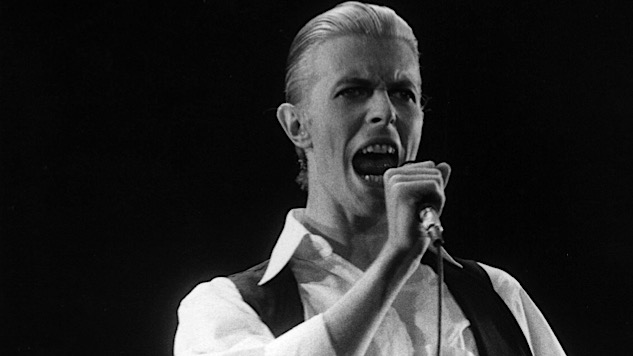
The title track kicks off the LP with the sound of a train shoving off—for about 75 seconds, part of an instrumental opening that’s longer than many songs. Then comes the entrance of “The Thin White Duke,” whom Bowie described to Crawdaddy magazine as “The most scary of the lot [of characters he created] because he was the result of all those years of putting characters together. He was an ogre for me. I hadn’t seen England for a few years and when I got back there I found that I’d taken back to England with me a character who was the epitome of everything that it looked like could be happening to England. I saw the National Front and it was obvious to me: There was a Nazi Party in England. Whether or not it was a good thing that I did, I don’t know. I believe the best way to fight an evil force is to caricature it.”
Somehow the opening track that goes on for over 10 minutes (and really is three songs in one) doesn’t seem remotely self-indulgent. In fact, the most thrilling thing about the song and the album generally is that it’s so close to completely falling apart, yet not only holds together but soars. After the prog-rock(ish) title track, the album recaptures the white soul of Bowie’s previous record, Young Americans, with “Golden Years” (which Bowie said he offered to Elvis Presley), then rocks in full guitar-hero fury with “Stay.” Here’s a live version of “Stay” from that same 1976 show at the Nassau Coliseum in New York.
Bowie deconstructs and then reconstructs a pop masterpiece in “TVC 15,” and croons with a passion so pronounced it almost seems unreal—and maybe that’s what makes “The Thin White Duke” most frightening—on both “Word on a Wing” and “Wild Is the Wind.” Every track is enthralling.
Half a decade after writing himself into fame with the intergalactic rock messiah Ziggy Stardust, David Bowie was in danger of crash-landing – just like Thomas Jerome Newton, the extraterrestrial he had assumed the role of throughout August 1975. Though there’s some debate about this, Station to Station was reportedly a failed soundtrack for 1976’s The Man Who Fell To Earth, Bowie’s first big-screen credit. That would make it the second rock masterpiece to hold that distinction, as The Who’s Who’s Next was an abandoned soundtrack for a planned Peter Townshend film (Lifehouse) that seemed to drive Townshend to the edge of insanity, to the point where his bandmates could no longer even follow what he was trying to say.
In deference to the demands of the movie, resolved to lead a clean life, when he returned to Los Angeles, preparing to work on what would become his new album, “Station To Station”, Bowie was at a spiritual, psychological and artistic crossroads that would eventually lead to one of his greatest albums
According to Crawdaddy’s Timothy White writing 40 years ago, “Bowie shuttled from house to house around the Hollywood area, sometimes staying with onetime Deep Purple bassist Glenn Hughes and later moving in with his next (ill-fated) choice for a ‘business adviser,’ Michael Lippman, before leaving for a three-month stay in New Mexico to star in Nic Roeg’s uneven sci-fi film, ‘The Man Who Fell to Earth.’ Reappearing shortly thereafter at Cherokee Studios in Hollywood to record, Bowie was, to quote Lippman, ‘in a very weak mental state.’”
Reportage at the time had Bowie seeing ghosts, worrying about witches stealing his semen and living in fear of rock’s reigning master of black magic, Led Zeppelin’s Jimmy Page. “I had this more-than-passing interest in Egyptology, mysticism, the Kabbalah, all this stuff that is inherently misleading in life,” Bowie recalled in 1983. Black magic, Aleister Crowley’s late-19th-century collection of occultist poetry, White Stains, and the Stations Of The Cross also filled his head. Pushing himself to extremes, Bowie kept increasingly long hours (“There’s things that you have to do to stay up that long,” he later acknowledged) that would see him enter a “hallucinogenic state” in which he envisioned “this bizarre nihilistic fantasy world of oncoming doom, mythological characters and imminent totalitarianism”, he reported seeing a body fall past his apartment window, so had taken to living with the blinds drawn, lighting black candles and scrawling chalk symbols around the place, in the hopes of warding off evil spirits.
As sessions for “Station To Station” unfolded, however, it became clear that Bowie was pursuing an entirely different vision, and was spending more time than ever in the studio trying to capture it.
But in the studio, Bowie was grounded by a band that was perhaps the best he ever assembled: Carlos Alomar and Earl Slick on guitars, Roy Bittan of E Street Band fame on piano, plus long time rhythm section Dennis Davis on drums and George Murray on bass. Earl Slick was key, with Bowie later saying to Kurt Loder as part of the Sound + Vision boxed set, “I got some quite extraordinary things out of Earl Slick. I think it captured his imagination to make noises on guitar, and textures, rather than playing the right notes.”
More recently, Slick said, “It was a very important record artistically because it was the first time somebody took pop songs and twisted the hell out of them but didn’t lose the essence of the song. The only person who was really doing ‘out there’ shit at the time was Zappa, and that was wonderful but it was Zappa. This wasn’t avant-garde, this was pop stuff and nobody had approached a record like that.”
You’ve got play around with it or it gets to be a dreadful bore.” Pulling apart the notions of conventional song writing, Bowie would bring formative ideas to the core group of Alomar, Murray and Davis in the studio, fashioning finished wholes out of an array of takes that turned these fragments inside out. “He had one or two songs written, but they were changed so drastically that you wouldn’t know them from the first time anyway,”
Bowie would later claim Station To Station was so “devoid of spirit” that “even the love songs are detached”, it contains two remarkable outpourings of emotion that are almost painful in their defencelessness. A “hymn” which Bowie also felt “sure… was a call for help”, Word On A Wing was written during The Man Who Fell To Earth shoot, and finds Bowie plainly seeking spiritual salvation amid “the darkest days of my life”. “It was the first time I’d seriously thought about Christ and God in any depth,” he revealed to the NME, adding that it “was a protection. The passion on the song is genuine.” Closing the album, Wild Is The Wind – a cover of a 50s film tune which Bowie had discovered through Nina Simone’s 1966 recording – was similarly yearning. With a vocal nailed in one take, it marked yet another progression for Bowie, in terms of his abilities as a singer. Having long admired Elvis Presley and Frank Sinatra, Wild Is The Wind proved he had the range and nuance to take his place alongside them as one of the all-time great vocalists.
Dramatically entering the song “throwing darts in lovers’ eyes”, the Duke, with his haughty demeanour, slicked-back auburn hair and monochrome clothing – white shirt, black slacks and waistcoat – was, in Bowie’s estimation, a “nasty character, indeed”. But he also pointed the way to his creator’s eventual rescue from LA. Acknowledging the new musical influences Bowie was gravitating towards, the Duke, Bowie never went back to either the Thin White Duke or that sound again. No one did. Maybe it was the product of so many destructive forces that he couldn’t revisit. As for the rest, it’s just too perfect and fully realized for anyone else to dare pick up.
In the case of Bowie’s relocation to Europe, one of those moves would be literal, and would find him laying the blueprint for the future of music, starting with the first album in his “Berlin Trilogy”, 1977’s Low. However, a deep psychological change had also taken place. Two decades after Station To Station’s release, Bowie reflected on how he had been “lucky enough to know somewhere within me that I was really killing myself, and that I had to do something drastic to pull myself out of that”.
Though the band hails from Los Angeles, they do not partake in any sort of witchcraft. Yet their ability to conjure a specific time and place through their sound does suggest a kind of magic. On their eponymous debut album, L.A. Witch’s reverb-drenched guitar jangle and sultry vocals conjure the analogue sound of a collector’s prized 45 from some short-lived footnote cult band. The melodies forgo the bubblegum pop for a druggy haze that straddles the line between seedy glory and ominous balladry; the production can’t afford Phil Spector’s wall-of-sound, but the instruments’ simple beauty provides an economic grace that renders studio trickery unnecessary; the lyrics seem more descendent of Johnny Cash’s first-person morality tales than the vacuous empty gestures of pre-fab pop bands. This isn’t music for the masses; it’s music for miscreants, burnouts, down-and-out dreamers, and obsessive historians.
Songs: Drive Your Car Kill My Baby Tonight Baby In Blue Jeans Get Lost
Album opener Kill My Baby Tonight is the perfect introduction to the band’s marriage of ‘60s girls-in-the-garage charm and David Lynch’s surreal exposés of Southern California’s underbelly. Sade Sanchez’s black velvet vocals disguise the malicious intent of this murder ballad, with the thumping pulse of bassist Irita Pai, the slow-burn build of drummer Ellie English, and Sanchez’s desert guitar twang helping beguile the listener into becoming a willing accomplice to the narrator’s crimes. Brianfollows the opening track with a similarly graceful, if not somewhat ominous, slow-mo take on a well-worn jukebox 7”. It’s a vibe that permeates the entire album, from the early psychedelic hue of 13th Floor Elevators on tracks like You Love Nothing, through the motorik beat and fuzzed-out licks of Drive Your Car, to the grittier permutation of Mazzy Star’s sleepy beauty on Baby In Blue Jeans.
If you know Gang of Four, PiL and The Slits inside and out, this three-disc box sets heads mostly to the fringes of the original post-punk disco scene
Making for a nice follow-up to the EXEK reissue is this new three-disc compilation of scratchy disco from the original post-punk era. The mix of funk, disco, punk, dub and bleak industrial noise is formative to this writer and its a sound that will forever be appealing to me, whether it’s the original article (Gang of Four, ESG, PiL, The Slits, The Pop Group), the ’00s second-wavers (Liars, Yeah Yeah Yeahs, Radio 4, Franz Ferdinand), and more recent acts like EXEK or Working Men’s Club.
For those who think they’ve heard it all, as well as folks who only casually know the heavy hitters, new three-disc compilation “Shake The Foundations: Militant Funk & The Post-Punk Dancefloor 1978-1984” opens a few new doors and brushes the dust off some forgotten acts from the era. While it doesn’t have Gang of Four, The Slits or Au Pairs — probably for budgetary reasons — it does have great tracks from lesser-known acts like Medium Medium, The Higsons, PiL bassist Jah Wobble, punk poet John Cooper Clarke, Glaxo Babies, Blue Rondo A La Turk, Specials-offshoot Fun Boy Three, pre-Breakfast Club Simple Minds, very early Haircut 100, Ian Dury, Bauhaus offshoot Tones On Tail, Visage, Furniture, Family Fodder, and more. There are also plenty of bands who are new to me, including The Chicken Granny, Viscous Pink, and C Cat Trance.
Bill Brewster, who wrote the great history of DJing, Last Night a DJ Saved My Life and compiled this box set, says he took the same approach to this collection as he would a DJ set. “The important thing was not to impress James Brown, emulate the Fatback Band or wear Kraftwerk’s game-face. The point was to have a go. ‘Shake The Foundations’ is not a comprehensive look at post-punk, so much as a shakily hand-drawn map of a particular area. It’s what happened when the post-punk fallout collided with the dancefloor, and forty years later we’re still feeling its effects.” 1980 single that also appeared on their Nine Months To The Disco debut album. Tony Wrafter, Dan Catsis and Charlie Llewellin eventually left and formed Maximum Joy with singer Janine Rainforth.
Shake The Foundations: Militant Funk & The Post-Punk Dancefloor 1978-1984 is out March 26th via Cherry Red Records. You can check out the full tracklist and preorder the album here and meanwhile this is the compilation’s title inspiration, Glaxo Babies’ “Shake the Foundations”:
North East veterans Little Comets are pleading for change with their powerful, politically charged new single ‘Total Abject Paranoia’.
For as long as I can remember, Little Comets have always held a place within my musical conscious, regional biased aside, the band’s career has taken them from indie darlings defining the early 2010’s with some ground-breaking hits to going out on their own whilst maintaining that consistency of quality music.
Fans have become accustomed to taking their Comets in bitesize nuggets over recent years, but ‘Total Abject Paranoia’ marks the next single from their currently online shop exclusive EP ‘Baywatch’ which includes favourites from the over last few years from ‘The Sneeze’ to personal favourite ‘American Tuna’.
This band have seemingly developed a knack for predicting the detriment of the world in their lyrics, predicting the current pandemic in ‘The Sneeze’ in 2019. Little Comets are keen to ensure their own powers don’t come into play with ‘Total Abject Paranoia’, warning of the potential implications that can come if we fail to begin to challenge the politics of fear which grip our everyday lives. Giving similar vibes to that of a previous single ‘Three Minute Faltz’, the band brilliantly use sound and lyrics to paint this grim picture of “populism and victimisation” being used as ammunition to “divide and rule” but offer optimism as the large majority of their catalogue does with sonic enjoyment and the hope to make the world a “better place” one note at a time.
For all their songs of pure pleasure, both for me and many others, Little Comets have never been ones to shy away from heavy topics in their songs and ‘Total Abject Paranoia’ is a great example of what this band has and can still offer to us and one hopes it leads to seeing much bigger things in 2021.
Just to say that our new song “Total Abject Paranoia” is out now, today in all the correct places. Please give it a listen.
We really poured everything into this one so we hope you like it! If not, hopefully there’ll be another one along soon to add to your elation/discomfort. In all honesty though, thanks again – especially at the minute. We really do need your support, so even by keeping listening to our music and new releases it helps us get from A to B. Hope to see you soon, Rob, Mickey and Matt
We’ve filmed a special, stripped back version of Total Abject Paranoia,
Austin, Texas has a new rock sweetheart and they performed for the president last night. Last night on the post-inauguration event Celebrating America, nestled between rock legends like Bruce Springsteen and pop stars Katy Perry and Demi Lovato, came Austin psychedelic soul band Black Pumas with a performance of their song “Colors” from their 2019 self-titled album. The duo virtually performed straight from the heart of Texas at ACL Live in Austin. For many viewers, this was possbily the first time they’d heard of Black Pumas, unlike their household name line-up counterparts.
The Grammy-nominated band has been beloved in their hometown since its inception just over three years ago, but for those who now find themselves searching for more information on the Lone Star state musicians, here’s the rundown. Black Pumas are made up of vocalist Eric Burton, 31, and guitarist/producer Adrian Quesada who met and formed the band in 2018. Quesada, a forty-something, worked with the likes of Prince and Daniel Johnston, as well as Austin Latin funk band Grupo Fantasma before itching to start his own project in 2017.
The magic started when a mutual friend connected Quesada to Burton, who at the time was busking in downtown Austin. Their self-titled debut album was released in 2019, and “Colors” hit number one on Billboard’s adult alternative chart in February 2020. Black Pumas’s sound encompasses the gritty blues and rock Austin is known for, joined with soul and psych tones that bring new life and underscore Burton’s silky smooth vocals. It’s the sweet balance of modern and retro at the same time, akin to Grammy-nominated Coming Home by fellow Texan Leon Bridges or Grammy-winning Sound and Color by Alabama Shakes. In 2019 they were swiftly nominated for Best New Artist, losing out to Billie Eilish, but come on, so did nearly everyone else.
The deluxe edition of their self-titled album is nominated for two Grammys, including Album of the Year and Record of the Year for “Colors.” They are also nominated for Best American Roots Performance for “Colors.”Quesada and Burton recently broke down the hit track from Quesada’s studio Electric Deluxe Recorders, giving insight to their writing process behind the track that arose as Burton woke up from a midday nap and admired the sky from his uncle’s roof.
Black Pumas popularity originated from their energizing and captivating live performances. They warmed up for Celebrating America on January 19th at The Late Show with Stephen Colbert, offering a technicolor take on “Colors.”
This was their second time on Colbert this year, after covering Tracy Chapman’s “Fast Car” back in June. Another riveting cover version in their repertoire is The Beatles’ “Eleanor Rigby,” an experimental version they discussed in their “Sweet Conversations” Youtube series. Last month the group recorded a Tiny Desk (Home) Concert, with a setlist that shows off more from their debut work, including “Red Rover,” “Fire,” “OCT 33,” and “Colors.” Get to listening and viewing now!,
The song title’s reference to stable ground is upended as reality is seen slipping away and replaced by manipulations or mediations. Against the backdrop of today’s political, economic, and environmental climate, the material world is distorted beyond recognition and the “screen” has become our most reliable means of community and communication, acting as an interface between us and lived reality. Closing with the line “all is all of it now,” the song gives expression to the contemporary experience of totalizing media and the enduring desire for finding connection to others in a world that privileges other values.” – CARM, CARM is the debut self-titled album of multi-instrumentalist, producer, and arranger CJ Camerieri. Whether it’s playing the iconic piccolo trumpet solo on Paul Simon’s “The Boxer;” anthemic horn parts on songs like The National’s “Fake Empire,” Sufjan Stevens’ “Chicago,” or Bon Iver’s “For Emma, Forever Ago;” or performing with his contemporary classical ensemble yMusic; or recording lush beds of french horns for artists from John Legend to The Tallest Man on Earth, you have undoubtedly heard the virtuosity of Camerieri.
He is the musician that musicians want to play with, and that is further evidenced by the cast on his debut. Since completing his classical trumpet training at The Juilliard School and quickly joining the touring band for Sufjan Stevens, Camerieri has played trumpet, french horn, and keyboards for some of the most important artists of our time. He founded the classical ensemble yMusic, joined Bon Iver—winning two Grammy awards for the band’s sophomore album and became an integral member of Paul Simon’s touring band in 2014, assuming a pivotal role in the legend’s last two records. According to Camerieri, “CARM started with the question: ‘What kind of record would my trumpet-playing heroes from the past make today?’ I believe Miles Davis would want to work with the best producers, beat makers, song-writers, and singers to create truly culturally relevant music, and that’s what I sought to do with this project.” The record was produced in Minneapolis by Ryan Olson (Gayngs, Polica, Lizzo) and features collaborations with Sufjan Stevens, Justin Vernon (Bon Iver), Yo La Tengo, Shara Nova (My Brightest Diamond), Mouseon Mars, Jake Luppen (Hippo Campus), and many others.
It is a completely unique sound that additionally serves as a survey of the many collaborations that have come to define the artist’s career thus far. The album begins with an orchestral brass choir of french horns, which quickly gives way to a piano sample of Francis and the Lights, as Stevens and Luppen combine voices over a lush bed of horns to sing “Song of Trouble” The album bookends with the same piano sample used as a springboard to a beautiful and iconic lyric by Vernon in the album closer “Land” Between these two generation-defining artists we have the upward sweeping melodies in “Soft Night” fanfares reminiscent of Ennio Morricone in “Nowhere” and the uncompromisingly original sound of Georgia Hubley and Ira Kaplan of Yo La Tengo in “Already Gone”.
Two dark and mysterious journeys in “After Hours” and “Invisible Walls” give way to the virtuoso sound of Nova’s voice, who the artist stood side-by-side with in his first Sufjan Stevens tour over a decade ago. “Slantwise” and “Scarcely Out” take us back down a more experimental path before the strings from yMusic members Rob Moose and Gabriel Cabezas bring us back to the piano sample that started the record. Given the oversaturated contemporary music market that often recycles well-trodden sounds, CARM offers a respite for those seeking an original voice.
Produced by Ryan Olson and CARM. Featuring guest vocals by Sufjan Stevens, Shara Nova, Justin Vernon, Georgia Hubley, Ira Kaplan, Lupin, Cliff Rhymes, and Benson Ramsey.
Also featuring Mouse on Mars, Francis Starlite, Jake Hanson, Mike Boschen, Chris Bierden, Mark McGee, Amati, Joe Westerlund, Dustin Zahn, Alex Nutter, Trever Hagen, Nick Camerieri, Hideaki Aomori, Mick Rossi, Bryan Nichols, Rob Moose, Gabe Cabezas.
The first single from the debut album, out 22nd January 2021 with 37d03d Records
Palberta have have been regulars in Brooklyn’s DIY scene for most of the last decade, cranking out jagged indie rock over four albums and a bunch of singles, a constant presence at tiny clubs like Alphaville and Silent Barn, but occasionally at bigger shows too, like getting to open for heroes Bikini Kill at Brooklyn Steel. The band have never been lacking in catchy melodies, as anyone who’s seen them live can attest, but previous records often masked that under murky, low-fi production.
Art-punk trio Palberta recorded their fifth album “Palberta5000” in Peekskill, New York. The follow-up to 2018’s Roach Goin’ Down is, at least partly, pop-inspired, with Lily Konigsberg saying , “I kind of only listen to pop music.” Ani Ivry-Block added, “The way we play and our production will always be weirder than mainstream pop allows.
Two years removed from their triumphant 2018 LP ‘Roach Going Down,’ which Pitchfork described as “a leap to another level” from the beloved NYC trio, Palberta are returning to deliver their clear-eyed fifth album, ‘Palberta5000,’ a collection of adventurous, hyper-melodic songs that will excite their devoted following while welcoming new fans along for the ride. While long heralded as one of the most original and idiosyncratic bands in the East Coast DIY scene, earning regular comparisons to ESG, Captain Beefheart (Pitchfork) and CAN (FADER), on Palberta5000, Ani Ivry-Block, Lily Konigsberg, and Nina Ryser max out traditional pop forms—creating hits that catch in listeners’ brains while blowing the genre out into lush, kinetic extensions that morph into absurdist outros and haptic breakdowns—to create their own hardcore style of popular music. In doing so, they have made their most accessible album by a far measure—one that is bursting at the seams with vocal hooks and exuberant playing. ‘Palberta5000’ was recorded with Matt Lambozza (PALM, Shimmer), whose Peekskill, New York, studio is located in the original home and family lamp-store of Paul Reuben (Pee Wee Herman). Fueled by carrots, celery, radishes, and peanut-butter-and-jelly bagels, they diligently tracked ‘Palberta5000’s well-rehearsed songs in four days, never putting down more than three takes. Lambozza’s recording and mix capture the band’s rollicking instrumentation and vocal precision.
The first single, “Before I Got Here,” features a charging and emotionally chaotic intro verse—building to the frantic ear-worm lyrics “if you want to talk about it / then we can talk about it / I’m just so sick about it / don’t blame me”—that stops on a dime for a three-part vocal harmony breakdown, then seamlessly rushes off again. The song conveys the raw emotions that can accompany letting someone into your life before pumping the brakes and settling into a hypnotic krout-surf outro, garnished with horns from Matt Norman that reinforce and swell the melody. “High speed, fast track, slow prose.” ‘Palberta5000’ punctuates its jagged edges with ebullient cries of “Hey!” and rounds its corners with angelic harmonies, while marching-band snares propel the album forward with a metronomic intensity that belies the sixteen tracks’ diverse time signatures and fevered pacing. Hardcore fans will recognize the band’s live staple “Corner Store,” whose heart-melting harmonies layer over irresistible croons of “I meet you anywhere you are”—a promise kept by an album that meets listeners where they are. “Big Bad Want,” another notable piece from the band’s pre-COVID sets, is Palberta’s version of fast punk, with a zig-zag bassline and a call-and-response nursery-rhyme chorus that returns for the song’s outro, stretching defiantly past the three-minute mark with the repeated mantra “Yeah (yeah) I can’t pretend what I want.”
Although Palberta have toyed with repetition and longer song structures on past recordings, ‘Palberta5000’ masterfully digs into a groove and transforms repeated phrases with a cult-like frenzy to hypnotic effect. On their slow waltz, “The Way That You Do,” and the enchanting “Red Antz,” Palberta bring the tempo down for lavish slow jams only hinted at on past efforts like ‘Bye Bye Berta’s “Why Didn’t I.” Such tracks add a variation to ‘Palberta5000’s well thought-out song cycle and contribute to a full album experience that will leave listeners breathless. In the fitful sleeper “Cow,”Palberta sing, “I will be there with my hand on your chest / I feel your rumbling internal mess.” In a time of exhausting disappointment, ‘Palberta5000’ is an album that sees our internal and external messes, openly displays its fragile places, and acts as an energetic complement to the movement for positive change.







 The Fat Angel Sings