Archive for the ‘CLASSIC ALBUMS’ Category

Before we had RIYL algorithms and Spotify discovery playlists, we had Kurt Cobain. The Nirvana frontman wasn’t just one of the most commercially successful and critically acclaimed alt-rock artists of the early ‘90s, he was also its foremost tastemaker. Cobain’s conflicted relationship with fame has been well documented, but one benevolent side effect of his discomfort in the spotlight was that he used every opportunity to redirect it onto lesser-known artists, and not just ones from his immediate community. While the media was hyping the Seattle scene, Cobain was leading impressionable kids down underground pathways that extended from Scotland to Japan.

This was a guy who could get an obscure, out-of-print punk record reissued by a major label by name-dropping it an interview, or who could effectively play armchair A&R rep and score a deal for an unsung artist by just by wearing their t-shirt. Even if only a tiny fraction of the 10 million people who bought Nevermind were willing to check out a record based on his recommendation, it was enough to turn groups like Shonen Knife into international club headliners, and enough to transform The Wipers’ once-obscure early ‘80s releases into canonical punk classics for future generations to discover.

Since his 1994 suicide, Cobain’s life and work have been put under the microscope many times over, through numerous biographies, documentaries, and barrel-scraping box sets. But one of the most illuminating pieces of detritus can be found in the 2002 scrapbook Journals: a handwritten list of his 50 favorite albums of all time. It’s a document that illustrates how, behind all the disaffected cool, Cobain was just a list-making music nerd like the rest of us. And based on the most recent entry—PJ Harvey’s 1992 debut Dry—it was a practice he indulged in even after his face was all over Rolling Stone and MTV. (He even divided his entries with lines as if he were designing the flippable label cards in his own imaginary jukebox.)

Kurt’s list reveals a typical punk-rock initiation process: You’ve got the pioneers (The Stooges, the Sex Pistols), their more extreme hardcore spawn (Black Flag, Fear), the detouring post-punk experimentalists (Public Image Ltd., Gang of Four), and the mutant recombinant offspring who fuse and abuse all of the above (Flipper, Butthole Surfers). It’s the last iteration that had the most audible impact on Nirvana, particularly on bludgeoning Bleach-era tracks like “Paper Cuts” (which bears both the bone- and soul-crushing heft of ‘80s Swans), Incesticide oddities like “Hairspray Queen” (which finds Kurt squealing like a young Gibby Haynes), and In Utero crushers like “Milk It” and “Scentless Apprentice” (where Kurt chews on the tin foil spit out by Scratch Acid’s David Yow). And then there’s the only band to earn three slots on Kurt’s list: Portland underground demigods The Wipers, whose relentless momentum and hoarse-throat hooks set the fiery pace for Nirvana corkers like “Breed” and “Territorial Pissings.” (Funnily enough, after once admitting that The Clash’s Sandinista! disappointed him as a kid because it didn’t align with his perceptions of punk, Kurt includes the much more commercial follow-up, Combat Rock—perhaps as a commiserating reminder that he wasn’t the first punk who had to deal with becoming popular.)

Like many kids born in the late ‘60s, Kurt’s first musical obsession was The Beatles. Their melodic sensibility formed a crucial strain of his musical DNA that withstood his eventual conversion to punk, leading to breakthrough moments like “About a Girl.” (Tellingly, Kurt’s favorite Fab Four record isn’t a typical muso pick like Revolver or the White Album, but the band’s winsome U.S. debut, Meet the Beatles, whose brevity and simplicity are more compatible with his passion for DIY indie rock.) Meanwhile, his adolescent affinity for mid-‘70s Aerosmith was entrenched enough that he would (partially) name a song after them, and while David Bowie was a less obvious influence on Nirvana, the band’s reverential cover of “The Man Who Sold the World” forged their spiritual connection with rock’s original iconoclast. But Kurt was also willing to own up to inspiration from less-respected hit-makers—listen to the verses of The Knack’s “Good Girls Don’t,” and you’ll hear the sort of slack, sardonic delivery he brought to Nirvana songs like “On a Plain.” His list also betrays a growing fascination with ’40s folk pioneer Lead Belly that would ultimately yield one of Cobain’s most chilling performances.

Nirvana’s explosive success couldn’t have happened without the fuse-igniting efforts of their immediate alt-rock antecedents—both close to home and beyond. “Negative Creep” is essentially Mudhoney’s “Sweet Young Thing Ain’t Sweet No More” flipped from 33 rpm to 45. The crash/burn/rebuild structure of Sonic Youth’s “Silver Rocket” would reappear in smoothed-out form on the alternately rousing and brooding “Drain You.” The whisper-to-scream hysterics of the Pixies, can of course, be heard on any number of Nirvana songs, but bassist Kim Deal’s Breeders offshoot was an equally profound influence, with the nocturnal, string-scraped atmosphere of Pod filtering down to In Utero respites like “Dumb” and “Penny Royal Tea.” And though the radiant, paisley-patterned jangle of R.E.M.’s Green may not be as perceptible, the wry, self-reflexive quality of “Pop Song 89” feels like a spiritual successor to Nirvana’s own meta-rock commentaries, like “In Bloom.”

Embarrassed somewhat by Nevermind’s big-budget studio polish (which he infamously compared to a Mötley Crüe record), not to mention the increasingly slick nature of alternative rock, Kurt used his pop-star pulpit to champion the virtues of amateurism. In the collapsible sing-alongs of ‘60s outcasts The Shaggs, he heard something stranger and more radical than anything you could find on 120 Minutes. Through his beloved Vaselines, he learned how to balance playful melodies atop rickety punk-rock foundations. And in the solitary serenades of Daniel Johnston and the giddy garage-rock of Shonen Knife, he heard the purest manifestation of the childlike emotions he tried to access on songs like “Sliver.” But while his fondness for ramshackle post-punk and lo-fi indie pop brought out Nirvana’s more playful side (best heard on Incesticide’s odds ‘n’ sods and the more whimsical moments of the MTV Unplugged set), for Kurt, that music was also represented an effective weapon for dismantling rock’s patriarchal power structure. Nirvana may not bear the direct musical influence of minimalist, female-fronted bands like The Raincoats, Young Marble Giants, and Kleenex, nor is there anything in their catalog resembling the homoerotic joke-folk hijinks of The Frogs, but they undoubtedly inspired him to become the preeminent male-feminist and pro-gay rock star of his generation, one who was willing to write indictments of rape (“Polly”) and machismo (“Mr. Moustache”), and who happily used his liner notes to tell the racist and homophobic jocks in his audience to fuck off. (Though one can’t help but wonder if, he were around today to make a similar Top 50 list in this post-poptimist age, he might include more than one hip-hop record.)

SAVAGE

Thawing Dawn, the first solo record from A. Savage, released on Dull Tools.

The songs on Thawing Dawn form a guided tour through the romantic environs of A. Savage’s mirrored mind. While some were written recently, other tunes were penned over the past decade. For one reason or another, these compositions didn’t land with any of Savage’s other groups, and instead are presented now as a distinct collection. Reflecting back, Savage says, “Once I realized I had a small body of work that didn’t fit anywhere else, I started to examine the commonalities: What’s the common denominator of all this and how I can expand on it?”

Savage is best known as the frontman for Parquet Court’s, a duty split with fellow Texan Austin Brown. Their last record, Human Performance, delved into the emotional wreckage of a broken heart, to critical acclaim. But with Thawing Dawn, it’s clear that Savage has matured. While assembling the record, he fell in love. Now, for the first time, we hear songs about being on the inside of love. Rather than lamenting the end of a relationship, we hear a voice trying, in the moment, to make sense of love’s mysteries. “Part of this maturity,” he says, “is reflecting on something when it’s happening, not just when it’s gone.”

Thawing Dawn gives us honesty: We see the artist at home in bed, more singer-songwriter portrait than esoteric statement. Throughout his discography Savage has long abbreviated his first name as a kind of writerly gesture. He says, of the move, “I am an uncivilized member of modern civilization–I’m just a savage.” Like Duchamp’s R. Mutt signature on a urinal, the shortening embodies a mischievous directness, enabling this savage to introduce his slanted honesty into the universe.

“I always like it when records are good representations of communities,” Savage says, and this one succeeds in this regard. These ten songs were recorded between December 2016 and June 2017 by a cast of friends in Jarvis Taveniere’s Thump Studios in Brooklyn. Members of Woods, Ultimate Painting, PC Worship, EZTV, and Psychic TV all lend their talents. Savage’s voice, once shouted into mosh pits, now glides confidently above its backing band. Thawing Dawn marks the arrival point for Savage as a sensitive and skilled vocalist. A strain of rural inquiry tinges the soundscape, an ongoing trope in Savage’s writing most powerfully felt on Parkay Quart’s ballad “Uncast Shadow of a Southern Myth.” On this record it is stronger, with a healthy helping of pedal steel guitar, a chorus of female back-up vocals, four familiar chords, and maybe the truth, all layered throughout these songs. Their titles also steer us this way, but don’t fully convey the hidden intricacies. “Buffalo Calf Road Woman” opens the record in a burst of C&W energy. The staccato pop piano of “Eyeballs” lays crisply beneath a refrain of heartbreak. “Wild Wild Horses” finds him confessing inside a Talk Talk bubble of guitar static and organ. The build-up of “What Do I Do” yields a guitar freak out that Parquet Courts fans will recognize. You could two-step to the swing of “Phantom Limbo.” “Ladies from Houston” is a Leonard Cohen-like ramble through a party scene. Finally, the title track is a suite of three interwoven songs that closes the record in a beautifully cinematic style.

Throughout, A. Savage delivers one-off lines of razor-sharp observation that will stick in your brain, only to surface when you’re least prepared to handle their insights. When you put your copy of Thawing Dawn on your turntable and drop the needle, you’ll learn what A. Savage has to say about romance in our modern world. Keep your ears open–it’s worth hearing.

http://

Though the release of his debut solo album, Thawing Dawn, is imminent, Parquet Courts co-frontman Andrew Savage is already focused on his next project: an art show in Brooklyn at the end of October. In between sessions finishing work on those paintings, he’ll be mailing out ordered copies of Thawing Dawn himself. After that? Just a measly, everyday East Coast solo tour for about half of November.

This small glimpse into Savage’s day-to-day flurry perhaps explains why some of his best performances in Parquet Courts sound like a man desperately trying to keep up with the constant chug of the modern world. “Do my thoughts belong to me? Or just some slogan I ingested to save time?” he pondered in the galloping “Content Nausea,” the title track to one of the five albums Parquet Courts released in the last five years.

http://

Thawing Dawn, out October 13th on Savage’s Dull Tools label, trades the musician’s normal clenched-fist intensity for sparse, arresting moments of introspection. With his main band’s breakneck pace and caterwauling guitar removed, Savage’s penchant for literary wordplay takes center stage throughout ten of the most revealing tunes he’s ever recorded.

Becca Mancari first popped up on my radar due to her being involved with Brittany Howard’s side-project, Bermuda Triangle. Soon thereafter I caught wind of the lead track off of her debut LP and I was hooked. On her debut, the Nashville based artist does a fantastic job of adding some indie pop flourishes to her Americana sound. It really made me stand up and take up notice.

The second track, Waiting So Long, is a real winner. It has some tasty guitar, including some unconventional use of pedal steel. The track centers around Mancari asking how she can get her interest reciprocated. Golden is a beautiful break-up track where both sides still seem be able to find the beauty in each other despite the dysfunction. The penultimate track, Kitchen Dancing, is another beauty; using subtle pedal steel to create atmosphere.

“Good Woman” is a great debut by someone who clearly has a great future ahead of her.

Wilco will reissue their first two albums, A.M. and Being There, on December 1st via Rhino. The new editions will feature an array of bonus tracks, including alternate takes, unreleased songs and live recordings. A live rendition of the band’s gritty and lonesome A.M. track, “Passenger Side,” recorded in Los Angeles in 1996

The deluxe editions of both albums will be released on CD and double LP, while Being There will be released as a five-CD collection or a four LP set. Digital versions of both albums will be available, while limited-edition color vinyl copies can be purchased on the Wilco website.

Following the dissolution of their previous band, Uncle Tupelo, Jeff Tweedy, bassist John Stirratt and drummer Ken Coomer helped form Wilco and released their debut album, A.M. in 1995. The new reissue will feature eight unreleased bonus tracks, including an early version of “Outtasite (Outta Mind),” and Uncle Tupelo’s last studio recording, “When You Find Trouble.”

http://

Stirratt wrote new liner notes for the reissue as well, and in them, he says of A.M., “Listening back to records 15 to 20 years later, I’m always taken with the confident but guileless quality of bands in their 20s, that strange mixture of innocence and conviction, and this is one of those records – we were barely a band at that point, just trying to make some noise.”

Wilco released Being There, a double album, in 1996. The expanded edition of that record includes a full disc of outtakes, alternate versions and demos, plus a 20-song live set recorded at the Troubadour in Los Angeles November 12th, 1996, and a four-song set recorded the following day at the Santa Monica radio station KCRW.

A.M. includes original album + 8 previously unreleased outtakes and liner notes by John Stirratt.

Being There includes original double album + 15 previously unreleased songs and demos plus a live performance at KCRW (11/13/96). CD/Digital version also includes Wilco live gig from The Troubadour (11/12/96).

Image may contain: 5 people, people smiling, text

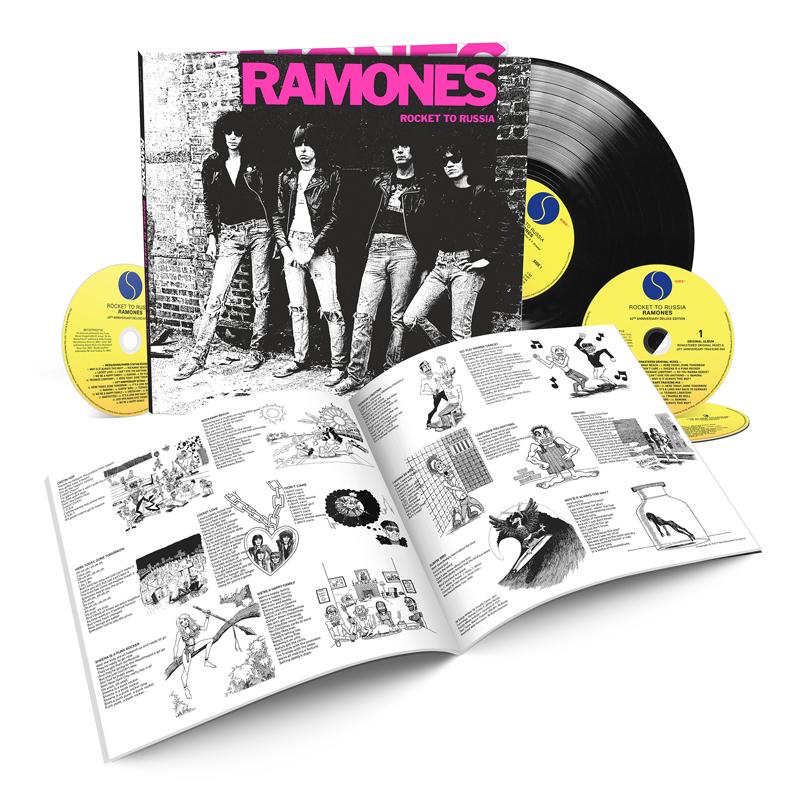
A third 40th anniversary deluxe edition is coming from the Ramones and Rhino Records, featuring the band’s third album, “Rocket To Russia”.

With punk rock reaching a fever pitch in the summer of 1977, the Queens quartet and Leave Home’s producer and engineer, Tony Bongiovi and Ed Stasium, again came together to record another hard-hitting album of urgent but melodic tunes. Drawing from surf rock influences (and featuring a significantly bigger budget than their previous two records), Rocket To Russia was praised by critics for its humor and pop-friendly sensibilities, with tracks like “Teenage Lobotomy,” “Sheena Is a Punk Rocker” (released in an alternate single version that spring) and “Rockaway Beach” becoming punk classics. The album also marked the end of an era; after Rocket To Russia, drummer Tommy Ramone stopped performing with the band, but continued as an intermittent writer/producer for the group.

http://

Like the deluxe editions of Ramones and Leave Home, Rocket To Russia features 3 CDs, an LP and a photo-filled book within its 12″ x 12″ box packaging. A total of 63 bonus tracks (only two of which have been made available before) will be included in this set. Alongside the original album, Stasium has created a back-to-basics “tracking mix” of the original album, featuring some alternate takes and songs that were unused on the original album. A bonus disc of rough mixes from Mediasound and The Power Station studios, plus alternates, B-sides and even an original radio promo with frontman Joey Ramone, is also included, as is a previously unreleased 1977 concert recorded in Glasgow. The package is rounded out with an LP of the tracking mix.

This rocket takes off November 24th. Rocket To Russia: 40th Anniversary Edition (Sire/Rhino, 2017)

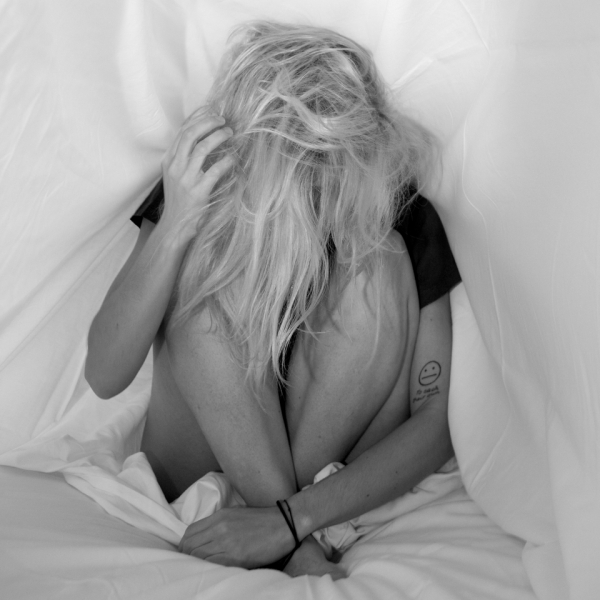
When Alicia Bognanno came forth with her debut album Feels Like under the pseudonym Bully in 2015, it was relatively easy to compare her lucid, diary-entry songwriting and throaty head-screams to dozens of 90s’ indie powerhouses.

These comparisons were appropriate at the time – Feels Like was 31 restless minutes of explosive indie guitar-rock, with a timeless appeal boasting 90s’ nostalgia and emotional self-revelations. But as time passed, Feels Like aged adequately, and each listen felt more refreshing than the last. Minute production details that were once unnoticed began to show – courtesy of Bognanno’s tenure at Steve Albini’s Electrical Audio studios in Chicago – and Feels Like became a vital document for heady 90s’ indie-rock revivalists.

Now two years wiser, Bognanno has returned with the follow up, and her Sub Pop debut, Losing – an album even more focused and emphatic than its predecessor.

US trio Bully like to mimic their live performance on record; a sound that’s frenetic, raw, vulnerable, and pulses with tension from start to finish. For frontwoman Alicia Bognanno, this year feels like the perfect time for the band’s return, with their sophomore record, Losing – the band’s first release with legendary label Sub Pop Records (Nirvana, Soundgarden, Sleater Kinney).

The same raw intensity that made fans fall under Bognanno’s spell in 2015 is still very much present, but this time around Bognanno sounds more self-assured. Whether it’s the muscular bass riffs on “Running,” the despairing chorus of “Feel the Same,” or the repetitive drum-rolls and cries on “Not the Way,” Bognanno is her finest and purest self on Losing.

Per usual, Bognanno’s perennial hooks and screams are felt with a stubborn sense of irritability and angst, ripping off old emotional band-aids in attempts to decipher the complexities of aging. Suffice to say, Alicia Bognanno is in her prime as a musician, songwriter, and producer, and somehow comes out of Losing better than before, proving herself as one of the most consistent and impressive artists of the decade.

‘Losing’ (Release Date: October 20, 2017) LP version of ‘Losing’ from the Sub Pop Records.

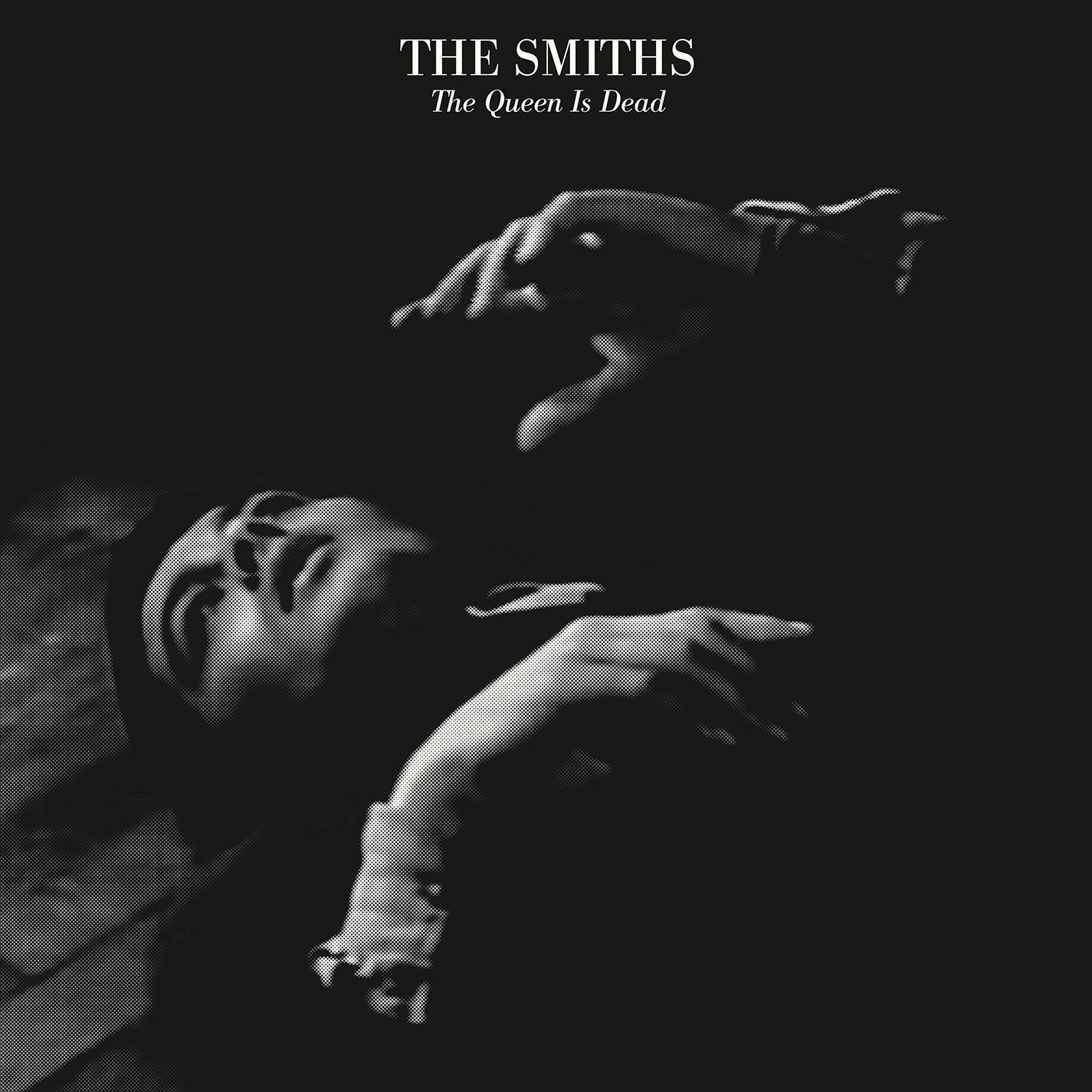
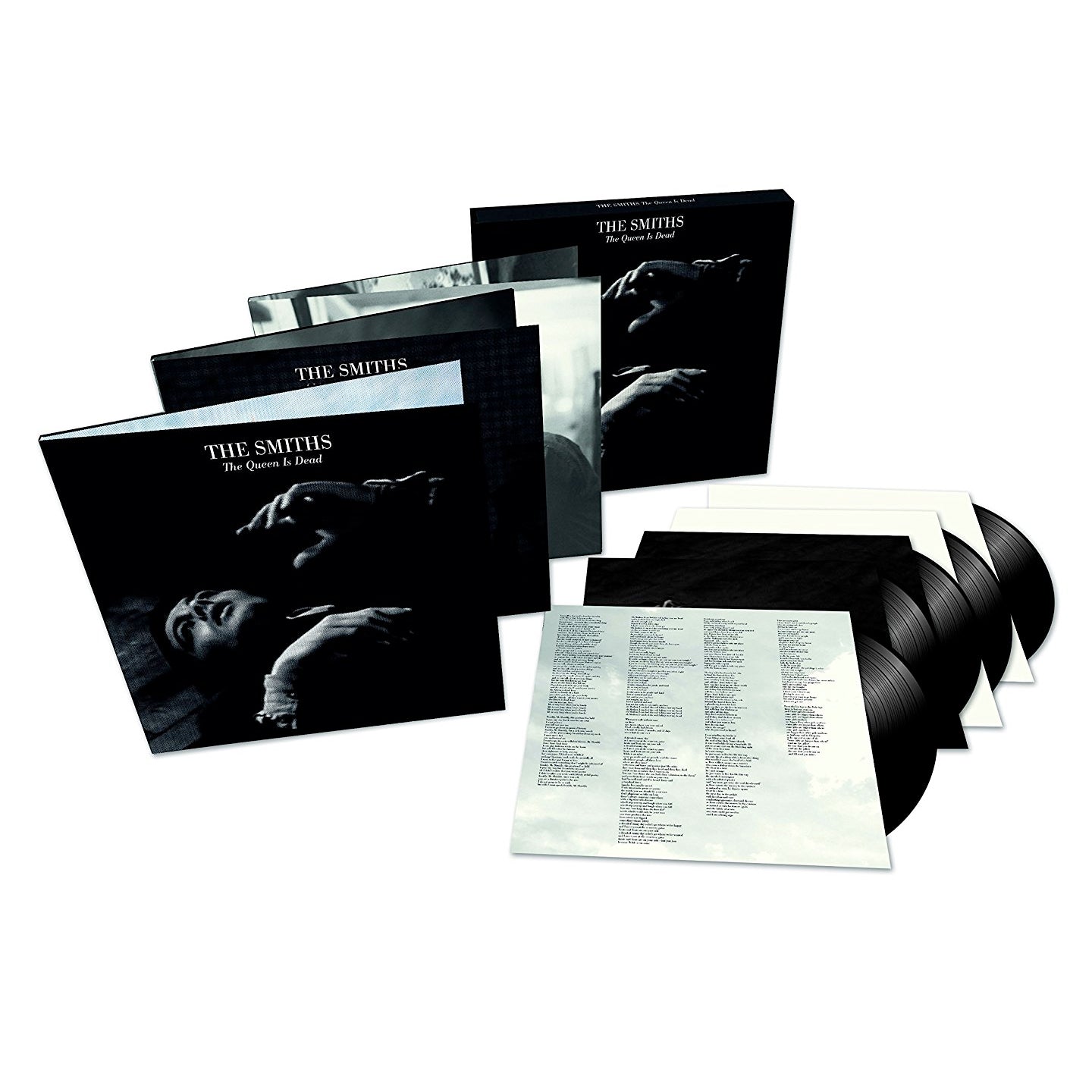
Warner Records will issue a four-disc deluxe edition of The Smiths‘ 1986 album “The Queen Is Dead” this week.
The album is generally considered to be the band’s best work (although “Strangeways, Here We Come” gives it a good run for its money) and the album features the classic “There Is A Light That Never Goes Out” (only a single in France at the time, fact fans). This reissue represents the first time that The Smiths’ back catalogue has been revisited in such a way. The album features several of the band’s finest moments including the title track and ‘There Is A Light That Never Goes Out’, as well as the iconic singles ‘The Boy With The Thorn In His Side’ and ‘Bigmouth Strikes Again’.

There are three physical formats for this release – which as you will note has updated artwork – a 3CD+DVD deluxe includes the remastered album, a bonus CD of demos, alternates and b-sides, a further CD: Live In Boston (recorded at the Great Woods Center For The Performing Arts on August 5th, 1986) and a DVD featuring the 2017 master of the album in 96kHz / 24-bit PCM stereo. The DVD also includes The Queen Is Dead – A Film By Derek Jarman.

A five-LP box set includes all the audio listed above, and a two-CD edition pairs the remaster with the bonus disc of demos etc.

LIMITED EDITION BOXSET WITH ADDITIONAL LIVE RECORDINGS! Widely considered to be both The Smiths‘ finest work and one of the greatest albums ever made, The Queen Is Dead has cast a significant influence over subsequent generations since it was first released in the summer of 1986. This five LP boxset contains a newly mastered and expanded version of the album, including the “Live In Boston” recording. “You cannot continue to record and simply hope that your audience will approve, or that average critics will approve, or that radio will approve,” says Morrissey. “You progress only when you wonder if an abnormally scientific genius would approve – and this is the leap The Smiths took with The Queen Is Dead.” Johnny Marr adds, “The Queen Is Dead was epic to make and epic to live.”

All formats of this The Queen Is Dead reissue will be released on 20th October 2017.

French artist Colleen is fearless in her willingness to explore new sounds and new ways of creating music as a solo performer. On her new album A flame My love, A Frequency she introduces the most drastic change to her music since she began singing on her fourth album. A chance encounter with a Critter and Guitari synthesizer at King Britt’s Philadelphia studio on the Captain of None album tour cracked the compositional model wide open. Colleen bought a Critter and Guitari Pocket Piano with the aim to use it through a newly-acquired Moog filter pedal to create new and interesting rhythms to accompany her voice and viola da gamba. But it turned out the sounds of this viola and rhythm combination was not what she was looking for, so in typical Colleen fashion, she set the viola da gamba aside altogether and picked up an additional Critter and Guitari synth, the Septavox, dug out her her trusted Moog delay and dove right in.

http://

Friends, we’ve been quietly anticipating this latest announcement for what feels like forever. Its with great appreciation for you and your support that we offer up the third release from our upcoming album, the title track, Queens of the Breakers,  It’s a song about the friendships of our past, some of which have fallen away, some of which have endured, all of which have marked us deeply, often in ways we still can’t fathom.

A great lesson in acceptance….It was one of the first tracks we demo’ed for this album in early 2016. It felt immediately great, and we were all galvanized. Over the coming months, though, we began to question it, and doubt it, and wonder if it couldn’t be better. We tried it again and again in several different studios, never feeling quite satisfied….On the verge of throwing our hands up, we decided to trust in that inspiration we felt at the beginning and put that earliest version on the album. So here it is. Engineered by Graham Lessard at Wild Studios in Saint-Zenon Quebec, mixed by Marcus Paquin….(dig Sarah’s unique harp bending technique!)….Queens of the Breakers

The Barr Brothers ‘Queens of the Breakers’ out October 13th,

“On all the other records, I’d pretty much written all the songs by myself, either in a bedroom or down in the studio. But, this time, we decided to try something different,” Brad Barr muses while tracing the creation of Queens of the Breakers, the third full-length record from The Barr Brothers. The Montreal-based singer/ guitarist explains that—along with his drumming sibling Andrew and harpist Sarah Page—on this album, they “decided to go off and see how we play together. It had been over seven years, and we decided to check back in with the three of us to see how we’d play together without any songs, to see if we can develop the music out of that. In the past, Andrew and Sarah and whoever else was in the band would tailor their approach to what the song called for, crafting their parts around a song that I wrote with a lot of room to be as impressionistic as they wanted to be. But this time, we wanted to develop the music out of that kind of playing instead of the inverse.”

DEFIBRILLATION (FEAT. LUCIUS)

This was the last song to be conceived, written and recorded for the album. Andrew’s opening drum beat was the impetus for the tune. Our mother had a small, not-really-consequential fall, but she needed stitches in her head. He went to the emergency room with her at 1 a.m., and overheard two EKG machines pulsing. They were lining up and then going out of sync, and then lining up. I assume that they were monitoring two patients on the wing. When we got back to Montreal, he was like, “I’m gonna try and make a beat based off of that.” He emailed that beat to me—we’d already started mixing the record— and I pinned the song on top of it really quickly. Then, we got the Lucius girls to sing the bridge and they just sent the song to the next level. It was the last tune to come to us and probably the one we spent the least amount of time laboring over.

LOOK BEFORE IT CHANGES

I wrote this one while I was working on a six-string ukulele that I brought with me to Mexico in the winter of 2015. Then, it all came together during our first session for the record. We went to this cabin in the woods of Northern Quebec and we were doing these improvisations and just trying things out. When we took a break, I tracked that little song just as is. For the first take, I sang and played the ukulele. The next time we took a break, Andrew went in and did a drum pass on it—pretty much just cymbals. And then, during the next break, we recorded Sarah.

We felt that we should just build this little song off on the side while we were writing the songs that were gonna be on our record. And it ended up being an easy and delightful experience. It feels really good and it reminds me of Lhasa de Sela, one of our friends from Montreal. She was an icon up here. Her voice was something just totally otherworldly and influential on all of us. Her band was The Barr Brothers band, minus me. She had Andrew on drums, Sarah on harp, our first bass player Miles [Perkin] and Joe Grass, who plays pedal steel with us. And then she got cancer in 2009, and she passed away on New Year’s Day 2010.

SONG THAT I HEARD

I started the song on the same beach in Mexico at the same time as “Look Before It Changes.” I knew it was exactly the kind of song I wanted to deliver, but it took me a while. I tried to shake that lyric “song that I heard” for a long time. I thought it was kind of corny: “Already changed by the song that I heard/ already claimed by the song that I heard.” I felt a little embarrassed by that lyric and finally I just gave over to it and started riffing around it. Once I accepted that one line, the rest of the song came into place.

I reference the Great Antonio, who was a strongman back in the ‘40s–‘60s when you had these strongmen at carnivals. He dragged four city buses filled with people and also a train. He ended up living in Montreal on the streets [after growing up in Yugoslavia]— he had huge dreadlocks. He had this sign, which said: “I will pick up your family for money!” He’s an icon here and an early symbol of the city, but he is relatively unknown outside of here.

MAYBE SOMEDAY

This is the only cover on the record. It’s a Nathan Moore song that was recorded by Surprise Me Mr. Davis. [The group features Moore, the Barrs, their Slip bandmate Marc Friedman and Marco Benevento.] We improvised on it at the cabin. Sarah came up with the guitar riffs—that’s her on guitar.

It’s the only recording I’ve ever made or released where I’m not playing guitar. Andrew championed that. It reminded us of funk music from the ‘70s. It’s a really innocent, naïve spin on what’s funky with Sarah riffing on the guitar. Funk is not really in her musical vocabulary, but she came up with this oblong, crazy little riff that Andrew pushed forward. Then, we tried putting “Maybe Someday” on top of that, and it worked. It’s fun for me to sing it, trying to invoke Hugh Mundell, who’s an early ska, rocksteady singer—a Studio One guy—and a little bit of Elvis Costello.

KOMPROMAT

That one came out of a really true improv with Andrew at the cabin in Northern Quebec. It was just us jamming together, feeling really loose, feeling really free and having that sort of main riff come out. Andrew discovered the word “kompromat.” [The word refers to compromising material used to injure the reputation of a public figure—the term gained notoriety in reference to the dossier that purported to chronicle Donald Trump’s transgressions in Russia.]

The song had been taking a more political/social critique format that Dylan called a “finger-pointing song.” For me, that was what the song seemed to call for lyrically and, when Andrew heard my first verses, he said, “Do you think you could find some way to fit in kompromat?” I said, “I don’t think I can fit the word kompromat in there but I can just name the song ‘Kompromat.’” So that’s what we did. I’ve made some pretty feeble, awful stabs at writing more social commentary-type songs in the past. This is the first one where I at least did it in a more graceful way that I could live with in the future.

YOU WOULD HAVE TO LOSE YOUR MIND

I came up with the chord pattern, rhythmic pattern and melody [for this song] during the end of the Sleeping Operator sessions. I thought about putting it on Sleeping Operator at the time, but I was spent lyrically—or I just couldn’t figure out what I wanted to sing about. So one of the first things we did when we started improvising for this record was say, “Let’s check out this thing; let’s see what it feels like.”

The version that’s on the record was directly from the cabin. We tried to recreate it in another studio here in Montreal and weren’t really successful, in our minds, at beating whatever we got out in the woods. Something about the openness of the room, the feeling of having the water right next to us—the cabin was very remote, about 30 minutes from the nearest market and right next to a lake. So the consistency of water just sort of seemed to permeate those recordings, and that’s what I feel when I listen to the song.

QUEENS OF THE BREAKERS

We had a breakthrough with this: We recorded an acoustic version in the cabin and then, once we got a take we liked, we went in and overdubbed a full electric band on top of the acoustic band. It just knocked us out. We were really excited with what happened, and it became our guiding song. We felt that way for about a month and then we started second-guessing it, thinking, “Maybe this doesn’t sound like us. Maybe it’s somebody else’s song. Maybe it sounds too much like this other band. It doesn’t feel like The Barr Brothers.”

We tried it almost a dozen different times in several different studios over a year. One of the sessions has 60 drum patterns—we just muted the drums to let Andrew try different patterns. In the end, we said, “Let’s just use the original one. It has something that made us really happy. And to hell with it—let’s just ride that feeling.”

I still feel great about it, but it has been one of the trickiest tunes for us to own. Maybe that’s because it’s one of the more straightforward rock-and-roll songs that we’ve ever tried to record. There’s no big left turns in it, there’s nothing idiosyncratic or eccentric about it, but it was very refreshing to play and it sounded easy and fun.

Lyrically, “Queens of the Breakers” is a reference to my old gang of friends—those early teenage friends who, at 13, 14, 15, you first smoked weed with and went to your first Grateful Dead shows with and started really getting into music with on a more cerebral level. We used to do weird shit like dressing up in my friend’s mother’s clothing, which were loud, colorful dresses. We’d raid her closet, put her dresses on, and sort of maraud in Providence—like go to restaurants and just sit down. I remember, one time, we went to The Breakers Mansion in Newport, R.I., dressed in his mother’s clothing, and took a tour of the place. I was thinking about those guys and those times, and I dubbed us Queens of the Breakers almost 30 years later.

IT CAME TO ME

This one began as an afterthought. Sarah had gone to bed, and Andrew and I were playing really loud at the end of the day. It was probably 2 or 3 a.m., and we just started rocking out. The lyrics came quickly, which is what I always look for when coming up with stuff. The best possible scenario for me is that a lyric hits at the same time as the music, and that gives me something I can work with. Otherwise, if I just have the music, I’m fishing for a long time.

It all came easily, but I never thought it would be one that The Barr Brothers would use. I couldn’t imagine how Sarah was gonna treat that one. It felt a little bit too abrasive for what I assumed she would be willing to put up with, volume-wise. But she jumped all over it. She really dove in.

That’s another thing I want to say about this record—Sarah took a huge leap forward from Sleeping Operator. There’s some ambient stuff you hear that almost sounds like synthesizers or trippy guitar and a lot of that is the harp. She went deep with the sonic possibilities of the harp and emerged with a setup that allowed her to be a lot louder and sustain her sound—that was the big thing because the harp dies out quickly. She made a lot of discoveries, and I would say she’s the MVP of the record. It’s been her personal mission to open up the possibilities for the harp.

HIDEOUS GLORIOUS

On “Hideous Glorious,” we used the same approach as “Queens of the Breakers”—we recorded as an acoustic band and then overdubbed as an electric band. It’s one of those tunes that felt good, but I also thought that, if we were going to leave a song off the record because the record felt too long, this probably would have been the first one we’d cut. It sits in a funny place. It’s at odds with what I had thought made The Barr Brothers a unique band—it’s got that meat-and-potatoes, rock-and-roll thing—but it’s another one that feels really good to play. It’s got an openness to it. I love the drum sounds on it, the parts are all well laid out and it just kind of fell together. It was another one where I was like, “Well, OK, we can play more anthemic, epic rock-and-roll that I thought was maybe off-limits to us.”

READY FOR WAR

“Ready for War” is another one I’d been kicking around for at least five years. I’d given up on it ever being on a record, or even just being finished compositionally. There was a point in [making] this record where Andrew felt it needed “one of those heart songs.” We had “Queens of the Breakers,” “Kompromat” and “Maybe Someday,” and these things that were either a bit more rocking or a bit more mysterious, but he felt we were missing that “heart song.” Then he was like, “What about that song you’ve been writing for a little while called ‘Ready for War?’ What do you think about that?”

So I took it back to the drawing board and penned it out. I felt like there was still a lot to be discovered in this song, and then we came up with this cool little time shift. The entrance of the drums felt kind of undeniable to us as a moment. And lyrically, it was really impressionistic for me. It was way less concrete than anything else on the record and I’m OK with that. I like having a couple of those songs on the record, where I listen a few years down the road and I’m like, “Oh, maybe that’s what this one is about.” It’s something open-ended to discover later.

Image may contain: one or more people and text

Wolf Alice topped the bill on last night’s episode of Later… with Jools Holland, playing two new tracks from their new album “Visions Of A Life”.  The Band have been around for a few years now , and to celebrate the release of their second record, Visions Of A Life,

In what was a particularly strong line-up on the long-running BBC show, London four-piece Wolf Alice ranked higher than the likes of King Krule, SZA, Grizzly Bear and Paul Heaton + Jacqui Abbott who also featured.

To kick things off, Wolf Alice rolled into ‘Beautifully Unconventional’ before playing ‘Don’t Delete The Kisses’ to close the show.

Wolf Alice perform Beautifully Unconventional on Later… with Jools Holland, BBC Two (17th October 2017)

Wolf Alice perform Don’t Delete The Kisses on Later… with Jools Holland, BBC Two (17 October 2017)


janglepophubhome.wordpress.com/

Dedicated to all jangly indie/guitar/jangle-pop

Stray Bullet

Show a little faith there's magic in the night

blackwings666

Horror, Science Fiction, Comic Books and More

hotfox63

IN MEMORY EVERYTHING SEEMS TO HAPPEN TO MUSIC - Tennessee Williams

All Things Thriller

A Celebration of Thrillers, Noire and Black Comedy by Pamela Lowe Saldana

The UK Number Ones Blog

Join me as I listen to every single #1 single!

Mike and Paul's Music Blog

Two Guys In Search of Great Music

A Unique Title For Me

Hoping to make the world more beautiful

A Sound Day

hear ye, hear ye!

Christian's Music Musings

Celebrating music craftsmanship

ECLECTIC MUSIC LOVER

Favorite song lists, reviews, featured indie artists, and music commentary.

Every record tells a story

A Blog About Music, Vinyl, More Music and (Sometimes) Music...

Make Your Own Taste

Eclectic reviews of ambient, psychedelic, post-rock, folk and progressive rock ... etc.!

Martin Crookall - Author For Sale

A transparent attempt to promote a writing career

Music Aficionado

Quality articles about the golden age of music

J. ERIC SMITH

Slow molasses drip under a tipped-up crescent moon.

THE PRESS | Music Reviews

Click Header to Return Home

Born To Listen

to Rock, Country, Blues & Jazz

Blabber 'n' Smoke

A Glasgow view of Americana and related music and writings.

The Music Files

Rewind the Review

If My Records Could Talk

A stroll down memory lane through my music collection

The Fat Angel Sings

the best music of yesterday today and the tomorrow, every era every genre