Suede will release a new album, The Blue Hour, in September. In a mysterious statement about the album, the British alt-rock band noted that the title references “the time of day when the light is fading and night is closing in.” They also teased the record as “progressive” and “expansive,” adding, “The songs hint at a narrative but never quite reveal it and never quite explain. But as with any Suede album, it’s always about the songwriting. The band, the passion and the noise: ‘The Blue Hour.'”
Their eighth studio album has been produced and mixed by Alan Moulder and is described as “the final part of a triptych of albums recorded by the band since they reformed and released 2013’s Bloodsports“. It will feature a choir, ‘spoken word’ and string arrangements by Craig Armstrong and Neil Codling.
Format-wise, there will be a CD edition (no deluxe), a double vinyl set and a box set. The contents of the latter will be “announced in full at a later date”, so basically they are still working it out. If I were to hazard a guess… I’d expect double vinyl and CD within some kind of book, perhaps with a bonus CD or vinyl offering exclusive audio and maybe some other ‘bits’ (postcards, poster) thrown in.
The Blue Hour will be released on 21st September 2018.
In addition to the options below, HMV have an exclusive BLUE vinyl and the box set listed for £49.99
Teenage Fanclub are putting out five new vinyl reissues. These reissues cover the Creation era, the first pressings of these will each come with a special seven-inch single that offers two tracks from a selection of rarities, picked by the band. These are all new to vinyl with one track previously unreleased.
For fans of cult Scottish band will be able to get their hands on new pressings of 1991’s Bandwagonesque, 1993’s Thirteen, 1995’s Grand Prix, 1997’s Songs From Northern Britain, and 2000’s Howdy!. They will be packaged in faithful reproductions of the original vinyl artwork and available on heavyweight 180g single vinyl, released on 10th August by Sony Music.
According to a press release, each album will come with a bonus 7″ single containing rarities, B-sides, and previously unreleased tracks selected by the band.
Each album has been remastered from the original tapes at Abbey Road Studios, London under the guidance of the band, and will be packaged in a faithful re-production of the original vinyl artwork. Each LP will be pressed on 180gsm black vinyl.
All records are out via the band’s official website on August 10th.
Teenage Fanclub have confirmed a series of live shows where the set list will linger on songs from their Creation era. The ‘Songs From Teenage Fanclub’ tour will see them play songs from 91-93 on ‘Night 1’, from 94-97 on ‘Night 2’ and from 98-00 on ‘Night 3’.
November
5 / 6 / 7 Manchester Academy 3
9 / 10 / 11 Birmingham Institute
13 / 14 / 15 London Electric Ballroom
Amber Arcades have announced a new album ‘European Heartbreak’ and are heading out on a pre album release tour this June.
A Film by Amber Arcades – Part 1 of 3 Music – Goodnight Europe Director – Elliott Arndt “A lot of the themes Annelotte de Graaf has written about for her record struck very close to home. What I found especially poignant in her lyrics is how it’s mostly through a study of herself and a nonchalant look outside her window that Annelotte makes us get a sense of the political turmoil that’s affecting her. In that respect, I was interested in trying to represent this sense of “banality” in a young adult couple in 2018, who are not only the fruit of a vibrant European Union, but also perhaps the ones most directly affected by its dismantling. I wanted to depict a static, homesick, glitchy romance. And here it is, trying all it can to grow against, amongst and beyond the constricting geographical barriers surrounding it.”
Simple Song, the second part of a three video trilogy, “which tells a modern European (love) story, touching on various thoughts and feelings that inspired my new record.”Musically, Simple Song shows the gentle progress of Amber Arcades’ sound; the driving rhythms and easy guitars remain, yet it’s a crisper sound, each idea more distinct and bolder than ever before, there’s even room for some delightful horn interludes courtesy of the Spacebomb house-band. As with all her best track the joy here is in the contrast, the breezy sound juxtaposing the sadness in the vocal, the confident musical decisions contradicting the doubt written large in the lyrics.
Music video by Amber Arcades performing Simple Song. Heavenly Recordings
Delighted to announce Amber Arcades new album, European Heartbreak, will be released on the 28th September 2018.
Pete Townshend‘s masterpiece is as much a defining part of the late ’60s as Vietnam and Woodstock. Its story — about a deaf, dumb and blind boy turns hippie idealism into a messianic fable of acceptance and rejection. But it’s the music, constructed as a rock opera complete with an overture and recurring musical themes, that holds together this double-record epic.
Perhaps it’s the original rock opera“Tommy”, released in 1969, composed by Pete Townshend and performed by The Who. This acclaimed work was presented over two LPs and it took the idea of thematically based albums to a much higher appreciation by both critics and the public. It was also the first story-based concept album of the rock era to enjoy commercial success. The Who went on to further explorations of the concept album format with their follow-up project “Lifehouse”, which was abandoned before completion, and with their 1973 rock opera, “Quadrophenia”.
After the witty, but flawed The Who Sell Out, The Who still hadn’t been really accepted as a serious album act. That was it, if they were going to conquer the world, they were going to have to use the big guns. It was time for the rock opera. While there had been concept albums before, none of them had been on this scale, Tommy was a double album meditation on loneliness, murder, child abuse, spritual guff, rejection and and a whole host of other weird stuff. On top of this it also had some fantastic tunes and was easily the best Who album to date.
Tommy as a little boy see’s his father murdered by his mother and her lover. He is told to never say he saw it or heard it. Tommy, being deaf, dumb, and blind learns to play pinball by sense of smell and touch soon master’s the game. Tommy as an adult becomes famous for his pinball prowess and quickly gains a mass following. By the end of the Opera Tommy’s follower’s turn on him, as they get sick of all of the rules he give’s.
Townshend’s desire for this album to be taken seriously is underlined by the instrumental passages “Overture” and “Sparks”, though admittedly the ambitious “Underture” was far too long for its own good. Most of the characters in this cantata are given voice by Roger Daltrey, though each member of the band seems to get to voice at least one character. As many of the songs on Tommy are a part of the much bigger narrative, there’s actually not that many songs that work well as stand-alone tunes, with only the rocking “Pinball Wizard” and to a lesser extent “Sally Simpson” able to thrive outside of the confines of the parent album.
Tommy is an album you have to listen in totality. There’s no point in which you can happily let your mind wander, other than “Underture”, which probably explains why it is one of the most popular tracks on the album (i.e. it gives you chance to put the kettle on). Arguably the thing that makes Tommy work was the drive and ambition of Pete Townshend and the fact at this stage in their career, The Who were a particularly well-drilled band, capable of making a good job of almost anything thrown at them.
Of course since its release Tommy has inspired countless bands to attempt ill-conceived and frankly tedious concept albums, all trying to be hugely significant and open the doors of perception. Ultimately Tommy is a much more intelligent and creative album than its questionable legacy suggests.
On (May 23rd) in 1969: The Who released their classic album ‘Tommy’ (Track Records in the UK/Decca Records in the US), a full-blown ‘rock opera’ about a deaf, dumb & blind boy that launched the band to international superstardom; written almost entirely by Pete Townshend, his ability to construct a lengthy conceptual narrative brought new possibilities to rock music; despite the complexity involved, he & the band never lost sight of solid pop melodies, harmonies & forceful instrumentation, imbuing the material with a suitably powerful grace the album has sold over 20 million copies worldwide…
The Who – Rock Opera Tommy – Full Concert – 1989 – Live performance in Los Angeles at the Universal Amphitheater The Los Angeles version of this show featured Phil Collins as Uncle Ernie, Patti LaBelle as the Acid Queen, Steve Winwood as the Hawker, Elton John as the Pinball Wizard and Billy Idol as Cousin Kevin
The Band
Roger Daltry (Vocals) Peter Townsend (Vocals/ Guitar) John Entwistle (Vocals Bass) Phil Collins, Billy Idol, Elton John, Patti LaBelle, Steve Winwood Simon Phillips (drums) Steve Boltz Bolton (Guitar) John Rabbit Bundrick (Keyboards) Roddy Lorimor (trumpet) Jody Linscott (Percussion) Simon Clarke (Saxophone) Tim Sanders (Saxophone) Niel Sidwell (Trombone) Simon Gardner (Trumpet) Chyna (Vocals) Cleveland (Vocals) Billy Nichols (Vocals)
The Replacements began to turn away from their early punk aesthetic on “Hootenanny”, the second studio album setting themselves up for stirring new successes. Unfortunately, this album also marked the beginning of the end for the band’s seminal lineup.
They had begun their discography with the hardcore, thrillingly haphazard 1981 album Sorry Ma, Forgot to Take Out the Trash, followed by the similarly constructed Stink EP a year later. This was booze-addled co-founding guitarist Bob Stinson’s forte, the place where he felt most at home. Frontman Paul Westerberg had other ideas.
“It had been a year or six months of touring and doing the Stink thing,” Westerberg says in the excellent “Trouble Boys The True Story of the Replacements”, “and the last thing I wanted to do was really bash out another one like that. … It was impossible to sing that shit anyway; it was ripping my throat raw.”
The Hootenanny, album was issued on April 29th, 1983, It re-drew the Replacements‘ musical boundaries. Suddenly, they were dabbling in pop and old-school rock sounds, and country and folk, too. Some of it was quite frankly ironic, but the album still represented a huge leap forward – and it completely reshaped the Replacements‘ audience.
They’d gotten there by finally speaking to their own deeper, quite fundamental contradictions. After all, this was a band that could somehow come off as both sensitive and sarcastic, darkly poetic and strikingly sophomoric. Westerberg’s roving muse was actually matched by the built-in musical tendencies of bandmates Bob Stinson, his bass-playing brother Tommy Stinson, and drummer Chris Mars.
“If it doesn’t rock enough, Bob will scoff at it,” Westerberg says in Our Band Could Be Your Life, “and if it isn’t catchy enough, Chris won’t like it – and if it isn’t modern enough, Tommy won’t like it.”
Having already changed recording venues in favor of a mobile 24-track unit at a warehouse in Roseville described in the liner notes as “a warehouse in some godawful suburb north of near downtown Minneapolis, The Replacements began trying on new personas: “Willpower” brought to mind the Psychedelic Furs at their most atmospheric, while “Take Me Down to the Hospital” revealed a blues base. “Mr. Whirly” boasted an overt Beatles influence a parody of the Beatles track “Oh! Darling” (with the opening bars of “Strawberry Fields Forever”) and bears the writing credit “mostly stolen” on the record label
, and “Buck Hill” referenced surf rock. “Color Me Impressed” rankes as one of Westerberg’s best early paeans to outsiders. “Within Your Reach” even included a bit of synth.
As he plumbed deeper emotions, Westerberg headed toward something that might be called singer-songwriter punk. “There was less concern of trying to make an album that was all fast rock and roll songs,” Westerberg adds in Trouble Boys. “The record was going to be whatever turned out best on tape.”
At the same time, however, Hootenanny still remained connected to their unstructured roots. The title track, a chaotic blues shuffle in which all of the Replacements switched instruments in order to annoy their fastidious co-producer Paul Stark, was placed at the top of the record. They then charged right into “Run It,” an unapologetically hardcore romp. In these moments, the late Bob Stinson transformed once more into a revelation of guttural expression, weird angles and coiled aggressiveness.
“I mean, what he played just came from somewhere else,” said former manager Peter Jesperson “It was instinctual, more than most people that I’ve ever experienced. He just played a weird amalgamation of things that he admired, filtered through the weird Bob Stinson brain.”
Through it boasts a surprisingly jazzy approach, the lyrics of “Lovelines” were also pure punk: Westerberg reads classified ads, verbatim, straight out of Minneapolis‘ City Pages, you can even detect the sound of turning pages as the song ends. They begin “You Lose” with Westerberg talking back to the control room. “Are we going to record this one?” he asks. Then, as the music suddenly surrounds him: “I see. Well, in that case …”
Meanwhile, the Replacements were still an on-stage mess, as they consumed staggering amounts of alcohol before performing. “If it’s a small crowd, it helps sometimes because you see double,” Westerberg once quipped. “Then you can fill the joint.”
That’s part of why almost all of Hootenanny was cut live, with minimal overdubbing of lead vocals and guitar. They were constrained, quite frankly, by Stinson’s outsized appetites. “The major consideration was how drunk Bob was going to be when he came to the sessions,” Stark said in Trouble Boys, “and how much you could get out of him before he got too drunk to work. With Bob, we only had about 20 or 30 minutes to record every night.”
Bob Stinson had tried to go on the wagon the summer before, but fell off again. At one point, Tommy Stinson was desperate enough to discuss replacing his brother with Dan Murphy of the band Soul Asylum. But Tommy, then still in high school, wasn’t in any position to redirect his wayward sibling. Up to this point, The Replacements had been limiting their schedule to regional weekend runs so the younger Stinson could be back in class on Mondays.
So, Stark adjusted. “We realized [Bob Stinson’s] lead guitar playing was best between his fifth and seventh beer, and after the seventh beer he was worthless,” Stark says “If he hadn’t had the four, he was worthless, as well.”
It all came together, somehow. Paul Westerberg felt like they’d finally stumbled onto something special, something uniquely their own. He later called Hootenanny “the first album that sounds just like us.” Certainly, it set the table for 1984’s breakthrough Let It Be. A year later, the Replacements were signed by a major label.
Still, seeds of discontent were already sown. Bob Stinson had flatly refused to include the Westerberg ballad “You’re Getting Married” on Stink. (“That ain’t the Replacements,” he reportedly said. “Save it for your record, Paul.”) Westerberg actually recorded this album’s more sensitive “Within Your Reach” all alone. The pair were clearly headed to a critical juncture: “When we played the loud, fast shit, it was his band,” Westerberg says in Trouble Boys, “but I felt like I can only do so much of that. I have to do this [ballad] crap, too.”
Westerberg closed out Hootenanny with “Treatment Bound,” a brutally frank admission.”We’re getting no place fast as we can,” he lamented. But that would change soon. Hundreds of college-rock stations added Hootenanny to their playlists, and it got great reviews. Meanwhile, Tommy Stinson quit school. TheReplacements were his full-time job now.
In the spring of ’83, they made their first East Coast trip. The Replacements played CBGB that June. By the fall of 1984, they had released one of the most important albums of the era. Within two years after that, however, BobStinson had gone. He didn’t live another full decade.
The Replacements
Paul Westerberg – rhythm guitar, vocals (drums on track 1, all instruments on side 2, track 1)
Bob Stinson – lead guitar (bass on track 1)
Tommy Stinson – bass (rhythm guitar on track 1)
Chris Mars – drums (lead guitar on track 1)
Hootenanny sold more than 38,000 vinyl copies. In 2008, The album was remastered and reissued by RhinoEntertainment, containing seven additional tracks.
“Bought It” is another extremely promising track from the debut album release of Middle Kids long player, Lost Friends. We have already heard earlier tracks “Mistake” and “On My Knees,” and now the Sydney indie rockers have given us a pleasing dose of chugging twilight guitar-pop. You can check it out below,
Middle Kids’ debut album ‘Lost Friends’, out May 4th 2018.
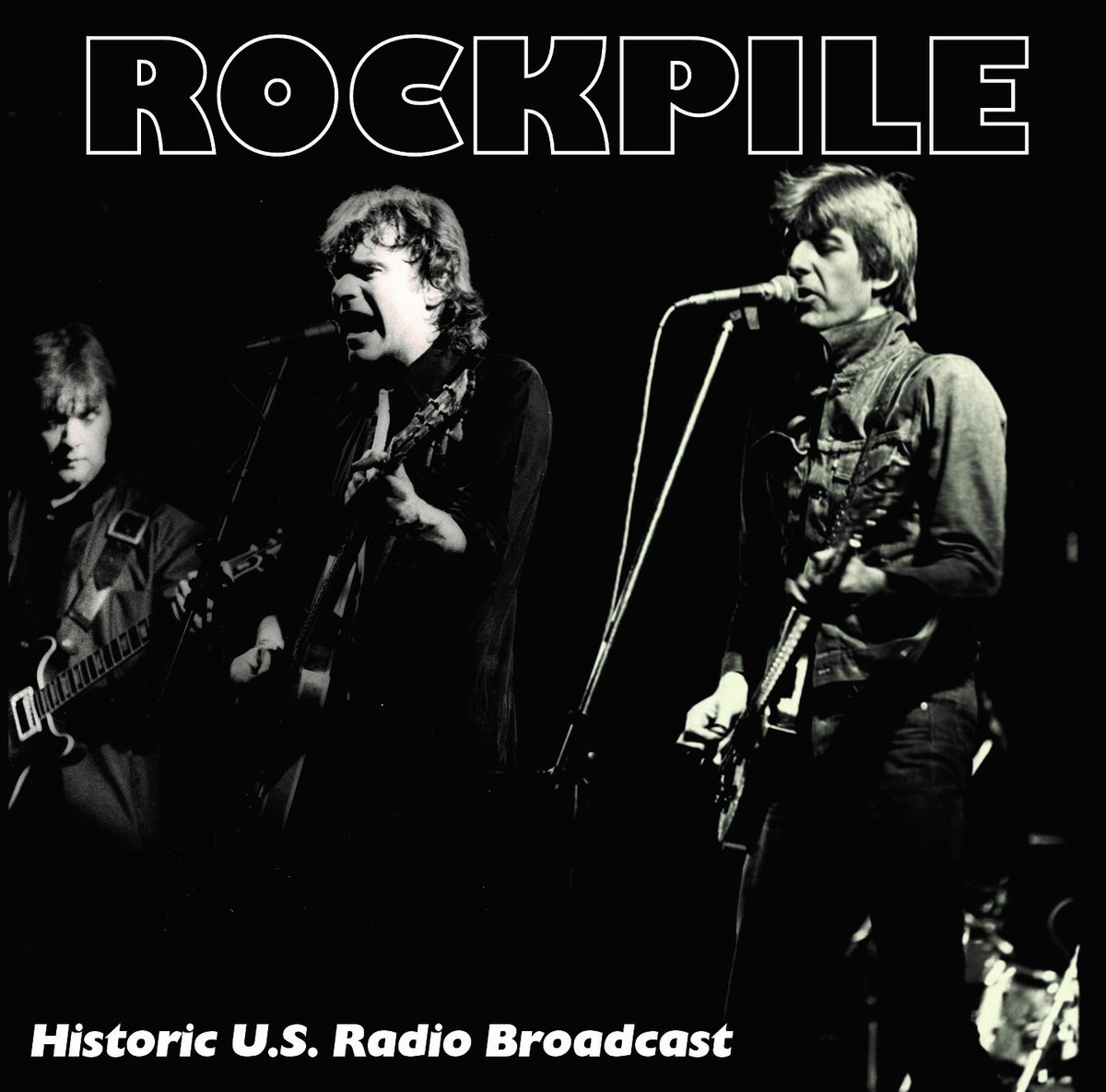
Rockpile recorded at the height of their powers. Includes live versions of ‘Girls Talk’, ‘Cruel To Be Kind’ and Rockpile’s version of ‘Jailhouse Rock’.
Rockpile were a British rock and roll group of the late 1970s and early 1980s, noted for their strong pub rock, rockabilly and power pop influences, and as a foundational influence on new wave. The band consisted of DaveEdmunds (vocals, guitar), Nick Lowe (vocals, bass guitar), Billy Bremner (vocals, guitar) and Terry Williams (drums). Rockpile recorded four studio albums, though only one (Seconds of Pleasure) was released under the Rockpile banner. Two other albums (Tracks on Wax 4 and Repeat When Necessary) were released as Dave Edmunds solo albums, and one more (Labour of Lust) was released as a Nick Lowe solo album.
A few days prior to their run of shows at Max’s Kansas City in July/August 1973, The Stooges arrived in Manhattan to rehearse. The band’s label provided a practice space in midtown, and tapes were made so Iggy and the band could hear themselves. Years later, the recordings were released, and they were a revelation. Iggy was absolutely on fire during these rehearsals. There are moments when his vocals are even more violent and unhinged than anything heard on the band’s studio LPs or their infamous live album, “Metallic KO .” Though the practice tapes lack the fidelity of those seminal releases, the intensity comes through all the same.
After a long delay, The Stooges third album, “Raw Power “ was finally released in May 1973. The previous March, after clashes with management came to head, James Williamson was forced out of the group, but after the company dropped Iggy and the Stooges, he was welcomed back into the fold. The band also added a new member, Scott Thurston, to play piano and harmonica.
A number of friends attended the Max’s rehearsals, which were held at a studio owned by CBS Records. Natalie Schlossman, former head of the Stooges fan club, was there, as was original bassist, Dave Alexander, amongst others. With the impending high-profile dates, and as so many were watching, The Stooges gave it their all. At one point, Iggy got on top of the studio’s grand piano to cut a rug.
Recordings of the Max’s rehearsals appear on a number of archival releases, beginning with Rubber Legs ( 1987), the first in a string of quasi-legal albums comprised of previously unreleased Stooges tapes that flooded the market in the late ‘80s. In 2005, Easy Action Records put out the Stooges-approved boxed set of outtakes and such, Heavy Liquid an abridged version was produced for Record Store Day . One of the six discs contains the Max’s show, as well as seven recordings from the Max’s rehearsals. All of the songs pulled from the practice tape were, at the time, newly worked-up tunes that, in the end, wouldn’t be formally recorded by The Stooges.
“Johanna” (later documented for the Kill City project) is particularly powerful. Said to be about a former girlfriend that got her kicks by playing mind games on the Stooges singer, the tape captures Iggy totally tortured, screaming his head off over a love he knows is toxic, but can’t quit.
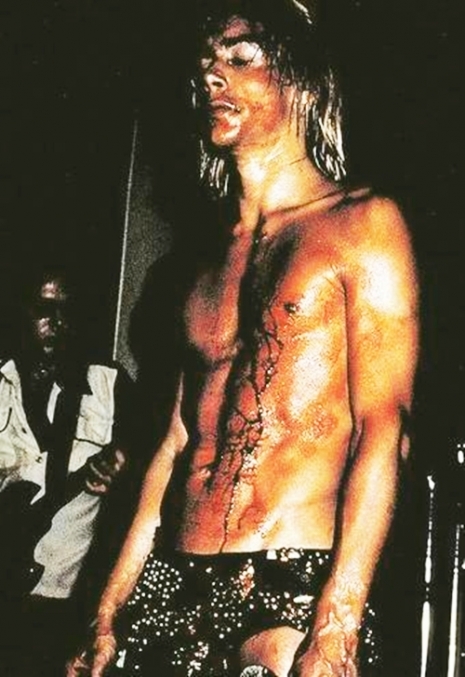
The haunting ballad, “Open up and Bleed,” is another intense one. Iggy’s vocals are positively hair-raising here. The second Max’s Kansas City gig is the one in which Iggy, as he was walking on tables in the club—with attendees including Wayne County, Lenny Kaye and Alice Cooper looking on—slipped and fell on a table full of glasses. When he stood up, his chest was covered in blood . Though thoroughly cut, he finished the show.
Exclusively for RSD 2018,Ride release a limited edition double vinyl LP collection of remixes of tracks from their acclaimed fifth album, ‘Weather Diaries’.
The double LP includes remixes from the likes of renowned Berlin techno duo Barker & Baumecker, Stereolab offshoot Cavern of Anti-Matter, Oren Ambarchi (Touch, Editions Mego, Black Truffle), beautiful ambient mixes from Jefre Cantu-Ledesma (with additional vocals from Maria Linden of I Break Horses), BartozKruczynski (aka Earthtrax) and a 25 minute opus from Babe Terror, amongst others.
Limited to 1000 copies for the UK and Ireland.
Tracklisting:
1. Lannoy Point (Bartosz Kruczynski Mix)
2. Charm Assault (Mogwai Remix)
3. All I Want (Glok Remix)
4. Home Is A Feeling (A Creamy Crambled Suite For A Ride)
5. All I Want (Oren Ambarchi Remix)
6. Weather Diaries (Jefre Cantu-Ledesma Remix)
7. Rocket Silver Symphony (Barker & Baumecker Mix)
8. Lateral Alice (Cavern Of Anti-Matter Remix)
9. Cali (Luke Abbott Remix)
10. White Sands (Lamplighter Remix)
‘All I Want’ remix by GLOK aka Andy Bell,
the Cavern of Anti-Matter remix of new live favourite, “Lateral Alice”. Cavern of Anti-Matter is the latest project of Tim Gane (Stereolab etc) and Joe Dilworth (Stereolab, Th’Faith Healers etc.) Here they strip “Lateral Alice” down to its vocals and then rebuild it as an organ-led, kraut-y, prog-y, psychedelic gem, as is their inimitable style.
Being made available alongside the release of the “Cali” video, the latest remix of a track from the new Ride album is by leading UK electronic producer, Luke Abbott. Luke has released records on James Holden’s BorderCommunity and Gold Panda’s Notown label, amongst others. Here he takes “Cali” on a haunting, psychedelic and somewhat twisted ride (no pun intended!), adding lush modular synths and heavily effected vocals to the sunshine bliss of the original.
There’s a confounding nature to the comfort constructed by The Myrrors throughout the flawless forty minutes of “Entranced Earth,” the third full-length album from the transcendentally-tuned, Tuscon-tied desert die-hards (and their second for Beyond Beyond Is Beyond Records).
Those looking for terra firma – for ground not given to staggering shifts, for easily grasped handholds, for the force of gravity as we know it – are likely to find the album an often-groundless experience. But for listeners willing to give themselves over to the landscape presented on “Entranced Earth,” the reward lies in the discovery of new lands, and the sound of a band operating at the peak of their powers.
When last we saw the reflection of The Myrrors, it was in the form of their previous release, “Arena Negra,” an album that announced its presence immediately and with high dosage of the appropriate amplification. “Entranced Earth,” by contrast, gives indication of The Myrrors entering an altogether different atmosphere, taking on an altogether higher climb, shorn of all hesitation and allowing their freak flags to unfurl and fly like never before.
Still, it’s difficult (and altogether unnecessary) to pin down “Entranced Earth” beyond the spires of sonic smoke that the album seems to generate at will. So subtle is the album- opening invocation of “Mountain Mourning” that it threatens to never descend from its sky-bound view, leaving the track that follows, “Liberty Is In the Street,” to offer the album’s first, fading glimpse of solid ground. “On your feet or on your knees” goes the mantra-like vocal drone, though the effect is likely to bring to mind the Moody Blues more than Blue Öyster Cult (at least, the path of The Myrrors seems to include traces of the footprints left by the one-time Harvard professor given an early eulogy by the Blues on “Legend of a Mind”). By the time that “No Clear Light” – a torch-lit, dust-crusted dirge that can be felt as the beating heart of the album overall – leads listeners toward the nearly nine-minute title track and album centerpiece, there are doubtlessly many more wanderers pledging allegiance to The Myrrors unnamed cult.
Guitars of six and twelve strings, harmonium, tablas, alto sax, bulbul tarang – these are the tools of The Myrrors all-consuming quest, expertly applied for maximum elevation. Enter the realm of “Entranced Earth,” sit still and let the ground disappear beneath your feet.
Band Members
Nik Rayne / Grant Beyschau / Miguel Urbina / Kellen Fortier / Casey Hadland


 .” Though the practice tapes lack the fidelity of those seminal releases, the intensity comes through all the same.
 “ was finally released in May 1973. The previous March, after clashes with management came to head, James Williamson was forced out of the group, but after the company dropped Iggy and the Stooges, he was welcomed back into the fold. The band also added a new member, Scott Thurston, to play piano and harmonica.

 was produced for Record Store Day . One of the six discs contains the Max’s show, as well as seven recordings from the Max’s rehearsals. All of the songs pulled from the practice tape were, at the time, newly worked-up tunes that, in the end, wouldn’t be formally recorded by The Stooges.


