Since 2011, the New York band LVL UP has grown up from a dorm room demo collaboration into a full-fledged songwriting force. From their indelibly catchy debut album, Space Brothers, to their 2016 Sub Pop Records release, Return to Love, the band never lost the spark that made their warm hearted indie rock tick. Now, after seven years together, LVL UP are calling it quits, but not before issuing an emotional swan song. “Orchard,” the group’s final single, feels like a fitting end to a musical project based on college friendship. It’s the sort of tune you might imagine playing over the closing credits of a buddy movie as the sun sets in the rearview mirror.
On “Orchard,” thick guitar chords and a haze of synthesized flutes evoke the feeling of humid summer air, while downturned vocal melodies convey a sense of nostalgia for a time that hasn’t quite ended yet. Midway through the track, all the instruments save the drums fall away, leaving the vocals bare. “Watching water run through the fingers,” sings vocalist and guitarist Mike Caridi, as if he’s trying to freeze time as it slips by. By the end, though, drummer Greg Rutkin has shifted to an upbeat pattern, putting an optimistic spin on the melancholy mood. It’s as if a new beginning were forming inside the song’s finish, a new era emerging from the close of the last one. “Orchard” may be the epilogue to a great rock act, but it’s also a reminder that there’s life after the breakup of a band.
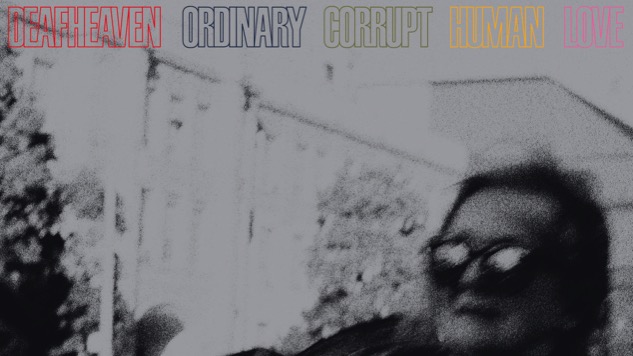
Deafheaven’s sound often feel light and effortless. The San Francisco rockers’ impressive blend of post-hardcore, screamo, and heavy metal achieves a surprisingly transcendent, almost revelatory quality, fueled by tight and aggressive rhythms and frontman George Clarke’s raw, guttural shrieks.
Ordinary Corrupt Human Love, which follows 2015’s New Bermuda and 2013’s crossover hit Sunbather, is out July 13th via Anti-Records. Check out the song “Canary Yellow” below, which clocks in at over 12 minutes long. Opening with an airy and melodic vibe, the track soon explodes into perfectly controlled hard rock chaos.
“Canary Yellow” by Deafheaven from the album ‘Ordinary Corrupt Human Love,’ available July 13th
Navigating influential multimedia blog Stadiums & Shrines is like a lovely trip by train through mystical destinations around the world. The Brooklyn-based digital institution pairs poetic ruminations with collage-based artwork and music as an ethereal guide to stitch each location-specific entry into an elevated art form. Enter Dreams, a 10-year anniversary compilation of the music that has graced (and will grace) the site over the years from the likes of DustinWong’s frenetic guitar loops (Japan), Teen Daze’s icy beats (Alaska), Kaitlyn Aurelia Smith’s buchla-driven jaunt (Yugoslavia), Mutual Benefit’s bells & chimes (Bali) and more.
Featuring other contemporary artists like Bing & Ruth, Kaitlyn Aurelia Smith, Julie Byrne, Yumi Zouma, Mutual Benefit and more, this sprawling compilation collects 18 original ambient, experimental and electronic tracks (a.k.a. ‘dreams‘) across a beautiful double LP. Vinyl is packaged in a premium gatefold jacket designed by visual artist Nathaniel Whitcomb, with a booklet of original collage and prose stitched to the interior. Limited editions are pressed on bone color vinyl.
Listen to this track from the ever superb Yumi Zouma – France (Grands Boulevards) is the first single from the compilation S&S Presents: Dreams, out on Cascine Records.
Thundering riffs, rumbling drums and sparkling psychedelia recall the glory daze of Cactus, Grand Funk & the James Gang. Unabashedly retro, these fellas still have their own singular vibe. Excellent songwriting and playing throughout. Crank loud and enjoy! Finding the middle ground between Skynyrd and Sabbath, Crypt Trip have discovered landed in a sweet spot to serve up fine, straightforward rock ‘n’ roll music. This mustachioed trio from San Marcos aren’t afraid to doom out like the children of the grave that they are on apocalyptic revelries like “Tears of Gaia,” but they also have a tune called “Boogie No. 6” that allows them to unleash their inner Canned Heat. While their knowledge of rock history is deep enough to rob the graves of bands past, their repurposing of their findings keeps from becoming corpses themselves.
One of those albums you enjoy from beginning to end without skipping any tracks. Each song flows into the next. Excellent fuzzy psychedelic rock tunes!
First rule of rock and roll: Make sure the music knows how much you love it. So, since the beginning, rockers have praised, named, and given thanks to rock and roll in song. Chuck Berry did it. So did Lou Reed and Joan Jett and Led Zeppelin and David Bowie. Laying his claim, Jesse Wells does it too, in one of the fuzz-fed brush fires he and his band – simply called Welles – light on this debut album.
The sound of Red Trees and White Trashes is confrontational and fun, marked by psychedelia and grunge (in 2015, Wells released a cover of Nirvana’s “Heart Shaped Box”) but with a little bit of Southern pastoralism in the mix. Wells grew up in Arkansas and, until recently, lived in an art commune in the gorgeous mountain lands around Fayetteville. In his gently drifting power ballad “Seventeen” which may be a bit of a tribute to Big Star’s great song about the same kind of angst, “Thirteen” – Wells tells his messed-up love he’d like to bring them to “Ar-Kansas, where there’s beer and molasses” and a certain immunity to time and those titular “red trees and white trashes” dot the psychedelic landscape. The feel of this album recalls other 21st-century Southern rock survivalists like Cage the Elephant and All Them Witches – artists who’ve found inspiration in the region’s woodsy cover and nighttime heat, and are keeping feedback-fed rock alive by not worrying about anybody else’s idea of what’s cool.
At only 23, Wells is already writing hooks that any of his heroes would envy. In Nashville he’s found bandmates who can take his vision past what he could do in Fayetteville’s coffee houses and backyards. The sound on this album is huge, putting Welles in the same league as the smart bands reviving rock’s mainstream right now, like Royal Blood and Greta Van Fleet. Produced by Beau Boggs (who’s known for his work with Nashville mavericks from Jamey Johnson to Natalie Prass) and Bobby Emmett, with three tracks helmed by Dave Cobb (reminding the world here that he started his ascent as a producer in a rock band of his own), Red Trees and White Trashes has the heft and complexity to likely earn a few Grammy nominations; but it’s also obvious that Wells will always be comfortable in some dirty rock and roll kitchen where, as he says in one song, “everyone’s kinda ugly in that way that looks pretty,” girls in blue bobs are smoking something illegal, and somebody’s turned the amp up to 10 on the other side of the screen door. “It’s just summer again,” Wells cries as the bass line creeps like a snake in the grass. “Giving it away to the night life trend all again.” Giving it away to the thing that gives it all to you: rock and roll.
After a five-year break between albums that involved lineup changes and half the band moving from Ireland to Toronto and back again, the Irish quartet Dott returned with a second album that mostly follows the girl group/noise pop template they laid out on their charming debut album, Swoon. Like Swoon, the band’s focus on Heart Swell is on the powerful, heartbreakingly clear vocals of Anna McCarthy. She could sing just about anything and make it sound like an urgent message from the angels, and when the songs are a match — like they often were on the debut — the music lifts off and takes flight. There are plenty of moments on Heart Swell that do exactly that. There are songs that have bright-as-a-new-light-bulb melodies (“Not Sorry”), gently swaying ballads that are as warm as a lingering cuddle (“18”), sweet summer pop songs with handclaps and swooning vocal harmonies (“Swim”), and at least one song that comes across like a lost chart-topping single from 1993 (the mighty “Bleached Blonde”).
These moments would have all fit nicely on Swoon and been highlights. Unfortunately, while 90 percent of the album is a fine follow-up, when they expand the formula a little bit, things get a little dicey. The singsongy “Like a Girl” sounds like it would fit on the soundtrack of a cheesy Josie & the Pussycats knockoff movie; there are overly beefy songs, like “Floating Arrow” and “Do Ya,” that conjure up memories of bands like Eve’s Plum that were regulars in the cut-out bins of the early ’90s; and one of the ballads, “Wedding Song,” gets a little too close to cloying middle-of-the-road territory. Subtract those few missteps and what’s left is fizzing guitar pop with just the right balance of snappy melody and biting guitar, with a brilliant voice driving the melodies home like a trusted cabbie. Sadly, they are stuck in the track list like ugly blue splotches on a freshly painted wall, hard to overlook and coming perilously close to ruining the whole thing. Easy enough to skip, though, because the rest of the album is a keeper.
When a band releases their third album five months after their second, you’re probably foolish if you’re expecting a significant amount of audible growth. But what do you know? Beechwood sound like a stronger and more energetic band on Inside the Flesh Hotel, which arrived in June 2018, hot on the heels of Songs from the Land of Nod, which came out in January of this same year.
Songs from the Land of Nod was fittingly titled, as the performances had a certain sleepy quality even when the band was rocking hard, but while vocalist Gordon Lawrence hasn’t abandoned the whispery mumble that dominated the previous LP, this band sounds tighter, more committed, and more forceful their third time at bat. Inside the Flesh Hotel has just enough sloppiness to suit this band’s garage-psych persona, but the pop-leaning growl of “Boy Before,” the clean-lined and wistful “Amy,” the brazen but effective Stooges cop of “Nero,” and the fuzzy peal of the guitars in “Over on Everyone” give the impression Beechwood have put more care into their music this time out.
Lawrence’s guitar work is more precise without seeming mannered, and bassist Sid Simons and drummer Isa Tineo keep the songs in line and moving forward with style and just the right amount of muscle. And while these guys generally seem to be too busy exploring inner space to fret much about politics, “Bigot in My Bedroom” is a witty but pointed attack on an unnamed leader who is making Lawrence and his bandmates want to flee the country. Inside the Flesh Hotel isn’t a quantum leap into greatness for Beechwood, but on every level it genuinely improves on Songs from the Land of Nod and makes a better case for their talents. Imagine how much better they might sound if they wait eight months to release album number four!
Warren Zevon was already a decade into a recording career when he released his breakthrough self-titled album in May 1976. But for every purpose the second LP under his name could have been Zevon’s debut. It was certainly laid out that way. Though only a modest commercial success, the Jackson Browne-produced Warren Zevon album(1976) would later be termed a masterpiece in the first edition of the Rolling Stone Record Guide and is cited in the book’s most recently revised edition as Zevon’s most realized work. Representative tracks include the junkie’s lament “Carmelita”; the Copland-esque outlaw ballad “Frank and Jesse James”; “The French Inhaler”, a scathing insider’s look at life and lust in the L.A. music business (which was, in fact, about his long-time girlfriend and mother to his son Jordan); and “Desperados Under the Eaves”, a chronicle of Zevon’s increasing alcoholism.
Warren Zevon was an industry veteran by the time he made his major label debut in 1976. He had toured with the Everly Brothers as their band leader, and was rooming with Lindsey Buckingham and Stevie Nicks in 1975. Jackson Browne had championed Zevon, and produced his first major solo album (his 1969 debut was unsuccessful).
When he moved to Los Angeles in 1975 and began work on the album that would become his first for a major label, Zevon stayed with Lindsey Buckingham and Stevie Nicks, who were just starting to experience fame for the first time themselves as new Fleetwood Mac recruits after years of performing and recording. They joined Zevon in the studio, as did Phil Everly, Eagles Glenn Frey, Don Henley and blues guitarist Bonnie Raitt and the Beach Boy Carl Wilson. Browne produced, played piano and contributed slide guitar to the album.
And ‘The French Inhaler’ is an extraordinary song for an artist launching their career. It’s not ambitious stylistically, following the same laid back west coast template as Browne and the Eagles. But it’s a complex song, dispensing with verse/chorus structures and winding its way through a series of jabs at his ex-girlfriend Tule Livingston. JordanZevon, Zevon and Livingston’s son, recalled “despite the subject matter, my mom would play that song to me after a couple of glasses of wine and laugh and say: ‘Isn’t that brilliant?’ She knew he was a genius”.
Musically, it’s centred on Zevon’s proficient piano playing, but the magic comes from the backing vocals from EaglesDon Henley and Glenn Frey. They appear halfway through the word “night” about a minute into the song, and come and go throughout. As much as I’m sometimes ambivalent about their band’s work, the two head Eagles are magnificent here.
Zevon’s music was full of blood, bile, and mean-spirited irony, and the glossy surfaces of Jackson Browne’s production failed to disguise the bitter heart of the songs on Warren Zevon. The album opened with a jaunty celebration of a pair of Old West thieves and gunfighters (“Frank and Jesse James”), and went on to tell remarkable, slightly unnerving tales of ambitious pimps (“The French Inhaler”), lonesome junkies (“Carmelita”), wired, hard-living lunatics (“I’ll Sleep When I’m Dead”), and truly dastardly womanizers (“Poor Poor Pitiful Me”), and even Zevon’s celebrations of life in Los Angeles, long a staple of the soft rock genre, had both a menace and an epic sweep his contemporaries could never match (“Join Me in L.A.” and “Desperados Under the Eaves”). But for all their darkness, Zevon’s songs also possessed a steely intelligence, a winning wit, and an unusually sophisticated melodic sense, and he certainly made the most of the high-priced help who backed him on the album.”
Warren Zevon served as announcement of a new singer-songwriter whose voice and songs were worth hearing. Some of music’s biggest names were already behind Zevon, and the album’s track listing now reads like a classic line up of some of his greatest songs.
His characters were drug addicts, alcoholics, prone to violence and gambling with their lives in ways that just happen to also affect those around them. In the album-closing “Desperados Under the Eaves” he sings, “Still waking up in the mornings with shaking hands … / Don’t the sun look angry at me?” That about sums it up. But like the protagonists of the opening track, “Frank and Jesse James,”Zevon was the eternal outlaw, “ridin’, ridin’, ridin’.”
And that’s the overriding spirit of Warren Zevon that more or less shaped the rest of his career. His next album “Excitable Boy “again produced by Browne and featuring an all-star roster of friends, climbed to the Top 10 – thanks in part to the fluke hit “Werewolves of London.”
Linda Ronstadt’s celebrated covers of several Zevon songs – “Hasten Down the Wind,” “Carmelita” and “Poor Poor Pitiful Me,” all from this LP, among them – wouldn’t arrive until after Warren Zevon’s release.
Black Helium are a four-piece formed in 2016 for a special one-off Halloween gig at the notoriously heady Guild Navigator club in East London, and have since then spread their sonic gumbo of hard-edged psychedelic head-fuckery and Neanderthal glam rock swagger across the country.
Heavy friends Stuart Gray (vocals/guitar), Beck Harvey (vocals/bass) Davey Mulka (guitar) and Ben Davies (drums) went on to record their debut, Primitive Fuck, at Hermitage Studios with Margo Broom in March 2017. Although, Ben Davies disappeared abruptly after recording his drum tracks after experiencing a ‘profound life-changing mystical occurrence’.
Influenced by bands such as Black Sabbath, Hawkwind, Amon Düül II and The Stooges; Primitive Fuck channels an era when psychedelic rock stood for mind expanding eclecticism, and hip shaking sonic hedonism in equal measure, moving from motor city heroism, to shapeless Kosmische ambient ego-death via space ritual riff worship. Now, with new drummer, Diogo Gomes on board, Primitive Fuck represents the birth of a band your psychiatrist warned you about.
British but born to Canadian parents, and a focal point of the vibrant South London scene which includes Shame, HMLTD and Goat Girl to name but a few, Matt’s acerbic, witty songwriting brought attention from The FADER, The Guardian, Interview Magazine, NME, DIY, The Line Of Best Fit, and a score of other titles both online and in print throughout 2017.
The Berkshire don helped to create a genre this year: schmaltzcore, caramel-smooth jazz-pop whose purveyors include Tom Misch and Rex Orange County. Sounds like Jamie Cullum, but cool, you know? On his damn fine debut album, Maltese has crafted near-perfect piano pop with whip-smart lyrics (“Some people think the Earth is flat / But if it were / How come I don’t see you anywhere?”) and the occasional boogie-woogie flourish (we heard Jools Holland smashed up his Steinway in a jealous rage when he heard the funky final 30 seconds of ‘Guilty’). ‘Bad Contestant’ is smooth as silk wrapped around a razorblade.
21 year-old South London artist Matt Maltese brings his debut album Bad Contestant – set for release on 1st June via Atlantic Records.
The record, a culmination of 12 days spent in Foxygen instigator Jonathan Rado’s Los Angeles studio and many hours of sessions with Londoner Alex Burey, displays a no-less-than stunning leap forward in songwriting confidence from the already critically acclaimed young musician.
Credited with steering the lush sounding debut albums from Whitney and the Lemon Twigs, as well as Father John Misty’s forthcoming material, Jonathan Rado has helped drench the record with Californian atmospherics, drawing out Matt’s sweetly drifting vocals over a swell of jubilant guitars, brass and drums. Featuring reworked versions of fan favourites and previous singles ‘Strange Time’ and ‘As The World Caves In’ amongst nine beautiful new tracks, Bad Contestant is a grand coming-of-age album packed with Matt’s typically complex, witty melancholy and uplifting melodies.