Deer Tick have announced a companion follow-up to 2017’s Deer Tick, Vol. 1 and Deer Tick, Vol. 2. It’s called Mayonnaise, perhaps a nod to last year’s condiment-inspired album art, and it’s out February. 1st, 2019, via Partisan Records. The 13-track compilation album will feature reworked versions of songs from Vol. 1 and Vol. 2, as well as covers and a few brand new tracks. In typical Deer Tick fashion, “Hey! Yeah!” involves worn and weathered Southern rock and gritty vocals. The easy-going, toe-tapping rock of “Hey! Yeah!” fits right in alongside the relaxed fingerpicking and folksy storytelling of “Doomed from the Start” and “Tiny Fortunes,” from Vol. 1 and Vol. 2, respectively. “Hey! Yeah!” is tremendously fun, twangy rock ’n’ roll, sure to please DeerTick’s devoted fans.
“Hey! Yeah!” is from Deer Tick’s forthcoming album ‘Mayonnaise’, available February 1, 2019.
We’ve only been waiting a little over two years with bated breath for “Darkness Rains“, the third release from California’sDeath Valley Girls; anxious only because after the promise of 2014’s “Street Venom” and the astounding “Glow in the Dark” back in 2016, it seemed like it could be a tall order to move the dial.
Well it may be a cliché to say a band is evolving, finding themselves, maturing if you will, but “Darkness Rains” finds Death Valley Girls reaching another level.
The third album can be a difficult hurdle for an artist; it’s the record where they discover what they are made of often writing from a clean slate. Just as Led Zeppelin’s third album or The Clash with “London Calling” found the iconic bands hitting their stride, “Darkness Rains” hits the target . The ten tracks here showcase a band that has a shitload of confidence in their writing and sound, shedding a touch of the fuzzy garage rawness of “Glow in the Dark” for a tighter, leaner more glammed out Stooges-proto-metal hell-spawn type of rock and roll.
Psychedelic haze, giant arena rock riffs, scuzzed-out wah-wah solos from Larry Schemel litter practically every song, with vocalist/multi-instrumentalist Bonnie Bloomgarden’s banshee wail leading wicked sing-along choruses. Bassist Alana Amram and drummer Laura Harris combine for a gut punch of a rhythm section.
It’s gothic, it’s psychedelic, it’s hypnotic, it’s rock and roll. “Darkness Rains”is an omnipotent force and Death Valley Girls are on the cusp of something big.
Last Building Burning is the product of eight days with producer Randall Dunn (Sunn O))), Wolves in the Throne Room, Boris) in Texas studio Sonic Ranch. Clocking in just over half an hour, the eight-song album sees CloudNothings capture their onstage appeal with help from Dunn, who Baldi describes as “technically minded without relying on technology to perfect the live sound.” In that, Last Building Burning is a return to Cloud Nothing’s sharpest form – the unhinged, feverish, guitar-heavy sound that they explode with onstage – without their early angst. “It’s not an angry record,” says Baldi. “It’s a very joyous thing for me. And it feels so nice to scream again, especially when you know people in the crowd will be screaming along back at you.”
“So Right So Clean” is the latest song to be taken from the Cloud Nothings album, Last Building Burning, which is due for release on the 19th October 2018 via Wichita Recordings and Carpark Records.
We are very pleased to announce that our new album ‘Only Now Forever’ is officially out now!.
Buy it direct from Invada Records or your local record shop, The last few copies of the limited edition transparent vinyl with black splatter are available via Invada Records, The KVB have released their sixth album, entitled Only Now Forever . Whilst holding evident inspiration from previous times, the sound this London-founded duo present is progressive and distinctly new in every sense. Idyllic at times; gritty in others, each bar is as enchanting as the last, leaving you in a melancholic trance. Offering poignant lyricism that explores modern anxieties that plague many, the duo manage to imbue feelings of empowerment, fighting such struggles with a deceivingly sanguine sound. This seamless juxtaposition is perhaps their best trait. Will appeal to fans of Depeche Mode, The Soft Moon, New Order, Nine Inch Nails and My Bloody Valentine.
This week also saw the release of 2 new lyric videos for the album single’s ‘On My Skin’ and ‘Afterglow’, both made by Kat Day.
In just over 1 week from now, we begin our seven week European album tour.
Taken from ‘Only Now Forever’ out via Invada Records on the 12th October 2018
Last month we highlighted a giant 9-disc R.E.M. boxed set filled with BBC Recordings, and while it’s still not officially announced though it seems we’re close to that happening It appears the full details and a complete tracklist for the package.
REM grew up with the BBC, and this historic relationship is lovingly celebrated across an incredible collection that beautifully illustrates the career trajectory of one of modern music’s greatest bands. The collection comprises a treasure trove of rare and unreleased live and studio recordings culled from the BBC and band archives. This is a must-have collection for REM fans and an authoritative introduction for newcomers.
Due out October. 19th, R.E.M. at the BBC is now fully listed on Amazon.co.uk, along with a 2LP vinyl set called The Best of R.E.M. at the BBC that’s listed for release that same day. The set now has been officially announced, and we can add that The Best of R.E.M. at the BBC will not only be released as a 2LP vinyl set, but a 2CD edition as well.
So what’s in this thing?, here’s a quick rundown of the set, which includes live material recorded both in concert and in the studio for the BBC between 1984 and 2008.
Disc 1: A round-up of BBC in-studio sessions, including six songs recorded in 1991, plus a 1998 session with the legendary John Peel and more songs recorded in 2003 and 2008.
Disc 2: A 12-song performance recorded at the BBC Radio Theatre in London in 1998.
Disc 3: Perhaps the most exciting to longtime fans, this is a 16-song set recorded at Rock City in Nottingham, England, in 1984 during the Reckoning tour.
Discs 4 and 5: A complete 25-song Monster tour set recorded at Milton Keynes in 1995.
Discs 6 and 7: The band’s Glastonbury festival appearance in 1999 following the release of Up.
Disc 8: An 11-song, invite-only performance at St. James’s Church in London in 2004.
Disc 9: A DVD featuring the “Accelerating Backwards” film plus a “Later… with Jools Holland” appearance filmed in 1998, and a few other assorted performances.
As for the 2LP and 2CD “best of” editions, they’re described as offering “a selection of in-studio performance and live broadcast highlights” from the boxed set.
It should be noted, though, that the two contain slightly different tracklists, and the 2CD edition does include audio of two “Later… with Jools Holland” performances only included on the DVD of the larger set.
He liked to sit at the side of stage, watching as his father sang some of the most popular songs in the history of music. The young onlooker had nothing but love and respect for the way his dad could charm a crowd with his talent while harnessing a voice whose purity had the power to make grown men and women weep.
Night after night, this boy watched as Glenn Frey and his bandmates in the Eagles played music that came to be associated with the laid-back, sun-kissed Californian state of mind. When his Dad was singing lead vocals on songs such as Take It Easy and Already Gone, Frey invariably closed his eyes to concentrate on hitting the right notes.
Deacon Frey was born in the April 1993, a year before his dad’s band re-formed after a 14-year hiatus. Its absence from the world stage had only made hearts grow fonder, and the period following the 1994 live album Hell Freezes Over brought a renewed interest in the timeless qualities of the Eagles’ highly melodic sound, which spanned country ballads and sleek rock ’n’ roll while foregrounding sweet harmonies.
In late 2004, Deacon took a few weeks off school to travel to Australia for the band’s Farewell 1 tour, the name a cheeky nod to the fact the farewell was only just getting started.
With his father’s long-time guitar technician Victor Rodriguez,Deacon would sit near the racks of beautiful instruments and watch the show while wearing an earpiece that allowed him to hear exactly what his father was playing and singing. It was the sort of intimate masterclass in musicianship that few have been lucky enough to experience.
Deacon came to regard his father’s fellow musicians — drummer Don Henley, guitarist Joe Walsh and bassist Timothy B. Schmit, all of whom alternated lead on the vocals as uncles, and the travelling entourage as his second family. Despite his proximity to the band, he never got sick of listening to the Eagles.
In January 2016, Glenn Frey died at a New York hospital from complications of rheumatoid arthritis, acute ulcerative colitis and pneumonia, at the age of 67. Both families and bandmates were devastated: the band had recently completed a highly successful two-year world tour following the release of the 2013 documentary History of the Eagles, including a run of Australian shows in February and March 2015. The final farewell came too soon; they all thought they had more time.
At a private memorial service for his father held at The Forum in Los Angeles, Deacon elected to play Peaceful Easy Feeling, a track from the band’s 1972 debut album. Nothing about the performance was easy, but with help from Schmit and founding guitarist Bernie Leadon, Deacon the young man strummed his guitar, closed his eyes and sang the very words he had watched his father sing: “I got a peaceful easy feeling / And I know you won’t let me down / ’Cause I’m already standing / On the ground … ”
Don Henley was impressed by the young man’s composure at the memorial and his determination to do a good job for his father. As far as Henley was concerned, the band had died on the same day as his co-founder; he had said as much in interviews following a performance of Take It Easy at the 2016 Grammy Awards.
Yet Deacon’s calm, assured performance on one of the most emotionally challenging days of his 23 years on earth lit a slow-burning fuse in the great songwriter’s mind.
Up ahead in the distance, he saw a shimmering light: America’s greatest rock band returning to the stage to continue its four-decade tradition of playing some of the most popular songs in the history of recorded music.
In March 2017, the band members met Deacon at his father’s studio in west Los Angeles with the idea of playing and singing together. More than a year had passed since the memorial, and all involved were interested to see whether the idea would work, and if they would each feel comfortable with pressing on together.
The Eagles camp had also put out feelers to another musician named Vince Gill.
Born in Oklahoma in 1957, Gill is an inductee of the Country Music Hall of Fame and has won 21 Grammy awards, more than any male country music artist. Renowned for his clear voice and guitar abilities, he was also a long-time friend and regular golfing buddy of the band’s departed co-founder. Gill is about a decade younger than Henley, Walsh and Schmit, and when he was starting out as a songwriter and musician, he regarded the Eagles as the beacon to follow.
At their first rehearsal together, Gill walked up to Deacon, put his arm around the young man and asked a question: Are you as scared as I am? Deacon laughed and said he was, whereupon Gill made a deal: I’ve got your back if you’ve got mine. From that moment on, the two newest Eagles members have been firm friends and have helped each other to navigate the inner workings of a hard-toiling band that consistently strives for the melodic and harmonic perfection of its original recordings.
All Gill recalls of the minutes leading up to his first concert with the band is white noise. The venue was a packed Dodger Stadium in Los Angeles, where the Eagles headlined a two-day festival last July called The Classic West, alongside Fleetwood Mac, Journey and Steely Dan.
About 56,000 people were waiting to see how the new guys would treat those great old songs. Gill could sense the crowd’s uncertainty, and he didn’t blame them for their apprehension. One song in, though, he felt the tension dissolve as both fans and musicians realised that the new line-up was a perfect fit.
Gill describes Deacon as a good kid and a pretty heady character. He always hits the mark and never lets the band down; in other words, he’s an ideal companion in an industry where reliability can be in short supply. For Deacon, though, the preparation ahead of that first show was a little different, as he didn’t have the decades of onstage experience Gill could draw on.
In conversation, the elder Eagles speak of the young man with the utmost respect. During a band interview, Deacon tends to let his second family do most of the talking, but he’s thoughtful and expansive when asked directly. His first family, too, has been nothing but supportive of his decision to join the band. His sister, Taylor, is working as his road manager: Ahead of the Dodger Stadium show, Walsh warned Deacon that as soon as he walked on stage, he’d be hit with piercing floodlights. Don’t look at them, said Walsh, and try not to look at the audience either: instead, try to be inside the songs, without feeling as if everybody in the crowd is holding a clipboard and judging him. After all, just about everyone is either staring at the big screens or looking at their phone.
Henley’s advice was a little more vulgar: you have to give a shit without really giving too much of a shit. The real work of live performance is a strange and somewhat unnatural combination of the need to be present without being too self-conscious. But, Henley assured Deacon, if he focused his attention on the songs, everything else would take care of itself.
In the moments before he made his public debut as an Eagles member, Deacon recalls the small voice of a lifelong sports fan whispering in his ear: he was about to perform at Dodger Stadium, one of the country’s greatest baseball parks. How cool is that? Like his bandmates, Schmit was impressed by the calm presence of the young man, at least on the surface. It reflected the reverence with which he had approached the task of studying, rehearsing and preparing for that first show.
Having composed himself for the four minutes required to perform a song at his father’s memorial the year before, Deacon had proved he could handle challenging situations. “It was a combination of excitement and fear, which I think is totally fine, and healthy — and honestly, it helps,” he recalls of his Dodger Stadium debut, smiling. “There’d be something wrong if I wasn’t nervous.”
On a mild Saturday afternoon last month, the Eagles are preparing to play their last concert of a six-show run in their home state of California. Once night falls at a baseball stadium surrounded by skyscrapers in central San Diego, the five musicians stand in line at the front of stage and open with the sweet vocal harmonies of Seven Bridges Road, before Walsh introduces Deacon to sing Take It Easy. From that moment on, the crowd is wholly on his side as the young guitarist alternates between backing vocals and taking the lead. Henley, Walsh and Gill each take lead vocals for a track or three from their respective solo careers, but most of the 26-song set is composed of exactly what the audience expects to hear: the very best moments from the seven Eagles studio albums.
The Eagles – Don Henley, Joe Walsh and Timothy B. Schmit, with Vince Gill and Deacon Frey – are bringing their critically acclaimed tour to Europe in 2019 and will perform classics spanning their career, including “Hotel California,” “One of These Nights,” “Life in the Fast Lane,” “Desperado,” and many more. The tour begins on Sunday 26 May at the Sportpaleis in Antwerp, Belgium, and includes concerts in Cologne, Munich, Amsterdam, Zurich, Stockholm, Copenhagen, London (with Special Guest Sheryl Crow), Manchester, Birmingham, Liverpool, Leeds, Glasgow, and Dublin.
It’s been almost 40 years since Rolling Stone magazine dubbed Steely Dan “the perfect musical antiheroes of the Seventies” in assessing the band’s sixth album Aja. But while the Walter Becker and Donald Fagen-led band named after a dildo in William S. Burroughs’s Naked Lunch may seem more establishment than anti-establishment these days, it’s amazing how fresh the music remains, even after decades of repeated plays on classic-rock and adult-contemporary radio stations. Even now, their albums still have plenty of riches left to uncover in their inventive mix of jazz and rock, complex chord progressions, intricate arrangements, and endlessly enigmatic, bitingly cynical lyrics.
Steely Dan announced that the band will return to The Beacon Theatre, New York stage for a nine-night residency of themed performances starting October 17th, 2018. Included among the highlights of this year’s extraordinary concerts are: performances of Steely Dan’s Countdown to Ecstasy (1973), The Royal Scam (1976), Aja (1977), Gaucho (1980), plus Donald Fagen’s solo album The Nightfly (1982), plus “By Popular Demand” and “Greatest Hits” nights. Each and every night, Steely Dan will also treat audiences with selections from The Dan’s extraordinary catalog, packed with infectious tunes, bodacious harmonies, irresistible grooves, blazing solo work, rich ensembles and sleek, subversive lyrics.
Becker died from complications of esophageal cancer on September 3rd, 2017. In a note released to the media, Fagen remembered his longtime friend and bandmate, and promised to “keep the music we created together alive as long as I can with the Steely Dan band
Fagen group is mostly a touring band these days, and their latest tour, which they dub “The Dan Who Knew Too Much” on their website, has now brought them to New York’s Beacon Theatre for a series of concerts, some of them devoted to live performances of particular albums. With this in mind, it’s as good a time as any to revisit and reassess their nine-album discography. Steely Dan has explored so many different musical styles and moods over the course of their more-than-four-decade-long. Whether you gravitate more toward Pretzel Logic or Aja or even Two Against Nature may all depend on how you’re feeling at a given moment.
Everything Must Go
This is Steely Dan’s last album to date, released in 2003. It feels like a final statement and a world-weary one at that. Its opening cut, “The Last Mall,” sets the tone: the music set in an ironically innocuous C major even as Fagen sings of an apocalyptic “cancellation sale” at seemingly the only mall left in the world. Much of the album progresses in a similar deceptively laid-back fashion until the concluding minute of the final title track ruefully fades out with what else? a wailing saxophone solo. In Everything Must Go, it’s as if Steely Dan, discovering they have nothing much left to say, decided to make that sense of resignation the subject of the album. The result lacks the lyrical and musical complexity of their best work, but there’s something strangely affecting about it nevertheless. Plus, it’s the only album that features Walter Becker singing lead (on “Slang of Ages”).
Gaucho
Speaking of world-weary, a similar air of ennui blows throughout this, their last album of Steely Dan’s ’70s heyday. “She thinks I’m crazy / but I’m just growing old,” Fagen sings in the album’s biggest hit, “Hey Nineteen.” That sense of being out of time extends to the record as a whole, with Fagen and Becker doubling down on the coolly relaxed vibe of their preceding Aja, while dispensing with anything resembling seductive emotional warmth. Instead, a kind of slick disillusionment peeks through Gaucho, most evident in the album’s longest track, “Glamour Profession,” which chronicles a day in the life of a drug dealer in Los Angeles with electronic keyboard lines that chill to the touch and brass lines that blare with ironic joie de vivre.
Naturally, the near-funereal “Third World Man” sees Steely Dan riding off to the distance in a fatigued daze. It may be a difficult album to warm to, but it’s nothing if not committed to its dispirited languor.
Two Against Nature
For millennials, this much-belated Becker/Fagen reunion album may well be known more as the album that beat out, among other nominees, Radiohead’s more progressive-sounding Kid A for the Album of the Year Grammy in 2000. As much of a confirmation as that may be as to the Recording Academy’s backward-leaning taste, that shouldn’t detract from the genuine pleasures of Two Against Nature, which allies the easy-listening jazz of Aja with some of the hard-rocking spirit of their earlier albums. Their dark-humored perversity remains intact here, too; among the album’s nine songs are various tales of, well, aging men basically trying to get some. But unlike in Gaucho’s “Hey Nineteen,” at least they approach this potentially unsavory subject matter with more youthful vitality this time.
Katy Lied
If 1974’s Pretzel Logic laid the groundwork for a jazzier sound than Can’t Buy a Thrill and Countdown to Ecstasy did, its follow-up, Katy Lied, ran with it while still keeping to its predecessor’s concision. To some degree, that makes this very fine album feel a bit like more of the same after Pretzel Logic. That, however, is not to deny the gleaming brilliance of the many of the songs here, especially the mid-album one-two punch of the strangely dreamy “Doctor Wu” (which the 1980s punk band Minutemen covered in their masterpiece Double Nickels on the Dime) and the calypso-infused “Everyone’s Gone to the Movies” (a song about a child molester, in case you weren’t paying attention to the lyrics). This is also the first album to feature Michael McDonald who Steely Dan’s former co-lead guitarist Jeff Baxter would later tap to front the Doobie Brothers as a backing singer.
The Royal Scam
Whatever warmth there was in the jazz-rock fusion of Pretzel Logic and Katy Lied was basically obliterated by 1976’s The Royal Scam, in which bitterness and sarcasm run rampant through blasting horn lines and driving rhythms. From the struggles of a drug dealer in “Kid Charlemagne” to the sneaky plea for abstinence in “The Fez” to Dean Parks’ brutal voice-box-amplified guitar solo of “Haitian Divorce,”
it all culminates in the epic title track, with its repetitive, near-Sisyphean structure and cynical chronicle of folks “[wandering] in from the city of St. John” into a glittery wasteland. Perhaps, in hindsight, the sophistication of Aja and subsequent Steely Dan albums was simply natural after this atom bomb of cynicism, with Fagen’s snarl sounding more potent than ever.
Can’t Buy a Thrill
In some ways, Steely Dan’s debut LP is an anomaly in its discography, featuring an expanded line-up that included the more conventionally pretty-sounding David Palmer singing lead vocals on two of the songs (“Dirty Work” and “Brooklyn (Owes the Charmer Under Me)”) and drummer Jim Hodder singing on another (“Midnite Cruiser”). But even if the more overtly soft-rock style of Can’t Buy a Thrill is different from what the band’s more concentrated line-up in subsequent albums would explore, it’s remarkable to hear how much of the band’s sound was already fully formed here.
Right off the bat, “Do It Again” features a Latin beat that marked as it strikingly different from just about anything else at the time, and assorted jazz flourishes pop up here and there in later cuts. Becker and Fagen would refine their style further in their subsequent albums, but Can’t Buy a Thrill is still a striking beginning for the band.
Aja
This, still the band’s most commercially successful record, represented Steely Dan’s first full-on venture into the kind of sophisticated jazz-rock that would characterize their music from then on. In many ways, it remains SteelyDan’s finest in that realm. Like its sophomore album, Countdown to Ecstasy,
Aja is rife with songs that have lengthy instrumental solos, akin to a jazz jam session. But while the Steely Dan of Countdown was mostly still rooted in a rock idiom, there’s no rock at all to be found in Aja, just some of the lushest textures and most relaxed music of their career. The album has some of the most openly empathetic lyrics, most notably in “Deacon Blues,” which is still one of the most touching songs about the yearning that arises out of a midlife crisis.
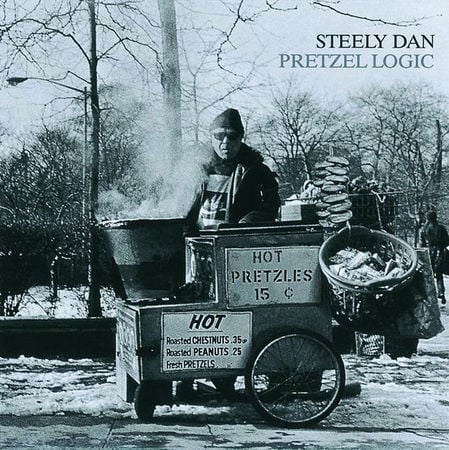
Pretzel Logic
After the extended jams of Countdown to Ecstasy, Steely Dan’s follow-up, Pretzel Logic, saw the band reverting back to the mainstream concision of Can’t Buy a Thrill. The longest songs on this album (“Rikki Don’t Lose That Number” and the title track) are roughly four-and-a-half minutes. But there’s nothing conventional at all about these tunes, which pushed the jazz flourishes in their first two albums further both musically and even lyrically. After all, how many rock albums would feature, of all things, a note-for-note cover of Duke Ellington’s “East St. LouisToodle-oo?” Or a joyous tune about basking in the music of “Mister Parker’s band,” with “Mister Parker” no doubt referring to the legendary jazz saxophonist Charlie Parker? Ranging from bluesy vamps (the title track) to lyrical ballads (“Any Major Dude Will Tell You”) to hard rockers (“Night by Night”), Pretzel Logic supersedes Steely Dan’s most commercial album with this fascinatingly unpredictable 33 minutes of music.
Countdown to Ecstasy
Countdown to Ecstasy is, in its deliberate sprawl, arguably the exhilarating Steely Dan experience. Becker and Fagen may have hemmed in their jazzy tendencies for the sake of wider accessibility in Can’t Buy a Thrill, but they let it all go for their sophomore effort. No major hits on the level of “Do It Again” and “Reelin’ in the Years” emerged from Countdown to Ecstasy, but there’s a stylistic variety to this set of eight songs—from the “Rock Around the Clock”-like beat of the opening cut “Bodhisattva” and the ragtime of “The Boston Rag” to the balladry of “Pearl of the Quarter” and the apocalypse of “King of the World”—that remains unparalleled among the band’s studio albums. At the very least, this album has the ever-irresistible “My Old School,” in which its raucous horn arrangements and up-tempo beat mask a deep cynicism toward college life. In other words, it’s quintessential Steely Dan.
Prince released his third studio album, Dirty Mind, in 1980, almost exactly a year after his self-titled sophomore album of 1979. Though Dirty Mind charted lower, it was a clear artistic advancement on its predecessors, exploring adult themes in a daring way and fusing a number of different genres including funk, rock, new wave and punk into a completely unique concoction. The stripped-down, minimal arrangements gave the album an extra punch, and the catchy hooks made it clear that Prince was on his way to crossover success.
Other than one keyboard solo courtesy of Dr. Fink, and some vocals by Lisa Coleman, every note of the album was produced, arranged and performed by Prince. (Contrary to the official credits, Prince wrote five of the eight tracks and co-wrote the other three with bandmates.)
Dirty Mind may not have been Prince’s commercial breakthrough, but it was adored by critics and fans alike, and it laid the foundations for his future career. The album’s bold, salacious lyrics coupled with Prince’s falsetto delivery earned him comparisons to both Smokey Robinson and Richard Pryor. The self-proclaimed “dean of American rock critics”, Robert Christgau, said at the time, “Mick Jagger should fold up his penis and go home”.
“Dirty Mind”
Kicking off the album with a robotic, pulsating beat, “Dirty Mind” made it clear that Prince’s music had been transformed. Gone were the relatively conventional sounds of his first two albums. The new Prince was funky, filthy and on the path to crossover success. “Dirty Mind” was the first time Prince shared a co-writing credit with a band member. Keyboard maestro Dr. Fink said about how they came up with the song together, and what it was like to collaborate with the infamous workaholic.
“When You Were Mine”
Despite being one of the most radio-friendly tracks he had ever recorded, Prince never released “When You Were Mine” as a single. The song would instead find chart success when Cyndi Lauper released her own take in 1983. “When You Were Mine”’s wistful lyrics and almost perversely catchy melody make more sense when you know where Prince was when he wrote it: sitting in an Orlando hotel room while his bandmates had fun at Disney World.
“Do It All Night”
With an extended opening keyboard riff, “Do It All Night” served as the opening number on 1980-1981’s Dirty Mind tour. The tour was Prince’s first headline outing since he hit the road as Rick James’ support act earlier in 1980, and his most extensive trek to date. Though he never gave a name to his backing band, the group featured eventual Revolution members Dr. Fink, Bobby Z. and Lisa Coleman, alongside longtime friends and collaborators Dez Dickerson and André Cymone.
“Gotta Broken Heart Again”
A sweet, strangely sunny breakup anthem, “Gotta Broken Heart Again” is an early example of Prince’s gifts as a vocal arranger. His wrenching vocal harmonies contrast with a plodding, jaunty time signature, hammering home both the tragedy and the banality of having a broken heart… again.
“Uptown”
According to its liner notes, the whole ofDirty Mind was recorded “somewhere in Uptown.” The place had a double meaning for Prince. On the one hand, it was a literal location: the Uptown district of Minneapolis, known for its nightlife. On the other, it was Prince’s idea of utopia, where people of all races, genders and sexualities could party together. The idea of Uptown would remain central to Prince’s philosophy for many years, and it all started here.
“Head”
Even for an artist known for his sexually explicit material, “Head” is particularly risqué. One of Prince’s funkiest-ever tracks, “Head” was initially meant as a concert-only tune, presumably because Prince thought his label would never allow it on a record. Featuring an early vocal appearance from eventual Revolution member Lisa Coleman, “Head” would remain a highlight of Prince’s live performances throughout most of the ’80s.
“Sister”
Dirty Mind is packed full of explicit and controversial lyrics, but “Sister” is the most taboo of all. Over a loud, fast-paced instrumental backing, the song’s narrator recalls a sexual encounter with his sister. But was it autobiographical?
“Party Up”
Segueing straight in from “Sister”, “Party Up” is an upbeat anti-war anthem that was initially conceived by Prince’s former Grand Central bandmate Morris Day. When Prince heard him playing it, he offered to buy the song off him, or to get him his own record deal. Day chose the record deal, and together they created the Time as a vehicle for him. But as Morris himself said, he had a very different idea about the song’s direction…
Hippo Campus are perfectly awkward with their new album Bambi set to be released September 28th through Transgressive Records and produced be BJ Burton (Bon Iver, Low). Guitarist Jake Luppen stated that part of their album was shaped by the #Metoo, mental health issues, and toxic masculinity. “That (#metoo) really made us take a look at how toxic masculinity has influenced the way we see ourselves and the world overall, in the past, we might have been apprehensive about being super-vulnerable, but now we’re more aware of how important it is to come forward about dealing with depression or anxiety. Because if more men are able to do that, they might be less likely to express those feelings as anger or violence.”
This drift from the status quo is apparent throughout the album. It’s playful and quirky, but with a vulnerability that lies in the fragile melodies and honest lyrics. They’re stretching, moving, and expanding what our society considers to be masculine. Bambi is unexpected, and once you get into a beat, it changes. It’ll have you bobbing your head to bubble sounds and loud glitches.
Hippo Campus has given us an album we can listen to while we test new waters, take an emotional journey, and find new parts of ourselves.
Du Blonde is the project of UK-based multi-instrumentalist Beth Jeans Houghton. She has announced a new album, “Lung Bread For Daddy” for Moshi Moshi Records, and has shared a video for a new song from it, “Buddy.” Lung Bread For Daddy is due out February 22nd, 2019 her first for the label. Houghton self-directed the video for “Buddy,” which features her taking a bath filled with spaghetti.
The album is the follow-up to 2015’s Welcome Back to Milkand 2012’s Yours Truly, Cellophane Nose. The latter album was released under her given name and both came out via Mute Records.
Houghton oversaw every aspect of Lung Bread For Daddy. “I know exactly what I want my record to sound like and apart from drums, I have the ability to play all the instruments, so I did,” she says in a press release.
She even painted the album cover, a self-portrait taken from, as the press release describes it, “a photograph taken during one of her lowest points, the image depicts Beth devoid not only of makeup, but of self-worth and confidence.”
Houghton elaborates: “I look tired and pretty much destroyed, which is a feeling I’ve known many times over; in the aftermath of relationships and that of making a record. Lyrically the album is very naked, so I’m carrying on the nudity of my previous album covers, only this time it’s emotional instead of physical.”
A press release describes the album this way: “Veering wildly between proto-punk, psych rock and the wholesome songwriting of the 1970s, Lung Bread For Daddy takes the listener on a journey through the landscape of her past. It is an honest and often uncomfortable look into the life of a person whose experiences have been touched by a myriad of characters, homes across continents, periods of extreme loneliness, mental illness and a search for an understanding of personal identity.”
Houghton adds: “My lyrics are always autobiographical. I have to be able to identify with what I’m singing, and telling my story is therapeutic.”
Buddy is her first single from the album with a self-directed video featuring a bathtub, 3 bottles of vegetable oil and 37 packets of spaghetti.
Du Blonde returns with new album ‘Lung Bread For Daddy’ on 22nd February on Moshi Moshi Records: