In recent years, Moving Panoramas‘ members have undergone lineup changes and health issues, but their new album, In Two, is still an impressive leap forward: a joyous and confident collision of girl-group harmonies and hazy dream-pop, with an agreeably beachy vibe that recalls the best of Best Coast. Bandleader Leslie Sisson enlists a new permanent lineup and an array of guests — including Nada Surf’s Matthew Caws and a few of Moving Panoramas‘ past members — to bring to life a perfect soundtrack to the first blush of springtime.
Summerteeth, released 20 years ago this week, is Wilco’s contribution to a common trope in pop music history: The prettiest songs are often about the ugliest subjects. Summerteeth exists as part of that lineage. It’s the most gorgeously ornate album Wilco ever made, and also the most disturbing.
Tweedy wrote the songs that became Summerteeth at what should have been the happiest time in his life. Rather than sabotaging his music career, the breakup of Uncle Tupelo — his massively influential country-punk partnership with childhood friend Jay Farrar had liberated him to pursue a vision entirely his own. He’d married his longtime girlfriend, Sue Miller, the owner of Chicago music venue Lounge Ax, and together they were raising a young son. The 1996 double-LP Being There had established Wilco as arguably the most talented and ambitious band in alt-country and helped Tweedy escape his reputation as Farrar’s plucky sidekick.
“I dreamed about killing you again last night, and it felt alright to me.” That’s a hell of a way to begin a song, and a hellish way. Just when the sleepy acoustic guitar chords out front of “Via Chicago” have lulled you into a stupor, Jeff Tweedy arrives to announce his shrugging approval toward the prospect of murdering someone he loves.
Eventually the Wilco frontman moves on to increasingly abstract imagery, from “I painted my name on the back of a leaf/ And I watched it float away” to “And crawling is screw faster lash/ I blow it with kisses.” The song builds from those initial chords into a vast soundscape that encapsulates Wilco at their best — that unparalleled ability to pile layers of beauty onto a simple folk song and then artfully rip it to shreds. At climactic moments, Tweedy launches into a slipshod guitar melody like Stephen Malkmus soloing over a disintegrating memory. Following it through to the finish is thrilling, but to get there you have to endure a whole verse of bloody, explosive details. It’s no wonder Tweedy writes in his new memoir Let’s Go (So We Can Get Back) that the album containing “Via Chicago” is “the record that’s hardest for my wife to listen to.”
Yet he writes, “I was probably as unhappy as I’d ever been. I was insecure, homesick, and drug-addled.” Even worse, “I had more love in my life that I’d ever had, and I was still lonely.” Furthermore, Tweedy was frustrated that Wilco had been pigeonholed as an alt-country band, a perception reinforced by Mermaid Avenue, a collaborative album with Billy Bragg setting music to unused Woody Guthrie lyrics. Being There had blown open the possibilities of what Wilco could be, but most of the listening public still saw the band a certain way. “People assumed we had this sort of identifiable, philistine range of influences,” Tweedy wrote, “and we, in our heads, knew that wasn’t the case.”
To upend those expectations, Wilco made their idea of a bubblegum record. The rootsy pop-rockers and ballads that populated 1994 debut A.M. were still in the mix, as were the formal and stylistic experiments that made Being There such a leap in terms of breadth and quality. But now Tweedy and his sideman Jay Bennett were building these songs into small-scale symphonies: Beach Boys harmonies spilling into every chorus, waves of gorgeous orchestration surging in and out of the frame. By this point they were more chamber-pop than cowpunk or whatever term the readership of No Depression favored that week.
It was a different record born from a different process. In many ways Summerteeth was a dry run for Yankee Hotel Foxtrot and its accompanying saga, be it Tweedy’s embrace of abstract, impressionistic lyrics, the introduction of extensive studio tinkering to tear apart the songs, or tearing apart of the band that came along with it. Drummer Ken Coomer and bassist John Stirratt were largely excluded from the sessions while Tweedy and Bennett popped pills and piled on the overdubs. As Coomer complained to Greg Kot in his Wilco biography Learning How To Die, “There wasn’t really a band, just two guys losing their minds in the studio.”
It’s hard to dispute the results Summerteeth continued a run of masterpieces that began with Being There and continued well into the next decade — but Reprise Records did anyway. That’s another way the album presaged Yankee Hotel Foxtrot: The label asked Wilco to go back and record more accessible music to promote to radio. In this case the band played along, leading to a rare instance of label meddling that worked out really well. The glorious guitar-pop onslaught “Can’t Stand It” is a phenomenal album opener and a frankly underrated entry in the Wilco canon. On the other hand, although you can see why the label didn’t want Summerteeth to begin with the drowsy, depressive, dysfunctional “She’s A Jar,” it’s tough to understand why they couldn’t find a single anywhere else on the tracklist especially when they had one readily available just one track beyond “She’s A Jar.”
On one hand, there’s nothing quite like “A Shot In The Arm” in Wilco’s discography. On the other hand, it’s a great case study for what Wilco were doing on Summerteeth: one of the most beautiful and exhilarating pop songs they’ve ever recorded, and also one of the bleakest. Bennett’s cascading piano ripples, a rock-steady Coomer backbeat, and a Stirratt bass line propel it breathlessly forward while an arsenal of squealing synths collide in the sky like fireworks. All the while, Tweedy alludes to strained relations with his wife and seemingly considers whether a heroin habit might jolt him out of his doldrums. It begins and ends in flicker of synthesizers.
He hints at those tensions again on “Pieholden Suite,” a lush multi-part sequence that really earns that “suite” designation: “There’s a whisper I would like to breathe into your ear, but I’m too scared to get that close to you right now.” And again on “We’re Just Friends,”, If love’s so easy, why’s it hard?” And again on the heartbreaking “How To Fight Loneliness,” a lounge-ready acoustic slow-drift that concludes the best strategy for battling alienation is “just smile all the time.” Punchy rock tracks “I’m Always In Love,” “Nothing’severgonnastandinmyway (Again),” and “ELT” course with stress and frustration beneath their cheery veneers. “Can’t Stand It” toggles between strutting Stones-lite verses with a carefree party vibe and a euphoric chorus smothered in keyboards and church bells, yet Tweedy spends the song lashing out at the randomness of both God’s love and his own. Yet again, he evokes a personal life that’s falling apart: “You know it’s all beginning to feel like it’s ending.”
Not everything on the album is so dark. Summerteeth concludes with a stretch of music that feels like a redemption arc. There’s real tenderness in the lullaby “My Darling” and the lazy back porch reverie “When You Wake Up Feeling Old.” The title track finds some kind of resolution as it breezes from snappy twang to sighing rhapsody, though even the apparent reconciliation is oblique enough to keep listeners guessing. And on gentle closing track “In A Future Age,” Tweedy buys into the possibility of change, bookending his album-opening cries that “Your prayers will never be answered again!” with a call to “turn our prayers to outrageous dares.” Yet despite things generally looking up at the end, the album remains a document of Tweedy at one of his lowest moments.
He writes in his memoir that the darkness explored on Summerteeth, while very real, was not autobiographical in the strictest sense. He discusses writing “Via Chicago” and other songs from the era in a fragmented style he compares to mosaic and collage. “When I write in this mode, I write for myself first, pretending that the audience isn’t even there, and will never be there,” he explains. “I can get things off of my chest, I can invent versions of myself that are better than I believe I am … or worse, are even downright awful and murderous. I can expose shadow selves that I believe I should keep my eye on. I can admit things about myself without really having to take ownership of anything.”
In other words, when “She’s A Jar” reaches its twist ending and Tweedy declares, “She begs me not to hit her,” he’s not actually confessing to domestic violence. He’s singing about a fictionalized version of himself, or maybe as a different character entirely, as a way to air out the more disquieting corners of his psyche. Which is not to say it’s wrong to be repulsed by these images or to wish that Tweedy, as the album’s ostensible protagonist, had not verbalized them.
Summerteeth occupies a weird space in Wilco’s history. It stands alone among their output, a product of personal crises and creative friction that would have ended the band if they’d carried on forever. There are people who’ll (wrongly, but earnestly) tell you that actually, this is the best album Wilco ever made. Others see it as the beginning of the end of the band they once loved, a rough draft for future glories. Whatever you make of Summerteeth, I can attest from experience that the album helped Wilco to become for a generation of listeners what the Clash and the Minutemen had been for Tweedy.
Timing is everything, they say. Of course, when you’re ahead of the curve, timing can also throw a wrench in the works. Give enough passage, however, and others eventually catch-up, understand… even emulate.
Such is the case for self-proclaimed micro-legendary weirdoz The Prefab Messiahs. Originally together from 1981-1983, they played basement and club shows fairly often. Armed with borrowed guitars, puny amps and a mission to confound the status quo, the Clark U. undergrads began a unique post-punk musical trajectory through the burgeoning-yet-insular “Wormtown” (Worcester, MA) underground. Aside from the 1983 cassette Flex Your Mind, though, no recorded material was available from them until 1998’sDevolver CD-R – an anthology of their recordings from the early ’80s. Several songs on the album were produced by their friend and outsider psychedelic singer-songwriter Bobb Trimble.
Fast-forward three decades later with the official remastered release of Devolver via Burger Records, followed by a well-received eight-song maxi-EP of new material entitled Keep Your Stupid Dreams Alive (2015), and it seems the stars have finally aligned for this art-damaged psych-pop collective. These two releases witnessed not only a new appreciation from a younger fan base (not much older than the original one the band first started out with over 35 years ago), but also rave reviews from media, who traced the lineage from the Prefab Messiahs to many of today’s garage-psych scuzz-pups, such as Oh Sees, King Tuff, White Fence, Ty Segall, et al.
Now The Prefab Messiahs are set to release their latest full-length platter of new material, PsychsploitationToday. On it, the fuzzed-out foursome of Xerox Feinberg, Trip Thompson, Doc Michaud and Mattyboy Horn have cooked-up, arguably, their most far-out and fantastical effort to date. The new record continues the path of melding timely social commentary with equal measures of jangle, left-field garage-pop and hooks aplenty.
Prefabs’ front dude Xerox Feinberg, a self-described “Lost Generation Wanna-be Spokesperson,” describes the the band’s approach on Psychsploitation Today thusly, “The new album is really a mental and sonic continuation of the things we were obsessed about from the beginning — mashing up the sounds and attitudes of ’60s garage-psychedelia with post-punk ’80s stuff and dragging all that into whatever ‘today’ is — while generally trying to poke people in the ribs and skewer some of the Big Shams behind all the Shiny Facades. We still don’t do songs about girls’ names or feeling good. We’re still trying to toss everything into the mix including the kitchen sink. We’re still bemused and shocked and disgusted with The State of Things — and also in love with the noises in our heads and guitars. We like to think that The Prefab Messiahs’ work is never done.”
Micro-legendary DIY Garage-Pop-Psych provocateurs! Evolutionary genre grinders practicing art-damaged power pop, rock, crunch, jangle and general mind-infiltration.
released January 18, 2019 The Prefab Messiahs:
Xerox Feinberg, Doc Michaud, Trip Thompson, Mattyboi Horn
The story of music in 2018 was actually made up of a bunch of different stories. As subgenres bloomed and bloomed, it seemed a greater number of more diverse identities were spotlighted than ever before. One of those storytellers is Portland-based Katherine Paul, who released her debut album, Mother of My Children, as Black Belt Eagle Scout last August. Paul has a knack for making very specific, personal anecdotes feel universal. She grew up on a tiny Indian reservation in Washington, and her indigenous identity is perhaps what informs her musings on nature and our relationship to it.
Paul says something of the sort herself in a press note: “My music and my identity come from the same foundation of being a Native woman.” On album standout “Indians Never Die,” Paul begs us to look up and pay attention. “Do you ever notice what surrounds you?” she asks. And on lead-off track “Soft Stud,” a marvelously fuzzed-out rock lean-in, Paul goes for the personal, singing “Need you, want you” over and over, perfectly summing up the desperate feelings surrounding new, perhaps forbidden, love. If the onslaught of new subgenres means we get to hear more voices like Paul’s,
Black Belt Eagle Scout – “Soft Stud” From the album Mother Of My Children – Out now!
This is the first, of two albums by late-60s hard rock trio, Gun. This group consisted of two brothers, Adrian (Guitar) and Paul Gurvitz (Bass/Lead Vocals), and Louie Farrell (Drums). They formed as a band, recorded and released this album all in 1968. They released another album in 1969, and broke up. Nothing else ever came from this band,
This 1968 release wasn’t just the debut album for the British band Gun; it also marked the debut of a number of other notable artists and their creations. First of all, this was the first album recorded by the Gurvitz brothers, bassist/vocalist Paul and guitarist/vocalist Adrian; they went on to form Three Man Army (with Buddy Miles among other drummers) and then The Baker Gurvitz with Ginger Baker of Cream among many other projects.
Gun also introduced the song “Race with the Devil,” which scored the band its only hit and was covered by everybody from Judas Priest to Girlschool to Black Oak Arkansas. And, finally, take a gander at that incredible front cover artwork…yes, that is the maiden album illustration of one Roger Dean, whose otherworldly creations graced the covers of many a Yes album cover (Yes vocalist Jon Anderson was for a short time a Gun member, in fact). Armed with such a collection of talent, and a dazzling stylistic breadth that ranged from psychedelic to hard rock to mod to Procol Harum-esque prog, it’s little wonder that Gun has seen multiple reissues, but it’s been about 30 years since it’s been available on vinyl. Real Gone Music’s limited edition (of 1,000) “red devil” vinyl pressing presents the original artwork intact.
Tow’rs is led by husband and wife Kyle and Gretta Miller, who aren’t terribly concerned about blowing out their string-infused folk-rock songs to fill arenas. Listen to the wistful “Girl in Calico,” and you’ll hear key ingredients of a powerhouse anthem — luscious strings, a crisp guitar line, rich vocal harmonies and none of the rafter-rattling grandiosity. Instead, every sound is impeccably rendered in the service of tender, ornate quietude.
Ariel Engle is a recent addition to the Canadian supergroup Broken Social Scene, filling a role once held by Leslie Feist. Listen to her work as La Force, and you’ll hear one clear reason the band thought of her to fill the bill: She’s got that same smoky, haunting vibe, landing somewhere between detachment and almost discomfiting intimacy. To delve into “Lucky One” is to hang on her every lushly appointed, impeccably controlled word.
The music of La Force is nocturnal electronic pop, featuring Engle’s enchanting vocals over dynamic production.
Born out of the culmination of AroarA – her musical project with husband and Broken Social Scene bandmate Andrew Whiteman La Force is a deep reflection on the magic and dismantlement of motherhood; the never-ending tightrope walk of life, and death; and the re-discovery of self.
Her first single “You Amaze Me” layers seductive melodies over restrained electronics. A love song to Whiteman, “You Amaze Me” defines the tender but powerful essence of La Force. Shaped with Warren Spicer of Plants & Animals, and featuring members of Suuns, Patrick Watson, and Broken Social Scene, “You Amaze Me” crystallizes the reverent, spiritual tone of Engle’s musical being. Borrowing its identity from the tarot card representing Strength, La Force captures the bold creative spirit of an undeniable voice.
Her presence resounds on Broken Social Scene’s 2017 album, Hug Of Thunder, lending fluid, commanding vocals to the oblique anthem “Stay Happy” and leaving an indelible mark on the collective’s rousing performances. Stepping up to the role first helmed by the immeasurable talent of Leslie Feist, Engle brings La Force’s singularity to the familial energy of Broken Social Scene.
Vampire Weekend are rolling out the advance tracks from their new double album two at a time. At the top of this year, Ezra Koenig explained that we were to expect a two-song dispatch once a month until “Father Of The Bride” sees official release this spring. That began last January with “Harmony Hall” and “2021” but February’s planned pair of tracks did not materialize. Koenig told us on Instagram last week, the band “wanted to get it out in February but we were convinced by intelligent people to wait a week to get some ducks in a row.”
So now, a week into March, comes the latest double drop. They’ve also confirmed a March 5th release date for Father Of The Bride and revealed its official cover art.
The ostensible A-side of this latest pairing is “Sunflower” which will soon have a video directed by Jonah Hill at Zabar’s on Manhattan’s Upper West Side. A collaboration with the Internet’s Steve Lacy, it’s billed as “the sibling song” of “Flower Moon” which Vampire Weekend previewed at a show last summer. The other song out today is “Big Blue” which got its first airing at a Lollapalooza .
Father Of The Bride is Vampire Weekend’s first album in a whopping six years. Their last release was 2013’s masterful Modern Vampires Of The City. A lot has happened since then, including the departure of founding member Rostam Batmanglij, though he was still involved with the creation of Father Of The Bride.
Last year Sun June caught the ear of many with their excellent debut album, “Years”. Described by the band as a, “we’ve-been-broken-up-a-long-time-record”,Years was an exploration of loss not delivered in the centre of the emotional storm, but presented with hindsight and the time for emotions to evolve. The record is about to get it’s second pressing on Keeled Scales, and will be presented alongside a new digital EP, “Younger”.
This week the band have shared the first taste of the upcoming EP, “Monster Moon”. A fine introduction to the genre the band call, “regret pop”,Monster Moon is a reflection on the long shadows cast when a relationship fails. Here it’s given an upbeat musical spin, vocalist Laura’s nonchalant delivery contrasted with a bright, pop-driven backing, like the fertile middle ground of Big Thief and Fleetwood Mac. A band who’ve already made waves on the musical underground, we wouldn’t be at all surprised to see Sun June’s unstoppable rise reach new heights in the year ahead.
‘Monster Moon’ by Sun June is from their digital EP Younger coming March 22nd, 2019, via Keeled Scales. It accompanies the second pressing
of their debut LP Years, which was originally released June 15, 2018.
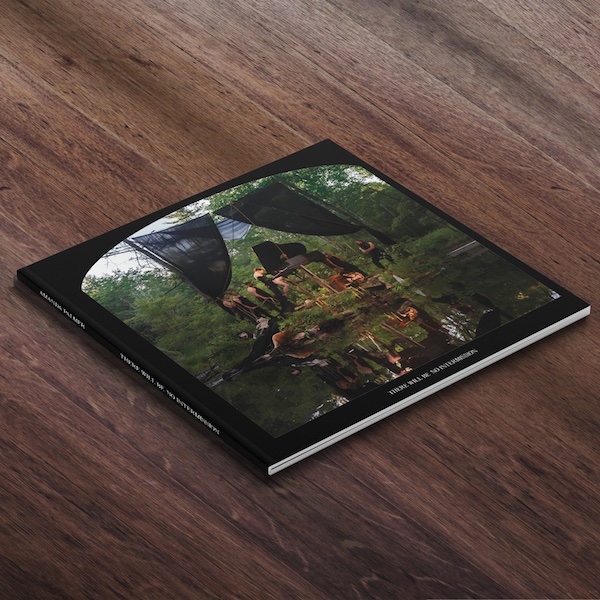
“There Will Be No Intermission” is out Friday, March 8th Amanda Palmer’s third solo effort and first in more than six years, is the multi-faceted artist’s most powerful and personal collection to date, with songs that tackle the big questions: life, death, grief and how we make sense with it all. While the themes may be dark, the album’s overall sonic and lyrical mood is one of triumph in the face of life’s most ineffably shitty circumstances. Beginning with the epic Bill-Hicks-inspired “The Ride”, it sees Palmer revealing her heart in total, turning the coals of fraught experience into musical diamonds. Themes of death and reproduction recur throughout, including “A Mother’s Confession”, a funny, honest, slice-of-life ramble detailing Palmer’s failings as a new mother, and “Machete” written in tribute to her best friend, Anthony following his untimely passing from cancer. “Voicemail For Jill” chronicles a different sort of death as Palmer reaches out to a friend on her way to an abortion clinic. Lead single “Drowning In The Sound” explores hidden connections between political unrest, the impending uncertainty of Hurricane Harvey, climate change, the solar eclipse, internet-hate and, bizarrely, Taylor Swift. One of the more lavishly produced songs on the album, the song combines Palmer’s singular style of piano-taming with a restrained chorus that pays sonic homage to two diverse but connected mentors: Prince and Ani DiFranco.
This album is the most personal and painfully vulnerable thing she has ever made, containing 10 of the most honest, funny, sad, dark songs. THE ALBUM, THE ARTBOOK and tickets for THE TOUR . the beautiful images you’re seeing (which are included in the artbook and are available as prints and select merchandise) were all captured by kahn & selesnick.
Amanda says, I know I say it a lot, but it bears repeating: this album would not have happened without the emotional and financial support of my 14,000 patrons. in so many ways, it just would not have been possible. if you are one of my patrons and reading this, i hope you are as proud today as I am. we did it.
The reviews and critics are weighing in….and the accolades mean a lot, but they don’t mean fuck all compared to what this music means to me and my community, and what it has meant over the past years as i’ve played these piano and ukulele in people’s houses, and in small clubs, and in living rooms, and in theaters for the people I really care about: you. you you you. fuck the critics. you’re my critics, and I listen. sometimes you make the art, and sometimes the art makes you. this record and tour feels more like the latter.
Listen. these songs are the most vulnerable and personal I’ve ever recorded, and they all provided some kind of relief from each life-situation I was facing over the last seven years since I out our my last album (theatre is evil), it was just non-stop, the gamut of human emotion and highs and lows. everything feels inseparable now: my crowdfunding through patreon, the birth of our son, the election of trump, my TED talk, two abortions, the kavanuagh hearing, the death of my best friend, writing a book, being in Ireland for the repeal, the miscarriage i had alone on a christmas day.
i sat in a theater in london and watched hannah gadsby decimate the blurted lines between entertainment and naked truth, i saw the brave women of #metoo standing up against their rapists, and I saw nick cave in concert and on record working through his grief using art as a necessary and generous tourniquet that others could re-use. they all reminded me to try harder and harder still to tell the real, unadorned truth. I love you all so much.
Thank you for coming on this ride with me.
watch this, and you will understand everything. I made this video in our living room (w/ two of my closest friends, Michael Pope & Coco Karol to announce my forthcoming solo album,
Amanda Palmer, performer, writer, giver, taker, listener, love-lover, rule-hater and co-founder of the Brechtian punk cabaret duo, The Dresden Dolls.
Musicians:
jherek bischoff – double bass, guitar, vibraphone, prepared piano, backing vocals
john congleton – drums, synths, sequencing
max henry – synths
amanda palmer – piano, ukulele, organ, synths, vocals
joey waronker – drums
jason webley – accordion
“There Will Be No Intermission is a triumphant return of an uncompromising artist. It is singularly the best piece of work that Palmer has produced in her career.” – popmatters.com