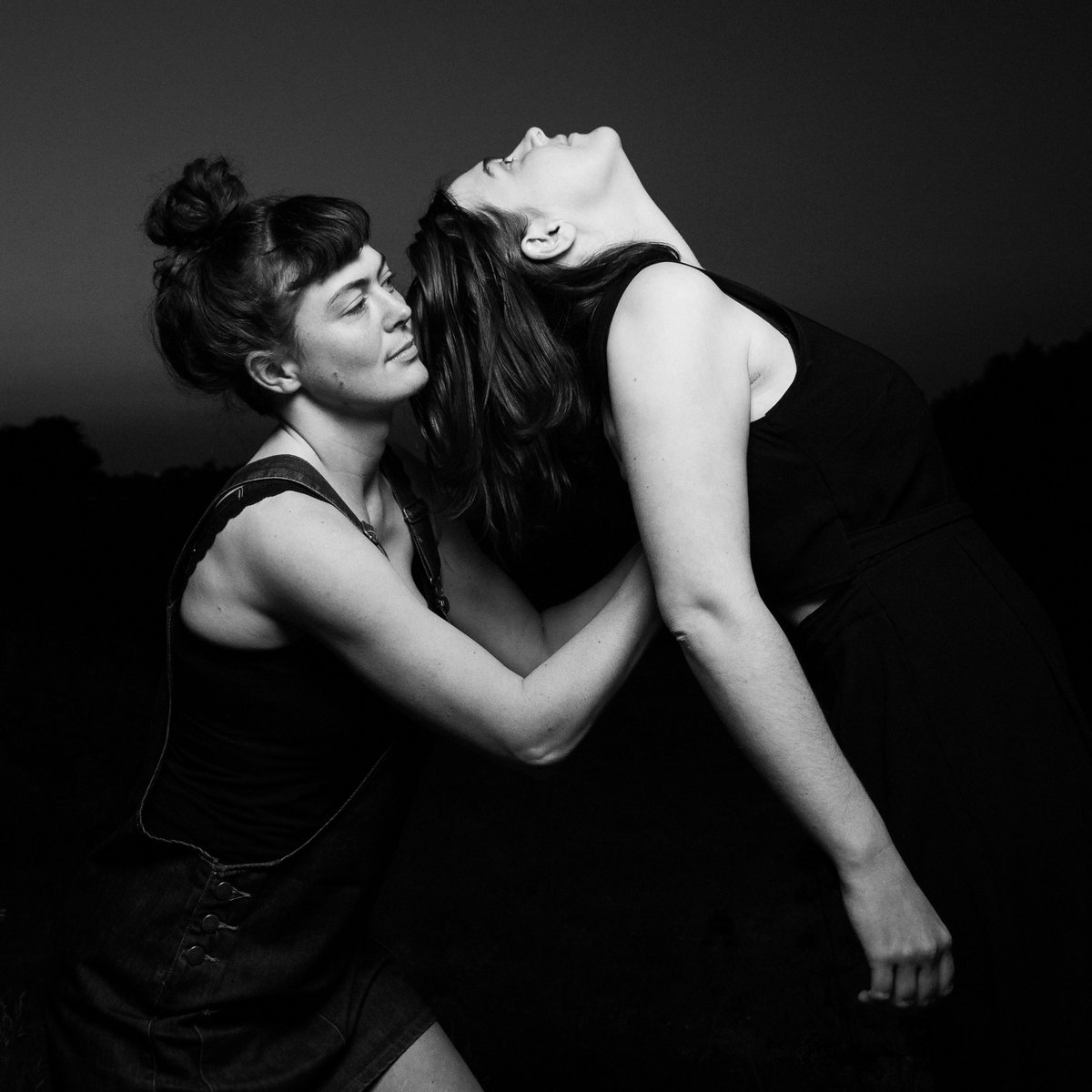
One of the most delightful discoveries of my year so far, this Australian duo made a very good record full of dusty tunes and tremendously lovely harmonies. RIYL coffee and quiet mornings and, sure, quiet snowy May mornings
The Mae’s Trio is a Melbourne-based band of three young musicians fast making a name for themselves in the Australian music scene. Maggie Rigby, Elsie Rigby and Anita Hillman started playing music together late 2011. All three members of the trio write their own songs and these are tastefully arranged to suit the group’s diverse instrumental talents and love of three part vocal harmony.
Just over a decade into beloved rock band Pile’s existence, something amazing happened for frontman RickMaguire: Finally, after six albums that all drew more critical acclaim than their predecessors, while slowly reaching more and more listeners outside the national underground, Maguire was able to make his band a full-time pursuit. He didn’t necessarily expect to get here, and many of Pile’s contemporaries didn’t.
Shelving all day jobs and side gigs, Maguire says, “was definitely the objective from day one. I was totally cool with the idea of it not getting to that point,” he clarifies, “but I’m happy that it has.”
“Green and Gray”, Pile’s upcoming seventh album and their fourth for every garage rock fan’s favorite truly independent label, Exploding in Sound Records, is the band’s first release during Maguire’s full-time era. Across the LP’s nearly hour-long runtime, Maguire reflects on growing older—he was twenty-one when he self-released Pile’s 2007 debut album, Demonstration—and how he feels about committing so wholly to Pile at an age when some people leave music behind.
“When I was younger,” he says, “I was pretty well convinced that I was going to front Pile until I was physically unable to. And now I still feel that way, but it’s not something in my imagination anymore.” As a result, on Green and Gray he “can point to things more directly” about aging than on past albums, on which this topic was, at most, “addressed in broader strokes.”
“I [couldn’t] go forward trying to juggle a job [with music],” he says of going full-time. “I have to be mentally and physically available,” he continues, plus he “wanted to spend full days trying to write.” Even if focusing solely on Pile pushes Maguire into an especially vulnerable space—see his depiction of himself as a public figure “trying to convince everybody that I’m a worthy candidate for their time and attention” on the acidly sauntering “Your Performance,” or having a surgeon expose his insides to everyone on the manic “On a Bigger Screen”—he wouldn’t have it any other way. “It doesn’t come without its stressors,” Maguire says of being in a band and only being in a band, “but I’m really grateful that I’m able to do this and that it’s able to sustain me.
This record is powerful and different and I think about how one of my favorite bands is changing and still growing. There is a distance and darkness to this recording but it also makes me feel less alone. The strings add an exciting and beautiful element.
the Band:
Chappy Hull – guitar and background vocals
Kris Kuss – drums
Rick Maguire – guitar and vocals
Alex Molini – bass
Unspeakable is proud to welcome singer-songwriter and activist Nora Rothman to their artist roster this season! Keep an ear out for her newest single “Strange” (produced by Dot) out May 17th, and her latest EP “Nothing New” coming July 2019.
Nora Rothman is a singer-songwriter and activist making music for social good. Blending Joni Mitchell-eqsue songwriting with James Blake-inspired beats, her folk-soul sound is nostalgic yet contemporary. She seeks to raise marginalized voices in the music industry by creating “mesmerizing” art with womxn all around the world.
After graduating from Brown with honors in poetry, Nora moved back to Los Angeles and played music while appearing as an actress on stage and screen. In 2016, she took a hiatus to work as a Field Organizer on the Clinton campaign. The day of Trump’s inauguration, she made a promise to continue her fight for women’s rights through music. After releasing her debut EP in July to praise, she made a commitment to work with female-identifying artists. In 2018, Nora expanded her equity work by founding Earhart, a community uplifting female, trans, and gender nonconforming music artists. Since then, Earhart has celebrated over 50 different artists through their weekly playlist and interview series.
“Nothing New” is her second EP and first off the female-run label Unspeakable Records. It is produced by LosAngeles-based Kate Ellwanger (aka Dot), and features collaborations with poet Sarah Kay and indie musician CapeFrancis. This collection of five songs takes Nora’s confessional songwriting and plates it with Dot’s imaginative sounds.
Following up the first half of her two-parter which arrived in September last year under the title Infections of a Different Kind, Aurora returns this month with the album’s second instalment. Different Kind of Human Step II makes its arrival in stores on June 7th and features 11 new tracks, including the singles ‘Animal’, ‘The Seed’ and ‘The River’.
As with last year’s instalment, Aurora is co-producing all the album’s tracks with Magnus Skylstad, although there are also production contributions from the likes of Toby Gad and Mark Ralph. The vinyl edition is standard black wax affair and arrives in stores alongside all other formats on June 7th.
Petroleum Records, Glassnote Records, Decca Records
When the Los Angeles group Wand formed in 2013, they played a wickedly spooky brand of psychedelic garage rock tinged with heavy metal. Over the course of three albums recorded in a couple years, the band’s leader Cory Hanson wielded full control over their claustrophobic sound. The band’s lineup has changed along the way and Hanson loosened his grip on their sonic boundaries, allowing the new band members more say in their newly classic rock- and modern pop-influenced approach. 2017’s Plum was the first Wand album to reflect this change.
Cory Hanson started the band with drummer Evan Burrows, guitarist Daniel Martens, and bassist Lee Landey and immediately dove headfirst into a sludgy, psychedelic garage rock. They quickly put together an abundance of material that straddled the line between melodic and noise-heavy, issuing split singles with artists like MikalCronin and Meatbodies before being signed by Ty Segall to his Drag City Records spinoff label “God?” for the release of their 2014 debut LP “Ganglion Reef”. Wand embarked on a tour supporting Segall for the release of the album.
After a handful of singles, Los Angeles power psych band Wand arrived with Ganglion Reef, their debut full-length and a nonstop parade of acid-dipped, pop-minded forays into both heaviness and wavy folk detours. Along with Ty Segall Wand approach songwriting with a fearless love of exploring guitar tones and unexpected dynamics, but where Segall builds up walls of guitars with layer after layer of fuzz to achieve his mind-bending sounds, Wand relies more on time-honored techniques of trippy ’60s production. Standout track “Broken Candle” sees vocalist Cory Hanson singing a thin, wispy melody over battling organs and highly effected acoustic guitars, the stomping acid folk rhythms building and building until the entire mix is coated in an over the top flanger effect for a few seconds before fading out. It’s by-the-books psychedelia taken right from the Are You Experienced? playbook.
Elsewhere, Wand tends toward sludgy proto-metal guitars and clunky rhythms on tracks like “Fire on the Mountain” and the stony funk-metal groove of “6661.” “Growing Up Boys” goes the opposite direction, offering a laid-back country-rock dirge in the style of solo John Lennon, but with all the spaced-out experimentation of Pink Floyd. The songs always waver between saturated extremes of heaviness and gentleness, with whispering vocal harmonies and dazzled acoustic guitars always seconds away from distorted organs and the band’s bevy of freakish effects. Ultimately, Wand’s gift for songwriting guides the endless psychedelic tug of war that is Ganglion Reef, offering listeners something turbulent and strange but deeply rooted in strong tunes.
The band’s next record was recorded over a 12-day span by Chris Woodhouse at The Dock in Sacramento, California, and saw the band expanding its sound with synthesizers and showing a deeper heavy metal influence. “Golem” was released in early 2015 by In the Red Records.
Wand’s debut album Ganglion Reef was an impressive neo-psych statement that weaved together various elements like folky guitar sounds, tricky arrangements, duel guitar wanderings, and, above all, hooky pop melodies into an entrancing whole. Their second record, 2015’s “Golem”, cuts out anything folky, paves over some of the fragile psych weirdness, and instead piles on the heavy, heavy noise, stomping into protoplasmic Black Sabbath territory at times. Tracks like the pummeling “Self Hypnosis in 3 Days” and the heavily phased “Cave In” sound like they were lifted directly from the set of a band that might have opened for Sabbath in 1970. “Planet Golem,” too, delves deeply into some dirge metal, with weird synths and riffs brutal enough to knock out a stegosaurus. There are still a few moments when Cory Hanson and Daniel Martens click off their fuzz pedals and the band heads back to the dreamier territory of its debut (“Reaper Invert” and the almost tender “Melted Rope”), and the album-ending “The Drift” switches gears entirely for a bit of near ambient, totally oceanic metal balladry, but really this album is about nightmarish power, not Technicolor dreams. In the hands of a less talented band, it could have ended up as a real mess .
Luckily, even though they have changed up their approach, the guys in Wand didn’t lose their ability to craft songs with huge hooks. Now they are thunderous and ugly hooks instead of weird psychedelic ones, but it works just as well. Their new sound might scare off some of the psych lovers who dug their debut, but for anyone looking for some weird heavy rock noise, Golem fits the bill.
Not a band to waste any time, Wand returned before the end of the year with their third album, 1000 Days. Released by Drag City proper this time, the album saw Wand incorporating more electronics into their sound, while integrating their metal and psych elements even further. The guys in Wand are a prolific bunch. 1000 Days is their third album in a year, This time out, the L.A. band blends the tricky psych and heavy metal into something more organic, adding keyboards and electronics in the process. It’s their best-sounding record yet, casting aside any vestiges of lo-fi in favor of a huge sound that envelops the listener in a hazy cloud of fuzzed sounds and warped dynamics. They melt acoustic and electric guitars into a swirling mix that will get heads spinning, with booming bass and echoing drums holding down the bottom. Most of 1000 Days sounds like a perfect blend of the first two albums that capture both the thudding power of heavy metal and the baroque weirdness of psych pop.
Tracks like “Grave Robber” and “Dungeon Dropper” lean a bit toward the heavy side, while the dreamier songs like “Passage of the Dream” and “Broken Sun” creep over to the psych side. “Morning Rainbow” even ends the album with some seriously acid-y folk. It’s an impressive job of fulfilling the promise of the first two albums, amping up both the production and the songcraft to a new level. Despite how focused and tight most of the album is, though, Wand still indulge their experimental nature a couple times. The electro-tribal instrumental “Dovetail” is a wobbling trip into inner space that feels like it could last for 20 minutes and not get boring, “Stolen Footsteps” is bedroom synth pop with a majestic melody, soaring synths, and a very tinny drum machine.
This willingness to take chances and explore oddball avenues is one of the things that makes Wand so good. They may be one of many, many neo-psych bands out there in 2015 whipping up retro-flavored noise, but this record proves that they are one of the best and most imaginative.
They also toured frequently, playing many shows with Segall, who was impressed enough to subsequently play a number of shows with Hanson as an acoustic duo. He also added Hanson and Burrows to his backing band the Muggers for his 2016 touring dates. Thanks to this, Wand was uncharacteristically quiet on the recording front during 2016, with Cory Hanson spending time working on a solo album.
The acid folk-inspired, lushly orchestrated The Unborn Capitalist from Limbo was released by Drag City in late 2016.
Around that time, Wand expanded their lineup by adding guitarist Robbie Cody and keyboardist/vocalist Sofia Arreguin. This also led to a change in the way the band wrote songs. Where previously Hanson brought finished songs to the rest of the group, now they spent time in their rehearsal space working out songs together.
This new style of writing and the new members led to some sonic differences on their 2017 record “Plum”, on which the creepy, claustrophobic psychedelia and bludgeoning metal of the past were downplayed in favour of classic rock influences and more expansive-sounding indie rock. The same lineup of the band soon went back to the recording studio and cranked out another EP in the democratic vein of Plum.
Plum is Wand’s fourth LP since the band formed in late 2013 but their first new album in two years. After a whirlwind initial phase of writing, recording, and touring at a frenetic clip, their newest document marks a period of relative patience; a refocusing and a push toward a new democratization of both process and musical surface.
From the out- set, the new ensemble moved naturally toward a changed working method, as they learned how to listen to each other and trust in this new format. The songwriting process was consciously relocated to the practice space, where for several months, the band spent hours a day freely improvising, while recording as much of the activity as they could manage. Previously, Wand songs had generally been brought to the group setting substan- tially formed by singer and guitarist Cory Hanson; now seedling songs were harvested from a growing cloudbank of archived material, then fleshed out and negotiated collectively as the band shifted rhythmically between the permissive space of jamming and the obsessive space of critique.
The band’s new approach charts them away from intense guitar workouts that verged on heavy metal and stickily claustrophobic psych pop toward a more traditional indie rock sound that’s not a million miles away from what bands like Wilco are doing. Simple melodies, twisting twin-guitar lines, obtuse keyboards, and a widescreen expansiveness are the order of the day, and only occasionally do Wand Mk II manage to wrestle their new sound into submission and make something interesting of it. For example, “Charles de Gaulle” is brainy and full of hooks, with sweet vocals from new keyboardist Sofia Arreguin that offset Hanson’s harsher tone, and the skittering “White Cat” is nervous, punchy, and not too far from something John Dwyer might cook up for his Damaged Bug project. Mostly, though, there’s either something important missing (energy, wildness, drama) or something unnecessary added (fancy keyboards, a sense of restraint), and it’s impossible to listen to Plum without wondering why Hanson changed things so drastically when they were working so well.
Three very long songs that end the album — the slow-rolling ballad “The Trap” the elongated and very indulgent tie-dyed jam “Blue Cloud” and “Driving” a trad rock ballad tailor-made for montage scenes on a major network drama.
After an album that saw Wand shifting from Cory Hanson’s project where he called all the shots to a fully fledged band, consequently losing some of the claustrophobic brilliance of earlier work, the 2018 EP Perfume is another democratic effort that suffers the same fate. While the seven songs included aren’t bad, they just lack the attention to detail and spooky outsider psych feel of Wand when it was only Hanson pulling the strings. Songs like the opening title track, which rages and roils like Thee Oh Sees on a bender, has plenty of energy, but lacks that certain something that could set it apart from the crowd. The proggy rave-up “Town Meeting” has lots of the weirdness of past songs, but is missing a hook. The EP-ending “I Will Keep You Up” has a rambling, sandblasted feel reminiscent of Mazzy Star at their loosest, but it just wanders aimlessly and never pays off sonically or emotionally. That’s kind of the way it goes through the whole record. The over-stuffed modern rockers “The Gift,” that encroaches on stadium indie or on “Pure Romance,” a song so utterly pleasant it sounds nothing at all like the Wand of the past. It’s clear that Hanson was looking for a change in the way Wand operated; it’s also clear that he gave away far too much control to his band, If it were another band’s name on the cover.
The seven-song Perfume was issued by Drag City Records in May of 2018. The shift away from their early garage rock fervor to more atmospheric songwriting fully solidified on 2019’s “Laughing Matter”. The lengthy album was sculpted from improvised jams and sketches, Wand explored more introspective indie rock territory.
Beginning in 2013 as a gnarly psych band with garage tendencies, Los Angeles’ Wand quickly made several albums of weird and suffocating music. A shift began in Wand’s sound around the release of 2017’s Plum, the first album from the group to reflect a new lineup and a new democratic approach to songwriting. Plum and the subsequent 2018 EP Perfume set the tone for the drastic shift the band has been undergoing, and Laughing Matter cements these changes. While earlier Wand albums weren’t absent of mellower moments, they came in the form of acid folk-modeled acoustic psychedelia and were nestled between blasts of disorienting metallic garage.
The Wand on Laughing Matter tends toward moodier, more textural sounds than they did just two years earlier on Plum. The 15 pieces that make up the album were sculpted from lengthy improvisations and distilled into moody, often paranoid songs. Opening with the nervous, scratchy rhythm of “Scarecrow,” as the album stretches on, often gelling into bright harmonies with bandmate Sofia Arreguin.
This haunted, darkened mood continues for much of the album, with songs like “Evening Star” and “Airplane” exploring the same beautifully tormented sound that Radiohead perfected in their first steps away from conventional rock. There are still echoes of Wand’s psych-rock past scattered throughout Laughing Matter. “Walkie Talkie” rides a clunky bounce that sounds part Faust, part Blue Cheer, but overrides the rock energy with an upbeat melody. “Thin Air” pulls out some of the heavy fuzz that early Wand songs were built on, but pulls back for a far more dynamic reading. The album explores different ideas and inspirations at length, making it hard to digest in one sitting. Those who stick around to the end will be surprised to hear the ambient atmospheres of the album’s second half give way to the Velvet Underground homage “Jennifer’s Gone” which closes the album.
“Laughing Matter” continues Wand’s headstrong push forward. It’s the final nail in the coffin for their garage roots, but they sound rejuvenated and excited in their unbridled exploration of new sounds.
Track from the Wand album “Laughing Matter” available from Drag City Records on April 19th, 2019.
California post-hardcore band Movements recently wrapped up the touring cycle in support of their debut album, “Feel Something”, which was released back on October 20th, 2017, via Fearless Records.
For fans of the group, it is absolutely wild to think of how they have accomplished so much in such a short period of time, and with such a small catalogue of released music. With multiple headlining tours, playing the main stage on the Warped Tour, and so much more, it’s been a long time since a new group has come out with a strong force like this. How did they get here and how are they going to keep it this way? Let’s talk about some of the catalysts behind this four-piece’s success.
Nine times out of ten, a band’s first show is a local bill or some sort of organized event that has live music just because. Movements had the pleasure of opening for the known rock band Have Mercy, leading to playing with other big names like Balance and Composure early on. Shortly after, this led to a deal with renowned label Fearless Records. Lucky for the band, they have attracted a large and devoted fanbase to jump on the ride with them. Over an album’s cycle, Movements went from opening big rooms to headlining those same rooms today. It is a testament to how it’s still possible to “blow up” despite the ever changing industry, as long as you have the ability to keeps fans reeled in. Going back to the whole emo thing, There is no denying it. However, the things they write about are what the average person deals with. Love, loss, mental health, illness. No one is left out of the circle, even though it may not be one you necessarily want to be in. These guys may seem to be at their peak currently, but expect the peak to be pushed further.
Feel Something was released October 2017 on Fearless Records.
Fruit Bats, aka Eric D. Johnson’s alt-folk band and songwriting project, are preparing to release their first new album since 2016’s critically acclaimed Absolute Loser. The new record tilted, “Gold Past Life”, marks Johnson’s seventh studio effort under the Fruit Bats name and his third in an “unintentional thematic trilogy” of albums beginning with 2014’s EDJ, which he released under his own initials. Following those five years of political and personal chaos that maxed out with Loser, Gold Past Life promises a shimmery new beginning.
The third single, following the previously released title track and “The Bottom of It,” is a real folk-rock charmer. It’s called “Ocean” .
“This is a song about late bloomers, late discoveries, adult baptism, coming-of-age when you’re way past the right time to do that,” Johnson says. “About growing, I guess. And how a good love can help you do all of that. In short, this is a lovey-dovey song I hope you enjoy.”
“Ocean” begins in calm waters, with just some light acoustic guitar, before maracas and staggered baroque piano accelerate the tempo, just as Johnson is “watching it all tumble into view.” As is usually the case with Johnson’s realist yet romantic songwriting, “Ocean” is nostalgic without collapsing into melodrama.
Fruit Bats signed to Merge Records earlier this year following Johnson’s longtime “mega label crush” on the North Carolina mainstay. Gold Past Life is their debut on the label, and it’s out June 21st.
From the album Gold Past Life, out June 21st, 2019 on Merge Records.
Recording an excellent debut album is mostly a blessing, of course. But there’s some curse involved, too, in that you have to figure out how to follow it up. That’s not easy to do. Usually, it means refusing to stagnate, lest you be labeled a one-trick pony. So you must try to record a set of songs that showcase some artistic growth and aesthetic ambition, but at the same time, you don’t want to stray too far from what worked so well the first time out. On their second album Young Enough, Charly Bliss navigates these various pressures and pitfalls without overthinking them. The hotly tipped New York City combo broke through nationally in 2017 on the strength of its debut album Guppy, a perfect—yeah, I said it—10-track blast of sweetly serrated pop-rock supercharged with punky energy and plentiful hooks. Two years later, Young Enough introduces new moods and textures without tamping down the band’s irrepressible likeability. There is unquestionably a centerpiece song on Young Enough, and that’s the title track, which clocks in at 5 minutes and 20 seconds long—an epic by this band’s standards. It’s time well-spent: slow-burning, dynamic, emotionally resonant and representative of Charly Bliss in 2019. Here, you can hear how the synthetic sounds better contextualize Hendricks’ desperate words by drawing out their meaning and feeling rather than running roughshod over them like Guppy’s rollicking arrangements. In doing so, they also open up a promising path forward for the band. That sophomore album challenge? Charly Bliss have nailed it.
Charly Bliss release their sophomore album, Young Enough, on May 10th, and they’ve shared a second new single from it, “Hard to Believe.” It’s a little more guitar-oriented than synthy first single “Capacity,” and Eva Hendricks says, “Sam wrote the guitar riff very early on in the writing process of Young Enough and we’ve always been obsessed with playing it because it’s so insanely catchy.” She also says the song is “about being addicted to a bad relationship, and the endless cycle of trying and failing to end one.”
Eva is the only woman of Charly Bliss’ power pop Brooklyn-hailing foursome, and her three bandmates’ male voices swirl flatteringly around her own in earworm harmonies on their second full-length, Young Enough. The title track tells a story of failed teen romance, with the resounding chorus “We’re young enough / To believe it should hurt this much,” ten words managing to convey both the masochism of starry-eyed youthful interactions and the age-earned knowledge that love shouldn’t be so painful. This record is one about growing up, detailing how expectations change and evolve as we experience disappointment and betrayal and heartbreak.
Love is everyday magic. That’s the impression you get listening to Water, the new album by Chicago trio Dehd. Veterans of Chicago’s increasingly fruitful DIY scene Jason Balla ( Ne-Hi and Earring) Emily Kempf (Vail and formerly with Lala Lala) and drummer Eric McGrady share a strange and inexplicable chemistry. Love rises up into the atmosphere like steam off a summer sidewalk and makes you wild. Love breaks your heart and you consider yourself lucky for it. Like water itself, it surrounds us, it supports us; it’s what we’re made of. It takes the shape of its container. The music is hazy and reverb-drenched, a scuzzy and hyped-up take on surf rock that could only come from the Third Coast. It’s all animated by the red-lining feel-good spirit of the Velvet Underground’s Loaded and the breezy melodicism of C86-era indie rock, with a dash of the Cramps’ spooky-hop bop courtesy of McGrady’s locomotive drumming.It’s a clear-eyed look at the wild nature of everyday life that’s been spun up in sugary sweet melodies and scratched-crystal sounds. More than anything, it’s the embodiment of Dehd’s m.o. from the start: As Kempf puts it, “Work with what you have and make it magical.”
There’s countless reasons a band could break up: personal differences, creative differences, the magic just isn’t there anymore. You’d think a literal breakup between two dating band members would do the trick, but for Chicago’s breezy rockers Dehd, it only made their bond stronger.
Dehd’s unique story is thoroughly documented on their new album “Water”, with songs tracing the perspectives of both guitarist Jason Balla (NE-HI, Earring) and bassist Emily Kempf (Lala Lala) through the end of their relationship. The songs feel ironically weightless for an album dealing with tense moments of frustration and heartbreak, and mirrors the ever-shifting essence of water itself. “It’s like a weird party,” Balla tells me. Weird, but comfortable. Both Balla and Kempf based in Chicago talk about their new record, how the band’s dynamic shifted in the face of a dramatic life change, and how music kept them together.
“When you play music with certain people and it just clicks, it’s not something you can take for granted. It doesn’t always work like that.” Jason Balla
Is there a central focus on Water, or is every song its own living thing and the record’s just a natural collection?
Jason: It’s kind of a product of the circumstances at the time, because we were in the process of our romantic relationship breaking up, so it was mostly that couple-month period distilled into the songs we were writing at the time. Emily: It was really cool. The band just prevailed through the form of our relationship changing, and it was just documented in the songwriting.
How comfortable was the songwriting process, knowing you two were writing about each other? Even on the single “Lucky,” you get straight to the point, singing, “Lucky to have people in my life with the power to break my heart.”
Emily: Yeah, there’s a lot of songs like that [laughs]. We don’t even really talk about it. Frequently, we write lyrics and neither of us know what the other is saying until we’re recording. We both start singing stuff and I don’t really hear Jason, then when we’re recording I’m like, “Oh, shit.” I think both of us are committed to the truth, but we’re also not shitty to each other on purpose. The songs reflect that. None of them are hateful. They’re just both of our takes on a scenario without us talking about it.
Was there a learning curve dealing with this subject matter face-to-face?
Jason: It’s pretty much always worked this way with us, which is why it was possible, I think. Emily: This [album] is probably the first time we’ve talked about it so bluntly.
Jason: Making music feels natural, so it was like, this is something worth putting up with and having some discomfort about, because it’s worth doing, and it’s rewarding in a creative and artistic way.
Emily: It’s like being in a different world, like when we were in the band it was a different world to be in and it was safe to do all this processing, together and separately. Jason: And you have to be on your best behavior together because [drummer Eric McGrady]’s there and you don’t want to disappoint dad [laughs].
Yeah, there’s a relaxed sound to your music, and obviously you all still get along well. Do you see one being the product of the other?
Jason: It’s just the combination of the three of us. When you play music with certain people and it just clicks, it’s not something you can take for granted. It doesn’t always work like that. I’ve tried to play music with people over the years where it’s like, “Oh, we don’t understand what each other is doing at all, actually.”
How has the dynamic shifted within the band? I assume with a change in your personal relationship, there’s been a bit of a shift?
Jason: Oh yeah, it’s a record with a lot of emotional growth and learning about yourself. Emily: We didn’t really know what was going to happen. We didn’t know if the “we” was going to stop being a “we.” We just kept showing up. If it seemed like it was time for us to stop showing up, I feel like we would’ve honored that, but things kept working themselves out. The music, and the way it feels to write songs and to play them.
Emily: The magic, honestly. The concept of “true love conquering all” kind of shit, in America and culturally—it’s usually sent into a romantic spin. But it’s like, I see this band as a true love situation. The real love is we’re all friends and we all show up for each other. There’s this unexplainable mystery when we come together in a musical way, and that’s the kind of thing we’re in awe of. I don’t know why the three of us met and work together so well and create this really fun music. It’s very pure and free from this other stuff. We’re not absorbed with ourselves, we’re absorbed with the music that comes through us together. We just loved making music together and for some reason when we make music together, the other stuff just didn’t matter.
Like the real love thing that I was talking about, it’s not always romantic or sexual or fun and frilly—or even in a “getting high” sort of feeling. It means showing up when it’s hard and having these tough conversations and crying on tour and saying sorry for stuff and writing a song about it and learning how to communicate in a musical space and also an emotional space. We’ll have conversations at practice and we’ll have short talks just checking in on each other, like, “Is this okay? How’s this going?” and setting, like, boundaries. It just keeps working.
Do you feel like when people listen to the record they’ll understand that message? Do you feel like it comes through?
Emily: I think the message comes through from watching us perform and by watching us continuing to exist as a band. Jason: I think on the record, you can pick what’s applicable and what makes sense to you.
Emily: It’s probably relatable on a “dealing with heartbreak” sort of level. The conclusion that we’re at now, maybe that will be apparent on the next record. I don’t really know what the story is going to be yet, but I guess we’ll know soon.
From Dehd’s sophomore LP ‘Water’ out May 10th on Fire Talk.
Pile’s seventh album and their fourth for every garage rock fan’s favorite truly independent label, Exploding in Sound, is the band’s first since Rick Maguire decided to make his band a full-time pursuit. Across the LP’s nearly hour-long runtime, Maguire reflects on growing older—he was twenty-one when he self-released Pile’s 2007 debut, Demonstration—and how he feels about committing so wholly to Pile at an age when some people leave music behind.
“Hair” by Pile from their upcoming LP, “Green and Gray” out May 3rd on Exploding in Sound Records.