One of this year’s highlights arrived early in 2019 in the form of Sundara Karma’s sophomore album “Ulfilas’ Alphabet”. The structure of this album fully grasps the listener and takes their hand to take you on an adventure, where Oscar Pollock talks you through his thoughts and feelings on the world we live in.
‘One Last Night On This Earth’ is taken from the upcoming album “Ulfilas’ Alphabet”.
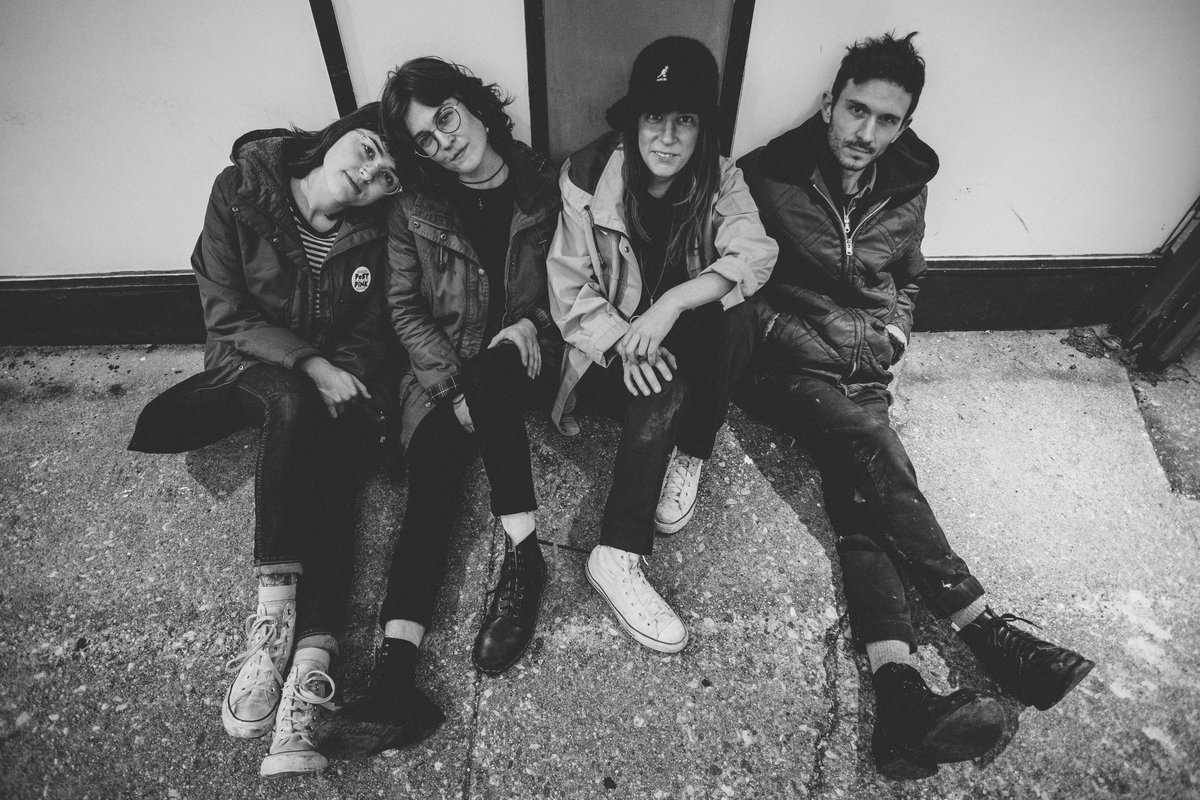
Post Pink embrace the doom-and-gloom. Across eight tracks, the Baltimore band is concerned with empty spaces and how to fill them adequately, but it’s like trying to hold water in your hands. Or as they put it on the opening track: “Eating air to feel full/ Breathe your air back into me, but there’s a hole in my lungs that won’t contain it.” The songs are wiry and tense, but they leave equal space for cutting barbs and warm melodies, delivered with a razor-sharp sincerity.
Two years ago, Guerilla Toss leader Kassie Carlson underwent open-heart surgery to remove a blood clot that had formed as a result of opiate addiction. “What Would The Odd Do?” is where Carlson and the rest of the band confront that near-brush with death. It’s one of the most concise and overpowering examples of the chaotically beautiful psych-dance sound that Guerilla Toss have been perfecting over the last few years, expertly constructed songs about the struggle to get clean and the wonder of seeing every day life through sober eyes.
Guerilla Toss returns to NNA Tapes with a brand new EP, ‘What Would The Odd Do?’, an exploration into new territories and an expansion on their recipe for twisted, addictive rock & roll mania: fried funk, damaged dance, and cosmic cacophony. Fans of 70’s prog and rock greats like King Crimson and Todd Rundgren as well as modern torchbearers like Sheer Mag and Deerhoof will be joyfully united by GT’s uniquely familiar world of wonder and excitement.
For Kassie Carlson — singer, songwriter, and bandleader of Guerilla Toss — What Would The Odd Do? is unarguably the group’s most personal release in their impressive history as a music-making collective. Carlson has found a new joy in life. She has since cleaned up for good, moved to Upstate New York with her partner and GuerillaToss drummer, Peter Negroponte, and has never felt more inspired.
Kassie Carlson is a true poet of punk, the voice of an unheard generation, the leader of The Odd. Few people have been through what she has, and making it out alive is just the beginning. With her band of musical misfits, Guerilla Toss is an unstoppable force of nature.
Dry Cleaning came together in a somewhat atypical way — three musicians who’d already been through the ringer with failed projects, finding their spark with a front woman who had no musical experience. That’s also what makes them special, with Florence Shaw’s deadpan-then-vicious spoken word delivery adding a new twist on Dry Cleaning’s gritty post-punk. Her lyrics come from stray details and overheard conversations and YouTube detritus — the jumble of a mind in an era of too much information and too many stimuli, the outpouring of it all ultimately making Dry Cleaning somehow therapeutic.
For anyone looking to get a quick sense of the vibe of the bracing debut EP from the London group Dry Cleaning, vocalist Florence Shaw provides a tip right out of the gate: “During what was probably the longest two-and-a-half months of my life after a near death experience, I could not sleep/…The only thing that kept me going was Saw 2.” Dry Cleaning—emphasis on “dry”—use bleak humor and acid sarcasm as a way to cut life’s thousand tiny indignities down to size. You have to be a sharp writer to make this kind of withering wit work, but fortunately, Shaw is one of the sharpest. When a date goes south and Shaw returns from the bathroom to discover her would-be partner has ghosted, she offers, “I thought you liked me, but maybe I was just a captive audience. You did seem a bit bored when I was talking.” In “The Magic of Meghan” (which certainly appears to be about a member of the Royal Family, but I don’t want to jump to conclusions), Shaw tartly observes, “Never has one outfit been designed to send so many messages/ Earrings to empower women/ Bag that helps charity/ jeans made in Wales/ Cruelty-free coat.” Come to think of it, that line may be appreciative rather than cutting, but that’s one of the things that makes Shaw’s writing so good—it’s beguilingly difficult to read.
The band surrounds her verse with the kind of jabbing guitars and lockstep rhythms that defined their home country’s post-punk years, bands like Delta 5 and the Au Pairs. Shaw would probably hate that comparison—but I bet she’d write a killer song about it.
A 4-CD set, “Only After Dark” chronicles Mick Ronson’s peripatetic solo work during the rest of the seventies after his split with Bowie, with his two albums “Slaughter On 10th Avenue” and “Play Don’t Worry” joined by B-sides, alternative versions, outtakes and a plethora of unissued-at-the-time studio recordings (including a handful with Guam, the backing band for Bob Dylan’s legendary 1975 Rolling Thunder tour) and various highlights from his live shows. Featuring some rare photos and a lengthy new essay on his Seventies career, Only After Dark is the most comprehensive anthology to date of a major talent.
Julian Casablancas was partly inspired to write his new Voidz single, “Did My Best,” by Algerian street vendors in Paris — specifically the Auto-Tuned Arabic music they listened to while “selling tourist crap. That seeped into my subconscious,” .
When he acquired an Auto-Tune pedal, his imagination took off. “In Indian music and Middle Eastern music, they use more notes [than in Western music],” he says. “But the truth is, those notes are secretly in Western music. … When you do a melody with Auto-Tune, it’s almost a different melody. Ten percent of the melodies jump off to a new level with Auto-Tune. It’s a whole other level of harmony.”
Auto-Tune colors the end of the song, where Casablancas repeats the phrase, “I can only change what I can change,” and features heavily on “The Eternal Tao,” released in May of this year. That song and “Did My Best” appear in a new video from the Voidz , which features the band having a party with a bunch of sex dolls. Mac DeMarco and Kirin J Callinan also appear in the video; DeMarco engineered both songs, while Callinan “dream weaved,” Casablancas says.
“I started the way I start most things, with a vague, blurry end vision in mind,” he says of the video. “It’s like one of those videos people make at parties. It’s like, ‘What is this world? Who are these people?’ It was [a] simple, dumb idea that could have been 10 seconds long, but I decided to [do that and add] robots.” The video was directed by Johann Rashid (Promiseland), with animation by Benjamin Portas.
Despite the Auto-Tune, “Did My Best” sounds more like a traditional Casablancas track and is, in part, about the singer’s disdain for nostalgia. “Some people might hear the political stuff, some people might hear the ‘hanging out in a bar’ stuff, some people might hear the philosophical stuff,” he says. “That song is about nostalgia and not giving a shit about it personally, but that’s only one of many topics in the song.”
“Eternal Tao” was inspired by Tao Te Ching — and it’s much more out-there than “Did My Best.” “That book is insane,” Casablancas says. “It seems like the ancient wisdoms of the old world, the top minds, got together and wrote this universal truths thing. It has so much in it and it’s so amazing. That took over my life for a second.”
With his trusty pedal in tow, the singer says he has more than 50 songs in the can. He’s not sure how the band will release them, but says they’ll likely come out as singles. “I think we’re just going to put out songs here and there. Does it matter, this day and age?” he says.
As for the Strokes, he says the band is similarly in limbo — and that there’s no plans for new music. “If you ask me in a week, the answer might be different. Right now not, but it could change at any moment,” he says. The Strokes are currently set to play a slew of dates, including a New Year’s show in New York, 2020’s Shaky Knees Festival, and several iterations of Lollapalooza overseas. Their last album was 2013’s Comedown Machine, while Voidz dropped their more recent album, Virtue, in 2018. Casablancas’ Strokes bandmates Albert Hammond Jr. and Fabrizio Moretti also recently put out new music; Hammond Jr.’s Francis Trouble dropped in 2018 and Moretti’s Conduit came out this week under the name Machinegum.
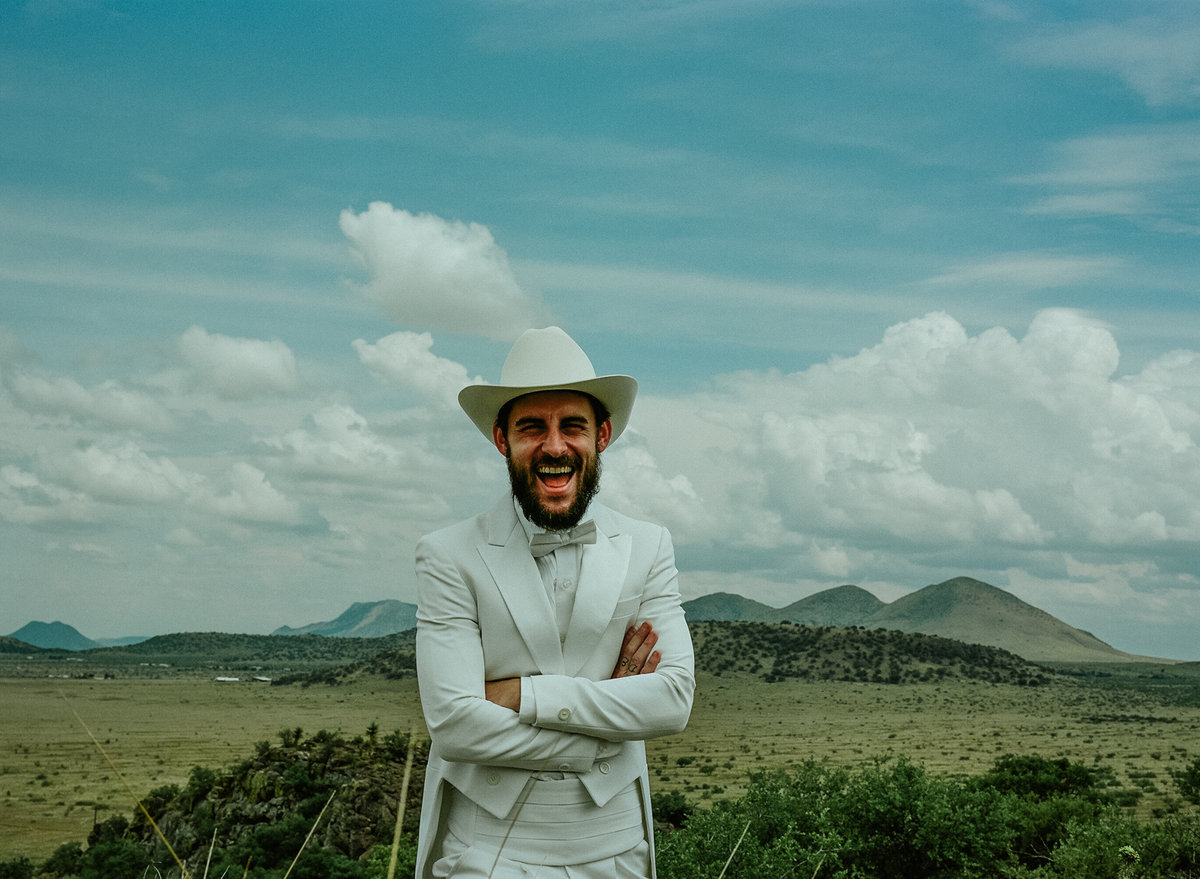
Robert Ellis recasts himself from an alt-country guitar-slinging troubadour to a white-suited, top-hatted barroom pianist making an album full of jaunty stompers about growing up and growing sober (“Topo Chico” and “Nobody Smokes Anymore”) and acerbic, affecting love songs (“Fucking Crazy” and “Passive Aggressive”). Ellis teared down a set at SXSW , The album is among our music highlights of 2019, and this record is a perfect companion for all the turns 365 days can throw at you.
Pianos and Keyboards – Robert Ellis
Guitars – Kelly Doyle
Bass Guitar – Geoffrey Muller
Drums and Percussion – Michael “Tank” Lisenbe
Congas and Auxiliary Percussion – Josh Block
Background Vocals and Vocal Arrangements by Robert Ellis and Michael Lisenbe
Quivers’ new single ‘When It Breaks’ has a golden jangle that glows so brightly I’m honestly a little bit worried I might get sunburnt listening to it. The band, led by Sam J Nicholson, have a knack for taking dark subject matter and moulding it into euphoric and uplifting pop.
It wouldn’t be a Quivers song without a grin-inducing group chorus, and this one delivers emphatically. If you don’t feel the urge to sing along, you’re dead inside for sure.
Quivers make cathartic guitar pop that jangles and shimmers somewhere between 1980s Australia and 1990s America. Started by Sam Nicholson in Hobart, the now Melbourne band has since toured Australia, NZ, Canada and most recently the US where they showcased at SXSW and filmed a session for KEXP in Seattle. 2018’s debut record ‘We’ll Go Riding on the Hearses’ came out through Hotel Motel Records. On it you might hear the ghosts of early R.E.M. guitars, the earnest lost pop moments of The Triffids or The Church, or the loud melancholy of Teenage Fanclub.
Band Members
Sam J Nicholson, Michael Panton, Bella Quinlan, Holly Thomas.
Official video for Quivers “When It Breaks” Single released on 30/10/2019
Be it on her more minimalist, acoustic-leaning 2009 debut album Me Oh My or critically acclaimed, liquid-riffed 2013 LP Mug Museum as well as 2016’s Crab Day, Cate Le Bon’s solo work – and indeed also her production work, such as that carried out on recent Deerhunter album Why Hasn’t Everything Already Disappeared? (2019) – has always resisted pigeonholing, walking the tightrope between krautrock aloofness and heartbreaking tenderness; deadpan served with a twinkle in the eye, a flick of the fringe and a lick of the Telecaster. The multifaceted nature of Le Bon’s art – its ability to take on multiple meanings and hold motivations which are not immediately obvious – is evident right down to the album’s very name, Reward. “Cate Le Bon writes songs in the absurdist tradition, as both as an escape and a mirror to the world. Her music is elliptical and sparse, using familiar sounds—chiming electric guitar, saxophone—to create her own alien landscape. ‘Daylight Matters’, the swooning first single from her new album Reward, isn’t so much a reinvention as it is a grand unveiling.”
The Welsh singer/songwriter/guitarist Cate Le Bon released a new album, Reward, this year via Mexican Summer. It was among our essential new releases . Now that the album is out, one of its best album tracks that wasn’t already released as a pre-release single, album opener “Miami.” Le Bon’s music is hard to define, she’s truly her own artist, and “Miami” is fantastic introduction to Reward.
Previously Le Bon shared Reward’s first single, “Daylight Matters,” as well as a video for “Daylight Matters.” Then she shared another new song from the album, “Home to You,” via a video for the track. Le Bon doesn’t feature in the video directed by Phil Collins (no, not that Phil Collins). It was filmed in Lunik IX neighborhood of Košice (Eastern Slovakia), which houses a Roma community who, as a press release states, “due to successive governmental and municipal policies, often live in slums and on isolated, dilapidated estates. Then she shared another song from the album, “The Light” .
In terms of her solo work, Reward is the follow-up to 2016’s Crab Day, although last year she also released Hippo Lite, her second album with DRINKS, a collaboration with Tim Presley of White Fence.
Le Bon has spent a year living in isolation in the Lake District in the UK, by day making wood furniture and by night playing piano and writing songs. “There’s a strange romanticism to going a little bit crazy and playing the piano to yourself and singing into the night,” Le Bon said in a previous press release.
Of the album title, Le Bon said: “People hear the word ‘reward’ and they think that it’s a positive word, and to me it’s quite a sinister word in that it depends on the relationship between the giver and the receiver. I feel like it’s really indicative of the times we’re living in where words are used as slogans, and everything is slowly losing its meaning.”
The album features Stella Mozgawa of Warpaint, H. Hawkline, and Samur Khouja. The latter co-produced Reward with Le Bon.
Once a generation, a blues artist comes along who not only reminds mainstream audiences how deeply satisfying and emotionally moving the best blues music can be, but shakes the genre to its core. With both eyes on the future and the blues in his blood, 20-year-old guitarist, vocalist and songwriter Christone “Kingfish” Ingram is set to take the music world by storm with the long-awaited release of his debut album, “KINGFISH”, on Alligator Records. Sprung from the same earth as so many of the Delta blues masters, Kingfish comes bursting out of Clarksdale, Mississippi, just ten miles from the legendary crossroads of Highways 61 and 49. A student of the Delta’s musical history, he is acutely aware of the musicians and the music that emerged from his corner of the world. “I do think I have an old soul, that I’ve been here before.
The 20-year-old Kingfish plays the blues like he was unfrozen from 1972, sent here via an Alligator Records experiment to play juke joint blues guitar like the Beatles, and disco, and rap, and everything else, never happened. His debut album is like a lost Albert Collins record, which is to say it’s the best new blues album released this year by a mile, in a year when not a lot of notable blues albums came out. Put this on when the weariness of existence gets to be too much, where Kingfish will pick you up.