If you’re nostalgic for infectious twin-guitar licks and Thin Lizzy-style late ’70s rock —whose late singer Phil Lynott is literally tattooed on Sheer Mag vocalist Christina Halladay — Sheer Mag demands and exceeds satisfaction. The Philly five-piece pays homage to traditional rock‘n’roll but with postmodern lyrical concerns that extend to their extracurriculars: Guitarist Kyle Seely started offering guitar lessons last month to raise money for the Philadelphia Community Bail Fund. But Halladay and her soulful vocal range are the stars, toggling between aggressive grunts in the nearly Iron Maiden-reminiscent “Steel Sharpens Steel” and softer, higher-pitched crooning. The rare throwback act who revise history entirely for the better.
2019’s A Distant Call is their most polished and varied production to date, with a significant ‘80s influence compared to past releases, and a wider sonic spectrum than ever: “The Killer” manifests Brian Johnson-era AC/DC, while “Silver Line” maintains a shimmering Pretenders vibe
“Hardly to Blame” by Sheer Mag, from the 2019 album A Distant Call on Wilsun Recording Company.
Like irony-breathing critic-turned-rockers from Blue Öyster Cult to Pet Shop Boys, Elizabeth Nelson writes the kind of lyrics those of us still unturned just want to quote at you all day. “An icepick deep in Trotsky’s back — his last thought is that it’s understandable.” “U put the ‘u’ in ‘cruel and unusual’ / But u typically put urself first.” “He went to Julliard / Which isn’t as easy as it sounds.” “What in the world’s come over me? / Asking for a friend.” “They digitally removed the coke from Neil’s nose, you know / Or so the rumour goes. I don’t know.” “I’m pretty sure ‘Ana Ng’ is the best one / But ‘They’ll Need a Crane’ is certainly a close second.” And these are all from 2019’s A Goddamn Impossible Way of Life alone — their seven-year catalogue keeps going back like this; may it keep going forward too. It may be healthier that Nelson and husband Timothy Bracy head up one of the most confident and muscular garage-rock bands going, threading all that deadpan text deftly through darting-needle melodies that stitch together hurtling hard-rock rave-ups. You’ll forgive them for being critical darlings because they’re also the goddamn life of the party.
The many moods of wishing ‘A Goddamn Impossible Way Of Life’ a happy first birthday. The Paranoid Style released our second full-length LP a year ago today, and few things quite literally have ever been the same. I loved making this record so much and only regret not going with my first instinct for an album title: “More Songs About Grover Norquist And Food.” Thanks to everyone who purchased it. The late-adopters and heretics are forgiven.
If all of the above didn’t sell you, “Turpitude”‘s “I smoke for the following reasons — the Contract With America / I smoke because of Pulp Fiction / I smoke because of Mojo Nixon” can’t, can it?
The Paranoid Style Presents: A Girl’s Gotta Eat. The Paranoid Style is Elizabeth Nelson and Timothy Bracy from The Mendoza Line. On this song they are joined by Ken Flagg (MC Frontalot, Edible Norris) and Bruce Bennett (The A-Bones). All songs are written by Nelson and Bracy except where noted.
Meet Me @ The Altar so lovingly summon the cues of ‘00s-era pop-punk and emo with an emotional intelligence and maturity that the genre’s most visible sad boys never really lived up to. Based in three different states after discovering each other on YouTube, singer Edith Johnson, guitarist and bassist Téa Campbell, and drummer Ada Juarez command their instruments with an attention to detail that belies the fact that they usually only get a day or two to practice in person before shows (and that was pre-pandemic). These three young women of colour create with a care befitting internet friends, paying homage to and carving out their own place in a genre notorious for gatekeeping its sound and sadness from anyone who isn’t a suburban white boy, and hold Paramore as a sacrosanct influence. The challenges of social distancing during the pandemic are real for any band, and must be especially for these three, but they’ve already overcome separation with ease.
Their strong online presence has been attracting fans to their comical personalities, but more importantly to their music. They released an EP titled “Bigger Than Me” in 2019 consisting of intricate guitar parts, fast paced drumming, and emotional lyrics.
The delicious, math-y first 20 seconds of their 2020 single “Garden” grow into one of 2020’s hardest, tenderest punk choruses.
Band Members:
Edith Johnson – Vocalist – GA
Téa Campbell – Guitarist – FL
Ada Juarez – Drummer – NJ
Kaylie Sang – Touring Guitarist
El Xiques – Touring Bassist
Yumi Zouma‘s glorious Polyvinyl Records debut, “Truth or Consequences”, arrived back in March and today we get an official music video for fan-favourite track “Sage“. the video was filmed by Jack Shepherd in 2019, and edited by Austin Roa, in the band’s native New Zealand. Watch below.
Earlier this month, the band shared a remix of their ToC standout, “Cool For A Second,” courtesy of Australian singer/producer Japanese Wallpaper. Look for more exciting news in the coming weeks from the zoomies!!!
“The video for ‘Sage’ was shot by the brilliant Jack Shepherd, who managed to discreetly capture us in-between our various band activities on his Super 8 camera, before passing the footage onto our good friend Austin Roa, to create a beautiful homage to one of our most loved songs from the new record.” – Yumi Zouma
“Sage” is taken from Yumi Zouma’s third album, Truth or Consequences, out now.
The new record from Sufjan Stevens as he returned with new single “America,” the first offering from his upcoming album “The Ascension”.
He’s recently officially released the b-side of “America,” the equally lengthy 10-minute track “My Rajneesh.” It’s another sprawling epic that even goes back and steals from himself, using the flutes from Age Of Adz track “Vesuvius.” It’s another stunning offering from Stevens, maybe even the better of the two tracks and it’s just released as a b-side. Which makes us wonder how good the rest of the songs on The Ascension must be.
Following up his series of drive-in live show performances in Anaheim earlier this month, Andrew McMahon in the Wilderness has returned with new single “Get On My Wave.”
The tune first debuted at one of McMahon’s live drive-in shows in Orange County. McMahon later tweeted that the tune would be available today.
In his online comments about “Get On My Wave,” McMahon says, “I wrote and produced ‘Get On My Wave’ with Kyle “King Tuff” Thomas the day we met last summer.” McMahon tweets “It’s about love, alienation and how in a world where things can look perfect on the surface, there are currents running beneath and tides which push and pull at the shore.” The track is romantic and reminiscent of McMahon’s former projects, Jack’s Mannequin and Something Corporate.
What really stands out about “Get On My Wave” is the driving acoustic guitar and shaker. The piano takes on more of an accent to McMahon’s voice, following the melody line in the chorus and shining through at the beginning of the bridge.
I wrote and produced “Get On My Wave” with Kyle “King Tuff” Thomas the day we met last summer. I’ve struggled with releasing the song during the pandemic because it felt too happy; detached from the tumult of our current world. Lately it’s been making more sense to me. It’s a song about love and alienation and how in a world where things can look perfect on the surface there are always currents running beneath and tides which push and pull at the shore. It’s about finding your people and acknowledging your relationship with those forces outside of your control and saying, “let’s ride this out together.”
As to whether the single will be featured on a new full-length or EP, only time will tell. His last full-length, “Upside Down Flowers” was in 2018.
On Arcade Fire’s greatest album (to date), the band creates something of an alternate universe where the suburbs are literally a post-apocalyptic wasteland. Win Butler and pals spotlight their uncanny ability to slip into the sights, sounds and feelings of childhood, melding memories (both happy and unhappy) into a greater portrait of comfort and rebellion in the outer environs. The theme unifies a diverse palette of relentlessly exciting rock ’n’ roll, from the punky “Month of May” to the synth-pop stunner “Sprawl II (Mountains Beyond Mountains).” On the latter, Regine Chassagne belts the eternal credo of tortured teenage artists: “I need the darkness, someone please cut the lights.”
“It has left me restless and endlessly frustrated, thinking about this, about a place that isn’t necessarily just a place but is also a state of mind.”
That’s how Eric Eidelstein begins his personal yet overarching look at Arcade Fire’s monumental 2010 album The Suburbs. The indie rock outfit is responsible for a handful of impeccable releases—from their sweeping 2004 debut Funeral to 2013’s daring Reflektor—but none triggers the imagination quite like The Suburbs, named one of the best albums of the 2010s. That restlessness Eidelstein describes in his 33 1/3 book is what makes The Suburbs such an inescapable and timeless classic. No matter how much bigger the urban/rural divide gets, people will always get stuck places—whether metaphorical or physical. And they’ll always find reasons to be restless.
The Suburbs, their third studio album, turns 10 this Sunday, August. 2nd, and in the years since its release, Arcade Fire have found themselves both at the forefront of the critical conversation and general rock music discourse. For most of the last 20 years, it seemed like they could do no wrong. They released four rock-solid albums, and then, in 2017, they dropped a dud (critically, at least). Even though this writer (and this writer) has found certain aspects of it to be redeemable, Everything Now was panned by everyone from Pitchfork to SPIN (who went so far to say it was a “deeply cynical, joyless album”). The Suburbs has endured throughout these conversations, perhaps because it cleanly offers social criticism and satire without cynicism. Everything Now attempts grand critique of culture in the same way The Suburbs does, but only the latter really pulls it off. Arcade Fire take more chances on this ambitious concept album, but the payoff is enormous.
Anyone who has lived somewhere small will understand what The Suburbs is getting at. For frontman Win Butler and his brother Will, this album was inspired by their upbringing in The Woodlands, Texas, a suburb outside Houston. I grew up in a small sweaty town in Alabama, not some cookie-cutter community lingering in the shadow of Chicago or Orlando or New York, but I still understand American mundanity and what it feels like to be trapped. This Arcade Fire album approaches that feeling more than just a sketch of a certain kind of place. “The Suburbs” could be anywhere. As Eidlestein also wrote, “I want you to think of the suburbs, whatever they may mean for you.” And as Win himself said, the album is “Neither a love letter to, nor an indictment of, the suburbs – it’s a letter from the suburbs.” The Suburbs continues to outlast other concept albums from this time period because it can be about anywhere. There are certain moments on The Suburbs that capture that aforementioned restlessness. Some sound more like freedom. And others seem to reflect American culture on a larger scale. One does all three, and it’s therefore the high point of the album. Régine Chassagne takes the spotlight on the massive, disco-inspired second “Sprawl”—“Sprawl II (Mountains Beyond Mountains)”—and, like a great coming-of-age film, it somehow encapsulates everything about growing up, chasing dreams and the ache so many of us felt when we imagined a life somewhere beyond our seemingly small worlds. “These days, my life, I feel it has no purpose / But late at night the feelings swim to the surface,” Chassagne sings. “’Cause on the suburbs the city lights shine / They’re calling at me, come and find your kind.” It’s an invitation to make good on those dreams and aches.
Arcade Fire are fond of creating a specific atmosphere or universe with each record—even if that landscape is one already familiar to us. Other key tracks include “The Suburbs” itself, which introduces us to the metaphorical ‘Burbs where the next hour of music will take place. “The Suburbs,” which attempts to tear down some of the utopian-like notions about suburban communities, is the project’s thesis statement, one that addresses themes like uniformity and toxicity in Western culture that they had only touched on in previous albums. The next song, “Ready to Start,” is a fast forward to fresh beginnings, the sparkling “Rococo” observes bored trendy teens and “Month of May” describes the wild feelings that come around when the world finally starts to thaw out every year. Lyrically, it’s a picturesque and vivid record from start to finish, but The Suburbs is also just a really good indie rock album. “Modern Man” is a bouncy rock jam, “Half Light I” swells with experimental strings and “Deep Blue” sinks into a cool, dark escape from the miles and miles of concrete. The synths, guitars and drums on The Suburbs make it a delight to behold even if you’re ignoring the lyrics, which are—let me be clear—still of the utmost importance.
What it did: Stripped the sound back to something altogether more immediate – from the jaunty title track to the raw punk power of ‘Month Of May’ – and touched on the fear of growing up. Poor old Win – it comes to us all. Fun fact: The album was inspired by a letter Win received from a childhood friend back home in Houston, Texas.
The new album from Fontaines D.C.—‘A Hero’s Death’—arrives July 31st. Available on deluxe gatefold 2x 180g vinyl, limited edition stormy blue vinyl, standard black vinyl, two pocket wallet CD, limited edition cassette, and MP3, lossless or 24-bit WAV digital album. Each album purchase comes with an instant grat download of “A Hero’s Death” (the single), and the full digital album to be delivered on release day. Barely a year after the release of their acclaimed debut album Dogrel (which charted Top 10 in the UK, earned a Mercury Prize nomination, and No. 1 Album of the Year positions for BBC 6Music and Rough Trade), Dublin, Ireland post-punk outfit Fontaines D.C. return with an intensely confident, patient, and complex sophomore album. A Hero’s Death arrives battered and bruised, albeit beautiful – a heady and philosophical take on the modern world, and its great uncertainty.
Barely a year after the release of their hugely acclaimed debut album ‘Dogrel’, which earned a Mercury Prize nomination and Album of the Year 2019 , Dublin’s Fontaines D.C. have returned with an intensely confident, patient, and complex follow up album. ‘A Hero’s Death’ arrives battered and bruised, albeit beautiful – a heady and philosophical take on the modern world, and its great uncertainty.
Foxing has become one of indie-rock’s most juiced-up alpha-sluggers, calling its towering shots and clobbering homers into the Busch Stadium parking lot. The valiant six-piece led by singer Conor Murphy swung big with their soaring 2018 LP Nearer My God, which landed somewhere between American Football’s disconsolate debut and Radiohead’s blinking Hail to the Thief.
It’s a sincerely commanding effort; 90 seconds into the emphatic album opener “Grand Paradise,” as Murphy shrieks the unforgettable phrase “shock-collared at the gates of heaven!” and the full band kicks in, it’s an arena-worthy moment for a band that plays to hundreds, not thousands. Yet those live shows are teeming with the group’s unapologetic self-belief — Foxing plays like it wants to be the rock band that saves your life. If concerts ever return, you better believe those clubs will be full.
“Nearer My God,” the title track, in all its triumphant, anguished, soul-affirming glory — the Hotelier-worshipping Missouri grandson of Queen’s “I Want to Break Free.”
“We live in a punk-rock world / Oooh-oooh, oooh-oooh,” sings Peter Gill on 2020’s astounding Hit to Hit, which honours both sentiments by sounding like Big Star if Alex Chilton had Bob Pollard’s ADHD, across 24 tunes that only break the two-minute mark on a quarter of the record. Homemade-sounding music is often championed for its roughness-as-realism, but Gill’s band shows how gorgeous and pristine the DIY life can be, albeit by leading with the Beach Boys rockabilly of “W-2,” a tax-form lament for anyone just trying to get their fucking quarantine check. Treat their breakthrough album as a thought-experiment about what would happen if you straightened all the crooked lines in Wowee Zowee and marvel at how much fractured beauty is still there.
2nd Grade have shared the fourth and final single from their debut album Hit to Hit. It’s another short ‘n sweet taste of the humble power pop that defines the album.
“The record’s latest single “Boys in Heat” clocks in at just over a minute and is incredibly catchy, so it’s easy to find yourself on your fourth or fifth listen without noticing. It’s a confident indie rock jam that exudes carefree summer fun.”
“Dennis Hopper in Easy Rider” is their “September Gurls” for a generation that first experienced “Little Honda” via Yo La Tengo’s I Can Hear the Heart Beating as One. Philadelphia’s 2nd Grade has released the third track from their upcoming full-length Hit to Hit. According to the band, “Dennis Hopper in Easy Rider” is “a rip-roaring earworm about clueless machismo set in the world of the road dog.” It’s insanely catchy.
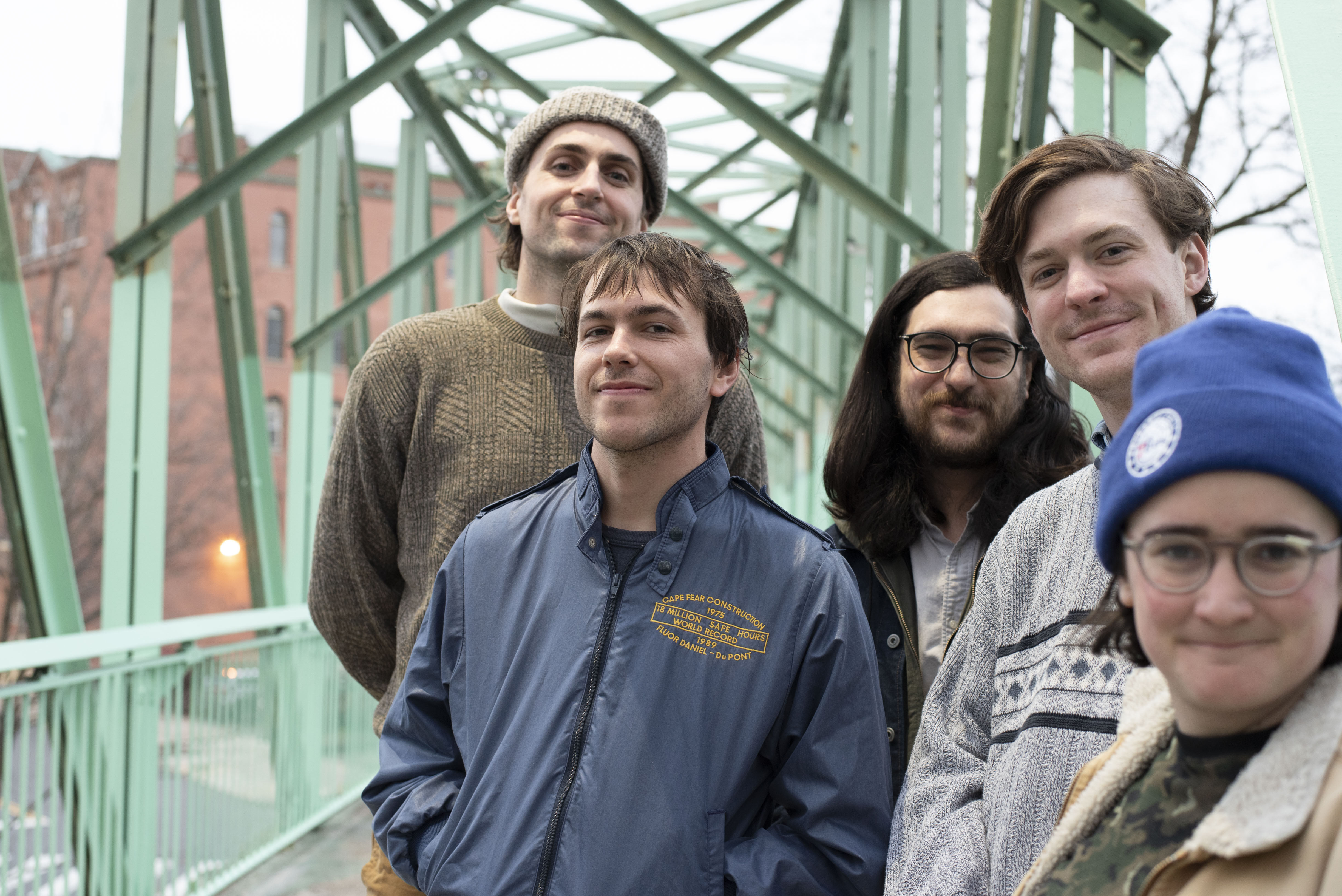
Second Grade is Peter Gill, Jon Samuels, Jack Washburn, Catherine Dwyer, and Will Kennedy.




 The Fat Angel Sings