Chloe Foy has had an exciting year. Fresh off the back of playing SXSW in the Spring, where she captured the attention of US audiences and the likes of NPR radio’s Bob Boilen, she has gone on to rack up over 6 million plays on Spotify and tour in support of the mercurially talented Jesca Hoop, as well as embarking on her first ever headline UK tour. Effortlessly beautiful from beginning to end, singer songwriter Chloe Foy’s Callous Copper was the first track we fell in love with in 2020.
Taking inspiration from classical music as much as wider transatlantic trends in folk and indie, Chloe’s songs comprise of carefully constructed arrangements that delicately compliment her cryptic lyrics. ‘Callous Copper’ is an unabashed love song,’ shared Foy back in January. ‘It’s not common for me to be quite so open in my imagery, so I surprised myself with how I laid myself out quite so openly. It has imagery of love in all its seasons.’
With her strikingly beautiful voice and emotionally direct song writing impressing listeners globally, Chloe looks set to have an even better 2021, with a debut album in the pipeline, and with festival appearances already confirmed at Cambridge Folk, amongst others. Chloe is supported by the PRS momentum fund.
‘Her huge talent lies in creating delicate yet intense atmospheres that swallow us in bliss, while her voice remains our steady link to reality.’ – The405
Songhoy Blues is a band whose experiences in Mali have opened their eyes to universal problems plaguing people everywhere. Using the pain and lessons learned from having to leave their hometowns in northern Mali, the band realizes that human rights is a concept that extends far beyond what they have seen with their own eyes and far beyond just the borders of Mali. In order for the band to see their homes restored, they understand the fight must be fought on all fronts, for everybody across the spectrum. They are no longer refugees or exiles or four people with instruments—they are Songhoy Blues, a musical voice for empowerment and equality.
Working with Matt Sweeney, who encouraged the band to make the album they want to make, “Optimisme” confronts our world today. On “Badala” and “Gabi,”Songhoy Blues seeks the empowerment of women, asking for centuries-old misogynistic practices to be done away with. With “Worry,” the band advises both the young and the old that positive vibes and persistence are the best tools to fight our struggles. In “Asssda,” the band praises and thanks the everyday warriors who wake up everyday to sweat for the betterment of their communities and in “Dournia,” the band laments the lack of compassion and empathy between humans today in the face of increasing materialism and selfishness. “Bon Bon” warns of being fooled by shiny promises, and in “Barre” the band asks for the youth to get involved at home for change while warning off those who wish to divide in “Fey Fey.” Each time Songhoy Blues steps to the mic on Optimisme the band confronts, consoles, praises, thanks, and encourages the listener toward a better world tomorrow.
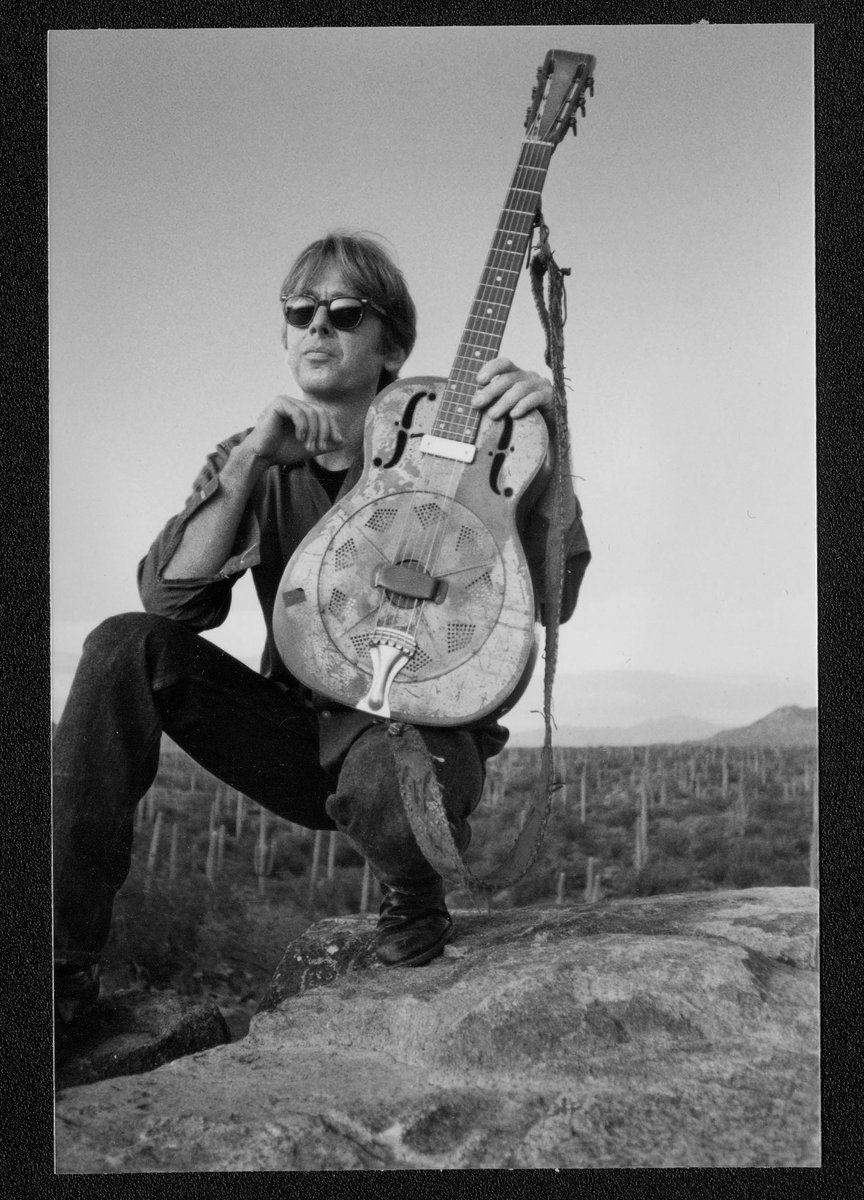
It’s the era of grunge. ‘Smells like Teen Spirit’ and its accompanying video clip is a revealing slice of high school unconfidential. Tattoos and tantrums, guitars set to overload, America is all about Seattle’s rainy realism. It’s 1992. Nothing will ever be the same again. Further South, the heat is on. Rainer Ptacek’s debut solo album was released – he’d already dallied with Das Combo and impressed both ZZ Top’s Billy Gibbons and Kurt Loder at Rolling Stone – “Quite delightfully rough but well worth hearing.” Alone, maybe a little lost. Rainer is soaked in the blues. Dripping with aching emotion.
“It was recorded in two days in a shed under the blazing sun of the Arizona desert, featuring nothing but Rainer´s voice and 1933 National Steel guitar, it is an album of intimate, slow-burning intensity,” exclaimed the Tuscon Citizen. “He applies the methods of Robert Johnson or Skip James to modern times, exhibiting a dedication to the archaic that renders the usual questions of white-boy blues authenticity quite meaningless,“ reasoned The Independent.
“His touch is eerily authentic: a finger-picking country blues style that clanks and drifts out of time, intercut with a steel tube glissandi that soars like hope on the wings of a dove,” shrieked The Times.
It’s a million miles from Seattle. There’s no streetwise bravado, ‘Worried Spirits’ is all about life’s raw and rough experiences and what’s spat out the other side. ‘It’s A Long Way (To The Top Of The World)’ is a dead ringer for Ry Cooder circa ‘Boomer’s Story’ or ‘Into The Purple Valley’, and ‘Waves Of Sorrow’ does exactly what it says on the can – it’s a tearjerker that broods magnificently.
“He’s capable of reviving the archaic spirit of Bukka White and Son House with just the help of his reso-phonic National Steel, Rainer Ptacek must be remembered not only for his frisky rockabilly déjà-vu performed with the so called Das Combo, but mainly for ‘Worried Spirits’ (’92) and Nocturnes (’95): two blues gems, one of the best example of blues in the ‘90ss, lyric, harrowing and definitive like only a few other artist of the period could sound,” added No Depression magazine some years later.
“The highlight is a setting of Langston Hughes´s poem `Life Is Fine´, so harrowing that it´s fully five seconds after the last note dies away that you dare draw another breath,” gasped Mat Snow in Q magazine.
That interplay of Rainer’s soulful guitar and Hughes’ keenly observed words make for fine if abrasive bedfellows.
“`Worried Spirits´ is parched and beautiful – the true song of the desert,” concluded The Independent on Sunday.
Now with 14 out-takes and alternative versions, some 25 years later and 20 years since Rainer’s untimely death, ‘Worried Spirits’ still rattles and distorts, it hums with a strange intensity, like it’s held together with those steel strings alone.
Georgia native Katie Pruitt was liable to offer up a pretty different set depending on when you saw her. Wielding her electric guitar, the arrangements were built around jazzy, fluid dynamics, her intently detailed lyrical vignettes giving way to the tumultuous release of an instrumental break that seemed to unleash all the emotions left unsaid by the narrator. The twang in Pruitt’s voice became more of a grounding device when she switched to her acoustic, she appeared as the winning “Artist on the Rise,” and sounded more like she’d taken the country ballad form and turned it inside out.
Katie Pruitt spends much of her debut album Expectations wrestling with the ones that encircled her growing up and realizing that they only have as much power as she gives them. That’s a big deal for someone who grew up gay in a Christian household in Georgia, feeling shame for being different and hiding it, and fear that revealing her true self would result in rejection from her family and friends—sentiments tempered by the late-blooming knowledge that even at her lowest she had a support system to help raise her back up. Pruitt channels those feelings into the 10 songs on Expectations, an album that leans heavily toward modern folk, with elements here and there of rock and pop: The title track, for example, has an ’80s radio-rock feel with gleaming guitars and a sleek rhythm. The real draw here, though, is her voice, which can sound delicate and feathery. She’s also capable of sudden, robust power, and she can switch from one to the other in a flash
On Wednesday night, I stumbled into a bar on 6th street and Janis Joplin’s spirit appeared in the voice of one Katie Pruitt, a Nashville-based singer/songwriter from Atlanta, Ga. whose powerhouse voice and wise, beautiful modern love songs absolutely blew me away. Pruitt is far and away the most passionate performer I’ve seen this week, delivering her songs with that same likable, strong-willed intensity as Brandi Carile. She sounds a bit like Carlile, too, seamlessly matching up her edgy Americana grit with soft country tones. Her song “Grace Has A Gun,” written about a unfavorable ex-girlfriend, is witty, sad and potent. “She had a gun under bed,” Pruitt sings. “And that wasn’t the most terrifying thing about her…at all.” Later on in the set, another clever sound byte sticks out: “You’re way too generous with all the fucks you give,” she sings. Pruitt is unapologetically herself, and her energy is a welcome addition to the Americana sphere. Like Joplin, she tells stories of broken relationships and she sings with her entire face, from her core. It left me speechless. I’m quite certain we’ll be seeing a lot more of her.
An indispensable part of growing up is that moment when a new experience — a story, an image, a person — puts its first crack in the foundation of your worldview. Across 10 tracks, Katie Pruitt’s debut album, Expectations, is an excavation of all those fractures and the latticework they leave behind. The 26-year-old singer-songwriter deconstructs the idea of who she should be as handed down by her family (“Georgia”), her Catholic school (“Loving Her”), Hollywood (“Wishful Thinking”) and the South (“Normal”). It’s a lot to squeeze into one album, but there’s a heady sense of momentum to these songs, led by Pruitt’s diamond-cut voice, biting turns of phrase and masterful arrangements. On the other side of everyone’s expectations, Pruitt emerges as the bold author of her own future.
After two albums on Universal Republic, The Secret Sisters (aka real-life sisters Laura Rogers and Lydia Slagle) were dropped by their major label which put the fate of the band in question, but then Brandi Carlile took them under her wing. She had them open for her and produced their third album “You Don’t Own Me Anymore”, which came out in 2017 on alt-country label New West Records, and this year the sisters and Brandi teamed up again for another record on New West, the gorgeous “Saturn Return”. The album is named after the astrological phenomenon that represents reaching full adulthood, and it followed some monumental life changes for the sisters; both became pregnant during the making of the album and they lost both of their grandmothers around that same time. “We were still just trying to figure out how you go forward in life without the strong matriarch,” Laura told The Boot. You can hear how these life changes impacted these personal songs — which, unlike their previous albums, were written without co-writers — though Saturn Return also finds the sisters looking outside of themselves, like on the powerful “Cabin,” which was written from the perspective of a woman who has been assaulted, and was written around the time of Brett Kavanaugh’s Supreme Court confirmation hearings. “This song was our way of saying, ‘We hear you, and we know it hurts…we know you’re not over it and that’s okay,'” said Laura. The power in the lyrics is matched by that of the music – warm, timeless Americana that would fit nicely next to anything from late ’70s Fleetwood Mac to the new Jason Isbell album. Brandi’s production is the perfect match, and she also encouraged the sisters to break from their trademark close harmony style and each sing some songs on their own, which very much worked to their benefit. Fans of their harmonies need not worry though — there are still plenty of those, and they’re as lush as you’d hope.
Laura Rogers – vocals
Lydia Rogers – vocals, acoustic guitar, electric guitar
Brandi Carlile – acoustic guitar, piano, backing and featured vocals on “Water Witch”
Tim Hanseroth – acoustic guitar, electric guitar, lap steel
Phil Hanseroth – electric bass
Chris Powell – percussion
Jacob Hoffman – piano
Cheyenne Medders – electric guitar
Josh Neumann – cello
Sam Rae – cello
Kyleen King – violin
Released February 28th, 2020
All songs written by Laura Rogers and Lydia Rogers
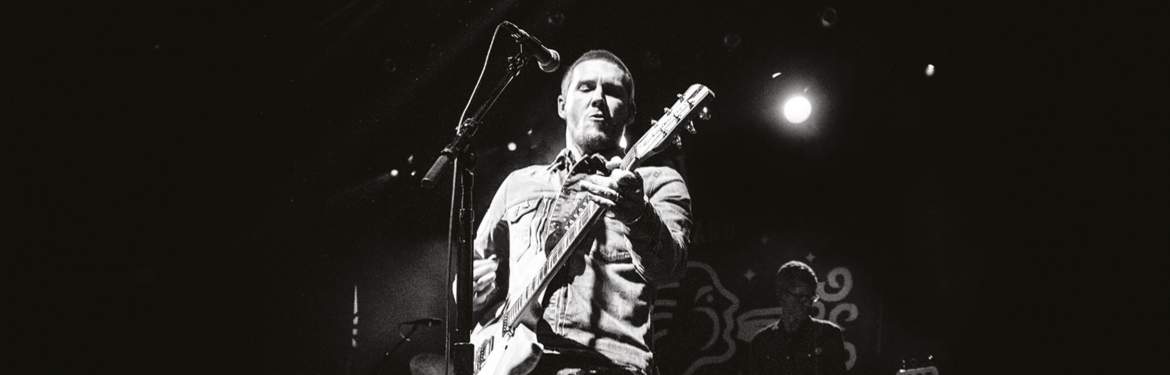
After sticking fairly close to his rock lineage on two previous solo albums, the Gaslight Anthem frontman threw himself into a new Americana direction on his third. It suits him. Local Honey is as warm and comforting as its title, full of hooks and narratives that draw you in like bears to, well.… Fallon opens the LP with a message to his daughter — “In this life there will be trouble, but you shall overcome,” he assures her in “When You’re Ready.” In the most Gaslight-sounding track on the record, “21 Days,” he stares down bad habits. Acoustic guitars and keys, even upright bass, frame most of the songs, and Fallon is perfectly comfortable without a loud amp behind him. Local Honey is the sound of getting older with grace and purpose.
Taken from Brian Fallon’s new album ‘Local Honey’ available now.
King Gizzard and The Lizard Wizard return with new album “K.G.”, their sixteenth since forming in 2010. In the wake of a global pandemic, it’s a collection of songs composed and recorded remotely after the six members of the band retreated to their own homes scattered around Melbourne, Australia.
“We’ve been busy… I think?”
King Gizzard And The Lizard Wizard guitarist Joey Walker is underselling the freak rock band’s pandemic pivot – a year’s output that (so far) includes two concert films, two live albums, four soundboard show recordings slash charity fundraisers, and now their 16th studio album, ‘K.G.’. speaking from his home studio – a prim, soundproofed room with a bookshelf peppered with Penguin classics, and a print of Henri Matisse’s 1910 painting Dance, a once-controversial ode to ecstatic bacchanalia. The fine art is a far cry from the six-piece’s lysergic tour posters, usually made by Jason Galea, and Walker’s listening habits reflect this band-divergent attitude – he says he doesn’t listen to “rock music”, preferring techno, house and “I’m gonna sound like a fuckin’ wanker, but jazz and all that dumbass shit”.
Staring down the void left by the Gizzard’s cancelled tours this year, Walker sank thousands of dollars (“more than I’ve ever spent on any musical instrument”) into learning modular synthesis. He swivels his webcam around to show NME the mess of wires that he’s “just constantly fucking fiddling with”. That feverishness extends to the guitarist’s personality, who in conversation darts between ideas like a moth flitting from bulb to bulb. “My disposition is more traditional, neurotic and shattered as a musician. I question everything,” Walker says.
The room he sits in was one of six home studios in which Gizz recorded ‘K.G.’, thanks to Melbourne’s punishingly strict lockdown. Forced individual home recording scuttled an initial plan to develop the album out of live jams, exploring elements of Afrobeat with acoustic microtonal instruments. Walker and scraggly-haired frontman Stu Mackenzie both had cushy spaces in which the band had previously begun or finished material, but the others didn’t.
“It was definitely a challenge for them,” Walker says. “Cavs [drummer Michael Cavanagh], he’d always had to rely on Stu or myself to record him because he didn’t have the know-how. Forced isolation meant he got a studio going, worked out Ableton and started from zero, recording his drums. You can kind of hear it on the album – there are some songs where the drum takes are a bit ‘how-you-goin’, at least sonically.” ‘K.G.’ is subtitled ‘Explorations Into Microtonal Tuning, Volume 2’ – marking it as a sonic sequel to their first experiment with the notes between the notes, 2017’s ‘Flying Microtonal Banana’. The major change on the new record is the use of acoustic microtonal instruments (“just shitty acoustic guitars with modded frets”) on several songs, bending the record closer to its Turkish and Middle Eastern antecedents. But Walker is careful not to identify any specific point of reference.
“We actively don’t look too much to the microtonal world for reference, because I feel like then it would just be the same as that. At least to us, it’s not as interesting. It’s about using [microtones] as a tool to make music that you would already make,” he explains. Indeed, the result sounds more like the band aggregating their work of the last five years – polymetric rhythms, hard rock, funk and folk – rather than disappearing down a new stylistic hole. The guitarist is responsible for the album’s only step into truly foreign territory: ‘Intrasport’, a “dirty Bollywood” banger Walker fiddled into existence during the early weeks of March. He acknowledges that to some fans, this lack of reinvention is technically a disappointment.
“If we don’t do something different, people are like, ‘What are you doing?’ But that’s always gonna happen, which is cool. It’s cool how divisive Gizz is,” Walker says.
The band’s lyrics have also undergone a subtle shift. The sci-fi apocalypse at the core of their earlier music (think ‘Murder Of The Universe’) has slowly morphed into our real, multi-faceted armageddon: the climate crisis, ongoing impacts of colonisation, and now a global pandemic (“I think you can draw a line through those,” Walker says). It first became more apparent on 2019’s ‘Infest The Rat’s Nest’, which paired thrashy aggression with doom-laden warnings about rising temperatures.
But 2020’s downward force brings the band’s social consciousness to the forefront of ‘K.G.’: Walker’s own ‘Minimum Brain Size’, written following the Christchurch shootings, excoriates the right-wing radicalisation of men on the internet; keyboardist Ambrose Kenny Smith’s goofy ‘Straws In The Wind’ is a self-described ‘Sign ‘O’ The Times’ (“Straws in the wind, is it all ending?… I can hear hell’s kitchen and they’re singing hymns”).
“There’s definitely a social tip to the Gizz thing, and obviously climate change is a big part of it,” Walker says. “We try not to be too didactic in how we go about it, though there probably are times where it [could] be. We try to bury it in metaphor and other shit.” A glance at the band’s dedicated fan pages on Facebook and Reddit (populated by a total of 74,000 users) would suggest the metaphors have the desired obfuscating effect – it’s the science fiction “Gizzverse” fans tend to dissect, not so much the sociopolitical substance.
Gizz fans have earned comparisons to The Grateful Dead’s for their similar breathless devotion to the band’s prolificacy and relentless touring. The combination of both those things, Walker says, “creates two parallel universes whereby a fan of King Gizzard can like and love studio records – or not. For the nots, the notion of us as a live band is a completely different story”.
The band mythologised their own love of the road twice this year – once in the immersive concert film Chunky Shrapnel, and on ‘K.G.’’s ‘Oddlife’: “No concept of geography / I wake up and I’m still fatigued / I’m drinking ’til I’m dead asleep”. But inevitable burnout claimed its first victim this year in second drummer and manager Eric Moore, who stepped away from the band in August to focus on their label Flightless Records. Though vague on the details when pressed, Walker says it was “definitely a group decision” that had actually been made in late 2019.
“It was just the endpoint of a really good conversation we all had,” he says. “[Eric] felt like he was wearing too many hats. Who knows what will happen in the future or whatever. I think he felt that he needed to focus on less than three things that were directly related, but also cancel each other out in a weird way.”
Closing in on their 10th anniversary, the band had previously decided 2020 would mark a final touring push before committing to a couple of years of studio work – but because of the pandemic, they’re calling this year their “hiatus”. Yes, really. The Gizzard machine, as Walker calls it, will have a “big year of output” in 2021 – even by their standards – with what the guitarist believes will be their most divisive music yet.
“Part of me thinks it’s the best thing we’ve ever done. And part of me thinks it’s the worst,” he laughs.
Walker won’t dish on the details, though he uses 2020’s de facto word of the year to describe the material: unprecedented. A spiritual sequel to Chunky Shrapnel is also planned, set to present new versions of forthcoming material: “Everything’s been done in terms of a music documentary and live albums or whatever it’s going to be, but there’s a certain distilled thing we’re trying for that we really haven’t seen.”
Not everyone might love King Gizzard’s music, but the band’s work ethic – and their penchant to laugh in the face of the modern music industry’s highly ritualised album cycle – commands grudging respect. Theirs is an ethos that wouldn’t die with the project, even if the Gizzard machine broke underneath the weight of its own output.
“The sheer fact that we wanted to put out heaps of music meant that we just didn’t work for heaps of people. Labels didn’t want to touch us. And if they did, they would try and put their label-y thing on it. We just operate outside of that,” Walker declares.
Another fantastic Australian band that has set the standard for work ethic in the studio over the past few years, King Gizzard & The Lizard Wizard kept their fans satisfied with two live albums released their year in Chunky Shrapnel and Live in San Francisco ’16. It was the surprise release of K.G. in late November, however, which reminded fans of how creative and innovative this band can be. The songs heard on K.G. made for a noticeable and enjoyable change-up from the more intense, hard-rock sounds and styles heard on their last few studio projects, thanks in large part to the band utilizing quarter-tone tuning and notation from microtonal scales often heard in Indian classical music. The combination of their psychedelic styles mixed with Eastern influences made K.G. quite the mesmerizing cyclone of peak rock and roll excellence.
“If Gizzard stopped tomorrow, each of us would just make music ourselves the very next day. It’s a full-time job, in a dope way.” King Gizzard And The Lizard Wizard’s ‘K.G.’ out now
Formed before lockdown and planned to really make a go of it. By early 2020, they’d nabbed a few support slots, released a couple of respectable singles, and signed to Specialist Subject Records. Then, the world stopped. However, Hamburger‘s sizzle didn’t come to a cool. Instead, they’ve built on the momentum. Their most recent release, “Supersad,” is a single that spells big things from their debut EP “Teenage Terrified,”
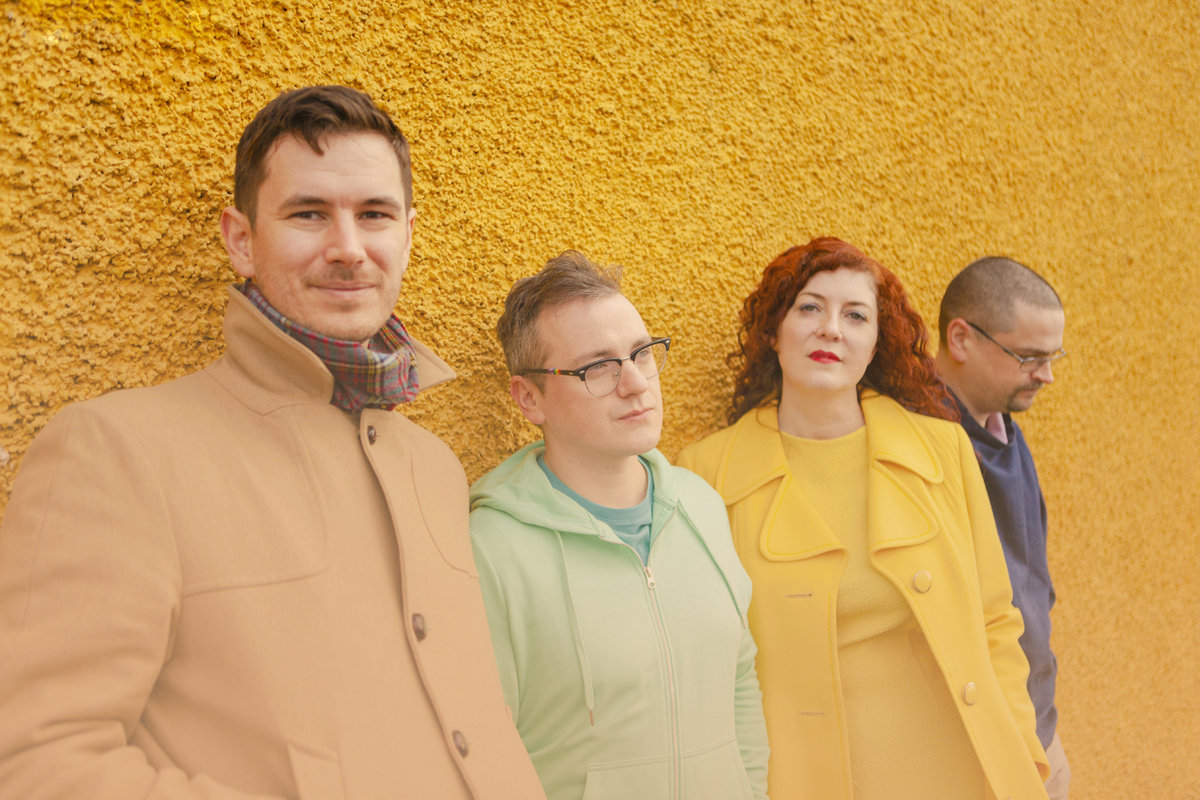
Hamburger is Tom, Katie, Liv, Fearghall, Mike and Doug. We are a good band, he new Hamburger EP is officially out today! 6 tracks of sweet indie pop, each song shows a distinct change in style. They’re a special band and I’m stoked to be helping with their first proper release, excited to see where they go from here!
Unfortunately the 12″ is slightly delayed but we’re still hoping to have them shipped before Christmas. So for now give it a listen, it’s streaming everywhere you’d expect!
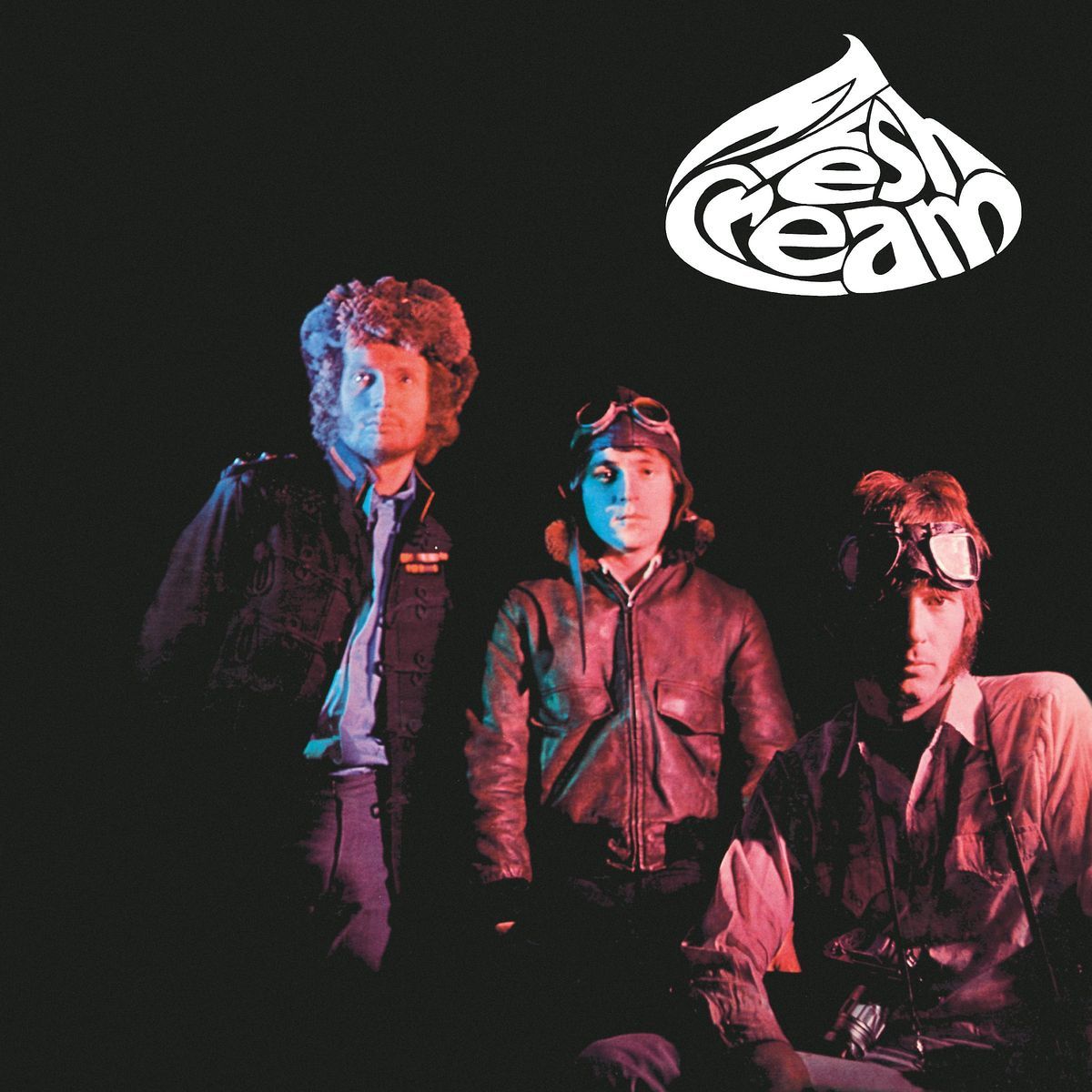
According to the Merriam-Webster dictionary, the most common definition of the word supergroup is “a rock group made up of prominent former members of other rock groups.” The word came into use either in 1968 or 1969, reportedly coined by Rolling Stone editor Jann Wenner—music historians seem to disagree exactly when the word first popped up, but they all agree that the supergroup Wenner was describing was Cream. From the first chord of the first song, the debut album by Cream was something new. Eric Clapton’s power chord gave way to handclaps and Jack Bruce’s humming, then Clapton returned in tandem with Bruce’s heady vocals and Ginger Baker’s mighty percussion. “I Feel Free” was up and running, and so was one of the most exciting debut records of the 1960s. “Fresh Cream” was released on December 9th, 1966.
Cream had already come and gone by the end of 1968 but in their brief run, just over two years, Eric Clapton, Jack Bruce and Ginger Baker undeniably changed the face of rock music.
In the spring of 1965, guitarist Clapton, having grown dissatisfied with what he perceived to be a move into a more pop-oriented direction for the Yardbirds, the group with which he’d made his name, left for John Mayall’s Bluesbreakers. As its name implied, the Mayall outfit was dedicated to the blues, Clapton’s favoured genre at the time. Clapton soon grew restless there too, and by the summer of 1966 he was looking for something new.
Cream were by no means a singles band, but “I Feel Free” was a definitive 45 of the era, on an album that oozed authentic, robust blues but was also full of light and shade. This was a trio of all talents, Bruce,Clapton and Baker all contributing to the song writing (as did Bruce’s first wife Janet Godfrey and his frequent collaborator Pete Brown), in addition to which they had a collectively trained ear for adapting the music of their heritage for the modern-day rock audience.
Hence new songs such as Bruce’s “N.S.U.” and “Dreaming,” and Baker and Godfrey’s “Sweet Wine” But here also were Clapton’s modernisations of “Four Until Late” and “Rollin’ and Tumblin,’” from the repertoires of two of his heroes (Robert Johnson and Muddy Waters respectively) and expert readings of Willie Dixon’s “Spoonful” and Skip James’ “I’m So Glad.” They were comfortable with instrumental formats too, as with the traditional “Cat’s Squirrel” and Baker’s theme piece “Toad.”
At the same time, drummer Ginger Baker, a member of the popular British blues band the Graham Bond Organisation, was also in the market for change. When he met Clapton, the two discussed starting a new band and Clapton mentioned bringing in Jack Bruce on bass. Baker was already quite familiar with Bruce—the latter had also worked in Bond’s group as well as with John Mayall.
Just in time for them to break up. Despite the success of Disraeli Gears and its follow up, the double LP Wheels of Fire (released in August 1968), Cream was already old news for its three members. Clapton had had enough and was looking for a new direction. Baker agreed, and on July 10th they announced they would be breaking up. They cut one last album, appropriately titled Goodbye, then played their final shows in October and November of ’68.
Baker was less than pleased with the suggestion though—the two had not gotten along well when they were in the Bond band and, at its worst, their spats had turned physical. Bruce interviewed in 2012, two years before his death, asked if his clash with Baker was overblown. “To a certain extent,” he said. “It did exist but I think those things are in every band, from that time, especially. People now are probably more tolerant of each other. We just didn’t give a shit and we were making it up as we went along.”
The album was a brilliant combination of the blues, jazz and rock resumés of all three members, in a line-up that introduced and defined the concept of the power trio. Except that the word “power” always threatens to overshadow the great subtleties, deftness of touch and sense of humour in Cream’s music.
Following the release of critically acclaimed new album ‘The Weight Of The Sun’ back in the Spring, Modern Studies used the time they’d have usually spent touring to create new music, resulting in two new EPs soon to be released on Fire Records.
Based on stray threads and thoughts from this period, Modern Studies reworked these seedlings remotely over the turning of seasons from Summer to Autumn this year. The EPs were recorded partly at the Glad Café in Glasgow with Emily Scott and Joe Smilie laying down piano melodies and percussion. Rob St John added guitars and modular synth, and an ambient track came from the processing of an accidental export of each ‘The Weight Of The Sun’ track playing at once.
Inspired by this collaborative process Rob and Emily began writing vocal melodies and collaborating on lyrics whilst Pete Harvey began mixing the new ideas in his Pumpkinfield studio and recording the basslines, cello and musical saw. “We shook off our usual song structures in favour of something repetitive, slow and heavy; life flows in endless song. We added chopstick drums, prepared guitars, harmonium, xaphoon, bowed clock gongs, chimes and violins from our homes.”
Split into two parts but arriving separately, Modern Studies first EP ‘Life Flows In Endless Song’ is diaphanous, adorned with the expansive sound of their recent releases whilst the second EP ‘The Body Is A Tide’ carries you into more ominous darker terrains providing another fine addition to the experimentalists’ expanding catalogue.
Modern Studies ‘Life Flows In Endless Song’ EP is digitally released on 10th December with the second EP due out in 2021.







 The Fat Angel Sings