Archive for the ‘CLASSIC ALBUMS’ Category

See the source image

Although James Taylor released his debut album for the Beatles’ Apple Records in 1968, it wasn’t until his second LP, 1970’s “Sweet Baby James” for Warner Bros Records, that most audiences were introduced to the singer-songwriter. The album, featuring such Taylor songs as “Fire and Rain,” “Country Road,” “Blossom,” and the title cut, was a significant success, commercially–it reached No3 on the U.S. sales chart–and critically–it received a Grammy Award nomination for Album of the Year from his peers.

By late 1969, folk musician Henry Diltz had been photographing many of the biggest recording artists in Southern California, in Los Angeles’ burgeoning Laurel Canyon music scene for several years, and had become a top choice for publicity pictures and album cover photos. He famously shot the cover for Sweet Baby James, which remains one of his very favourites. “Peter Asher called me one day and asked if I could come to his house and photograph this guy that he was producing,” he says. After experiencing success as one-half of the British pop vocal duo Peter and Gordon, Asher had become an executive for Apple Records and signed Taylor. He ultimately resigned his position with the label to become James Taylor’s manager.

“I went over and as I walked into the living room,” says Diltz, “James was sitting on the far side, sort of behind the piano with his back to the window, finger-picking ‘Oh, Susannah’ on his guitar. And being a musician, it just absolutely blew me away to hear this music box version of the song.” Taylor was still just 21 years old on this December 1969 day. “I couldn’t even believe it. It was angelic,” recalls Diltz. “I kind of sunk down in front of him and asked if he would play it again. The first pictures I took of him, he was sitting there.” The photographer then suggested that they “go outside somewhere” and they went over to a friend of Diltz’s who had a place called “The Farm.”

“It was kind of a musical commune,” he says. “There were little sheds, little outhouses and things. So we took pictures there. It was very quiet. We weren’t talking much. And at one point James leaned on this big post. He’s a tall guy and he leaned on it and it filled my frame… my horizontal frame… in a perfect way. I thought, ‘Holy cow… I’m taking black-and-white, because they wanted publicity pictures.’ “So I said, ‘Wait a minute, James, don’t move.’ “And I picked up my colour camera because in my mind I was thinking I want to show this in my slide shows for my hippie friends and I wanted to show this picture that was blowing my mind.”

“And when Peter saw those, he showed them to Warner Bros. and it became the cover. The art director blew it up, it was kind of grainy, and he cropped it into a square. Inside that was a pull-out, black-and-white, that had the lyrics on one side and it was like 12×24 when you opened it up and on the other side was that black-and-white picture of him from elbow to elbow, leaning on that post as a horizontal shot the way it ought to be. And that’s one of my absolute favourite portraits.”

Sweet Baby James was released just two months after the photo shoot, in February 1970. “Years later, when I see that photo on the wall, I love seeing that picture of James.
Thyla

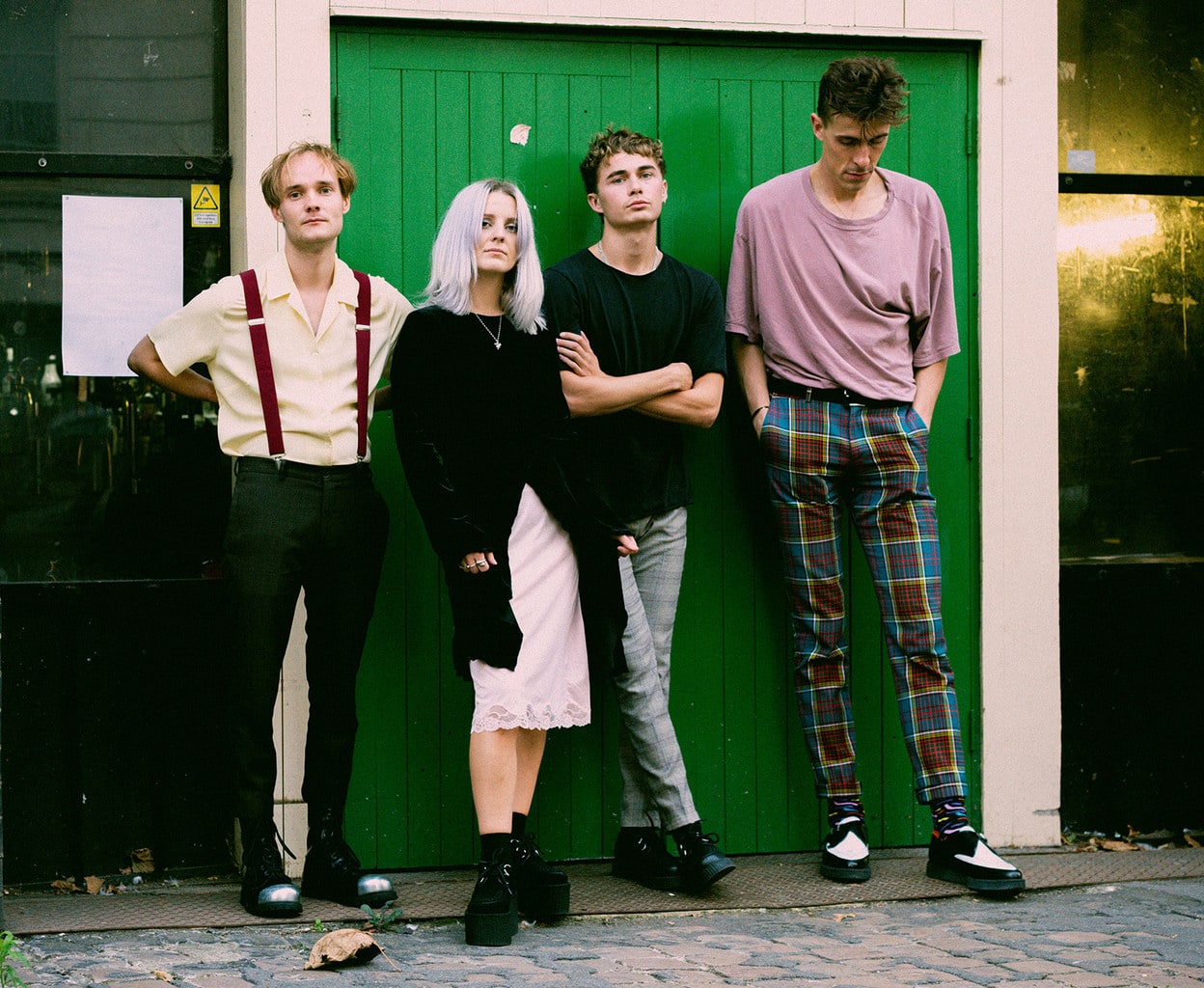
THYLA today bring the curtain down on their 2020 by offering us a look into how their 2021 is beginning to shape up. Locked away, like everyone else this year, the possibilities for a live show’s of any description were of course few and far between, if non-existent. When the chance for the Brighton band to film a live set at the city’s famous Green Door Store venue popped up, it provided the perfect opportunity to bring music from their long-awaited debut album into a live setting for the first time. In fact, this live version of new track “Dandelion” is the first song to be made available from the record.

Lead singer Millie Duthie offers these thoughts on the track: “Dandelion” is the angriest track on the album. It was written from a bass and drum instrumental jam which makes the rhythm section the focal point. Danny actually charted the drums out from the original phone recording and the parts were recorded identically on the album. The lyrical message of the track was inspired by work songs sung by female factory workers during WW2. The women used to sing to the repetitive rhythms of their monotonous labour as a way of coping.

First the heel and then the toe” is the first lyric of the song and it sums up our mantra entirely, keep putting one foot in front of the other and we’ll get there!”

Often found between the bric-a-brac and neon glow of their favourite Brighton drinking and planning den The Bee’s Mouth, as Thyla, Millie Duthie (vocals), Dan Hole (bass), Danny Southwell (drums) and Mitch Duce (guitar) find comfort in the sanctuary of their second home. Out of town, they craft explosive walls of sound from within a dock-side warehouse, culling and tailoring the sonic offspring with immaculate attention to detail.

Image may contain: 4 people, people standing, shoes, sky and outdoor

Dance Gavin Dance are a band that don’t really need introduction. Chances are, if you’ve been paying any attention to post-hardcore, alternative or math rock you’ve at least seen their name on a festival flyer or in a compilation. They are polarizing and one of the most love-them-or-hate-them bands within an otherwise palatable genre. If nothing else, however, Dance Gavin Dance are one of—if not the most prolific band in the genre, putting out records that average around 45 minutes seemingly every year. Their latest addition, Afterburner, clocks in at the high end, nearing an hour of riff-driven, artsy-yet-aggressive technically savvy post-hardcore. While the record’s singles have earned largely positive press, the biggest question in the minds of fans and skeptics alike remains: is Afterburner another archetypal Dance Gavin Dance record, or does it see the band breaking out of the hallmark sound and style they’ve crafted for themselves?.

 At its core, Afterburner is unmistakably a Dance Gavin Dance record. From the subtle opener, “Prisoner” through “Nothing Shameful” and “Into the Sunset,” Afterburner takes the same dancy, light-hearted energy that Dance Gavin Dance have built a career on and expands, giving listeners nearly an hour of tracks that balance catchy hooks with segments of scathing, white-hot aggression in perhaps the most fluid and natural manner the band has managed in years. Percussionist Matt Mingus continues to deliver drums that, for lack of a better means of explanation, inspire the listener to drop what they’re doing and shake their ass. This is abundantly true on singles “Lyrics Lie” and “Three Wishes.” However, Mingus’ penchant for subtle technicality and speed aren’t absent—“Into the Sunset” and “Parallels” both see him stepping up his game with percussion patterns vaguely reminiscent of Downtown Battle Mountain’s more metallic cuts.

Meanwhile, bassist Tim Feerick adds bounce and groove in heaping ladles throughout Afterburner, with songs like “Strawberry’s Wake” chief among them. Feerick’s work is an excellent scaffold for the fretwork from Will Swan, who, much like Dance Gavin Dance as an entity, needs no real introduction. Swan’s work on Afterburner is yet another addition to his impressive roster of records his fretwork has graced. While “Parallels” is a heavier and more abrasive cut from Swan, “Three Wishes” and “Strawberry’s Wake” are whimsical, balancing atmosphere and catchy, bouncy leads. Swan’s work behind the fretboard is fantastic as always—even if only a select few songs (“Parallels,” “Nothing Shameful”) see him really doing much different.

 Where Dance Gavin Dance have perhaps gained the most variety on a record-to-record basis is with their vocal element. With each new singer, the band have found ways to tweak and tighten up their instrumentation—with Craig, huge choruses and catchy leads dominated. With Travis, more “-core” friendly structure blended into a backbone of funky, dancy rock with near-reggaeton elements. With the addition of Tilian Pearson in 2012, the band’s renewed focus on R&B has taken centre stage—a trend that has continued with Afterburner, to a point. Pearson’s voice is still the soft, buttery croon with moments of rough-but-not-too­-roughness that listeners have spent the last eight years falling in love with. His work on “Lyrics Lie,” “Night Sway” and “Parody Catharsis” are examples of his best work yet—while “Calentamino Global” sees him using a different language altogether. Where Pearson is still…well, Pearson, what has changed is the comfort and fluidity with which he works alongside Jon Mess. The screamed and sung components of Dance Gavin Dance’s vocal dynamic hasn’t sounded this strong and natural since their early releases. Where “Parallel” is a Mess-heavy cut, “Parody Catharsis” and “Strawberry’s Wake” are excellent examples of the duo working in harmony—a harmony the likes of which hasn’t hit this smoothly in a decade.

 “Afterburner” is a Dance Gavin Dance record. Mess’ lines still make…tedious, if any sense. Pearson’s lines pull at the listener’s heartstrings. Mingus and Swan work as brilliantly together as they ever have. It’s catchy, artsy, bouncy and fun. Where it isn’t a departure from the band’s trademark, it’s perhaps the strongest collection of songs they’ve released in a long time, with barely a skippable moment to be found throughout the hour-long adventure. While it might not have the replay value or nostalgic appeal some of their previous records have, Afterburner sees Dance Gavin Dance working cohesively—a creative unit with all cylinders firing—and creating a strong, solid—albeit safe—contribution to their airtight discography.

Image may contain: 1 person, standing and outdoor

Pretty much every duo gets compared to the White Stripes anyway, but there’s certainly a dose of Jack White swagger to the fuzzy edges of opener Spit It Out and the hip-shake and hand-clap groove of Leadfoot.

Howlin’ Back gets even dirtier, but all this bluesy rock flex turns into something more expansive and grandiose, especially in the latter half of the album. The other as-yet unmentioned presence looming over Crown Lands is Led Zeppelin. Unlike other latter day devotees, however, they don’t evoke Zep in their full-on thunderous rock configuration, but rather the more intricate folk-tinged mysticism, which filters through on the textured Forest Song. You’re unlikely to catch vocalist and drummer Cody Bowles singing about squeezing his lemon ​‘til the juice runs down his leg. ​“I don’t need any more ​‘Hey Mamas’ in my life,” says Kevin, and these are songs with a little more depth than the primal urge fixation of most proto-hard rock. End Of The Road, for example, deals with the Highway Of Tears, an infamous stretch of road in North British Columbia where a lot of Indigenous women go missing with very little done about it. It gives an extra sense of intelligence and weight that sets this band apart.

We are so excited to release our debut Full Length Self-Titled LP! We made this in Nashville with Dave Cobb and it is an honest document of who we are as a band – tracked live off the floor in RCA Studio A. We did it right with no click or auto tune. We also just debuted the video for lead single Leadfoot. Thanks so much to everyone for their support,

“Spit It Out” and “Leadfoot”, from Crown Lands self-titled debut album out now.

Album artwork for Wake Up The Nation

Paul Weller’s incendiary Mercury Music nominated album “Wake Up The Nation” 2020 remastered edition is out now. Remastered by Jan ‘Stan’ Kybert and Paul himself, “Wake Up The Nation” includes the hit singles – No Tears to Cry, Wake Up the Nation, Find the Torch Burn the Plans, & Fast Car/Slow Traffic. Featuring re-styled cover artwork and packaging (with colour poster ), this version of “Wake Up The Nation” is available on CD and digitally now. The vinyl version is coming early 2021. 

Buzzing with guitars and gurgling effects, and built upon a succession songs that barely crest the two-minute mark, Wake Up the Nation doesn’t share much with the follow up “22 Dreams”, apart from that sense of adventure with Weller cramming a suite’s worth of twists into a song. As packed as these tunes are, they’re drawn with crisp lines; for as busy as these are, nothing feels cluttered, they’re all teeming with life. Many of the left turns arrive via the arrangements — witness how everything careens out of control after the chorus of “Grasp & Still Connect,” the elastic psychedelia of “Andromeda,” the updated New Orleans shuffle of “Trees’ — or the unexpected collaborations, whether it’s the tightly wound reunion with the Jam’s Bruce Foxton on “Fast Car/Slow Traffic” or bringing in My Bloody Valentine’s Kevin Shields to craft the dense dangerous heartbeat of “7&3 Is the Strikers Name,” but this isn’t window-dressing: the entire effect is 22 Dreams in reverse, contracting where its predecessor expanded, substituting introspection for action, swapping contemplation for excitement. Wake Up the Nation pulsates with an energy considerably different than the stomping rock & roll of As Is Now.

That was all musical muscle, but this is music of the mind that remains fiercely visceral, music that feels of a piece of Weller’s entire body of work, but is quite unique in its execution and impact.

“I was never happy with the mix on Wake Up the Nation, so when someone pointed out that it had been 10 years since it’s been out I thought it was a good opportunity to try a re-mix on it. I liked the chaos and intensity of the original but I could hear how much you couldn’t hear in it. I think the new mix reveals lots more parts that you didn’t hear in the original while still keeping the energy.” – Paul Weller

Wake Up the Nation was the tenth studio album from Paul Weller and was released on 19th April 2010. It was nominated for the 2010 Mercury Music Prize. The albums was dedicated to “absent friends – John Weller, Pat Foxton and Robert Kirby. It is the first of Weller’s albums since 1982 to feature contributions from Bruce Foxton, formerly of The Jam. Weller told Mojo magazine: “We’d both lost loved ones and without getting too spiritual that was the spur of it. I spoke to him this time last year when his wife Pat was ill and that broke the ice, then I invited him down to Black Barn (studio).

There was no big plan, it was easy, a laugh, and nice to see him and work together again. We just slipped back into it.” Wake Up the Nation received great acclaim from most music critics. In Metro, John Lewis awarded the album 4 stars out of 5 and commented: “Since turning 50 two years ago, the Modfather seems to be making the most adventurous music of his career, astounding even the most Weller-phobic critics … Most of the 16 tracks are short, sharp, clever and often wonderfully odd: check out bonkers music hall epic “Trees”, “In Amsterdam” or militaristic sound collage 7&3 Is The Strikers Name (an unlikely collaboration with My Bloody Valentine’s Kevin Shields). Weller loyalists will be reassured by the copper-bottomed dad-rock staples, while Style Council fans will love Aim High, his finest blue-eyed soul ballad in ages.

On his astonishing debut album “Live Forever”, Bartees Strange shapeshifts across songs with grace and charm, winning over even the most jaded listeners. In the album’s first section alone, the Washington, DC-based musician gallops through gut-wrenching indie rock on “Mustang,” floats airy rap over post-punk on “Boomer,” and waxes R&B dreams-turned-poetics on “Kelly Rowland” — the juxtaposition of which turns Live Forever into a revitalizing expanse. In many ways, it’s the sound of Bartees Strange building the world he’s always wanted without realizing it was even possible to do so, or that so many listeners want to join him there.

If the only thing you knew about Bartees Strange was that his debut EP, “Say Goodbye to Pretty Boy”, was comprised entirely of The National covers, you would probably draw some conclusions about what Strange’s music sounds like—and, given the specificity of The National’s niche, understandably so. “Come to a place where everything’s everything,” Bartees Strange sings on “Jealousy,” an apt description of a debut album that grabs from emo breakdowns, hip-hop cadences, indie-rock riffs, glitchy production and gentle minimalism. Though many of the songs are about feeling hemmed in, Live Forever is purposefully expansive, grounded in a singular vision. “These songs make sense because I’m Black and because my voice ties these songs together,” he told NPR Music. It takes conviction to gesture, as the title does, toward immortality, especially in a music industry that has never adequately valued Black musicians, that insists on categorization (“Genres keep us in our boxes,” he bemoans on “Mossblerd”), that says putting all your chips on your art is too big a risk. Luckily for us, Bartees Strange has it. 

But your assumptions would almost certainly be wrong. Sure, Strange can summon the same pulse of The National’s most kinetic anthems (see “Mustang,” which in a different era might have been a breakout hit). But his debut album, Live Forever, bristles at the idea of slavish adherence to a formula, even one as sturdy as The National’s. The D.C.-based songwriter has a broad swath of influences; Live Forever slinks through countless genres, blending energetic hip-hop, dynamic indie rock, amorphous jazz, and sinuous R&B with the confidence of an expert in each.

It’s unusual to see so many familiar elements joined in such a singular way. While Live Forever has the ambition of a newcomer, highlights like “Boomer” and the gleaming menace of “Flagey God” are the work of someone who knows exactly what he is doing.

http://

Bartees Strange is a producer and songwriter in Washington, D.C. His mother is an opera singer. His dad served in the military for decades. He travelled widely for his parents jobs — born in Ipswich, England 1989, his family did stints in Germany, Greenland, and a number of states across America before he hit his 12th birthday when they settled down in Mustang, Oklahoma

Bartees Strange – Live Forever Out Now

pFire Talkp

Chicago group Dehd have released a new music video for their “Flower of Devotion” track “Haha.” The summer camp–themed visual stars performer Alex Grelle as duelling camp counsellors, as well as the band’s Emily Kempf and Jason Balla. Check out the colourful clip below. In 2019, The Chicago indie rock trio Dehd released the sparse and scrappy album “Water”, with songs informed by the romantic breakup of bassist Emily Kempf and guitarist Jason Balla, accompanied by Eric McGrady’s one-tom, one-snare minimalism. For their exquisite follow-up Flower of Devotion, Dehd upgraded to a proper studio, refining their gritty alchemy without scrubbing it too clean. Kempf and Balla trade yearning, hiccupy vocals across riffs that reverberate like heat waves off asphalt, as McGrady thuds away through the humid air. “If this is all that we get, so be it,” Kempf insists, a bit of wistful resignation that doubles as a mission statement for their proudly stripped-down approach.

“‘Haha’ is about finding humour in impossible situations—sometimes you just gotta laugh it off,” Emily Kempf said in a press release. “The video is led by our favourite Chicago star, Alex Grelle, playing both lead roles. Becky and Gary, two head counsellors at the illustrious and wholesome Camp HaHa, are constantly in competition with each other. Here’s the wacky TWIST—only one knows about it! Oh Gary, when will you ever learn! Becky will always be No1!”.

Dehd issued “Flower of Devotion” in July, out now on Fire Talk following their 2019 LP Water.

Wmc

West Yorkshire band Working Men’s Club dropped their long-awaited debut in September. Their eponymous collection of songs is equal parts Calder Valley restlessness and raw Sheffield steel; guitars locking horns with floor-filling beats, synths masquerading as drums and Minsky-Sargeant’s scratchy, electrifying bedroom demos brought to their full potential by Orton’s blade-sharp yet sensitive production.

A rumble on the horizon. Gritted teeth, nuclear fizz and fissured rock. A dab of pill dust from a linty pocket before it hits: the atom split, pool table overturned, pint glass smashed — valley fever breaking with the clouds as the inertia of small town life is well and truly disrupted. Here to bust out of Doledrum, clad in a t-shirt that screams Socialism and armed with drum machine, synth, pedal and icy stare are Working Men’s Club, and their self-titled debut album.

Their eponymous collection of songs featured on the album, Be My Guest is an industrial, unrelenting force and a prime example of their indie-dance-hybrid that people (us included) can’t seem to get enough of.

In anticipation of their debut album released October 2nd), the band took to Manchester’s YES for a bruising, brilliant livestreamed gig last month and this pummelling pop number opened proceedings.

Standouts include the nonchalant existential groove John Cooper Clarke — centred around the realisation that yes, even the luckiest guy alive, the Bard of Salford himself, will someday die. The washily-vocalled, Orange Juicily-guitared White Rooms and People, Cook A Coffee which is like a lost Joy Division number from an alternate universe and the frenetic, pew-pewing A.A.A.A.

AOTY - Nova Twins

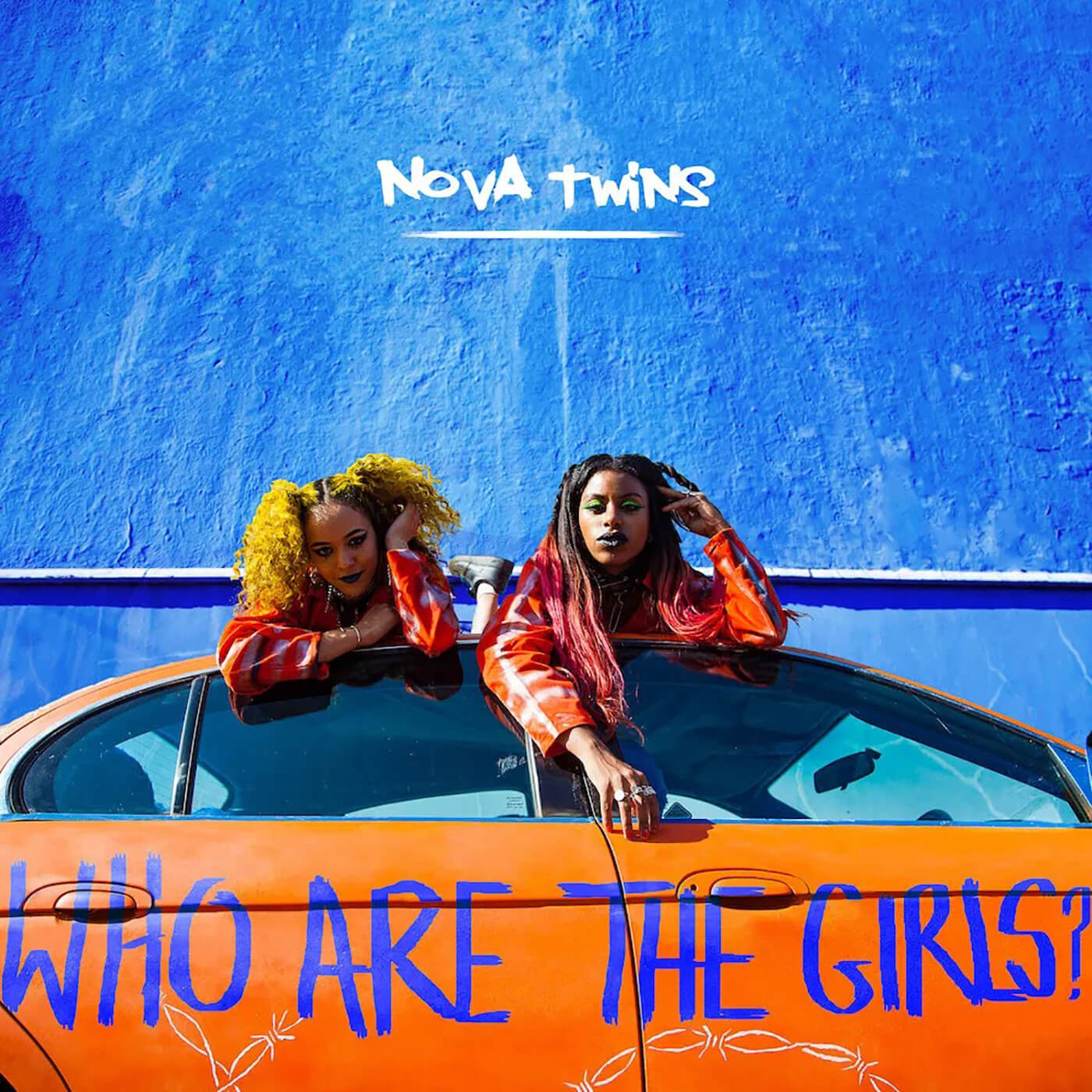
Heavy Music Award winners Nova Twins mix up riffs, hip-hop and nihilism in their hard-hitting music, and there’s no better example of this than “Play Fair” The track first appeared on Nova Twins’ debut album ‘Who Are The Girls?’, released earlier this year. The incendiary, utterly invigorating debut album from London’s Nova Twins formally introduced us to two future stars-in-the-making: vocalist and guitarist Amy Love and bassist Georgia South, a duo whose unwillingness to conform to genre makes them all the more enticing. A wild-eyed crossover of distorted rock and electronic influences, Who Are The Girls? made for one of the most exhilarating and assured releases of the year. It built mountains of coruscating noise via scything riffs, metal thrashing and bass pedals alone, and rewarded the listener with its defiant lyrical content, with the no-shit stance refrain of ‘Bullet’ being a blazing example: “It’s my body, it’s my mind, do what I want with it’. More power to them.

Speaking about the track, the band said in a press release: ‘It’s the ultimate revenge tune, about powering through any hurdles that stand in our way. It’s a call to arms; rise against those who try to hold you back! If life hands you an unfair game, don’t play fair.’

Nova Twins’ Amy and Georgia along with producer Jim Abbiss wrote, recorded and produced their debut album ‘Who Are The Girls?’ 

Reflecting on venturing into the studio for the first time with a ‘big name’ producer, Amy, Georgia and Jim delved into their “ropey” demos written in a tiny room at Georgia’s house, unravelling they formed their raucous balance of electronics, punk and heavy hitting guitar and bass riffs. We’re given a glimpse into the secrets of the duo’s mammoth pedal boards, revealing how they are so much more than extensions of their instruments. Check out their drum parts written for drummers with more than two arms, studio debates about a cowbell, and how many biscuits were consumed during the making of the album. 

Image may contain: 1 person, on stage, playing a musical instrument, guitar and concert

Lanterns On The Lake‘s Hazel Wilde has spoken to NME about their nomination for Hyundai Mercury Prize. The Newcastle band have scored their first Mercury nod with their acclaimed fourth album ‘Spook The Herd’ – which sees them employing their unique brand of atmospheric indie to dissect the hell-scape that we’re all living through. Rising nationalism and entire countries being let down by their leaders are all pertinent themes on the record, but they are always tackled with a degree of impressive subtlety.

“We never do sit down and say ‘this is what we’re going to write a record about’, because it feel too forced and not natural,” said Wilde.

“But that stuff, climate change and global politics is just what you see when you’re flicking through the news. Those things are on my mind and they’re the things we talk about as a band. It seeps into the music.” She continued: “We’re not political with a ‘capital P’ in the songs, but not in a social commentary kind of way – it’s a personal point of view. We’re not trying to lecture anybody or proclaim that we’ve got the big answers to massive questions. It’s coming from the point of view of people who are just living in these weird times.”

“We’ve just discovered that there’s been a big leak in our rehearsal room and a load of stuff is knackered. It would come in pretty useful for that! But we’re not thinking of the winnings – we’re just chuffed to be on the shortlist and have the album heard by more people,” Hazel explained.

And while fans had to wait five years for the arrival of ‘Spook The Herd’, it seems that the follow-up could be here sooner than expected. She added: “I’m really itching to get started on the next one. We do have a few ideas that we started on, but that had to take a backseat at the start of this lockdown. I’m itching to just getting cracking on the next one, I’m sure it will find its own way.”

Mercury Prize nominees Lanterns on the Lake released a live rendition of their beguiling track When It All Comes True ahead of their album and had us hooked. Of the track vocalist Hazel Wilde says: ‘Sometimes when you write a song you are creating a world in the same way a film maker or an artist painting a scene would. This is a twisted coming-of-age love story where we’re let in on the thoughts of what seems like a deranged narrator with a premonition.’

“Spook the Herd” was the fourth studio album to come from Lanterns on the Lake. It was released on 28th February 2020 under Bella Union Records.