‘FLEETWOOD MAC 1973-1974’ follows on from 2013’s 1969-1972 vinyl boxset that continues to bring the band’s early albums back into print. The vinyl collection includes three remastered studio albums: ‘Penguin’ (1973), ‘Mystery To Me’ (1973), and ‘Heroes Are Hard To Find’ (1974). The box set concludes with an unreleased recording of the band’s December 15th, 1974 concert at The Record Plant in Sausalito, California. The performance captures the band – Fleetwood, Welch and the McVies – on tour supporting their latest album, ‘Heroes Are Hard To Find’.
Originally, the show was simulcast on the legendary rock radio station KSAN-FM in San Francisco. For the vinyl version of this release, to ensure superb sound quality, Chris Bellman at Bernie Grundman Mastering cut the lacquers for all the albums from the original analogue masters, which are pressed on 140-gram vinyl and presented in replica sleeves made to look like the original pressings. As a final touch, the set also includes a 7” single with “For Your Love” (Mono Promo Edit) on one side, and the previously unreleased “Good Things (Come To Those Who Wait)” on the flipside.
The collection covers a five-year timeframe that encompasses several different band line-ups, from founding members MickFleetwood, Peter Green, John McVie and Jeremy Spencer; to later additions like Danny Kirwan, Christine McVie, Dave Walker, Bob Welch, and Bob Weston.
ORIGINAL BLUES MASTERPIECES HAND-PICKED AND CURATED IN COLLABORATION WITH THE ROLLING STONES. DONATION TO WILLIE DIXON’S BLUES HEAVEN FOUNDATION
COVER ARTWORK BY RONNIE WOOD
`If you don’t know the blues… there’s no point in picking up the guitar and playing rock and roll or any other form of popular music’ – Keith Richards
As well as being the biggest band in the world, The Rolling Stones are also the biggest champions of the blues, so who better to curate a compilation in collaboration with BMG and Universal, of the music that inspired them throughout their career?. “Confessin’ The Blues” collects together the greatest bluesmen ever and provides a perfect education to the genre. The track-listing on the various formats have been chosen by The Rolling Stones in collaboration with BMG and Universal and will be released on BMG on 9th November.
The Rolling Stones have long been supporters of the Blues from before the start of their career right through to their latest album, Blue & Lonesome which featured their interpretations of the classics, many of which appear in their original versions here on Confessin’ The Blues. Mick Jagger was an early fan of the Blues: “The first Muddy Waters album that was really popular was Muddy Waters at Newport, which was the first album I ever bought”. As such big supporters of the genre, the band and BMG/Universal have decided that 10% of BMG’s net receipts* from the sale of this album will be donated to Willie Dixon’s Blues Heaven Foundation non-profit organisation in the United States).
Confessin’ The Blues includes tracks by the biggest Blues pioneers including Howlin’ Wolf, John Lee Hooker, Elmore James, Muddy Waters, Chuck Berry, Big Bill Broonzy and Robert Johnson. All of these artists had an impact on the nascent Rolling Stones, be they influencing Keith’s guitar licks or Mick’s vocals and lyrics. As Ronnie Wood says: “That’s how Mick and Keith first got close as well, on the train coming back from college. They noticed each other’s record collection and it was, “Hey, you’ve got Muddy Waters. You must be a good guy, let’s form a band”.
The Book Pack version contains 5 x 10’’ vinyls and an extended essay by music journalist Colin Larkin. It also contains 4 removeable art card prints by noted blues illustrator Christoph Mueller. The album cover artwork comes courtesy of Stones guitarist Ronnie Wood who has added his own personal twist to the project by painting his interpretation of a Bluesman.
Confessin’ The Blues is a real musical education from those who know the genre best, the greatest living band on the planet, The Rolling Stones.
Touché Amoré recently held a livestream to celebrate the release of their new album “Lament”, seeing as how touring behind the album is put on hold until it’s safe to have live music indoors again (and presumably everyone’s vaccinated). If you happened to miss the stream when it happened, however, you’re in luck: Touché Amoré have archived the performance in its entirety, so you can watch the whole thing. It’s a full, 40-minute set performed inside of an empty venue, with a light show. The set includes the entirety of Lament, as well as non-album singles and a few highlights from their 2016 album Stage Four. It’s just the blistering post-hardcore performance you need, but almost certainly haven’t had the chance to see all year.
As part of the GRAMMY Museum’s Programs at Home series, Moderator Scott Goldman talks with Los Angeles post hardcore band Touché Amoré about the recent release of their fifth studio album, “Lament”. Since their formation in 2007, Touché Amoré has been burrowing through angst, alienation, cancer, and death throughout four adored studio albums. After over a decade of working through darkness, Lament, finds the light at the end of the tunnel. The album arrives as the follow-up to the band’s critically acclaimed 2016 release, Stage Four, which found vocalist Jeremy Bolm mourning and paying tribute to his late mother. Lament shines a light on what life for the band has been like since then, tackling themes of fragility, empathy, politics, and love while pushing forward a newfound sense of hope.
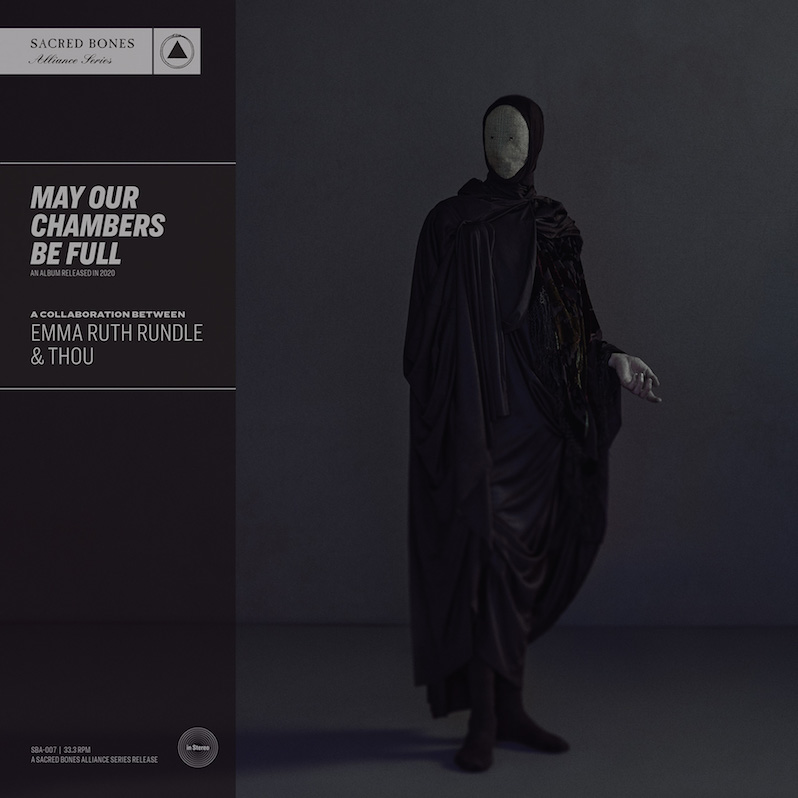
Given our previous adoration both of Emma Ruth Rundle’s immaculate On Dark Horses it seemed inevitable that this record would rate with us . Each artist has a hybrid tendency, the capacity to remain in the realm of hyperemotive dreamstates, a space induced by both heavy atmospherics and a keen post-psychedelic sense of melody. On paper, this pairing makes tremendous sense; each seems to sit on either side of a divide, one slightly heavier than the other while one sits more in dreamy shoegaze than the other, but each containing traces of the other. What you would hope, on seeing this dual-headline pairing on a record sleeve, is that each of them would pull those hidden elements out of the other, not just gifting Emma a greater weight but revealing in retrospect that weight as it existed in her earlier material, just as Thou has their evocative colours and dreamy post-psychedelia laid bare in their earlier works. And, thank god, that’s precisely what they did.
There’s something soothing, of course, with the highest rated record among us being a collaborative record in a period where human connection feels desperately, painfully needed. COVID has worn on all of us; it can be hard to convince yourself of the necessity of writing about music when people are getting sick and dying, easy to let deadlines for columns careen off the rails as you worry about aging family and distant friends. That sense of communalism at work, the implicit hope of the title, certainly struck a chord. But the most potent aspect of the record was, inevitably, its fullness. This is the trait, ultimately, that is most richly satisfying about each of these artists on their own. Emma Ruth Rundle nearly won a Best Song nod a few years back precisely for this reason, her songs billowing out into clouds of drama and history that feels so often more like stepping into another psyche, the voice inside of your head composing a new universe.
Thou, especially over the past three or so years, have been much the same, radically expanding their scope and sonic vision such that they feel like a limitless group no longer purely defined by heavy metal. These two in unison not only drew out hidden or obscured elements of each other; they intensified those obvious and shared elements as well, producing a record that is both at once the best record of the year and among the best of either artist’s bodies of work.
May Our Chambers Be Full straddles a similar, very fine line both musically and thematically. While Emma Ruth Rundle’s standard fare is a blend of post-rock-infused folk music, and Thou is typically known for its down-tuned, doomy sludge, the conjoining of the two artists has created a record more in the vein of the early ’90s Seattle sound and later ’90s episodes of Alternative Nation, while still retaining much of the artists’ core identities. Likewise, the lyrical content of the album is a marriage of mental trauma, existential crises, and the ecstatic tradition of the expressionist dance movement. “Excessive sorrow laughs. Excessive joy weeps.” Melodic, melancholic, heavy, visceral.
There’s a palpable sense of dread throughout Just Look At That Sky, the breathtaking LP from Chicago post-punks Ganser. Bassist Alicia Gaines and keyboardist Nadia Garofalo swap lead vocal duties and anchor these abrasive and stunning songs with divergent approaches between Garofalo’s biting punk delivery and Gaines’ ethereal alto. Tracks like “Shadowcasting” boast brooding atmospherics and foreboding lyrics from Gaines, where she sings, “The more I look at it / the worse it gets.” Elsewhere, the vibe gets more aggressive on the jagged single “Lucky,” where Garofalo shrieks, “You thought you’d be more than this / Thought you’d be OK” over screeching riffs. It’s everything you’d want in a post-punk LP.
Ganser understand tension better than most. The eight post-punk anthems that comprise their new album Just Look at That Sky (and one jazz/spoken word interlude) eschew the easy formula of build-and-release in favour of settling into moments of discomfort that mirror the uneasy narrators of their songs, drinking away their anxious existence and prepping for air disasters. Their rhythms are so taut they’re ready to snap, their guitar riffs caustic and unpredictable, so that when there is a moment of climax—like the surprising burst of horns on closer “Bags of Life”—it’s more than earned. I probably don’t have to explain why an album of aestheticized discomfort resonated as much as it did this year—anxiety loves company—but it’s more than a healthy outlet for nervous energy. It’s pure headphone catharsis.
Our new album ‘Just Look at That Sky’ is out now on Felte! Check out the videos from the album on their channel and stream the record on all platforms. Vinyl, CDs and merch available at Bandcamp.
If any band appeared poised to carry on the mantle of the Beatles at the dawn of the ‘70s, it was Badfinger. Signed to the Beatles’ Apple Records label, the British quartet—Pete Ham, Tom Evans, Joey Molland and Mike Gibbins–had already scored two Top 10 hits by 1971. The first, an irresistible, bubble-gum-y tune titled “Come and Get It,” had been written and produced for the band by Paul McCartney. The second, a punchy burst of pop-rock titled “No Matter What,” was penned by Ham, whose extraordinary song writing skills were fast becoming evident.
Such was the backdrop for Straight Up, Badfinger’s third LP. Released in the U.S. on December 13, 1971, the album is rightly considered a landmark in power pop. “That’s what the kind of music we made came to be called,” said Molland, speaking about the “power pop” tag with this writer in 2012, “We viewed ourselves as continuing in the tradition of the music we grew up with, which was everything up to and including the Beatles. That meant Welsh traditional songs, folk songs, American rock and roll and American vocal bands. We gave the music a hard edge, because we liked rock and roll, but we also made the songs melodic.”
Sessions for Straight Up got underway in January 1971 at Abbey Road Studios, with Beatles engineer Geoff Emerick assisting Ham and Evans with production. Under pressure to work quickly—a two-month spring tour in America loomed—the group completed 12 tracks by March. Powers-that-be at Apple rejected the recordings as “too crude,” however, and George Harrison was brought in to oversee a new round of sessions beginning in late May.
Harrison, an avid Badfinger fan, had already worked extensively with the group, enlisting all four members a year earlier as part of his ensemble on the 1970 opus, All Things Must Pass. “[Of all the Beatles], he was definitely closest to the band,” Molland later told Vintage Rock. Harrison’s overarching plan for Straight Up was to come up with something “more sophisticated.”
“George wanted to smooth things out,” Molland recalled. “He wanted to make more of an Abbey Road-style album. He took our original version of Straight Up, went through the songs and lyrics, and arranged them very much as he did his own music. And then he had us play those arrangements. It turned out great, although to this day I think some of the original versions are closer to what the band was about.”
Molland went on to praise Harrison as an “extremely pleasant” collaborator. “He didn’t act like a ‘rock star’ or a Beatle,” he said. “It was all very comfortable. He had no qualms about strapping on his guitar and playing a bit with us. In fact, I think he enjoyed doing that, as much as he enjoyed everything else. He worked on lyrics with us, and he got excited about the songs as they went down. He started sensing that it could be a hit record.”
Indeed, the majestic bridge on Straight Up’s signature ballad, “Day After Day,” consists of a slide-guitar duet played by Harrison and Ham. “Pete and I were in the studio, working out the parts, and George came in and asked if we minded if he played on it,” Molland remembers. “Of course we said, ‘No, we don’t mind!’ I gave him my guitar, and he just went to work on it.” All told, Badfinger completed five songs with Harrison—“I’d Die Babe,” “Sweet Tuesday Morning,” “Suitcase,” “Name of the Game” and “Day After Day.” Other personnel involved in the Harrison sessions included Leon Russell, whose piano work figures prominently in “Day After Day,” and Klaus Voormann, who contributed electric piano to “Suitcase.” Russell added guitar parts to the latter song as well.
Unfortunately, the sessions with Harrison screeched to a halt in late June, when the former Beatle flew to Los Angeles to work with Ravi Shankar. While in L.A., Harrison agreed to stage the “Concert for Bangladesh“, which effectively ended any chance of his resuming production work on Straight Up. With Harrison’s blessing, Todd Rundgren was brought in to complete the sessions. Despite (or perhaps due to) ongoing tension between Rundgren and the band, the project was completed in just two weeks. High points from the Rundgren sessions included “Take It All,” a Ham-written meditation on Badfinger’s performance at the Harrison charity concert; and “Baby Blue,” a fuzz-riff-driven masterpiece that’s since become a classic-rock staple.
Molland was pleased with the results, but he was also determined that Badfinger not lose its edge and become a pop lightweight. “We had pop hits, sure, and we were proud of them, but we wanted to be known as a rock band,” he later told Music Radar. “We didn’t want to be one of these twee groups like Marmalade. We placed a lot of value in having great songs, but when it came time to hit the stage, we played two-hour shows and got into jams, the whole thing. If you went to see Badfinger, you got a rock show; it wasn’t just about seeing this group that had some songs on the charts.”
Straight Up, of course, went on to achieve considerable commercial success—including a 32-week run on Billboard’s Top 200 Album chart. The single “Day After Day” peaked at #4 on the Hot 100 chart, and its followup, “Baby Blue,” fared nearly as well. Reviews of the album were generally favourable, and more importantly, the LP’s legacy and far-reaching influence has endured. All of which makes the overarching Badfinger story all the more sorrowful.
Sadly, what should have been a glorious and lengthy future for Badfinger ultimately became a tragedy of Shakespearean dimension. Victimized by unscrupulous management, the group split up just three years after Straight Up was released. Two of the band’s founding members—Pete Ham and Tom Evans—eventually took their own lives. For their many fans, the sorrow lingers, but nothing can diminish the brilliance of what Badfinger accomplished.
“We were forever striving to do something great,” said Molland. “We paid close attention to what our peers were doing, to what the bands of our era were doing, and we wanted to be as good as any of them. All these years later, the music of a lot of those bands hasn’t stood the test of time, but the Badfinger stuff carries on. I think Pete and Tom would be surprised. I know they would be very happy.”
Pete Ham – vocals, guitar, keyboards
Joey Molland – vocals, guitar, keyboards
Tom Evans – vocals, bass, guitar
Mike Gibbins – vocals, drums, percussion, keyboards
The album, ultimately titled Straight Up, was released in December 1971
These days, it’s hard to remain an anonymous musician, but no one seems to know who or how many people make up Sault. What we do know is that they released two albums last year—5 and 7 on the Forever Living Originals label, and critics can’t get enough of them. Both albums shared the number two slot on Bandcamp’s 100 best albums of 2019, and for good reason—their groovy, free-flowing arrangements are almost too good to be true. Simultaneously sounding like lost funk classics and modern mash-ups of bass-heavy soul, pop and post-punk, these records possess a rare exuberance.
Part of Sault’s brilliance is their effortlessness, and part of it is their ability to construct songs that are at once spacious and ornate. On their pair of recent Untitled albums, tumbling rhythms, dazzling keyboards and defiant vocals combine and radiate mastery at every turn. Track two on Untitled (Rise), “Fearless” is an embodiment of that mastery, opening with vigorous drums and enveloping neo-soul before blooming into a dramatic, string-laden disco-fusion track.
The song’s message itself is just as towering, as it captures the vast fears and hopes that come with the Black experience, along with the longing for one’s roots. The ability to digest all the horrific oppression against one’s people and still have a desire to wear a mask of fearlessness is inspiring and powerful, but also somewhat tragic that some feel any outward sign of dejection is just giving the oppressors a leg up.
We still know barely anything about the mysterious British collective SAULT, but their prolific streak gave us two Untitled albums that tapped into the grief and resilience that coursed through this year’s wave of BLM protests. Untitled (Rise), like its predecessor (Black Is), weaves together a vast spectrum of Black history and art, wielding jazz and funk and Afrobeat with a fluid, precise orchestration. With the details of SAULT’s personnel remaining obscured, (Rise) becomes the work of a collective voice even with all its different angles and timbres. Dizzyingly creative, mournful yet hopeful, effortlessly catchy and impeccably crafted, it’s an album equal parts rousing and cleansing for the traumas of 2020.
Choir Boy debuted with the warmly received album ‘Passive With Desire’ in 2017. After signing to Dais Records, Choir Boyfollowed up with the 2018 single, “Sunday Light” and a lovingly packaged reissue of the debut album on vinyl and CD. Choir Boy is Adam Klopp on vocals, Chaz Costello on bass, Jeff Kleinman on saxophone and keyboard, and Michael Paulsen on guitar.
Salt Lake City’s indie pop favorites Choir Boy return after four years with the release of their new cosmic album, Gathering Swans. An emotionally powerful record, full of poignant heartbreak and gently steeped in pop nostalgia, Choir Boy push their distinctive sound further, while tenderly romancing the unsuspected.
Since the release of their well-received 2016 debut Passive With Desire, of which Slug Magazine’s Erin Moore declares to be “…packed with songs that are infectious by way of their sound, as well as their emotion…”, and their 2018 single “Sunday Light”, the band evolved from singer Adam Klopp’s project accompanied by a rotating cast of players into a solidified, permanent line-up featuring long-time collaborator and bassist Chaz Costello, saxophonist and keyboardist Jeff Kleinman, and guitarist Michael Paulsen. Following a series of tours with such notable acts as Cold Cave, Snail Mail, and Ceremony, Choir Boy began writing their new album. Proving to be a worthy successor, Gathering Swans builds upon Choir Boy’s infectiousness with unique pop sensibilities and impeccable polish.
The first single, Complainer, demonstrates Klopp’s angelic voice effortlessly floating within the heart-wrenchingly sombre melodies, that in a tender state, will surely render tears. Lyrically, the song poses a form of wounded optimism, declaring “Oh my life, what a pitiful thing to hear…But it’s not that bad…I’m just a complainer”. Tracks such as Toxic Eye undoubtedly present the touching “choral-pop” sound that has come to be a hallmark of Choir Boy. Repetitious, layered vocal hooks that fade into the background, allowing the absence between breaths to be filled with the serene melody that embodies the foundation of Choir Boy’s appeal, demonstrating that the ethereal moments between the bright choruses and memorable hooks are as equally crucial and unforgettable as the lyrical content itself. A slightly more solemn ballad, Eat The Frog, skillfully adapts Choir Boy’s taste for nostalgia and translates such desire into a fully mature statement. The propulsive drive behind Eat The Frog possesses the emotional equivalent to sitting atop a hillside, just outside of the city, gazing at the sunset on a warm Summer night.
Creative, sincere, passionate and glaring with intention, Gathering Swans paints a bright, hopeful, and deeply heartfelt image that will most assuredly attract anyone who accompanies Choir Boy upon their journey.
Original Release Date: May 8, 2020
On his first album in almost four years, New York singer/songwriter Ben Seretan churns out stirring folk-rock with an impressive level of dynamism. The album highlight, “Am I Doing Right By You?” features layers of clamorous guitars and busy horns, but there are also bare passages that give way to Seretan’s hushed, introspective vocals. It’s an unpredictable thunderstorm—complete serenity one minute and ground-shaking bluster the next. With each listen, another sprinkle of intriguing, atmospheric sounds pours out, but its vast emotional capacity remains a constant.
“You will always be hungry / For something you can’t hold,” Ben Seretan sings in the opening minutes of his latest LP, an undeniably dynamic examination of how human beings seek meaning, whether in a higher power or in each other. The California-born, New York-based multi-instrumentalist and singer/songwriter longs for community on slow-blooming opener “1 Of” [prays] to the breeze / with asphalt in his knees” on the pedal steel-accented “Power Zone” yearns to properly honour a lover and/or deity on stunning centerpiece “Am I Doing Right by You?” harmonizes with his late friend, artist Devra Freelander, on the open-hearted “Shadow” (and others); and recalls being baptized on “Holding Up the Sun.” Youth Pastoral is a stunning album that draws its power from Seretan’s Neil Young-like vocals, his evocative, soul-baring songwriting, and a rustic, reverent hum befitting of its heavenward gaze.
A large, golden retriever puppy of a man who is frequently audibly delighted by the music that comes out of him. A secular youth pastor with high-fives at the ready who is most comfortable in cut-offs. Shreds hard, but not to show you that he can shred hard, but that life is wonderful. Proud subway commuter. Very gentle. He thanks you for listening.
Am I Doing Right by You? on Whatever’s Clever Released on: 2nd November 2020,
A standout example of Motherhood’s multiplicity is track four, “Four” (natch), which Jasamine White-Gluz called “perhaps my favourite No Joy song ever written.” Hypnotic electronic guitar notes buzz and bend, slowly multiplying into a dull roar of feedback punctuated only by piano and handclaps, like 90 seconds of a high-tension wire being pulled tight to the point of snapping—and just when you think it’s about to break, all that pressure just evaporates, with a serene trip-hop beat bubbling up in its place. Of course, it’s not long before that cathartic groove transforms, in turn, into a hard-nosed, post-punk instrumental, its caustic guitars swelling and receding like a pair of black lungs clinging to life.
“Four” by No Joy off the album ‘Motherhood’ out on Joyful Noise Recordings (world) & Handdrawn Dracula in Canada.





 The Fat Angel Sings