Soccer Mommy is the stage name of Nashville native, 20 year-old Sophie Allison, and today as well as sharing her brand new track ‘Your Dog’ she’s also announced her new album Clean will be out on 2nd March.
We’ve featured Soccer Mommy for a while now and her ability to make relatable and challenging music that hinges on the melodrama of normality has made her one of our ‘ones to watch’ for 2018.
It seems we were right to be keeping an eye on her output as she’s given us a belter of a new track. ‘Your Dog’ has one key line that boils with tension and underlying fury, it’s this “I don’t want to be your fucking dog,” and it sets the tone for the whole track.
The song menaces and meanders across emotions, Allison says “The song comes from a feeling of being paralyzed in a relationship to the point where you feel like you are a pawn in someone else’s world. The song and the video are meant to show someone breaking away and taking action, but at the same time, it’s only a quick burst of motivation. It’s a moment of strength amidst a long period of weakness.”
Speaking of her first full length proper Allison said “I’d never made a full album before, just EPs and random tracks thrown together. I wanted it to be a lot more cohesive than the rest of the stuff that came before,” explains Allison. “I wanted to make something that was a full piece of my life, that addressed similar themes and held together as a whole.”
Sophie Allison – Guitar, vocals, bass
Julian Powell – Lead guitar
Nick Brown – Drums
Gabe Wax – Piano, synth, mellotron, bass, guitar, drum programming, percussion
The result is Clean, an album that presents Soccer Mommy as a singular artist, wise beyond her years, with an emotional authenticity of her own. Clean will be released on March 2nd via Fat Possum She’s also due out on a UK tour in the Spring, the dates of which are below.
But for now, take a moment to enjoy ‘Your Dog’
March
2nd – London, UK – Rough Trade East
3rd – Leeds, UK – Headrow House
4th – Manchester UK, The Castle Hotel
6th – London, UK – Moth Club
7th – Brighton, UK – The Hope
Mysterium is the eighth album from Nashville’s ambient guitar duo, Hammock. While each of the group’s albums has been defined by a specific sound—minimal and uncluttered on Maybe They Will Sing for UsTomorrow, and nearly approaching conventional dreampop on Chasing After Shadows…Living with the Ghosts—on Mysterium, the band’s members Marc Byrd and Andrew Thompson are just as focused on thematic unity in their lyrics. Grief and tension abound on Mysterium and, unlike the band’s previous offering, Everything and Nothing, the song structures and arrangements feel a little less straightforward. Instead, the new record plays like a requiem in both its tone and its sweeping scope.
That change is intentional. The album is dedicated to Marc Byrd’s sister, whose son died in 2016 from NF2, an aggressive tumor. Because facing tremendous loss can evoke silence, the album’s title, Mysterium, indicates the lack of resolution—a mystery. The album was created both in the midst of, and as a response to, Byrd’s grief; it’s in no hurry to arrive at any kind of well-meaning platitudes. “Silence is reverence, and space is reverence,” Byrd says. “And if there’s nothing else, there’s a sense of reverence in this record for life and death. The thing that captures that reverence is the moments between the notes.”
That’s not necessarily what the band envisioned when they started recording. Initially, they intended to make an electronic album that Byrd describes as “more in the vein of [debut album] Kenotic.” With the assistance of MattKidd (whose own project, Slow Meadow, records for Hammock Music), ambient electronic sounds open “Things of Beauty Burn,” the first song Byrd and Thompson recorded for Mysterium. But after the passing of Byrd’s nephew, the band felt it was inappropriate to continue in the same direction.
Anyone who thinks the days of glam, garage and blistering rock and roll are relegated to classic rock “deep tracks” satellite stations hasn’t spun Ron Gallo’s solo debut. The young ex-Toy Soldiers guitar-slinging singer-songwriter brought his tough Philadelphia bona fides when he relocated to Nashville, churning up a rugged racket of riveting riffs without the tentative self-consciousness you might expect from a first album. When he closes the set asserting “All the Punks are Domesticated,” with a laconic talk-sung sneer, it’s clear he won’t be ending up there. These songs, full of sweat and swagger, show why. check out the single release another new 7” coming out . This one is a split with our dear friends Naked Giants. Then we go on tour together
In 2015, 20-year-old Memphis singer-songwriter Julien Baker stunned folks with her debut album, Sprained Ankle. The spare arrangements, plaintive vocals, and candidness about how she relates to everything from significant others and herself to times of trouble and God’s mysterious presence in her life were all striking revelations, especially from such a young voice.
Her follow up album releaseTurn Out the Lightsfinds Baker seasoned far beyond what you’d expect two years later. Her growth as a lyricist astounds, and she’s expanded her still-minimalist instrumentation to include piano and ambient parts and now trusts her voice to harmonize and draw attention to itself by raising her volume as songs call for it. No record out this year boasts a more affecting and beautiful one-two punch than singles “Appointments” and “Turn Out the Lights”, and few emerging singer-songwriters have us as excited as Baker.
The 2nd video from Julien Baker’s long-awaited 2nd album, the titular track “Turn Out The Lights”, directed by Sophia Peer. ‘Turn Out The Lights’ is available now.
From the new album ‘Turn Out the Lights’ out October 27th on Matador Records, Essential Tracks: “Appointments”, “Turn Out the Lights”, and “Everything That Helps You Sleep”
Praised as “one of the unsung heroes of American pop music” Despite a life marked by tragedy and a career crippled by commercial indifference, the singer/songwriter’s slim body of recorded work proved massively influential on the generations of indie rockers who emerged in his wake.”
He was one of the pioneers of power pop – and his catalog of proto-alternative rock has inspired the likes of Beck, R.E.M., Teenage Fanclub, Primal Scream, Afghan Whigs, Pete Yorn, Wilco, The Posies, and The Replacements, all of which have covered his music or name-dropped his band, Big Star, in the press. His name was Chris Bell.
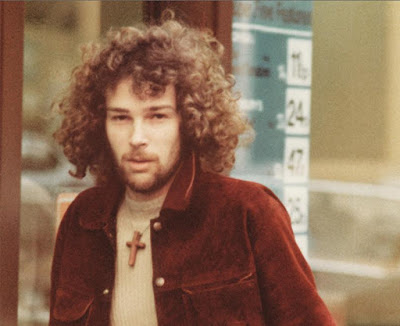
Christopher Branford “Chris” Bell (January 12th, 1951 – December 27th, 1978) was born in Memphis, Tennessee to a well-off family. He was a sharp, funny, deeply introverted and sexually confused young man, who dreamed of rock stardom.
Omnivore Record’sLooking Forward: The Roots of Big Star Featuring Chris Bell was the first of several planned releases from the Grammy Award-winning label showcasing the talents of Big Star co-founder Bell, who passed away in 1978. The label recently announced their next two Bell projects: a new expanded edition of the quintessential Bell collection I Am The Cosmos, and a definitive archive of his work as a 6LP box set.
Prior to Rykodisc’s I Am The Cosmos in 1992, only two of the tracks (the title cut and “You and Your Sister”) were released during Bell’s lifetime; both tracks were pressed on a single released shortly before a car crash took the Memphis hero’s life. (Much of it was recorded long before that, after Bell had departed Big Star and decamped to Paris in 1974 and 1975.) In 2009, Rhino Records also issued a double-disc Cosmos set that featured not only alternate versions and mixes of the album’s original tracks but also cuts by Bell’s pre-Big Star bands Icewater and Rock City for context. As those tracks (and more) are now a part of Looking Forward, this new double-disc edition sweetens the deal with another 10 tracks, most previously unreleased. Compilation producer Alec Palao and writer Bob Mehr provide liner notes, and a clear vinyl version of the original album (the first release of this material on the format in years) will ship day and date alongside the 2CD set.
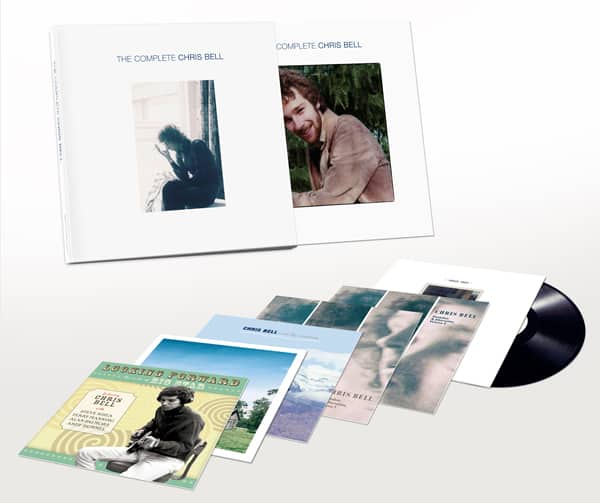
The material of Looking Forward and I Am The Cosmos will also be featured on a comprehensive vinyl box set, The Complete Chris Bell, to be released later this fall. That set includes the vinyl premiere of Looking Forward (reconfigured to include only the Icewater and Wallabys tracks, plus Bell’s solo “Psychedelic Stuff”); a separate vinyl debut of the material from Rock City, the I Am The Cosmosvinyl (as well as the material from the bonus disc on two LPs); and, exclusive to this set, a newly-discovered career-spanning interview with Bell, conducted by journalist Barry Ballard in 1975 and sourced from his own personal copy of the conversation.
Palao and Mehr again offer notes for the box (alongside an excerpt from Rich Tupica’s forthcoming biography of Bell), all tracks are remastered by Michael Graves, vinyl was cut at Ardent Studios by Chris Jackson and Adam Hill, and Palao, Hill and Omnivore head Cheryl Pawelski serve as the box set’s producers, with the full cooperation of Bell’s estate (as run by his brother David). I Am The Cosmos is back in print , while The Complete Chris Bell is available November 24th!
In 1964 and 1965, Bell played lead guitar in a British Invasion-influenced group called the Jynx (the name is a takeoff on The Kinks) with local musicians, including lead vocalist Mike Harris, rhythm guitarist David Hoback, drummer DeWitt Shy, and bassist Bill Cunningham, and later, bassist Leo Goff. Other lead vocalists at some of the group’s shows and rehearsals (though not present on their recordings) included local teens Ames Yates, VanceAlexander, and Alex Chilton. Chilton, who attended many Jynx shows and sang lead vocals at a couple of gigs, soon joined the Box Tops with Cunningham, as the Jynx split up in 1966. Here are the Jynx, with Bell on lead guitar, performing Little Girl:
Bell continued to perform and record in Memphis throughout the rest of the decade, including a stint in the heavier psych-rock band Christmas Future. By the late 1960s, after attending UT in Knoxville, he had turned his focus toward writing original songs. The group later known as Big Star stemmed from two Bell band projects that began in the late 1960s, while he recorded and performed live in groups, named Icewater and Rock City. These groups featured a revolving set of musicians including Jody Stephens, Terry Manning, Tom Eubanks, Andy Hummel, Richard Rosebrough, Vance Alexander, and Steve Rhea. Here are Icewater and All I See Is You:
Bell asked Alex Chilton to join several months after the group had started performing. Eventually, during a period of recording demos and tracks for their first album, the group settled on the name “Big Star.” The lineup for BigStar’s first album was composed of Bell (guitars/vocals), Chilton (guitars, vocals), Hummel (bass, vocals), and Stephens (drums, vocals). Bell and Chilton wrote most of the group’s songs, with occasional writing contributions from Hummel and Stephens.
Big Star were, in the words of Robyn Hitchcock, “a letter posted in 1971 that didn’t arrive till 1985.” Crowned the inventors of power pop, they were, over the course of three critically acclaimed but commercially unsuccessful albums, much more than that. Nobody could turn pain into beauty like Big Star.
In 1971, the 20-year old Alex Chilton has already been a star. He was the front man of The Box Tops, a manufactured rock combo who had one the biggest hits of 1967 with The Letter. His teenage stardom meant that he’d already met Charles Manson, toured with the Beach Boys, and watched Hendrix from the side of the stage before he could legally drink. He was an “art brat” who’d been given peyote as a kid and was already living a remarkable life. But witnessing the guitar shredding, five-part harmonizing experimenters of rock had left him feeling uncomfortable. He was essentially in a boy band. He needed to step up and make his own music. So he quit The Box Tops and after a brief spell in New York, returned to his hometown of Memphis to make music he wanted to listen to.
Just to remind you what a great pop group The Box Tops were, here are a few of ther hits. Their first hit was their biggest, surely one of the classic singles of the 60s (and of all-time). Here’s The Letter, with 16-year-old lead singer Alex Chilton:
Here’s their third single, which was their second-biggest hit, “Cry Like A Baby”:
Chris Bell obsessed with creating perfect, multi-layered pop music. To do this, he had the studios of ArdentRecords, run by whizz kid engineer John Fry, who let the local musical kids use it at night for their own sessions. Fry taught Bell how to multi-track. Ardent had become a subsidiary of the legendary Stax Records, taking on some of its recording sessions and, in return, agreeing to be its pop/rock imprint. The studios and – bizarrely -TGI Fridays, were the twin pillars of a raucous Memphis counter-culture scene that was big on drinking, sexual experimentation and drugs, particularly ludes, Mandrax and related pills.
“That pill culture is unique to Memphis”, says director and screenwriter Drew DeNicola. “It’s what killed Elvis and it’s what those Big Star boys were doing too. Everyone knew a crooked doctor. Polite society would go to bed and then, in the margins, the alternative kids could do what they wanted, as long as they made it to Sunday lunch with Momma.”
It was out of this southern stew that Big Star’s first album, #1 Record, came. The band’s name had come out of desperation, taken from a chain of supermarkets, one of which sat across the street from Ardent. Chilton and Bell put their heart and soul into the album, with Jody Stephens and Andy Hummel on drums and bass respectively. It’s an album of perfect pop songs, suffused with pain and melancholy, up-tempo and down-tempo, beautifully layered, subtle and all over the place genre-wise.
On its release in June 1972, #1 Record immediately received widespread acclaim, and continued to do so for six months, although an inability by Stax Records to make the album available in stores meant it sold fewer than 10,000 copies. Record Worldcalled it “one of the best albums of the year”, and Billboardcommented, “Every cut could be a single”. It wasdescribed it as one where “everything falls together as a total sound” and one that “should go to the top”. In 2003 it was ranked on Rolling Stone magazine’s list of the 500 greatest albums of all time.
Eight years earlier in 1964, when their home town of Memphis, Tennessee became a tour stop for The Beatles, primary songwriters Alex Chilton and Chris Bell were thirteen years old. They went to the show together – and it made them see the light. Thirteen, a song Chilton wrote nearly six years after he first witnessed that Beatles performance, referred to the event with the line “Rock ‘n’ roll is here to stay”.
Heavily influenced by the UK band, the pair – Bell in particular -wanted to model their songwriting on the Lennon–McCartney partnership, with the result that they credited as many songs as possible on Big Star’s debut album to “Bell/Chilton”. In practice, they developed material incrementally in the studio, each making changes to the other’s recordings. Drummer Jody Stephens recalled, “Alex would come in and put down something rough and edgy and Chris would come in and add some sweet-sounding background vocals to it.” The pair also each contributed songs individually composed before Big Star was formed, Bell bringing Feel, My Life Is Right, and Try Again, and Chilton, The Ballad of El Goodo, In The Street, and Thirteen.
Here’s Feel, the album’s opening track:
… and here’s the song with which Alex “auditioned” for the band: Watch the Sunrise.
The album’s short closing track, ST 100/6, is the only song where Alex Chilton and Chris Bell share lead vocals (lead vocals are divided among them on the rest of the album).
The critics loved the album but the public couldn’t get their hands on it. Press attention focused on former teen star Chilton. Chris Bell, the driving force behind the album, was relegated to the sidelines. The failure of #1 Record devastated him. He was tormented by his sexuality: he was probably gay but was unable, in Tennessee, to deal with it, and there were rumours in Memphis that he was in love with Chilton and that the latter’s lack of reciprocation hastened his departure from the band, which came not long after #1 Record.
The frustration at #1 Record’s obstructed sales contributed to tension within the band. There was physical fighting between members: Bell, after being punched in the face by Hummel, retaliated by smashing Hummel’s new bass guitar to pieces against the wall. Hummel took revenge at a later date: finding Bell’s acoustic guitar in the latter’s unattended car, he repeatedly punched it with a screwdriver. In November 1972, Bell quit the band. When work continued on songs for a second album, Bell rejoined, but further conflict soon erupted. A master tape of the new songs inexplicably went missing, and Bell, whose heavy drug intake was affecting his judgment, attacked Fry’s parked car. In late 1972, struggling with severe depression, Bell quit the band once more, and by the end of the year Big Star disbanded.
After a few months Chilton, Stephens, and Hummel decided to reform Big Star, and the three resumed work on the second album. The title chosen, Radio City, continued the play on the theme of a big star’s popularity and success, expressing what biographer Robert Gordon calls the band’s “romantic expectation”
Although uncredited, Bell contributed to the writing of some of the album’s songs, including O My Soul and Back of a Car. Shortly before the album’s release, Hummel left the band: judging that it would not last, and in his final year at college, he elected to concentrate on his studies and live a more normal life.
For all the trouble surrounding it, Radio City met with general acclaim. Critics judged the musicianship “superb” It was called “a collection of excellent material”; giving it an “A” rating, Robert Christgau calls the album “Brilliant, addictive”, observing meanwhile that “The harmonies sound like the lead sheets are upside down and backwards, the guitar solos sound like screwball ready made pastiches, and the lyrics sound like love is strange,” concluding his review with, “Can an album be catchy and twisted at the same time?”
However, sales were thwarted (again!) by an inability to make the album available in stores. As a result, the album achieved only minimal sales of around 20,000 copies at the time.
September Gurls is the best track on the album, almost as good as their best track overall, Thirteen.
Before returning to Bell’s solo career, I would be amiss not to present Big Star’s legendary third album known as Thirdor Sister Lovers. It was recorded in 1974. Though Ardent Studios created test pressings for the record in 1975, a combination of financial issues, the uncommercial sound of the record, and lack of interest from singer Alex Chilton and drummer Jody Stephens in continuing the project prevented the album from ever being properly finished or released at the time of its recording. It was eventually released in 1978 by PVC Records.
After two commercially unsuccessful albums, Third documents the band’s deterioration as well as the declining mental state of singer Alex Chilton. It has since gone on to become one of the most critically acclaimed albums in history and is considered a cult album.
You have to take into account that most of the songs in Third/Sister Lovers are practically demos. I wonder what would be the final form of these songs, had Alex decided to properly complete the album…
Chilton went on to have an interesting solo career, but commercial success always eluded him. In truth, he wasn’t really aiming for it. He also briefly reformed Big Star, as well as regrouped with the original Box Tops for a number of tours. He was taken to the hospital in New Orleans on Wednesday, March 17th, 2010, complaining of health problems, and died the same day of a heart attack. Four months later, Hummel died of cancer.
Back to our man, Chris Bell. After leaving Big Star, Chris would attempt suicide, abuse strong sedatives and use religion to suppress doubts around his sexuality amid an inherently homophobic Deep South.
Vocally, to some, Bell was an icon trapped in the wrong era. “At times Chris could be so punk rock and he’d just make this painful noise from the back of his throat like a Cobain,” beams Adam Hill, an engineer at Ardent, who remastered Bell’s recordings for posthumous collection I Am The Cosmos. “On grungy solo track Better Save Yourself, Bell contorts his voice, sometimes shouting, to bellow: “You should’ve gave your love to Jesus, it couldn’t do you no harm. You better save yourself, if you wanna see his face.” This was songwriting that had little time for affectation. Whereas on a song like Though I Know She Lies you could be listening to Dylan on Lay Lady Lay. He always pushed his vocal cords to their very limit.” On the delicate You And Your Sister, Bell pours his heart out about an unrequited love. When he reflects “Plans fail every day,” to backing vocals by Chilton, who remained an acquaintance, you sense heartbreak of both a romantic and professional nature. And Speed of Sound – with its existential dread of “The plane goes down, it will not land. The pilot’s dead, nowhere to be found”—hits you right in the gut, writing the angsty blueprint Elliott Smith would later follow to a tee.
Seen by friends as an intervention, Bell’s brother David took him across Europe in the mid-70s, armed with these solo demos. Bell, an anglophile who imported copies of NME, would get the chance to work with hero Geoff Emerick—a pivotal engineer on all the best Beatles albums—at the legendary Air Studios. “It was good for him to go to Europe but I sense he was still in a really dark place. He was an impatient artist after Big Star,” says Van Duren, a fellow Memphis musician. With a record deal not forthcoming, Bell accepted he needed a regular 9-to-5 upon his return to Memphis. For a while, he worked for his father’s hamburger chain Danvers—a heartbreaking scene for friends who understood his talent.
While Bell was back home flipping burgers, Big Star were blowing up in the UK, with NME unable to keep up with reader letters requesting copies of their first two albums. In fact, demand for both albums was so high they were eventually reissued in a gatefold release. “I called Chris and it was one of the only times I remember him being really happy, as all those Beatles Parlophone pressings he loved had the same address on the back,” remembers Stephens, noting that the reissue said “Pressed by EMI at Hayes, Middlesex” on the back. However, Bell’s adulation would be short lived.
“When I came back to Memphis we made plans to meet at the studio. However, when I arrived he had already left,” recalls Stephens. Friends and family still don’t know for sure what happened in the early hours of December 27th, 1978, the dark mystique of Bell’s music holding even in death. “What’s weird is I decided to drive back and when I got to the Sears department store, I could see police cars with their lights flashing and there was this car in the middle of the road. A pole had fallen and completely crushed the left side of the roof. I immediately thought ‘I shouldn’t look.’ The next day John [Fry] phoned to say Chris had died in a car accident. I had passed by Chris.” He was 27, that fateful age.
Unreleased for over 15 years, I Am the Cosmos, Bell’s only solo album, is nevertheless an enduring testament to the brilliance of Chris Bell; lyrically poignant and melodically stunning, this lone solo album is proof positive of his underappreciated pop mastery. The title track is a harrowingly schizophrenic tale of romantic despair:
We end this story with the album’s highlight, You and Your Sister – which features backing vocals from none other than Bell’s Big Star mate Alex Chilton – which is simply one of the great unknown love songs in the pop canon, a luminous and fragile ballad almost otherworldly in its beauty.
Lo-fi music pioneer R. Stevie Moore & power pop icon Jason Falkner. “Make It Be” was released on Friday, March 10th, 2017. The majority of songs were composed by Moore with one Falkner composition, a Roger Ferguson/Moore co-write, a surprising cover of “Don’t You Just Know It”, five co-writes between the two sprinkled throughout. The recording was done by Jason Falkner at his Rhetoric Studio in Hollywood CA.
Before they met up, both artists had long and storied careers, but their paths to cult status take completely opposite routes. Moore is widely considered to be the godfather of the DIY recording aesthetic. Dubbed a “lo-fi legend” by the New York Times, he started his career in the late 60’s, gaining widespread underground recognition during the 70’s punk explosion. Anticipating the viral internet era, Moore made innumerable cheap but brilliant videos. Luckily, many of them eventually found their way to YouTube where a whole new generation of fans discovered his work including the likes of MGMT, Mac Demarco, the Vaccines and collaborator Ariel Pink.
After a stint playing with a later line-up of the Coasters and trying his hand as a Nashville session player, R. StevieMoore realized he wasn’t cut out for the life of a conventional working musician. As he said in the documentary film, *I AM A GENIUS (AND THERE’S NOTHING I CAN DO ABOUT IT)* “So boring. It was not me at all. If you have to work a day job, what could be better than doing music even if you hate it? …At the same time I started smoking pot as a twenty year old and I’m playing this acid rock on headphones and reel to reel recorders. It just exploded!”. He’s recorded more than 400 albums including the classic *Phonography* and *Delicate Tension,* releasing them via various labels as well as on his own on handmade cassettes and CDRs.
On the other hand, Falkner was involved in various major label deals as a group member and solo artist. He started with Paisley Underground pioneers The Three O Clock, joined supergroups Jellyfish with Andy Sturmer and Roger Manning, and the Grays with Jon Brion, finally scoring a solo deal with Elektra. He’s gone on to release numerous solo records and has worked with a wide range of artists, including Beck, Air, Brendan Benson and Paul McCartney.
“Make It Be” makes clear very quickly that their voices, performances, and arrangements are a match made in heaven long overdue to be realized here on earth. The duo immediately explodes on the lead off track with “I H8 Ppl” and proceeds to take listeners on a journey through rock, pop, and experimental music. Anchors such as “Play Myself Some Music” and “Sincero Amore” keep the effort rooted in insanely catchy songwriting, while spacey instrumental interludes and spoken-word pieces push boundaries of what could be considered pop music. Their raucous cover of the New Orleans classic “Don’t You Just Know It” shows the kind of fun the two had together.
“He was only able to be here for two weeks,” Falkner recounted , “so I just kind of concentrated on getting as much of him on tape as possible, and then I’m adding my Jason half to it. But it is a duo, it’s not just a record that I’m producing. So that’s very exciting.” As well as adding multiple instrumental tracks, Jason sang lead on a number of R. Stevie’s compositions. (Note: a whole new documentary “Cool Daddio” about Stevie is set to be released in 2017).
Moore explains how these strange bedfellows finally got under the creative covers together:
“We unknowingly shared a mutual admiration bigtime and finally got in direct contact mid 2000’s. I think my friend Tim Burgess was the first one to turn him onto my stuff. Recording with him was a dream, totally incredible. We showed a similar sense of both crazed adventure and textbook pop discipline. The sessions moved fast, just gleefully piling on overdubs. I am grateful he allowed me to just dive into any left-field idea I felt. JF’s a marvelous producer and killer drummer, but I don’t think he usually gets quite as much creative leeway to tinker with things as he did with me.”
Meanwhile, Falkner recalls: “I first became aware of Stevie in the late 90’s when I was sifting through the 10″ bin at a record shop that was going out of business. This record with the Beatles’ Revolver cover caught my eye. Upon closer inspection I noticed all the Beatles’ faces in the collage were covered with this oddly interesting looking fella. It was, of course, the R. Stevie Moore “Revolver” record so I bought it on looks alone..took it home and fell hard in love.
Take one mad DIY genius with the whole history of rock n roll at his fingertips and one consummate, world-class multi-instrumentalist, singer/composer, shake vigorously, and you have the magic that can be found in the grooves of “Make It Be” by R. Stevie Moore and Jason Falkner. Can’t wait to see what happens next.
Fixed Focus is the debut album from Saint Pé (Ian Saint Pé, longtime Black Lips and Diamond Rugs guitarist).
After moving to Nashville, he settled down in a log cabin formerly owned by country legend Roy Acuff, which is where the record was born. it maintains all the hooks and pop sensibilities of his previous acts, while refining them with a bit of Nashville class and a hint of the darkness that ten long years on the road imbues upon the soul.
When Nikki Lane releases her anticipated third album on February. 17th, it won’t be the set she originally thought you’d hear. Between tours for her second album, the well-received, Dan Auerbach-produced “All Or Nothin’”, she holed up in New York City’s fabled Electric Lady Studios with producer Jonathan Wilson (Father John Misty, Dawes) to record. But at the end of those sessions, she realized everything had to be scrapped. “I just didn’t hear enough of myself on it,” she says.
The legacy of Nothin’s success was weighing on her, as was the shadow Auerbach cast across it. Working with the Black Keys frontman and renowned producer was, as she recalls, “a wonderful thing.” But it also messed with her head. “Most of the interviews that I had for that record began with, ‘Oh my god! You worked with Dan Auerbach! What’s he like? What’s his new music sound like?’” Lane started to question if it was his genius — or that of Dave Cobb, the producer of her first record, who has also helmed brilliant sets from Jason Isbell, Sturgill Simpson, and Chris Stapleton in recent years — that made her records crackle. “Would mine be good if a famous rock star didn’t make it?” she says she began to wonder.
Highway Queen, is the product of primarily Lane and Jonathan Tyler, her boyfriend and frequent collaborator. They recorded in the Spring of 2016, while Lane was visiting Tyler in Dallas a few months after she’d been off the road. The last several years of touring had taught her that the more personal the fare, the more fans connected to her. “We’re all coming from the common denominators that we all have feelings and we’re trying to find friendships and relationship that are eternal,” she says, “I realize the more that I was open and honest, the more people could relate to [the music]” — and the more intimate studio environment aided her in letting loose. “I have to sometimes work through with myself what I’m willing to share,” she admits.
Across “HighwayQueen‘s” 10 tracks, Lane shares plenty. On “Big Mouth” she calls out a fellow Music City artist for badmouthing one of their industry-mates. “Jackpot” sees her admire her luck in finding Tyler and on the title track she admires her dream alter-ego.
The notion of the “Highway Queen” was largely inspired by Zane Grey’s 1950 Western novel The Maverick Queen, Lane says. The woman here, with tight blue jeans and long black hair, helps the singer-songwriter stay on the road for long stretches, something that she’d struggled with early in her career. “My life had become a character that didn’t know how to come home,” she says. “Because when I did, the house was empty, the dog was at my sister’s, my friends had had babies that were already walking. So I created this persona who, if I could slip into [her in] the evenings, would help me forget the fact that there was another side of me that was being put on hold.”
Overall, through this process, Lane says she’s more sure of her talents than ever. “I entered this [industry] as a bonafide rookie. I couldn’t play guitar, I just made up that I could do this job. And then the co-writes on my records, the producers in the studio, the album covers and fonts — everything was assisted,” she remembers. “So the thing I am most proud of now is the difference in myself, six years later. [This album] has given me an awareness that I am good enough at my job to get to call the shots and if things fail, now, I am much more comfortable with that than as a byproduct of a famous person making my record.” Fail? Not a shot.
Julien Baker’s music is poetic and intensely personal, written from her perspective as a young, gay, Christian from Memphis, Tennessee. The surprising thing is how well her music resonates with a crowd of all ages, genders, religious beliefs, and sexual orientations,
From the album “Sprained Ankle” out via 6131 Records. Perhaps part of the appeal of Sprained Ankle is the liberating feeling that comes from hearing someone tackling these subjects with such eloquence,
Recorded at Spacebomb Studios in Richmond, VA
Julien Baker continues to rise thanks to the strength of her 2015 debut album “Sprained Ankle” and her mesmerising live sets . It’s now been announced that she’s signed to the wonderful indie label MatadorRecords So big congrats to Julien, its awesome news and gives hope for some UK festivals or shows this year. .
Her first release for the label is the new single, “Funeral Pyre” a song that you may remember she debuted in an Tiny Desk Concert last year. The studio version is just as gorgeous as the version she played on NPR. Here’s what she tells NPR about it in a new interview:
Obviously, drinking gasoline incurs bodily harm on you, but also, being an accessory to that kind of behavior and having to decide — it incurs harm upon you, too. And then, are you responsible for permitting that? If you stay, are you responsible for permitting it? And if you leave, are you responsible for not intervening? If you intervene, are you out of your bounds? Everything about the song is figuring out how you should act in your level of responsibility for your own health and to others in the dynamic of a relationship, which is a difficult lesson to learn.I feel like I would have put myself into an unfavorable or unhealthy position for this person and maybe recognizing from an outside perspective that that destructivism is a more healthy thing to do than to stay in it for the sort of, romantic, admirable belief that subjecting yourself to this kind of sacrificial, fatuous love would be more of the right thing to do.
“Funeral Pyre” won’t be out until March with “Distant Solar System,” an unheard song from the Sprained Ankle sessions, on the flip. Matador Records will also reissue Sprained Ankle, originally released on 6131 Records, that day (but not in the US or Australia).
Julien Baker has contributed a new song to Punk Talks’ holiday album, “Jingle Yay! Punk Talks”, an organization that provides musicians and industry workers with free mental health services, was founded in 2015.
Baker’s new song, “Decorated Lawns,” is the perfect song to get you in a reflective, somewhat nostalgic mood just in time for the holidays. It’s slightly more upbeat than her debut album, “Sprained Ankle”, but remains characteristic of the singer-songwriter. (It wouldn’t be complete if someone didn’t crash a car!) The album is available for purchase now via Bandcamp






 The Fat Angel Sings