Posts Tagged ‘Kim Gordon’

girlinaband120215w

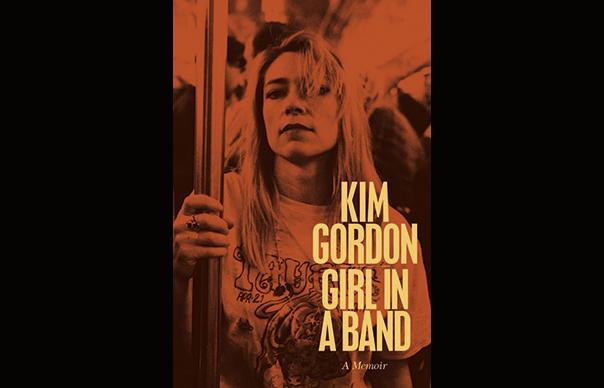
Not just about a girl in a band…

There is plenty of talk about music in Kim Gordon‘s memoir, but its animating force is disappointment. The book opens with Sonic Youth’s final performance; in November 2011 at the SWU Music & Arts Festival in São Paulo, Brazil. By then, Gordon and her husband and band mate Thurston Moore are estranged after 30 years together; he has been unfaithful and she reflects on “a life’s work now inextricable from heartbreak”. Indeed, much of Girl As A Band is overshadowed by her relationship with Moore. But curiously, the book is often at its most interesting when discussing neither music nor Moore.

In her 1979 collection of essays, The White Album, Joan Didion noted, “A place belongs forever to whoever claims it hardest, remembers it most obsessively, wrenches it from itself, shapes it, renders it, loves it so radically that he remakes it in his image.” Didion was the sharp-eyed observer of cultural values and experiences in California during the 1960s and Seventies; a period, incidentally, which Kim Gordon knows very well.

Didion is clearly an influence on Gordon – like Didion, Gordon’s writing is precise, her tone unsentimental, and her eye for detail sharp. Although born in Rochester, New York, Gordon moved to California when she was five years old when her father accepted a professorship at UCLA. This was 1958, and much of the early part of her excellent memoir subsequently finds Gordon staking out California, much as Didion had done before her. “LA in the late Sixties had a desolation about it, a disquiet,” she writes. “More than anything, that had to do with a feeling, one that you still find in parts of the San Fernando Valley. There was a sense of apocalyptic expanse, of sidewalks and houses centipeding over mountains and going on forever, combined with a shrugging kind of anchorlessness. Growing up I was always aware of LA’s diffuseness, its lack of an attachment to anything other than its own good reflection in the mirror.”

In some ways, Girl In A Band is a self-deprecating title – evidently, Gordon is much more than that – but it is also an extremely limiting one. Any one expecting this to be a definitive biography of Sonic Youth, for instance, will be disappointed. Inevitably, Sonic Youth play a critical part in this book; but this is much more than just an account of life in a band. In fact, the strongest parts of Girl In A Band are Gordon’s observations of California during the dissonance of the Sixties. “Back then, there were lots of eccentric bearded guys dressed in white roaming round LA,” she notes; indeed, her brother, Keller, is invited up to “the ranch” by Manson acolyte Bobby Beausoleil, while one of Keller’s ex girlfriends is abducted and later found stabbed to death.

Although Gordon’s parents were both liberal intellectuals – jazz, “Venice beatnik guys” and documentary filmmakers figure highly in the early chapters -– the dominant figure during her childhood was Keller, a “sadistic, arrogant” figure who is later diagnosed with paranoid schizophrenia. Gradually, Gordon’s artistic temperament surfaces; she enrolls at Santa Monica College in 1972 and moves to Venice where her landlord is a former CSNY roadie. She becomes friendly with Bruce Berry, a relative of Jan Berry from Jan and Dean, and she finds herself in “Jan’s house high in the hills, a cheesy contemporary glass box on a tacky hilltop in a would-be neighbourhood, surrounded by nothing. Cocaine was prevalent, heroin more under-the-table, but I wasn’t into that stuff. I do remember being there one morning at around 8am watching a topless girl float through the living room playing a violin.”

If the early part of Girl In A Band is concerned with depicting California’s post-60s malady, the book is equally strong in capturing downtown Manhattan in the 1980s, where Gordon moves to pursue a career in art. “In 1980 New York was near bankruptcy, with garbage strikes every month, it seemed, and a crumbling, weedy infrastructure. These days, it gleams and towers in ways most people I know hate and can’t understand.” She documents the art scene on the Lower East Side with a kind of casual aloofness; Basquiat, Warhol, Jeff Koons all drift through. It is here, of course, that she finally meets Thurston Moore, and Sonic Youth come together.

The band stuff is all fillet, no fat. Gordon zones in on a specific memories for each album. About Sister, for instance, she explains that “Pacific Coast Highway” was “a direct pull from the fears of my teenage years when I was focused on the lore surrounding Charles Manson”. Such insights are accompanied by colourful vignettes – cooking dinner for Neil Young while he tunes the sound of a cow mooing for his electric train set. She writes eloquently about Kurt Cobain; evidently a loss she still feels to this day. Additionally, the cast list includes Danny Elfman, Larry Gagosian, Gerhard Richter, Courtney Love, Marc Jacobs, Sofia Coppola, Tony Oursler and Julie Cafritz (a staunch friend in troubled times). The final section takes place in Northampton, Massachusetts where the density of alt-rock royalty – Gordon and Moore, J Mascis and his wife, Cafritz and her husband – assumes an unintentionally amusing quality, like a real life Stellar Street. In this bohemian enclave, Gordon and Moore raise their daughter, Coco: but “I’ve never had any domestic talents or hobbies,” admits Gordon. They struggle to adapt, despite the good neighbours.

Finally, Gordon returns to California, to work on art projects. “The older I get, the smaller the world seems,” she muses. She works on an exhibition in the basement of a house in Lauren Canyon, close to Mulholland Drive. She writes about hearing “fire engines, helicopters, and traffic zooming up and down the canyon” before linking it back to “the favoured route of the Manson family for crosstown travel and creepy crawling exploits from their place near Calabasas to Hollywood.” In truth, however far Kim Gordon has come – figuratively, creatively, literally – it is hard to completely shake of the past.

Kim Gordon, Art Record Covers, Taschen, 2017

Kim Gordon, bassist, guitarist, vocalist and founding member of Sonic Youth until 2011, has also been a visual artist since the late 1970s. This painting featured on the sleeve of soon-to-be ex-husband Thurston Moore’s EP Flipped Out Bride (2006). The pair started Sonic Youth together, though their split would eventually lead to its disbandment. Her portraits of women have also featured on Sonic Youth’s single “Bull In The Heather” (1994) and Free Kitten’s Sentimental Education (1997). Gordon’s style is expressionist, using text or figures as form. Gordon also created a text-based painting for artist Richard Prince’s single “Loud Song” (2016), returning a favour for his own cover for Sonic Youth.

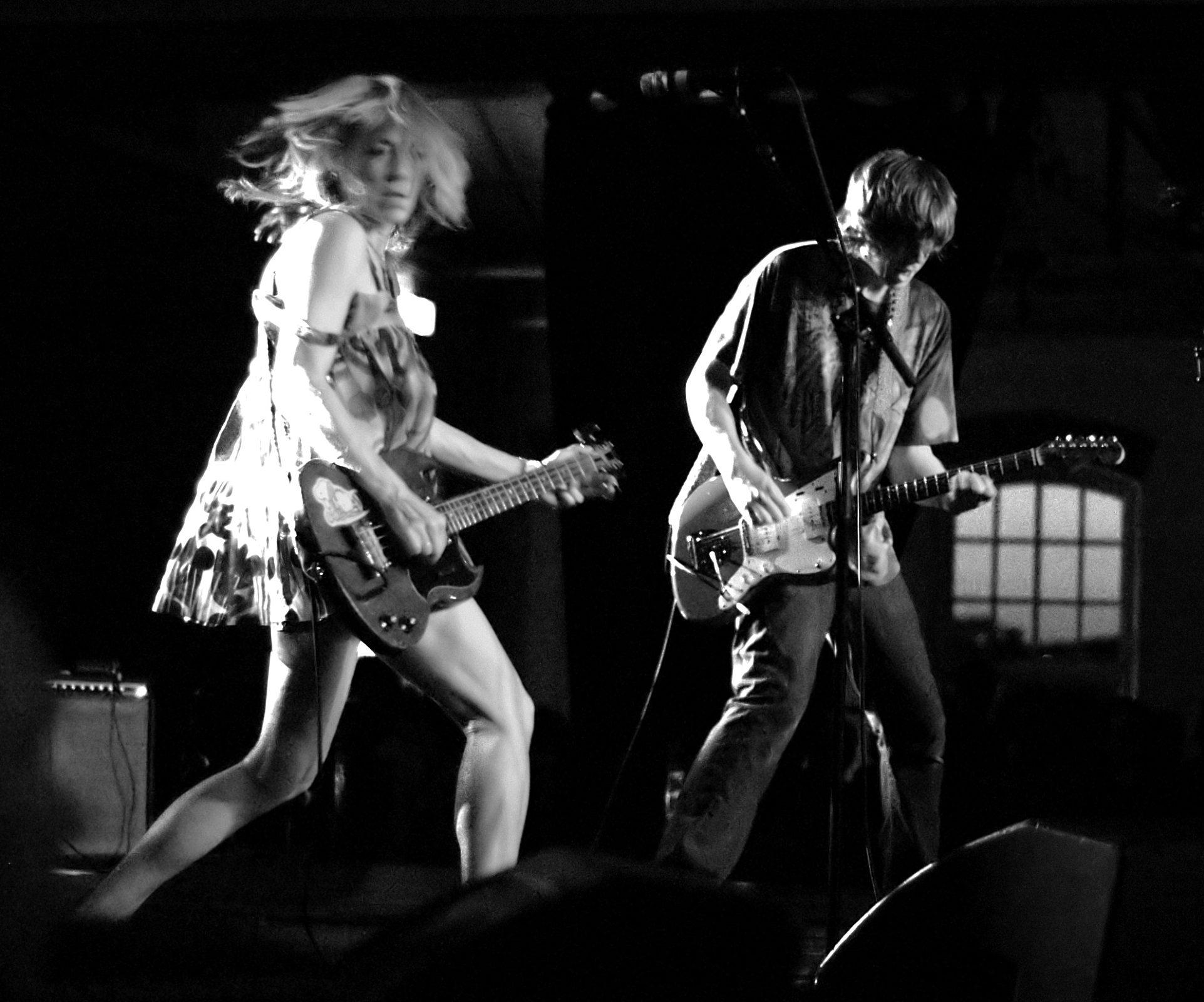
Image result for kim gordon

The former Sonic Youth co-leader Kim Gordon has been recording for 35 years, and she has never released a song under her own name until today. She’s dropped the new single “Murdered Out,” a feverish noise-rock song with an absolutely monster groove. Los Angeles car culture inspired the song, and Gordon worked on it with Sky Ferreira/Angel Olsen producer Justin Raisen, with Warpaint’s Stella Mozgawa playing drums. It’s heavier and more rhythmic than anything Kim Gordon has done in a long time, but it still has a freewheeling experimental-noise sensibility. It’s just an awesome song Kim has this to say about the premise to the song,

When I moved back to LA, I noticed more and more cars painted with black matte spray, tinted windows, blackened logos, and black wheels. This was something I had occasionally seen in the past, part of low rider car culture. A reclaiming of a corporate symbol of American success, The Car, from an outsider’s point of view. A statement-making rejection of the shiny brand new look, the idea of a new start, the promise of power, and the freedom on the open road. Like an option on a voting ballot, “none of the above.”

“Murdered Out,” as a look, is now creeping into mainstream culture as a design trend. A coffee brand. A clothing line. A nailpolish color.

Black-on-black matte is the ultimate expression in digging out, getting rid of, purging the soul. Like a black hole, the supreme inward look, a culture collapsing in on itself, the outsider as an unwilling participant as the “It” look.

“Murdered Out” is out now on Matador Records.

One of the best moments for any music fan is the discovery of a band or artist with a long, rich body of work. In addition to obviously offering tons of music, massive discographies are often stylistically compelling and offer the fodder of debate among friends and fellow music nerds.

However, which record should a new fan start with? Does an artist’s often uncorrupted debut offer the purest example of their sound? Are oft-cited classics the best first step, or do they offer a difficult path for newcomers to tread?

This influential noise rock band is on hold due to the marital separation of frontman Thurston Moore and bassist Kim Gordon. Other than being alt-rock icons, this extremely talented four piece released several fantastic albums of beautiful guitar clanging clamor over their 30-plus career together. Sonic Youth constantly toed the line between accessibility and ambition, which is why starting with 1987’s pre-fame Sister is perhaps the best for newcomers. Sister, released on iconic punk label SST Records, captured the band’s developing knack for melting pop melodies between slabs of abrasive noise rock. Further, Moore’s fascination with hardcore resulted in a full speed ahead energy on several cuts, like punk ravers “I Got A Catholic Block” and “Stereo Sanctity.” Elsewhere, the slow burning punk power ballad “Kotton Krown” remains one of Sonic Youth’s finest recorded moment.

One of the best moments for any music fan is the discovery of a band or artist with a long, rich body of work. In addition to obviously offering tons of music, massive discographies are often stylistically compelling and offer the fodder of debate among friends and fellow music nerds.

However, which record should a new fan start with? Does an artist’s often uncorrupted debut offer the purest example of their sound? Are oft-cited classics the best first step, or do they offer a difficult path for newcomers to tread?

With these questions in mind, we’ve selected one album from eights artists who boast towering, intimidating discographies of at least 13 albums or more. These eight acts are not only enormously prolific, but also fairly consistent, with no single album serving as “the” career definer (sorry Ryan Adams fans). Check out these entry point albums below.

LAWRENCE ROTHMAN PHOTO

Here is a stunning new song from Lawrence Rothman featuring Kim Gordon with additional vocals from Angel Olsen. The track, “Designer Babies“, was produced by Justin Raisen and features Nick Zinner (Yeah, Yeah, Yeahs) on guitar, Active Child on harp,Justin Meldal-Johnsen (M83, Beck) on bass and Stella Mozgawa (Warpaint) on drums. cinematic sounds with Kim Gordon sounding so emotional, really great track

http://

Rothman is finishing up his debut album with producer Justin Raisen (Charli XCX, Sky Ferreira, Santigold, etc) in the next few weeks and going on tour with Jennylee (of Warpaint) in April.


Kurt Vile Covers the Velvet Underground With Kim Gordon and Steve Gunn, Bob Dylan With Woods

New York’s Webster Hall hosted an event celebrating booking agency Ground Control Touring’s 15th anniversary. The showcase took place across the venue’s three stages and featured a bunch of collaborations and covers.
Kurt Vile, Kim Gordon, Steve Gunn, and Woods’ Jarvis Taveniere covered the Velvet Underground’s “Sister Ray”, while Vile also joined Woods for a take on Bob Dylan’s “Knockin’ on Heaven’s Door”
Other collaborations included Parquet Courts with Lee Ranaldo (who played Sonic Youth’s “Mote” and “Eric’s Trip”), Woods with Parquet Courts’ Andrew Savage, Waxahatchee with Superchunk’s Mac McCaughan, and Perfect Pussy’s Meredith Graves with Rainer Maria.
Kurt Vile with Kim Gordon, Steve Gunn, and Woods’ Jarvis Taveniere: “Sister Ray” (The Velvet Underground cover)

Kim Gordon and J Mascis Team Up on

Kim Gordon and J Mascis, old friends from Sonic Youth and Dinosaur Jr., have joined forces on a new song called “Slow Boy”. It’s from the forthcoming third volume of Converse’s CONS EP series, which features collaborations between a variety of artists. Listen to “Slow Boy” below, and download the track for free.
In addition to “Slow Boy”, CONS EP Vol. 3 features a collaboration between Freddie Gibbs and Hanni El Khatib and more tracks by GZA, Sweet Valley, and more. “Slow Boy” is the second single off of the third Converse CONS compilation, CONS EP Vol. 3, with two more tracks being released throughout June 2015. The song was written by J Mascis and Kim Gordon, with Mascis handling production as well.

http://

Music by: J Mascis & Kim Gordon
Written by: J Mascis & Kim Gordon
Vocals by: Kim Gordon

https://www.youtube.com/watch?v=ipX5YWyTwoE

http://

Sonic Youth  so long ago reached that rare point in an artist’s career when they can do exactly whatever they want, whenever they want. a day after they released two incredible tracks on the glowingly-reviewed vinyl-only retrospective box set by the North Carolina imprint Three Lobed Recordings, the band dropped into the radically revamped Williamsburg Waterfront and played a set of older and rarely-played cuts.  Albums that have gone almost-untouched on recent tours saw the light of day: “Brave Men Run,” “Ghost Bitch” and (the more-commonly played) “Death Valley ’69” from “Bad Moon Rising” were on the menu. “Dirty” – regarded, rightly or wrongly as the band’s most “commercial” record – wore its age well on an extended “Sugar Kane” and the infectious “Drunken Butterfly,” with Kim spinning round the stage like a madwoman twenty to thirty years her junior.  “Starfield Road,” from the relatively unappreciated “Experimental Jet Set, Trash and No Star”, made the cut, alongside classics like “Kill Yr Idols” and “Cotton Crown” (from Sister).  Late-period material similarly seemed at home; “What We Know” sounded just as vital among these gems as it has at recent shows where the band played almost exclusively new material.  And, for good measure, the band’s second encore (of three) was the title track to Thurston’s mid-90s solo effort, “Psychic Hearts”.  Other than their deep-as-shit discography, Sonic Youth don’t feel like a “classic” band, with energy, enthusiasm and intensity that could put most crews of 22-year-olds to shame.  They can carry a show and rule the night anywhere in this city.

The show wrapped with the feral noise squall of “Inhuman,” as Moore howled at the soulless towers of steel and glass and the band’s immense blasts of feedback threatened to shake the junk to its foundations.  A lot in this world feels built on a shaky foundations these days.  Some artists have the power to remind you that some things still are real, and good, and right.  Fifty years from now, those architectural monstrosities will probably be rubble.  Sonic Youth will be a monument to their era. Thanks to the New York Taper.

Tracks

01 Brave Men Run,  02 Death Valley ’69,  03 Cotton Crown,  04 Kill Yr Idols,  05 Eric’s Trip,  06 Sacred Trickster,  07 [banter] 08 Calming the Snake,  09 [banter],  10 Starfield Road,  11 I Love Her All the Time,  12 Ghost Bitch,  13 Tom Violence,  14 [banter] 15 What We Know,  16 [banter],  17 Drunken Butterfly,  18 [encore break 1],  19 Flower,  20 Sugar Kane,  21 [encore break 2] 22 Psychic Hearts,  23 [encore break 3],  24 Inhuman.