Posts Tagged ‘Iggy Pop’

Image result

Last February one month after the death of his close friend and collaborator David Bowie ,Iggy Pop covered Bowie’s “The Jean Genie” at Carnegie Hall. Two weeks earlier, he had said in an interview that he’s probably “closing up” and retiring from the recording business after the release of his new album Post Pop Depression with Josh Homme. If Pop seems a little morbid these days, well, it’s nothing new. A hell-bent, self-destructive streak runs through his entire body of work; in fact, that streak long ago became his calling card, along with this feral, hair-raising baritone. Hard to believe he launched his music career innocuously enough as fresh-faced James Osterberg, the drummer of various ’60s garage bands in Michigan such as The Iguanas and the Prime Movers.

iggy Pop’s next band, The Stooges, hit the scene like a runaway earthmover. Not that the band was particularly popular during its time. Formed in 1967 when he was still going by the name Iggy Stooge, The Psychedelic Stooges (soon shortened), the group harnessed the jet-engine power of fellow Michigan band The MC5 while droning on in a spectacularly Neanderthal way. The Stooges’ self-titled debut appeared in 1969, produced by The Velvet Underground’s John Cale, and it turned psychedelia into something overwhelmingly new: simple, primal, brutal, and blazing the trail for a new style of music still a decade away, punk rock. On the album’s best-known track, “I Wanna Be Your Dog,” Pop howls in an lascivious imitation of Ron Asheton’s wah-wah guitar, celebrating sexual submissiveness while paradoxically playing up the group’s own aggressive, distorted domination.

https://www.youtube.com/watch?v=BJIqnXTqg8I

As great as The Stooges was, it’s an album that all but painted the band into a corner—that is, until Fun House blew off the roof. The blueprint from the first album is dutifully carried over no one ever accused The Stooges of being eclectic but the band’s attack is deepened, sharpened, and given a far more insidious atmosphere of transgression and hedonism. On top of that, the decision to bring saxophonist Steve Mackay into the mix on songs like “1970” and the sinuous, swaggering title track lent a jazzy edge that only enhanced the album’s ominous atmosphere. And Pop’s blistered voice urges on the noise like a drug-pushing drill sergeant. At the start of the ’70s, as rock ’n’ roll was congealing into corporate slickness, Fun House ripped off the skin and pissed in the wound.

Three years passed between “Fun House” and its follow-up, “Raw Power”. The album was billed under the name Iggy And The Stooges, reflecting the new star power of its self-abusive front man, whose bloody, destructive stage performances were already becoming the stuff of legend. But the band itself had disintegrated in a haze of drugs and reformed in those three years, giving Raw Power a far more abrasive and hard-edged sound; co-produced by Pop and his admirer David Bowie, the album’s ear-shredding, in-the-red chaos kick started the punk movement. On songs such as “Search And Destroy,” guitarist James Williamson threatens to split the heavens with his unhinged solos; meanwhile Pop weaves a new mythology of rock decadence that teeters on the brink of sanity and reality.

https://www.youtube.com/watch?v=EDNzQ3CXspU

Barring the officially released demo Kill City in 1977 (recorded in 1975 and credited to Iggy Pop and James Williamson), The Stooges’ time in the studio was long over by the time Pop began in solo career in earnest with The Idiot. Released in 1977, the year punk exploded, it took a different route than all the groups The Stooges had inspired; instead of raw power, the album bears the cool, dour, synthetic tones that co-produced and collaborator Bowie was about to use on his Berlin Trilogy (The Idiot was also recorded in Berlin). In a way, Pop is fish-out-of-place on Krautrock-inspired tracks like “Nightclubbing” and the ethereal “China Girl” (later turned into a hit by Bowie himself). But it’s exactly this bewildered displacement and fresh context that makes The Idiot such a welcome jolt in Pop’s career arc—one that stretched his formidable voice into strange new shapes.

The second of Iggy Pop’s Berlin collaborations with Bowie released in 1977, Lust For Life produced Pop’s most identifiable solo hit: the Bowie-penned title track, a thumping, sinewy anthem that gleefully hurls Pop’s suicidal image back at itself. Falling much closer to Pop’s raw rock wheelhouse than The Idiot, Lust For Life nonetheless produced one of his most sultry songs: “The Passenger,” whose slinky, menacing vibe taps into the dark poetry that Pop always has lurking beneath his bad-boy surface. With punk in full swing, the movement’s forefather claimed his snotty offspring while striking out on his own assured yet anarchic path.

Pop’s third solo album, New Values, was released in 1979—his first without Bowie. Instead it was produced by his old Raw Power cohort James Williamson, who also supplies guitar. Rather than sounding like a Stooges rehash, though, the album ventured forth into bold new territory: sleek, sculpted, and lean, songs like the nervy title track gave Iggy Pop a clean canvas on which to reinvent himself. Accordingly, his vocal range is fully explored for the first time on record: From spoken-word proclamations to supple yelps to stentorian moans, he’d finally settled into his solo-artist role as a sophisticated provocateur and enfant terrible—even while Williamson sets off Stooges-era guitar explosions.

The ’80s should have been the decade where Pop reaped his hard-earned artistic rewards. Instead, it was pretty spotty. In spite of a strong pool of collaborators (The Sex Pistols’ Glen Matlock, Blondie’s Clem Burke and Chris Stein, Patti Smith Group’s Ivan Kral, and Bowie sideman Carlos Alomar) the run of albums including 1980’s Soldier, 1981’s Party, and 1982’s Zombie Birdhouse reflect a desperate frenzy of weirdness, mediocrity, and experimentation with only sporadic bursts of brilliance. Following a four-year break from studio albums, 1986’s Blah Blah Blah was Pop’s attempt to court the mainstream; with David Bowie back in the producer’s chair, the record resulted in a minor hit and something of a calling card for Pop in the ’80s, a slick cover of Johnny O’Keefe’s rock ’n’ roll oldie “Wild One (Real Wild Child).” Pop’s rebelliousness comes off as canned, but the album gave Pop another lease on music life—although it wasn’t capitalized on by 1988’s Instinct, a middling hard-rock team-up with The Sex Pistols’ Steve Jones that feels like a washed-out echo of Raw Power.

In the ’90s, the alternative boom brought many borderline underground artists out of the shadows—Pop somewhat included. He came out swinging with 1990’s Brick By Brick, a substantial album that boasted appearances from members of Guns N’ Roses plus another minor hit—a genuinely stirring duet with The B-52s’ Kate Pierson, “Candy.” With a new generation of stars, led by Kurt Cobain, singing his praises, the decade might have been huge for Iggy Pop, but his next three albums of the decade (1993’s American Caesar, 1996’s Naughty Little Doggie, and 1999’s Avenue B) were mostly muddled and confused, each one lesser than the one before it. Pop’s status as an icon was cemented—especially after “Lust For Life” was resurrected by its appearance on the soundtrack to 1996’s movie Trainspotting but his inability to funnel that into another classic record was frustrating. Yet wholly in line with his perverse brand of self-destructive integrity.

Image may contain: 2 people, people smiling

In the ’70s, few would have predicted that Pop would make it to the year 2000, let alone release some of his most intriguing music in the 21st century. That’s not to say 2001’s Beat Em Up and 2003’s Skull Ring are good—they aren’t—but two significant things happened to Pop’s career in the new millennium: One, he started dabbling in French pop , and jazz, and two, he also got The Stooges back together. His French-inflected albums, 2009’s Préliminaires (consisting of original songs) and 2012’s Après (comprising covers of everyone from Serge Gainsbourg to Édith Piaf), aren’t entirely successful, but they’re both brave and compelling in their own way, giving Pop’s ever-more-cavernous voice a new atmosphere to breathe. The Stooges’ two reunion albums, 2007’s The Weirdness and 2013’s Ready To Die, are wildly uneven—the second is much better—but there are flashes of real combustion to that decades-old chemistry. His new album, Post Pop Depression, once again relies on top-notch collaborators, in this case a group led by Josh Homme of Queens Of The Stone Age, and it’s one of Pop’s best solo albums since The Idiot, Lust For Life, and New Values—mostly because it draws heavily from The Idiot, Lust For Life, and New Values. But if Post Pop Depression is indeed Pop’s swan song, he’s going out on a note that’s both dignified and fittingly creepy.

The Essentials purchases,

1. The Stooges, Fun House (1970) More confident and corrosive than The Stooges’ self-titled debut a year earlier,Fun House is not only Iggy Pop’s most potent statement about the dark side of the modern psyche—it captures American civilization at the cusp of an epic comedown.

2. Iggy Pop, The Idiot (1977) The Idiot is as much a Bowie album as a Pop one, and that’s its strength: icy, experimental, starkly chiseled, and filled with both dreamy electronics, it gave Pop’s wild-man persona a chillingly robotic sheen.

3. Iggy And The Stooges, Raw Power (1969) If ever an Iggy Pop album explodes out of the speakers, it’s Raw Power. Savage and incediary, every second feels like it’s about to shake apart at the molecular level. And Pop has never topped his fierce, apocalyptic imagery here.

4. The Stooges, The Stooges (1973) There’s something endearingly numbskull about The Stooges’ eponymous debut—a psychedelic record that bulldozes over every flower in its path. But it’s also steeped in shadows and Pop’s pulsing, psychotic desire.

5. Iggy Pop, Lust For Life (1977) The title track of Lust For Life may have been used in one too many TV commercials for its punch to be fully retained, but Pop’s sophomore solo album as a whole remains a giddy, meaty match-up between Bowie’s vestigial glam stomp and Pop’s fiery abandon.

https://www.youtube.com/watch?v=hNVmV3KtrSc

Thanks To The AV Club

Iggy Pop will be releasing 'Post Pop Depression Live At Royal Albert Hall' for Record Store Day

3LP set, Best gig ever, Iggy Pop’s Post Pop Depression album, a collaboration with co-writer and producer Joshua Homme from Queens Of The Stone Age, is his most critically acclaimed and commercially successful album for many years. On 13th May 2016, Iggy Pop brought his Post Pop Depression live show to London’s revered Royal Albert Hall and almost tore the roof off! With a backing band including Joshua Homme and Dean Fertita from Queens Of The Stone Age and Matt Helders from the Arctic Monkeys, Iggy delivered a set focused almost entirely on the new album plus his two classic David Bowie collaboration albums from 1977, The Idiot and Lust For Life.

Fans and critics alike raved about the performance and this will definitely be remembered as one of Iggy Pop’s finest concerts. This relentlessly energetic show at the Hall, performed as part of Pop’s Post Pop Depression tour, was certainly one of the live events of the year and one of the standout shows of his career.

The 69-year old rocker, and his supergroup lineup of Josh Homme, Dean Fertita, Troy Van Leeuwen, and Matt Helders, powered through a blistering two-hour set packed with Pop’s biggest hits. The extraordinary atmosphere of this once-in-a-lifetime event, more like a life changing event rather than just another rock concert has been captured remarkably in the recording of the night by Splinter Films.

Image may contain: text

Iggy Pop will put out a ragged new single later this month, titled “Asshole Blues,” as part of a new flexi disc series on indie rockers Jacuzzi Boys’ Mag Mag label. The track is a muffled recording featuring just Pop and an acoustic guitar, as he bemoans an asshole who’s glommed onto his trail like one of Robert Johnson’s hellhounds. “Asshole, when are you gonna die?” Iggy sings at one point of the song. It will come out officially on April 21st.

“I wrote a blues song about an asshole who’s out to get me,” Pop said of the song. “It’s full of negative energy. Listen at you own risk. It’s fun to play the blues”

Jacuzzi Boys issued a joint statement explaining why they launched the flexi-disc series. “Basically the flexis will serve as a place where artists can do as they please,” the said. “[It’s] a place to exercise your most experimental desires or keep it 101. No rules. We’re just trying to turn folks on to stuff we find interesting. We’re as curious as anyone else might be to see how it all unfolds.”

http://

the original Stooge simply growls and acoustically strums through expressing his displeasure with someone in his life, something akin to being down at the crossroads in 1927, albeit with a Twitter account. In another sin done in the name of Record Store Day, this will be available on flexidisc

C2obNp3W8AAU1tZ

PINS, the Manchester quintet, have teased a future collaboration with Iggy Pop, something that coupled with the deep knowledge of the extensive artistry that underpins everything the band does has got us salivating. The Manchester band PINS got Iggy Pop to feature on a new track that’ll be featured on their forthcoming EP, “Bad Thing”, its the follow-up to their 2015 full-length album “Wild Nights”. The band explained that they got him to record his spoken word part by asking via e-mail through their booking agent, who happened to be friends with Iggy’s manager.

Iggy had to say this about the collab.  “I’ve got a session with a bunch of girls from Manchester called PINS, they sent me a good song and they’re looking for a narration in it, and I liked their music and their picture, so I’m doing that.”  PINS explain: “‘Aggrophobe’ is the wild card from our EP. The video was filmed partly at the director’s studio in Ancoats and partly at one of our favourite pubs on Oldham Street called Gulliver’s. We we’re backstage waiting to go on to play a show, whilst the other acts are doing their thing.”

Catch Pins at the Cookie in Leicester next week. also Instore on Record Store Day at Rough Trade Nottingham

Tracklist:
01 “Bad Thing”
02 “Aggrophobe” (Feat. Iggy Pop)
03 “All Hail”
04 “In Nightmares”
05 “Dead Souls”

21/04 Leicester, The Cookie 

Image of The Jesus And Mary Chain - Damage And Joy

The Jesus And Mary Chain are set to release their long-awaited new album ‘Damage and Joy’ on March 24th, their first since ‘Munki’, back in the summer of 1998. The Reid brothers have enlisted the help of super (as in cool, not megabucks!) producer Youth and he has coaxed and cajoled these perma-scrapping siblings (still, even now!!) into producing a magnificent distillation of everything we’ve come to love about their sound.

Fuzzed up trashy or broken and blue, Jim’s honeyed voice takes us over familiar territory while William scuzzes things up in the wings. The songs are all classic Mary Chain.
With the help of Isobel Campbell, Sky Ferreira and the Reids’ own sister Linda on vocals, there’s also a freshness to their palette, bringing their much imitated sound back up to date, here in the now.  It’s great to have them back!

D8cb3c19 1aba 4933 9f7e 09346f83d76b

500 limited edition 12” on Cadillac pink vinyl. Manchester all-female five-piece Pins release a new EP Bad Thing, through Haus Of Pins and features Aggrophobe, their single with the legendary Iggy Pop. Following the release of their acclaimed second album Wild Nights last year, Pins went back into the studio to work on new tracks. Recorded in a studio on the Scottish Borders last October and produced by Mark Vernon and the band themselves, the EP features 5 new tracks, which includes a cover of Joy Division’s Dead Souls. The EP opens with the teasing Bad Thing before moving into the addictive Aggrophobe, featuring Iggy Pop’s iconic vocal, leading onto the chant-like pop of All Hail and the dreamy and synth-laden In Nightmares, before ending with Pins own take on Dead Souls. The four new tracks are synonymous with Pins’ sound but also showcase a vigorous, more mature side to the band, making up a solid and impressive musical body of work.

Desperate journalist grow up nong112

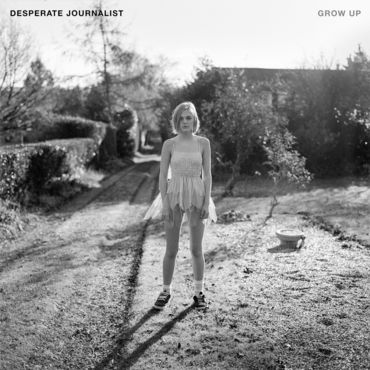
Desperate Journalist release their second album, Grow Up, ostensibly eleven tracks of rocketing leftfield delights propelled forth with thundering rhythms, thunderously spectacular guitar and Jo Bevan’s thunderstruck vocals. Such is intense life with Desperate Journalist, one of the most potent, important DIY bands lurking on the underground scene right now.

Image of The Moonlandingz - Interplanetary Class Classics

They began as a fictional band from a fictional town featured on the Eccentronic Research Council’s 2015 concept album Johnny Rocket, Narcissist And Music Machine… I’m Your Biggest Fan. Now The Moonlandingz have lurched, sticky and bleeding, into the real world and are releasing the first great album of 2017. Interplanetary Class Classics, released on Transgressive Records, is a feast of swirling juddering synths, wailing guitars, motorik stomp and extraordinary songwriting. The Moonlandingz have proven themselves to be one of the best live bands in the UK (“Magnificent, cosmic and batshit!” said The Quietus. “Feral antics and louche anarchy!” said The Guardian) and now they’ve produced an album of proper weird catchy glorious filthy pop.
The Moonlandingz is Eccentronic Research Council’s Adrian Flanagan and Dean Honer in cahoots with Fat White Family’s Lias Saoudi (aka frontman Johnny Rocket) and Saul Adamczewski. They recorded the album with Sean Lennon at his studio in upstate New York. Also on the record: Randy Jones the Cowboy from The Village People, Rebecca Taylor from Slow Club, drummer Ross Orton, bassist Mairead O’Connor, Phil Oakey and YOKO fucking ONO, who sings and yowls on epic closer This Cities Undone.

Image of Sonic Jesus - Grace

Sonic Jesus is an Italian musical project lead by multi-instrumentalist Tiziano Veronese. Since signing to Fuzz Club, the project has released a split single with The Black Angels and been remixed by Sonic Boom aka Pete Kember. Their internationally acclaimed debut ‘Neither Virtue Nor Anger’; an industrial barrage of hypnotic, dark psychedelia. Sonic Jesus’ new album ‘Grace’ goes beyond the past boundaries, pushing towards enthralling melodic horizons and modern pounding beats, delivered by a new-found pop sensibility. There’s still a darkness brooding beneath the noise but these new tracks see the project take on a magnificent and insatiable new form.

Screen shot 2017 03 03 at 13.13.04

Limited to 1000 Copies. Long Time is the second single off Blondie’s new album Pollinator and comes backed with exclusive B-Side Breaks.

A3337164431 16

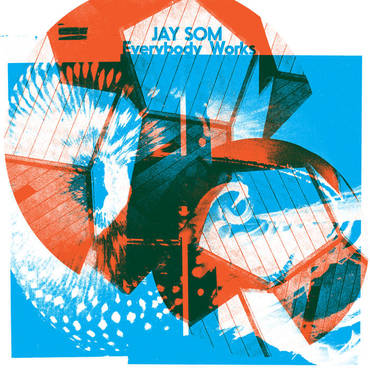
On her first proper album as Jay Som, Melina Duterte, 22, solidifies her rep as a self-made force of sonic splendor and emotional might. If last year’s aptly named Turn Into compilation showcased a fuzz-loving artist in flux – chronicling her mission to master bedroom recording – then the rising Oakland star’s latest, Everybody Works, is the LP equivalent of mission accomplished. Duterte is as DIY as ever – writing, recording, playing, and producing every sound beyond a few backing vocals – but she takes us places we never could have imagined, wedding lo-fi rock to hi-fi home orchestration, and weaving evocative autobiographical poetry into energetic punk, electrified folk, and dreamy alt-funk. Everybody Works was made in three furious, caffeinated weeks. She came home from the road, moved into a new apartment, set up her bedroom studio and dove in. Duterte even ditched most of her demos, writing half the LP on the spot and making lushly composed pieces like Lipstick Stains all the more impressive. While the guitar-grinding Jay Som we first fell in love with still reigns on shoegazey shredders like 1 Billion Dogs and in the melodic distortions of Take It, we also get the sublimely spacious synth-pop beauty of Remain, and the luxe, proggy funk of One More Time, Please.

Image of Samantha Crain - You Had Me At Goodbye - Bonus Disc Edition

Fifth album (third for Full Time Hobby) from Samantha Crain, following 2015’s “Under Branch & Thorn & Tree” and the 2014 album “Kid Face.”

Written over 4 months at the back end of winter whilst at home in Norman, Oklahoma, You Had Me At Goodbye was penned whilst Samantha was working shifts at a pizza place to save up money for touring, recording, paying bills, and as a self-confessed ‘film nerd,’ binge watching movies. “Oklahoma is beautiful but my relationship with it is complicated. There are mountains, plains, prairies, rolling hills, high deserts and plateaus, with an amazing creative community of people making beautiful visual art, interesting films and loud music. But it’s extremely Christian, conservative, and whilst people say it’s ‘friendly,’ really, people are only friendly if you’re white and aren’t dressed unconventionally. I feel welcome and alienated all at once.”
Bolstered by the visionary production of John Vanderslice (Spoon, the Mountain Goats, Strand of Oaks), mixed and engineered by Jacob Winik (The Magnetic Fields, Hot Buttered Rum), Samantha returned to the Bay Area in California to, once again, record the album in analog at Tiny Telephone Studio.

100000x100000 999

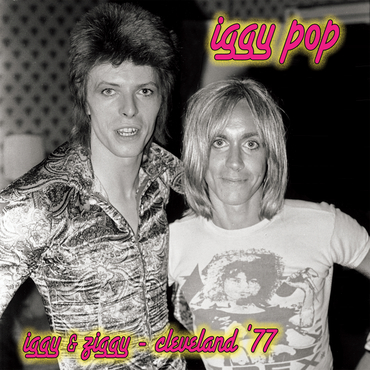
Iggy Pop had hit bottom after the messy breakup of the Stooges and he needed help, and when friend and fan David Bowie offered to lend him a hand, he was smart and grateful enough to accept. Bowie produced Iggy’s first solo album, The Idiot, and after Iggy set up a tour to promote the record, Bowie put together the band and tagged along as their keyboard player. Bowie’s presence insured a larger audience than Iggy had attracted during the grim final days of his band, and he was determined to prove he could deliver the goods without making a spectacle of himself or collapsing into a drug-sodden heap on-stage. Unfortunately, anyone familiar with Iggy’s body of work knows the last thing you want from one of his live shows is a professional-sounding performance without a sense of danger, and unfortunately, that’s what the audience got during this March 21st, 1977 show in Cleveland, OH, part of a three-night stand Iggy and the band would perform at the Agora Ballroom. Iggy & Ziggy: Cleveland ’77 finds Iggy in fine voice, and at a time when he had a lot to prove, he leaves no doubt he was a solid musician and showman, singing with a sense of control and dynamics he couldn’t approach with the Raw Power-era Stooges. However, Iggy also seems clearly afraid to push this material too far, and the caution robs the songs (nine of which are drawn from the Stooges‘ songbook) of much of their life force. Even worse, guitarist Ricky Gardiner doesn’t seem to know what to do with the Stooges material — he’s at least as skillful as Ron Asheton or James Williamson, but his attack is so toothless and polite that he reduces some of the greatest rock songs ever to mush. (Bowie’s keyboards are not nearly as ill-advised but they don’t fit the old material very well, though Hunt Sales and Tony Sales are a great rhythm section who do what they can to give Iggy the energy he needs.) Some of the material from this show also appeared on Iggy’s lamentable live album TV Eye Live.

Watch Metallica and Iggy Pop Perform the Stooges'

Iggy Pop joined Metallica onstage at a gig in Mexico City. They joined forces to perform the song “T.V. Eye,” a track from The Stooges 1970 album “Fun House” .

Metallica has much respect for the man coming out here to sing a song with us,” Metallica’s James Hetfield told the crowd. “And we’re grateful that he’s been able to be on this Mexico City tour with us. Please show your sign of respect and love for Mr. Iggy Pop.”

Filmed on March 5th, 2017 at Foro Sol in Mexico City, Mexico

Image result for iggy pop the stooges 2007

Reuniting in 2003 for the Coachella Music Festival, the Stooges became an active touring unit again. But it would take a few more years before they ventured back into the studio to complete a full-length effort, manifesting itself in The Weirdness, which came out March 6th, 2007.

Three-quarters of the original band was on board, with frontman Iggy Pop joined by guitarist Ron Asheton, his brother Scott Asheton on drums and ex Minuteman bass player Mike Watt replacing Dave Alexander, who died in 1975. It was their first LP together in 34 years, though they had contributed four songs to Pop’s guest-heavy 2003 solo opus Skull Ring. Recorded at Steve Albini’s Electrical Audio Studios in Chicago, The Weirdness was technically the follow-up to 1973’s proto-punk masterpiece of “Raw Power” .

“I think the big change in the dynamic would be I’ve learned to delegate more,” Pop said shortly after the release of The Weirdness. “I’m not micromanaging as much as I did. The drummer has learned he has the ultimate authority in this group. He sails the ship. Neither Ron or myself will sound like much without that guy backing it up and the same would be true in a street brawl. He has that authority, and he is one of these soft-spoken people who people do listen to when he opens his mouth. He’s kept the group sensible, and he’s been a little more active in the group.”

It may be for that reason alone that The Weirdness isn’t more uneven. Scott Asheton takes the lead and holds it down from the outset, evident on the lead single, “My Idea of Fun.” He’s undeniably driving the Stooges tank, and everyone else follows his cues. Check the rowdy “ATM” or “The End of Christianity,” where even his older brother lets him show the way. That’s not to say Ron isn’t ripping solos left and right; he does a call-and-response with Pop during “Mexican Guy” that’s on fire, and his leads on “Free & Freaking” and album closer “I’m Fried” are dirty and raw. The Weirdness would end up being the finale for Ron, who died less than two years after its release.

Tracklist

1. Trollin’- 0:00
2. You Can’t Have Friends- 3:06
3. ATM- 5:28
4. My Idea Of Fun- 8:43
5. The Weirdness- 12:00
6. Free & Freaky- 15:45
7. Greedy Awful People- 18:29
8. She Took My Money- 20:36
9. End Of Christianity- 24:25
10. Mexican Guy- 28:45
11. Passing Cloud- 32:14
12. I’m Fried- 36:18

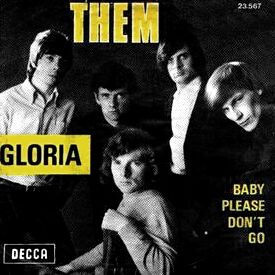
Gloria (Them song) coverart.jpg


The song “Gloria” is built on just three chords that any garage band can play and that almost every garage band has. Yet the list of artists who have covered this tune include many bands Jimi Hendrix, the Doors, Patti Smith, Tom Petty, David Bowie, R.E.M., Iggy Pop, U2, Bruce Springsteen, Elvis Costello..even. Bill Murray strapped on a guitar and played it at Eric Clapton’s Crossroads Festival, the Grateful Dead used to jam on it, and it might be the only song that Jon Bon Jovi and Johnny Thunders have in common.

How has such a minimal song have had such a huge impact? Why does it still reverberate today, in arenas, at festivals, in bars and studios? And how did Gloria become such a resilient classic rock tune. Written more than fifty years ago by Van Morrison for his band Them , the story the song tells couldn’t be more archetypal: the singer (usually but not always male) knows this girl and he’s eager to tell us about her, but he doesn’t share much in the way of detail. She comes down the street, up to a room, knocks on a door, enters, makes the singer extremely happy.

She is, nearly all the time, about five feet, four inches tall (on the original demo, she was five feet). As physical descriptions go, that’s at once very specific and very incomplete. Dark-haired or light, curvy or slender, who knows? At just about midnight, she appears. There is, we can assume, something sensual about the way she moves, because the song itself slithers with an air of hypnotic mystery, those three chords (E-D-A) setting the scene.

The Shadows of Knight, version clocked in at a tidy two and a half minutes, but that was too constricting for other groups like the Hangmen, the Blues Magoos, and the Amboy Dukes, all of whom easily exceeded the five-minute mark and turned it into early psychedelic-rock classic.

On the debut studio recording by Them, Van Morrison takes the listener into his confidence, and it’s a little like bragging, He wants to tell us about his baby (on the demo, she’s his “gal”), but aside from her head-to-the-ground measurement, he doesn’t tell us much more. She makes him feel good. Also for some reason, he feels compelled to spell out her name before he says it, “G-L-O-R-I-A,” as though it were something exotic or complicated. so she does whatever she does with Van, and instead of describing what that might be, he spells her name out again. He wants to make sure we get that name right, This woman who’s about five feet, four inches, and her name is G-L-O-R-I-A.

https://www.youtube.com/watch?v=J0aHmMfZTEw

“Gloria” was cut at Decca’s studio in West Hempstead in the summer of 1964, the first Them session. Them had been doing the song live for a while in Ireland clubs, but from all reports, they were not the most adept musicians in the studio, so the producer brought in some ringers, and here’s where the saga of “Gloria” gets a little fuzzy. It’s pretty clear from the audio evidence—compare the demo’s sluggish drumming to the finished studio version—that London’s top session drummer Bobby Graham was recruited. Graham told an interviewer for the Independent that Morrison “was really hostile as he didn’t want session men at his recordings. He calmed down but he didn’t like it.” In addition to Graham, The guitar playing was none other than Jimmy Page , Page: “It was very embarrassing on the Them sessions. With each song, another member of the band would be replaced by a session player…Talk about daggers! You’d be sitting there, wishing you hadn’t been booked.”

There’s something so compelling about the record, the rawness, the sudden startling instrumental leap midway through, Morrison’s intensity, the erotic momentum, the flurry of drums at the end. It was the sexiest thing. And it was stuck on a B-side, It was the flip side of Them’s second U.K. single “Baby Please Don’t Go In England, “Baby Please Don’t Go” charted at numer 10. In America, it was released on Parrot Records, But it was  “Gloria” that got a bit of attention, it was like that with “Gloria” it wasn’t a hit, but all around the world, local bands who discovered it found a Holy Grail. How many group rehearsals everywhere began with “Let’s try ‘Gloria’?” If you hadn’t been playing guitar for very long, this was an instant entry-level classic, and if you were playing gigs and didn’t have many songs in your live arsenal, you could stretch out on “Gloria” for a while, just keep that going. If you had a kid on Vox organ in your combo, it sounded even better.


Part of the brilliance of “Gloria” is in its vagueness and ambiguity. It feels explicit, but that’s a trick. The whole song is an ellipsis. Gloria the object of desire, someone who makes it all so easy: she comes up to your room, raps at your door (at a Bottom Line gig years ago, T Bone Burnett compared her knock to the drum beat of Al Jackson Jr. from the M.G.’s), no pining, no scheming. we don’t know if Gloria’s night ends satisfactorily.) The narrative is a sketch, but over the years, some of its interpreters have felt compelled to flesh it out. Leave it to Jim Morrison or Jimi Hendrix to make the goings-on considerably more graphic. It was a part of the Doors’s set since their early days on the L.A. club circuit (you can hear how the dynamics of “Gloria” got appropriated for the “Light My Fire” climax, the American Morrison went much further in his on-stage embellishments, some of which came out officially on posthumous Doors releases. He addresses Gloria directly, and sometimes there’s a predatory creepiness: “Meet me at the graveyard, meet me after school.” On one released version, he yells, “Here she is in my room, oh boy!” and for nine minutes it’s like a cautionary after-school special: her dad is at work, her mom is out shopping, and he’s giving her instruction: “Wrap your legs around my neck/Wrap your arms around my feet/Wrap your hair around my skin.” He continues  “Hey, what’s your name, how old are you, where’d you go to school?” What’s her name? Is he missing the whole point of this song? here.

https://www.youtube.com/watch?v=zPv12pjykVk

Not to be outdone, Jimi Hendrix, on a slamming off the cuff version with the Experience from October 1968, also asks her name she replies (he says), “It don’t make no difference anyway…You can call me Gloria.” Is she a call girl? (That would explain the midnight knocking.) A groupie? More likely. Hendrix mentions that Mitch Mitchell and Noel Redding also have “Gloria”s, and there is some kind of “scene” going on that involves the arrival of a pot dealer and, subsequently, the police. “Gloria, get off my chest,” Jimi says. “We gotta get out of here.” Meanwhile, he’s playing some amazing guitar, and Mitchell is just on fire, and the song is a long way from its beginnings with Them.

https://www.youtube.com/watch?v=fYVLAScPGog

The song still belonged to Van Morrison, who has had a notoriously ambivalent relationship with some of his earlier hits, but he has almost always stuck with “Gloria” it’s on his landmark live album “Its Too Late To Stop Now”, and he’s revisited it over and over through the years, on record with John Lee Hooker, live with U2 (who not only have done Morrison’s version, but wrote their own song called “Gloria”) and Elvis Costello, on TV with Jools Holland’s big band. But in 1975, Patti Smith found a way to radically reinterpret it by incorporating it into the lead track from her debut album “Horses”. The cut is in two parts, the first part “In Excelsis Deo” starts off with a stark statement of intent  “Jesus died for somebody’s sins, but not mine” and keeps building and building until Smith through a window, sees a “sweet young thing,” and she’s transfixed. It’s almost unbearably tense, the way Patti’s group coils around the melody, the rising excitement in her voice. It’s midnight (naturally: that’s when this always happens), and the woman comes up the stairs in “a pretty red dress” and knocks on the door, and you don’t even realize it, but the song is sneakily turning into Van Morrison’s: Patti asks the girl’s name. “And her name is…and her name is…and her name is…G…” you know the rest. With this performance, Patti’s done two things. She’s made a breathtaking breakthrough that’s completely new, and connected it with rock tradition (her guitarist Lenny Kaye is steeped in the era of “Gloria,” and compiled the essential garage-rock collection Nuggets). It was a tremendous cultural moment.

Nothing has been able to stop “Gloria” because the song is whatever it needs to be. It’s remained a rock staple. Iggy Pop  has done it live  (and singing “I-G-G-Y-P-O-P”), Joe Strummer’s pre-Clash band the 101’ers had it in their repertoire and so did Bon Scott’s group the Spektors,  On his 1978 tour, Bruce Springsteen often would include it as part of a medley with “She’s The One” and sometimes “Not Fade Away.” R.E.M. was performing it in the eighties, and so was David Bowie, in conjunction with his own “The Jean Genie” .

Some more recent live interpretations stand out. Rickie Lee Jones starts to play it, and after about a minute and a half, it turns into a reminiscence. The band keeps on riffing on those three chords, those chords that give the singer all the freedom in the world to amplify, to comment, to reflect. “I was twelve when this song came out,” she says, “and I have never forgotten, I would never forget, that’s why I will never get old, what it felt like to me as he described this [and here she pauses] girl.” “I’m gonna shout it all night, gonna shout it every day,” the song goes, and if you were around twelve years old when it came out, as Rickie Lee was, or you were more like fifteen or sixteen, as Bruce Springsteen and Tom Petty were, that shout of ecstasy was something that made possibilities open up for you. And that’s why Springsteen (who introduced it at a 2008 show by saying “Bring it back to where it all started! Follow me boys!”) and Petty can’t stop going back to it. It probably was where it all started, in their nascent rocking days.

Tom Petty makes it almost like a prequel. It became a set-piece for him and his band the Heartbreakers in the late nineties, played the song several times on his Highway Companion Tour in 2006, and he closed most of the shows with it during his twenty-night run at The Fillmore Auditorium in San Francisco in 1997.  Up to this century, and there are versions floating around, from German TV, from Bonnaroo, where he unspools a story about walking on an uptown street and approaching this woman: “Don’t walk so fast,” he tells her. “I’m a true believer and I loved you at first sight.” She spurns him, she bolts (in one version, she tells him he smells like marijuana), and he’s getting nowhere.

Like Springsteen in the song “Rosalita”  he plays the only card he has. “I got this little rock and roll band,” he says. “Things are going good.” We don’t know what happens, ultimately, except this: all he wants to know is her name, this tiny shred of information. And suddenly, he hears it. Not from her, but from the wind. The wind began to sing her name. At this point, Petty’s audience knows what its part is, and the band has been patiently waiting for this eruptive moment, and like a huge gust of wind, the name rises up from the crowd, louder and louder: “Gloria!” Because even five decades after she first appeared, there’s no one anywhere who doesn’t know who she is, and the power she has.

Iggy Pop ©KLRU photo by Scott Newton

At 68 years old and with 16  albums under his belt, music veteran Iggy Pop is still making history. The godfather of punk took the Austin City Limits stage for his inaugural appearance on the show just days before the release of Post Pop Depression, There exist nobody on Earth quite like Iggy Pop, and his great new album is further proof.

Conceived in partnership with Queens of the Stone Age leader Josh Homme, a two-time ACL veteran who also produced the album, Post Pop Depression was recorded in secret in Palm Desert, CA with a vibe described as “Detroit meets Palm Desert by way of old Berlin.”

Bringing the new songs to life alongside classic spanning Iggy’s storied career, Iggy is joined by Homme and the powerhouse band that recorded Post Pop Depression , including Homme’s QOTSA bandmate and Dead Weather-man Dean Fertita and Arctic Monkeys’ Matt Helders, and fleshed out with touring members Troy Van Leeuwen (QOTSA) and Matt Sweeney (Chavez, Bonnie Prince Billy).

https://www.youtube.com/watch?v=pySZ-3W8Gmc

Post Pop Depression…picks up where Lust For Life left off… The lyrics reflect on memories, hint at characters and offer advice and confessions; they can be hard-nosed, remorseful, flippant, combative or philosophical.”

Setlist:

0:04 Lust For Life
5:33 American Valhalla
10:06 Sixteen
12:41 In The Lobby
16:58 Some Weird Sin
20:46 Funtime
23:45 Tonight
28:01 Sunday
33:04 China Girl
39:43 Break Into Your Heart
43:49 Gardenia
48:55 Interview of the whole Band

Iggy Pop with
Josh Homme – guitar, vocals
Dean Fertita – guitar, vocals
Matt Helders – drums, vocals
Troy Van Leeuwen – guitar, keyboards, percussion, vocals
Matt Sweeney – bass, vocals

The final show by the Stooges until their reunion in 2003, Metallic K.O. is the only rock album I know where you can actually hear hurled beer bottles breaking against guitar strings.
Recorded 2/6/1974 at the Michigan Palace on a reel-to-reel tape machine by Michael Tipton, later obtained by Stooges guitarist James Williamson. Considering Williamson’s involvement, and the endorsement of Iggy, it was considered a “semi-official” bootleg, when released on the Skydog label in 1976.

The album is mostly composed of previously unreleased material. Studio demo and rehearsal recordings of some of the songs would later turn up on similarly semi-official posthumous Stooges compilations.
The album proved popular, due to its release in the first era of punk rock and The Stooges‘ growing legend as protopunks. Metallic K.O. outsold The Stooges‘ major label official releases, selling over 100,000 copies in America as an import in its first year alone

“You can throw every goddamn thing in the world,” brags Iggy Pop upon being pelted  with beer bottles at the Stooges’ last-ever show, “and your girlfriend will still love me, you jealous cocksuckers!” Pop stars love to accuse their haters of being jealous. It absolves them of any role in the fact that they’re despised, making audience rejection into an affirmation of their greatness rather than an argument against it. In truth, jealousy is a lot of the reason we like pop stars.

You might wonder why anyone would want to listen to a recording of a gig that was disastrous by any stretch of the word. Metallic K.O. is famed for its hostile audience response; you can hear bottles break on the stage and bounce off the guitar strings, and Iggy responds by baiting the audience more mercilessly. The playing is sloppy, the sound quality more so. Why audiences like Metallic K.O. enough to merit a fourth reissue than why they didn’t like the Stooges’ performance at the time. There’s something inspiring about hearing the singer completely take over the stage, throwing both decorum and political correctness to the wind in order to harangue and harass the people who paid to see him. Being a drunk, stumbling rock star is the ultimate. You’re in the spotlight, but you have no obligation to entertain. You take up space by your mere presence, are paid just for showing up, and can propagate the self-destructive mythology central to most rock-star personality cults by making an ass of yourself. Then, you either die or, like Iggy Pop, become a meme because you somehow haven’t died yet.

Your response to Metallic K.O. depends on how much you buy into this myth. Your response to Metallic K.O. also depends on how much you’re willing to let Iggy get away with. He reserves his vitriol mostly for women. “Rich Bitch” is the Simple English version of “Like a Rolling Stone,” asking what the heroine is gonna do once she’s slept with enough guys that she won’t titillate anyone’s virgin fantasies anymore—least of all his, as he switches to first person halfway through and advises her to “keep your hands off me.” (He introduces the song with a dedication to “the Hebrew girls.”) There’s nothing here as execrable as what you hear in the average two-minute snippet off Lou Reed’s Take No Prisoners, a live album that deserves any content warning you care to name, but if you decide you want nothing to do with Iggy or the Stooges after hearing this album that’s totally reasonable and probably the correct moral stance.

But if your idea of the Stooges is of a nihilistic, self-destructive, primitive, out-of-control rock ‘n’ roll band, Metallic K.O. is definitive proof and thus the definitive Stooges recordings. Though the key line in any Stooges biography is “prefigured punk rock,” their approach to rock was fairly conservative, rooted more in the ‘50s than the psychedelic or progressive era. The “Louie Louie” that ends this set is a microcosm of the band’s approach, making something unmistakably obscene out of a song whose fruitless lyric investigation by the FBI epitomizes tight-laced pre-countercultural attitudes about rock. “She’s just a whore,” Iggy sneers, making explicit what was only hinted at in the original song just as “I’m gonna laugh at you, rich bitch!” sums up “Rolling Stone” more crudely than Bob Dylan might’ve liked. The Stooges often sound a bit compromised on record, which is not something that could be said of Metallic K.O.. We get the sense we’re bumping against an extreme, especially considering only two songs out of six appear on any Stooges album and that the profanity and poor audio quality of Metallic K.O. are not attributes of their records.

The Stooges’ strongest tie to rock ‘n’ roll is in their instrumentation, which often included a piano or a saxophone. Pianist Scott Thurston, who would later spend several decades as one of Tom Petty’s Heartbreakers, engages in the kind of playing here that hasn’t been popular in rock since Jerry Lee Lewis married his cousin. If you want to hear the most perverse piano glissando in all of rock, listen on “Louie Louie” after Iggy sings “her tits are bare” and the chorus repeats for the first time. Piano glissandos bear such a strong association with the relative innocence of the ‘50s that hearing it illustrate such a line is just as jarring as the celesta behind Iggy’s fuck-lust panting on “Penetration.” Thurston’s the only musician onstage playing with any kind of intent other than to piss the audience off. At one point during “Rich Bitch,” Iggy demands all musicians stop playing except the drummer, who’s one beat off. “Gimme just the drums!” Iggy screams. “It’s the only way you’re ever gonna get it right, take it down to the drums!” Not that anyone might’ve noticed or cared otherwise. The lack of any response between the audience and the performer is refreshing. Metallic K.O. is at least honest.

Side B of the first Stooges live album is, purportedly, one of the gnarliest rock shows ever recorded. For weeks before the February 1974 gig, Stooges frontman Iggy Pop had gleefully engaged in public beef with a motorcycle gang called the Scorpions. They showed up in droves, along with all kinds of objects with which to pelt the band — fruits and vegetables, bottles, yard tools. That hardly bothered Iggy, though his band was hungry, close to broke, and at the end of their rope. Sloppy on purpose, discordant and gut-churningly raw, the entire set-list is a big screw-you, down to the song selection. The non-album tracks “Rich Bitch” and “Cock in My Pocket” lead into the most gleefully, barely competent cover of “Louie Louie.” Here’s how little the band fretted about charming at this point. In his book Gimme Danger: The Story of Iggy Pop, Joe Ambrose reports this bit of Pop stage patter from the night: “Hands up, who hates the Stooges? We don’t hate you. We don’t even care

When Skydog Records first released this recording, it was presented as an “official bootleg” of the band’s February 9th, 1974 swansong at the Michigan Palace in Detroit, surreptitiously recorded by a fan and approved by the band. A 1988 reissue revealed that the original album is, in fact, cobbled together from the first half of a tamer show in 1973 and the last half of the 1974 gig. Perhaps the 1973 recordings were substituted for the 1974 ones because “Raw Power” is at least a recognizable Stooges song, while other 1974 cuts like “Heavy Liquid” and “I Got Nothin’” have never been released officially and exist in their definitive versions here. A 1998 double-CD release boasted both shows, and the full 1974 show is miles more entertaining than the truncated version that’s being reissued; here, you might wonder how the audience suddenly switched from admiration to throwing anything they could get their hands on at the stage. If you want the full Metallic K.O. experience, the 1998 CD reissue is easily available to stream, and as nothing in the recording is exactly enhanced by the improved audio quality afforded by a vinyl record, this reissue’s “metallic vinyl” won’t appeal to anyone beyond collectors. But it’s worth reflecting on this reissue and asking yourself why such an embarrassing show has such an enduring appeal and whether that fact has more to do with rock fandom or with rock ‘n’ roll itself.