Posts Tagged ‘Bob Dylan’

If 1967 was a year of introduction and innovation in rock ‘n’ roll—from Monterey Pop to to the release of Sgt. Pepper’s Lonely Heart’s Club Band and the launch of Rolling Stone Magazine  1968 was a proving ground, when a handful of the stars who had sprouted in the “Summer of Love” came to full flower in the psychedelia age. Artists from both sides of the pond, including The Jimi Hendrix Experience, Aretha Franklin, Cream, Traffic and Jefferson Airplane felt free to chip further away at old molds and pursue a daring new musical muse. It was an epochal year for established artists as well. The Beatles splintered in the studio, but their individual contributions to a self-titled double LP, the so-called “White Album”, amounted to some of the band’s greatest work and, in retrospect, unlocked a few imminent solo careers. It was a double album released by the Beatles  containing strong flavours of blues and rock’n’roll, Does this now mean the Beatles are taking a step backwards? As Ringo Starr philosophically remarks: ‘It’s not forwards or backwards. It’s just a step.’
John Wesley Harding

The year started out with what may well have been the finest album of the year, Bob Dylan’s John Wesley Harding. Midway through the year some tapes of Dylan’s were uncovered which were equally brilliant. Several of the songs on them came out on an album by The Band, Music From Big Pink. The best things on their album were not the Dylan songs, most of which sounded forced and strained, and by no means as good as Dylan’s own version of them on the tape. Rather, the highlights were the songs written by lead guitarist Robbie Robertson. “The Weight” was typical of the group’s low-down, country-soul, rock and roll performing and was one of the finest recordings of the year.

Bob Dylan also sets an anomalous tempo, established early in the year with the bucolic minimalism of ‘John Wesley Harding’. Dylan’s continued absence from the promotional scene allows him to move with a freedom not permitted his British contemporaries, and his absence creates a vacuum that myth, and under-the-counter recordings, step in to fill. British groups like The Who, meanwhile, grasp the opportunities of America. So effectively in fact, that their live shows were stupendous as they were chaotic.
The Notorious Byrd Brothers

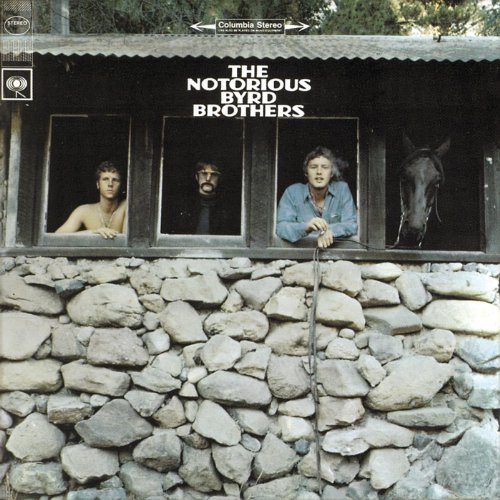
The Byrds continued to go through personnel changes at least four times a year but in between times came up with two of the year’s great albums: The Notorious Byrd Brothers and Sweetheart of the Rodeo. The latter was a fine, straight country album with gorgeous, free harmonizing and excellent material. The former was perhaps their best album to date, and surely one of the five or so best of the year. David Crosby made some brilliant song-writing contributions, but the album was mainly Roger McGuinn’s and neither he nor anyone else in rock has often equalled such cuts as “Get To You” and “Artificial Energy.”

The Grateful Dead bored a lot of people with their much awaited second release, Anthem of the Sun and Moby Grape disappointed those who know that they are (or at least were) one of the finest live bands in the country with a very mediocre second album, Wow. On the other hand, the Rascals, long thought of as a teeny bopper group, continue to mature and develop and had at least one fine single this year: “People Got To Be Free.” 

Among individual artists, Laura Nyro began to receive the recognition she deserves, and many idolize her Eli and the Thirteenth Confession. Johnny Winter, a recently discovered white Texas blues singer has already created a large following on the basis of a few guest appearances in New York. San Francisco concert promoter Bill Graham rents a vacant New York theater and opens the Fillmore East concert venue.

Canadian rock band Steppenwolf release their debut album including the single “Born to Be Wild” and San Diego Rock band Iron Butterfly releases the album In A Gadda Da Vida considered to one of the first incarnations of the genre heavy metal albums.

The Rolling Stones grew out their roots with “Beggar’s Banquet”, while The Kinks and The Zombies took giant leaps forward with new and imaginative masterpieces that forever altered their trajectories. Plus we were introduced to a bunch of new faces to the pantheon:  The Doors, Sly Stone, Fleetwood Mac, Tim Buckley and, oh yes, Led Zeppelin. British rock and roll this year was dominated by blues bands. Ten Years After managed to kick up a lot of dust, Procol Harum continued to grow into its style and came up with a fine album, Shine on Brightly.

Pink Floyd lead singer and song writer Syd Barrett is checked into a psychiatric hospital and the band replaces him with David Gilmour.

Rock ‘n’ roll was at its most free in the pre-Woodstock glow of 1968. The Beatles went to India, Johnny Cash went to Prison at Folsom with one of the great live albums ever released, the Rolling Stones put a mobile studio in a truck, The Monkees went off the air. But it couldn’t ignore what was happening in the world riots, assassinations, war, a doomed election, space travel, poverty, drugs, Civil Rights, women’s liberation. All of it seeped into the art of the free-love counterculture with that strange combination of militant idealism and comical self-regard, as though it were clear that humanity would one day look at 1968 for a generation’s heroes and villains. Fifty years later in 2018 we are in the midst of a modern drug epidemic, a tarnished presidency, a growing underclass and a renewed vigor for social progress.

Here are some of the best albums of that momentous year in no particular order.
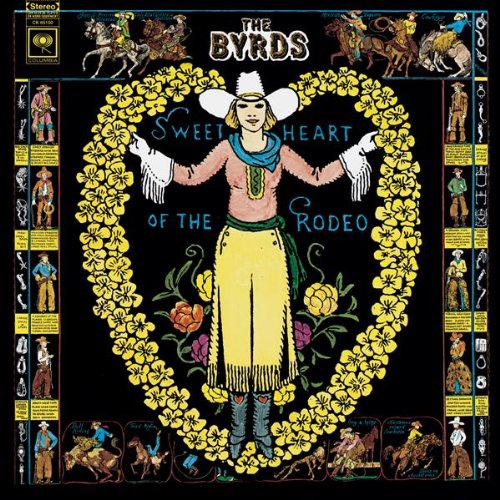
Sweetheart Of The Rodeo

The Byrds,  – Sweetheart of the Rodeo’

Even though David Crosby was booted from the Byrds in late 1967, the band had a pretty great 1968. In addition to the excellent ‘Notorious Byrd Brothers’ album, the restructured group released ‘Sweetheart of the Rodeo,’ the granddaddy of all country-rock records. Credit goes to newcomer Gram Parsons, who helped steer the Byrds in this new direction. By the time the album came out in August, Parsons was gone and most of his vocals had been replaced (you can hear his recordings on the various reissues). But it didn’t matter in the long run — his, and the album’s, influence still resonates today.
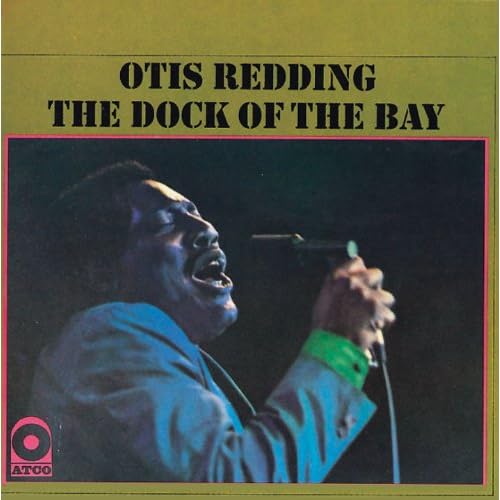
Dock Of The Bay

Otis Redding, The Dock of the Bay   Released: February. 23rd

In some ways, 1968 began with a great sadness. On December. 10th, 1967, the blossoming soul star Otis Redding was killed in a plane crash in Wisconsin that also claimed the lives of four of his band members. The tragedy had taken not just one of the era’s most distinctive singers, but an artist standing at a new horizon for R&B music. Days before his death, Redding had recorded a new composition ”(Sitting On) The Dock of the Bay,” a lilting ray of sunshine that found a winsome Otis Redding unwinding his tight groove sound and opening up new worlds for his soul.

Released posthumously in February 1968, The Dock of the Bay showcased Redding for the mainstream audience he had courted at Monterey Pop the previous summer. “Let Me Come on Home” was the hard-driving, horn-happy rocker; “The Glory of Love” the arpeggiated slow burn; “Tramp” the naughty call-and-response with Carla Thomas. It wasn’t the album Redding was supposed to make in 1968, but it nevertheless served as the crossover breakthrough he always had in him.
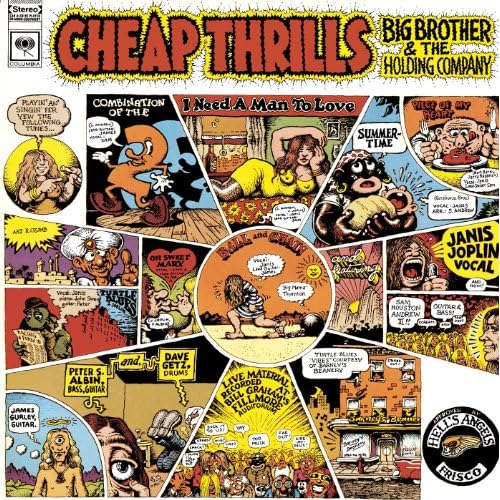
Cheap Thrills

Big Brother & Holding Company, Cheap Thrills  – Released: August. 12th

Cheap Thrills, the second album featuring Janis Joplin, marked the emphatic emergence of the Texas-born singer in the San Francisco band that had already found some local success without her. Propelled by a star-making appearance at the Monterey Pop Festival in 1967 that netted the band a deal with Columbia Records, Janis Joplin’s wavering, powderkeg voice quickly dominated the band’s psych-blues repertoire and raised the bar for practically every fiery vocalist to follow. Album entries “Summertime” and “Piece of My Heart” became signature songs, the vehicles with which she stunned the pop world with her grit and femininity, fusing her inner torment and strife with her public persona. Cheap Thrills topped the charts, one of the few products of San Francisco’s emerging underground to earn a mainstream embrace. The album’s cover, by illustrator R. Crumb, remains one of the most iconic of the era.
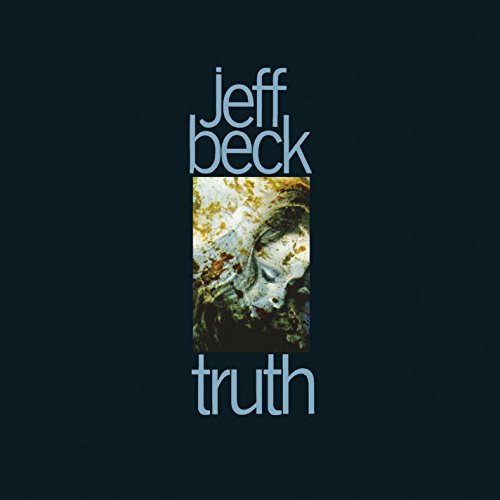
Truth

Jeff Beck,  –  Truth  

Jeff Beck’s first solo album following his departure from the Yardbirds in 1966 picks up where he left off with the influential British blues rockers: covering blues classics, standards from the Great American Songbook and even one of his old band’s songs. The guitar hero’s group on ‘Truth’ — including singer Rod Stewart and guitarist Ronnie Wood  would get co-billing on the follow-up album, 1969’s ‘Beck-Ola.’ They deserve it here too.
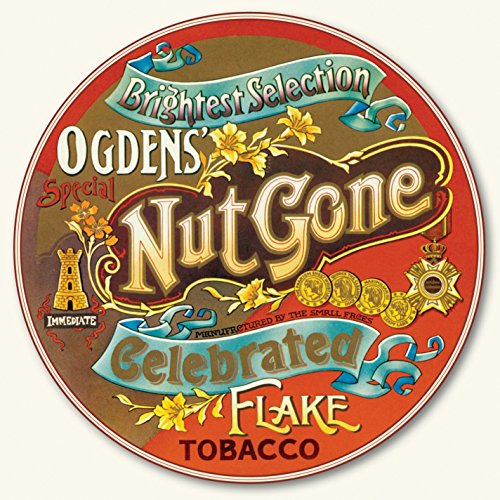
Ogdens' Nut Gone Flake

Small Faces, Ogden’s Nut Gone Flake  –  Released: May 24th

Marking a definitive break from Small Faces’ early mod and R&B underpinnings, the two-act Ogden’s Nut Gone Flake was a bold move into the realms of stylish psychedelia and the eccentric affectation of late ‘60s English invention. Although more than a hint of Steve Marriott and Ronnie Lane’s Cockney humor was inescapable—the whimsical “Rene” and “Lazy Sunday” being obvious examples—two bold anthems, “Song of a Baker” and “Long Agos and Worlds Away,” predated Led Zeppelin’s arch bombast by several months.

At the time, the round album cover, made to resemble a tobacco tin, and the sidelong gibberish of “Happiness Stan,” a pseudo fairytale narrated by English actor Stanley Unwin, also garnered plenty of attention. One of the first concept albums ever envisioned (and basically unplayable live), Ogden’s Nut Gone Flake remains a little appreciated musical masterpiece. Small Faces would disband the following year.
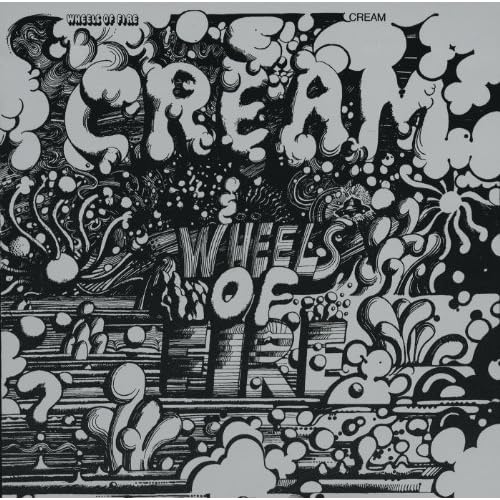
Wheels Of Fire (Remastered)

Cream, Wheels of Fire  –  Released: August

Wheels of Fire had a hard precedent to follow, coming as it did on the heels of Cream’s 1967 sophomore breakthrough, Disraeli Gears and the blues-embossed psychedelia that preceded it. Nevertheless, laden with such classics as “White Room,” “Politician” and a sterling remake of the Robert Johnson classic “Crossroads” that became a microcosm of Eric Clapton’s entire career as a blues-nicking guitar deity, it managed to express the full potency of this startling supergroup (with Jack Bruce on bass and Ginger Baker on drums) and ensure their immortality. By taking the idea of a double disc to a new level of productivity—half live, half studio—Wheels of Fire also made full use of the trio’s songwriting chops and their ability to improvise onstage. Rarely has there been such a sprawling effort capable of bringing out that ability with such flourish and finesse. This was Cream’s last real album-length musical document, with only 1969’s abridged Goodbye to follow.
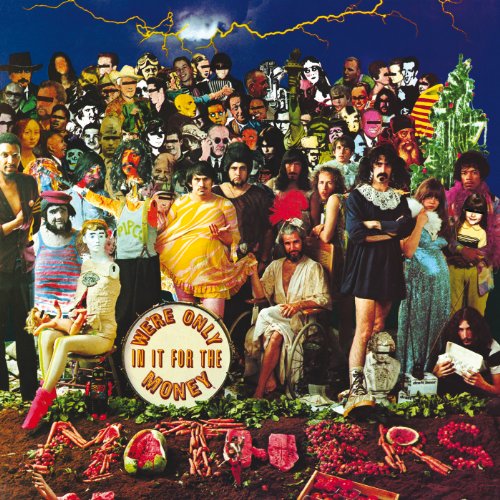
We're Only In It For The Money

Frank Zappa and the Mothers Of Invention  –  We’re Only It for the Money

More so than any other record on our list of the Top Albums of 1968, the Mothers‘ third record is the one with the most direct link to ‘Sgt. Pepper’s.’ And not just because its original parody cover photo — which ended up inside the LP after the Beatles’ management objected — is a fierce slap to the earlier record. Frank Zappa and crew’s concept album satirizes tons of Summer of Love standbys, including hippie idealism, left-wing thought processes and over-the-top concept albums.
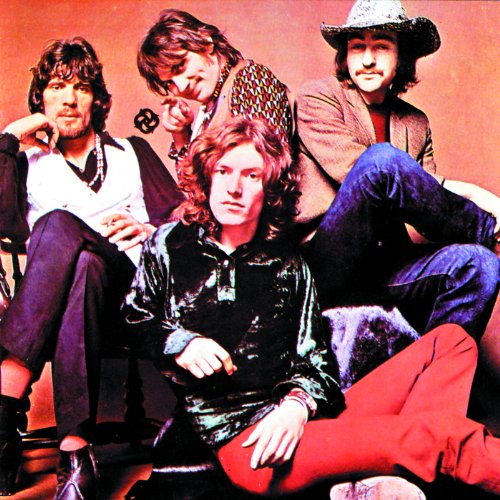
Traffic (Remasters)

Traffic, Traffic  Released: October

A follow-up to their excellent and eclectic debut, Traffic’s eponymous sophomore set found a fully congealed ensemble. The on-again, off-again participation of Dave Mason was now fully present, if only temporarily for this effort. Indeed, this was the album that represented Traffic’s transition from woodshed romanticism to forerunners of new iconic invention, a sound simultaneously purveyed by The Band in their early Americana guise. Several of the standout songs—”40,000 Headmen,” “Who Knows What Tomorrow May Bring,” “Pearly Queen”—offered druggy swirls of hippie-rock and tight soul embodied by Steve Winwood’s preternatural tenor and organ playing. Mason’s highlight, “Feelin‘ Alright,” would become a rock-radio smash for Gospel-tinged covermeister Joe Cocker the following year, and remains a mainstay in Mason’s live repertoire to this day. The definitive Traffic album, Traffic is another underrated monument of 1968.
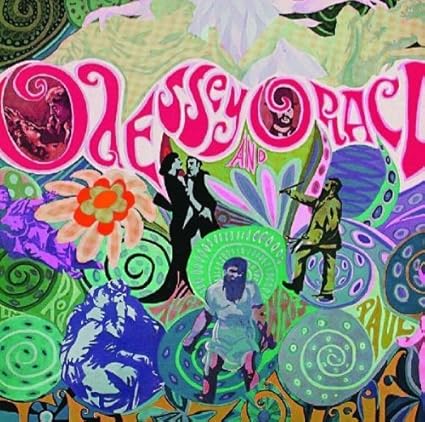
Odyssey & Oracle by ZOMBIES (2011-01-21)

The Zombies, Odyssey and Oracle  –  Released: April 19th

One of the ‘60s great unsung masterpieces of that hallowed decade, the Zombies’ Odyssey and Oracle followed on the heels of the group’s early hits “Tell Her No” and “She’s Not There,” while marking a giant leap forward. It was a set of songs flush with bold experimentation and baroque innovation, a concept not unlike that of Sgt. Pepper and other ornate musical ventures of the day. Ironically, The Zombies had broken up by the time Odyssey came out, and with its eventual smash hit, “Time of the Season,” it became a sad swan song that failed to reap the appreciation it deserved. Al Kooper championed its release in the U.S., but tepid label support doomed it to the cut-out bins practically from the get go. The original band recently reconvened (sans the late guitarist Jim Atkinson) to play the album live in its entirety, helping regain the critical kudos that evaded it originally.
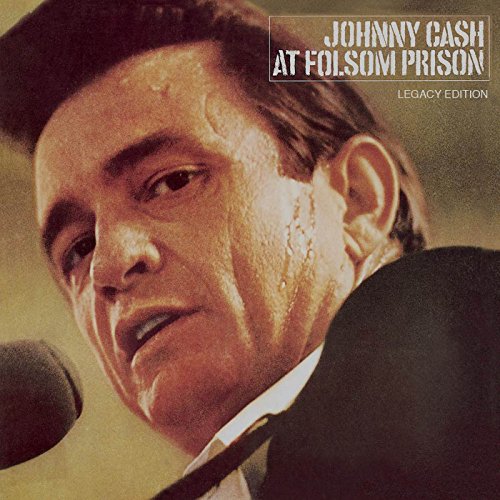
At Folsom Prison (Legacy Edition)

Johnny Cash, At Folsom Prison  –  Release: May

When Johnny Cash arrived at Folsom Prison in California on January. 13th, 1968, he was fortunate that he was there to perform for inmates and not join them behind bars. Cash had spent much of the previous few years in a drug spiral, watching his career and his life circle the drain. He was looking to revitalize his waning career, and a prison concert seemed the ideal vehicle—if Cash had always empathized with jail-bound convicts and the lonely despair that comes with the life, now he felt he could speak directly to them on terms everyone could understand. He had recorded the “Folsom Prison Blues” single back in 1955, and here was an opportunity to put faces to names. Proving that the concert was directed at a very specific audience, Cash performed a set of songs (two sets actually, which were combined into one 15-song album) that resisted self-help bromides and spiritual guff. “Dark as a Dungeon,” “The Long Black Veil” and “25 Minutes to Go” evoked the cynicism and gloom of living in captivity. Little did Cash expect, it also resonated loud and clear with a global audience who for one reason or another felt the sting of living in bondage even as they walked free.
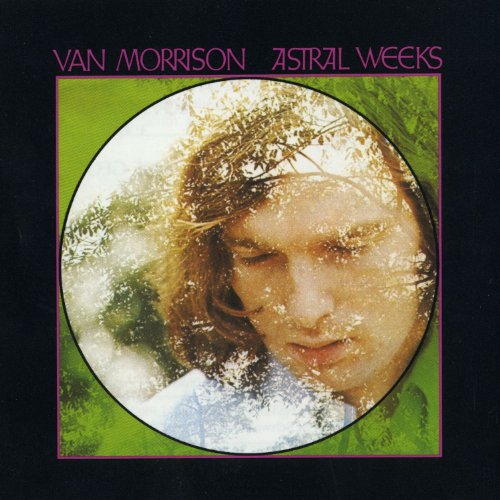
Astral Weeks

Van Morrison, Astral Weeks   –  Released: November

After attaining his initial success back in Belfast with the band Them and a couple of hits (“Gloria,” “Here Comes the Night”), Van Morrison launched his solo career with a bang in the form of the ubiquitous soul-blaring 1967 hit “Brown Eyed Girl,” off his debut LP Blowin’ Your Mind! But it was the followup that proved to be his magnum opus. Charting new experimental terrain, he initiated a sound that was open-ended and had more to do with jazz, folk, elegiac imagery and pure stream of consciousness. “Cyprus Avenue,” “Sweet Thing,” “Ballerina” and “Astral Weeks” are unbound folk songs lit up with bells, strings, flutes and Morrison’s assured vocal wail. All but ignored in Northern Ireland, the album struck a chord with critics who admired Morrison’s meditative musings and the songs’ cerebral settings. Today, it’s widely recognized as one of the most influential albums of the era and an adventurous chapter in what would be a long and varied career.
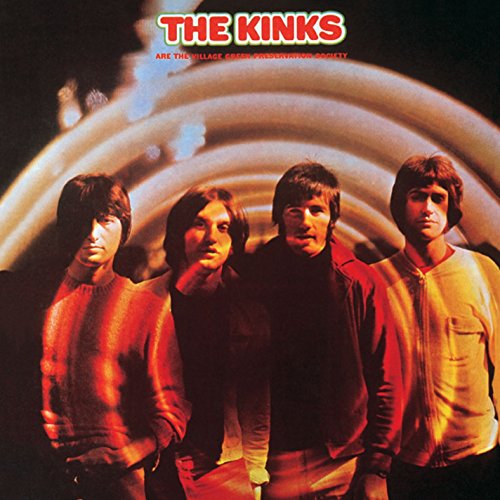
The Kinks Are the Village Green Preservation Society

The Kinks, Are the Village Green Preservation Society  –  Released: November. 22nd

The Kinks were never rabble-rousers in the truest sense of the word. For every proto-punk attempt at slash and burn with songs like “You Really Got Me” and “All Day and All of the Night,” Ray Davies and Co. were able to offer softer laments like “Waterloo Sunset” and “Set Me Free.” With an astute eye for detail, Davies could probe the absurdities of life and turn them into woeful tales of middle-class misery. He found full flourish with the lovely and graceful Village Green Preservation Society, a wonderfully wistful song cycle about idyllic England in more innocent times, flush with nostalgia, nuance and a gentle chiding of civility and sentiment in a storybook world. If Ray Davies chose to look at life through rose-colored lenses, no one could blame him for attempting to engineer this imaginative escape. It was The Kinks‘ sixth album, and final record by the original quartet, bombed when it came out in November 1968 . But it’s now considered the band’s best LP, a straight-faced concept album about Victorian-era mores. It’s lush, pastoral and brimming with gently strummed songs about small-town England that rank among the best songs that Ray Davies has ever written.
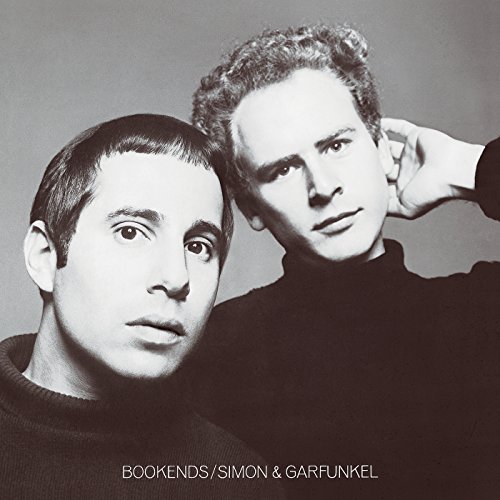
Bookends

Simon & Garfunkel, –  Bookends  –  Release: April 3rd

The most fully realized album of Simon and Garfunkel’s middle-period career, Bookends showed that the duo were capable of more than merely poignant, introspective balladry. Only their fourth studio effort, Bookends was fashioned as a concept album that imagined life’s progression from youth to old age. “Old Friends,” a song that more or less became synonymous with the duo’s often stormy relationship, encapsulated that trajectory, but several others stood apart as future standards, including “America,” “A Hazy Shade of Winter,” “At the Zoo,” and an encore performance of “Mrs. Robinson,” culled from the soundtrack to The Graduate, released the year before. At the same time, Bookends would prove an ideal lead-in to Bridge Over Troubled Water, which would follow two years later and elevate the duo to their grand crescendo.
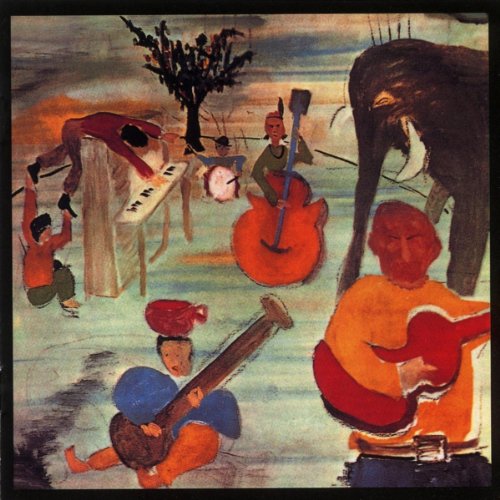
Music From Big Pink

The Band, Music From Big Pink  –  Release: July 1st

The Band’s debut record took an entirely different path from 1967’s candy-colored psych-rock explosion. Bob Dylan’s former backing group stripped down and excavated a form of American roots music that was somewhere between country and folk. Dylan had a hand in some of the songs, but the quintet proved to be one of the most significant groups of their time.

By the time The Band released their debut full-length, they were already a well-known, road-tested outfit who’d played behind Dylan during his infamous electric breakout. But their emergence as architects of archival Americana arrived with Music From Big Pink, an album borne from jams, rehearsals and songwriting sessions at the album’s namesake house in upstate New York. Though elevated in stature at the time thanks to the presence of a few Dylan compositions, the finished album found Robertson, Helm, Hudson, Danko and Manuel tossing off their musical shackles, mixing up instrumental and vocal duties, and creating a vintage variety of folk and country that seemed as effortless as it did brilliant. It was that emphasis on rural roots—the band boasted four Canadians and and Arkansan—that inspired the souped-up backwoods persona they purveyed in both sight and sound. The songs stand the test of time, and indeed, “The Weight,” “This Wheel’s On Fire,” “Tears of Rage” and “I Shall Be Released” stand among the most indelible expressions of heartland music ever recorded.

Lady Soul [w/bonus selections]

Aretha Franklin, Lady Soul   –  Released: January. 22nd

It says something about how rare and electrifying Aretha Franklin was in 1968, as a 26-year-old singer making her third album for Atlantic Records, that she could claim the title Lady Soul and not only pull it off, but then wear the crown undisputed for the next 50 years. Aretha Franklin had scored a defining hit—for both herself and women everywhere—the previous year with her cover of Otis Redding’s “Respect,” then mourned Redding’s death in December. Her mix of exuberance and despair, crying and shouting with every twist of a wounded relationship that haunts the album, courses through Lady Soul.

There’s gospel bliss on ”(You Make Me Feel Like) A Natural Woman” and down-hearted blues on “Good to Me As I Am to You.” She also fearlessly reimagines songs by her most famed male contemporaries, including a simmering cover of Curtis Mayfield’s “People Get Ready,” which had been a hit for The Impressions. Franklin’s once-in-a-century siren of a voice always powerful, always under complete control—is backed all the way by a crack New York headlined led by organist Spooner Oldham, saxophonist King Curtis and guitarist Joe South.Beggars Banquet
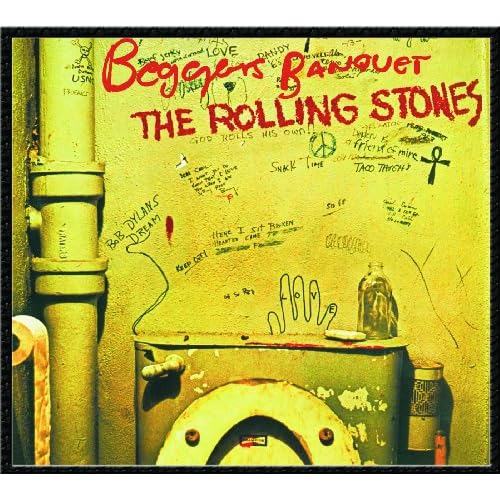
The Rolling Stones, Beggar’s Banquet  –  Released: December. 6th

Following 1967’s critically panned Their Satanic Majesties Request, attempt to cash in on psychedelia, the Rolling Stones revealed their essence on Beggar’s Banquet—a dirty, raw, set of originals that injected some country twang into the band’s R&B obsessions and set the mold for the iconic Stones sound that would stretch on for another 50 years.

Like a few other artists on our list of Albums of 1968, unplugged and settled into a more gutsy rock ‘n’ roll groove for their seventh LP. Acknowledging, but without directly borrowing from, the usual R&B and blues influences, the Rolling Stones crafted an album that’s simultaneously raw, scary and sinister. More than that, it launched a staggeringly fruitful creative period (which continued through 1972’s career milestone ‘Exile on Main St.’) when the Stones more than earned their title as the World’s Greatest Rock ‘n’ Band.

Containing at least three certified Stones classics—“Street Fighting Man,” “Salt of the Earth (featuring a rare lead vocal from Keith Richards) and the signature song “Sympathy for the Devil”Beggar’s Banquet marked the first entry in a four-album run—followed by Let It Bleed, Sticky Fingers and Exile on Main Street—that would go down as maybe the greatest winning album streak in rock history.

https://www.youtube.com/watch?time_continue=3&v=-lI3b-SbvUM

Sadly, it also marks the final album with Brian Jones’s full participation, and his reliability at the time was clearly in question. The original cover image, featuring a graffiti-strewn lavatory, was rejected by the record label and replaced with an unadorned invitation image that drew instant comparisons to the Beatles’ White Album, which had come out three weeks before. Nevertheless, the inner gatefold, depicting an enthusiastic food fight, ensured the Stones’ depravity wasn’t diminished.

The Jimi Hendrix Experience, Electric Ladyland  –  Released: October. 16th

Jimi Hendrix  radiated genius from the get-go with Are You Experienced? and Axis Bold As Love, his first two albums with the his band Experience in 1967. On Electric Ladyland, he took that extraordinary innovation into entirely new realms that were difficult to define then and remain so now. The trio, with its British rhythm section and American front man, was perfectly suited to their era, and with a supporting cast that included Traffic’s Steve Winwood, Dave Mason and Chris Wood, as well as drummer Buddy Miles and Jefferson Airplane bassist Jack Casady, Electric Ladyland redefined the concept of modern rock within a progressive posture. The album boasts everything that Hendrix (who produced it) did well: slinky psych-soul (“Burning of the Midnight Lamp,” the title track), explosive electric blues (“Voodoo Chile”), melodic pop (“Crosstown Traffic,” “Long Hot Summer Night”) and tripped-out sonic explorations that take the listener under the sea (“1983… A Merman I Should Turn to Be”) and into the heavens (“And the Gods Made Love”). His version of Dylan’s “All Along the Watchtower” showcased his ability to put an indelible mark on any popular music of the day, making it little wonder that even now, half a century later, the final studio effort recorded in Hendrix’s lifetime continues to set an almost unattainably high bar. Hendrix’s Electric Ladyland was the only two record set of the year that made it in my book. He is the authoritative lead guitarist, the coolest showman, an excellent songwriter, and a constantly improving vocalist. He has one of the finest drummers in pop music working with him and an imagination of touring performers on the scene that day, Hendrix is tops and 1968 was his year.
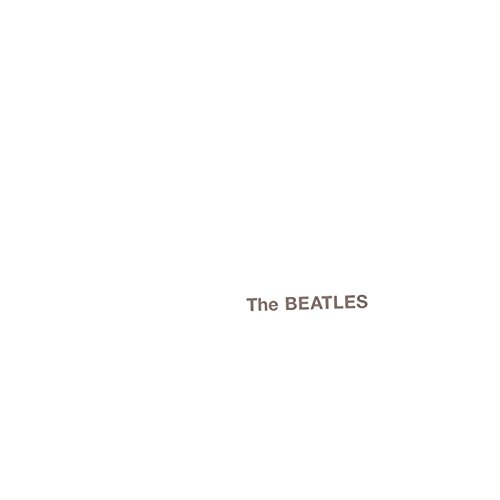
The Beatles (The White Album)

The Beatles, The Beatles  –  Release: November. 22nd

After the critical success of Sgt. Pepper’s Lonely Hearts Club Band and the rapid follow-up of the equally colorful and hallucinogenic Magical Mystery Tour, this expansive double-disc allowed the four Beatles both to stretch out artistically and reconnect with their roots in a way that would be further explored with the bare bones concept for their 1970 swan song, Let It Be.

https://www.youtube.com/watch?time_continue=1&v=zIguktsfr7k

A series of solo excursions made by an increasingly fractured band, the so-called White Album collected songs composed while the Fabs were meditating in India with the Maharishi Mahesh Yogi. It mostly resisted the pressure to address the social upheaval swirling outside the doors of EMI Studios (later called Abbey Road) and focused instead on wide-ranging song craft, with each member managing to create some of his most lasting work despite—or maybe because of—the infighting and tension that plagued the recording sessions. Lennon emerged with “Dear Prudence,” Happiness Is a Warm Gun,” “Sexy Sadie” and “Revolution 1”; McCartney composed “Martha My Dear,” “Blackbird,” “I Will” and “Helter Skelter”; and Harrison contributed “While My Guitar Gently Weeps,” “Long Long Long” and “Savoy Truffle.” Taken together, they form what many consider to be among The Beatles’ greatest collection of songs.

blood-on-the-tracks-album-cover

Blood on the Tracks is the fifteenth studio album by American singer-songwriter Bob Dylan, released in January 1975 on Columbia Records. The album marked Dylan’s return to Columbia after a two-album stint with Asylum Records. Most of the lyrics on the album revolve around heartache, anger, and loneliness.

The album, which followed on the resurgence of critical acclaim for Dylan’s work after Planet Waves, was greeted enthusiastically by fans and critics. In the years following its release it has come to be regarded as one of his best albums; it is common for subsequent records to be labeled his “best since Blood on the Tracks.” It is also commonly seen as a standard for confessional singer-songwriter albums; though Dylan has denied that the songs are autobiographical, but his son Jakob Dylan has stated: “The songs are my parents talking.”

With good reason, Dylan is most revered for his nearly unparalleled streak of legendary albums in the 1960s (including 1963’s The Freewheelin’ Bob Dylan, 1965’s Highway 61 Revisited, and 1966’s Blonde on Blonde), but he saved arguably his finest album ever until 1975, making one of rock ’n’ roll’s most jaw-dropping comebacks with the striking, emotional Blood on the Tracks. Despite being recorded in a ridiculous 10 days (barring a last-minute re-tracking of a few songs), the album remains Dylan’s warmest, richest recording—loads of purring organs, shuffling acoustics, and soulful rhythm sections. But as always with Dylan albums, it’s the words that steal the show, particularly on the bitter epic “Idiot Wind” and the haunting, uplifting “Tangled Up in Blue.” Rock’s most critically acclaimed troubadour kept on releasing wonderful albums after Blood on the Tracks but he never topped this classic album release.

https://vimeo.com/150126587

Well, Blood On The Tracks did consciously what I used to do unconsciously. I didn’t perform it well, I didn’t have the power to perform it well, but I did write the songs; they can be changed but the idea was right…
~Bob Dylan (to Matt Damsker, September 1978)

in stunning, total contrast to the previous album, Before the Flood, this 16th Dylan album triumphantly shows more subtlety and nuance than anything he’d ever done, and as honed a use of understatement as on John Wesley Harding. At the time this was the most unexpected leap of Dylan’s career. After years of comparatively second-rate work and a considerable decline in his reputation, here was an album to stand with Highway 61 Revisited and Blonde on Blonde.
~Michael Gray

‘Simple Twist of Fate’ is another absolutely extraordinary performance. Where ‘Tangled Up In Blue’ is bright, bouncy, jangly, ‘Simple Twist Of Fate’ is soft and warm and mournful. Dylan’s voice is.. gentle and rounded.
~Paul Williams (Bob Dylan: Performing Artist, Vol 2: The Middle Years 1974-1986)

in 1975: Bob Dylan went to #1 on the US albums chart with ‘Blood On The Tracks’ (Columbia Records), his second American chart topper (it reached #4 in the UK); it has come to be regarded as one of his greatest recordings, commonly considered the ‘high bar’ for confessional singer-songwriters; Bob has denied that the songs are autobiographical, but his son Jakob Dylan stated, “the songs are my parents talking”; Rolling Stone ranked it #16 on its list of ‘The 500 Greatest Albums of All Time’…

Bob Dylan BOTT back

thanks to All Dylan

Country singer Emmylou Harris had no idea what she was in for the day she arrived at Columbia Studios to sing backup on her first Bob Dylan sessions. Emmylou Harris had just received the lyrics to “Romance in Durango” and was practicing when she realized the tape had already started rolling. “I thought, ‘Oh, I can fix anything that sounds funky or out of tune with the engineer later,'” she says. But there would be no second takes. “That album was like throwing paint on a canvas. And whatever happened was what it was supposed to be. I guess that’s another part of the genius of Dylan: He knew exactly what he was doing.”

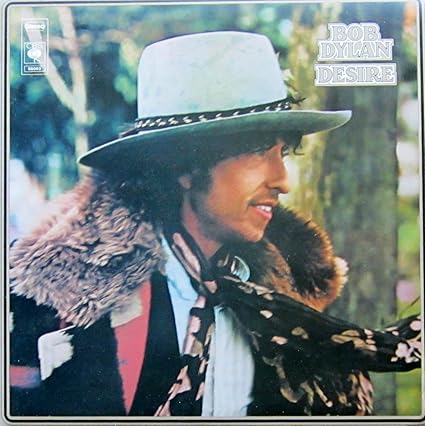
Dylan thrived on chaos and chance while making Desire, a process that was a far cry from the heavily labored recording of his prior LP, 1975’s Blood on the Tracks. One night, Dylan was walking around Greenwich Village and was approached by Jacques Levy, a playwright and director who had previously written songs with Roger McGuinn of the Byrds. Dylan invited Levy to hang out that night at the Other End, a long-standing folkie haunt; later on, at Levy’s apartment, they wrote “Isis.” “He said these magic words, ‘I’d like you to write some stuff for me,'” Levy recalled before his death in 2004. They continued work at Dylan’s summer home in the Hamptons, writing songs with a much different flavor than the reflective tone of his last album. “I guess I never intended to keep that going,” Dylan said. “Sometimes you’ll get what you can out of these things, but you can’t stay there.”

The album’s centerpieces were rooted in real-life drama. The album’s opening track and highlight, Hurricane,” was based on the plight of boxer Rubin Carter, who was charged with three murders in 1966. A decade later, his case was protested by activists, who claimed that racism drove both his arrest and trial. Dylan picked up on Carter’s story and wrote an eight-and-a-half-minute song about him, which was both controversial and eye-opening. (In 1985, Carter was released after a judge found that he didn’t receive a fair trial 20 years earlier.) It also — surprisingly, given its subject matter and length

Instead, these were sprawling narratives of outlaws and wanderers, with clearer storylines than anything Dylan had written in more than a decade. They included the cowboy-on-the-run tale “Isis” and “Joey,” the 11-minute saga of fallen gangster Joey Gallo. “I thought ‘Joey’ was a good song,” Dylan said in 1981. “I know no one said much about it.” Perhaps it was overshadowed by “Hurricane,” the story of former boxer Rubin “Hurricane” Carter, who had been convicted of triple murder in 1966. “I read his book and it really touched me,” said Dylan. “I felt that the man was innocent.” Though Dylan and Levy’s lyrics were riddled with factual errors (as was “Joey”), the song helped turn public attention to Carter’s case; his conviction was overturned in 1985. Cover version of the 1976 classic.
Guitars, Vocals and Bass by Elliott Smith recorded at home in Barnard Castle Co. Durham, England.

The album’s atmosphere was also affected by a trip Dylan had taken to the South of France, where he had gone to a “gypsy festival” on his birthday. The gypsy imagery marked songs like “One More Cup of Coffee” and “Durango.” “I think ‘exotic’ is a good word to put on it,” said Levy. The only personal song on Desire is perhaps his most personal ever: “Sara,” a plea to his then-estranged wife, Sara Lownds, to return to him. According to Levy, Lownds showed up at the studio the night they recorded the song. “You could have heard a pin drop,” said Levy. “She was absolutely stunned by it.” .More than two dozen musicians were initially gathered — a violin player, an accordion and mandolin player, even Eric Clapton at one point — to work on Desire, but by the time it was released on January  16th, 1976, its scale had lessened by quite a bit.

During recording, Dylan kept several studios going at once, filled with musicians (including Dave Mason and Eric Clapton) and non-musicians. Says bassist Rob Stoner, “They had opened up all the adjacent studios to accommodate all these hangers-on and buffet tables. It was just like a huge party. And it wasn’t conducive to getting any work done.”

Eventually, the rooms were cleared and a core group cut the entire album over two long nights. “There was just a level of excitement,” says Stoner. “Sessions were called for 7 p.m., and we only stopped at seven in the morning because that’s when they tow your car on that street. We didn’t want to lose the vibe. No drinking, no drugs, no nothing. It was pure adrenaline.”

In the autumn of 1967, Bob Dylan took a mysterious trip to Nashville. “As I recall, it was just on a kind of whim that Bob went down,” Robbie Robertson, who had spent much of that summer wood shedding with Dylan and the rest of the Band in upstate New York, would later say. To this day, no one knows for sure when Dylan wrote many of the 12 songs he recorded on his secretive visit. He hadn’t played a single one of them during his mythic sessions in the basement of “Big Pink” near Woodstock that year, and he reputedly composed several of the best new tunes (“The Ballad of Frankie Lee and Judas Priest,” “I Dreamed I Saw St. Augustine” and “Drifter’s Escape”) during his two-day train ride from New York to Nashville. Once there, he knocked out his eighth album in just three sessions in a local studio. “We did the whole thing in nine, nine and a half hours,” says Charlie McCoy, who returned from the Blonde on Blonde sessions to play bass on the new material. “He was focused. And he never used a lyric sheet. To memorize those lyrics, with all those double meanings, was impressive.”

Bob Dylan released his eighth LP “John Wesley Harding” on December. 27th, 1967. This record marked Dylan’s return to acoustic music and traditional roots, after three albums of electric rock music.

The album was well received by critics and enjoyed solid sales, reaching #2 on the US charts and topping the UK charts. The commercial performance was considered remarkable considering that Dylan had kept Columbia from releasing the album with much promotion or publicity. Less than three months after its release, John Wesley Harding was certified gold by the RIAA.

“All Along the Watchtower” became one of his most popular songs after it was recorded by Jimi Hendrix the following year. How long did it take for you to realize that “All Along the Watchtower” was not written by Hendrix?

John Wesley Harding came as a shock to fans, and decades later, it stands alone in Dylan’s discography – a hard pivot away from the revolutionary rock & roll masterpieces that preceded it, and equally distant from anything else he’d done or would do. Its tightly crafted country-folk songs lack traditional choruses but teem with cryptic tales and strange warnings. “There was to be no wasted language, no wasted breath,” Allen Ginsberg later said of the approach to songwriting that Dylan adopted after Blonde on Blonde“All the imagery was to be functional rather than ornamental.” Dylan himself traced the change to his 1966 motorcycle crash: “I thought I was just gonna get up and go back to doing what I was doing before,” he recalled in 1969. “But I couldn’t do it anymore.”

Dylan began incorporating explicit religious language into his lyrics; much has been made of Beatty Zimmerman’s report around this time that her son kept “a huge Bible open on a stand in the middle of his study.” The death of Dylan’s early idol Woody Guthrie, on October 3rd, 1967, less than a month before recording began, may well have influenced songs like “I Dreamed I Saw St. Augustine” (a surreal riff on the labor-rally folk standard “Joe Hill”).

The sound of the album was bracingly austere, which Dylan later explained as a reaction to the “very indulgent” psychedelic orchestration of albums like the Beatles’ Sgt. Pepper’s Lonely Hearts Club BandCasting aside his own ambitious arrangements on the previous year’s Blonde on Blondehe called back only two of his sidemen from that album – McCoy on bass and Kenny Buttrey on drums – and kept his interactions with them at a bare minimum. “He didn’t talk to us, which was unusual,” McCoy says. “Just did not communicate. I think he appreciated what we were doing. It was hard to tell.”

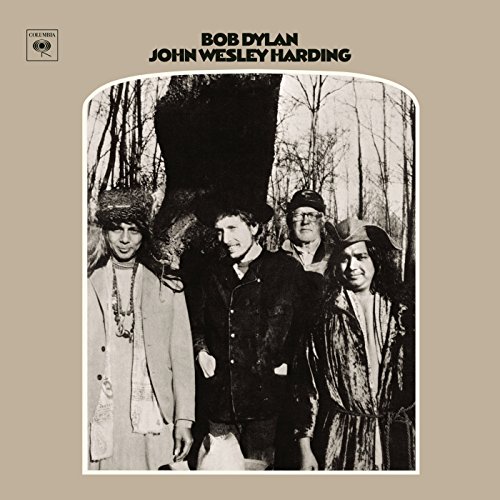
When I Paint My Masterpiece: Don’t beat yourself up if you don’t recognize the other three men in the photo on the album’s cover. Flanking Dylan on his left and right are sibling Bengali minstrels Luxman and Purna Das, the latter of whom has performed in more than 140 countries. Behind them is a local carpenter named Charlie Joy. Legend has it that if you turn the album cover upside down, you can see an image of The Beatles in the knot of the tree. While photographer John Berg acknowledges the resemblance, he denies that the likeness was intentional.

It’s All Good: The gem of the collection, of course, remains “All Along the Watchtower,” an urgent tale that centre’s around a cryptic conversation between a joker and a thief. While fans and academics alike have tried to make sense of the song’s sparse narrative for decades, an acoustic strum, a howling harmonica, and an ominous drumbeat tell us all we need to know: that something grim — perhaps even apocalyptic — is about to go down, and the characters best get away while they still can. Jimi Hendrix would go on to transform the simple acoustic song into an expansive jam full of portent and electricity. For what it’s worth, Dylan preferred the guitar god’s version and styled his own performances of the song after Hendrix from then on.

It Ain’t Me, Babe: Near the middle of the album sits “The Ballad of Frankie Lee and Judas Priest,” a rambling morality play that sticks out among its more laconic brethren. While Dylan does offer us a moral at the story’s conclusion, most listeners will probably echo the sentiments muttered under the breath of the boy in the penultimate stanza: “Nothing is revealed.”

Blowin’ in the Wind: “Outside in the distance/ A wildcat did growl/ Two riders were approaching/ The wind began to howl” — from “All Along the Watchtower”

Closing track “I’ll Be Your Baby Tonight” offers a welcome respite after 11 tracks that make you feel like you didn’t pay enough attention in Sunday school or your Bible as literature class. The ambling send-off holds no grand mysteries, offering only the promise of a bottle and some companionship for the night. We’ll take it.

While Dylan has used “All Along the Watchtower” (Setlist.fm shows it’s his most-played song) as a thundering closer for hundreds of performances on his Never Ending Tour, other songs from John Wesley Harding, like “Drifter’s Escape” and “The Wicked Messenger,” have joined “I’ll Be Your Baby Tonight” as semi-regular inclusions between better-known fare.

John Wesley Harding found a very different Dylan returning to his first proper recording after his infamous motorcycle crash and sessions with The Band at Big Pink. More a collection of acoustic parables than anything else, the album is noted for its simple arrangements, economical lyrics, and Biblical qualities. Gone is the kinetic electricity and fountains of language gushing forth on previous releases, yet there’s something appealing to these simple, yet still mysterious, tales, especially when absorbed as a whole. While bands like The Beatles were pushing boundaries, Dylan — who insisted the record be released without publicity or a single — seemed to be in retreat. Regardless, the album climbed the charts in 1968 and has grown in esteem among both fans and critics ever since.

Happy 49th Birthday to the LP “John Wesley Harding”!!

Image may contain: one or more people

Season four of BBC’s Peaky Blinders came to a close last night, and to round out the season, they enlisted Laura Marling to cover Bob Dylan’s “A Hard Rain’s a-Gonna Fall,” from 1962’s The Freewheelin’ Bob Dylan. Marling’s voice is more soothing than Dylan’s, but still as commanding, as she blends her vocals over rollicking acoustic guitar punctuated with electric strums, building with intensity from start to finish.

The crime drama series previously tapped Jarvis Cocker and Iggy Pop to cover Nick Cave’s “Red Right Hand,” the theme of the show, to appear in last week’s episode. listen to Marling’s cover of Dylan’s classic below.

Laura Marling’s cover of Bob Dylan’s ‘A Hard Rain’s A-Gonna Fall’, recorded especially for the series finale of TV Drama Peaky Blinders.

Image result

Rostam recently appeared on SiriusXMU to perform a stripped-down set of songs from his September solo debut Half-Light, and along with those tracks, he also paid homage to Bob Dylan by covering his classic “Like A Rolling Stone,” in which the song recently celebrated its 52nd birthday.

Rostam gives the folky anthem the baroque indie-pop treatment, slowing down the tempo and transforming the lyrical ramblings into an elegant tune. Equipped with only a piano, he polishes up the song, replacing Dylan’s coarse melodic chants with his soft and tender crooning.

Listen to the cover below, and underneath, find the original 1965 version. Rostam is gearing up to embark on a North American tour at the beginning of next year, maybe some UK dates will follow

Rostam (Rostam Batmanglij) covers the Bob Dylan classic, Like A Rolling Stone, for SiriusXMU

Take What You Need UK Covers Of Bob Dylan Songs 1964-69In February of 1965, Melody Maker asked John Lennon about his enthusiasm for Bob Dylan material and Dylan interpretations. “I just felt like going that way,” he said about the new acoustic guitar-based material The Beatles were then recording at Abbey Road. “If I’d not heard Dylan, it might have been that I’d written stuff and sung it like Dominic Behan, or somebody like that.” Despite the non-committal answer, Dylan’s impact on Lennon was clear .
Out of the public eye, Lennon after being hipped to the album by George Harrison had spent summer 1964 absorbing Dylan’s Freewheelin’ album. All four Beatles smoked cannabis with Dylan. Lennon went further and confessed he’d written “a folky song which I try to sing in a Dylan style. I didn’t want to overdo it, but I like it.

Indeed, The Beatles weren’t the only British pop stars in thrall to Dylan. In openly acknowledging this, they and Donovan had been beaten to the record shops in 1964 by The Animals, whose first two singles – “Baby Let Me Take You Home” and “House of the Rising Sun” – reinterpreted material from Dylan’s first album, issued in 1962. Those were pre-existing songs covered by Dylan but when he began issuing his own compositions they were, in turn, also ripe for covering.

https://www.youtube.com/watch?v=zcFnPkA3R8k

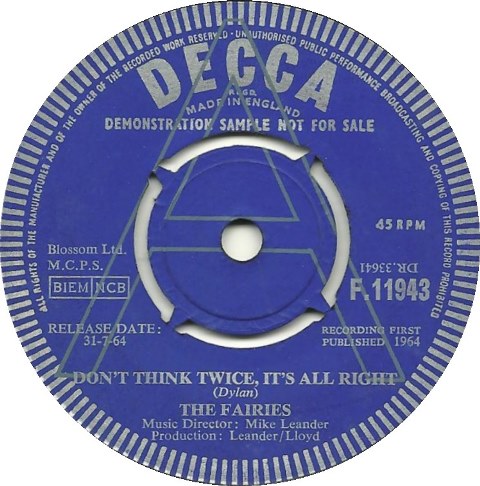
Any of Dylan’s songs were up for grabs and the enlightening, entertaining new 22-track compilation “Take What You Need: UK Covers of Bob Dylan Songs 1964-69” charts the early days of these endeavours on this side of the Atlantic. The oldest track is The Fairies’ version of “Don’t Think Twice It’s Alright”, issued on 31st July 1964. The latest are five tracks from 1969 which range from Joe Cocker to Sandie Shaw, and Fairport Convention to the Tim Rice/Andrew Lloyd Webber-sponsored The Mixed Bag.

Britain, though, was initially resistant to Dylan’s charms. He had been in London at the end of 1962 and appeared on television, as well as live at The Troubadour and other folk clubs. As the fine liner notes say, “few on the British scene were taken with Dylan; most were at best indifferent or, in the case of arch traditionalists Peggy Seeger and Ewan MacColl, completely dismissive.” There was one exception: the open-minded Martin Carthy. He alone was not going to help Dylan’s recognition.

Take What You Need UK Covers Of Bob Dylan Songs 1964-69 The Fairies Don’t Think Twice it’s Alright

So how did Bob Dylan become embedded in the fabric of British pop? The generalised opening of minds and ears integral to Beatlemania is one answer. Playing London in May 1964 helped push Dylan towards the pop, rather than niche folk, market. More specifically, bands like The Animals were blues fans who also liked folk and were on the lookout for material. Cover versions laid the table for the real thing – Dylan himself. Another factor was the high-profile support Dylan enjoyed in America which attracted attention in Britain. Joan Baez’s espousal did no harm and Peter, Paul and Mary’s version of “Blowin’ in the Wind” in June 1963 was a massive US hit. Handily for Dylan, the manager he shared with the latter was keen on cross-collateralisation. It all ensured 1964 became Dylan’s breakthrough year in the UK.

Take What You Need kicks off with The Fairies’ bouncy “Don’t Think Twice It’s Alright”, which features session-era Jimmy Page on guitar. It’s followed by Marianne Faithfull’s Baez-style “Blowin’ in the Wind” (on which Page probably also appears). She sings preciously, as if afraid of the song. The Fairies blast away with nary a care for the nature of the source material. This twin-track approach courses through the compilation: wholesale reinterpretation versus on-eggshells respect for what’s being recorded.

Artistically and commercially, the most successful of the Britain’s Sixties Dylan fanciers were serial Dylan interpreters Manfred Mann, whose still daisy-fresh “If You Gotta Go, Go Now” is sandwiched between the Ian Campbell Folk Group’s gloopy, portentous “The Times They Are A-Changin’” and The Cops ‘N Robbers‘ tense “It’s All Over Now Baby Blue”. Next up is Chad & Jeremy’s limp “Mr Tambourine Man”.

Take What You Need UK Covers Of Bob Dylan Songs 1964-69 Manfred Mann If you Gotta go go Now

As the decade winds on, the mostly chronologically sequenced Take What You Need scoops up some extraordinary obscurities. Alex Campbell’s superb “Tom Thumb’s Blues” balances reverence for the material with spontaneity. Best of all is The Factotums’ romp through “Absolutely Sweet Marie”. Conversely, Cocker’s clod-hopping assassination of “Just Like a Woman” – with yet more Jimmy Page – is almost impossible to listen to.

Take What You Need is a wild ride. And it should be. During the years covered, it was open season on Dylan’s songs. The smooth comes with the rough and, in acknowledging this, the true nature of British musician’s response to Dylan is revealed.


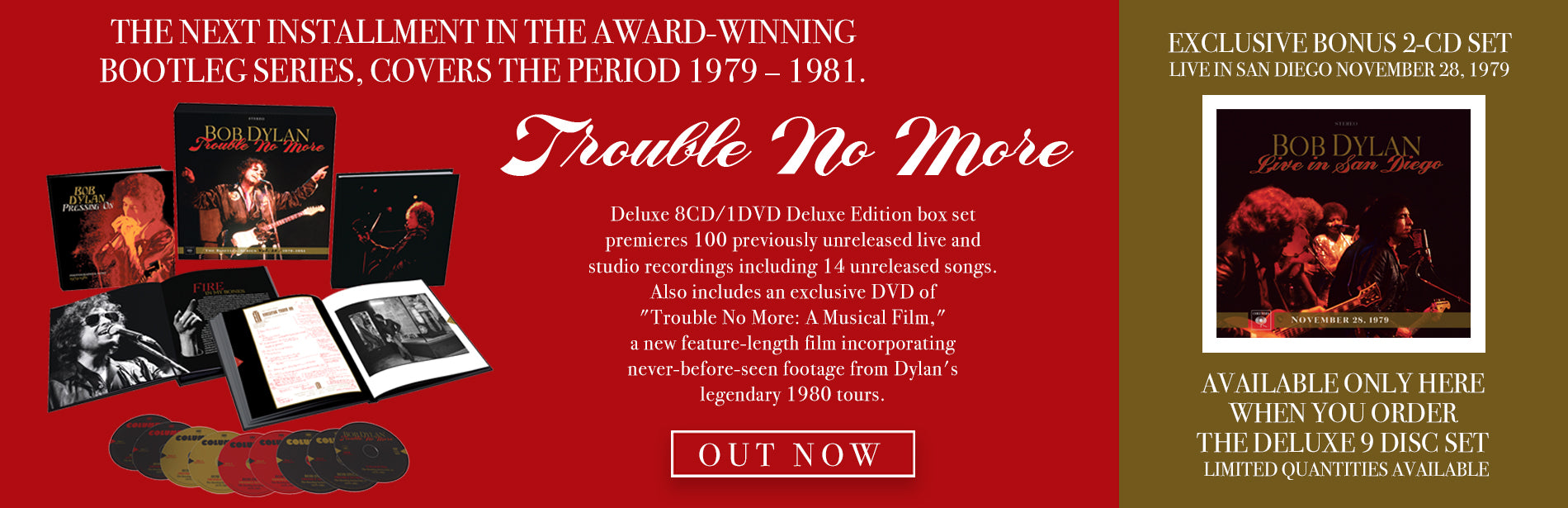
Sony have announced the November release of a boxed set devoted to archival material from “the gospel years.” The nine-disc set, titled “Trouble No More – The Bootleg Series Vol. 13 / 1979-1981,” features more than 100 previously unreleased live and studio tracks from the three-year period that found Dylan recording and performing almost exclusively Christian material.

While it stands as the most controversial era of Dylan’s career (yes, even more controversial than the deliberately fan-alienating “Self Portrait”), that three-year period has long fascinated the most hardcore faithful, because of the fiery performances Dylan was turning in with one of the best bands he ever assembled in his five-and-a-half-decade career. The patience of the Dylan die-hards has been rewarded with a collection that includes 15 songs he never officially released in any form.

The main attraction of the set, though — available only as part of the CD package, not the download version — is a DVD of a newly assembled film, also called “Trouble No More.” The hour-long movie, which will have its public premiere October. 3rd at the New York Film Festival, screened for a small invited audience Tuesday night at the Sony lot in Culver City. About three-fourths of the film consists of pro-shot videotape of the gospel material being performed at 1980 tour dates. Between the songs, meanwhile, actor Michael Shannon appears in newly shot scenes playing an evangelical preacher and reading freshly scripted sermons, a curious artistic choice that pays off in thematically contextualizing the vintage concert material.

A few excerpts from the audio discs were played for invitees at the Sony gathering, including a walloping live version of “The Groom’s Still Waiting at the Altar” that features Carlos Santana as the guest guitar soloist. There were also A/B excerpts of live tracks to show how radically some of the “Slow Train Coming” songs evolved between the 1979 and ’80 tours, along with cassette recordings from tour rehearsals demonstrating very different arrangements Dylan tried out before ever taking the songs on the road.

The studio track that may generate the most immediate buzz is “Making a Liar Out of Me,” which a member of the Dylan camp described as so rare, it was “never even whispered about” before the September 1980 recording session was discovered recently. (The existence of the song was mentioned in a Clinton Heylin book, and the lyrics are said to be present in the Dylan archive at the University of Tulsa, but it otherwise has escaped any public notice.) There are 11 other studio versions of previously unreleased tunes that have only been heard on live bootlegs, if at all, including “Ain’t Gonna Go to Hell for Anybody,” “Cover Down, Pray Through,” “Thief on the Cross,” “City of Gold,” “Ain’t No Man Righteous, Not One,” “Stand by Faith,” and “Yonder Comes Sin.”

Guitarist Fred Tackett, a mainstay of Dylan’s band through the “Slow Train” and “Saved” tours, was in attendance at Wednesday’s screening, marveling at the 37-year-old footage. “We shot up in Toronto, and we were up two or three days doing it, and it just disappeared,” Tackett said. “Nobody ever heard about it again. Then Monalisa (Young), one of the singers, sent me a link saying there was a new mastered version of it, and I saw that, just the concert footage, but this is the first time I’ve seen the movie. Actually seeing Bob sing the songs, it’s just the best. I could sit here all night and watch it about three times. The mix is beautiful. I just wish Tim Drummond (the bass player, who died in 2015) could have lived to see it,” Tackett added.

You can now preorder ‘Trouble No More – The Bootleg Series Vol. 13 / 1979-1981’ as a Deluxe 9 Disc Box Set, featuring a DVD of never-before-seen footage from Dylan’s 1980 tours.

EXCLUSIVE BONUS 2-CD SET OF THE FULL LIVE SHOW FROM SAN DIEGO, 1979 WHEN YOU PRE-ORDER THE DELUXE 9 DISC BOX SET FROM BOBDYLAN.COM

LIMITED QUANTITIES WHILE STOCKS LAST…

  • 8CD/1DVD Deluxe Edition box set
  • Premieres 100 previously unreleased live and studio recordings including 14 unreleased songs
  • Exclusive DVD of “Trouble No More: A Musical Film,” a new feature-length film incorporating never-before-seen footage from Dylan’s legendary 1980 tours
  • 120 page photo book
  • Extensive liner notes

Release date: 3rd November 2017

Disc 1: Live
1. Slow Train (Nov. 16, 1979)
2. Gotta Serve Somebody (Nov. 15, 1979)
3. I Believe in You (May 16, 1980)
4. When You Gonna Wake Up? (July 9, 1981)
5. When He Returns (Dec. 5, 1979)
6. Man Gave Names to All the Animals (Jan. 16, 1980)
7. Precious Angel (Nov. 16, 1979)
8. Covenant Woman (Nov. 20, 1979)
9. Gonna Change My Way of Thinking (Jan. 31, 1980)
10. Do Right to Me Baby (Do Unto Others) (Jan. 28, 1980)
11. Solid Rock (Nov. 27, 1979)
12. What Can I Do for You? (Nov. 27, 1979)
13. Saved (Jan. 12, 1980)
14. In the Garden (Jan. 27, 1980)

Disc 2: Live
1. Slow Train (June 29, 1981)
2. Ain’t Gonna Go to Hell for Anybody (Unreleased song – Apr. 24, 1980)
3. Gotta Serve Somebody (July 15, 1981)
4. Ain’t No Man Righteous, No Not One (Unreleased song – Nov. 16, 1979)
5. Saving Grace (Nov. 6, 1979)
6. Blessed Is the Name (Unreleased song – Nov. 20, 1979)
7. Solid Rock (Oct. 23, 1981)
8. Are You Ready? (Apr. 30, 1980)
9. Pressing On (Nov. 6, 1979)
10. Shot of Love (July 25, 1981)
11. Dead Man, Dead Man (June 21, 1981)
12. Watered-Down Love (June 12, 1981)
13. In the Summertime (Oct. 21, 1981)
14. The Groom’s Still Waiting at the Altar (Nov. 13, 1980)
15. Caribbean Wind (Nov. 12, 1980)
16. Every Grain of Sand (Nov. 21, 1981)

Disc 3: Rare and Unreleased
1. Slow Train (Soundcheck – Oct. 5, 1978)
2. Do Right to Me Baby (Do Unto Others) (Soundcheck – Dec. 7, 1978)
3. Help Me Understand (Unreleased song – Oct. 5, 1978)
4. Gonna Change My Way of Thinking (Rehearsal – Oct. 2, 1979)
5. Gotta Serve Somebody (Outtake – May 4, 1979)
6. When He Returns (Outtake – May 4, 1979)
7. Ain’t No Man Righteous, No Not One (Unreleased song – May 1, 1979)
8. Trouble in Mind (Outtake – April 30, 1979)
9. Ye Shall Be Changed (Outtake – May 2, 1979)
10. Covenant Woman (Outtake – February 11, 1980)
11. Stand by Faith (Unreleased song – Sept. 26, 1979)
12. I Will Love Him (Unreleased song -Apr. 19, 1980)
13. Jesus Is the One (Unreleased song – Jul. 17, 1981)
14. City of Gold (Unreleased song – Nov. 22, 1980)
15. Thief on the Cross (Unreleased song – Nov. 10, 1981)
16. Pressing On (Outtake – Feb. 13, 1980)

Disc 4: Rare and Unreleased
1. Slow Train (Rehearsal – Oct. 2, 1979)
2. Gotta Serve Somebody (Rehearsal – Oct. 9, 1979)
3. Making a Liar Out of Me (Unreleased song – Sept. 26, 1980)
4. Yonder Comes Sin (Unreleased song – Oct. 1, 1980)
5. Radio Spot January 1980, Portland, OR show
6. Cover Down, Pray Through (Unreleased song – May 1, 1980)
7. Rise Again (Unreleased song – Oct. 16, 1980)
8. Ain’t Gonna Go to Hell for Anybody (Unreleased song – Dec. 2, 1980)
9. The Groom’s Still Waiting at the Altar (Outtake – May 1, 1981)
10. Caribbean Wind (Rehearsal – Sept. 23, 1980)
11. You Changed My Life (Outtake – April 23, 1981)
12. Shot of Love (Outtake – March 25, 1981)
13. Watered-Down Love (Outtake – May 15, 1981)
14. Dead Man, Dead Man (Outtake – April 24, 1981)
15. Every Grain of Sand (Rehearsal – Sept. 26, 1980)

Disc 5: Live in Toronto 1980
1. Gotta Serve Somebody (April 18, 1980)
2. I Believe In You (April 18, 1980)
3. Covenant Woman (April 19, 1980)
4. When You Gonna Wake Up? (April 18, 1980)
5. When He Returns (April 20, 1980)
6. Ain’t Gonna Go To Hell For Anybody (Unreleased song – April 18, 1980)
7. Cover Down, Pray Through (Unreleased song – April 19, 1980)
8. Man Gave Names To All The Animals (April 19, 1980)
9. Precious Angel (April 19, 1980)

Disc 6: Live in Toronto 1980
1. Slow Train (April 18, 1980)
2. Do Right To Me Baby (Do Unto Others) (April 20, 1980)
3. Solid Rock (April 20, 1980)
4. Saving Grace (April 18, 1980)
5. What Can I Do For You? (April 19, 1980)
6. In The Garden (April 20, 1980)
7. Band Introductions (April 19, 1980)
8. Are You Ready? (April 19, 1980)
9. Pressing On (April 18, 1980)

Disc 7: Live in Earl’s Court, London – June 27, 1981
1. Gotta Serve Somebody
2. I Believe In You
3. Like A Rolling Stone
4. Man Gave Names To All The Animals
5. Maggie’s Farm
6. I Don’t Believe You
7. Dead Man, Dead Man
8. Girl From The North Country
9. Ballad Of A Thin Man

Disc 8: Live in Earl’s Court – London – June 27, 1981
1. Slow Train
2. Let’s Begin
3. Lenny Bruce
4. Mr. Tambourine Man 5. Solid Rock
6. Just Like A Woman
7. Watered-Down Love
8. Forever Young
9. When You Gonna Wake Up
10. In The Garden
11. Band Introductions
12. Blowin’ In The Wind
13. It’s All Over Now, Baby Blue
14. Knockin’ On Heaven’s Door

Disc 9: Bonus DVD
Trouble No More – A Musical Film

DVD EXTRAS:
– Shot of Love
– Cover Down, Pray Through
– Jesus Met the Woman at the Well (Alternate version)
– Ain’t Gonna Go to Hell for Anybody (Complete version)
– Precious Angel (Complete version)
– Slow Train (Complete version)Trouble No More: The Bootleg Series Vol. 13 (1979-1981) - 2CD


Image result

“The Freewheelin’ Bob Dylan” is certainly one of the most well-known Dylan’s record. It put Bob on the map as this new Folk singer with incredible original compositions and lyrics.

The album in itself is a work of art, gathering some of his best songs like Blowin’ In The Wind, Girl From The North Country, Masters Of War, A Hard Rain’s A-Gonna Fall, Don’t Think Twice, It’s All Right, and more. Any artist with just one of these songs would have become a star (Blowin’ In The Wind launched Peter, Paul & Mary on the national stage).
It is especially poignant to hear outtakes of The Death Of Emmett Till and Talking John Birch Paranoid Blues , With that album, Bob Dylan gradually became the voice of a generation, a prophet, and a leader in the Civil Rights Movement, culminating with him singing during the March On Washington, along Joan Baez and others. He refused all those terms and continued his path into other musical territories for the next 55 years.

The Freewheelin’ is also revered for its cover, Bob and Suze Rotolo (Bob’s girlfriend from 1962 to 1964) walking down in West Village in New York, the epitomy of youth and love for the Baby Boomers.

Most of the material was unknown to most until 2012. At the end of that year, Columbia (Sony) released an under the radar collection, called “The Copyright Extension Collection Vol.I “, with less than a hundred copies. This collection had to be released due to changes in the European laws on copyright. If Sony wanted to keep the rights on those recordings for the next 70 years, they had to release all the material they have before the 50 years mark, each year. That is why we have for Christmas every year since 2012 a special release from several musical acts.

On this video, you have more than 50 outtakes available in superb quality, spanning from April 1962 to April 1963, including the rare tracks of the promotional edition of the album like Rocks & Gravel (broadcasted in an overdubbed version on the first season of the HBO show True Detective). A really great collection.  Edited it down so to exclude officially released material on the album or the bootleg series.

http://https://www.youtube.com/watch?v=7YRFHb8KMkw

Studio A, Columbia Recording Studios, New York City: 24 April 1962    The 1st Freewheelin’ Bob Dylan session, produced by John Hammond.

1. Goin’ To New Orleans (Take 1) 2. Goin’ To New Orleans (Take 2) 3. Sally Gal (Take 2) 4. Sally Gal (Take 3) 5. Rambling, Gambling Willie (Take 1) 6. Rambling, Gambling Willie (Take 3) 7. Corrina, Corrina (Take 1) 8. Corrina, Corrina (Take 2) 9. The Death Of Emmett Till 10. Talking John Birch Paranoid Blues 11. (I Heard That) Lonesome Whistle [Take 2]

Studio A, Columbia Recording Studios, New York City: 25 April 1962    The 2nd Freewheelin’ Bob Dylan session, produced by John Hammond.

1. Rocks And Gravel (Solid Road) [Take 3] 2. Sally Gal (Take 4) 3. Sally Gal (Take 5) 4. Baby Please Don’t Go (Take 1) 5. Milk Cow (Calf’s) Blues (Good Morning Blues) [Take 1] 6. Milk Cow (Calf’s) Blues (Good Morning Blues) [Take 3] 7. Wichita Blues (Going To Louisiana) [Take 1] 8. Talkin’ Bear Mountain Picnic Massacre Blues (Take 2) 9. Milk Cow (Calf’s) Blues (Good Morning Blues) [Take 4] 10. Wichita Blues (Going To Louisiana) [Take 2]

Studio A, Columbia Recording Studios, New York City: 9 July 1962   The 3rd  Freewheelin’ Bob Dylan session, produced by John Hammond.

1. Baby, I’m In The Mood For You (Take 2) 2. Blowin’ In The Wind (Take 1) 3. Blowin’ In The Wind (Take 2) 4. Worried Blues (Take 2)  5. Babe, I’m In The Mood For You (Take 4) 6. Bob Dylan’s Blues (Take 2)

Studio A, Columbia Recording Studios, New York City: 26 October 1962   The 4th  Freewheelin’ Bob Dylan session, produced by John Hammond.

1. Corrina, Corrina (Take 2) 2. Corrina, Corrina (Take 3) 3. That’s All Right, Mama (Take 1) 4. That’s All Right, Mama (Take 3) 5. That’s All Right, Mama (Take 5) 6. Mixed Up Confusion (Take 3) 7. Mixed Up Confusion (Take 5) 8. Corrina, Corrina (Take 7)

Studio A, Columbia Recording Studios, New York City: 1 November 1962    The 5th Freewheelin’ Bob Dylan session, produced by John Hammond.

1. Mixed Up Confusion (Take 1) 2. Mixed Up Confusion (Take 2) 3. Mixed Up Confusion (Take 4) 4. Mixed Up Confusion (Take 5) 5. Mixed Up Confusion (Take 6) 6. That’s All Right Mama 7. Rocks And Gravel (Solid Road) [Take 1] 8. Rocks And Gravel (Solid Road) [Take 2]

Studio A, Columbia Recording Studios, New York City: 14 November 1962    The 6th Freewheelin’ Bob Dylan session, produced by John Hammond.

1. The Ballad Of Hollis Brown (Take 2) 2. Kingsport Town (Take 1) 3. Whatcha Gonna Do? Studio A, Columbia Recording Studios, New York Studio: 6 December 1962   The 7th Freewheelin’ Bob Dylan session, produced by John Hammond. 1. Hero Blues (Take 1) 2. Whatcha Gonna Do? (Take) 3. I Shall Be Free (Take 3) 4. I Shall Be Free (Take 5) 5. Hero Blues (Take 2) 6. Hero Blues (Take 4)

Credits to Dylanstubs.com

Desire

“Although not as revered as Blood On The Tracks, Desire is still one of Dylan’s strongest album with incredible songs like the protest song Hurricane about Rubin Hurricane Carter, a black boxer wrongfully accused of murder. The song launched the Rolling Thunder Revue across New England to plead for his release from prison, culminating with a concert at Madison Square Garden and another inside Hurricane’s jail. You also have songs like Isis, Romance in Durango, Oh, Sister, and finally Sara. The last song is obviously dedicated to his then wife Sara, when the couple was in a midst of breaking up (which will happen two years later).

Not many outtakes are circulating from that album however, albeit from an alternate version of Hurricane, and alternate takes of Joey and the single Rita May. Other outtakes exist but were released on Bootleg Series Vol. 1-3 (Catfish, Golden Loom) and the magnificent Abandoned Love on Biograph.
On the bootleg, you will find the quadrophonic version of the album (the original intended mix but since the technology didn’t allow a large release, the album was consequently available only on stereo with another mix). You will also have some live recordings of the album through the years, and of course most of the outtakes of Desire.
Another surprise is the session Bob had with Bette Midler for her album Songs From The New Depression with Nuggets of Rain (a spoof of Buckets of Rain from Blood On The Tracks) and the complete rehearsal of that song (with Bob talking, working, and sometimes flirting with Bette Midler).

https://www.youtube.com/watch?v=v8w-rRLDqcI&t=673s

Tracklist
Quadraphonic Desire
1. Hurricane
2. Isis
3. Mozambique
4. One More Cup Of Coffee (Valley Bellow)
5. Oh, Sister
6. Joey
7. Romance In Durango
8. Black Diamond Bay
9. Sara
10. Hurricane (Live – Clinton Correctional Institute, Dec 7, 1975)
11. Romance In Durango (Live – Hammersmith Apollo, Nov 24, 2003)
12. Abandoned Love (Live – The Other End, July 3, 1975)

Abandoned Desire
1. Joey (Alternate Take)
2. Rita May (Single Version)
3. Catfish
4. Golden Loom
5. Hurricane (“Libel” Version)
6. Rita May (Alternate Take)
7. Abandoned Love
8. People Get Ready
9. Nuggets Of Rain
10. Rehearsal Dialogue
11. Buckets Of Rain
12. Joey (Alternate Take) [Corrected]

Credits to Dylanstubs.com