In April 1992 The Cure released their 9th album “Wish”. To celebrate the 25th year anniversary of this iconic album many Sydney acts will come together to play and sing the entire album plus many many other songs off their previous 8 albums before its release. The Factory Theatre in Sydney hosted the celebration of the 25th Anniversary to the Cure’s ninth album “The Wish” with a complete front to back of the album headlined by Steve Kilbey of The Church.
Steve Kilbey (The Church), The Exploding Boys, The Hummingbirds, Jamie Hutchings, Peter Fenton (CROW), Dave Challinor (Sounds Like Sunset), J M S Harrison, Christine Jane + many more!”
With the original album remastered from the analog tapes (we’ve heard the test pressings and it does laps around the original), this deluxe re-issue does not disappoint.
In his new liner notes for this reissue, Rolling Stone’s David Fricke calls High Land, Hard Rain “ten songs of anxious yearning, romantic urgency, big hurt and hard-won learning, distilled into compact dramas of buckskin-folk jangle and skewed-pop elegance.” We call it one of the greatest debut albums in the history of rock ‘n’ roll. That it was written and conceived by mastermind Roddy Frame when he was just Eighteen Years Old, well… that just defies all logic and sense of fair play.
Remarquable Records issued a Limited 10-track LP. It contains 10 previously unreleased studio recordings co-produced by Steve Lillywhite and featuring Steve Jones and Paul Cook (Sex Pistols); Phil Lynott (Thin Lizzy); Peter Perrett and Mike Kellie (The Only Ones); Patti Palladin (Snatch); Paul Gray (Eddie and the Hot Rods) plus the Heartbreakers. The set has a 20″ x 10″ four page poster insert, as well as a download card for the songs.
JOHNNY THUNDERS : 1978 is the banner of our first REMARQUABLE project which documents Johnny’s career-peak year with releases that reveal for the first time the extent of his studio activities accompanied by restored or previously unpublished photographs from the period, plus an ongoing narrative allowing an insight into the year that produced his personal favourite album ‘SO ALONE’ and his most popular solo single ‘You Can’t Put Your Arms Around A Memory’. Original tapes have been sourced and restored and surviving participants – musicians, producers, engineers, designers, photographers, managers and record label personnel have contributed to our project allowing for as comprehensive a tale of 1978 as is possible.
Johnny Thunders. New York Doll. Heartbreaker. Rock’n’roller. Addict. Johnny has simultaneously inspired guitarists from his own, and every following generation and conversely sidestepped inclusion in any and every Top Guitarists listing over the same period. Critical pariah, and popular hero, Johnny exalted the very essence of the classic twentieth century rock’n’roll myth. (Stick his name in a web browser if you need to know more – or check out the official 1978 biography which accompanied his ‘So Alone’ album and is reproduced in our forthcoming special edition re-issue).
The album sleeve contains a previously unpublished photos from the 1978 sessions that went into ‘So Alone’.
It features
Pipeline (alternate mix)
Dead Or Alive (alternate mix)
Great Big Kiss (alternate mix)
Leave Me Alone (alternate version)
So Alone (alternate version)
Daddy Rollin’ Stone (alternate version)
London Boys (alternate mix)
(She’s So) Untouchable (alternate mix)
Subway Train (alternate version)
The Wizard (full length version)
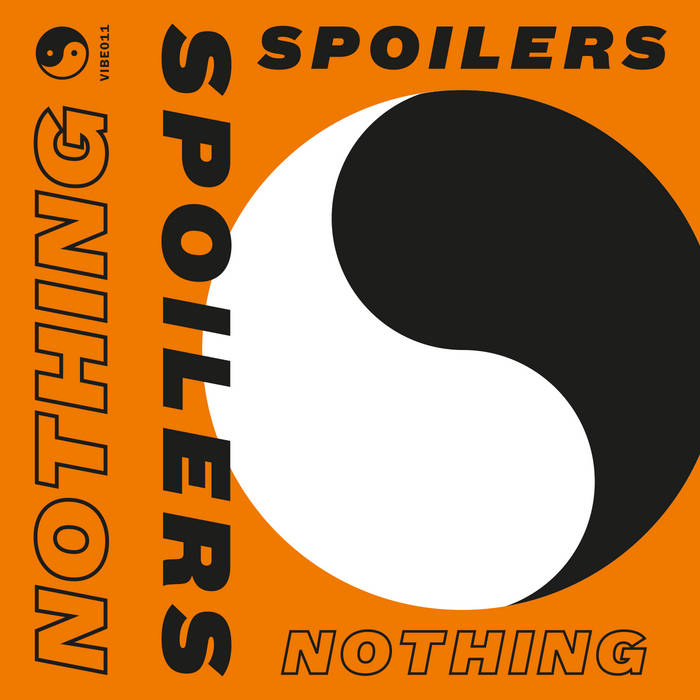
Released months after their debut LP, Spoilers skip the distorted tones of their ‘Anti Vibe’ 12″ and choose to take a direct, focused response to single-issue voters, echo chambers and e-activism with ‘Nothing’.
Sharp-sounding clangy guitars strum out this catchy punk rock, reminiscent of early Wire, Parquet Courts and Uranium Club. Recorded and mixed by the band’s bassist Christopher Smith at their rehearsal space/studio Kluster Rooms and self-released by the band’s own label Anti Vibe Music Group on limited edition orange cassette.
HBO’s series Vinyl has inspired a lot of great covers, including Aimee Mann’s take on Carpenters’ “Yesterday Once More”, Julian Casablancas’ re-imagining of The VelvetUnderground , and everyone from Iggy Pop to Alison Mosshart covering classic rock and punk tracks . But the show has also led to some brand new recordings, like the track from Royal Blood , “Where Are You Now?”
The UK rockers were apparently inspired to write the song after seeing the first trailer for Vinyl. “Hearing Richie Finestra talk about the first time you heard a song that made your hairs on the back of your neck stand up or made you wanna dance or kick someone’s arse,” bassist/singer Mike Kerr. “I just wanted to write a song that gave me that sort of buzz.”
Well, mission accomplished. “Where Are You Now?” is a dirty, slinking number with lines reminiscent of Queens of the Stone Age at their most pronounced. There’s a sensuality in all that noise, especially with Kerr singing lyrics like, “I’ve tasted every person and they don’t taste like you,” which we’re very down with.”
New music from the HBO series VINYL released each week
A half a century ago this year, the Velvet Underground released its debut LP, “The Velvet Underground & Nico.” This enduringly transgressive album would go on to earn the music-industry axiom, that although relatively few people bought it initially, everyone who did started a band.
The Velvet Underground — featuring Lou Reed, John Cale, Sterling Morrison and Maureen Tucker, with additional vocals from the German singer Nico — would enter Scepter Studios in New York to record its first professional demos of songs like “I’ll Be Your Mirror” and “Heroin.”
One night at a club in New York — described in The New York Times then as “the temporary cinema-discotheque that Andy Warhol , the apostle of Pop Culture, has installed at 23 St. Marks Place” it was all so new. Attendees, wrote, you could “grope their way to the dance floor in blackness that is broken only by hallucinatory flashes of multicolored lights in order to wriggle, writhe and tremble to the music of the Velvet Undergrounds, a four-piece band whose chanteuse is a fashion model answering only to the name of Nico.” The group was merely a detail in the story and getting its name right was not yet a priority.
The concert was part of Warhol’s traveling multimedia shows, known as the Exploding Plastic Inevitable, which mixed projected films, live music and dance. (The entry fee for the night: $2.) Gerard Malanga, a Warhol associate and Factory collaborator, can be seen shimmying onstage with the fresh-faced Velvets. “It was an ephemeral but everlasting experience,” he recalled in an interview this week.
While the images show a split between the squares seated, straight-faced, at clothed tables, and those letting loose on the dance floor, Mr. Malanga remembered the atmosphere as “one of participation and excitement.”
“The crowd looks like they were all grown-ups everybody looks so well-behaved,” he said. “I do remember it being younger and more lively.”
In the celebration of the 50-year anniversary of “The Velvet Underground & Nico” — plus the news that LouReed’s personal archive has now been acquired by the New York Public Library.
By now it’s a pretty famous story of how some guy found a one-of-a-kind acetate pressing of an early, 1966 version of what would become “The Velvet Underground and Nico” album on a New York City street for 75 cents, then sold it on eBay for 25 Grand. It’s known as “The Norman Dolph Acetate”,
The acetate itself was of course very scratchy. This bootleg vinyl released a couple years ago, apparently from Sweden but who knows, offers a beautifully cleaned-up version of the acetate. But you should also go to WFMU’s blog and get the original, scratchy version. For comparison at least. Or history. Apparently this recording was sent back from Columbia Records with a note that said, “You have got to be fucking kidding!” Note that this version of the LP starts off, audaciously, with an even noisier version of European Son, a whole minute longer at 8:49 and a whole lot more cacophonous than the final version which ended up at the opposite end, closing the LP. Also notable are very different versions of “I’m Waiting for the Man” and “Venus In Furs”.
That album was The Velvet Underground and Nico, a uniquely groundbreaking release from a band of arty New York misfits and marketed by the creative whims of one of the most iconic figures of the time:Andy Warhol . The cornerstone of the Velvet Underground’s image and sound was the songwriting of Lou Reed. A socially-awkward Jewish kid from Long Island, Reed’s musical voice, like so many others, was forged in pop and in pain. He taught himself how to play R&B songs on guitar by listening to the radio, eventually forming a doo-wopish group as a teen. Reed also began suffering panic attacks and after a mental breakdown following his first semester at NYU, his parents submitted him for electroshock therapy.
“Panic attacks and social phobias beset him,” wrote Reed’s sister, Merrill Reed Weiner, in 2015. “He possessed a fragile temperament. His hyper-focus on the things he liked led him to music and it was there that he found himself.”
But Lou Reed’s love of music became his guide, and rock ‘n’ roll became his voice. He eventually landed work as a pop songwriter, churning out middling hits for Pickwick Records while composing songs for himself on the side. His approach was to keep things simple and direct.
“I studied classical piano, and the minute I could play something I started writing new things,” Reed said in 2004. “And I switched to guitar and did the same thing. And the nice thing about rock is, besides the fact that I was in love with it, anyone can play that. And to this day anyone can play a Lou Reed song. Anybody. It’s the same essential chords, just various ways of looking at them. There is nothing special about it, and it only becomes special when I can’t do it. When I can’t do it I’m very impressed by the person who can, and when I can do it, it means nothing. But I would write new things from the day I could play anything.”
Reed had been inspired by as much as R&B as pop, and his edgy approach belied a music lover whose tastes were informed by a wide variety of influences.
“There were two sides of the coin for me: That kind of music—R&B, doo-wop, rockabilly. And then Ornette Coleman and Don Cherry, Archie Shepp, stuff like that,” Reed told rock journalist David Fricke in 1989. “When I was in college, I had a jazz radio show. I called it Excursion on a Wobbly Rail, after a Cecil Taylor song. I used to run around the Village following Ornette Coleman wherever he played. There was his song ‘Lonely Woman,’ Charlie Haden’s bass on that [he hums the riff]. Extraordinary.”
What would become the Velvet Underground started in 1964, when Reed met experimental instrumentalist JohnCale and formed a band called The Primitives. With Reed on guitar and Cale on virtually everything else, they eventually added guitarist Sterling Morrison and percussionist Angus Maclise. After a short stint as The Falling Spikes, the fledgling quartet dubbed themselves “The Velvet Underground” after Michael Leigh’s book about sexual subculture in the 1960s. After Maclise suddenly left the group prior to their first paying gig, Morrison brought in Maureen Tucker to play drums. With Tucker’s unique approach (she used mallets more than drumsticks and never played cymbals), the Velvet Underground’s classic sound began to come together.
Gigging around New York City, the band eventually was introduced to Andy Warhol and became fixtures at The Factory, his famous studio in the Decker Building on Union Square West. Warhol insisted on becoming their manager, and centered the Velvet Underground in his ambitious pop art roadshow, Exploding Plastic Inevitable, with the VU’s music combined in showcase with experimental films from Warhol and his associates. The exposure raised the band’s profile significantly—despite the fact that Warhol had little-to-no influence on their actual approach or sound and rarely operated as a traditional manager for the band.
“We needed someone like Andy,” John Cale has said . “He was a genius for getting publicity. Once we were in Providence to play at the Rhode Island School of Design and they sent a TV newsman to talk to us. Andy did the interview lying on the ground with his head propped up on one arm. There were some studded balls with lights shining on them and when the interviewer asked him why he was on the ground, Andy said, ‘So I can see the stars better.’ The interview ended with the TV guy lying flat on his back saying, ‘Yeah, I see what you mean.’”
“I loved him on sight, he was obviously one of us,” said Reed in 2004. “He was right. I didn’t know who he was, I wasn’t aware of any of that, amazingly enough. But he was obviously a kindred spirit if ever there was one, and so smart with charisma to spare. But really so smart. And for a quote ‘passive’ guy, he took over everything. He was the leader, which would be very surprising for a lot of people to work out. He was in charge of us, everyone. You look towards Andy, the least likely person, but in fact the most likely. He was so smart, so talented and 24 hours a day going at it.”
It was Warhol who famously pushed the Velvet Underground to add German model Nico as they worked on their first album—a move that the band resented.
“We were together as a band, and then Nico showed up at the Factory,” said Morrison in 1980. “Andy said, ‘Oh, here we have Nico. Would you like her to sing with you?’ We said, ‘Well, we couldn’t dis-like it.’ That’s how we became the Velvet Underground and Nico. She just came kind of creeping in. We knew that it couldn’t last, because we didn’t have that many songs she could sing. Lou and I cranked out some songs for her. ‘Femme Fatale’—she always hated that. Nico, whose native language is minority French, would say, ‘The name of this song is ‘Fahm Fahtahl.’ Lou and I would sing it our way. Nico hated that. I said, ‘Nico, hey, it’s my title, I’ll pronounce it my way.’”
“Lou and I were sort of startled,” Cale recalled “Moe didn’t know what to make of it. And Sterling was harumphing . . . But, y’know, after a little bit, you got to understand Andy, and that was really pure Andy. Everybody suddenly started looking at us in a different way.”
The VU began recording the album in the spring of 1966 at the ramshackle Scepter Studios in New York City. The original acetate was shopped around to labels and routinely dismissed, prompting the band to re-record several songs. To facilitate a more marketable approach to the music, producer Tom Wilson, who had produced Dylan and Simon and Garfunkel , was brought in to remix some tracks. In Los Angeles, the Velvet Underground would re-record “Waiting For the Man,” “Venus and Furs” and “Heroin,” a seven-minute composition Lou Reed had begun as far back as 1964. At Wilson’s urging, the band also recorded the more radio-friendly “Sunday Morning.”
“I’d been around studios before, writing and recording these cutout-bin kind of records, trendy songs that sell for ninety-nine cents,” Reed said in 1989. “But Andy absorbed all the flak. Then MGM said they wanted to bring in a real producer, Tom Wilson. So that’s how you got ‘Sunday Morning,’ with all those overdubs—the viola in the back, Nico chanting. But he couldn’t undo what had already been done.”
For all of its visceral feel and focus, the debut album from the Velvet Underground opens with this rather delicate ballad. “Sunday Morning” it features Lou Reed cooing in his most preciously girlie voice about “all the streets you cross not so long ago.” The song is a beautiful ode to paranoia (“Watch out—the world’s behind you”), and an early indicator that Reed was capable of remarkably simple melodicism that rivaled the more mainstream songwriters of the era while not directly emulating any of them. “Sunday Morning” was explicitly written to be a single, and is one of the most pop-friendly songs on the album. Wilson wanted the tune to be a showcase for Nico; nonetheless, it was Reed who sang the lilting lead vocal.
The jaggedly jaunty classic “I’m Waiting For the Man” sits somewhere between Bob Dylan, Lead Belly and glam rock, laying a sonic foundation on which David Bowie would build his church (Bowie recorded a live cover in 1972). The soundtrack for a white hipster’s travels uptown to score drugs, Reed’s crass “Hey white boy, what you doin’ uptown?” jive along with the strutting rhythm sounded more urban and streetwise than anything else happening in rock at the time. The declaration of “Man, you gotta split ‘cause he got no time to waste” captured the awkward hastiness of scoring some shit, with Reed’s chugging chords and Morrison’s Cropper-esque guitar lines swerving against the melody throughout.
The dirge-like “Venus In Furs” drips with sex and oozes doom. It’s an S&M-driven masterpiece that features Cale’s dissonant viola set against Maureen Tucker’s thumping drums. Reed’s lyrics are inspired by the novella of the same name—by Austrian author Leopold von Sacher-Masoch (“I didn’t write the book. But what a great book to throw into a song,” Reed would say in 1988), with declarations to “Strike dear mistress, and cure his heart” and references to “Sevrin” who “awaits you there.” The primary narrative of the novella describes the suprasexuality of Severin von Kusiemski, who is smitten with a woman named Wanda von Dunajew and longs to be dominated by her in degrading ways.
The forced addition of Nico adds an off-kilter element to the three songs on which she’s featured. Her icy vocal is best highlighted on the swirling midtempo “Femme Fatale,” a song inspired by Warhol superstar Edie Sedgwick. Warhol had requested Reed write a dedication to Sedgwick specifically, and “Femme Fatale” would be the first of many Reed compositions inspired by personalities he’d met at Warhol’s Factory. Reed’s observations of the people at Warhol’s Factory also inspired the Nico-led “All Tomorrow’s Parties.” Cale’s repetitive piano drives the melancholy feel, as the lyrics detail a sad woman who has lost her family. She was among the personalities Reed had encountered around Warhol.
Despite Reed’s declaration that “if anybody played a blues lick [in the band], they would be fined,” “Run Run Run” sounds like Slim Harpo sitting in with a garage band, with a driving rhythm turned on its ear and driven dissonant with Morrison’s jagged leads and Reed’s abrasive solo. It’s another song focused squarely on New York City junkie life, with lyrics that detail strung-out characters Teenage Mary, Margarita Passion, Seasick Sarah, and Beardless Harry, who need to “get a fix” and “rode the trolleys down to 47” to “get himself to heaven.”
“There She Goes Again” is the album’s most explicitly R&B-influenced track; the opening guitar rhythm is directly lifted from Marvin Gaye’s 1962 hit “Hitch Hike” and the backing vocals are straightforward harmonizing—or at least as close to it as the Velvet Underground got. Reed’s lyrics focus on the daily life of a prostitute: “She’s out on the streets again / She’s down on her knees, my friend / But you know she’ll never ask you please again.” The song never presents the woman as a tragic figure. In keeping with many of Reed’s characters, her life is just a reflection of reality—not a cautionary tale: “Now take a look, there’s no tears in her eyes / Like a bird, you know she would fly, what can you do / You see her walkin’ on down the street / Look at all your friends that she’s gonna meet…”
Nico’s vocals on “I’ll Be Your Mirror” became a source of frustration for Morrison and Reed. The German model seemed to be adamant in singing the song aggressively, which neither of the band members felt was suitable. After Morrison decided that they would scrap the song if she couldn’t get it right, Nico sang the final vocal in one take. It would be one of the first commercially available songs by the Velvet Underground—a single that was released in July 1966, almost a year before the album itself.
Cale’s experimentalism was at the core of “The Black Angel’s Death Song,” with dissonant viola and droning rhythms. The Chuck Berry-esque guitar riff repeats early on and slowly descends into avant-noise with feedback and distortion—as well as a crash of plates, courtesy of Cale—with Reed singing dismissive lyrics aimed at writer Delmore Schwartz, who was a mentor to Reed during the rocker’s time at Syracuse University. The lyrics don’t directly mention Schwartz, but original pressings of the album titled the track “European Son (Dedication to Delmore Schwartz.)”
One of the most harrowing and beautiful drug songs ever recorded, “Heroin” is an epic that seems to define the album. Opening with Reed’s distinctively melodic guitar lines and building into a cacophony of sound that evokes the rush of shooting up, it was a daring record—even during the “mind expanding” rhetoric of the 1960s. Hippie bands were singing about marijuana and LSD, but the darkness and danger of heroin was something else entirely. The element of release was there, but this was a harder addiction—something that the idealistic flower-power crowd hadn’t broached on record. Reed relished standing apart from what was supposedly the counterculture of the time.
In a 1987 interview, he told Joe Smith, “When [bands] did try to get, in quotes, ‘arty,’ it was worse than stupid rock ‘n’ roll,” he said. “What I mean by ‘stupid,’ I mean, like, the Doors. I never liked the Beatles, I thought they were garbage. If you say, ‘Who did you like?’ I liked nobody.”
The Velvet Underground’s “arty outsider” ethos and fiercely New York image went against the grain in 1967, but their association with Andy Warhol kept the band’s profile relatively high for an act that was never very mainstream. The weight of Warhol’s image over the band came to be something that the Velvet Underground chafed against—especially after The Velvet Underground and Nico was released with the “produced by AndyWarhol” tag on the sleeve.
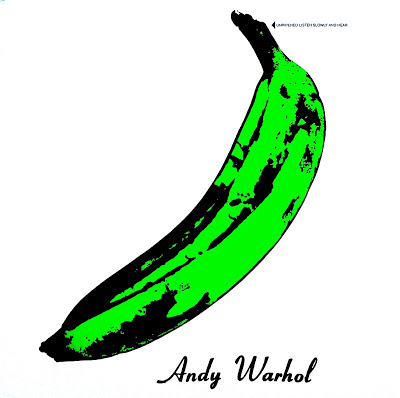
John Cale fully understood the power of Warhol’s vision when the he saw what would become the iconic album cover for The Velvet Underground and Nico. The inspiration was purely spontaneous and indicative of how Warhol saw high art in the everyday.Warhol had noticed a magazine in the waiting room at an earlier doctor’s appointment; there was an ad inside that featured a banana with a peel-away sticker that revealed the nutrients in a banana. “He called me over and showed me: this is the album cover,” Cale said in 2011. “He said ‘What do you think of this as an album cover?’ I thought it was amazing.”
The Velvet Underground and Nico was finally released on March 12th, 1967, but a pending lawsuit from actor Eric Emerson (his image was inadvertently featured in the background of the album’s back sleeve, in a photo of the band performing) led to it being shelved briefly and redistributed that summer. With the Summer of Love in full swing and much of the world fawning over Jimi Hendrix’s Are You Experienced? and the Beatles’ Sgt. Pepper…, The Velvet Underground and Nico barely made a commercial dent. Shortly thereafter, the band broke from Warhol. And Nico, always viewed as a temporary affiliate of the Velvet Underground as opposed to an actual member, went her own way. She would release six solo albums before her death in 1988.
The Velvet Underground, of course, would release three more seminal albums, White Light/White Heat, their eponymous 1969 album, and 1970’s Loaded, before ultimately deteriorating (Cale would leave after White Light/White Heat and be replaced by Doug Yule; Reed and Morrison left the band after Loaded.) Cale would become one of the world’s most highly-regarded experimental rock artists, and Reed would go on to a legendary solo career, becoming one of the most revered rock songwriters of his generation before his death in 2013.
The Velvet Underground and Nico now looked more like the future of rock music. With its embrace of dissonant sounds, unapologetically gritty subject matter and simplistic rhythms and songwriting, the album is a jumping-off point for virtually every form of “alternative” music that would take hold over the next 30 years. Glam, punk, noise rock, art rock, ’80s college rock—it all seemed to draw from something established on The Velvet Underground and Nico. There has never been a rock album more ahead of its time.
Tracks:
01. European Son
02. The Black Angel’s Death Song
03. All Tomorrow’s Parties
04. I’ll Be Your Mirror
05. Heroin
06. Femme Fatale
07. Venus In Furs
08. I’m Waiting For The Man
09. Run Run Run
Nicholas Wood and Kat Day are The KVB, a shoegaze-indebted synth-pop duo who are gearing up to release a brand new EP on Geoff Barrow’s Invada label.
Having started out with a handful of vinyl and cassette releases, their sound swiftly grew into a being of its own. Leaning heavily on hardware (having rummaged through Barrow’s vintage synth collection for previous recordings). On “Fixation”, the vocals blend into the trudging, smoky fog of synths. Quietly epic and totally very bewitching, the track has the kind of mysterious repeat-play quality that evokes Depeche Mode at their most ghostly.
Today, the Brooklyn-based, genre-defying band Woods released the physical copy of their latest album, and the lyric video for the album’s penultimate track, “Hit That Drum.” The video, filmed from a highway with a skyline view of New York City, slowly pans in black and white across the city’s urban topography.
The song hums with an acute melancholy—the song and album are written about Woods’ process of adjusting to the Trump years. in a press release shared by the band:
There will be parts of life where we will watch as events unfold and we will feel helpless. We will not be sure of the future. On good days, we’ll have each other. On the bad ones, we’ll turn to the art that helps us feel something. Love is Love is a document of the new world we live in, proof that light can come from despair and hope is still possible. We just need a little help remembering it exists.
This is the live music video for “Greenwoods Bethlehem” by Bear’s Den filmed at multiple venues since the release of Red Earth & Pouring Rain. The release of our second album, Red Earth & Pouring Rain, we’ve been lucky enough to tour all over the world playing so many shows and meeting so many of you. In case you missed it, we’ve released our new video for Greenwoods Bethlehem using footage filmed at some of these shows in different venues and countries. Thank you to everyone who has supported us along the way, we couldn’t do it without you!
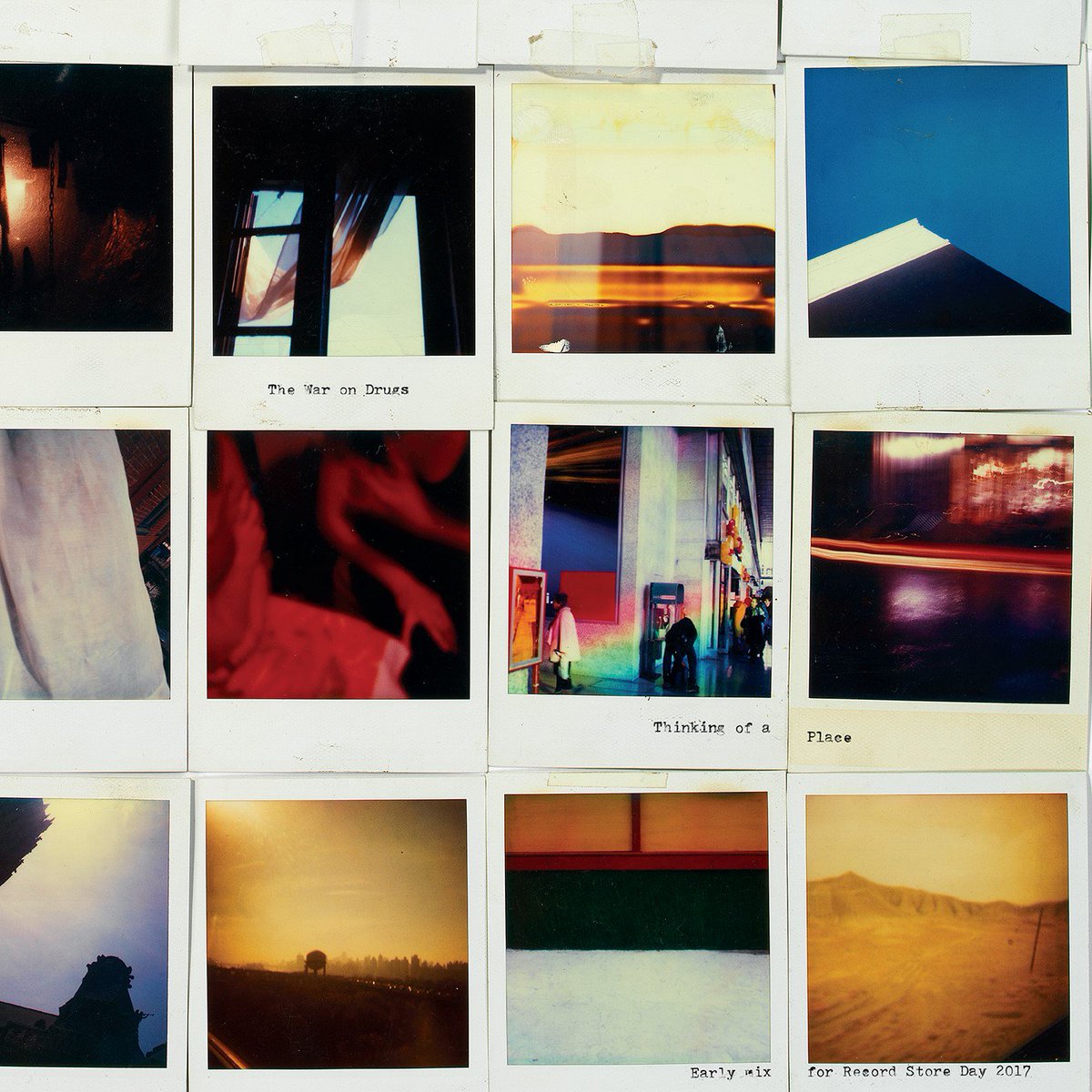
Following the release of 2014’s excellent album release “Lost In The Dream” , Philly rockers the War On Drugs signed a two-album deal with Atlantic Records . Now, after a few years of silence barring a lone Grateful Dead cover , Adam Granduciel and co. are finally set to reveal what they’ve been working on at their new label home. The band confirmed today on Twitter that they’ll be releasing a new 12″ on Record Store Day (4/22) featuring a song called “Thinking Of A Place.” That’s the artwork above.
Side A has part one of the single, and side B has part two.