Mild is the very best word to describe Melbourne’s Crepes, but that is in no way a slight. This gentle, affable new single from the quintet, is hazy bit of sepia-stained summer pop, centred on a throwback electric organ break. Taken from their forthcoming debut full-length Channel Four, the track feels like an idyllic trip through a 1970s garage sale. Led by the fanciful charm of singer/multi-instrumentalist Tim Karmouche, Crepes came about in Ballarat, Australia through high-school friends Nick (drums) and Pat Robbins (bass). The band later grew to include lead guitarist Sam Cooper and keyboardist Jackson Dahlenburg, after relocating to Melbourne.
Whenyoung are Aoife Power (Vocals/Bass), Niall Burns (Guitar) and Andrew Flood (Drums) who originate from Limerick in Ireland but are currently now based in London.
First meeting as teenagers, sneaking into the only indie bar of their city in Ireland, they bonded over cheap vodka and The Velvet Underground. Soon after, Niall moved to London, with Andrew and Aoife quickly following, and here they began writing songs together.
The trio flatter to flatter as they don’t seek to over-complicate anything, relying mostly on the raw power of their gritty guitars and the fact that Aoife Power’s voice is exactly the sort of leader’s tone you should be tuning into as you tune out the noise. With a chorus this memorable and a swagger so irresistible, this is a great tune to get that blood pumping and your head nodding as if you were a Churchill bobbing head doll sat in the back of your newly insured car.
Whenyoung – Actor (Audio) 7″ single coming soon on Hate Hate Hate Records.
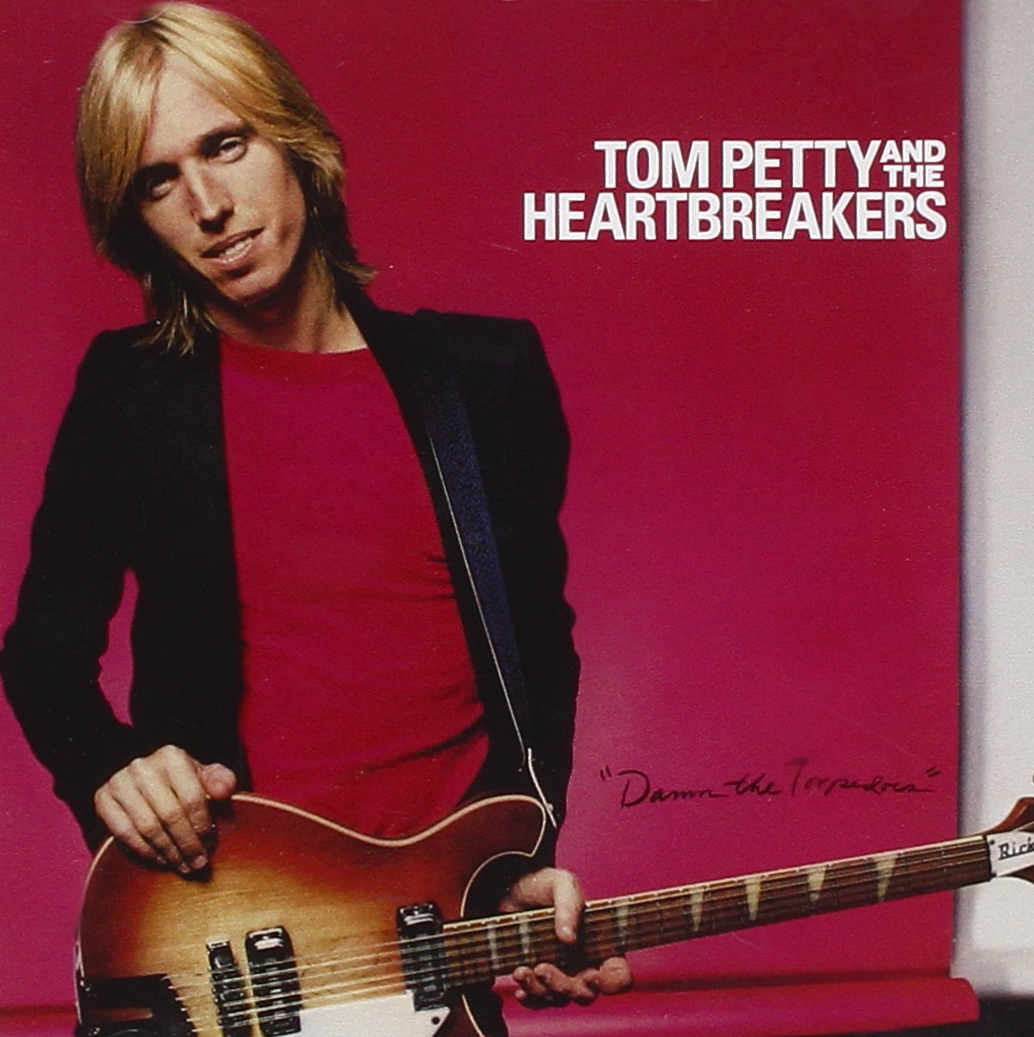
Initially following its release, the album received little attention in the United States. But Following a U/K tour, it climbed up the UK album chart and the single “Anything That’s Rock ‘n’ Roll” became a hit in the UK. After nearly a year and many positive reviews, the album reached the U.S. charts, and eventually went Gold.
It’s a great American rock album with beautifully constructed songs and a passionate vocal from Tom Petty.
It runs in at a little over 1/2 an hour so it is slightly short by today’s standards but the music there in is wonderful.
Before I mention the songs individually , I should say that there isn’t the searing guitar overload of a live performance, in that the solos are short and not as stand-out in the mix.
Live, there was more emphasis on soloing but the songs are rock ‘n’ roll works of art and this is an album that you can’t tire of. Luna, is a beautiful ballad, is my favourite song of the album and I would say that it is a unique song , part blues, part lullaby , with a beautiful organ melody that you’ll never forget.
huge anthemic track American Girl is a joy and the guitar solo at the end is a piece of magic, The Wild One Forever and Mystery Man are beautiful , gentle songs with melodies to die for.
Throw in Fooled Again, Breakdown and Strangered in the Night et.al. and you have one of the best albums ever made. Wonderful stuff !.
The singles “Breakdown” and “American Girl” became an FM radio tracks that can still be heard today.
The album was recorded and mixed at the Shelter Studio, Hollywood, California.
Petty’s breakthrough album plays like his most genuine slice of rock ‘n’ roll – probably because his two earlier albums didn’t do much, and that hunger drips through nearly every single groove. ‘Damn the Torpedoes’ heads straight into a world where Byrds-ian folk-rock collides with heartland-sized riffs. Tom Petty and the Heartbreakers never hit the brakes.
Not long after You’re Gonna Get It, Tom Petty & the Heartbreakers’ label, Shelter Records, was sold to MCA Records. Petty struggled to free himself from the major label, eventually sending himself into bankruptcy. He settled with MCA and set to work on his third album, digging out some old Mudcrutch numbers and quickly writing new songs. Amazingly, through all the frustration and anguish, Petty & the Heartbreakers delivered their breakthrough and arguably their masterpiece with the album Damn the Torpedoes.
Musically, it follows through on the promise of their first two albums, offering a tough, streamlined fusion of the Stones and Byrds that, thanks to Jimmy Iovine’s clean production, sounded utterly modern yet timeless. It helped that the Heartbreakers had turned into a tighter, muscular outfit, reminiscent of, well, the Stones in their prime — all of the parts combine into a powerful, distinctive sound capable of all sorts of subtle variations. Their musical suppleness helps bring out the soul in Petty’s impressive set of songs. He had written a few classics before like “American Girl,”“Listen to Her Heart” — but here his songwriting truly blossoms. Most of the songs have a deep melancholy undercurrent — the tough “Here Comes My Girl” and “Even the Losers” have tender hearts; the infectious “Don’t Do Me Like That” masks a painful relationship; “Refugee” is a scornful, blistering rocker; “Louisiana Rain” is a tear-jerking ballad. Yet there are purpose and passion behind the performances that makes Damn the Torpedoes an invigorating listen all the same. Few mainstream rock albums of the late ’70s and early ’80s were quite as strong as this, and it still stands as one of the great records of the album rock era.
It’s about an hour before Tom Petty and the Heartbreakers play Colorado’s Red Rocks Amphitheatre for what may be the last time. Backstage, Petty is in his dressing room putting on a frontier rebel’s headdress to fight the chill. Keyboardist Benmont Tench is tweeting about the sad state of our country under Donald Trump. Bassist RonBlair has battled stage fright for years since rejoining the Heartbreakers in 2002, after a 20-year sanity break. He wanders into Tom Petty’s dressing room and cops to something you’re not likely to admit to your bandleader unless you’ve known him for 40 years. “I’m kinda nervous, you know,” says Blair in a quiet voice.
Petty rarely describes himself as the leader of his band, but as “the older brother they sometimes have to listen to.” Tonight, he gives Blair some fatherly assurance and a toothy Southern smile: “Let me be nervous for you.”
The band takes the stage and blows through “Rockin’ Around (With You),” the first song on its self-titled first album, from 1976. Petty ends the next few songs strumming in front of the drum set, trading man-crush smiles with drummer Steve Ferrone (Tench jokes, “They should get a room”). Petty even grins through a joyous version of “Walls,” from 1996’s She’s the One, an album he’s complained about for nearly 20 years.
And then there’s a flash of lightning. Rain pours down. The Heartbreakers are shooed into the catacombs of Red Rocks, and 9,000 fans head for cover.
As the bandmates wait out the rain, Petty asks if they want to add their 1999 song “Swingin'” to the second half of the set. Everyone agrees: They do. The Heartbreakers aren’t a democracy, but more of a benevolent dictatorship. This is true when it comes to the set list. “We can make suggestions,” says Tench with a wry smile. “Sometimes they’re even accepted.”
After 20 minutes, the Heartbreakers retake the stage. They play “Swingin’,” which has a chorus where Petty lists icons who “went down swinging,” including Sonny Liston and Sammy Davis. Tench, who sings with Petty on the song, switches it up. Epstein provided the beautiful high harmonies on the record, so Tench sneaks in a tribute to his departed friend: “He went down swingin’/Just like Howie Epstein.”
Petty is supposed to do some acoustic numbers from Wildflowers,his 1994 solo album. There’s just one problem: His guitar is dead, soaked by the rain. There’s confusion and uncertainty on the band mates’ faces for a moment, like it’s a 1975 show at a honky-tonk in Gainesville. Then Petty and Campbell shout across the stage, “Ben, play something!”
Tench, the best keyboardist in American rock, breaks into a pastiche of boogie-woogie, a homage to pianist Pete Johnson. The group chimes in, not quite in sync, until Petty switches to Chuck Berry’s “Carol.” The Heartbreakers fall in line, sounding like the best bar band you don’t want to tell your friends about.
They encore with “American Girl.” The bandmates take a bow, wiping sweat and rain off their faces. Everyone exits, but Petty seems reluctant to leave. He takes a few steps toward the front of the stage and gives a last wave.
One word Petty and the band never mention: retirement. Petty still goes into his Malibu home office to write songs right across from his home studio. He’s mostly a homebody, rarely even venturing the 45 minutes into Los Angeles unless it’s to see his two daughters and his young granddaughter. There was a Mudcrutch tour last year and a turn producing a record for former Byrds bassist Chris Hillman. The Heartbreakers will record again and play live in some capacity. After 40 years, it would be surprising if there weren’t a few regrets. “Howie should’ve gotten some lead on a record,” Tench says of Epstein. “He should’ve produced a record for the Heartbreakers. I would’ve loved that.” Then he shrugs. “But I’m not in charge.”
There’s been a valedictory feel to the Heartbreakers‘ 40th-anniversary tour, which Petty says is the band’s final country-spanning run – the “last big one.” Everyone else is a bit skeptical. “I’ve been hearing that for 15 years,” says guitarist and original Heartbreaker Mike Campbell. “We’ll see.”
The crowds are still there, something Petty is clearly proud of when we sit down in a hotel room on an off day. To be honest, he looks more jittery offstage than on. This may be because he is chain-smoking, alternating between Marlboros and vaping, perhaps as a concession to the Denver Ritz-Carlton’s smoking policy.
Petty says sleep is now his friend. “I need a new Netflix show, does anyone have any suggestions?” he asks just before his assistant ducks out of the room. Someone suggests Bloodline, a noirish series set in his native Florida.
Petty is defiant about the hyper pace of the tour, which hits 30 cities this spring and summer. “Unless you’ve done it, you can’t understand what it is,” says Petty, brushing his scarecrow hair out of his face. “And if you’re not really experienced, you will fall.”
What keeps the Heartbreakers together is simple: The band has been their life since 1976. BenjaminMontmorency Tench III, was a prep-school kid and piano prodigy. Tench wears suits and went to Exeter, but he’s the fiery one. In the Peter Bogdanovich documentary on the Heartbreakers, 2007’s Runnin’ Down a Dream, Tench can be heard screaming at his bandmates to take things seriously. His nickname is Mad Dog. When Tench used to go on one of his tirades, a roadie would slide a dog bowl of water under his piano.
Petty, Campbell and Tench formed the nucleus of the band Mudcrutch, which morphed into the Heartbreakers in 1976, after adding San Diego native Blair on bass and Stan Lynch on drums. Blair fried out and bailed in 1982. He opened a bikini shop in the Valley and was replaced by Howie Epstein, but the band loomed in his subconscious. “I’d dream I’d be walking to the stage, and be like, ‘I don’t know “Mary Jane’s LastDance,”‘ recalls Blair. “I had half a dozen of those nightmares, so I started learning those songs so I could get a night’s sleep.”
This proved fortuitous when Epstein died of heroin-related complications in 2003. “I don’t think the band continues without Ron,” Tench tells me. “Bringing in someone new wouldn’t have worked.”
“About 20 years ago, we stopped doing soundchecks,” says Petty. “It eats up the whole day and we’d argue, and then you’d come back and the sound would be completely different with a crowd.”
The other game-changer was Dylan. By 1986, the band had toured relentlessly for a decade. Off the road, everyone was a mess – some members dealing with substance issues, some just dealing with real life. “The road and the studio are the only places I’ve ever felt completely OK,” says Petty, lighting another Marlboro. “In any other life situation I’m terribly retarded.” Petty got a call from Dylan asking if the band would back him on a tour. Petty raced out a “hell, yes.” Watching footage, you can see him smiling his head off, ecstatic to not be leading the show. The experience taught him how to be inthe Heartbreakers, not just lead them. “That’s when we learned how to really be a band,” says Petty.
One word Petty and the band never mention: retirement. Petty still goes into his Malibu home office to write songs right across from his home studio. He’s mostly a homebody, rarely even venturing the 45 minutes into Los Angeles unless it’s to see his two daughters and his young granddaughter. There was a Mudcrutch tour last year and a turn producing a record for former Byrds bassist Chris Hillman. The Heartbreakers will record again and play live in some capacity. After 40 years, it would be surprising if there weren’t a few regrets. “Howie should’ve gotten some lead on a record,” Tench says of Epstein. “He should’ve produced a record for the Heartbreakers. I would’ve loved that.” Then he shrugs. “But I’m not in charge.”
I cannot really say too much as I was a huge Petty admirer Really extremely Sad News, As LAPD issues a new statement saying they are now unable to confirm the death of Tom Petty I cross my fingers. He was found not breathing after a full cardiac arrest and placed on life support. It would be nice to think that he got to the gates of hell and they sent him back because he was better off with us.
XTC have one of the most fascinating career progressions in music. From their highly-energetic, eclectic, punkish new wave of their first album, to the pastoral, acoustic-driven songs found on “English Settlement,” XTC seem to have something for everybody. Let us not forget XTC’s psychedelic pop masterpiece “Skylarking,” the incredibly authentic-sounding ‘60’s psychedelic rock as The Dukes of Stratosphear, and the orchestral arrangements on “Apple Venus, Pt. 1.” Andy Partridge’s lyrics also warrant a shout out, truly intelligent, thought-provoking lyrics.
Primary songwriter and lead singer Andy Partridge expertly balanced his experimental side — angular guitar parts mixed with jittery rhythms — with strong sensibilities for pop melodies and hooks, and his partner-in-crime, ColinMoulding, was capable of contributing a few gems of his own on every record.
This may seem like high praise, but the only band that XTC are second to in terms of melodic sensibility is The Beatles, which will certainly be an understandable position to reach after listening through their discography. How so many songs sound like they can be hits, but were not, is unfortunate, but XTC does maintain a sizable and highly passionate fan base, as indicated by numerous active online fan clubs, groups, and cover bands. XTC’s music contains a ton of variety, so to get the best picture of the band as a whole, all of their era’s should be sampled.
Though their final album of new material was released in 2000, interest in their music and legacy has continued to grow over the years. Over the span of around 30 years total, XTC delivered 14 proper albums, dozens of classic singles, and several collections of demos, dubs and remixes along the way. Taken as a whole, their catalog shows how they evolved from one of the many arty English post-punk bands to retro-psychedelia and beyond.
Essential Albums: “Skylarking” (1986), “English Settlement” (1982), “Chips from the Chocolate Fireball” (as The Dukes of Stratosphear) (1987), “Apple Venus, Pt. 1” (1999), “White Music” (1978)
In a career that would come to be defined by near-constant change Van Morrison‘s fifth studio album found him in the midst of personal as well as creative upheaval. released in the October of 1971. Recorded Spring-Summer, 1971 at Wally Heider Studios and Columbia Studios in San Francisco.
Already over the course of his relatively young career, Morrison had led a nomadic lifestyle, moving from Ireland to Boston and then to upstate New York, where he settled in Woodstock while writing the material for the classic albums “Moondance” and “His Band And The Street Choir” LPs. Fruitful as those environments clearly were from a songwriting standpoint, by the spring of 1971, he was on the move again this time across the country, to the sunnier climes of northern California.
There were a number of reasons for Morrison’s latest migration. His wife at the time, Janet “Planet” RigsbeeMorrison, was from the area, and was eager for more familiar areas a desire compounded by the changes Woodstock had seen in the wake of the historic rock festival held in the area. Complaining it “was getting to be such a heavy number,” Morrison said later, “When I first went, people were moving there to get away from the scene — and then Woodstock itself started being the scene.”
Morrison was also at something of an artistic crossroads. After exploring Northern soul to critical acclaim with his more recent efforts, he contemplated cutting a country album for his fifth LP. Although he gave up on that idea after making the move to the West Coast, he faced an even bigger decision: what to do about putting together a new group of musicians now that he’d put thousands of miles between himself and his regular crew.
With saxophonist Jack Schroer and his wife Ellen who contributed backing vocals the lone holdouts from Morrison’s previous band, he set about assembling a new musical corps, ultimately enlisting a crowd of players that included familiar faces (percussionists Connie Kay and Gary Mallaber had contributed to previous LPs) as well as a generous helping of fresh blood. Among the new additions were a trio of Bay Area musicians who’d later become very familiar to rock fans: producer Ted Templeman, notching his second co-production credit after working on the Doobie Brothers’ self-titled debut earlier in the year; guitarist Ronnie Montrose, who’d soon embark on his own distinguished recording career; and guitarist John McFee, a highly regarded session player who’d join the Doobies toward the end of the decade. The vocals on the album were always live after rehearsing each song five or six times, according to saxophonist and flautist “Boots” Houston, who further commented that when Morrison and the band went into the studio: “we would then just play a whole set straight through without repeating anything. We would have played maybe twenty songs and Van would go back and cut out the songs he didn’t want.
If his personnel were new, Morrison’s material was of a slightly older vintage. After abandoning the idea of a country album, he relied mostly on previously written material during the sessions for the new LP, penning one new track — the Side One closer “You’re My Woman” — along the way. Further cementing the reputation he’d already acquired for mercurial behavior, Morrison subjected Templeman to a trial by fire, leading a hard charge through the songs and essentially demanding everyone else keep up. The end result, somewhat ironically, amounted to one of his more peaceful, contended-sounding records.
Tupelo Honey proved an immediate hit for Morrison upon its arrival in October of 1971. Peaking at No. 27 in the U.S. — a new high for him — it also included one of his biggest hit singles, the album opener “Wild Night.” For mainstream listeners eager to hear more of the bucolic side of his musical personality, Tupelo Honey offered a bounty of mellow riches, reflecting the sun-dappled domestic bliss pictured on the album cover. Of course, as he was later eager to point out, none of it was necessarily reflective of his reality.
“The picture was taken at a stable and I didn’t live there,” said Morrison “We just went there and took the picture and split. A lot of people seem to think album covers are your life or something.”
In fact, although it ended up garnering him additional riches and critical acclaim, Morrison was never shy about expressing his emotional distance from the album. As stubbornly as he insisted on making music his way and following his own occasionally inscrutable creative path, he wasn’t immune to contractual obligations or commercial pressures, and he’d later acknowledge that the decisions leading to these particular sessions weren’t ones he stood behind.
“I wasn’t very happy with “Tupelo Honey,”Morrison amitted afterward. “It consisted of songs that were left over from before and that they’d finally gotten around to using. It wasn’t really fresh. It was a whole bunch of songs that had been hanging around for awhile. I was really trying to make a country and western album.”
Tupelo Honey remains one of the more popular gateways to Morrison’s daunting body of work, and if it isn’t necessarily the first record named in discussions of his best albums, it’s usually part of the conversation. Still, for the relentlessly forward-thinking artist who produced it, it represents a misguided detour he’d rather not revisit — and as fans would soon discover, he was interested in exploring musical vistas well beyond this period’s sound.
“I never really listen to Tupelo Honey much,” commented Morrison. “I just don’t connect up with it. I’ve got a bad taste in my mouth for both the Street Choir and Tupelo Honey albums.”
Psych-rock revivalists Allah-Las have long incorporated the shimmering guitar tones and sensuous pop hooks of the genre’s forebears into their own music, and they continue to wear their influences proudly with a new cover of George Harrison’s “Fish on the Sand,” .
The Los Angeles quartet recorded the song for their upcoming Covers #1 EP, the first in a series of EPs that will pay homage to their favorite classics as well as new tunes they discovered during recording sessions. Eschewing more obvious selections from Harrison’s early ’70s output — think All Things Must Pass cut “If Not for You” — the band chose to rework a track off the former Beatle’s more straightforward comeback album, 1987’s Cloud Nine.
“‘Fish on the Sand’ is an often overlooked gem from the Dark Horse’s Cloud Nine record and one that we felt could sound good produced with a more moody, B-side style,“ singer and guitarist Miles Michaud says. Indeed, the band strips the song of Jeff Lynne’s glossy production and re-imagines the track as a languid, late-’60s psych-rock exploration — not unlike The Beatles’ own work from the time.
ArielPink released his latest album “Dedicated to Bobby Jameson”on September 15th, the follow-up to his critically acclaimed release pom pom from 2014, and first full-length since joining forces with the Brooklyn-based independent label Mexican Summer Records.
The album is Dedicated to Bobby Jameson, who’s a real-life Los Angeles musician whose story instantly resonated with Pink. Bobby Jameson was long presumed dead and resurfaced online in 2007 after 35 reclusive years to pen his autobiography and tragic life story in a series of blogs and YouTube tirades. “His book and life resonated with me to such a degree,” Pink states, “that I felt a need to dedicate my latest record to him.”
Ariel Pink is set to tour across North America this winter, where his new material will be aired live and fans should expect to be treated to songs from his back catalogue which he has accumulated over the last couple of decades.
Ariel Pink has also released a powerful new video for his single ‘Time to Live’, Ukranian three-piece art collective, Gorsad directed the video and are known for their striking imagery and their focus on youth culture.
Ariel Pink – “Time To Live “ From the album Dedicated To Bobby Jameson
Dedicated to Bobby Jamesonbegins at the end and ends at the beginning. “We follow the protagonist through a battery of tests and milestones, the first of which sees him reborn into life out of death,” Pink explains, referencing the opening track “Time To Meet Your God.” “From there, he seesaws his way between the innocent love and the rock-solid edifice of childhood-worn trauma that together constitute his lifelong initiation into the realm of artifice and theatrical disposability.”
Standout tracks from Dedicated to Bobby Jamesoninclude “Feels Like Heaven,” a lovelorn insta-classic paying tribute to the promise of romance, “Another Weekend,” which encapsulates the lingering euphoria of a regrettable weekend over the edge, “Dedicated to Bobby Jameson,” a rah-rah psych romp paying homage to L.A.’s punk history, and “Time to Live,” an ironic anti-suicide anthem that promotes survival as a form of resistance before devolving into a grungy, “Video Killed the Radio Star”-style breakdown that supposes life and death as being more or less the same fate and embraces the immortal anarchy of a rock song as an alternative to the prison of reality.
Alternately contained and sprawling, Dedicated to Bobby Jameson is a shimmering pop odyssey that represents more astonishing peaks and menacing valleys in the career of a man who, through sheer originality and nerve, has become an American rock and roll institution. The album marks his first full-length release with the Brooklyn-based independent label Mexican Summer.
Building upon his singular vision of pop songcraft, established by such seminal records as The Doldrums, Worn Copy, House Arrest, Loverboy, Before Today, Mature Themes, and pom pom, Pink revisits themes that have haunted his sonic cinemascapes since the late 1990s: mismanaged dreams, west coast mythologies, itinerant criminals, haunted boulevards, Hollywood legends, the impermanence of romance, bubblegum artifice, movie stardom, childhood terror, acceptance of self, and narcissism projected through a celluloid filter of controversion.
Pink attracted the attention of Animal Collective’sPaw Tracks label, earning his home recordings a small and devoted fan base through a series of limited edition reissues. Drawing upon a list of long-forgotten iconoclasts and trailblazers like the Shaggs, the Cure, the Velvet Underground,Destroy All Monsters, the Godz, Cabaret Voltaire, and R. Stevie Moore, Pink set himself to the task of redefining the musical lexicon for himself and others. “This mission,” he says, “remains mine to this day.”