The Barr Brothers recorded 40 tracks when making their 2014 sophomore album Sleeping Operator, so it’s no big surprise the folksy Montreal band have a whole pile of extra songs left over. Now they’ve shared five of them in the form of a new EP.
Alta Falls is made up of extra material from the sessions, and it’s available immediately. It includes a short instrumental overture (“Oscilla”), a six-minute piano ballad (“Alta Falls”) and a few beautiful Americana tunes.
In a statement, the band describe this EP has being made up of “some of our favourite misfits from the Sleeping Operator sessions.” For those with Spotify, Alta Falls can be streamed at the bottom of this page; scroll past the tracklist.
Alta Falls:
1. Oscilla
2. Burn Card
3. Alta Falls
4. Never Been a Captain
5. May 4th
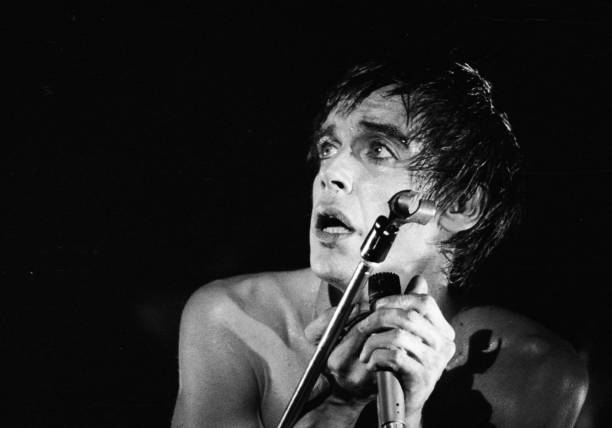
This video features the tracks, Lust for Life and The Passenger, which are originally from the Iggy Pop album, “Lust for Life”. The album had been released about a month prior to the show, on the 29th of August. Most of the footage used here was shot for So it Goes; a British TV music show, presented by Factory Records founder, Tony Wilson on Granada Television between 1976 and 1977. So it Goes specialised in showcasing the punk rock scene of the day.
Manchester was the ninth date of the Lust for Life tour. The tour had started in Iggy’s then home city of Berlin on September the 12th and it would finish up two months later on the 18th of November at the Santa Monica CivicAuditorium. The musicians on the Lust for Life album had been The Idiot touring band of: Tony Sales – bass, Hunt Sales – drums, Ricky Gardiner – guitar, David Bowie – keyboard and backing vocals. Plus Carlos Alomar – guitar. However, by the time of the Lust for Life tour, Bowie and Gardner were gone, replaced by Bowie’s former lead guitarist from the Station to Station tour, Stacy Heydon, and multi-instrumentalist, Scott Thurston, on guitar, piano, synthesizer, harmonica.
Stacy Heydon, on how he came to be chosen for the Lust for Life tour “Iggy accompanied us throughout the Station to Station tour. He and Dave were best mates. I was approached by Jimmy. No doubt Dave gave his blessing”. Scott Thurston had already been a member of the 1973 – 74 live incarnation of The Stooges, and he had played on the Kill City material in 1975.
Stacy Heydon talking about the tour with Iggy: “The people in Manchester were among the best. Being mostly of English dissent I felt very much at home throughout the country. Jimmy was and is quite the entertainer. On countless occasions he would be sharing his extensive knowledge on things like French impressionists, psychology, various political systems, specific museum pieces and the like. Two steps later as soon as we’d taken the stage all bets were off. Being on tour with Mr Osterburg was not for the faint of heart but it did open my eyes to the immense wit and chameleon like qualities that he could extract from his psyche at will, and was the very fabric of his being. That said, whichever side of the cloth you happened to be with at any given time seemed to be the antithesis of the other. If it’s true that opposites attract, that little fucker must love himself as much as we all do!”
The material shot for So it Goes was shown on British TV about a month after the live show, on the 30th of October. Part of The Passenger was shown, a short interview with Iggy, and at the end of the show, part of Lust for Life, with credits played before the end of the song. Unfortunately, this broadcast led to the early demise of So it Goes. As John Cooper Clark states on his narration on “Anarchy in Manchester”, “Unfortunately for So it Goes, his (Iggy’s) noble onstage savagery led to the shows cancelation in late ’77. That FY appendage didn’t do it for Granada’s top brass.” And so the planned third series of So it Goes never happened.
A little extra material from the Iggy interview, and extra footage and different audio sources of the two songs from the live show have surfaced here and there. So as per my usual remit with these recreation videos, from the 10+ sources I could find, I have compiled all the best quality bits and pieces into one hopefully fluid and enjoyable whole. I could somewhat complete the two live performances. However no footage could be found for the first minute and a half of Lust for Life, so I used footage from another European date on the tour (possibly Amsterdam). It’s not a perfect match – Iggy is wearing different clothing and the venue and audience are obviously different, but better than a blank screen or omitting a large chuck of the track, I think. Frustratingly, in the multiple TV sets that are the backdrop to Tony Wilson’s intro, we see more footage from the show and two other Iggy interviews! What happened to that material?!
The amazing cover shot of Iggy leering into a Granada Televison camera was taken at the Manchester show by Kevin Cummings.
I am grateful to Easy Action for providing audio tracks and allowing me to use them on this video. The Manchester audio performances of Lust for Life and The Passenger are available to buy from Easy Action, as downloads and a limited edition 10” vinyl that has just been released this weekend.
Since Jason Molina‘s death in 2013, there have been some memorable and intimate releases. In 2016, SecretlyCanadian released The Townes Van Zandt Covers (I’ll Be Here In the Morning/Tower Song). It came as no surprise that Molina should be drawn to these songs. His melancholic sad tones seemed well suited to those Townes songs who, like Molina, also battled with alcoholism.
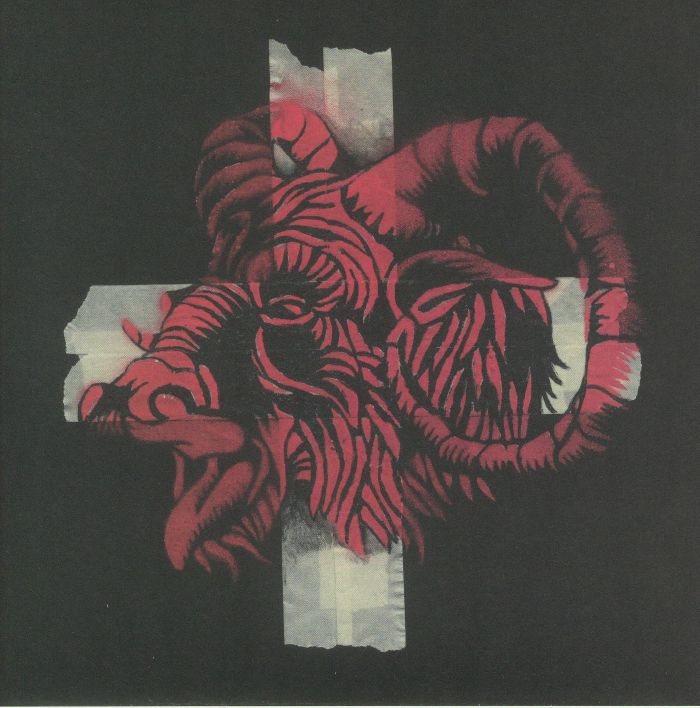
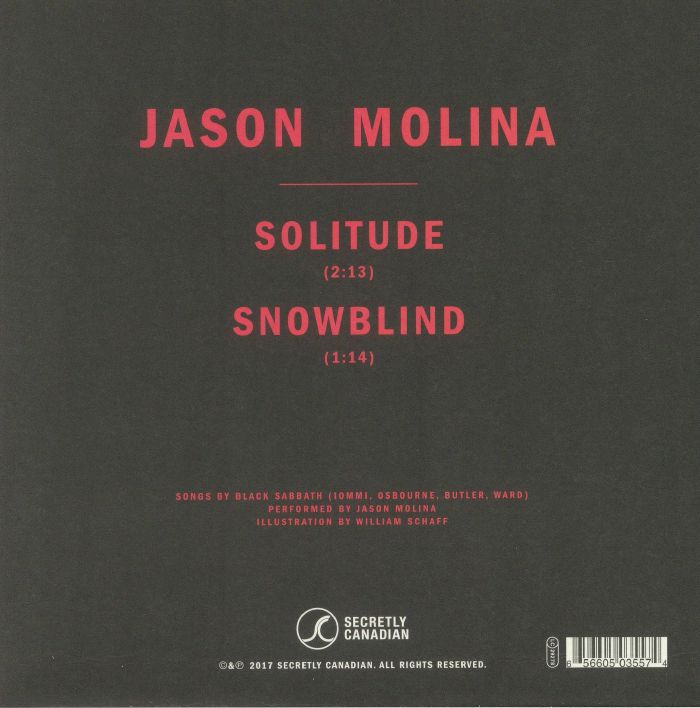
The latest offering from Secretly Canadian may be a less obvious connection – The Black Sabbath Covers 7″. Although Molina was in the punk band Spineriders in the late ’80s and early ’90s this isn’t a return to those days, instead, the two tracks Solitude and Snowblind were recorded in the late ’90s, with just voice and acoustic guitar. He makes them both his own although they are no sooner started then they’re over – combined they come in at just under 3:30 minutes but this does allow the b-side to be adorned with an etching of a black ram by the brilliant Rhode Island artist and musician William Schaff.
When Jason Molina took on another artist’s song, he willed his own universe into it, his own personal and artistic mythology. Be it Conway Twitty or Townes Van Zandt, their blues were infused with Molina’s own entrancing blues. This pair of newly discovered, home-recorded Black Sabbath covers is no different. Molina, a through-and-through fan of metal (seek out his high school metal band the Spineriders‘ album if you haven’t yet) peels back the sinister and stoned elements of Sabbath, zeroing in on the loneliness and brooding. He takes “Solitude,” from 1971’s unfuckwithable Master of Reality — and one of Sabbath’s more mystical, near-proggy songs — and doubles down on the title. Molina extracts Ozzy Osbourne’s gorgeously cooed vocal performance and transforms it into a high and lonesome sound, a desert campfire howler. And on his cover of “Snowblind,” from 1972’s Vol. 4, it becomes obvious what a guitar hero Sabbath’s Tony Iommi was for Molina.
Lukas Nelson and Promise Of The Real are a must-see. The band are gaining a steadily-growing fan base over the past two years. Their frontman, Lukas Nelson, joins the ranks of other sons and daughters of country music greats such as Justin Townes Earle, Holly Williams and Rosanne Cash. He made his first claim to fame in 2012 when he collaborated with his father, the legendary Willie Nelson, on the album Heroes. Young Nelson recently said to the Delaware County Daily Times that his father’s greatest lesson was teaching him the art of “being yourself” and “staying true to your [artistic] values.”
His band was soon plucked from the ever-deep pool of alt-country and Americana talent by Neil Young, who became a mentor for the now 28-year-old. Nelson’s self-titled album was released in August this year, drawing influence from his father’s legacy, as well as Kris Kristofferson and Waylon Jennings, and it features a guest appearance from Lady Gaga on the latest rendition of hit track, ‘Find Yourself’.
The notable softie said of his craft, “When you play music, when you’re living life, it’s all about finding a place where you’re not thinking and you’re living from your heart.” Growing up between Austin and the island of Maui, Hawaii, he describes himself as a surfing cowboy, which explains the band’s ‘cowboy hippy surf rock’ tagline. His attraction to country music as a teen provided a way to connect with his father, who was often on the road. The band is famous for its high-energy performances, as Nelson’s classic country tunes are also inspired by the likes of Eric Clapton and Jimi Hendix.
“Find Yourself” appears on the new album “Lukas Nelson & Promise Of The Real”
Hailing from London, England, Flyte are an alternative pop/rock outfit that meld bright vocal melodies akin to those of MGMT and Orange Juice with the buzzy guitar work of Franz Ferdinand and Cage the Elephant. Made up of lead vocalist/guitarist Will Taylor, guitarist/keyboardist Sam Berridge, bass guitarist Nick Hill, and drummer Jon Supran, the band formed while at school, with Taylor and Supran writing songs after studies every day. Following the addition of Berridge and Hill, the boys got to work performing in and around London before going into the studio to record their debut .
Faithless is the opening track off our debut album and now it has a big, beautiful music video to go with it. It’s our second collaboration with the legendary production company CANADA and director Femke Huurdman and we shot it out in the Spanish desert . Really hope you enjoy watching it as much as we did making it. All our love, Flyte x
Fleet Foxes have announced a special Black Friday release edition 10″ EP available exclusively at independent record stores starting on Record Store Day’s Black Friday, November 24th, 2017. The EP features four songs, thoughtfully selected from a WFUV session recorded at the historic Electric Lady Studio in New York on June 13th, 2017, days before the band’s new album, “Crack-Up”, was released.
Side A of the vinyl includes “Cassius,-“ and “- “Naiads, Cassadies” while Side B includes “Mearcstapa” and “On Another Ocean (January / June).” Each pair is recorded and cut as one long track to reflect the intentional fluidity between these songs, on both the album and in live performance. In addition to the announcement, FleetFoxes have released a Classic Album Sunday Q&A which premiered via Record Store Day,
WFUV (90.7 FM) has been a noncommercial, member-supported public media service of Fordham University in New York for 70 years. WFUV has received national recognition for its award-winning weekday format of adult album alternative music, award-winning local news and sports, and a diverse weekend lineup. Electric LadyStudios is the oldest working and thriving recording studio in New York City. Made famous by Jimi Hendrix and classic 70s sessions with The Rolling Stones, Led Zeppelin, Stevie Wonder, David Bowie, and Patti Smith, among others, the studio maintains its reputation as hallowed grounds for recorded music.
Live recording from Electric Lady studios
A: 1. Cassius, 2. –Naiads, Cassadies. B: 1. Mearcstapa 2. On Another Ocean (January / June)
London producer and singer Kelly Lee Owens who released an outstanding self-titled album earlier this year, ‘a pulsating collage of electronica replete with an homage to arthur russell and a collaboration with Jenny Hval. as if that album’s ten songs weren’t enough of a gift, Owens today released an extended version, with three additional tracks in tow.
“Spaces” is part of that addendum. armed with a descending motif that meanders towards its destination and owens’ exacting lead vocal, “Spaces” is a chilly slow-jam, content with pausing at sparse plateaus before continuing its plunge to cavernous depths.
Praised as “one of the unsung heroes of American pop music” Despite a life marked by tragedy and a career crippled by commercial indifference, the singer/songwriter’s slim body of recorded work proved massively influential on the generations of indie rockers who emerged in his wake.”
He was one of the pioneers of power pop – and his catalog of proto-alternative rock has inspired the likes of Beck, R.E.M., Teenage Fanclub, Primal Scream, Afghan Whigs, Pete Yorn, Wilco, The Posies, and The Replacements, all of which have covered his music or name-dropped his band, Big Star, in the press. His name was Chris Bell.
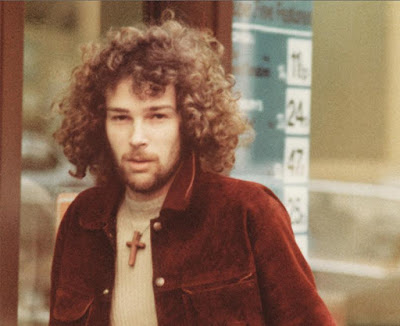
Christopher Branford “Chris” Bell (January 12th, 1951 – December 27th, 1978) was born in Memphis, Tennessee to a well-off family. He was a sharp, funny, deeply introverted and sexually confused young man, who dreamed of rock stardom.
Omnivore Record’sLooking Forward: The Roots of Big Star Featuring Chris Bell was the first of several planned releases from the Grammy Award-winning label showcasing the talents of Big Star co-founder Bell, who passed away in 1978. The label recently announced their next two Bell projects: a new expanded edition of the quintessential Bell collection I Am The Cosmos, and a definitive archive of his work as a 6LP box set.
Prior to Rykodisc’s I Am The Cosmos in 1992, only two of the tracks (the title cut and “You and Your Sister”) were released during Bell’s lifetime; both tracks were pressed on a single released shortly before a car crash took the Memphis hero’s life. (Much of it was recorded long before that, after Bell had departed Big Star and decamped to Paris in 1974 and 1975.) In 2009, Rhino Records also issued a double-disc Cosmos set that featured not only alternate versions and mixes of the album’s original tracks but also cuts by Bell’s pre-Big Star bands Icewater and Rock City for context. As those tracks (and more) are now a part of Looking Forward, this new double-disc edition sweetens the deal with another 10 tracks, most previously unreleased. Compilation producer Alec Palao and writer Bob Mehr provide liner notes, and a clear vinyl version of the original album (the first release of this material on the format in years) will ship day and date alongside the 2CD set.
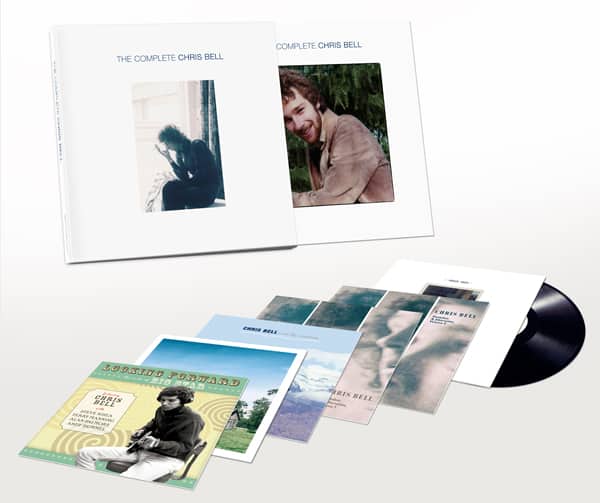
The material of Looking Forward and I Am The Cosmos will also be featured on a comprehensive vinyl box set, The Complete Chris Bell, to be released later this fall. That set includes the vinyl premiere of Looking Forward (reconfigured to include only the Icewater and Wallabys tracks, plus Bell’s solo “Psychedelic Stuff”); a separate vinyl debut of the material from Rock City, the I Am The Cosmosvinyl (as well as the material from the bonus disc on two LPs); and, exclusive to this set, a newly-discovered career-spanning interview with Bell, conducted by journalist Barry Ballard in 1975 and sourced from his own personal copy of the conversation.
Palao and Mehr again offer notes for the box (alongside an excerpt from Rich Tupica’s forthcoming biography of Bell), all tracks are remastered by Michael Graves, vinyl was cut at Ardent Studios by Chris Jackson and Adam Hill, and Palao, Hill and Omnivore head Cheryl Pawelski serve as the box set’s producers, with the full cooperation of Bell’s estate (as run by his brother David). I Am The Cosmos is back in print , while The Complete Chris Bell is available November 24th!
In 1964 and 1965, Bell played lead guitar in a British Invasion-influenced group called the Jynx (the name is a takeoff on The Kinks) with local musicians, including lead vocalist Mike Harris, rhythm guitarist David Hoback, drummer DeWitt Shy, and bassist Bill Cunningham, and later, bassist Leo Goff. Other lead vocalists at some of the group’s shows and rehearsals (though not present on their recordings) included local teens Ames Yates, VanceAlexander, and Alex Chilton. Chilton, who attended many Jynx shows and sang lead vocals at a couple of gigs, soon joined the Box Tops with Cunningham, as the Jynx split up in 1966. Here are the Jynx, with Bell on lead guitar, performing Little Girl:
Bell continued to perform and record in Memphis throughout the rest of the decade, including a stint in the heavier psych-rock band Christmas Future. By the late 1960s, after attending UT in Knoxville, he had turned his focus toward writing original songs. The group later known as Big Star stemmed from two Bell band projects that began in the late 1960s, while he recorded and performed live in groups, named Icewater and Rock City. These groups featured a revolving set of musicians including Jody Stephens, Terry Manning, Tom Eubanks, Andy Hummel, Richard Rosebrough, Vance Alexander, and Steve Rhea. Here are Icewater and All I See Is You:
Bell asked Alex Chilton to join several months after the group had started performing. Eventually, during a period of recording demos and tracks for their first album, the group settled on the name “Big Star.” The lineup for BigStar’s first album was composed of Bell (guitars/vocals), Chilton (guitars, vocals), Hummel (bass, vocals), and Stephens (drums, vocals). Bell and Chilton wrote most of the group’s songs, with occasional writing contributions from Hummel and Stephens.
Big Star were, in the words of Robyn Hitchcock, “a letter posted in 1971 that didn’t arrive till 1985.” Crowned the inventors of power pop, they were, over the course of three critically acclaimed but commercially unsuccessful albums, much more than that. Nobody could turn pain into beauty like Big Star.
In 1971, the 20-year old Alex Chilton has already been a star. He was the front man of The Box Tops, a manufactured rock combo who had one the biggest hits of 1967 with The Letter. His teenage stardom meant that he’d already met Charles Manson, toured with the Beach Boys, and watched Hendrix from the side of the stage before he could legally drink. He was an “art brat” who’d been given peyote as a kid and was already living a remarkable life. But witnessing the guitar shredding, five-part harmonizing experimenters of rock had left him feeling uncomfortable. He was essentially in a boy band. He needed to step up and make his own music. So he quit The Box Tops and after a brief spell in New York, returned to his hometown of Memphis to make music he wanted to listen to.
Just to remind you what a great pop group The Box Tops were, here are a few of ther hits. Their first hit was their biggest, surely one of the classic singles of the 60s (and of all-time). Here’s The Letter, with 16-year-old lead singer Alex Chilton:
Here’s their third single, which was their second-biggest hit, “Cry Like A Baby”:
Chris Bell obsessed with creating perfect, multi-layered pop music. To do this, he had the studios of ArdentRecords, run by whizz kid engineer John Fry, who let the local musical kids use it at night for their own sessions. Fry taught Bell how to multi-track. Ardent had become a subsidiary of the legendary Stax Records, taking on some of its recording sessions and, in return, agreeing to be its pop/rock imprint. The studios and – bizarrely -TGI Fridays, were the twin pillars of a raucous Memphis counter-culture scene that was big on drinking, sexual experimentation and drugs, particularly ludes, Mandrax and related pills.
“That pill culture is unique to Memphis”, says director and screenwriter Drew DeNicola. “It’s what killed Elvis and it’s what those Big Star boys were doing too. Everyone knew a crooked doctor. Polite society would go to bed and then, in the margins, the alternative kids could do what they wanted, as long as they made it to Sunday lunch with Momma.”
It was out of this southern stew that Big Star’s first album, #1 Record, came. The band’s name had come out of desperation, taken from a chain of supermarkets, one of which sat across the street from Ardent. Chilton and Bell put their heart and soul into the album, with Jody Stephens and Andy Hummel on drums and bass respectively. It’s an album of perfect pop songs, suffused with pain and melancholy, up-tempo and down-tempo, beautifully layered, subtle and all over the place genre-wise.
On its release in June 1972, #1 Record immediately received widespread acclaim, and continued to do so for six months, although an inability by Stax Records to make the album available in stores meant it sold fewer than 10,000 copies. Record Worldcalled it “one of the best albums of the year”, and Billboardcommented, “Every cut could be a single”. It wasdescribed it as one where “everything falls together as a total sound” and one that “should go to the top”. In 2003 it was ranked on Rolling Stone magazine’s list of the 500 greatest albums of all time.
Eight years earlier in 1964, when their home town of Memphis, Tennessee became a tour stop for The Beatles, primary songwriters Alex Chilton and Chris Bell were thirteen years old. They went to the show together – and it made them see the light. Thirteen, a song Chilton wrote nearly six years after he first witnessed that Beatles performance, referred to the event with the line “Rock ‘n’ roll is here to stay”.
Heavily influenced by the UK band, the pair – Bell in particular -wanted to model their songwriting on the Lennon–McCartney partnership, with the result that they credited as many songs as possible on Big Star’s debut album to “Bell/Chilton”. In practice, they developed material incrementally in the studio, each making changes to the other’s recordings. Drummer Jody Stephens recalled, “Alex would come in and put down something rough and edgy and Chris would come in and add some sweet-sounding background vocals to it.” The pair also each contributed songs individually composed before Big Star was formed, Bell bringing Feel, My Life Is Right, and Try Again, and Chilton, The Ballad of El Goodo, In The Street, and Thirteen.
Here’s Feel, the album’s opening track:
… and here’s the song with which Alex “auditioned” for the band: Watch the Sunrise.
The album’s short closing track, ST 100/6, is the only song where Alex Chilton and Chris Bell share lead vocals (lead vocals are divided among them on the rest of the album).
The critics loved the album but the public couldn’t get their hands on it. Press attention focused on former teen star Chilton. Chris Bell, the driving force behind the album, was relegated to the sidelines. The failure of #1 Record devastated him. He was tormented by his sexuality: he was probably gay but was unable, in Tennessee, to deal with it, and there were rumours in Memphis that he was in love with Chilton and that the latter’s lack of reciprocation hastened his departure from the band, which came not long after #1 Record.
The frustration at #1 Record’s obstructed sales contributed to tension within the band. There was physical fighting between members: Bell, after being punched in the face by Hummel, retaliated by smashing Hummel’s new bass guitar to pieces against the wall. Hummel took revenge at a later date: finding Bell’s acoustic guitar in the latter’s unattended car, he repeatedly punched it with a screwdriver. In November 1972, Bell quit the band. When work continued on songs for a second album, Bell rejoined, but further conflict soon erupted. A master tape of the new songs inexplicably went missing, and Bell, whose heavy drug intake was affecting his judgment, attacked Fry’s parked car. In late 1972, struggling with severe depression, Bell quit the band once more, and by the end of the year Big Star disbanded.
After a few months Chilton, Stephens, and Hummel decided to reform Big Star, and the three resumed work on the second album. The title chosen, Radio City, continued the play on the theme of a big star’s popularity and success, expressing what biographer Robert Gordon calls the band’s “romantic expectation”
Although uncredited, Bell contributed to the writing of some of the album’s songs, including O My Soul and Back of a Car. Shortly before the album’s release, Hummel left the band: judging that it would not last, and in his final year at college, he elected to concentrate on his studies and live a more normal life.
For all the trouble surrounding it, Radio City met with general acclaim. Critics judged the musicianship “superb” It was called “a collection of excellent material”; giving it an “A” rating, Robert Christgau calls the album “Brilliant, addictive”, observing meanwhile that “The harmonies sound like the lead sheets are upside down and backwards, the guitar solos sound like screwball ready made pastiches, and the lyrics sound like love is strange,” concluding his review with, “Can an album be catchy and twisted at the same time?”
However, sales were thwarted (again!) by an inability to make the album available in stores. As a result, the album achieved only minimal sales of around 20,000 copies at the time.
September Gurls is the best track on the album, almost as good as their best track overall, Thirteen.
Before returning to Bell’s solo career, I would be amiss not to present Big Star’s legendary third album known as Thirdor Sister Lovers. It was recorded in 1974. Though Ardent Studios created test pressings for the record in 1975, a combination of financial issues, the uncommercial sound of the record, and lack of interest from singer Alex Chilton and drummer Jody Stephens in continuing the project prevented the album from ever being properly finished or released at the time of its recording. It was eventually released in 1978 by PVC Records.
After two commercially unsuccessful albums, Third documents the band’s deterioration as well as the declining mental state of singer Alex Chilton. It has since gone on to become one of the most critically acclaimed albums in history and is considered a cult album.
You have to take into account that most of the songs in Third/Sister Lovers are practically demos. I wonder what would be the final form of these songs, had Alex decided to properly complete the album…
Chilton went on to have an interesting solo career, but commercial success always eluded him. In truth, he wasn’t really aiming for it. He also briefly reformed Big Star, as well as regrouped with the original Box Tops for a number of tours. He was taken to the hospital in New Orleans on Wednesday, March 17th, 2010, complaining of health problems, and died the same day of a heart attack. Four months later, Hummel died of cancer.
Back to our man, Chris Bell. After leaving Big Star, Chris would attempt suicide, abuse strong sedatives and use religion to suppress doubts around his sexuality amid an inherently homophobic Deep South.
Vocally, to some, Bell was an icon trapped in the wrong era. “At times Chris could be so punk rock and he’d just make this painful noise from the back of his throat like a Cobain,” beams Adam Hill, an engineer at Ardent, who remastered Bell’s recordings for posthumous collection I Am The Cosmos. “On grungy solo track Better Save Yourself, Bell contorts his voice, sometimes shouting, to bellow: “You should’ve gave your love to Jesus, it couldn’t do you no harm. You better save yourself, if you wanna see his face.” This was songwriting that had little time for affectation. Whereas on a song like Though I Know She Lies you could be listening to Dylan on Lay Lady Lay. He always pushed his vocal cords to their very limit.” On the delicate You And Your Sister, Bell pours his heart out about an unrequited love. When he reflects “Plans fail every day,” to backing vocals by Chilton, who remained an acquaintance, you sense heartbreak of both a romantic and professional nature. And Speed of Sound – with its existential dread of “The plane goes down, it will not land. The pilot’s dead, nowhere to be found”—hits you right in the gut, writing the angsty blueprint Elliott Smith would later follow to a tee.
Seen by friends as an intervention, Bell’s brother David took him across Europe in the mid-70s, armed with these solo demos. Bell, an anglophile who imported copies of NME, would get the chance to work with hero Geoff Emerick—a pivotal engineer on all the best Beatles albums—at the legendary Air Studios. “It was good for him to go to Europe but I sense he was still in a really dark place. He was an impatient artist after Big Star,” says Van Duren, a fellow Memphis musician. With a record deal not forthcoming, Bell accepted he needed a regular 9-to-5 upon his return to Memphis. For a while, he worked for his father’s hamburger chain Danvers—a heartbreaking scene for friends who understood his talent.
While Bell was back home flipping burgers, Big Star were blowing up in the UK, with NME unable to keep up with reader letters requesting copies of their first two albums. In fact, demand for both albums was so high they were eventually reissued in a gatefold release. “I called Chris and it was one of the only times I remember him being really happy, as all those Beatles Parlophone pressings he loved had the same address on the back,” remembers Stephens, noting that the reissue said “Pressed by EMI at Hayes, Middlesex” on the back. However, Bell’s adulation would be short lived.
“When I came back to Memphis we made plans to meet at the studio. However, when I arrived he had already left,” recalls Stephens. Friends and family still don’t know for sure what happened in the early hours of December 27th, 1978, the dark mystique of Bell’s music holding even in death. “What’s weird is I decided to drive back and when I got to the Sears department store, I could see police cars with their lights flashing and there was this car in the middle of the road. A pole had fallen and completely crushed the left side of the roof. I immediately thought ‘I shouldn’t look.’ The next day John [Fry] phoned to say Chris had died in a car accident. I had passed by Chris.” He was 27, that fateful age.
Unreleased for over 15 years, I Am the Cosmos, Bell’s only solo album, is nevertheless an enduring testament to the brilliance of Chris Bell; lyrically poignant and melodically stunning, this lone solo album is proof positive of his underappreciated pop mastery. The title track is a harrowingly schizophrenic tale of romantic despair:
We end this story with the album’s highlight, You and Your Sister – which features backing vocals from none other than Bell’s Big Star mate Alex Chilton – which is simply one of the great unknown love songs in the pop canon, a luminous and fragile ballad almost otherworldly in its beauty.
Black Rooster, is the EP that started it all! Originally released on Dim Mak in 2002, Black Rooster was the start of what’s been an incredible career for Alison Mosshart and Jamie Hince of The Kills. Now in their 15th year as a band, The Kills have been looking back and celebrating with a string of anniversary shows, retrospective features, and now this special Black Friday 2017 re-issue of their very first release. Steve Aoki, owner of Dim Mak and another artist who has proven a career with similar staying power, had some words to share on the release of Black Rooster: “Many moons ago, back in 2002, I had to make a decision whether to pursue a Ph.D. Program or continue with my label Dim Mak & after hearing a demo from The Kills and becoming the first American label to release their EP Black Rooster, I knew what path I was going to choose. They took me under their wing and I hit the road with them as their tour manager, merch guy, driver (we all took turns) and label. I’ll never forget that and love Jamie and Alison forever. Thank you for believing in me when not many people gave two shits about Dim Mak and what we were doing. Ride or Die.” Back in press in North America for the first time since it’s limited 2002 release, get your hands on The Kills first ever statement to the world, and the beginning of many wild things to come. The record sleeve featured photos of Mosshart and Hince taken in a photo booth rather than professional photography.
A1 Cat Claw A2 Black Rooster (Fuck And Fight) A3 Wait B1 Dropout Boogie (“Live” At Paint It Black 4/04/02) B2 Gum (Intermission “Red Meat Heart”)
The official promo video for ‘Ain’t Too Proud To Beg’, the 1974 single by the Rolling Stones. ‘Aint’ Too Proud ToBeg’ was originally performed by the Temptations in 1966 and was composed by Norman Whitfield and Edward Holland Jr. The Rolling Stones recorded the song at Musicland, Munich in November 1973 and it was released in October 1974 and peaked at number 17 on the billboard charts. It features on the album It’s OnlyRock ‘N’ Roll. The track features Mick Jagger on lead vocals, Keith Richards on rhythm guitar, Charlie Watts on drums, Mick Taylor on lead guitar and Bill Wyman on bass, along with Billy Preston on keys and clavinet, and Ed Leach on cowbell. The video was directed Michael Lindsay-Hogg, who directed many promos for the Rolling Stones including ‘Child Of The Moon’, ‘Jumpin’ Jack Flash’, ‘It’s Only Rock ‘N’ Roll’ and ‘Start Me Up’. Ain’t To Proud To Beg (single version)