On February 2, 2018, Zappa Records/UMe will release

43 years ago in December 1973, Frank Zappa played a series of legendary concerts at the famed Roxy Theatre on the Sunset Strip in Hollywood. Considered a high-water mark of his career, owing to the incredible, virtuosic performances of himself and his stellar band The Mothers, the five shows – across three nights – included a private invite-only performance/soundcheck/film shoot followed by back-to-back doubleheaders. A few days later, continuing this incredibly prolific week, Frank Zappa brought his band and camera crew to Ike Turner’s Bolic Sound in Inglewood for a filmed recording session. In typical Zappa fashion, he recorded it all.

Zappa Records presents The Roxy Performances. A 7-Disc Box Set that contains the MOTHERLODE of all things Roxy. All 4 public shows from December 9th & 10th 1973, remixed in 2016 and presented in their entirety for the first time. Also included is the sound check from December 8th and bonus content that features rehearsal nuggets and unreleased tracks along with highlights from the recording session at Bolic Studios that took place in conjunction with the filming dates.  The box set that collects all four public shows from December 9th-10th, 1973, and the December 8th film shoot/soundcheck, each presented in their entirety for the first time, along with bonus content featuring rarities from a rehearsal, unreleased tracks and highlights from the Bolic Studios recording session. This complete collection, totaling nearly eight hours, documents the Roxy shows as they happened and presents brand new 2016 mixes by Craig Parker Adams from new 96K 24 Bit transfers of the multi-track masters. The set is rounded out with a 48-page booklet that includes photos from the performances, extensive liner notes by Vaultmeister Joe Travers, essays from Zappa family friend, Australian writer Jen Jewel Brown,and American singer/songwriter Dave Alvin, who give their firsthand recollections about the shows, and a selection of archival press reviews.

This is one of my favorite Frank Zappa line-ups ever. This box contains some of the best nights of music Los Angeles has ever seen with their ears at an historic venue,” says Ahmet Zappa, who co-produced the collection along with Travers, “Hold on to your hotdogs people. This box is the be-all-end-all. This is it. This is all of it. It’s time to get your rocks off for the Roxy.”

While portions of these concerts have been released in various formats over the years – first in 1974 on the album Roxy and Elsewhere, which mixed material from the shows with performances recorded in different locations months later, followed by 2014’s Roxy By Proxy, which featured Zappa’s 1987 digital mixes of tracks from various shows, and most recently the 2015 film Roxy The Movie and its accompanying soundtrack – the shows have never been released in their entirety until now.

The Roxy Performances capture Zappa and The Mothers in peak condition as they play to rowdy sold-out crowds in the intimate, just-opened venue in their hometown Los Angeles following the release of Over-Nite Sensation. The extraordinary band was one of Zappa’s best with keyboardist George Duke, bassist Tom Fowler, trombonist Bruce Fowler, tenor saxophonist and vocalist Napoleon Murphy Brock, percussionist Ruth Underwood and drummers Ralph Humphrey and Chester Thompson all flawlessly in lockstep as Zappa led them through his musically adventurous compositions filled with complicated time signatures and sudden tempo changes. As the Los Angeles Times remarked in their review, “The content of any show starring Frank Zappa and the Mothers of Invention is unpredictable. But the quality of the show is predictable. I have seen this satirical rock group many times and every show has been excellent. True to form, the group performed sensationally at the Roxy on Sunday night.” The (long-defunct) Los Angeles Herald-Examiner was equally impressed: “This time around Zappa, the counter-culture’s John Cage, has assembled a remarkable group of musicians. Tim Fowler on bass, his brother Bruce on trombone, Ralph Humphrey on drums, and George Duke, whose keyboard skills almost upstaged the leader himself. Percussionist Ruth Underwood kept up with the band’s frenetic pace without missing a single swat of the gong, and she was incredible.”

The material expertly performed across the five shows consisted mostly of songs from 1969 and beyond and included a dizzying array of stylistic diverse tracks from Uncle Meat, Hot Rats, Waka/Jawaka and Over-Nite Sensation. The shows also include a number of live favorites like “Village Of The Sun,” “Pygmy Twylyte,” “Cheepnis,” “Penguin In Bondage,” “Echidna’s Arf (Of You),” and “Don’t You Ever Wash That Thing.” Many of these ended up on Roxy & Elsewhere.

Jen Jewel Brown and Dave Alvin give a glimpse at what it was like to be at these historic shows in their richly detailed essays in the liner notes that accompany the recordings. Alvin reflects about meeting Zappa on the Isle of Capri in 1982 while on tour with his band The Blasters and how Zappa’s eyes lit up when he told him he saw him at the Roxy. “You were at a Roxy show?,” he beamed. He goes on to write, “The Roxy Mothers were a grand combination of high art, low art, masterful technique and razor sharp humor with a touch of wild abandon.” In Brown’s reflection, “This is a cultural record and there’s some prime Zappanalia here. Frank had put the crippling disasters of December ’71 behind him and was plunged headlong into some of the most beautiful music and zestful, open-hearted engagement with life imaginable.”

Image may contain: one or more people

Pip Hall might share youth, a label and a flare for the emotional , Pip’s offering, “James”, is a raw slice of emotional outpouring. This is never more obvious than on the stunning title track, Pip’s tribute to her late father, who died when she was young; is part beautiful homage to his memory, part honest recollection of her struggles to grow up without him around.

Musically, across the EP, Pip shows a wonderful dexterity, from the fluttering electronics and Fleetwood Mac-like melodies of Devil You Don’t, to the driving twangy guitars of Turn Over. Throughout they are all pinned together by Pip’s frankly stunning vocal, an instrument capable of effortlessly shifting from an impassioned howl to an intricate whisper. At barely sixteen, Pip Hall is a mercurial talent, a songwriter with unlimited potential, and already quite probably Preston’s most famous musical daughter. If James is an intriguing introduction, where she goes next might just be incredible try and catch her while you can.

http://

“a gigantic talent…potentially massive” – The Line Of Best Fit
“Hall’s ability to write a brilliant pop hit is evident.” – Goldflakepaint
“It’s been haunting me all day. Sounding absolutely fantastic” – Radio X (John Kennedy)
“a palpable successor to the crown bestowed on Lorde after all.” – The Metro
“Revelatory songs wrapped in velvety synths and guitars” – Daily Mirror
“Stunningly penned tracks.” – Little Indie Blogs
“Wonderful” – Amazing Radio (Shell Zenner)
“Beautiful and engrossing.” – The Revue
“Graciously dark and lushly soulful” – Fame Magazine
“A star in the making.” – For The Rabbits

Tamara Lindeman was 31 years old when she recorded her latest album as the Weather Station, which is significant. “Thirty” is a song about surviving that milestone birthday, about the small moments that define that time of life: “You put your hand on the small of my back, I was surprised that you’d touch me like that.” The song builds speed and momentum, getting faster and faster with each new memory, much like life itself. And Lindeman stands in the middle of the storm, trying to make sense of one moment before the next moment hits. “That was that year, now here is another one.”

On astonishing artistic statement The Weather Station, Tamara Lindeman homes in on her rebellious core to express some of the finest musical sentiments Canada has conjured. A mood and scene-setter, Lindeman delves into the complexity of interpersonal relationships and, in particular, the tricks and treachery of soul mate communication. It’s not always easy, and neither is the Weather Station.

Often citing the writing of Steven Lambke, like he’s a mentor, Lindeman approaches language like a dancing partner but also like a foe. Often, as on the flurry of imagery that propels “Thirty” or “Kept it All to Myself,” she lets loose emotive lyrical torrents that haunt the listener.

Beyond her gift for phrasing and alluring voice, Lindeman also shows off an ear for arrangements and production here. The musicality is uniquely orchestral and sophisticated; the back-up vocalists are utilized with subtle strength. This is the Weather Station, ascending with the grace of a heron to full flight.

The Weather Station’s S/T album was released October 6th, 2017 on Paradise of Bachelors (worldwide), http://www.paradiseofbachelors.com/po… as The Weather Station, Tamara Lindeman reinvents, and more deeply roots, her extraordinary, acclaimed songcraft, framing her precisely detailed, exquisitely wrought prose-poem narratives in bolder and more cinematic musical settings. The result is her most sonically direct and emotionally candid statement to date, a work of profound urgency and artistic generosity.

The palpable freedom emanating from Tamara Lindeman’s fourth long-playing album as The Weather Station is unmistakable, and completely intentional. Stepping aside from a successful acting career, and taking the reigns in the recording studio, the Toronto-based singer/songwriter and multi-instrumentalist has crafted her most intrepid, stirring, and successful work to date. All it took was a load of gumption.

She cracks that the new album is her rock and roll record. There’s of course a grain of truth in every joke. “There was this excitement around what would happen if I blended my sensibility with that spirit,” she says. “That devil-may-care attitude.” By that she means that she had to actively work against most of her natural instincts in the studio—to be less careful, less cautious, and totally unselfconscious in her decision to stand up to male assertion. “I knew exactly what I wanted, and I just realized that it was actually better if I didn’t listen to anyone else,” she adds.

It’s an environmental reality most women have had to face. The overcoming of this quiet oppression, this subtle misogyny, becomes an unwanted career milestone—the product of a deep-rooted, male-centric ideology that remains a de facto force in creative and corporate settings. “Lord, Give Me the Confidence of a Mediocre White Man” is an oft-memed phrase for a reason.

Lindeman explains that she’s never worked with a female producer, and in her experience men in that role exude finality in their point of view, often ignoring the artist’s input altogether. As a self-proclaimed introvert and someone to whom leadership does not come naturally, she adds that she had to tap into her acting chops to construct a reality where her opinions of her own work negated outside input. She adds that men have a keen ability to make their opinion seem like the truth. “But in the end, that’s just one opinion, that’s how it sounds to you,” she says. “I just had to pretend to myself that my opinions were the Word of God.”

The new, self-titled album’s eleven songs unfold and build upon one another like chapters in a captivating memoir. They’re moving yet unsentimental, welcoming listeners aboard a passenger train between heart, brain, and larynx.

“I just had to pretend to myself that my opinions were the Word of God.”

“All these years I have followed you / It never occurred to you to follow me,” she sings on album opener “Free.” The song acts as a mission statement, the trailhead of a path through introspection and liberation, surrounded by swaying guitar, stringed breezes, and chirping piano. It’s familiar and yet deeply personal, merging universal truth and individual experience. It describes the making of the record, and the feeling throughout the end result. It’s a painful realization—and a battle cry.

Like any great book, the LP’s effortless quality comes from a mastery of craft. Each song has a stream-of-consciousness quality, but in fact endures rounds of re-imagining and revision. Lindeman begins with a germ, a seed of a song, and incubates it by recording different, largely spontaneous versions on the theme with just guitar and voice. She plays them back, transcribes them, and then fuses together her favorite parts for a finished song.

Album standout “Impossible” began with what became its apex: the line “I guess I got the hang of it, the impossible.” She knew immediately that the very loaded observation deserved a wider exploration. Despite the universality of the song’s crux, she sought a very personal narrative to surround it. An early version didn’t tap far enough into any specific place in time, and ended up on the cutting room floor. “It doesn’t feel right if I write a song that’s too vague,” she says. “All the lyricists I admire have moments where it’s universal and moments where it’s specific. There’s a perfect balance that I’m always striving for.”

Like any red-blooded Canadian, Lindeman cites Leonard Cohen as a lyrical hero, but with a caveat. “Bob Dylan is also the best,” she says. “Leonard is better in a lot of ways, and I think he’s the best, but you need Bob, too.” She also mentions Canadian compatriots of the contemporary music scene in the same breath. Artists like Jennifer Castle have inspired her own free-form approach to songcraft, which emphasizes lyrical narrative, rhythmic phrasing, and organic instrumentation over traditional verse-chorus formatting. It’s a signature mark of artists like Joni Mitchell and Mary Margaret O’Hara, and one increasingly present in the new age of singer/songwriters like Lindeman, who deftly manages to work a multitude of cohesive feelings, ideas, and actual words into her songs.

When asked about her approach to phrasing, her voice piques with excitement. “People don’t talk about phrasing, but it’s so key,” she explains. She adds that while she doesn’t have a deep knowledge of the canon, rap music has influenced the quality of her sung words. “You can’t help but notice the ingenuity pouring out of that genre right now,” she says. “What people are doing in rap is much more distinctive than what people are doing in folk music… Having rap permeate the culture has really affected me.”

For an album with a remarkable series of firsts, from self-producing to string arranging, The Weather Station spins like a classic work from a storied professional, steeped in equal parts confidence, grace, and duende—that intangible spirit of passion. And all this despite disapproving forces in the studio. “There were people around me who didn’t like the record,” Lindeman says. “I was like, ‘OK, I gotta see this through.’” The result is a triumph of character and expression. A singular vision swimming upstream in a sea of know-better.

If David Rawlings had an airplane, he’d “fly to Tennessee just for the day, and lay me down easy, just to wind my blues away.” You could substitute any state or place in that line, wherever you want to be at any particularly bad moment. It’s a beauty of a song about escaping, about leaving your woes on the ground as you go soaring through the air, and Rawlings sings and plays guitar like a man who has more than a few of those woes.

Over the past decade, ever since releasing the first album under his own name — 2009’s Friend Of A Friend – David Rawlings has gradually emerged in his partnership with Gillian Welch as the duo’s primary vocal outlet. Though it often seems as though the only discernible difference between albums under Gillian Welch and David Rawlings is who happens to be singing lead, three of their past four albums have been released under Rawlings’ name. “Poor David’s Almanack” takes a more full-band approach toward Welch and Rawlings’ neo-traditionalist American roots music. Enlisting longtime collaborators like Willie Watson, Brittany Haas and Ketch Secor, Rawlings runs through a mix of light folk-rock, orchestrated country-soul, traditional country-gospel, and folksy low-country blues. When recording under the Rawlings name, Welch and Rawlings are freer to toy around musically and stray from the note-perfect craftsmanship of the acoustic duo format they tend to stick to when performing as Gillian Welch. Poor David’s Almanack, for instance, features plenty of electric guitar, full string sections, rollicking fiddle and ramshackle three-part harmonies. A large component of Rawlings and Welch’s musical/historical project with their David Rawlings’ releases is their repeated insistence that in traditional music, there’s no such thing as a novelty song. Like on past comical high-dramas like 2009’s “Sweet Tooth” and 2015’s “Candy,” new numbers like “Yup,” “Good God A Woman” and “Money Is The Meat In The Coconut” are humorous, deadpan allegories that often tell deeper stories of lust, greed sex, and violence. What’s so profoundly American about these songs are the way they often deploy humorous metaphor and simple, child-like storytelling devices to convey deeper, darker truths. Other times, the songs are simply funny stories without a larger lesson. In this way, Dave Rawlings records exist as an important counterweight to the inherent gravitas and high stakes seriousness in Gillian Welch albums. An earlier version of this review listed Griffin and Taylor Goldsmith as producers of the album. The album was produced by David Rawlings and engineered by Ken Scott and Matt Andrews.

from his “Poor David’s Almanack” 2017. Acony Records

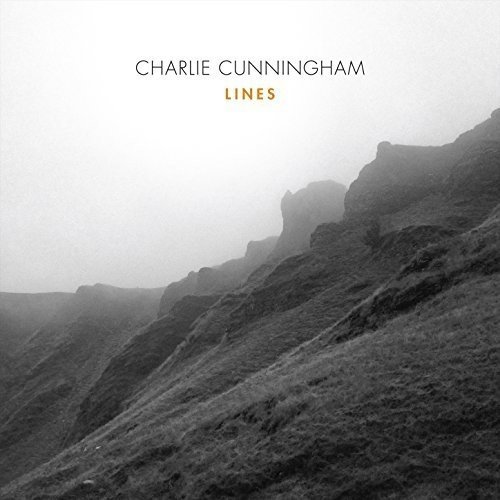
This singer-songwriter opened for Lucy Rose on her recent tour and has won plaudits from Elton John – and after one listen to this brand of ambient folk, it’s easy to see why. An idiosyncratic percussive nylon-string player, his first album, “Lines”, capably stands out from the acoustic crowd. 

The Bedfordshire-born, London-based artist presents a dreamy, slow-building sound on Lines, with standout track “Minimum” personifying the exact sonic qualities that earned Cunningham such a sizeable fanbase initially. Clocking in at just over three minutes, it refuses to compromise on quality and magnifies his sheer talent.

Luscious percussive qualities abound in a strong start to the record. The vocally rhythmic “Answers” oozes British charm without flashy instrumentation, just raw and consistently winning melodies, whereas the title track’s softly sung vocals and swirling guitar sees him artist at his wistful best.

“Lights Off” stops, starts and stutters along but maintains attention with its moody build-up before erupting into a passionate display. It’s a slow-burning beauty and is certainly amongst Cunningham’s best work to date. His next moves will be closely measured against Lines, as this is a soaring debut

Kevin Devine suffers from Nice Guy Syndrome. Over the last 20 years, his smiling face has been such a reliable staple in the indie rock scene that it’s almost possible to take him and his music for granted. But over those two decades, the Brooklyn songwriter has quietly amassed a substantial catalog of solidly crafted albums. With his ninth solo effort, “Instigator”, it’s clearer than ever that it’s time to take a step back and appreciate just how talented this guy is. “Instigator’s” first half alone includes no fewer than four absolutely perfect songs. And the album’s relentless assault of catchy hooks makes its easy to overlook the fact that Devine is tackling timely and important topics like police murder and the hypocritical nature of political criticism. Kevin Devine is not asking for your respect as a songwriter here.

For Kevin Devine, as for so many Americans in 2017, the lines between the political and the personal have become a little blurred. “Life is really sweet right now on the ground and really fucking insane in the air,” Devine says. At 37, the Brooklyn-based singer-songwriter has learned to balance talking about the present and his past, singing about everything from his own personal trauma to government shutdowns. But with our current climate, Devine knows it’s pretty impossible to avoid the political. “It’s so omnipresent that it can’t not sneak in, and it kind of comes in through the side, but I haven’t sat down to write my nuclear war song yet or my ‘the president is a racist’ [track],” he explains. His 2016 album, Instigator, was written largely during the presidential campaign, but was recorded and released before the actual election.

“A few of the songs that are on there that are social justice songs unfortunately have aged really well, given what happened,” he notes. For instance, “Freddie Gray Blues” focuses on police brutality and institutional racism, while “No History” reflects on how little we’ve learned as a nation since 9-11. The words still resonated in 2017 — maybe more than ever — but Devine wanted to shift tone. The result: a more contextual, stripped-down re-work of Instigator called We Are Who We’ve Always Been, released in October. “It felt like the timing was right for recommunicating those [songs] with a bit more solemnity or gravity,” he says. “Everyone is just feeling their way through how to reckon with [our current reality] and how to communicate about it, I think. I know that I am.”

For his latest release, Devine sought the help of his friend and collaborator of fifteen years, Chris Bracco. Recorded in just two days, the bulk of the album is just live guitar and vocals. “The baseline thing we wanted was no electric guitar and to keep it to acoustic guitar, vocal, and harmonies,” says Devine, explaining that he wanted the album to have a direct, spare quality to it: something akin to the intimacy of a live performance. During the writing and recording process, he was immersed in Big Thief’s latest record, Capacity, listening to it on loop. “[Capacity] is actually a spare, direct-communicator record, so I’m sure that snuck in subconsciously.”

For “Freddie Gray Blues,” Devine recruited SWIVS’ Will Schalda, Jr., while Half Waif’s Nandi Rose Plunkett assisted on the cascading harmonies of “I Was Alive Back Then.” For “No One Says You Have To,” Devine recruited the Mynabirds’ Laura Burhenn. The collaborations were all pleasant surprises, especially when they came out differently than he had imagined. “I think all three of them made a cool, new painting with what they did.”

Having joined forces with Atlanta band Manchester Orchestra on the indie rock side project Bad Books — and after a short-lived tour with Brand New this fall  Devine is at least temporarily focusing on his own work again.

Image may contain: 1 person, standing, shoes, outdoor and water

Fallon’s old band the Gaslight Anthem went on hiatus in 2015, clearing the way for solo efforts from band members. Brian Fallon released his debut, the Butch Walker-produced Painkillers, last year. When he started recording Sleepwalkers, he connected with Ted Hutt, who also produced the Gaslight Anthem LP The ’59 Sound.

Fallon is planning an extensive tour of North America and Europe in support of his new record.

Music video by Brian Fallon performing If Your Prayers Don’t Get To Heaven. (C) 2017 Island Records, a division of UMG Recordings, Inc.

The plaintive tune “God In Chicago” appears at the midpoint of Craig Finn’s “We All Want The Same Things”, his third and most fully realized solo album to date. While it’s got all the characteristics of the best of the Hold Steady and Lifter Puller songs — when push comes to shove, I bet Wayne from Winnetka could hold his own with Charlemagne from “Separation Sunday” — the track feels utterly singular in Finn’s body of work. With unsettling solemnity and uncanny deliberation, “God In Chicago” befits a Midwestern winter, icy and foreboding. It comes not in hollers, but in hushed tones, hinting at desperation and hiding fresh wounds. It’s a short story of a song that’s fixated on specificity: that Mexican restaurant near Midway, a left turn on Cermak, the Walgreens near the Hyatt. “God In Chicago” is an attempt at closure amid unfinished business and uncertain future.

We expect strong characters and compelling stories from Craig Finn, whether he’s recording solo or with the Hold Steady. We even expect beautiful details and excellent location scouting. But we didn’t expect a song as powerful, as specific, as lived in, as beautiful, as insightful, as risky as “God in Chicago,” one of the great surprises of 2017. The music is as simple as anything he’s ever done: just a few sad piano chords and a bruised chorus that never repeats. He doesn’t sing, either. Instead, he relates the story of two grieving souls in a matter-of-fact tone, speaking to you, direct and conversational, as casual as a tale told over beers but as serious as a eulogy. When he remarks, “We all want the same things,” you know exactly what he’s talking about, because this story he’s telling isn’t just about two people selling drugs and having a night in Chicago. It’s about you and me and our desire to find some brief escape from the beautiful horror of living.

“We All Want The Same Things” available now on Partisan Records.

“God in Chicago” written by Craig Finn & Josh Kaufman
Craig Finn – Vocals
Josh Kaufman – Bass
Sam Kassirer – Piano, Organ
Matt Barrick – Drums
Annie Nero – Additional Vocals

We often associate the strongest emotions with loudness: a scream, a belly laugh, an agonizing cry, but Louisville singer songwriter Joan Shelley proves on her self-titled fifth album that deeply felt emotions can exist just as comfortably alongside stillness and quiet, potentially more so. Like Townes Van Zandt, Shelley is most powerful telling bedside tales that can unexpectedly level you with a slight twist of phrase. Coming seven years into her career, this Jeff Tweedy-produced effort finds Shelley, who describes herself as an “open nerve,” with the confidence and sigh of relief that often comes in your 30s, able to feel and think all at once without feeling completely overtaken in self-doubt. Drawing skillfully from Appalachian musical traditions, this album is a reminder that great American roots music still exists and that despite a constant feeling of crowdedness in the field, a voice and a guitar can still be more than enough when put in the hands of the right artist.

This Kentucky native writes simply and straightforwardly, with a singsong cadence in her vocal melodies and a sense of gentle purpose in guitar playing. “Where I’ll Find You” uses those elements to speak softly about hard desire: “I blamed the wind when my legs shook/ but your eyes, that hungry look.” It’s all the more powerful for being so understated, as she can barely admit to feelings she can’t even name.

Alynda Lee Segarra’s fifth album as Hurray For The Riff Raff was a dramatic departure, as she jettisoned much of the rootsy sound of her previous records and wrote an ambitious concept album with sci-fi trappings and real-world implications. “Rican Beach” confronts the gentrification of immigrant neighborhoods in New York City and the displacement of settlers to the furthest outskirts of the boroughs. The song itself is a throwback to ‘70s salsoul and Fania Records, proving that urban Latin music is just as Americana as country or bluegrass.