Enough has been written about Barns Courtney’s tumultuous career so that will not be focused on in this review. What this review will be entirely focused on is the fact that despite his past, Barns Courtney is simply on his way to impossible things.
His album “The Attractions of Youth” jumps from Kings of Leon-anthemry (‘Golden Dandelions’) and dirty blues, film soundtracking brilliance (‘Fire’) and it marks him down as an incredibly skilful and versatile songwriter. And as good as that album is, his new single is the best thing he’s done yet.
I don’t believe the presence of Carl Barat has particularly enhanced the quality of this song- it contains all the things that Courtney has proven himself to do so competently. Bluesy acoustic verses, drug referencing lyrics “the nights still good for a gram or two” and a fists aloft, shout along chorus.
But what makes this superior to ‘Fire’ is the depths he plunges in his vocals. The verses are almost Nick Cave-esque and he pulls it off to dramatic effect. The sheer sex appeal in his vocals could lure in the most fair-weather of music fans. If I can employ some kind of criticism to this critique, the song could quite comfortably go on for a minute or two longer and still retain it’s initial excitement value thrown to the listener in the first ten seconds. But that is splitting hairs. He leaves you gasping for more and with a record this prolific, don’t be surprised if the next song this boy gifts to us is even better. Boy is undeniably good for something now.
Pacific Northwest native and indie-folk musician Talena Bricker has been writing songs for over 17 years. It was only recently that she mustered the courage to present them publicly. Many of her songs explore this in themes of choices, overcoming fears, and loss. Her current project is her debut EP, “Drowning”, set to release this January,
Here is the video for Drowning. It is Brad’s (my husband’s) brain child. I do not like being in front of a camera, so I went into it kicking and screaming a bit, but relented (and eventually had fun even with random people watching us like we were crazy!). This video was shot during our summer vacation at Twin Lakes, Washington, where we have vacationed for a decade (and Brad’s family for decades before). Also, an insiders note here, Brad was shooting this with our baby strapped to him. I don’t want to forget to give music producer credit to Jason Vorpagel – you rock, man! Hope you enjoy! Feel free to share! And if you want to stream or download the music, just visit https://talenabricker.bandcamp.com/…/dr….
Talena Bricker shares mellow indie folk single, ‘From These Cliffs’ the final track to be revealed from her debut EP, ‘Drowning’ which is out now!
Talena Bricker weaves sadness into serenity in new single, ‘From These Cliffs’. There’s a solemn and reverant tone to the song, as Bricker’s captivating vocal spills vivid poetic lyricism amongst delicate and consoling arrangements. ‘From These Cliffs’ is arguably the most blissful track on Bricker’s ‘Drowning’ EP. Despite the joyful ambience that lives within the song. It’s conflicted. Shudders of vulnerability and sorrow haunt the song in such a way, Bricker leaves her listener feeling both soothed and saddened.
Amen Dunes (aka the project of New York-based Damon McMahon)has shared the video for his new single Blue Rose, taken from upcoming long player Freedom which is out on the 30th March.
The song is a teenage clarion call born from McMahon’s growing up with an unpredictable father, his fighting back with music, drugs and fantasy, and his eventual escape from it all via one of the many identities, that of a musician.
“Freedom” took three. The first iteration of the album was recorded in 2016 following a year of writing in Lisbon and NYC, but it was scrapped completely. Uncertain how to move forward, McMahon brought in a powerful set of collaborators and old friends, and began anew. Along with his core band members, including Parker Kindred (Antony & The Johnsons, Jeff Buckley) on drums, came Chris Coady (Beach House) as producer and Delicate Steve on guitars. This is the first Amen Dunes record that looks back to the electronic influences of McMahon’s youth with the aid of revered underground producer Panoram from Rome. McMahon discovered Panoram’s music in a shop in London and became enamored. Following this the two became friends and here Panoram finds his place as a significant, if subtle, contributor to the record.
The bulk of the songs were recorded at the famed Electric Lady Studios in NYC (home of Jimi Hendrix, AC/DC, D’Angelo), and finished at the similarly legendary Sunset Sound in L.A., where McMahon, Nick Zinner, and session bass player extraordinaire Gus Seyffert (Beck, Bedouine) fleshed out the recordings.
On the surface, Freedom is a reflection on growing up, childhood friends who ended up in prison or worse, male identity, McMahon’s father, and his mother, who was diagnosed with terminal cancer at the beginning of recording.
It’s Valentine’s Day, and Ryan Adams is celebrating the occasion with a new love song appropriately called ‘Baby, I Love You’. Adams’ press release describes the tune as “a song to one’s baby, whom they love—a unique twist on Ryan Adams’ classic recipe, with key ingredient ‘sad’ replaced by ‘happy’”.
On top of the new song, the singer-songwriter has also announced a huge show at Red Rocks Amphitheatre on June 14th, Early last year, Adams released his latest album Prisoner. The Prisoner singer has been embroiled in a long-term feud with The Strokes, which saw Adams once again took to Twitter last July, writing: “Abert Hammond is a more horrible songwriter than his dad. If that’s possible. It rains in Sthtrn CA & washes out the dirt As you were RA x”
He swiftly followed that up with a dig at Strokes frontman Julian Casablancas, tweeting “Julian Casablancas: who got you strung out on lasagna tho?”
Adams continued: “I should have got them addicted to writing better songs. Too bad The Killers did it for them”.
The spat came after it was claimed by The Strokes that Adams was in some way responsible for Albert Hammond Jr.’s past heroin addiction.
The comments came in a new book by Lizzy Goodman calledMeet Me in the Bathroom: Rebirth and Rock and Roll in New York City, 2001–2011, which details the rise of 2000s NYC indie bands such as The Strokes, Yeah Yeah Yeahs, LCD Soundsystem, Interpol and Vampire Weekend.
Founded by drummer Ginger Baker when he recruited Eric Clapton, followed by Jack Bruce to form a new band, Cream would quickly become one of the most influential groups of the 1960s, changing the landscape of blues and rock ‘n’ roll simultaneously. Volcanic onstage, Baker and Bruce were equally volatile offstage. Despite antagonistic history between the two, Clapton convinced them to set aside their differences and Cream was born in 1966, becoming the prototype power trio, fusing the blues and rock ‘n’ roll into a powerful new brew. Three technically gifted musicians with a penchant for volume, Cream’s live performances made a strong impression in Europe, making all but a select few bands sound lightweight or tame by comparison. Although all three members, especially Clapton, had established reputations in Europe, none of them had ever ventured to America. Other than Clapton, who had a modest reputation from import recordings by the Yardbirds and John Mayall’s Bluesbreakers, the members of Cream were unknown commodities in America.
This all changed over the course of six months, with San Francisco and the city’s primary concert promoter, BillGraham, playing a major role in making it happen. The band’s initial visit to the States occurred in March of 1967 and was not an auspicious start. Cream played nine dates at Brooklyn’s RKO Theater for Murry The K, who presented five shows a day featuring Mitch Ryder, Smokey Robinson, Wilson Pickett, the Blues Project, and the Who, in addition to the virtually unknown Cream. As such, Cream were first relegated to playing three songs per show, which was soon paired down to a single song, “I’m So Glad,” which they were required to play five times a day.
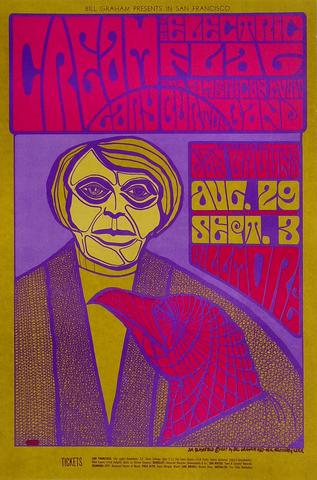
Not an inspiring first visit, but Cream would return to the States in August of 1967, when they would embark on their first American tour and experience an alternate universe flourishing on the other side of the country. Much had changed in the past several months, both culturally and musically. The Beatles had released Sgt. Pepper and the Summer Of Love was in full swing when Cream landed in San Francisco, a city that would have a profound impact on the band. Cream’s first residency at Bill Graham’s Fillmore Auditorium occurred the last week of August and the first week of September. For the first week, Graham presented the PaulButterfield Blues Band and Southside Sound System (which featured Charlie Musselwhite and Harvey Mandel) as openers to create a truly incredible triple bill of modern blues. The following week was no less impressive with jazz vibraphonist GaryBurton’s group (which included a young Larry Coryell on guitar) and the newly formed Electric Flag, featuring Mike Bloomfield, opening the shows.
Graham’s inspired billing and the great influx of young people that had descended on San Francisco at this time meant these shows were packed to the hilt. The Fillmore Auditorium had a legal capacity of 900, but somewhere between 1400 and 1500 people were reportedly crammed in for these shows, making Cream’s initial San Francisco residency a huge success. What they experienced in San Francisco, both culturally and musically, had a profound impact on the band. In turn, Cream’s performances had a lasting impact on the music scene now flourishing in the city. Faced with a more demanding performing experience, Cream began improvising more and incorporating spontaneous jams into many of their songs, some stretching out to nearly 20 minutes. The 1967 audiences in San Francisco embraced experimentation and sensory exploration and Cream took both to new levels on stage. With many of the key up-and-coming San Francisco musicians attending this run of shows, Cream had a significant impact, inspiring groups like the Grateful Dead, Quicksilver, and countless others to further embrace spontaneity in their own performances.
Thanks in large part to this initial run of 1967 Fillmore Auditorium performances, word of mouth spread rapidly. Cream established a reputation as one of the most exciting live acts to ever hit the city, which in turn increased album sales and demand for their performances in America. Early the following year, Cream returned to the States to record sessions for their third album at Atlantic Records New York City studios and to embark on their second US Tour. With much of the studio recordings for Wheels Of Fire just completed and with their new single, “Sunshine Of Your Love” just hitting the airwaves, Cream hit San Francisco for a second extended stay. With their reputation preceding them this time around, demand for tickets was now much greater. To address this, BillGraham presented Cream at the significantly larger Winterland Ballroom (5,000 capacity) for three nights, followed by a fourth night at the more intimate Fillmore Auditorium, with the Loading Zone and Big Black opening all four nights. These concerts—which began on February 29th and continued through the first three nights of March—were a huge success, and following a few days off, Graham presented an additional four nights. These shows would go down in history as the peak performances of Cream’s career.
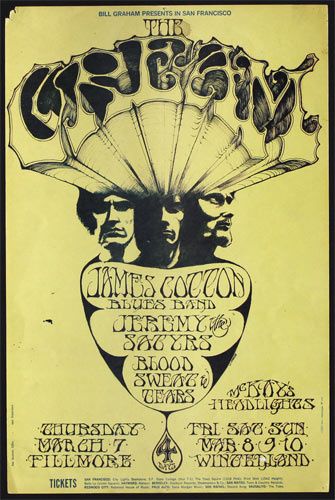
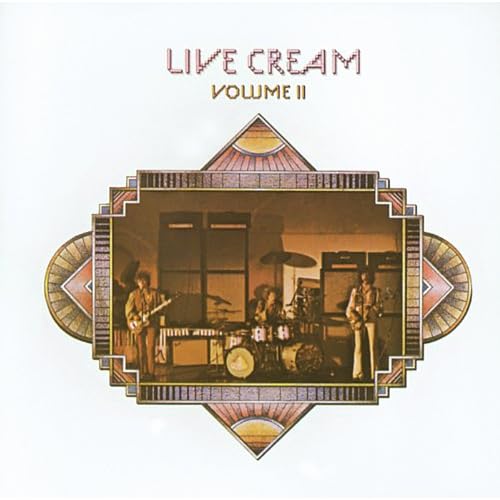
Atlantic Records and the group’s producer, Felix Pappalardi (who would soon team up with Leslie West to form the Cream-influenced band Mountain) were wise to capture the band’s onstage energy this time around, and much of Cream’s live legacy is based on the results of these recordings. Cream’s final run of San Francisco ballroom shows, which occurred on March, 7, 8, 9 and 10, 1968 would end up providing nearly all the evidence of Cream at their peak on stage and would also become the source of decades of confusion among fans, historians and collectors. For this final run, Bill Graham would reverse the approach of the following week, beginning with one night of two performances at the intimate Fillmore Auditorium, followed by six shows over the course of three nights at the much larger Winterland, this time with the James Cotton Blues Band and Al Kooper’s new outfit, Blood, Sweat & Tears opening. For this final four-night run, Cream producer Felix Pappalardi hired Wally Heider’s mobile unit and engineer Bill Halverson to record all eight performances. Essentially an eight track recording studio on wheels, Pappalardi and Halverson’s tapes from these nights would provide the incendiary live recordings fueling the second Wheel’s Of Fire album and eventually be mined for the posthumous Live Cream and Live Cream Volume 2 albums in the years to come.
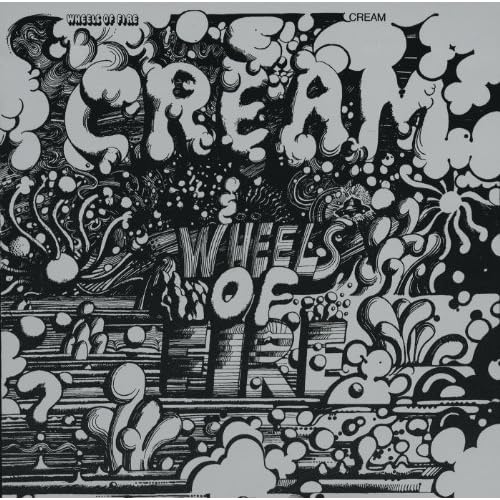
Cream’s double album, Wheel’s Of Fire, would achieve astounding success, becoming the first double-record to ever sell a million copies, due in large part to the live material recorded by Pappalardi and Halverson during the final four nights in San Francisco. Herein also lies the initial source of confusion surrounding the official notation of these gigs, as the liner notes in Wheels Of Fire attributed the second disc of the set as Live at The Fillmore, despite the fact that all but one of the tracks was actually recorded at Winterland. At the time, this made marketing sense, as the Fillmore had far greater name recognition thanks to the local cultural scene receiving so much attention in the media, especially in Life and Time Magazine, as well as Crawdaddy! and the bourgeoning Rolling Stone magazine, which had recently launched out of San Francisco.
The confusion surrounding the venues on these recordings was further convoluted as the years went by and subsequent releases and reissues (including Cream’s own recent career retrospective box set – Those Were The Days) identified some of the material from these recordings as being from Fillmore West, a venue the band NEVER played. For the benefit of those questioning the validity of this statement, the reality is actually quite easily explained. In March of 1968, which is when these live San Francisco recordings were made, Fillmore West did not yet exist. Graham had opened Fillmore East in New York City (that same week, in fact) but he was still in the early stages of pursuing the 2800 capacity venue in San Francisco, which was then known as the Carousel Ballroom. Graham would not present concerts there until June of 1968, which is when he moved operations and christened the venue Fillmore West. Three times the capacity of the intimate Fillmore Auditorium and an entirely different experience, Cream never got the opportunity to perform there. By the time they returned to California on their farewell tour in October of 1968, they were playing huge sporting arenas like the Forum in LosAngeles and the Oakland Coliseum in the Bay Area, having already outgrown the likes of Fillmore West or Winterland. Despite this, incorrect information persists in authorized biographies, official release liner notes and is ubiquitous in much of the online documentation surrounding the March 1968 recordings. Because these Fillmore Auditorium and Winterland recordings were utilized as individual tracks on multiple albums over the course of the next several years, much date confusion surrounds the individual songs as well. With Pappalardi and Halverson’s recording logs as a guide, much of this has been rectified during the past decade, as reissues have begun documenting individual live song dates accurately, but the incorrect Fillmore West notation persists.
Since the Pappalardi/Halverson recordings have only been released as individual song edits, spread out and re-sequenced over several different releases, it is difficult, if not impossible, to enjoy an accurately sequenced continuous recording of Cream at their peak, unless one pursues poor quality audience recordings of the era. All of which makes this 40-minute two-track board recording from Bill Graham’s archive quite fascinating. Recorded at the early show on March 10th, 1968, the final night of this historic run, this particular set includes the performance of “Crossroads” that forever cemented Eric Clapton’s reputation and presents an extended sequence from one of the group’s greatest performances. Being a direct board recording of the house mix, rather than a post-production multitrack mix, provides a significantly different listening experience that in some ways is a more satisfying one, despite the less polished nature of the recordings.
The recording begins with the first song of the set, “Tales Of Brave Ulysses,” well underway. This is the performance that would later surface on Live Cream Volume 2 and features some of the greatest wah-wah guitar soloing ever played by a white man. Written by Clapton, Cream is in fine form right off the bat, setting the stage for the incendiary performances to come. It’s difficult to believe that the versions of “Crossroads” and “Spoonful” that floored so many on the Wheels Of Fire album could have occurred so early on in a set (and during an early show to boot!), but indeed they did, although Pappalardi wisely chose to reverse their order on the album. Here one can experience both songs in context of the larger performance, beginning with that monumental version of Willie Dixon’s “Spoonful.” This is a prime example of Cream at the peak of their exploratory powers. Despite “Spoonful” being based on a very simple riff, the trio has the ability to improvise both tonally and rhythmically and the results burn for a solid sixteen minutes. It’s an extraordinarily daring performance that displays the intricate interplay and innate chemistry of these musicians. At approximately 10 minutes in, this performances heads for the stratosphere, with all three musicians furiously improvising, taking a basic blues soaring into regions few had ever explored.
This is followed by the now definitive Cream performance of Robert Johnson’s “Crossroads,” possibly the greatest live encapsulation of Eric Clapton’s strength as a guitarist. This is a blistering performance, in which Clapton, Bruce, and Baker all seem to be soloing simultaneously. “Crossroads” is a dazzling display of the fury and bravado when Cream was at the pinnacle of their powers. This raw two-track recording also dispels several long-standing myths regarding “Crossroads” on the Wheels Of Fire album, which is indeed this performance. Many have claimed Clapton’s blistering solo a result of studio overdubbing, but here it is, fully intact, exactly as it went down, proving that one of the most blazing guitar solos of all time was indeed done spontaneously live on stage. Several noted historians have also claimed “Crossroads” to be an edited amalgamation of only the best parts, but that too is clearly not the case, as Cream really did manage to compress that much finesse and energy into a little over four minutes.
Taking a few seconds to catch their collective breath after “Crossroads,” the band next tackle Jack Bruce’s “We’re Going Wrong,” which many listeners will find fascinating as it has never seen official release. This is another fiery performance that slowly builds in intensity over the course of nearly eight minutes, well over twice the length of its studio counterpart. Here Jack Bruce displays what a passionate singer he could be, while simultaneously playing extraordinary bass lines. A hybrid of blues, rock, and a dose of psychadelia, this is another exciting performance that demonstrates Cream’s unique chemistry onstage. Along with the Jimi HendrixExperience (arguably Cream’s only competition at the time) this music clearly foreshadows the “hard rock” sound that would come to dominate in the following decade.
Following “We’re Going Wrong” the band take a minute or so to debate what to close with. If one listens closely, Clapton can be heard suggesting “Cat’s Squirrel,” but Baker vetoes the suggestion, and since they’ve yet to play one of his songs, they pursue “Sweet Wine,” one of Baker’s contributions to their debut album. Although the tape runs out six and a half minutes in, this still provides another excellent example of the group building up a powerful performance based on the collective strengths of the individual members. Bruce and Baker are particularly impressive here, playing with a relentless fury that is well beyond what any rhythm section was attempting at the time. Clapton wails in response with seemingly boundless creativity.
Reaching the pinnacle of their collective strength, Cream wouldn’t last much longer and within a few short months; the constant bickering between Baker and Bruce would take its toll, leading the group to split up before years end. For the not quite three short years they were together, Cream was a prolific unit, releasing four (five if you count Wheels as a double) albums that set a new standard for rock musicianship. Despite their personal volatility (or perhaps in part, because of it), Cream burned brighter than most and left a lasting impression. GingerBaker’s jazz-influenced drumming and EricClapton’s blues guitar stylings, combined with the complex bass lines and extraordinary voice of Jack Bruce, created a distinctive sound that would have a lasting impact. In many ways, Cream is largely responsible for creating the basic blueprint for rock music, with their heavier (and much louder) fusion of blues and rock ‘n’ roll. Much of the recorded evidence of their power on stage is sourced from these SanFrancisco performances and it’s doubtful they ever played with more conviction or invention than they did on the final night at Winterland, March 10th, 1968.
thanks to Alan Bershaw
Eric Clapton – guitar, vocals; Jack Bruce – bass, vocals, harmonica; Ginger Baker – drums
Irish duo The Lost BrothersMark McCausland & Oisin Leech have recently released new album Halfway Towards A Healinghas been rightly picking up some great reviews, and new single Come Tomorrow may be our favourite track from the record.
It is a gently insistent folk song complete with their trademark tender harmonies and sense of bruised heartache and is a absolute gem of a tune.
Enter the White Room. Inside you’ll find a serrated blend of sky-gaze psychedelia and raucous distortion. The Brighton-based five-piece have already won plaudits for their compelling live shows. Released last year after support slots for Weller and acclaimed performances at Reading and Leeds, their debut EP ‘Fizzy Liquid’ was described by NME as ‘driving, and pretty lawless’. This year White Room will play Dot to Dot, The Great Escape and Live at Leeds, with many more to be announced at a later date.
The latest release by this Brighton five-piece and signee’s to Liverpool’s famed Deltasonic Records was a double EP and a concept record of sorts entitled Eight, released last December. The double-EP contains touches of ‘60s classic psych (the group is named for a Cream song, after all), rock and contemporary synth-pop. Jake Smallwood and Josie McNamara intermingle vocals brilliantly, as on the devilishly catchy chorus of “Stole the I.V.” The EP’s kaleidoscopic, escapist lyrics mixed with dreamy soundscapes via distorted guitars and transcendent synths make for an overwhelmingly compelling listen. White Room have supported the legendary Paul Weller back in the UK, and hopefully their first U.S. shows aren’t too far off.
Cable-Built Dreamland/Cannibal Song‘ is Out Now everywhere. Double EP ‘EIght’ out 01/12/17
Welsh alt-rock group The Alarm will reissue and expand their earliest recordings from the first four years of their discography next month.
Eponymous 1981-1983 and Declaration 1984-1985 will hit stores March 16th. Previously released in single-disc form by the group’s Twenty First Century label in 2000, these 2CD or 2LP releases paint an even clearer, more definitive picture of this era of Mike Peters and company, including their signing to I.R.S. Records and highest-charting single release (1983’s “Sixty Eight Guns,” a U.K. Top 20 hit).
The band’s first recorded and released works as The Alarm feature on Eponymous 1981-1983, offering all their single sides from this period, an assortment of live non-LP material and five demos. From there, Declaration 1984-1985 expands the band’s first studio album with a bonus disc of B-sides and four previously unreleased outtakes.
This summer sees the launch of a brand new epic music festival Cool Britannia — which will take place at Knebworth — the stately home of rock.
Cool Britannia is set to feature some of the very best of British rock and dance music, with the Main Stage to be headlined by one of the most influential bands to come out of the UK – the Happy Mondays as well as Birmingham born and bred Ocean Colour Scene — with amazing support from the likes of: Embrace, The Lightning Seeds, Peter Hook & The Light, Cast, Heather Small, Dodgy, Space, Toploader, The South and more acts still to be announced.
The festival will also see the premier of ‘Britpop Classical’ which will feature a full orchestra together with rock band and guest soloists including The Farm’s Peter Hooton, Republica’s Saffron and Heaven 17’s Glenn Gregory, with others to be announced, performing unique versions of your favourite Britpop classics.
Cool Britannia has also teamed up with the legendary Ministry of Sound. Housed in the Big Top, they will feature some of the best club DJs of the era including Todd Terry, Brandon Block, Jazzie B and Alfredo. Each night there will be apprearances by a host of club classic stars including Black Box, N-Trance, Rozalla, Alison Limerick, Angie Brown and Urban Cookie Collective.
Outside the rocking arena, Cool Britannia will be tending to the needs of rock & dance music fans with camping, glamping, street food, themed bars, street entertainers, funfairs, kid-zone, fireworks, trade stands, karaoke and much more!
We’re absolutely loving this new single from Dublin’s Fontaines D.C.
Channelling past masters like the Modern Lovers, The Fall and Iggy Pop, as well as contemporaries like Idles andShame, Chequeless Reckless is built on a great hypnotic, kraut-rock infused cyclical riff, and some scalpel sharp lyrics.
“Fontaines D.C. are set to open their 2018 account in a way that you’d hope that they would. Kicking off from where they left off last year, with the forthcoming double A Side ‘Chequeless Reckless/ Boys in The Better Land’ are tunes that may well make other acts wonder what’s the point.” Its due for release on Friday 23rd February. So far we’re pretty damn sure it is going to end up in our end of year best of lists…With a set of snarling, swaggering post-punk tracks filtered through their retro-rock of the early ’00s; with their frontman Grian Chatten.
A sellout is someone who becomes a hypocrite in the name of money, An idiot is someone who lets their education do all of the thinking A phony is someone who demands respect for the principles they affect A dilettante is someone who can’t tell the difference between fashion and style
They are “Dublin’s latest sensations Fontaines earlier tracks 7”. On one side is Hurricane Laughter which is an insistent and repetitive song built on a Mark E Smith style spoken vocal and a band who are locked into a rock n roll groove. The hook of “And there is no connection available” lingers long in your mind after the song has left the building” .
Check it out below, along with previous singles, the almost equally as good Liberty Belle.
Band Members
Grian Chatten
Conor Deegan III
Carlos O’Connell
Conor Curley
Tom Coll