Ola’s Kool Kitchen is a show on KCLA 99.3 FM in Los Angeles, 107.5 andhow.FM, Rock Velvet Radio, Maximum Threshold Radio, Rock Radio UK, Sword Radio UK, Jammerstream One, Kor Radio, Firebrand Radio and Bombshell Radio and you can hear more shows here www.mixcloud.com/olaskoolkitchen/ Show 352
1. Josh T. Pearson – Straight To The Top!-The Straight Hits-Mute Records
2. Okkervil River -Don’t Move Back To La-In The Rain Rainbow Rain-Rough Trade
3. Prettymess-Tripping-Surface Glow-Shock Records
4. HEAVEN-Believable-All Love Is Blue-Little Cloud Recordings
5. Shishi-Love-single-self release
6. The Violators-Summer Of 81-The No Future Years-Captain Oi
7. Dig Exotic-Major Drain-Exposition-Type Body Music
8. Franz Ferdinand-Always Ascending-Always Ascending-Domino
9. Tune-Yards-Look At Your Hands-I Can Feel You Creep Into My Private Life-4AD
10. The Wailers-Mau Mau-single-Golden Crest Records
11. Open Mind-Magic Potion-singles-Phillips
12. Mod 4-Open Up Your Mind- Sixties Rebellion Vol. 4: The Go-Go-Way Back Records
13. The Low Anthem – Toowee Toowee- The Salt Doll Went To Measure The Depth Of The Sea-Joyful Noise Recordings
14. Abi Wade – A Bit Like Love-Beautiful Ashtray-Love Thy Neighbour
Freedom, the new record from Amen Dunes (aka New York songwriter Damon McMahon), is a first and foremost a study of desperate men.
Damon McMahon has been releasing a somewhat steady stream of music for the past 15 years – as the lead singer of Inouk before launching solo project Amen Dunes. But it’s the new album Freedom that finally takes him from a local New York act to an international name. On ‘Dracula’ – one of the final tracks on his fourth full-length under the Amen Dunes moniker – Damon finds himself somewhere between Cass McCombs’ poeticism and Jim James’ modernised classic rock with a standout number on one of 2018’s stand-out albums so far.
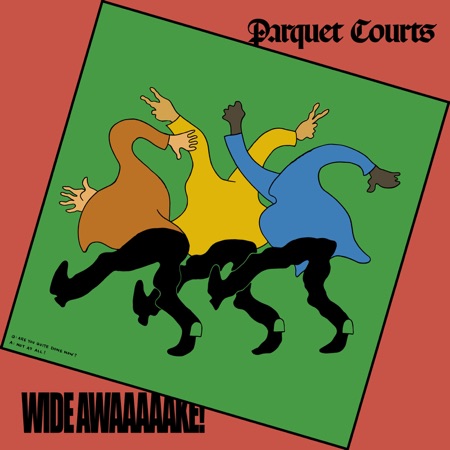
First of all, a big thanks to everyone who helped us carry out the search for Austin Brown of Parquet Courts! We are happy to report that we found him wandering around New Orleans in a post-Mardi Gras party daze, wearing his “Wide Awake” purple suit and clutching some beads. The band played a terrific show at a dive bar that night, and Austin seems back to his old self now. Watch the whole episode unfold in the video for the band’s brand new track “Mardi Gras Beads”
“Mardi Gras Beads” is the first Austin Brown-penned track to be revealed thus far from Parquet Courts‘ new album “Wide Awake!” (out 18th May). He describes it as “a song about commitment to yourself, for better or worse”. Maybe some of you heard it early by bagging a copy of it b/w “Seems Kind of Silly” on 7″ at Record Store Day
From Parquet Courts‘ album ‘Wide Awake!’, out 18th May on Rough Trade Records
NYC freaks Acid Dad are here with their first music video, primed and ready for your viewing pleasure. “Marine” is taken from Acid Dad’s self titled debut LP. Acid Dad is available on limited edition vinyl, cassette, cd
NYC’s Acid Dad released its debut S/T LP in March via Greenway Records, to praise from The New York Times, Consequence of Sound, BrooklynVegan & more. A follow-up to 2016’sLet’s Plan A Robbery EP, it showcases the band’s diverse yet accessible sound, from the driving, punk-infused opener “Die Hard“ to the jangly guitars and hazy psych-pop melodies of lead single “2Ci.”
Having just wrapped up a US tour in support of the new release, Acid Dad is gearing up to play Canadian Music Week before heading to Europe for dates in the Netherlands, the UK, and France. Ahead of the tour, they’ve shared a new video for album track “Marine,”
Acid Dad – Marine – 2/23/2018 – Live in the Paste Studios – New York –
Even in the melting pot of the American new wave scene, The B-52s’ debut single stood out. Equal parts funny, weird and artfully avant-garde, “Rock Lobster” is still the greatest nonsensical six-and-a-half-minute psychedelic surf-rock song about marine life. “Well, there’s not any songs like it,” laughs vocalist Fred Schneider. The quintet bonded over a flaming volcano cocktail in a Chinese restaurant in Athens, Georgia, in late 1976, and quickly pieced together the song that helped secure them an audience on New York’s alternative scene.
“Nothing with the band was ever thought out or calculated,” says drummer Keith Strickland . “Even the way we dressed was just how we dressed when we went to parties before the band started. I think that’s what made it work, ’cos it was just who we were.”
Formed from an open-tuned riff written by the group’s late guitarist Ricky Wilson and wry sprechgesang poetry from Schneider, all topped off with raucous fish impressions from Kate Pierson and Cindy Wilson, “RockLobster” even has the honour of having sparked John Lennon’s return to the studio in the late ’70s. Recognising Yoko Ono’s influence on Cindy’s wild screams, Lennon became convinced the music world was now ready for him and his wife, and swiftly began work on Double Fantasy. “We started out as a party band,” says Schneider, “and we all had a good sense of humour. But we don’t do our songs in a funny way, we want to kick ass. We want to rock.”
_________________________________
KEITH STRICKLAND (drums): I’d been friends with Ricky since we were 16 in high school. I would play his guitar sometimes, but I would often break a string, and instead of replacing it I’d just retune the guitar to some open tuning. This was much to Ricky’s annoyance… I said, “Try playing it like this.” And he finally tried it. The next day I walked in, and he’s playing the guitar and laughing. I go, “What’s so funny?” and he says, “I’ve just written the most stupid guitar riff ever.” And he plays the “Rock Lobster” riff. He knew it was good, but he also thought it was funny – that was Ricky’s sense of humour.
FRED SCHNEIDER (vocals, songwriting): I first heard the riff when we started jamming. I’d had the idea for the title – I was at this disco in Atlanta, called 2001 Disco, and instead of a light show they had a really cheap, cheesy slideshow. They’d show slides of puppies, lobsters on the grill, hamburgers, children… I mean, it wasn’t a pervy place [laughs], but it definitely wasn’t an expensive, deluxe place. And I just thought “rock this, rock that… rock lobster”. So we went into our studio, which was an unheated bloodletting room in the African-American part of town, in a funeral parlour.
STRICKLAND: I would just jam along with Ricky. Kate wasn’t playing bass on the keyboard yet, so it was just drums and guitar; very White Stripes!
SCHNEIDER: The way we worked was to jam for a long time. If we thought we had something, Ricky and Keith would take it back on their tape recorder, and then they’d come back and play it for us, and show us parts and we’d see if it worked for us. I just thought, “Okay, so this is the title, imagine something and then just start singing about it…” Sometimes pot would help, too [laughs]. It just gradually grew and then it wound up at six and a half minutes long…
STRICKLAND: When Cindy goes into the scream, that was sort of a tip of the hat to Yoko Ono. We were all big fans of her music. I think the fish sounds and Fred going “there goes a narwhal” and “here comes a bikini whale” and all that stuff, that was just from the jams, and piecing it all together.
SCHNEIDER: “Pass the tanning butter…” That was probably a ’60s reference, ’cos I lived near the shore, and there were constant ads for suntan lotion and all that stuff – I just threw everything into the mix.
STRICKLAND: The humour came out very naturally for us. That is Fred’s genius in a way. He would just yell the stuff out… very sort of punk, you know? It was how he delivered it that made it work.
KEVIN DUNN (production): I first heard about the Bs when they were playing around at parties and they were the talk of the town, basically. I saw them when my band The Fans played with them in Atlanta – it was something to see. It was a singular sound, nothing like it, Ricky especially. He was one of a kind, a perfect, naïve genius. Honestly, I don’t think I’ve ever seen anything like that in my life.
It was like mass kinesis in the audience.
SCHNEIDER: We played New York before we ever played Athens. We’d done parties in Athens but there was no place for us to play, ’cos we were the only punk band in town. Somebody said, “You sound as good as a lot of the bands at Max’s”, so we got a gig there on December 12th, 1977.
DUNN: The Fans were playing CBGB’s a lot in ’77 and we basically introduced the band to Hilly Kristal: “Here’s a cute little band from Athens, perhaps you might like to book them sometime.”
SCHNEIDER: And eventually we were one of the only bands they would allow to play both Max’s and CBGB’s, because we said, “Look, we can’t be driving 800 miles on alternate weekends.” We started just totally selling out, and record labels came to see us, we were thrilled. We met Blondie, the Talking Heads…
STRICKLAND: I remember playing Max’s the second time and The Cramps were there, and I was talking to Lux and Ivy after our set. In those days, everybody was putting out an independent single and we hadn’t recorded ours yet. I remember Lux and Ivy asking, “What’s your single gonna be?” And we were like, “Well, we haven’t decided yet.” They said, “It’s gotta be ‘Rock Lobster’!” I wasn’t really sure, but it was always the last song at closing time.
SCHNEIDER: I guess it was the strongest, and got the most response. By that time, we had “Killer Bees”, “Planet Claire”, “52 Girls”, maybe “Dance This Mess Around”.
STRICKLAND: We went to Stone Mountain Studios, and basically set up live. Maybe we all played it live, so Kate played keyboards and keyboard bass at the same time.
DUNN: I came to produce the first version of “Rock Lobster” through Danny Beard [of DB Records]. He was sort of dating Kate, and was into the band a lot, and he decided that I knew something about recording. In a lot of ways I would always say I was the production chauffeur. I didn’t add very much to the operation, which was pretty bare-boned. It was just like, here’s the sound recorded. The engineer, Bruce Baxter, was a genius in that way, so uh… I directed traffic. That was basically it. I think it took the better part of two days.
SCHNEIDER: I don’t think we added any reverb to the whole recording at all – we didn’t think about it!
DUNN: The aesthetic back then was for dry drums. It was like, do as little to the core of the rhythm section as possible.
STRICKLAND: There wasn’t a lot of production. There were no overdubs. Um, I think we may have overdubbed the gong, though, and kind of pitched it down.
DUNN: I tried, in the “down, down” section, to get a ring modulator effect to be introduced to sound like bubbles. And they were
like, “No.” That notion was not accepted!
SCHNEIDER: We released it in the summer of ’78, and it made its way to Australia and all these different places, and eventually it was one of the best-selling independent singles of that time.
STRICKLAND: A lot of people were very interested in producing us, including Frank Zappa. I love him but I just felt, it’s going to go in that territory, you know – that sort of obvious, very sarcastic humour.
SCHNEIDER: I like British humour, you just come up with something that’s intelligent and ridiculous, and keep a straight face. People were saying, ‘They’re camp’ and shit like that. It’s like, hello, camp means you don’t know what you’re doing, but you’re funny ’cos you’re ridiculous. All our stuff, we knew what we were doing. We were a band with a sense of humour, and a lot of uptight, probably straight, white guys didn’t get it.
STRICKLAND: We liked that our music was more ambiguous, it wasn’t tongue in cheek, because we performed as passionately as someone doing a very heartfelt, gut-wrenching song. It wasn’t like, ‘Here comes the punch line…’
SCHNEIDER: We signed with Warners in 1978. All these different labels kept courting us, ’cos we all figured like, hey, free meals! ’Cos we all had jobs that didn’t pay well – 25 cent tips… Imagine, I’m washing pots and pans one week and flying down to the Bahamas to record our debut album the next. Keith and Ricky were working at the bus station. So it was exciting.
STRICKLAND: We didn’t spend too long recording the first album at Compass Point, maybe a couple of weeks. We recorded pretty quickly once we found a deal ’cos we just wanted to get the album out that summer. So I think we were down there for maybe two weeks. Things went pretty quickly, most of it was recorded live as well.
SCHNEIDER:Chris Blackwell wasn’t really hands-on at all. Robert Ash basically produced the record and I think Chris just listened to it, and made some suggestions.
STRICKLAND: I remember after we finished the album, we listened back to it and I just thought, ‘This sounds horrible.’ I just thought it was dreadful, the whole thing, the whole album… it was terrible. Because I just thought, you know, you go into a studio and you think you’ll sound bigger and better or whatever, you know? And Chris really wanted to keep it stripped down and just sound the way we did it. I mean to me, to my ears, we never sounded that way. In the club, it’s reverby, the acoustics are horrible and so there’s a lot of splashing around with sounds, it always sounded much bigger to me when we played live. And it was louder and bigger, but in the recording it doesn’t sound that way, it sounds very stripped down and very minimal.
SCHNEIDER: I thought it sounded a little ‘rinky dink’, to be honest. I mean, I guess that’s what we sounded like live, I don’t know.
DUNN: The sound got a little sharp on the album version. I think the somewhat primitive nature of the equipment involved in the original session made it warmer, more guttural.
STRICKLAND: Now, I get it and I like it, it’s a document. John Lennon said a few times that he liked the song. Of course, this is something we didn’t know until after he had been killed; so it was quite bittersweet to hear it. It blew my mind because The Beatles were the reason why I wanted to be an artist at all. I was just blown away that he had heard it and he’d heard Yoko through Cindy, and thought, ‘Now they’re ready for us.’
SCHNEIDER: We’d always been fans of The Beatles, John, Yoko… people still don’t get Yoko, she’s brilliant. So to hear they liked it… oh God, yeah. Yoko sang on “Rock Lobster” when we did our 25th anniversary show. Unfortunately I didn’t have her in my ears, but c’est la vie [laughs].
STRICKLAND: It was just amazing. Yoko’s just going; she’s wailing, she was way into it. I remember thinking, ‘Let’s just keep it going, let’s just jam out on this.’ But I couldn’t really get everyone on board in time, and the song seemed to end so quickly. But we could’ve just gone all night doing that! She and I sat down for a moment backstage and we talked about John and Ricky, and it was just blowing my mind that she knew all about Ricky and his guitar playing and everything [Wilson passed away in 1985], so it was a really sweet moment to have that with her.
SCHNEIDER: I would always say that we were good for all theatres, ’cos if we played, they could tell if they were structurally sound. The balconies would have a bit of give… and boy, did they start giving!
STRICKLAND: Yeah, “Rock Lobster” was the dangerous one, we had to stop a show in Minnesota in 1990 because plaster was falling from the ceiling, on to the people down below. That was probably one of the only times we didn’t play “Rock Lobster”.
SCHNEIDER: For some reason, I don’t get bored with it, I don’t know why.
STRICKLAND: It sounds like a children’s record, if you think about it. It’s like those children toys where you learn, like; ‘This is the sound a pig makes…’ I mean, we were aware of that, we were like, ‘This is ridiculous’, but it just made us laugh. So we just went for it!
The official music video for Courtney Marie Andrews’ song, “Took You Up,” off her new album, May Your Kindness Remain, premiered at The Independent who stated, “The Americana songwriter shows that true love survives through the tough times in her latest visual,” and goes on to praise, “…finds her with an even keener eye for storytelling.” The video was directed by Giraffe Studios LA.
Courtney Marie Andrews – Took You Up From ‘May Your Kindness Remain’ – Available from Fat Possum Records / Mama Bird Recording Co.
The Goon Sax are James Harrison, Louis Forster and Riley Jones from Brisbane, Australia.
Still in high school when they made their first album Up To Anything in 2016, their brand of awkwardly transcendent teenage guitar pop took them into end of year lists for BBC6, Billboard and Rough Trade, and earned them raves from the Guardian, Pitchfork, Spin, Uncut, Rolling Stone and elsewhere. According to Metacritic, Up To Anything was the 8th best-reviewed debut album anywhere in the world in 2016.
The Goon Sax toured UK and Europe twice on that record, played shows with Whitney, US Girls, Teenage Fanclub, Twerps and Blank Realm, graduated school, and then turned their focus to album number two. They flew to Melbourne to record with James Cecil and Cameron Bird, respectively former/current members of Architecture In Helsinki.
Upcoming album We’re Not Talking shows how much can change between the ages of 17 and 19. It’s a record that takes the enthusiasms of youth and twists them into darker, more sophisticated shapes, full of lines like “When the bus went past your house and past your stop my eyes filled with tears” and “I’ve got a few things above my bed but it feels so empty, I’ve got spaces to fill and we’re not talking.” Relationships are now laced with hesitation, remorse, misunderstanding and ultimately compassion.
Strings, horns, even castanets sneak their way onto the album, but We’re Not Talking isn’t glossy throwaway pop. Sounds stick out at surprising angles, cow-bells become lead instruments and brief home-recorded fragments appear unexpectedly. This is a record made by restless artists, defying expectations as if hardly noticing, and its complexity makes We’re Not Talking even more of a marvel.
Releases September 14th, 2018 The Band
James – Guitar, Bass, keys, Vocals
Riley – Percussion, Vocals
Louis – Guitar, Bass, keys, Vocals
Lizzie Welsh – Violin
Biddy Connor – Viola
Madison Foley – TrumpetAll songs written by The Goon Sax.
Frankie Cosmos, the up-close and tender musical project led by singer/songwriter Greta Kline, released their Sub Pop Records debut Vessellate March , and now they’ve just released a third new song from that album, “Apathy,” which you can hear below. Like earlier singles “Jesse” and “Being Alive,”“Apathy” finds FrankieCosmos stretching beyond Kline’s intimate singing to explore the DIY indie-pop sound as a full band.
The Band are having some fun with their videos. In their clip for “Jesse,” they messed around with the popular fringe YouTube video genres of ASMR and slime videos. Now they’re back with a video for “Apathy,” and it’s also pretty silly.
In the clip, directed by Tom Scharpling, a different band named Frankie Cosmos comes across the Frankie Cosmos that we know and love, so they go to one of their shows and meet them outside after, with the intent of intimidating them into changing their band name. Frankie Cosmos leader Greta Kline nonchalantly flips open her switchblade, and that’s the end of that conflict. Kline says that the video was a delight to make with Scharpling:
With an interview, The new song Kline spoke about growing into her role as a professional musician, moving on from a pretty public relationship with Aaron Maine of Porches, and how maturity has changed her understanding of love songs she wrote as a teen.
Suede will release a new album, The Blue Hour, in September. In a mysterious statement about the album, the British alt-rock band noted that the title references “the time of day when the light is fading and night is closing in.” They also teased the record as “progressive” and “expansive,” adding, “The songs hint at a narrative but never quite reveal it and never quite explain. But as with any Suede album, it’s always about the songwriting. The band, the passion and the noise: ‘The Blue Hour.'”
Their eighth studio album has been produced and mixed by Alan Moulder and is described as “the final part of a triptych of albums recorded by the band since they reformed and released 2013’s Bloodsports“. It will feature a choir, ‘spoken word’ and string arrangements by Craig Armstrong and Neil Codling.
Format-wise, there will be a CD edition (no deluxe), a double vinyl set and a box set. The contents of the latter will be “announced in full at a later date”, so basically they are still working it out. If I were to hazard a guess… I’d expect double vinyl and CD within some kind of book, perhaps with a bonus CD or vinyl offering exclusive audio and maybe some other ‘bits’ (postcards, poster) thrown in.
The Blue Hour will be released on 21st September 2018.
In addition to the options below, HMV have an exclusive BLUE vinyl and the box set listed for £49.99
Stockholm-based Delsbo Beach Club have been one of this year’s most frequent live acts on the capital’s indie scene and are set to release their instantly charming debut single All The Way Home on Swedish label Rama Lama Records (Steve Buscemi’s Dreamy Eyes, Melby).
The track, a fine representation of the band’s expertly crafted sound, finds its irresistible strength in their fuzzy indie pop melodies, with hints of classic garage and surf rock drawing early comparisons to the likes of Mac DeMarco.
Having formed when frontman Erik Björklund moved to Stockholm from northern Swedish city Umeå and began recording a ton of bedroom pop demos, before joining together with Alexander Kuronen (drums), MaxEnglund (guitar) and Aron Lange (bass), the band have since developed into an infectious live outfit and will release their debut EP early next year.
Stockholm band Delsbo Beach Club’s debut single, out on all platforms via Rama Lama Records Oct 11th