The Wirral-based garage rock trio of Lia Metcalfe (lead guitar) George Favager (bass) and Chrissy Moore (drums) formed in 2016 and gained an influential fan in the form of The Coral’s James Skelly, who produced their debut single Hormone. The band have supported Miles Kane on his tour earlier this year and they will be special guests of the Psychedelic Porn Crumpets in February 2019. Hear their single Hormone here.
Cloaked in mystery – no music and no social media, until now – the buzz whirling around the Wirral’s psych-rock groovers The Mysterines, heightened by a recent support tour with Miles Kane, has reached fever pitch with the release of outstanding debut single ‘Hormone’, already racking up unheard of plays for a brand new band on Spotify. Liverpool, are breeding ground of uniquely special bands, it appears has done it again. Ones to watch
On their self-titled debut album, Moaning captured the frenetic energy and uncertainty of 2018 across its 10 tracks. It was a big year for the Los Angeles post-punk trio as they released their first LP on Sub Pop and played live with The Breeders, Ought, Preoccupations, Mothers, Lala Lala and others. The album opens with the punchy “Don’t Go,” which captures the fragility of a relationship and the fear of depending on something that you know won’t last forever (“This might work out somehow / Might as well see / Cause it’s right, right now / Even if it’s temporary”). They master the coupling of rumbling, feverish guitars with starkly-delivered deadpan vocals, mercurial synths and tumultuous drums—sounding composed one second and effectively disheveled the next. Their volatile guitars mirror the distressed, anxious tone of their lyrics—“Tired” and “Useless” follow the end of a relationship with the latter laced with hints of regret and the rehashing of memories to find out why it soured (“There’s nothing we can do / You had to go / If I loved you / I guess you’ll never know”). Frontman Sean Solomon is at his best on “Artificial”—with an imitation of someone rather pompous (“Pardon me / Everything’s so easy”) and a vigorously delivered, reality check of a chorus.
Moaning dive into their self-titled debut LP headfirst with dissonant lo-fi guitar stabs on “Don’t Go.” It’s a prophetic and noisy shit-kicker of an opening single that foreshadows the LA trio’s furious brand of thrashy post-punk. Singer Sean Solomon’s deep, melancholic voice anchors this sharply-felt album in all its emotional phases – from angry and abrasive, to knotty and experimental, to fiery and passionate. “Tired” represents the band at their most sweetly melodic, with sleek new wave synths matching pensive lyrics in which Solomon expresses feelings of emptiness and exhaustion: “It’s all gone/ It caught fire/ It’s all wrong/ And I’m so tired.”
Dark, numbing bass lines and stormy shoegaze aesthetics contribute to a sense of mounting panic and frustration on tracks like “Artificial” and “The Same.” Meanwhile, “For Now” shows off Moaning’s knack for arpeggio-soaked riffs and rich, towering choruses. The band proudly wears its Joy Division influences on its sleeve while also expanding on that well-worn sound with thrilling layers of reverb and gut-punching moments of angst and self-reflection. Moaning is a striking debut balancing ice-cold moods and cavernous sonics, and it positions the band alongside other modern greats of the post-punk genre.
Preoccupations, the post-punk band formerly known as Viet Cong, released the follow-up to their 2016 self-titled album.
And the circle is complete. Any Preoccupations fan will understand what these words mean, as the band’s latest album, New Material, completes a trilogy that began with Viet Cong (when they were known under that name) and continued with 2016’s self-titled album. Like the previous two, New Material is a dark, bleak, and trembling concept album that shakes the listener to the core.
The hypnotic “Antidote” is like a hallucinogenic, except this place is harrowing and mechanical. Front man Matt Flegel’s loopy and robotic vocals mirror his lyrics about the information overload that destroys and the narcissism that governs us. The eerie and trance-like “Doubt” addresses the notion of how we are followers to the world order. This act of obedience can only be interpreted as “Compliance”, which is a gruelling, industrial number.
Preoccupations, however, are masters of contrast to tell their stories. On “Disarray”, they offer a beacon of light into their darkness – at least musically. It all feels like a dream, but the story is a nightmare, as Flegel solemnly hollers, “Everything you’ve been told is a lie”. These lies are further accentuated on the gripping, stark, and emotional “Manipulation”. The roaring, Joy Division-esque “Espionage”, meanwhile, explains how the manipulation is ingrained into our psyche and morals. We are told we are valuable, which is true until we become expendable and don’t fit the norm. Still we strive for acceptance, as revealed on the mysterious and enchanting “Decompose”.
New Material is more than just an album. It is a psychological and sociological examination of recent history and the state of today’s world. Through different prisms and perspectives while playing on our deepest emotions, fears, and hopes, Preoccupations tell us things we need to hear before it’s too late. They seek to open our eyes before it’s all too late. There are very few bands who challenge people in so many ways, and Preoccupations are the gurus of this unique art.
The new record entitled, New Material, available March 23rd and is accompanied by the lead single ‘Espionage’.
Preoccupations are Matt Flegel (vocals/bass), Scott Munro (guitar/synth), Daniel Christiansen (guitar), and Mike Wallace (drums).
New Material is out now via Jagjaguwar and Flemish Eye.
Exuberant indie pop with a touch of Vampire Weekend and Foals, 2018 saw this Macclesfield trio get shortlisted for Best Live Act at the AIM Awards, before selling out the O2 Ritz in Manchester and The Garage in London. 2019 will see them release their debut album, but until then, watch the video to recent single, Loosen Up here.
Yoooo, got a surprise for you. 2018 has been an incredible year for us and it’s all down to you guys. We’ve spent the last month in the studio and wanted to thank you, so we’ve re-recorded 100 Times Over
Band Members
Rob Ellis – Guitar and sings
Lou Cotterill – Bass and sings
Jake Leff – Drums and sings
Music video by Cassia performing Loosen Up. (C) 2018 Distiller Records
Chiming guitar pop trio from Limerick, Ireland, whose latest EP Given Up dropped in November. The band consist of Aoife Power (vocals/ bass), Niall Burns (guitar), Andrew Flood (drums). First meeting as teenagers, sneaking into the only indie bar of their city in Ireland, they bonded over cheap vodka and The Velvet Underground. Soon after, Niall moved to London, with Andrew and Aoife quickly following, and here they began writing songs together.
They have released singles such as Heaven On Earth and a cover of the Cranberries classic Dreams, and supported The Vaccines and Blossoms acroos the year. They kick off 2019 with a UK tour and you can hear the track Given Up below.
Manchester trio Beach Skulls are back with their second album Las Dunas, the follow-up to the acclaimed debut album Slow Grind from 2016 which brought the band the attention of the likes of The Line of Best Fit, Clash, GoldFlakePaint and Under the Radar. Summery garage pop mixed with psych and dream pop influences, Las Dunas finds Beach Skulls refining and expanding their sonic palette, coupled with their strongest set of tracks yet.
Du Blonde has announced a new album Lung Bread For Daddy, which sees the self-sufficient artist utilise her multiple skills to try and create the project as independently as possible. “I know exactly what I want my record to sound like,” Houghton explains, “and apart from drums, I have the ability to play all the instruments, so I did.”
Houghton knows her direction, particularly when it comes to visual projects, having made videos for the likes of Red Hot Chili Peppers, LUMP, and Ezra Furman. Lung Bread For Daddy’s lead track “Buddy” arrives with a self-directed video, which features a bath, three bottles of vegetable oil, and hella spaghetti (37 packets to be precise)
Buddy is her first single from the album with a self-directed video featuring a bathtub, 3 bottles of vegetable oil and 37 packets of spaghetti.
Band Members
Beth Jeans Houghton,
Du Blonde returns with new album ‘Lung Bread For Daddy’ on 22nd February on Moshi Moshi Records
Continuing his reign as one of the world’s most arresting songwriters, Phil Elverum’s Now Only expands the tragic worldview found on A Crow Looked at Me, a cathartic attempt at processing the death of his late wife Geneviève Castrée. But this time, the Mount Eerie project finds the brightness in Elverum’s memories, laughing at the very precipice of forging his living by performing songs about his dead wife at a festival in the middle of nowhere. The self-awareness remains on 10, the reflections are poignant, and the six songs sprawl out over 43 minutes without the slightest trace of overindulgence. I never found a right time to slap this album’s predecessor given the dark depth of the subject matter; this one sports a far leaner emotional barrier to entry. Both are indispensable works of bravery.
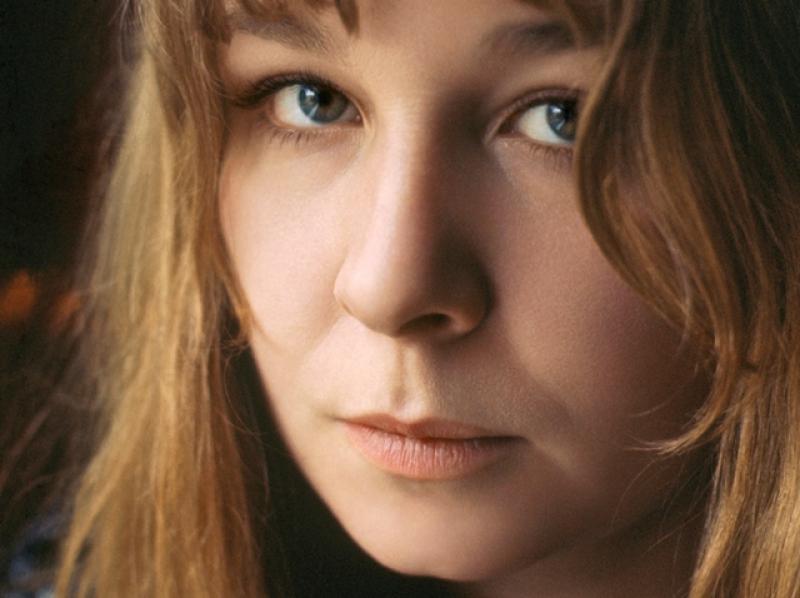
Robert Plant called her his “favorite singer out of all the British girls there ever were.” But a compliment of her singing alone undercuts the holistic talents of the musician Sandy Denny. To be sure: Her sublime voice stands on its own in the Anglo-folk canon, but her songwriting and lyricism are equally impressive. Both aspects of her talents remain essential to the fabric of the British folk-rock movement of the 1960s and ‘70s. Though the modern music press frequently portrays Denny as a cartoon-ish caricature of a temperamental singing faerie, she in fact endures, 40 years after her death, as an unexampled lyricist and songwriter, and an equally magnetic performer.
Born Alexandra Elene MacLean Denny and raised in the London suburb of Wimbledon, Denny was inspired early on by her grandmother, Mary Smith MacLean, whom she didn’t know well, but whose presence was fierce. MacLean insisted the young Denny be called “Sandy,” the Scottish shortening of Alexandra. She also brought to Denny’s blood a musical prowess and passion, as she’d been a known balladeer of arcane Scottish traditional tunes in her time.
After finishing primary school Denny began a short stint training as a nurse at a London hospital, at the behest of her prim parents, who didn’t see music as a viable career. Inspired by Bob Dylan’s Freewheelin’, and encouraged by her older brother David, she began working out covers by American folk singers, as well as Scottish traditionals, on a hand-me-down acoustic guitar. After learning a few chords and practicing at home, she became an audience fixture among London’s folk music houses, which were inspired by the American folk scenes in Greenwich Village and North Beach in San Francisco, and were spreading like spores across the Big Smoke. Denny soaked in each performer studiously, and often sang covers on the floor as an unpaid warmup between acts.
With a growing passion for music and live performance, Denny became acutely aware that nursing would never be a good fit. In the fall of 1965 she was accepted into a foundation course at Kingston College of Art—required studies for acceptance in a bachelors program—where there was a swelling folk music scene in nearby clubs like The Barge (an actual barge docked on the Thames). She’d already performed at the beloved floating club a couple of times and was becoming engrained in the local folk circuit, hobnobbing with scensters like visiting American Jackson C. Frank, and locals Bert Jansch and John Renbourn, who’d go on to form folk-fusion act Pentangle.
She didn’t last long at university. A busy schedule of performances at local nightclubs led to her earliest recordings with local folkies Johnny Silvo and Alex Campbell: Alex Campbell and His Friends and Sandy and Johnny, both released by London’s Saga label in 1967, when she was just 20 years old. On each LP Denny performed covers by Jackson C. Frank and Tom Paxton, as well as a number of traditionals. These earliest LPs endure as momentos of Denny’s budding folk club repertoire. Her stirring version of trad “Make Me a Pallet on Your Floor” prelude her emotive and heartrending original compositions soon to come.
A chance encounter at The Troubadour coffeehouse swung open a gate for Denny’s interest in songwriting. Dave Cousins of London folk outfit The Strawberry Hill Boys asked Denny to join the group after seeing her perform onstage in the club’s cellar. All Our Own Work by Sandy Denny & The Strawbs was recorded over two weeks in Copenhagen. Twelve songs were captured, including Denny’s breakthrough and most enduring composition, “Who Knows Where The Time Goes?,” which showcases her emotive power and palpable solitude simply and immediately in the first verse, over minor-key acoustic guitar:
“Across the purple sky, all the birds are leaving
But how can they know, it’s time for them to go?
Before the winter fire, I will still be dreaming,
I have no thought of time.
For who knows where the time goes?
Who knows where the times goes?”
But with the release of that album greatly delayed, the world would have to wait two more years to hear that beauty, on Fairport Convention’s excellent third LP, Unhalfbricking. By the time Denny joined Fairport Convention in 1968, they were already the most besainted act of the British folk-rock scene, having magnetized UFO Club owner and noted producer of the period Joe Boyd, who’d helped them secure deals with Polydor Records and then IslandRecords. Denny won over the group with a cover of Jackson C. Frank’s “You Never Wanted Me” during her audition and replaced singer Judy Dyble, who’d founded the group with bassist Ashley Hutchings, guitarist SimonNicol, and guitarist Richard Thompson, notable for his later solo works and collaborations with his wife Linda.
Denny brought a more plaintive, less pop-oriented intensity to the group with her wide vocal register and open-ended songwriting style. Under Denny’s leadership, they became less focused on ape-ing American folk acts, and instead carved out a signature appreciation for British traditional songs and the negative space between notes. The Denny-penned original “Fotheringay,” which opens Fairport’s second album, What We Did on Our Holidays, is the shaky and incongruous LP’s saving grace, a mystical meditation on isolation and death, inspired by the story of Mary, Queen of Scots.
The cover of her second album with the group, Unhalfbricking, released in 1969, features a portrait of Denny’s parents, Neil and Edna, standing outside their family home in Wimbledon—the band barely visible in the background. Though the Unhalfbricking version of “Who Knows…” is notable, and prompted a slew of covers, its full band noodling and subdued vocals temper its fire, making it more pleasant than powerful. Denny stayed on with Fairport through the recording of the heralded album Liege & Lief, their first record comprised mostly of adapted British and Celtic traditional songs, with Denny’s profound delivery front and center. Today, it’s considered the most important record in the British folk-rock movement, a beacon of modernity inspired by antiquity.
Conjecture about Denny’s departure from Fairport Convention abounds to this day. Some cite a new relationship with Australian folk musician Trevor Lucas—others, her increasing thirst for alcohol. Regardless, Denny left the band shortly after the release of their most prestigious album, as unceremoniously as her audition in a humble folk music dive.
Her short-lived collaboration with Lucas, also called Fotheringay, was unremarkable, and Denny soon embarked upon a solo career that yielded mixed results. As magnetic a performer as she was, her personal insecurities and alliance to folk music traditions muddied a clear path to crossover audiences. She wasn’t a pop singer.
Her 1971 solo debut for Island Records, The North Star Grassman and the Ravens, is no clearer testament to that. An album comprised of mostly Denny-written songs, the only time it veers off course is when she covers others—Dylan’s “Down in the Flood” and Charles Robins’ “Let’s Jump The Broomstick.” Of the album’s 11 original songs, eight are phenomenal. The title track, a core-rattler. It leaves one to wonder what Denny might have been capable of earlier, if empowered to write and record more originals by her peers in The Strawbs and Fairport Convention.
Her single album with The Strawbs, All Our Own Work, finally saw a release in 1973 via the Hallmark label, a nascent subsidiary of Pickwick International. For the first time, folk-rock fans heard Denny’s masterpiece, “Who Knows Where the Time Goes?,” in its purest and most arresting form. Though Denny would die five years later due to a brain hemorrhage, her compositions on the passing of time, loss, love, and tradition, and her unparalleled voice, live on.