For the first time ever, after four decades buried deep in the vaults, a previously unreleased version of ‘Time’, recorded in 1986 by Freddie Mercury for the concept album of the hit musical of the same name, has finally emerged after two years of work by the globally successful musician, songwriter and producer Dave Clark, a long-time friend of Freddie’s, using the song’s full title, ‘Time Waits For No One’. ‘Time Waits For No One’ shows Freddie Mercury at his most compelling; a completely stripped-down performance, accompanied by just a piano, showcasing one of music’s most beloved and show-stopping voices.
Previously unreleased Freddie Mercury performance of ‘Time Waits For No One’, available now
Despite coming up in a Georgia scene that also spawned R.E.M. and the Black Crowes, and spending time on the road touring with Neil Young and Soul Asylum following the release of their successful 1991 album Fly Me Courageous, Drivin N Cryin are generally overlooked in the discussions of Southern rock. As this new vinyl reissue makes clear, they certainly deserve to be part of the conversation. The LP is a sparklingly remastered and renamed version of the group’s 1997 self-titled album, originally released on the little-known Ichiban International label. And what it reveals is a band that is comfortable working in the vein of cowpunk (“Paid In Full,” a stomping cover of John Denver’s “Leaving On A Jet Plane”), jangling power-pop and dreamy psychedelia as they are in muscular barroom rock. Beneath it all, front man Kevn Kinney’s bruised lyrical sensibilities prove to be the true heart of the group, capturing the desperation, thrills and weathered spirit of a born romantic.
Drivin N Cryin proved much more resilient than many of their peers as well, as the band is still going strong today and still releasing quality music. It’s well past time catch up with these rock lifers.
Listening to Mal Blum’s music, you might grow a bit jealous of the people who get to actually hang with the singer/songwriter in real life. Thanks to their wry one-liners and their ability to create joyful sounds out of relentless self-scrutiny, it’s easy to picture Blum sliding up to brunch or a beach day dispensing a fluid mix of slightly weird yet perceptive jokes and deep insights about the endless struggle to understand oneself and others. These registers—humor and world-weary musing—converge on Blum’s latest record Pity Boy, bringing levity to songs about mental health, the limited resources we have to care for one another, and the grace to be found in taking responsibility for hurting others. Even when Blum’s themes shade darker, the music allows slants of brightness to permeate the gloom and offers frequent opportunities to jump up, dance around, and forget whatever problem might have initially inspired a song.
Opening track “Things Still Left to Say” summarizes what distinguishes Blum’s music from others working at the nexus of punk, pop, and confessional songwriting: specifically, Blum’s ability to diffuse difficult thoughts with humor (“Should I explain myself? / I’d rather read the dictionary!”) and their fascination with the metaphysical gap between one’s presence among others and one’s internal experience of that togetherness. “Do you miss me when I’m not around?” Blum sings, “Because you don’t see me when I’m here”.
In their refrains, Blum’s songs often rely on repetition but not in a way that grows annoying or rote. Rather, the strategy lets Blum turn a thought over and over, drawing different meanings out of it. The refrain on “Things Still Left to Say” goes, “I’ve got things still left to say / I’ve got phrases, I’ve got phrases”—and the contrast between the colloquial construction “I’ve got” and the pretentious word “phrases” strikes a somewhat hilarious, self-deprecating tone. Through this choice, the refrain both mocks the self-indulgent impulse to express oneself and insists on its importance. Blum never specifies what “things” they have to say, but that evasion is exactly the point. Sometimes we feel moved to speak but don’t quite know what to say.
Pity Boy is the first album that Blum recorded with their longtime touring band, The Blums, which includes Audrey Zee Whitesides on guitar, Barrett Lindgren on bass, and Ricardo Lagomasino on drums. The Blums contributed substantially to the arrangements here and created teflon-tight musical structures to shape Blum’s occasionally wordy writing. On “Things Still Left to Say,” for example, Lagomasino and Lindgren create a foot-stomping backbeat while Whitesides sprays arcing guitar riffs like rainbow confetti all over the melody. The song feels engineered to inspire head-bobbing; it’s almost impossible to take the ride without moving some part of your body along.
Pity Boy’s other tracks cleave into two fairly distinct sonic categories: cathartic pop-punk bliss and downtempo DIY acoustics. “Odds,” “I Don’t Want To” and “Gotta Go” exemplify the former through fast tempos, peppy power chords, and Blum’s slightly attitudinal delivery, recalling the adolescent paradox of raising a middle finger to the world while secretly stewing in insecurity. These songs hit a sweet spot between Green Day’s guilty-pleasure ear candy and the introspective, political observations made by Blum’s punk-leaning labelmates at Don Giovanni Records.
On its face, “I Don’t Want To” appears to be an anti-adulting anthem: a declaration of resistance to the tasks we must do to keep our lives on track under capitalism even if, like Blum, we don’t want to. Closer inspection reveals a confrontation with a friend who’s leveled up in the game of life, engaging in bourgeois activities (“You do yoga / And you don’t feel complicated about it”) and hitting their financial marks (“Pay your bills on time / Not month-to-month like some other guys”) with aggravating precision. As elsewhere, Blum deploys the musical syntax of fuck-you punk to sublimate their self doubt, as lines like this creep in: “I’ll never be like that / I can’t tell you why.” If you feel like blasting the song while doing something other than opening your mail, then Blum is giving you permission to go for it.
The second category of songs harkens back to Blum’s earlier, quieter compositions, turning down the feedback and softening the rhythm section to showcase poetic observations. “Splinter,” “Black Coffee” and “Salt Flats” all deserve a close listen, but “See Me” stands out among this group. “I don’t belong, though it helps to play along,” Blum sings, capturing a feeling that resonates between two valences of experience: the common suspicion of not fitting in and Blum’s own identity as a non-binary transgender individual in a cis-normative society. Blum may well have written the song before the Trump administration launched its assault on the civil rights of transgender people, but in its current context, Blum’s repeated plea of “Why can’t you see me when I’m right here?” insists on visibility not just in an interpersonal sense, but also at a crucial juncture in American political life. On album closer “Maybe I’ll Wait,” Blum acknowledges how their self-protective tendencies—whether stemming from brain chemistry or being hurt by others—sometimes lead to letting people down. “I’ve been trying to be better / Since I’ve known what better was,” Blum admits. Pity Boy offers both the comfort and joy of spending 38 minutes in Blum’s forthright yet mercifully light-hearted presence as they navigate how to speak politically in 2019 and try to be a better friend.
If you heard new solo electro-rock act Des Rocs’ first single last month, “Hvy Mtl Drmmr,”you’d know that he carries the same theatricality as the rock greats before him — only he’s far from old and crusty. In fact, he’s bringing the genre back with a freshness and modernity that’s a breath of fresh air for those who miss the days of blaring guitar solos and fuzzed out “We Will Rock You”-type anthems.
Before Des Rocs, Danny Rocco was just one half of the electro-rock duo Secret Weapons, who broke through with their soulful pop sound with the underground hit, “Something New.” When it comes to this new project, Danny says, “Des Rocs is something I’ve felt inside myself since the first day I started making music. It’s a more personal expression of the energies that make me tick.”
He is releasing his second single from the project, “Used to The Darkness,” a pulse-pounding, vocally soul-filled, fuzz boxed tune about being lost. But what does our new favorite rock star have to say about the supposed demise of rock music?
“Rock was the most culturally disrupting movement in music history, yet somehow today the word has lost something. So many artists worry about sub-genres and lose the greater energy of what it means to say you’re a rock artist. I think there’s a lot of great songs out there waiting to be revealed if we could embrace the “rock artist.”
Des Rocs may be a relatively young rock artist, but he’s already secured opening gigs for some of the biggest names in the biz, including The Rolling Stones and The Struts. His discography consists of an EP and a handful of singles, but his live performances are enough to satiate fans while waiting for an album.
Des Rocs just recently started playing live shows — and if you’ve seen his artwork, you’ll notice something important:
“I want you to see the artwork and think, ‘this is live.’ When I was a little kid and before I knew anything about recording, I would hear a song on the radio and thought these guys just went in there and played into microphones and that was the record. There was a certain live energy in the presentation of the music then that you don’t have today, and that is what Des Rocs is all about.”
He played stripped-down versions of two of those songs, “Let Me Live / Let Me Die” and “Used to the Darkness,” plus an unreleased track, “Hold On,”
Songs :1. Let Me Live / Let Me Die 0:30 2. Used to the Darkness 5:30 3. Hold On 12:15
Des Rocs Live at Paste Studio NYC live from The Manhattan Center
Exclusive to Vivid LIVE, alternative British rock legends The Cure brought their magisterial, slow-burn masterpiece “Disintegration” to the Opera House Concert Hall for five shows to mark the 30th anniversary of their career-defining epic. This was the world premiere of these 30th anniversary performances, and their only Australian engagement. This live stream was directed by British filmmaker Nick Wickham, a close collaborator of The Cure’s who is known for his work with Iggy Pop, Joe Cocker, Annie Lennox and Madonna.
Released in 1989, Disintegration peaked at No 3 in the UK album charts, making it the band’s highest-charting record. Songs such as Lullaby, Lovesong, Pictures of You and Fascination Street cemented the band’s success in the United States too. By 1992, the album, described by this publication as “exquisitely morose”, had sold more than three million copies worldwide.
The Cure played the record with a full band, featuring lead singer Robert Smith alongside Simon Gallup, Jason Cooper, Roger O’Donnell and Reeves Gabrels.
This will be the second time the Cure have played Vivid Live after 2011’s Reflections shows, at which the band played their first three albums in full: Three Imaginary Boys, Seventeen Seconds and Faith.
This time, the band will play Disintegration along with other tracks from their back catalogue.
Today marks 30 years since the release of the Disintegration album – and we are very pleased to announce to Cure fans around the world that we will be global live streaming our final performance from the Sydney Opera House on 30th May, where we will be playing the album in its entirety – plus extras! – at Vivid LIVE. We look forward to celebrating the anniversary of this special album with you all… …And remember: this album was mixed to be played loud… so turn it up!” — Robert Smith, 2nd May 2019.
The Cure’s fifth and final performance of “Disintegration” at Sydney Opera House on 30th May 2019
Setlist:
B-Sides and Demos 1. Delirious Night 17:20 2. Fear of Ghosts 23:44 3. No Heart 30:54 4. Esten 34:20 5. 2 Late 38:17 6. Out of Mind 41:10 7. Babble 44:45 Disintegration 8. Plainsong 49:15 9. Pictures of You 59:31 10. Closedown 1:06:44 11. Lovesong 1:11:00 12. Last Dance 1:14:40 13. Lullaby 1:19:54 14. Fascination Street 1:24:46 15. Prayers for Rain 1:29:47 16. The Same Deep Water as You 1:35:34 17. Disintegration 1:44:47 18. Homesick 1:53:10 19. Untitled 2:00:18 Encore 20. Burn 2:10:55 21. Three Imaginary Boys 2:17:52 22. Pirate Ships (Wendy Waldman cover) 2:21:30
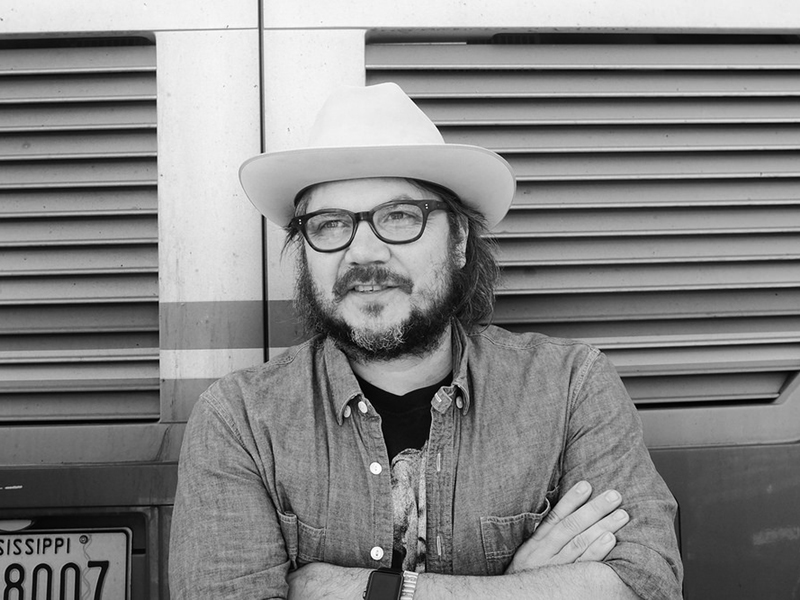
As a founding member and leader of the American rock band Wilco, and before that the co-founder of the alt-country band Uncle Tupelo, Chicago-based Jeff Tweedy is one of contemporary American music’s most accomplished songwriters, musicians and performers. His memoir, LET’S GO (SO WE CAN GET BACK): A Memoir of Recording and Discording with Wilco, Etc., was released last year.
Through his pioneering work in the legendary country-punk band, Uncle Tupelo, to his enduring legacy as the creative force behind the unclassifiable sound of Wilco, Jeff Tweedy has weaved his way between the underground and the mainstream – and back again. Funny, disarming, and deeply honest, his memoir casts light on his unique creative process and the stories that shaped his life and career, from a childhood spent in Illinois to the release of the bands album “No Depression” in the early 90’s – which set the blueprint for alt-country – and later working with Mavis Staples and, posthumously, Woody Guthrie. (Rough Trade BOOKS OF THE YEAR)
Jeff Tweedy and son Spencer,
The book delves deeper into the creative development of one of the greatest American songwriters on his generation than any interview or biography I’ve read about Jeff Tweedy. The guy is honest, dishonest, candid, flippant, coherent, rambling, sometimes all on the same page.
Jeff Tweedy – One Wing – Woods Stage
Jeff opens up about the development of his writing style, making the understanding of the Wilco albums greater than any journalist review ever could. In fact the only flaw I would throw at this book is that it is almost too revealing about the personal lows Jeff has experienced in the troubled phases of the Wilco era. I’m sure it will hardly appeal to anyone unfamiliar with Tweedy’s output, which is sad as Jeff’s contribution to recorded music in general is as vital as anyone else I’ve ever heard.
Acclaimed singer-songwriter Mark Mulcahy returns with his brand-new LP, The Gus, on the Mezzotint Label. The Gusis Mulcahy’s sixth solo record and follows 2017’s dynamic The Possum in the Driveway and his celebrated 2013 return record, Dear Mark J Mulcahy I Love You.
Long heralded by contemporary luminaries like Radiohead’s Thom Yorke and covered by touchstone artists such as The National and R.E.M.’s Michael Stipe, Mulcahy refuses to rest on laurels and turn out the same type of album twice. Inspired to “up his lyrical game” while reading a collection of short fiction by George Saunders, The Gus finds the songwriter channeling his eclectic voice and ear for melody into the role of storyteller more than ever before. The result is ten infectious songs that combine Mulcahy’s unique window on the world with stories that absorb listeners more with each spin. In addition to his celebrated solo career, audiences may also know Mulcahy as the frontman of seminal ‘80s rock band Miracle Legion or as “Muggy Polaris,” ringleader of Polaris, the fictional house band of the beloved ‘90s Nickelodeon series The Adventures of Pete and Pete. Both Miracle Legion and Polaris have reunited in recent years to tour and will likely do it again.
The lead track, ”Taking Baby Steps” from Mark Mulcahy’s brand-new LP, ‘The Gus’, out on Friday, July 5th
From his days with Miracle Legion and then Polaris, Mark Mulcahy has always had a laid-back, summer-porch pop styling that often betrays his complicated lyrics. On The Gus, Mulcahy unfolds a map of any neighborhood in America and then tears it apart, piece by piece, revealing a quiet underbelly of want and despair, of neediness and love in tiny truths and microscopic fictions.
“Cut Your Teeth”, the debut album from Vancouver quartet Necking, has too much nuanced humanity to write them off as just another punk band. Their minimal, shouty post-punk and grunge-tinted rock songs would fall flat if they weren’t performed with discernible gusto or infused with as much simmering rage or relatable sulk. Perhaps one of the reasons their emotions are so believable is that three of the four band members went through breakups while writing the album. That said, the four women that make up Necking—singer Hannah Karren, guitarist Nada Hayek, bassist Sonya R and drummer Melissa Kuipers—aren’t just howling about the usual suspects. They do so when necessary, but first and foremost, they embark on a quest to become functioning people, or whatever their own definition of that is. Their frenzied rhythms have a sense of urgency, and their twitchy, melodic guitars utter a threatening “Get out of my way” just as much as an overwhelmed “I’m losing my mind!”
December 29th, 1980 Night two of the legendary three-show stand at Nassau Coliseum 1980 is a barnstormer. It features the tour premiere of “Night” as the opener and, in its lone River tour performance, an extraordinary “Incident On 57th Street” into “Rosalita” to close the set. Spanning 35 songs, Nassau 29th beautifully blends deep River cuts (“Stolen Car,” “Wreck on the Highway,” “Point Blank”), seasonal nuggets (“Merry Christmas Baby” and “Santa Claus Is Coming to Town” and fan favorites (“Fire,” “Because the Night”).
One of the most thrilling times to be a sports fan is when your team is in the midst of a winning streak. They occur in all sports, but in baseball and especially basketball, winning streaks are irresistible because of the unique way they place team chemistry, a “never give up” mentality, and moments of individual brilliance against a backdrop of ever-rising stakes. Who doesn’t want to tune in to see if your team can push their streak to 17, 21, or 33 in a row?
It could be argued that the entire live performance history of Bruce Springsteen and the E Street Band is one long winning streak. That acknowledged, and with the benefit of hindsight and live recordings, fan consensus has coalesced around notable E Street streaks: the last two weeks of the 1977 tour with the Miami Horns; the late-’84 stretch of the Born in the U.S.A. tour.; and the final U.S. leg of Magic 2008 to name but a few.
The River tour boasts a few of its own streaks, and without question, Thanksgiving to New Year’s Eve 1980 is among the best of them. A staggering run of shows throughout the Northeast culminated in a three-night stand at the Nassau Coliseum on Long Island. With his first chart-topping album and a Top Five single (“Hungry Heart”) in hand, Bruce and the band closed out 1980 more popular than ever.
Shows that wrapped that leg of the tour offered an intoxicating mix of musician-athletes performing at their peak, newfound confidence drawn from a long-awaited commercial breakthrough, and a continued hunger to prove it all night.
Supporting a double album of new material, that hunger was manifest in the increasing duration of the concerts and the stunning number of songs performed. In fact, until records were broken in 2012, the late-’80 River shows were the longest of Bruce’s career. Other shows and tours have their own distinct qualities, but if you are talking about a run of epic Springsteen concerts, the Thanksgiving-New Year’s ’80 streak is the reference point.
Nassau Coliseum 29/ 12/80 and its sister show 31/12/80 (reissued in a newly remixed and remastered edition) each stretch to 35 or more songs and live up to the legend of Bruce’s four-hour concerts by running close to that (counting the between-sets intermission). There may be other eras where the band played this well, but there is no period where they played better.
Both stunning performances are packed with delicious rarities along with some of the strongest versions of core material ever caught on multi-tracks. With a bounty of more than 70 songs between the two shows, there’s too much good stuff to cover, but here are ten things to listen for as you relive these magical nights.
1.Springsteen debuted his brilliant take on Creedence Clearwater Revival’s “Who’ll Stop the Rain” three shows earlier at Madison Square Garden. It has endured as one of the band’s finest covers, popping up a few times on tours ever since. The versions performed on 29/12 and 31/12 are musically rich and heartfelt, pointing to the musical direction Bruce would explore six months hence on the band’s first proper tour of Europe.
2. Having just read Joe Klein’s biography of Woody Guthrie, Bruce covers “This Land Is Your Land” for the first time during the three-show Nassau stand, calling it an “angry song…an answer to Irving Berlin’s ‘God Bless America’.” With the possible exception of a one-off performance of Bob Dylan’s “Chimes of Freedom” in 1978, it is the first protest song Springsteen performed in concert with the E Street Band and signals the start of his public turn toward social and political commentary.
3. The paternal pairing of “Factory” and “Independence Day” on 29/12 is not only an evocative stretch of storytelling, but could pass for a dramatic monologue at a Broadway theater.
4. One of the signature sequences of early River tour shows is Roy Bittan’s mini-suite of “The River” into “Badlands.” 1980 performances of “The River” start with an original piano prelude (echoed by Danny Federici) before Bruce’s plaintive harmonica wail starts the song formally. Shortly after “The River” ends, Bittan starts into his interpretation of Ennio Morricone’s theme from the Sergio Leone filmOnce Upon A Time In The West. As Bittan plays the moving piano refrain, electric guitar chords start to chime in, building energy that crescendos when the intro gives way to an explosive “Badlands.” Magnificent.
5. The River tour is the height of Stevie Van Zandt’s role as backing vocalist, at times reaching the point of co-lead vocals. He’s a marvel at these shows on expected songs like “Two Hearts” and “Prove It All Night,” but listen for him in more unexpected places like the chorus of “Thunder Road” for signs of just how into it he is at Nassau.
6. Bruce’s spirited vocal on “For You” is full of fresh intonations distinct from other renditions.
7. The earnest story that leads into “Stolen Car” on 12/29 might melt your heart; the moving performance itself will have you reaching for a tissue or three.
8. The gorgeous, stripped-down arrangement of “The Price You Pay” on 31/12 starts solo. The band joins softly in the second verse, and we’re treated to the alternate third verse found in the single-disc version of The River included in The Ties That Bind box set. As good as it gets.
9. While we’ve heard the incredible version of “Incident on 57th Street” from 29/12 before (it was released as the b-side to “War” from Live 1975/85), hearing it in context of the show is so much sweeter. “This is a song we haven’t done in a real long time,” says Bruce, as he tests out the chords on his guitar. “No, it ain’t ‘Kitty’s Back.’ I hope I remember all the words….” Roy tinkles out the first few notes, the crowd swoons in recognition of the song, Max comes with his drum intro, and the lead guitar sends us soaring. If that wasn’t enough, after nearly ten majestic minutes, it rolls straight into “Rosalita” as it does on The Wild, the Innocent & the E Street Shuffle.
10. You want rarities? We got rarities. Beyond the aforementioned, the Nassau shows feature “Rendezvous,” the first-ever version of the “Hungry Heart” b-side “Held Up Without a Gun,” sublime seasonal nuggets “Merry Christmas Baby” and “Santa Claus Is Coming to Town,” plus Happy New Year covers of “In the Midnight Hour” and “Auld Lang Syne.” All that, plus 15 of the 20 songs on The River, including the under-played “Fade Away,”“Wreck on the Highway” and “The Price You Pay.”
A Final Note: Jon Altschiller’s new mix and mastering on 31/12/80 moves the listener from the 40th row to the first, proximity that reveals incredible new detail and musical power.
After electing to Plangent Process 29/12/80 for release, it was clear that 31/12/80 also deserved a Plangent-transferred new mix and mastering to match, as the version released in 2015 was not up to the same standards.
While the Plangent Processed and remixed version of 31/12/80 is being sold as a standalone release, anyone who bought the original can access the new upgraded audio for free via the “My Stash” section of the nugs.net app, which provides streaming access to all shows purchased as downloads or CDs (no subscription required). Previous buyers of New Years Eve ’80 can log in with the account credentials they used to buy the show the first time.
December 31st, 1980 For the first time, multi-track master tapes of the classic New Year’s Eve 1980 show have been transferred via Plangent Processes and newly remixed by Jon Altschiller for superior sound. This upgraded edition breathes fresh life into a jaw-dropping 38-song performance which is packed with highlights, including “Spirit in the Night,” “Rendezvous,” “Fade Away,” “The Price You Pay,” “Held Up Without a Gun,” “In The Midnight Hour,” “Auld Lang Syne,” “Twist and Shout” and “Raise Your Hand.” The all-time fan favorite has never sounded better.
The Band:
Bruce Springsteen – Lead vocal, guitar, harmonica; Roy Bittan – Piano, keyboards; Clarence Clemons – Tenor and baritone saxophones, percussion, backing vocal; Danny Federici – Organ, glockenspiel, accordion; Garry Tallent – Bass; Stevie Van Zandt – Electric and acoustic guitars, backing vocal; Max Weinberg – Drums
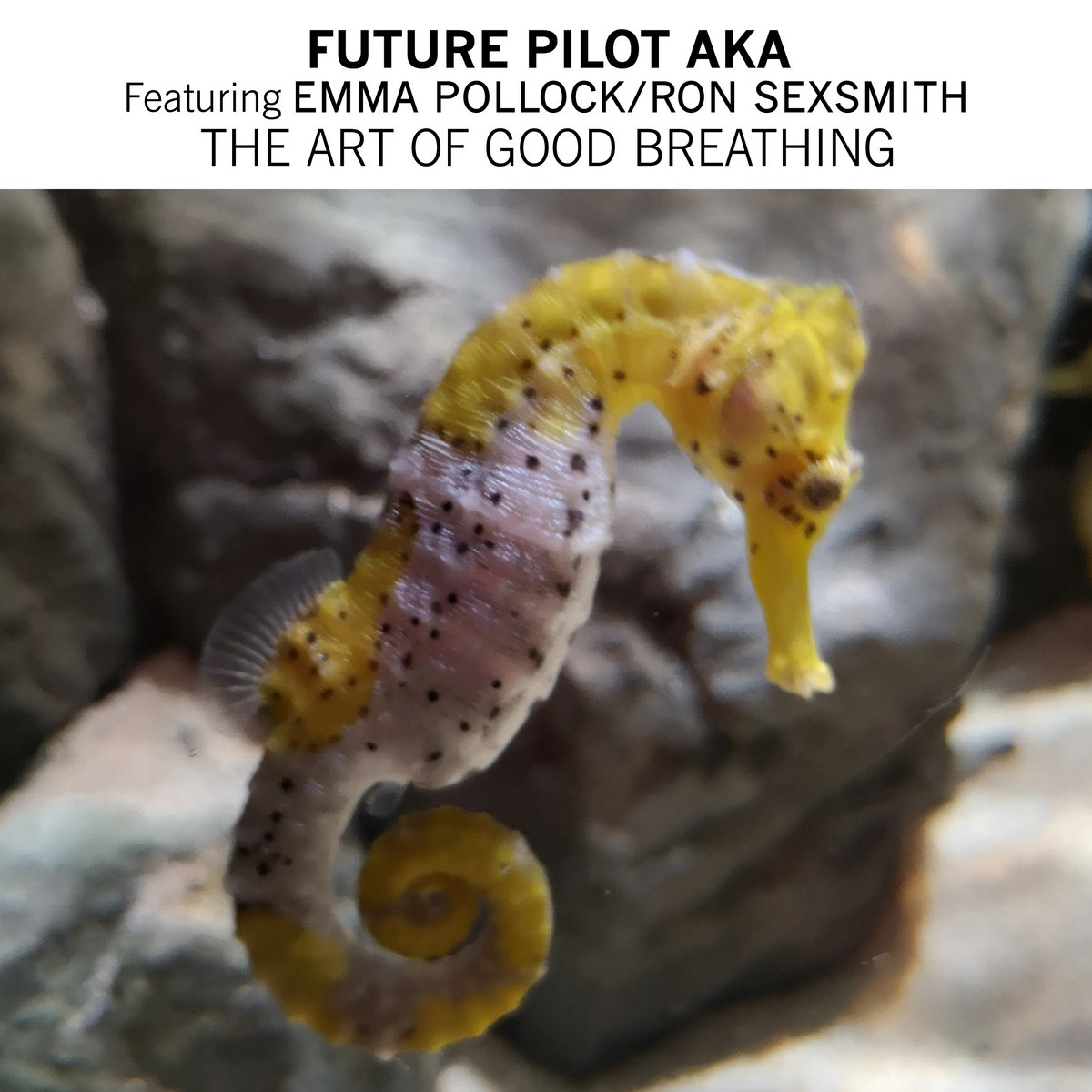
The second Digital single to be released from the much anticipated and final studio album ‘Orkestra Digitalis’ by Future Pilot AKA , the brainchild of bassist Sushil K Dade.
‘The Art of Good Breathing’ features lead vocals by Emma Pollock (Delgados/ Chemikal Underground) and harmonies/backing vocals by Ron Sexsmith. The vocals were recorded in true ‘guerilla’ style in a few hours at a session fuelled by caffeine, at a studio built on the site of the former Headquarters of the Lipton Tea Company in Glasgow’s Southside, on a sound desk built by sonic legend Rupert Neve.
Dade’s previous recordings have featured contributions from a range of artists including Philip Glass, Damo Suzuki,Mikey Dread, The Pastels, The Go-Betweens and the new album will feature contributions from Robert Wyatt, Mulatu Astatke, R M Hubbert, Leo Abrahams, Craig Armstrong and this single featuring Emma Pollock/Ron Sexsmith.
The Master tracks from the album were hidden in the elements (shorelines/ hills/ windfarms/ islands and lochs) as part of a #soniktreasurehunt and will all appear on the album Orkestra Digitalis.
The first single ‘Tutti Shruti’ featuring Robert Wyatt, received support from DJ’s Gideon Coe, Lauren Laverne, Steve Lamacq, Mary Anne Hobbs, Vic Galloway & Shaun Keavney.
released July 5th, 2019
Glass Modern is a new imprint of Glass Records, for new recordings and a choice selection of Ltd Edition reissues