‘Songs for Australia’, which is raising money for organizations in Australia who are helping to rebuild during and after the bushfire crisis. ‘Songs for Australia’ was conceptualized by Australian musician Julia Stone, The album, which was finalized in about two months, started out as “a feeling of sadness and helplessness,” says Julia Stone . She was working with the National collaborator, performer, and producer Thomas Bartlett (Sufjan Stevens, St. Vincent) in London when the project came together.
As the fires raged, Julia Stone played her favorite track Midnight Oil’s “Beds Are Burning” and inspiration struck. Bartlett suggested they record it the next day in search of a cathartic experience. Stone’s cover of “Beds Are Burning,” which was written 33 years ago about indigenous land rights, is included in the set. She started exploring the information relating to the inattention to indigenous wisdom on land management in Australia. “Had that information not been ignored, this crisis may have been less damaging,” she says.
Stone ended up working on the song with artists from the indigenous Australian Karrabing community; Natasha Bigfoot Lewis, Quinton Shields, and Deborah Sing added lyrics and vocals. “I get goosebumps when I hear Natasha say, ‘What you gonna do when the whole world’s fried?’” She soon realized the project was more than a song. “I know a heap of great artists, and I just started writing the emails, making the calls, sending text messages,” she explains. “‘Hey, I have this idea. Things are bad in Australia. Here are some people doing really good stuff. Want to help?’… That was on January 8th.”
The National was one of a handful of international acts that jumped at the idea of contributing. Frontman Matt Berninger was the one to suggest the INXS choice, and Stone was immediately sold. “Matt came straight back to me after I presented the idea for the record,” Stone says. “He was so thrilled to have an opportunity to help.”
“I’m so grateful to have a good excuse to cover that song,” Berninger tells us. “One of my favorites ever. Hope it helps a little bit.”
Proceeds from the record’s sales and streams will go to numerous organizations, including SEED, Firesticks Alliance, Landcare, Emergency Leaders for Climate Action, Wild Ark, and NSW Rural Fire Service. All proceeds given to Wild Ark goes to what’s needed on the ground. As for Emergency Leaders for Climate Action, “they are trying to do what the government should be doing,” Stone says. “They have created a bushfire summit to make plans for a future where we can do our best to avoid the repeat of such extreme damage and devastation.”
Songs for Australia Tracklisting:
1. The National, “Never Tear Us Apart” (INXS)
2. Petit Biscuit, “Chateau” (Angus & Julia Stone)
3. Dermot Kennedy, “Resolution” (Matt Corby)
4. Dope Lemon, “Streets of Your Town” (The Go-Betweens)
5. Kurt Vile, “Stranger Than Kindness” (Nick Cave)
6. Joan As Police Woman, “Hearts a Mess” (Gotye)
7. Damien Rice, “Chandelier” (SIA)
8. Martha Wainwright, “The Ship Song” (Nick Cave)
9. Paul Kelly, “Native Born” (Archie Roach)
10. Dan Sultan, “Into My Arms” (Nick Cave)
11. Pomme, “Big Jet Plane” (Angus & Julia Stone)
12. Julia Stone, “Beds Are Burning” (Midnight Oil)
13. Sam Amidon, “Let Me Down Easy” (Gang of Youths)
Brooklyn’s Jeanines specialise in ultra-short bursts of energetic but melancholy minor-key pop. With influences that run deep into the most crucial tributaries of DIY pop — the Velvets, the Shop Assistants, the Television Personalities, Dolly Mixture, Veronica Falls and Girl Ray — they’ve crafted a style that is as individual as it is just plain pleasurable. Frontwoman Alicia Jeanine (guitar/vocals) multi-tracks her vocals, delivering delicious harmonies, and Jed Smith (bass/drums) infuses bounce and punch. The melodies are perfect pop sugar, and the themes are melancholic with a dose of sunshine — delivered with a direct and sincere lyricism.
60s-meet-80s melodies combine with timeless guitar jangle in a way that recalls everything from The Aislers Set and Saturday Looks Good To Me to more recent DIY pop groups like Parsnip and Chook Race. the tunes on this exclusive 4 track single hearken back to some of the most intriguing moments of the C86/C88 era, when bands like Jesse Garon & The Desperadoes and Talulah Gosh crafted perfect pop gems enlivened by the inspiration of punk.
Alicia Jeanine explains: “I’m kind of obsessed with mortality and how weird the passage of time is, so I think my lyrics reflect that. I definitely lean into that kind of melancholy state of mind when trying to think of lyrics, while trying to avoid cliches!” The marriage of the minor-key melodies and melancholic lyrics is powerful and make Alicia’s songs all the more memorable, with its echoes of girl harmony post-punk groups like Grass Widow and Household.
Jeanines have been compared to such cult pop icons as Dear Nora, Black Tambourine, and more recent acts like Veronica Falls and Girl Ray, but their dark, modal melodies and pensive, philosophical lyrics, along with Smith’s versatile but ever-economical musicality, ensure them a place of their own in today’s crowded but boisterously healthy DIY pop scene.
Jeanines will be playing their first european shows this spring:
A Powys trio whose free-spirited invention and exuberant intensity flows through experimental pop: hypnotic, exhilarating and defiantly unique. The Welsh band Islet return with the release of their long-awaited new album.
‘Eyelet’ was recorded at home tucked away in the hills of rural Mid Wales. It took form the months following the birth of band members Emma and Mark Daman Thomas’ second child and the death of fellow band member Alex Williams’ mother. Alex came to live with Emma and Mark, and the band enlisted Rob Jones (Pictish Trail, Charles Watson) to produce.
TheWho’s incendiary 1968 performance on “The Rolling Stones Rock and Roll Circus” TV special. That article was all about the incredible power of the Who, and Townshend in particular, as live performers.
Pete Townshend’s stage antics were unparalleled (the leaps, the windmill, the guitar smashing), as was the sheer speed and energy of his playing. As another example, check out one of my all-time favorite Townshend live performances, him doing Quadrophenia’s “Drowned” by himself on acoustic guitar at the 1979 Secret Policeman’s Ball.
The entire performance is spellbinding, but the guitar flurry he unleashes at the 2:00 mark just blows me away every time. That technical dexterity combined with primal energy, top-notch songwriting, and heartbreaking pathos encapsulates the amazing creative mixture that was Pete Townshend.
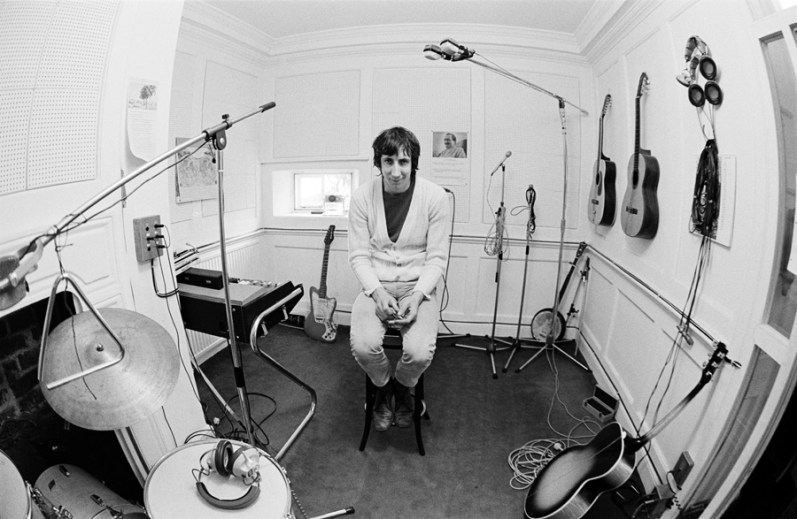
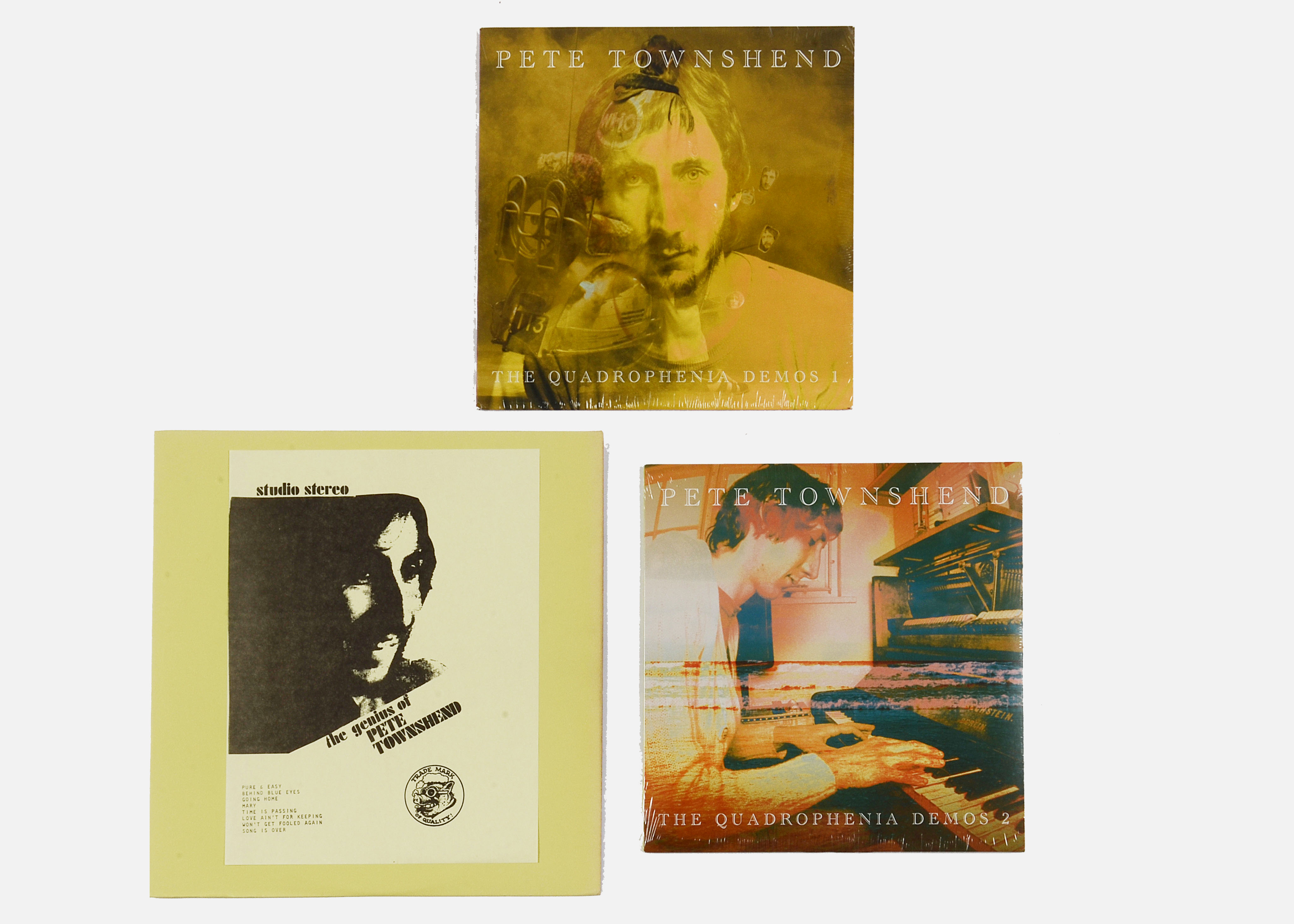
Yet there’s a quieter, more private side of Pete Townshend that’s just as noteworthy. Beginning in the late 1960s, Townshend was on the forefront of the development of home studios. In a world before ProTools and GarageBand, the idea of having a recording studio in your own home was quite extraordinary, but Townshend took to it immediately and started producing amazingly rich demo recordings on which he sang and played every instrument (including drums and bass). For tracks that later found their way onto Who albums, these demos provided a template for the other members of the Who to flesh out with their individual parts, adding their own flourishes and touches.
It’s incredible, however, how fully Townshend had already worked out the arrangements of these future Who classics. In many respects he’d figured everything out ahead of time, and it was just up to The Who to lay it down in a professional studio, bringing to it the animal electricity that only The Who could.
The first album for which Townshend did extensive home demoing was 1969’s “Tommy”, and his demo of “Pinball Wizard” is a perfect example of his arranging genius, as his home recording maps out the song pretty much exactly in line with the Who version that would sweep the world by storm:
Despite the fact that Townshend could play every instrument and write every part, he never felt like he didn’t need the band. He heard in these demos exactly what we hear today—that Keith Moon’s manic drumming, John Entwhistle’s muscular bass, and Roger Daltrey’s guttural fury launch these songs to a whole other level.
It was in preparing for the Who’s next album—which started as the multimedia Lifehouse project but wound up as the Who’s Next collection released in 1971—that Townshend began producing stunningly complex and beautiful home demos, cuts that really demonstrate his multi-instrumental talent and sonic adventurousness. One of the most impressive tracks is “Baba O’Riley,” which is both like and quite unlike the eventually released Who version:
Townshend’s synthesizer part is mind-blowing in and of itself, revolutionary at the time and still impressive today. In fact, the part heard on this home demo is the very one the Who wound up using on the official recording (though they did muck around with it a bit once in a professional studio). “Baba O’Riley” gives a fascinating window into Townshend’s creative process. All the basic parts of the Who version are here, but this demo goes on for longer, and includes little passages here and there that eventually got cut from the Who’s Next arrangement. In this recording we get to hear all the ideas Townshend throws at the wall, and by comparing it to the released version he can hear what eventually stuck (though Townshend was reportedly unhappy with the released version of “Baba O’Riley,” feeling that he’d allowed too much material to be cut; he’s wrong, though, since The Who’s “Baba O’Riley” is pretty much perfect).
Another Who’s Next classic worth pointing out here is “Behind Blue Eyes.” Again, the demo mostly mirrors the Who version, but in this case it has an entirely different feel. Whereas the Who’s version is for the most part loud and bombastic, Townshend’s demo version is gentle, dark, and plaintive, (Daltrey’s over-the-top vocals on this track have always bothered me):
These demos provide the listener a view into an alternate reality where Townshend rather than Daltrey is The Who’s primary vocalist. I mean, listen, for much of the Who’s material, Daltrey was the man for the job, and in certain instances, he laid down some of the best rock vocals ever, period. The first and last example anyone would need in that regard is “Won’t Get Fooled Again” from Who’s Next, aka “The Scream”:
Pete Townshend could never pull off that scream, nor could anyone else. But on some of the Who’s more gentle material, Daltrey’s approach can feel a little ham-fisted, so hearing Townshend sing some of these songs in demo form is a real treat. The song that stands out in this regard for me is one of my Who’s Next favorites, “Getting in Tune.” With Townshend at the mic, the song’s delicacy and fragility come to the front, causing my heart to break a little bit each time I hear it:
Speaking of Townshend’s gentle side, not all of his home demos were done with the Who in mind. Since the late 1960s Townshend had been a loyal disciple of the Indian spiritual leader Meher Baba, and a good portion of his home recordings were intended for release on Baba tribute and fund-raising albums, produced and released under the name “Pete Townshend” rather than “the Who.” This gave Townshend the chance to work out material not appropriate for the Who as a band, and which might confuse or anger the Who’s trill-seeking, head-banging audience.
Many of these tracks were very hard to track down until released on Townshend’s first solo album, 1972’s Who Came First, in their original demo form. The gentle yet bouncy “Mary Jane” is a great example of the type of material Townshend worked on without thinking of the Who eventually performing the song in a stadium setting:
While Townshend continued to produce home demos throughout the rest of the 1970s, I’ll end here with two choice cuts from the Who’s last significant record, 1973’s Quadrophenia. Breaking from the pattern of these home demos being very close in arrangement and spirit to the eventually released Who versions, “The Real Me” demo is vastly different. Whereas the Who version is a driving punch in the face—for my money one of the best things they ever recorded—Townshend’s home demo is a slower, funkier, almost dancey take. I don’t think it holds a candle to the Quadrophenia version, but it’s an interesting experiment nonetheless:
Another standout from the Quadrophenia double album was “Bell Boy”; as with “The Real Me,” the Who’s version of “Bell Boy” is a prolonged punch in the face, a monumental wave of sound and energy. Townshend’s home demo follows the same structure, but overall it’s quieter and gentler, especially with him on lead vocals for the entire song instead of drummer Keith Moon, whose vocal cameo on the album version is hilarious, intense, and unforgettable. In the home demo setting, you can here just how complex and lovely the song’s arrangement really is, having stripped away all the Who’s (admittedly great) rock and roll bombast:
And that’s just it—the Who as a band could melt your face, but obviously Pete Townshend’s vision and talent went beyond such histrionics, and it’s in these home demos that we hear him stretching out in all sorts of different directions. They’re certainly a mixed bag—sometimes these sketches are better than the eventual Who versions, sometimes they’re not, sometimes they allow us to hear material never performed or recorded by the Who or Townshend in any other arena, but they’re always revelatory, giving us a more intimate glimpse of the creative process of a man who could both windmill the shit out of a guitar but also play every instrument in the band and arrange complex rock operas while his tea steeped in the kitchen down the hall.
Disq have assembled a razor-sharp, teetering-on-the-edge-of-chaos melange of sounds, experiences, memories, and influences. “Collector” ought to be taken literally—it is a place to explore and catalogue the Madison, Wisconsin band’s relationships to themselves, their pasts, and the world beyond the American Midwest as they careen from their teens into their 20s. This turbulence is backdropped by gnarled power pop, anxious post-punk, warm psych-folk, and hectic, formless, tongue-in-cheek indie rock.
Collector, like the band itself, is defined and tightly-contoured by the ties between the five members. Raina Bock (bass/vocals) and Isaac deBroux-Slone (guitar/vocals) have known each other from infancy, growing up and into music together. Through gigging around Madison, they met and befriended Shannon Connor (guitar/keys/vocals), Logan Severson (guitar/vocals), and Brendan Manley (drums)—three equally dedicated and adventurous musicians committed to coaxing genre boundaries.
Produced by Rob Schnapf, “Collector” is a set of songs largely pulled from each of the five members’ demo piles over the years. They’re organic representations of each moment in time, gathered together to tell a mixtape-story of growing up in 21st century America. The songs are marked by urgency, introspection, tongue-in-cheek nihilism, and a shrewd understanding of pop and rock structures and their corollaries—as well as a keen desire to dialogue with and upset them.
Following his 2016 album ‘I Had A Dream That You Were Mine’ with Vampire Weekend’s Rostam Batmanglij and his 2017’s one-off single with Angel Olsen ‘Heartstruck (Wild Hunger)’, former The Walkmen vocalist Hamilton Leithauser is back with new track ‘Here They Come’.
“’Here They Come’ is about a friend who tends to run from his problems,” he explains. “When the going gets tough, he tends to just cut and run. The song is about the specific moment when the lights are coming up in a movie theatre where he’s been hiding out all day, and life’s complications are just coming back into focus.”
My song Isabella is about the kind of friend everyone has in New York…the kind of friend who’s parents might be paying the rent. And if you ask me, that’s precisely the reason she can’t seem to get it together. At first it may not seem like the most flattering portrayal of a friend…but to be honest, it’s not necessarily a friend’s saintliness that I find most interesting, and I mean the song as a compliment.
A lot of people have been writing in recently asking about my new record—which is great. But even more people have been writing in asking if I was thinking about getting a haircut any time soon—which is fine. So, just the other day as I was on my way to play Isabella for my writer/musician friend, it dawned on me that I might kill two birds with one stone, and hopefully get a little positive feedback…and maybe a little trim.
“Isabella” is out March 6th, 2020 Thank you to Maggie Rogers Song by Hamilton Leithauser
I’ll be honest, I don’t know much about Nashville’s Maggie Rose, but was told to drop everything and listen to her second album. I tend to hate traditonal style country music, but this album reminds me just how good that genre can be when it’s full of heart instead of studio polish. Change also radiates with the glory and divine feminine energy of that first Indigo Girls album, you now, the one most dudes have in their record collections. As it steadily builds steam, it turns into a bonafide rock and roll record, reminding me of the days when Linda Ronstadt released bonafide rock and roll records. Perhaps with this album and it’s little bit of country, little bit of honey, and little bit of booty shaking, we finally have something everyone on the Right and Left can agree on.
In 2018, Rose was named a YouTube Emerging Artist and a Artist to Watch. Quickly being recognized as a formidable force in the pop-soul, jam-band arena, Rose performed aboard the Cayamo Cruise with performers including Jason Isbell, Emmylou Harris and Dawes, and she opened tour dates as support for Kelly Clarkson’s Meaning Of Life Tour.
Following Keith Moon’s death in September 1978, The Who decided to continue as band, recruiting former Small Faces drummer Kenney Jones; keyboardist John “Rabbit” Bundrick was also added to the line-up for live performances, adding another element to the band’s sound. A horn section was introduced to the band’s act for the first time around this time. It would be retained through 1980. The horn section also allowed numbers like “5:15” and “Drowned” (now sung by Townshend) to be reintroduced to the act. Meanwhile, 1979 shows are known among Who fans for new material that Townshend introduced on some nights during jams, The tour supported their 1978 album “Who Are You”,
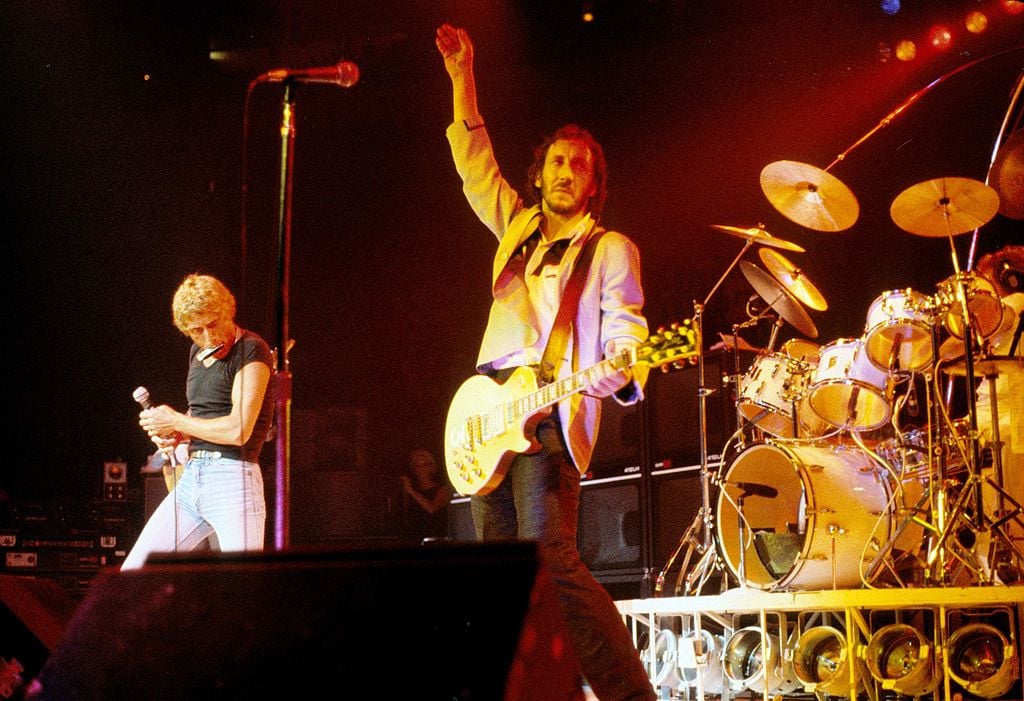
The Who performed at the Chicago Amphitheater in Chicago, Illinois on December. 8th, 1979,
The version of “How Can You Do It Alone” from the Face Dances reissue also comes from the Chicago show. “5:15”, “My Wife”, “Music Must Change”, and “Pinball Wizard” from the Thirty Years of Maximum R&B Live video and DVD come from the same Chicago show.
The concert was broadcast live to several local movie theaters. The general consensus was that this show was the
best on the 1979 tour. The show was visually stunning. Many times Pete Townshend or Roger Daltrey would move to the front of the stage and direct the cameraman to focus in close, then unleash a mic twirl or scissors kick for the hungry crowd.
Backstage Roger asks us if we liked the show with a devious smile, knowing full well how great it was for the band
and crowd alike”. ~ The Who Concert File book/Joe McMichaels;Jack Lyons.
The Chicago Tribune wrote: “… it is the spirit The Who brings to its performance that makes it so special. Like the title of its current movie, “The Kids Are Alright,” The Who is alright and more; and though no longer “kids” in terms of the calendar, Daltrey and Townshend in particular reflect a genuine love for rock and roll, with a kid like enthusiasm which has nothing to do with age. Twirling the microphone on its cord, running in place to the beat, Daltrey throws himself into the proceedings with a joy that’s not only convincing, but catching; Townshend, meanwhile, lopes and lur-ches around the stage, his windmilIng arm crashing out heavy rock chords. The Who’s own energy output is just as devastating on a more human level.
Daltrey and Townshend come across like cheerleaders for rock and roll. If the act is, when It comes to the seeming affection for the music and the transcendent moments that rock at its best can offer, just that – an act- really doesn’t matter”.
The three-disc version of The Who biographical film “Amazing Journey: The Story of The Who” includes the majority of the band’s show of 8th December at the International Amphitheatre in Chicago.
Roger Daltrey: Harmonica, Vocals, John Entwistle: Vocals, Bass, Kenney Jones: Drums, Pete Townshend: Vocals, Guitar
John Bundrick: Keyboards,Reg Brooks: Trombone, Howie Casey: Saxofone, Dave Caswell: Brass Section
Setlist:
Substitute,I Can’t Explain,Baba O’Riley,The Punk And The Godfather,My Wife,Sister Disco,Behind Blue Eyes,Music Must Change,Drowned,Who Are You,5.15,Pinball Wizard,See Me Feel Me,Long Live Rock,My Generation,I Can See For Miles,Sparks,Won’t Get Fooled Again
Encore:
The Real Me, Dancing In The Streets, Dance It Away, Young Man Blues, Roadrunner, Big Boss Man, How Can You Do It Alone
In May 1969, British Invasion band The Who released their rock opera “Tommy”. Featuring ‘Pinball Wizard’ and ‘Tommy, Can You Hear Me?’, the double album was hailed as the band’s breakthrough, catapulting them to stellar success.
Our sold-out anthology of images of the band on stage, The Who Live, includes photos from their subsequent 1969 tour of Tommy, which began in the UK in April and then travelled to North America in May and June. Five copies are now being made available, each signed by Ross Halfin and with a personal introduction written by Pete Townshend.
This remarkable limited edition charts the band’s performances from the early days in the Sixties through to Pete Townshend’s Lifehouse shows at Sadler’s Wells in London, with emphasis on the legendary tours of the Seventies when the band were labelled the greatest live rock ‘n’ roll band in the world.
Accompanying the photographs are observations from Ross Halfin and Matt Kent, as well as other featured photographers.
Never before has such a remarkable anthology of images from the world’s most celebrated photographers been assembled in one benchmark volume. This set of extraordinary photographs, mostly unpublished, includes the last shots of Keith Moon playing live. Masterprinted to the highest standards of craftmanship, this superb edition is essential for all fans of The Who as well as collectors of fine art books on modern music.