Archive for the ‘MUSIC’ Category

The JOSHUA LIGHT SHOW

Posted: October 23, 2020 in MUSIC
Tags: ,
May be an image of 1 person, playing a musical instrument and standing

The Joshua Light Show, created by Joshua White, was a liquid light show. It was known for its psychedelic art and served as a lighting backdrop behind many live band performances during the late 1960s and early 1970s.

Joshua White is renowned for his light show at the Fillmore East in the late sixties and early seventies. Employing an arsenal of various trailblazing effects, including the now-iconic “liquid light”, the Joshua Light Show catapulted Fillmore crowds into cosmic depths from which many have yet to return.

In his post-Fillmore life, White has gone on to a career in television direction and mixed-media art. But he continues to keep a few fingers dipped in the liquid light.

The show at the Fillmore was perfect for its time and I don’t wish to recreate it. I’m interested in regenerating some of the visual techniques and forms that I thought were very important when I was doing it back then and that I haven’t had a great deal of opportunity to do in the present. Because of our situation and where we were at the Fillmore, we were able to improvise on a very large, thirty to forty foot canvas behind the musicians as they performed. We had a knowledge of their music but we weren’t following any score, we were just improvising, making something visual using our tools.

When we did the light show we were forced by the limitations of the technology of the time to develop very high powered projectors and light sources that could punch through a large rear projection screen and be highly visible for the audience, while at the same time allowing for the musicians to be properly lit. Only recently has the technology evolved to the point where there actually are ways you can project that are very powerful and don’t require big equipment. Most of them involve video projection. So this show is a merging of the old heavy duty projection techniques with the modern video projection techniques.

If we accept the premise that “the sixties” sort of began in 1965, I was very young and I wanted to come up with something interesting to do. Something that was visually reflective of everything that was going on in terms of music and fashion and lifestyle. Because I had been trained in theatre at Carnegie Tech and film at USC, I had all the skills but I could not find a place where I could make work that was really exciting. But things began to change in the mid sixties and I was able to start doing fashion shows that used lighting and film effects. And I was able to design and build lighting for discothèques – and there’s a big difference between the old discothèques and the 70s ‘discos’ that we all think about. The discothèques were much more refined affairs. So I actually had a business with several other associates…

And just by sheer good luck one of the people working with us happened to have a relationship with the agency that represented Bill Graham. And Bill Graham had been quite successful in San Francisco producing these very interesting shows in a ballroom called the Fillmore. And you went in, everybody paid cash, the band got up and played, the light show performed all over the walls, people walked around in various states and it was very groovy.

And in the summer of ‘67 Bill was asked to transport the whole idea to Toronto for a week. And they wanted to have a Summer of Love San Francisco week in Toronto. Bill agreed to come and bring the Jefferson Airplane and The Grateful Dead and hire a local band. The problem was that the place where they wanted to stage it was a traditional theatre. So they went into this theatre and the light show wanted to cut off the balcony – which had very valuable seats – and do their traditional light show. And they wanted somebody preferably not from San Francisco to serve as the people in between – in between the reality of the event and the practicality of the theatre. And that was me.

So we went and we figured out a way that the light show could perform without tying off the balcony and we provided environmental lighting. And at the last minute I even had to do the stage lighting because the person who was supposed to do it got busted trying to get into Canada carrying drugs. And what happened is that the Dead and the Airplane played for a week and the San Francisco light show performed on a rear projection screen that was our design. And we provided other lights and things that went around the room to give it a ballroom effect. And I sat in the back and called the lights. In those days calling the lights was basically going from red to amber to red-amber and back to red again. There was no real lighting; it was just a glow. But I had to do it for eight performances and watch The Dead and The Airplane play and at the same time stare at the San Francisco light show. And I was just transformed. I said, “I love the music and I need to do these light shows – I need to do that light show specifically.”

And then we got lucky again. We were there in Toronto doing the shows and the Summer of Love was a concept that didn’t have a lot of real life applied to it. So it turned out that the San Francisco light show, which was called Head Lights, were fighting with each other. They hated each other. They were doing the shows but they were fighting and fighting backstage. Literally right in the middle of the run they broke up. They continued to do the work, of course, but half of the light show, a man named Glenn McKay, sort of began to fall in with us. And he came back to New York with us and we built him a new light show because we had the technology. And he in turn showed us the mixing techniques for the oil and the water. And Glenn and I have been friends for 40 years.

And from that point on, from the fall of ‘67, we were the Joshua Light Show and it was just a matter of finding work. And we were happy to let go of all the disco lighting and the fashion shows. Then Bill Graham came to New York and decided to open the Fillmore East and we were, of course, the light show. But Bill didn’t give us our start; we were already doing it and Bill came to town. And he couldn’t have treated us better or paid us better. It was heaven for two years.

Because the light show didn’t have to actually connect with the musicians; we could enjoy them. We were performing behind them but we were only 18 feet away. And our prep room was literally next door to the star dressing room at the Fillmore. And none of those layers of security were there. We just hung. So the really nice musicians were great and the ones that were pricks we didn’t talk to. But it made no difference, we were literally in the same place, we were right in each other’s faces.

And it was a time when we did two shows on Friday and two shows on Saturday. Tickets started, by the way, at two dollars, two-fifty. And it was a reserve seat so everyone who came was guaranteed a seat. And because it was a theater they were looking forward, not wandering around. So we felt the light show had to be very disciplined; we couldn’t mess around. We had to really be good. And being good – aside from the visuals – was starting on time, listening to the music, finishing on time. So we got it all; we go to hang with The Who, we got to perform behind them and we have great memories of them but I can’t tell you that we palled around a lot because they were musicians and we were visual artists

Memories of anyone acting particularly crazy? Oh sure… Let me see, who acted crazy? There was good crazy, which was The Who. They were wonderful crazy because they were sort of these rough edged guys and they brought their own rough edge guys with them. Anybody with an English accent in those days ruled. They were The Who, they were the best band in the world. But a lot of the musicians by the time they got to the Fillmore, especially the most established ones like Jimi Hendrix and Janis Joplin that had already made a name for themselves were a little bit…what would be the word… they were alcoholics. So there was a lot of bizarre, alcoholic sort of behavior. But Bill Graham was really a great entrepreneur, really the greatest I’ve ever experienced, and he kept everybody in line. So even though there was always some kind of craziness there was never a sense of danger. I don’t remember ever failing to put on a show. I cannot remember a band not ultimately giving four great performances.

Fortunately, as a light show we were just too busy pleasing people in a visual sense to be deeply drawn into the politics of the time. There was just no time. But we appreciated it and we certainly did everything we could to support this movement, even though nobody really knew what it was. And we marched on Washington and did all of those things but we were apolitical. And it turned out so were the bands. And the bands that were very political, like MC5 and people like that really lost their fan base or they got confused.

Because Bill Graham decided that the audience needed to have something to look at besides a bunch of musicians in street clothes tuning up. So he spent the money to have a light show; there was no precedent before that. And after he stopped there weren’t a whole lot of light shows afterwards. He spent over a thousand dollars a week to have this light show and he gave me his undiluted trust to do it, he made no demands, he just trusted me and I honoured that trust by delivering an amazingly fine light show that pleased people because it filled in the visual part.

May be an image of one or more people and people playing musical instruments

Mamalarky’s indie rock summons an easy and pure joy. Like stepping out from under a tree canopy and into the sun, or feeling the first kick of wind on a hot, sticky day. It’s that sort of gentle wonder that the Los Angeles-based quartet — comprised of ex-Cherry Glazer bassist Livvy Bennett, drummer Dylan Hill, keyboardist Michael Hunter, and bassist Noor Khan channels on their latest song, The song’s bright guitar licks and Bennet’s fuzzy vocals go down like the sweetest little package. As Bennet’s inquisitive lyrics wonder.

While “Schism Trek,” the first single from Mamalarky‘s self-titled debut album took on a more rocking edge, “You Make Me Smile” is a more laid-back affair. With light, precise instrumentation and dreamy vocals, it shows the versatility of the Atlanta quartet.

A new single from Mamalarky out October 14th on Fire Talk Records.

Sjowgren is a musical project by three friends hailing from Northern California’s Bay Area. Yes, the still enigmatic Bay Area group took time to hone their sound, but the follow ups have come with both increasing consistency and regularity. Their latest offering is the third in a sudden, and wholly welcome, string of quick releases, It feels like they’re properly up and running, and with “I Don’t Know”, Sjowgren are showcasing their most potent pop work to date. Its pacey, hypnotic, rock ‘n’ roll guitar riff drives the track along, while hand claps and a foot-stomping rhythm lead us to what is quickly becoming their thing; a beautifully elegant-yet-empowering earworm chorus that begs to be returned to.

Perhaps soon we’ll know more about this lot, but for now we’re more than happy to let the music do the talking; stubborn forces of indie pop nature indeed.

Long Time Friend Discount Released on: 2020-10-02

Rostam (full name Rostam Batmanglij, formerly of Vampire Weekend) shared a new song, “Unfold You,” via a video for it. Rostam self-directed the video, which features himself and actress Hari Hef . “Unfold You” was inspired by a Nick Hakim song and features saxophone playing by Henry Solomon. Sax sells! Meaning, the sax part sent the song over the edge. 

Rostam released his debut solo album, Half-Light, in 2017 via Nonesuch Records. Since then he’s produced the latest albums by Clairo and Haim.  In recent years, Rostam has focused primarily on producing, working with Clairo on Immunity and Haim on their new album Women In Music Pt. III. Although the ex-Vampire Weekend member has not formally announced a new project, “Unfold You” is his first official new solo music since 2017’s Half Light. “Under a lulling beat, mesmerizing saxophone licks, and shimmering keys, ‘Unfold You’ speaks to Rostam’s willingness to be open to a new love,”

Rostam had this to say about “Unfold You” in a lengthy press release statement:

“In November 2017 I played a show with Nick Hakim at Cafe De La Danse in Paris. This was the first Rostam show outside of America. I wasn’t familiar with Nick’s music but I was immediately drawn to it. Later that night in my hotel room I was winding down after the show and listening to some of Nick’s records. The song ‘Papas Fritas’ came on, it’s an instrumental track, and I suddenly found myself singing a melody over it and recorded that in my voice memos. Anyone writing songs probably has a few hundred voice memos on their phone. I kept coming back to this one though, and when I returned from a North American tour in February 2018 I booked some days at my favourite Vox Studios in Hollywood.  

“That’s where I first met Henry Solomon, who came in to play sax on ‘Unfold You.’ I had written out some sax lines for a few sections of the song, but others we arranged together in the studio. I wasn’t exactly sure where ‘Unfold You’ would land. I hadn’t finished writing the song, but I continued building out the track with Nick’s ‘Papas Fritas’ as its backbone. I decided I’d let the recording process take me where it would.

“‘Unfold You’ was the first thing me and Henry had worked on. A year later, I’d ask him to come back to Vox and record some sax lines I sketched out for the song ‘Summer Girl,’ which I was producing for Haim. Henry can also be found playing himself in PTA’s [Paul Thomas Anderson] video for the song.  “Summer Girl’ came out within a few months of us starting to record it, but ‘Unfold You’ took years. In some ways it had to—because the recording of the song tracks an evolution and a metamorphosis for me. As I write this, I’m finishing a record that deals a lot with the subject of change and for this whole album, change was what I was searching for musically.

In the summer of 2016, I was sitting on a park bench on Commercial street in Provincetown, Massachusetts. I found myself in conversation with a stranger who left me with a piece of advice that has stuck with me. ‘Change is good,’ he said, ‘Go with it.

Rostam had this to add about the video: “Hari and I found ourselves in the same quarantine pod in Massachusetts this past July. We also found we had a bunch in common, having gone to the same college nine years apart. The video was shot on the Dune Shacks Trail during the last several days of the trip.”

The Damned are reforming their original, classic line-up of vocalist Dave Vanian, guitarist Brian James, bassist Captain Sensible and drummer Rat Scabies for four UK shows next year.

The legendary British punk quartet, who released their debut single “New Rose” almost exactly 44 years ago on October 22nd, 1976, will play four headline dates in London, Birmingham, Glasgow and Manchester in July 2021. The tour will celebrate The Damned’s 45th anniversary, and the setlist will draw upon the quartet’s first two albums, Damned Damned Damned and Music For Pleasure, which was produced by Pink Floyd drummer Nick Mason.

Tickets for the tour go on sale on Friday, October 23rd.

The band’s eleventh studio album, the Tony Visconti-produced Evil Spirits, was released in April 2018.

Hi everyone, “Mockingbird” is out now, Valley Maker (aka singer/songwriter Austin Crane) shared “Mockingbird,” his first new music since 2019’s “Supernatural” and his 2018 LP Rhododendron. It’s a calming, folky rumination about shifting sands, and much like his previous work, “Mockingbird” thrives on Crane’s intuitive vocal cadence, subtly accenting words to draw the most passion out of his songs. “It’s a song about trying to settle in while feeling quite unsettled,” – along with an accompanying video: https://orcd.co/valleymakermockingbird I wrote ‘Mockingbird’ within a week of moving to Columbia, SC, having just left my home of nearly seven years in Seattle to return to the area and community I grew up in. For me, it’s a song about trying to settle in while feeling quite unsettled. Megan and I had just bought an old house that needed (still needs!) a lot of work, and wanting to do something tangible and forward looking, I planted my favourite tree in the yard: a Japanese Maple. There’s a line in the song that acknowledges how I’ll “sit for a while and watch it grow,” I guess as a way of accepting the season of transition. When I wrote the song, I didn’t know how long I would be doing just that.

So while “Mockingbird” was written a few months before the pandemic upended life as we knew it, for me, the song has resonated with this strange season of life. The song meditates on memory, time and aging; on trying to embrace the uncertainty, absurdity and beauty of life; and on being in-between places and communities. We decided to try and reflect these ideas in the video by Joseph Kolean and Zach Gutierrez capturing footage from their lives and environments in the PNW and Colorado, and juxtaposing this with Super 8 footage I captured around my neighbourhood and the Carolinas.

I’m really proud of what we made, and grateful to everyone involved. Thanks to everyone who played a part in bringing this song and video into being. Trevor Spencer, Amy Godwin and Chris Icasiano — I loved recording this song with you. Joe and Zach — thank you for your caring and imaginative work on the video. To my neighbours, thanks for letting me unprofessionally film you. Thanks to Frenchkiss Records for releasing my music. And, always, thank you very much for listening.  

Out now via Frenchkiss Records

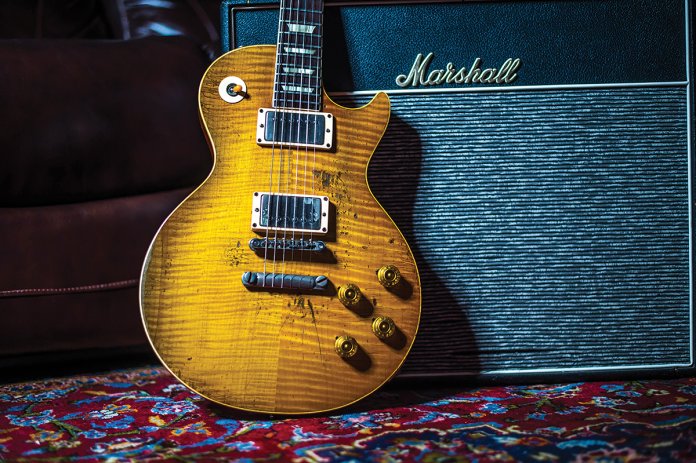
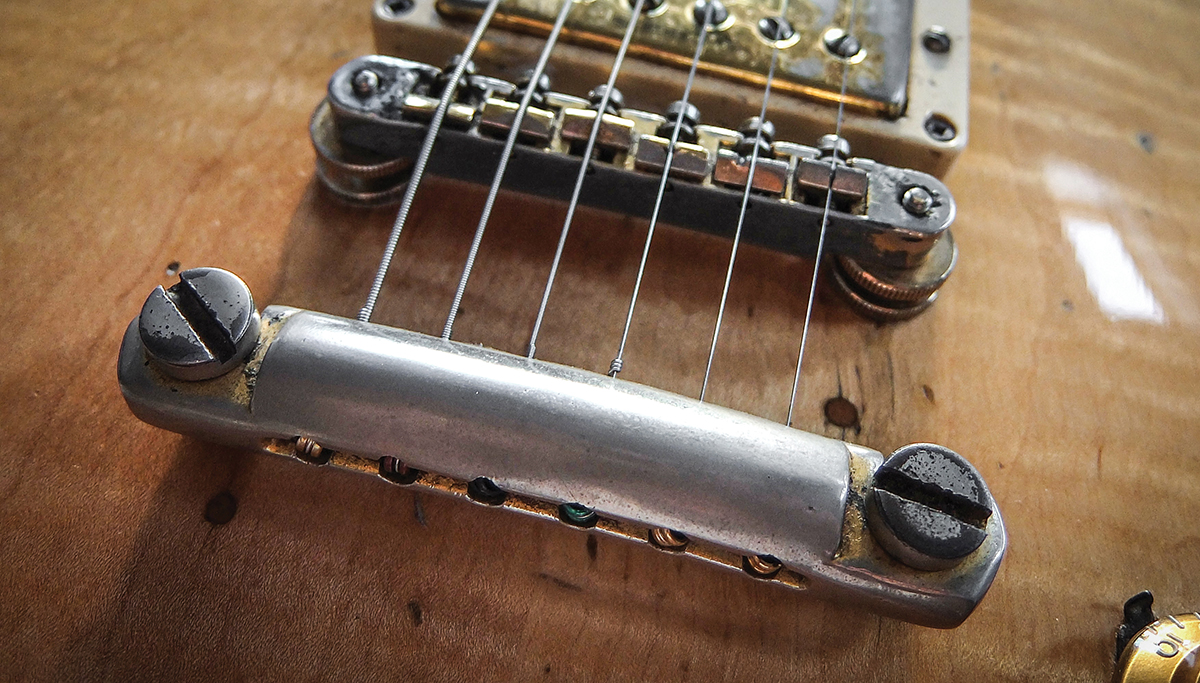
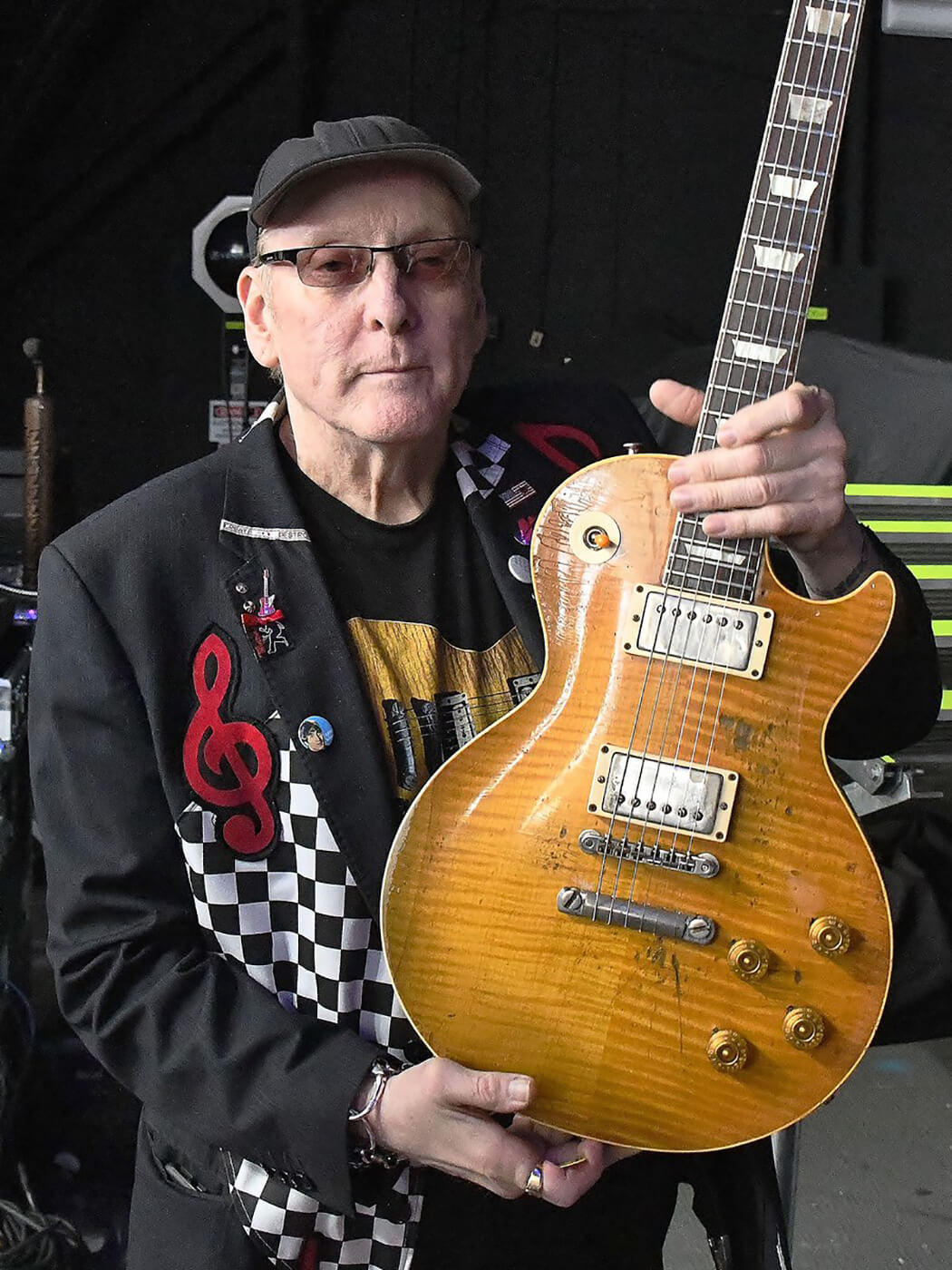
Paul Kossoff Les Paul

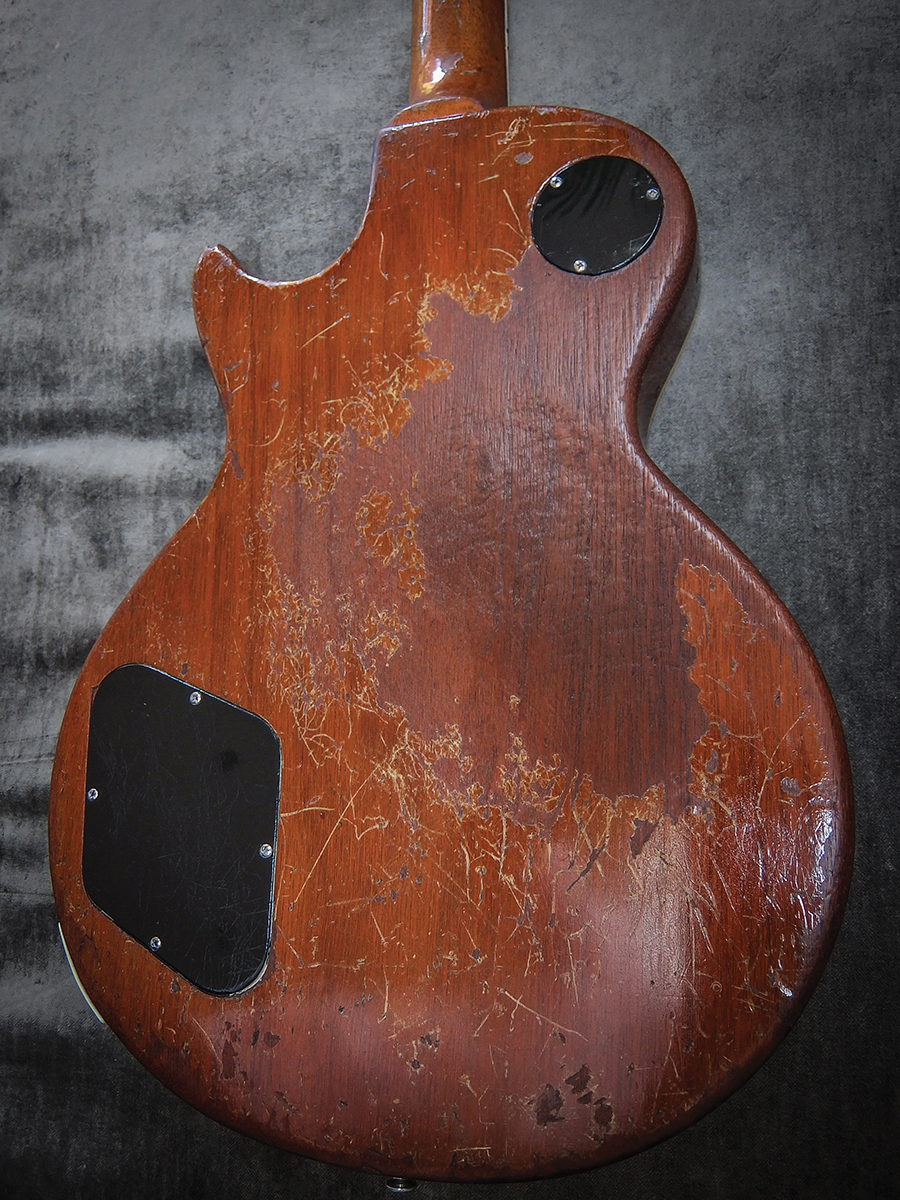
Despite passing away at the age of just 25 in 1976, the influence that Paul Kossoff continues to have on guitar players the world over cannot be overstated. His inventive take on blues-rock and that legendary vibrato have inspired countless guitarists to strap on a Les Paul and hit the stage. Though he played several Lesters during his all-too-brief career, one of the most instantly recognisable is the ’59 that suffered a broken neck the night before Free split in 1973.

The guitar was repaired and later ended up in the hands of Arthur Ramm – who had been playing on the bill the night Koss snapped the neck – after being swapped for the ’68 Goldtop that Ramm had been playing that night. In the intervening years however, that Burst would take on an almost spiritual significance to fans of Kossoff and of 1959 Les Pauls in general. Fast forward to 2012, and Gibson Custom announced plans to pay tribute to Kossoff and his iconic guitar by creating a limited edition run of 100 meticulously hand-aged replicas of the Burst, giving fans the chance to get as close as they were likely to get to Koss’s original.

But for one fan, this wasn’t nearly close enough. Kris Blakely is a man who knows a thing or two about buying beautiful guitars. The man known on Instagram and the Les Paul Forum as ‘Fried Okra’ has a wonderful collection of vintage instruments, which featured on Guitar.com back in 2018. Among a stunning array of vintage electrics and even acoustic guitars that saw action in WWII, one guitar stands out – the aforementioned ’59 Les Paul, once owned by none other than Paul Kossoff himself.

“In 2016 David Plues [co-author of the Burst Believers series and fellow Les Paul Forumite – Ed] emailed me and asked if I was interested in the Kossoff Burst. I first thought, yeah right. Me? I’m not worthy of Kossoff’s Burst!” Blakely recalls. But, despite his initial reservations, the Mississippi native found himself thinning his herd of guitars and arriving in Newcastle, England ready to become the proud owner of Paul Kossoff’s broke-neck Les Paul.

“Upon arrival at the station we met David and Arthur Ramm, from where they drove us to Arthur’s home. Arthur said, ‘Well, let’s see what you travelled all this way for.’ Those are the words I will remember for the rest of my life.” Taking possession of an iconic instrument – particularly one that you’ve venerated your entire life – is surely exhilarating and terrifying in equal measure. The temptation must surely be to keep this irreplaceable guitar under lock and key, maybe tucking it away a glass coffin, much like Mickey Mouse on the cover of Free’s debut album, Tons of Sobs. Kris, however, had other ideas.

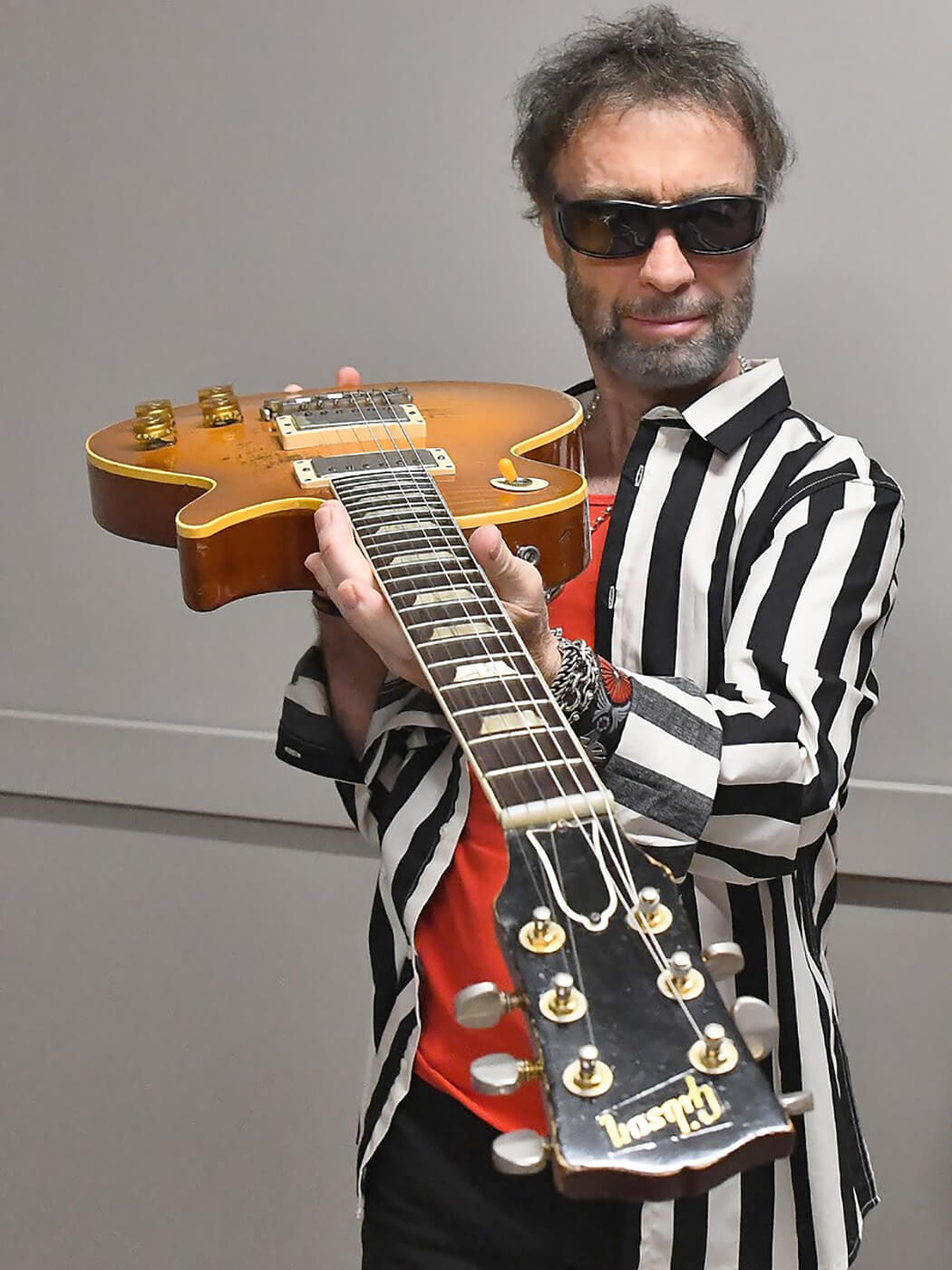
After becoming the caretaker of one of the most important guitars in the development of British blues-rock, he took it upon himself to reunite the instrument with its former bandmates,Paul Rodgersand Simon Kirke, most recently in May 2019. When we speak to Rodgers about the reunion, he immediately begins to reminisce, the Les Paul acting as an emotional trigger for his memories of his long-lost friend.

“I have a lot of memories of dear Koss. When we first met back in what would have been about ’67, at the famous Fickle Pickle in Finsbury Park, he came up with a Les Paul to the front of the stage between sets and simply said, ‘I’d like to come up and jam,’” Rodgers enthuses. “I said ‘Absolutely, have you got a guitar?’ and he said, ‘Yeah, I’ve got a Les Paul, it’s in the car.’ I said, ‘It’s Finsbury Park, you better bring it in anyway, sharpish!’

Free Interview

“I wish I knew which guitar it was [when we met] because he had at least two. I don’t know whether he had the ’58 or the ’59 that night we met. But the night that it broke I didn’t see that, it happened behind me. There was an audible gasp from the audience, and Koss was gone!”

Meanwhile, Kirke’s reaction to being reunited with the instrument threw up a range of emotions. “I had mixed feelings really, anything connected with Paul Kossoff invokes different types of feelings,” he admits. “He took me under his wing when I came down to London from the countryside back in ‘68. He was a good friend to me and of course I witnessed his descent into drug addiction over the next five years, which was very painful. But the first couple of years were really wonderful playing with him.”

Indeed, Kossoff’s mesmerising ability to convey such emotion in his playing was a direct result of his passionate personality. His devotion to the blues was deep rooted, as Rodgers remembers.

“I visited him in his house, he sat and played acoustic guitar and played classical. I said, ‘That’s fantastic. I had no idea you could play classical guitar.’ But he said, ‘No, it’s crap all that. It’s not blues.’” .

Kossoff possessed a vibrato technique that is as distinctive and musical as anyone in the history of the electric guitar. The way he attacked a note with both intensity and elegance could turn the head of even the most conservative of listeners. It was this lead playing ability that really stood out for Kirke.

“He had such passion and feel, and an amazing vibrato. His rhythm playing was quite economical and one of the reasons Free had such a sparse sound on stage. By his own admission he was not a great rhythm player, – like Keith Richards or Lennon – of course he made up for it with his lead playing.”

Rodgers agrees, but also thinks that in some cases the identity of the guitar and player are interwoven. “The spirit of Koss and the spirit of a ’59, they sort of merge. And together, they go on this incredible journey. I think that that he rode it like one might drive a Maserati or something. He kind of flew with it. “It was an amazing guitar, kind of hummed with power. I played it and I could hear Koss. It was almost eerie. One did wonder how much is it the player and how much is it the guitar? There’s definitely a spirit in those guitars.”

Guitarist Pete Bullick had the responsibility of replicating Kossoff’s style on Rodgers’ Free Spirit tour, with the singer adamant that Bullick’s approach to guitar playing almost mirrors Koss – especially when he had that special guitar in his hands.

“I know that Koss and I took a lot from Eric Clapton and Peter Green’s performances. You would go to the Marquee and see Peter Green and time did stand still,” Rodgers recalls. “He could take it down to where you could hear a pin drop. When we played at the Albert Hall, Pete Bullick took it right down so that you could literally hear breathing.

“I think Pete did a fantastic job with Free Spirit. The audience was just so amazing, because you could feel the love for the music. He comes very close to Koss’s feel. He was the only guy I would have done that tour with.”

The genius of Kossoff’s guitar playing is of course evident across the gamut of Free’s back catalogue, but it’s “All Right Now” that remains the band and Kossoff’s most famous and beloved song. That said, the question of which guitar was used for that iconic recording has long been a matter of some debate.

“As to the truth that it might’ve been used on All Right Now? It’s possible. Certainly not out of the question,” says Kirke. “I believe he only owned two or three Les Pauls and it certainly wasn’t the black one that he traded with Eric Clapton, which leaves two left. So, it’s a 50/50 chance!”

Rodgers only adds fuel to the fire: “Probably. He owned it through that time, but it’s hard to say really. It was one or the other. Definitely.”

Whether it was used on the studio version of All Right Now or not, this 1959 Burst remains a truly iconic instrument and a piece of bona fide rock history. And as we’re sure Kris Blakely will agree, it’s a worthy centrepiece to anyone’s collection…

Free Interview

Over the last three years or so, Body Type have emerged as one of our favourite newcomers within the indie-pop realm, with their consistently on-point lyricism and their versatile, guitar-charged instrumentals holding strong as they’ve grown and matured as a band. While their debut single “Ludlow”back in 2016 was one that turned heads, their debut EP – last year’s Body Type– was one that solidified their place within our scene, bringing a particular energy and flavour that has really yet to be fleshed out from other musicians, giving them a unique lane to shine. Their latest single Stingray looks ahead at another triumphant year bound for the four-piece, announcing that their forthcoming second EP, the aptly-titled EP2, will arrive via Partisan Records / Inertia Music, while showcasing what to expect from the five-track release. 

Stingray is a breezy slice of indie-pop-rock that Body Type have come to champion over the last few years, with Sophie’s vocal flowing alongside the single’s instrumental which rises, falls and swirls with this playful, light-hearted feel. “This is a song about observing my friends being stuck in relationship ruts and trying to shake them out of it, reminding them of their power to sting and swim away gracefully. Stingray is lifted from EP2, out now via Partisan Records & Inertia Music:


Agitated is more than pleased to announce the long over-due return to wax (and CD) by Carlton Melton, the new album from San Franciscan / Northern Californian space-trippers is here, and its ready to tune you out and turn you on.

Nestled deep in the forests of Mendocino County in Northern California, huddled under the protective shade of towering redwoods and within earshot of frothy waves crashing against the Pacific coastline, squats a geodesic dome that has served as crucible for the experimental genius of Carlton Melton. Nature and Man operate under different logics. But here, Carlton Melton wholly entrusts this idyllic environment with the task of inspiring and guiding their musical improvisations.

The Dome has been the ideal setting to facilitate their creativity. Without forcing a specific dynamic or theme, the band inhabits its womb-like confines to improvise, explore, dream. Their music draws on psychedelia, stoner metal, krautrock, and ambient atmospherics to convey, above all else, a mood.

A prickly guitar melody will float lazily, a wall of dissonant feedback will resolve into a hypnotic drone, or a colossal riff will exhume the soul of Jimi Hendrix. One hears Hawkwind or Spacemen 3 jamming with Pink Floyd at Pompeii.

Indeed, Carlton Melton have one foot in the ancient world and one tentacle in deep space. They are both the pack of proto-humans drumming with femurs in Kubrick’s 2001 and the film’s inscrutable monolith hinting at the universe’s mysteries. The “Stoned Ape” theory holds that early hominids ingested psychedelic mushrooms that provided an evolutionary boost to their brains, helping them blossom into Homo Sapiens. Imagine such cavemen trippin’ balls, their nightmarish visions sending them into feverish bouts of rage and then gentle moments of introspection. They very well could have heard the music of Carlton Melton rattling inside their skulls, first driving our ancestors mad then upward into a higher realm.

http://

Andy Duvall (drums, guitar), Clint Golden (bass), and Rich Millman (guitar, synths) have yet to play Pompeii, but they have already wowed crowds at European festivals such as the Liverpool International Festival of Psychedelia, Roadburn, and Desertfest Antwerp. Live, they are jaw-dropping. On record, mind-altering.

In fact, with each album, Carlton Melton adds a subtle new element, synapses firing new neural connections. In 2020, they release new full-length “Where This Leads”, marking ten years of the band’s working relationship with their UK label Agitated Records and five years of recording with Phil Manley in his El Studio in San Francisco. With “Where This Leads”, the band rewires the listener’s mind. “Smoke Drip Revisited” is a ticklish acid flashback, “Porch Dreams” a dabbling in country psych, and “Closer” a driving, freak-out of guitar heroics.

One senses that the group is conveying a message that cannot be expressed verbally but only suggested through synth sighs, walloping rhythms, and soaring solos.

Releases October 30, 2020

Hull / Leeds-based shoegazers bdrmm follow their hugely acclaimed debut album “Bedroom” with “The Bedroom Tapes”, a limited-edition 12” EP that rounds up remixes and lockdown live sessions. The first side features stripped-down versions of “Gush, A Reason To Celebrate” and “Forget The Credits” from the album, plus a version of 2019 single “Question Mark”. Originally recorded at home by the band’s Ryan and Jordan Smith for various radio sessions, these versions feel fragile and expose the feelings that are buried under the noise of Bedroom.

The flip features Andy Bell’s radical reworking of “A Reason To Celebrate” under his GLOK guise, which finds the previously unexplored middle ground between the late Andrew Weatherall and underrated 4AD outfit Ultra Vivid Scene. It is joined by Ditz’s dynamic deconstruction of If.… and International Teachers Of Pop’s almost obscenely cheerful ‘de-mix’ of Happy.

A selection of remixes and live sessions

http://

Releases October 23rd, 2020

Music and words by bdrmm