Indie-folk artist Harper Bloom has dropped a sweet new song titled ‘Sunflower Girl’, and announced her final live show for the year. The Melbourne-via-Perth songwriter wrote her new single during the winter months in Brooklyn, New York, performing the song live for the first time during her busking days on the streets of Manhattan.
According to Bloom, ‘Sunflower Girl’ reflected the continued experiences she shared with her partner in a unique perspective.“I wanted ‘Sunflower Girl’ to reflect how we felt about life, detailing how the purest joy comes from simply being in each other’s company and enjoying unique experiences, rather than the pursuit of materialistic gains,” Bloom said in a press statement.
The song marks the fourth single from Bloom, who released her debut single ‘Mary’ back in April. On that track, the 25-year-old collaborated with producer Benjamin McCarthy (G Flip, Thelma Plum, Megan Washington). Bloom followed that up with ‘Walk My Way’ and ‘You’re The Music’. All four singles have been lifted from Bloom’s forthcoming EP, entitled ‘Faith, Sex And Skin’. A release date for that project has not yet been announced.
The Perth-bred, Melbourne-based indie-folk songsmith Harper Bloom has released her latest sun-soaked single, ‘Sunflower Girl’, a bright and blissful track composed in a cosy Brooklyn apartment in the middle of a frosty winter. A song glowing with the same warmth and charm of earlier releases that fast captured the hearts of new fans across Australia and put her on an industry must-watch-list, ‘Sunflower Girl’ marks as the fourth single from the ascending singer-songwriter and closes a stellar year for the BIGSOUND 50 Artist, who not only landed a new management deal with Teamtrick (Allday, Mallrat) and booking agency deal with New World Artists earlier this year, but has also risen as one Australia’s most exciting new talents in the indie-folk landscape.“Bloom’s indie-folk-pop approach to music, paired with her immersive lyricism, easily make her one artist to watch in the future” – Rolling Stone
The new project of Slaves guitarist Laurie Vincent and producer Jolyon Thomas, Larry Pink The Human’s latest single is an explosive synth-pop track featuring vocals from IDLES frontman Joe Talbot. The duo describe their fourth single of 2020 as “a contemplative look at missing the beauty in the everyday,” while Talbot adds, “It’s a track about not knowing the magic ‘til the magic is behind us.” The song itself, however, is more likely to help you lose yourself than find the present moment: The verses combine Talbot’s reserved musings with a calming synth hum, but the choruses throttle up into a cathartic thump that simply rules out sitting still.
‘Wasted Days [Inbetweens]’ follows recent single ‘Might Delete Later’ and debut track ‘Love You, Bye’. back in April, and they spoke of the emotional openness that defines the new band. “It’s about putting your deepest, darkest feelings on a plate, as simply or as complicated as you want to,” Vincent said.
LARRY PINK THE HUMAN added: ‘Wasted Days [Inbetweens]’ is a contemplative look at missing the beauty in the everyday. In the rush to reach our destinations how we can often lose sight of the joy in our journeys. An awakening. Doing nothing at all is something very special.”
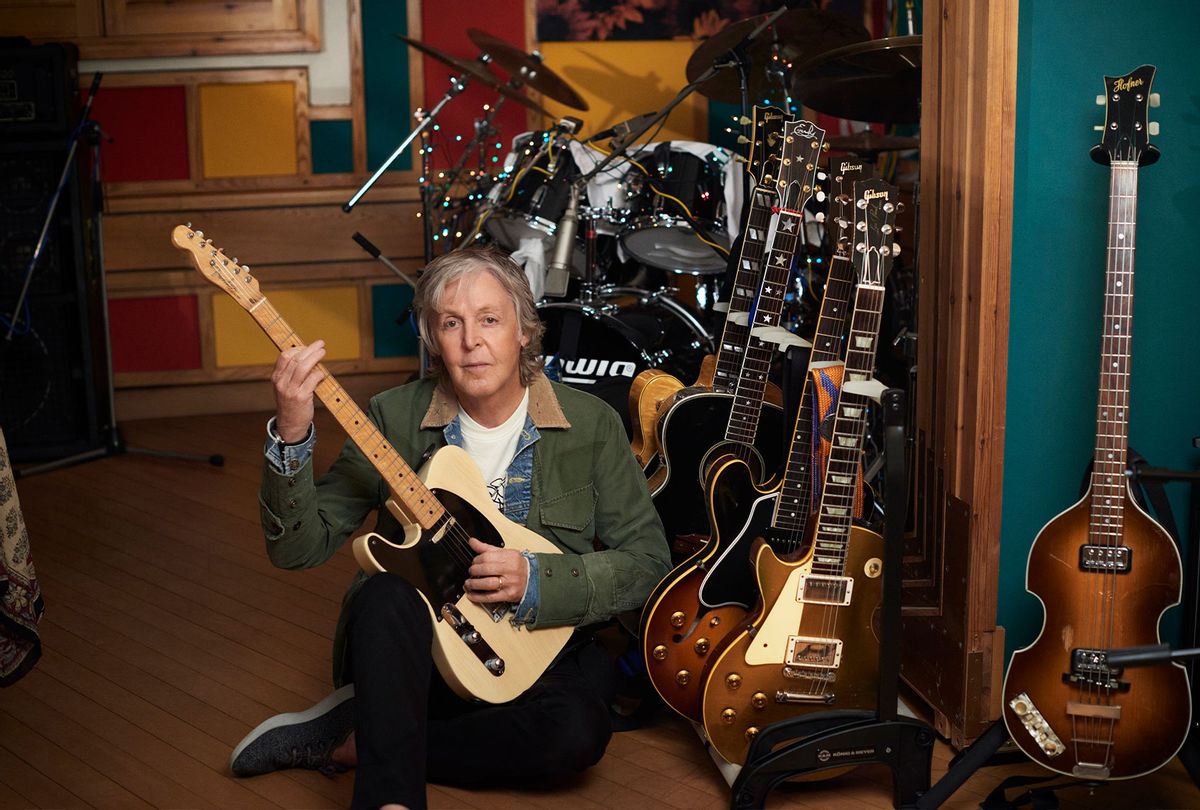
With “McCartney III,” the Ex-Beatle makes a spectacular return to form, produces one of his most compelling albums in decades, and reminds us that at age 78, his musical chops are as exquisite and profound as virtually anyone’s. Ever.
Working at his Sussex studio, Paul McCartney recorded nearly the entirety of “McCartney III” during the pandemic. A one-man band production in the spirit of his eponymous debut solo album in 1970, “McCartney III” arrives more than 40 years after the release of its predecessor, “McCartney II,” in 1980. That summer, the album topped the UK charts and yielded a chart-topping single Stateside in “Coming Up.”
In its own fashion, “McCartney III” functions as the logical extension of its precursors, each acting as lodestones of sorts for signal moments across his long career. As with the first two LPs, McCartney took a carefree, homespun approach to his efforts, allowing his imagination to guide the way. As he remarked in the album’s press notes about his process during its production, “Each day, I’d start recording with the instrument I wrote the song on and then gradually layer it all up; it was a lot of fun. It was about making music for yourself rather than making music that has to do a job. So, I just did stuff I fancied doing. I had no idea this would end up as an album.”
McCartney’s whimsical approach pays dividends from beginning to end, with the songwriter charting the emotional experience of not only surviving, but thriving in his eighth decade on earth. And he has the road miles to prove it. In many ways, McCartney himself is the “Long Tailed Winter Bird” who soars above the opening track, a spirited, largely instrumental number that is highlighted by one of the musician’s niftiest acoustic guitar licks in years.
In short order, McCartney rips off one musical confection after another, including Beatlesque pop ditties such as “Find My Way” and “Seize the Day.” And then there’s “Lavatory Lil,” a composition that, in a very different time and place, might have found a home in the Abbey Road medley nestled alongside “Mean Mr. Mustard” and “Polythene Pam.”
McCartney absolutely sizzles on such bone-crunching electric numbers as “Slidin'” and “Deep Down,” with hard-driving guitar licks that might find some listeners hearkening back to the “Band on the Run” track “Let Me Roll It.” Even still, his guitar work on “McCartney III” sounds equally fresh and urgent, as he wrestles with the endlessly fecund muse that has served him well since at least the mid-1950s, when he penned his first song as a paean for his mother Mary.
In the LP’s latter stages, McCartney offers up a pair of memorable acoustic tunes in “The Kiss of Venus” and “When Winter Comes.” He reportedly composed “The Kiss of Venus” after reading an astrological book about the balletic movements and synchronicity of the planets. It was “a fascinating book,” the songwriter recalled, about the ways in which our solar system structures itself as a “trippy” lotus shape.
Capitol Records will release “McCartney III” on digital platforms, CD and LP manufactured by Third Man Pressing on December 11th, 2020,
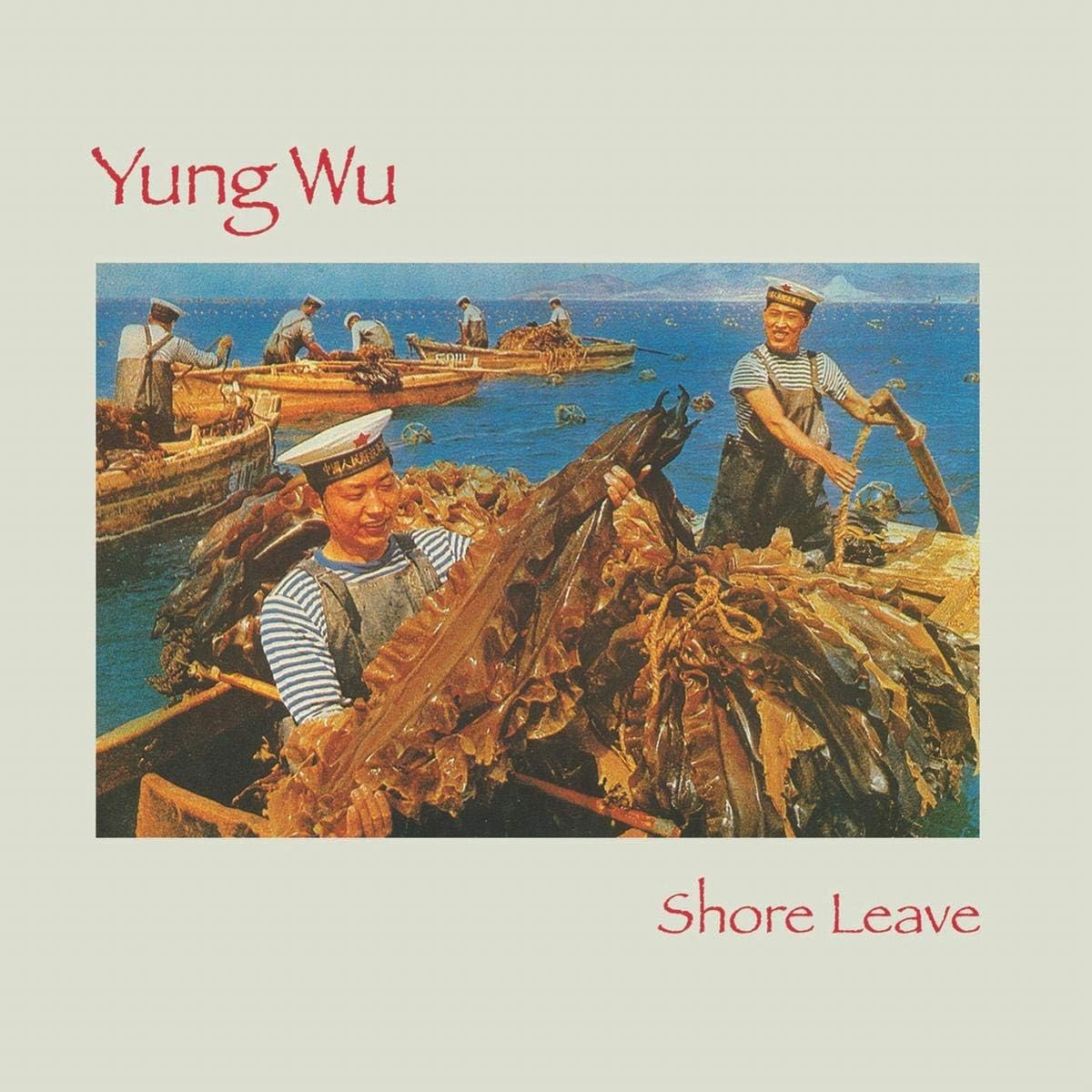
One of the most overlooked and underrated albums to emerge from the Feelies universe, side project Yung Wu’s “Shore Leave” ranks highly in the group’s oeuvre, at least the equal of and in some ways superior to the three albums the Feelies released under their own name between 1985 and 1991. Yung Wu was led by singer/songwriter Dave Weckerman, who had been the drummer in the Feelies’ first lineup before being replaced by Anton Fier. Backed by Glenn Mercer and Bill Million on guitars (they also produced the album), John Baumgartner on keyboards, Brenda Sauter on bass, and Stanley Demeski on drums, Weckerman finds a midway point between the mellow, twangy rootiness of contemporaneous Feelies records like Only Life and the more tightly wound jangle of 1980’s Crazy Rhythms. Resulting songs like the title track, “Spinning,” and the quietly tense “Return to Zion” are archetypal examples of the Hoboken sound that was a mainstay of late-’80s college radio.
The album’s three covers — Neil Young’s “Powderfinger,” the Rolling Stones’ “Child of the Moon,” and “Big Day,” a Brian Eno song that originally appeared on Phil Manzanera’s solo album Diamond Head — were proudly uncool by 1987 terms, which of course only makes them cooler. Shore Leave was largely ignored at the time, selling fewer than 5,000 copies all told, but it’s a minor classic of ’80s jangle pop ripe for rediscovery.
When you’ve made one perfect record, why make another? “Shore Leave”, originally released in 1987, is Yung Wu’s sole long-player (though a covers album has circulated privately). It’s a jangle rock gem, filled with sparkling song writing, infectious rhythms and hook-laden melodies. But even though the band’s discography is brief, you know the sound: Yung Wu is basically the Feelies with percussionist Dave Weckerman stepping into the frontman role (and keyboardist John Baumgartner contributing as well). But it’s much more than just a Feelies footnote; freshly reissued this year with stellar remastering, Shore Leave is a necessary listen.
Although never released on CD at the time (in 1987, a lot of indies were still sticking exclusively to vinyl and cassettes), Shore Leave is one of many classic out of print albums on the Twin/Tone and Coyote labels now available on custom-burned CDs through the Twin/Tone website.
Nation of Language returned to share a new song “A Different Kind Of Life,” the first new music since their debut album Introduction, Presence, which dropped earlier this year. “This song first started to come together in the early days of the Trump administration, but was never quite finished and got a bit lost as time went by,” says frontman Ian Devaney. “When the demo resurfaced during the pandemic, the song struck a chord not just in its intended political context but in the context of so many people losing family members, jobs, or any semblance of normality—whatever might be left of it after the past few years.”
Working Class Synth-Pop. Debut album Introduction Presence is out now in all formats. Nation of Language are also releasing an exclusive, translucent pressing of their debut album through Rough Trade Records,
released November 12th, 2020 Written by Nation of Language
Van’s third solo album, November 1970’s His Band and the Street Choir, will never be considered one of Van’s grand statements, but it holds its place as a necessary piece of the Van Morrison puzzle. And is cherished by many Van the Man fans, who should enjoy this remastered and expanded near gem.
The songs on Street Choir are relatively compact and seemingly quite well-adjusted. Any allusions to being a “stranger in this world” appear to have been quelled by the band who achieve a perfect groove. “Domino” so immediately announces its ease of execution that Van can’t help but glide over the backing band with a sense of freedom so contagious that every listener floats on its merry wave. This sense of camaraderie among the players – enforced by the album’s photos taken at a birthday party for Peter, the son of Van Morrison’s then-wife Janet Planet – enabled Van to nail down several songs that had previously eluded him, including “Domino,” that hailed from the Astral Weeks-era of November 1968, according to Cory Frye’s informative liner notes.
The album itself was meant to capitalize on Van’s current hot streak withMoondance, whose single “Come Running” peaked at #39. His manager, Mary Martin, convinced him to return to New York’s A&R Studios, only a month after that album’s release. Working with the stellar core group of guitarist John Plantania, saxophonist Jack Schroer, bassist John Klingberg and the addition of keyboardist Alan Hand, trumpeter/organist Keith Johnson, and tour drummer Dahaud Elias Shaar (aka Daoud Shaw and David Shaw). Van rehearsed in an old church in Woodstock, NY, before laying down the official tracks in the studio. Martin’s instincts proved correct, as the album’s first single, “Domino,” went to No#9, Van’s highest charting pop hit in the U.S., passing “Brown Eyed Girl” (#10) by a notch.
His Band and the Street Choir is another beautiful phase in the continuing development of one of the few originals left in rock. In his own mysterious way. Van Morrison continues to shake his head, strum his guitar and to sing his songs. He knows it’s too late to stop now and he quit trying to a long, long time ago. Meanwhile, the song he is singing keeps getting better and better.”- John Landau,
The Album also called “Street Choir” was the fourth solo album by Northern Irish singer-songwriter Van Morrison. It was released on 15th November 1970 by Warner Bros. Records. Originally titled “Virgo’s Fool” but was renamed by Warner Bros. without Morrison’s consent. Recording began in early 1970 with a demo session in a small church in Woodstock, New York. Morrison booked the A&R Studios on 46th Street in New York City in the second quarter of 1970 to produce two sessions of songs that were released on His Band and the Street Choir. Reviewers praised the music of both sessions for its free, relaxed sound, but the lyrics were considered to be simple compared with those of his previous work. Morrison had intended to record the album a cappella with only vocal backing by a vocal group he called the Street Choir, but the songs released on the album that included the choir also featured a backing band. Morrison was dissatisfied with additional vocalists to the original quintet that made up the choir,
Compared to the meditative beast that is Saint Dominic’s Preview (1972), with its twin 10-minute-plus epics, “Listen to the Lion” and “Almost Independence Day,” or the complete return-to-Ireland masterpiece that is Veedon Fleece (1974), Street Choir feels less ambitious. However, one should never discount Van’s handling of more succinct material. The Fats Domino homages are obvious (“Domino,” “Blue Money”) and slightly under the radar (“Give Me a Kiss”) and occasionally come across as workmanlike. But considering the Belfast fireplug’s impulsive phrasings and his behind-the-beat inclinations are always just an Irish Heartbeat away from creating an alternative Ulster R&B universe, it’s worth giving him his genre exercises. Besides, pianist Alan Hand works double-time to ensure everything rolls as it should.
Anyone versed in Van’s career knows he doesn’t stay in one place for long and no amount of Fats Domino love is going to contain him. Street Choir’s best moments –besides the ease of “Domino,” the Curtis Mayfield sweetness of “Gypsy Queen,” and the meditative acoustic revelry of “I’ll Be Your Lover, Too” – come from the full-band blast-off of “Call Me Up in Dreamland,” where all is pure locomotion with Van on tenor sax, “Virgo Clowns,” where loosely doubled vocals create a rare-but-effective moment of joy from the legendary crank, and the closing duo of “If I Ever Needed Someone” and “Street Choir,” where Van teases out a George Harrison sentiment to the breaking point and Keith Johnson’s organ takes the title track to the next astral plane.
Essentially, it’s A-minus Van Morrison, which is still light years beyond all but ‘A’ list artists like the Stones, Kinks, Dylan, Miles Davis, John Coltrane, Ornette Coleman, Thelonious Monk, Sonics and Stooges. The original album packed 12 songs with no room for the improvisational sidetracking that makes his A-plus discs impossible to beat. At the same time, the album came just eight months after its predecessor and 11 months before its followup, Tupelo Honey. It wasn’t like Springsteen or Paul Simon who took lifetimes between releases. Despite Van’s masterful reach, he’s never treated any of his work as so precious that it had to be shined a thousand ways before final release. If something isn’t working, he moves on to something else and saves the idea for another day. Van’s genius is rarely in the writing. As a lyricist, he’s often lazy and as a songwriter he rarely ventures beyond the usual chords. Though he’s done more with two chords than most musicians do with a full arsenal. Van’s genius is in the execution.
The bonus tracks – alternate takes of “Call Me Up in Dreamland,” “Give Me a Kiss” and “Gypsy Queen” and alternate ‘versions’ of “I’ve Been Working” and “I’ll Be Your Lover, Too” (distinctions between ’takes’ and ‘versions’ not apparent) – mostly offer unvarnished, simpler takes that since not chosen were not subjected to overdubs.
Regarding these bonuses, all are welcomed, though none shock the system. (Inexplicably, the seventeen-minute instrumental “Caledonia Soul Music” was eliminated from the final product.) The alternate version of “I’ve Been Working” is mildly quicker and looser with an extended sax solo in its mid-section. “I’ll Be Your Lover, Too,” the album’s most meditative and heartfelt cut, puts Van’s vocal right in your ear, without the mild studio reverb of the official track and with yet another superlative performance. “Gypsy Queen,” the first cousin to Moondance’s “Crazy Love,” begins with several false starts before aiming for – and landing in – the heavens. It’s another fine alternate take that illustrates how Van had these songs where he wanted them at this point and could at any moment out-sing just about anyone not named Stevie Wonder or Al Green.
U2, Ireland’s own Fab Four, ignited a blaze in the mid-1980s with The Unforgettable Fire, then turned up the heat later in that decade with The Joshua Tree and Achtung Baby. Things cooled off a bit in the 1990s, which witnessed the release of the uneven Zooropa and Pop, plus a retrospective collection. But the group greeted the new millennium (or ended the last one, depending on how you figure) with a bang: 2000’s All That You Can’t Leave Behind, their 10th album, which builds on the elements that make their 1980s work so great.
Reunited with the production team of Daniel Lanois and Brian Eno, who produced all of the aforementioned early triumphs,U2 offers an 11-song set that finds Bono singing passionately, with the Edge, Adam Clayton and Larry Mullen Jr., respectively, adding shimmering lead guitar, rhythmic bass lines and an insistent beat. Moreover, the anthemic, hooks-laden compositions are consistently as majestic and tuneful as any U2 has ever produced. “I’m just trying to find a decent melody,” Bono sings in “Stuck in a Moment You Can’t Get Out Of.” He and his bandmates find a whole bunch of them here.
The album—which debuted at the top of the charts in nearly three dozen countries—produced four well-deserved international hits: “Beautiful Day,” “Elevation,” “Walk On” and “Stuck in a Moment You Can’t Get Out Of.” This is an all-killer, no-filler recording on which tracks such as “Wild Honey” and “Kite” are just as memorable as the singles.
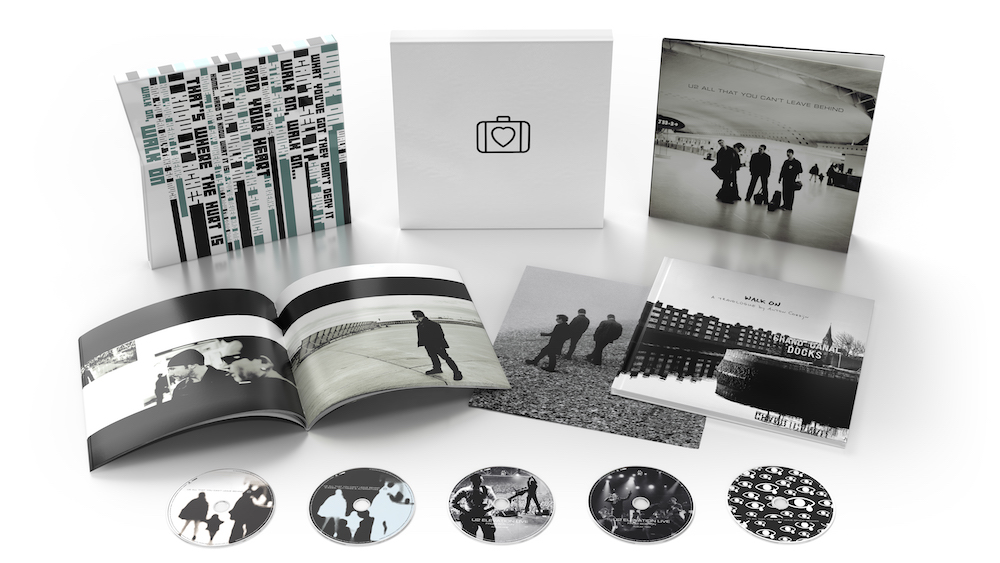
Twenty years later, All That You Can’t Leave Behind still sounds magical—and better than ever in the remastered copy that’s included in a new “super deluxe” anniversary edition. The set arrives in an LP-sized slipcase with a double-sided poster, a 20-page booklet with lyrics and a 32-page hardcover book of band photos, but those are just icing on a five-layer CD cake.
In addition to the aforementioned remaster, the first disc features “The Ground Beneath Her Feet,” a number with lyrics by novelist Salman Rushdie that appeared as a bonus track on the original album in several countries outside the U.S. A second CD holds nine odds and ends, including an acoustic version of “Stuck in a Moment You Can’t Get Out Of”; “Stateless,” from the soundtrack of the film The Million Dollar Hotel; four remastered B-sides; and three excellent session outtakes: “Levitate,” “Love You Like Mad” and “Flower Child.”
There’s also a disc with 11 extended remixes of songs from the original album, including two versions each of “New York,” “Beautiful Day” and “Elevation.” For the most part, these remixes add the sort of tech clutter that detracted from the group’s 1990s albums. But the new box also devotes a couple of CDs to a nearly two-hour June 2001 Boston concert that finds U2 at the peak of their form. It incorporates seven numbers from All That You Can’t Leave Behind plus such earlier highpoints as “Sunday Bloody Sunday,” “Bullet the Blue Sky” and The Joshua Tree’s “Where the Streets Have No Name” and “With or Without You.”
What’s not to like? Well, it seems a good bet that most fans would have preferred a Blu-ray with concert video and/or a surround-sound mix of the album instead of the CD with remixes. That said, there’s more terrific music in this one box than in many artists’ entire catalogs.
The British singer-songwriter’s lockdown-created debut EP “Falling Asleep at the Wheel” has marked her out for big things on both sides of the Atlantic. Everything about this year is different. So when Holly Humberstone made her recent US late night talk show bow with a set on Jimmy Kimmel Live!, she leaned into that. Standing in for the studio glare of Los Angeles, witness the headlights of a creaking Range Rover on the farm back home. In place of a stage, find the car’s bonnet and the Lincolnshire countryside retreating into the night.
After tumbling from an opening slot on Lewis Capaldi’s European tour into COVID-19 lockdown, Holly Humberstone has spent recent months figuring out how to be creative under the current circumstances, playing online sessions (including an atmospheric offering for Guitar.com Live) and assembling music videos with her sister while gradually settling into the idea of writing new music. “It’s been so weird,” she says. “A lot of the creative stuff that I’ve been forced to get into during lockdown, I wouldn’t have been at all good at before, or even had the chance to do.
“At first I was really uninspired. I’m most prolific when I’m really busy, and seeing my friends, cramming my days full. It was really hard going from that to doing absolutely nothing, and finding it hard to write. I put quite a lot of pressure on myself as well. I felt like everyone was like, ‘There’s going to be so much creativity coming out of lockdown with all these creatives stuck inside…’ After I chilled out a bit, I had to see it as an opportunity.”
Humberstone released her debut EP “Falling Asleep at the Wheel” in August. It’s an artful collection of studied, serious indie-pop songs, fusing some luminescent melodies with searching lyrics that are hitting home with people in real time. She sees the title track – Maggie Rogers via bummer house keys and a War On Drugs lead break – as one of its anchors, having emerged at a time when she was tuning in to what sort of artist she’d like to be.
I wrote this song a while ago whilst still unsure of who I wanted to be and where I wanted to head musically. Writing this song was probably the first time I felt like I knew who I was within the music I was making. The track is about losing momentum and feeling like your emotions will slowly destroy the relationship you’re in and you altogether. I think the dark, wonky sonics define who I am musically, which is why Falling Asleep At The Wheel is such a milestone track for me, and has taught me so much about myself as a musician. We created the song at the house I grew up in, which is very old and falling apart, in the middle of the countryside. You can almost hear the weird sounds of the house within the track. It’s where I feel the most me and love that this is all coming from that one place.
“I remember writing the song and it being a real milestone for me,” she says. “I wrote the whole EP over the course of two years. It took me ages to figure out who I was within the music I was making, what I wanted to do with it, what kind of sound I wanted to make, what I wanted to say. It took loads of shit songs, loads of experimentation, before realising how I wanted to come across. Falling Asleep And The Wheel was a lightbulb moment.” Falling Asleep At The Wheel was largely crafted alongside Nottingham-based producer Rob Milton, and it’s an interesting blend of small town, late teen reality and widescreen could-be-massive songwriting. Humberstone is an open, insightful lyricist who prizes direct access, utilising her music as a communication tool even between the people closest to her.
“Deep End”, the EP’s striking opening song, was written for one of her sisters as Humberstone struggled to understand exactly how to help during a difficult time. “I’ll be your medicine if you let me, give you reason to get out of bed,” she sings over desolate guitars. “Sister, I’m trying to hold off the lightning and help you escape from your head.”
This song is quite a personal one. It came out pretty naturally, as one of my sisters was going through a difficult time and I was struggling to know how best to help. This song is my way of telling her that I’m always here. It feels like a lot of people are going through something similar or suffering themselves and don’t have an outlet to express it. It’s a difficult conversation but really important to let those around you know that you care for them and will always stand by them.
“I’ve been getting messages saying, ‘This is mine and my sister’s song’ or ‘I’ve felt the same way about my best friend’,” Humberstone says. “A lot of the stuff I write might connect with people because it’s universal. I’m never going to be the only one who’s feeling like that. We had a plan to release Falling Asleep at the Wheel first, but then I wrote Deep End. I think it’s the most vulnerable I am on the EP, that’s why it’s a good first track. I’m baring so much of my soul. When I wrote that song it needed to come out. I love that.”
This emotional honesty is a recurring theme on Falling Asleep at the Wheel as Humberstone interrogates anxiety, self-doubt, love and other big hits. She does so without so much as a lick of varnish, choosing instead to speak plainly wherever possible. “I really like songs that are conversational, and not trying to be poetic,” she says. “Like, ‘This is what I’m saying’ or ‘These are my unfiltered thoughts.’ I love listening to music that has personal detail in there, and rambling thoughts – people like Phoebe Bridgers or Damien Rice or Lorde.
“I feel like I know them personally from listening to their stuff. Also, a lot of the time I’m writing for myself. I’m just trying to get my words into a simpler format. I find conversations really hard to have, especially if they’re awkward ones about mental health or telling someone you like them or whatever. I think putting something into a song is easier for me to do and it’s genuinely a simpler format than having it all confusing up in my head. It helps me so much to work through my feelings. It helps me just as much as someone listening to it.”
The EP’s palette is a bracing, entirely trend-appropriate blend of traditional instrumentation and shimmering electronic textures. Humberstone manages to thrive in this arena, relying on sharp, unusual melodies and gutsy delivery to add blood and heart to a space that is rapidly filling up with identikit artists. Tracing things back to the start, she views her song writing approach as a sort of stylistic scrapbook, with multiple jumping off points. Unsurprisingly, emotion-first is a general rule.“ Sometimes it’s a guitar, sometimes it’s a piano,” she says. “I find if I’m writing on my own then I can usually just jot a load of stuff down and see what sounds nice. Some stuff stems from the title. I thought of Falling Asleep at the Wheel before I wrote the song. Sometimes when I’m co-writing with other people, it’s so important to have people in the room I can trust and who I can offload on first about how I’m feeling.
I wrote “Drop Dead” about a troubled & manipulative relationship that despite how bad it is, you can’t get out, because love can often be blinding. I think a lot of people have been through something where you’re with someone that was no good and for some reason all they have to do is look at you and you go straight back. I wanted the video concept to echo that feeling of something making you want to drop dead… when the rug is pulled from underneath you and you’re falling. I kept thinking about my failed driving tests and how awful they made me feel, so I decided to cover my dads car in learner plates and burn it down. My way of saying up yours to the driving tests !!
Some of the songs on the EP were written before the production [ideas], like Drop Dead and Deep End, but I also love going into a room with Rob and jamming, making something sound cool. That’s really inspiring as well. With Overkill l we were listening to loads of Fleetwood Mac and Haim, and it came from there. It’s different every time. I really love music that has that blend of real, natural instruments and cool, wonky electronic bits as well. Rob is so good at that, he’s got loads of vintage, weird, synthy, arpeggiated things. I love all those odd sounds.”
“Overkill” is probably one of my favourite songs. I was going through at a really happy time towards the end of last year. Before this, I’d never really been one for relationships, they just weren’t something I was looking for, but I’d recently started seeing someone and I was excited about it all for the first time. I realised I was falling for this guy and just wanted to know if he felt the same way about me, or if telling him how I felt was just going to freak him out and scare him away! I can be quite full on. I wanted Overkill to capture all the thrill and uncertainty and confusion and the many other emotions that come with falling for someone for the first time.
Milton also provided the guitar that Humberstone sees as vital to the EP’s overall sound. Accenting a handful of Fenders – Humberstone has been playing a Player Lead III and Mustang 90 of late – is an Airline Map baritone from Eastwood, modelled on a National Newport.
“I love an ambient, reverby electric guitar,” she says. “It just does something to me. I didn’t know the baritone existed before we wrote Deep End and now I’m obsessed with it. I play it all the time. I also play quite a lot of Fenders, but my first few guitars were Epiphone Les Pauls that my dad got second hand on eBay. They were great to learn on, but I dropped one on tour and snapped the neck in half. I’m scarred from that experience.” Having introduced her to Damien Rice’s O, Regina Spektor, Radiohead (be sure to look up her cover of Fake Plastic Tree) and Led Zeppelin, Humberstone’s folks are also behind the loops that have lit up her recent sessions. “I’ve got a really over-enthusiastic dad who’s down for getting new equipment that I have no idea how to use,” she laughs. “I think he’d seen.
“My parents are really supportive and I think he bought a beginner loop station, and I’d not really touched it. I still play solo, and when I went on the Lewis Capaldi tour at the beginning of this year I realised that if I’m going to be playing rooms that are a bit bigger I’m going to need something else to fill out my sound. I incorporated the loop pedal, but I still don’t really know how to use it. I’m so awful at the technical side of stuff. Honestly, anything could happen on stage. I hope for the best.”
As strategies go, hoping for the best isn’t exactly bulletproof. But you get the feeling that, even at this early stage in her career, Humberstone has enough talent and melodic smarts on hand to make it work. “Writing Falling Asleep at the Wheel, I’ve made a little world for myself,” she says. “I understand who I want to be. It’s really fun to explore that world, push some boundaries, and I’ve really enjoyed writing on my own. I have a few songs for the second EP that are things I’ve worked on solo, which is really important to me. That’s how I started out. I’m waiting for one or two more songs, but I’m so excited.”
Holly Humberstone’s “Falling Asleep at the Wheel” is out now.
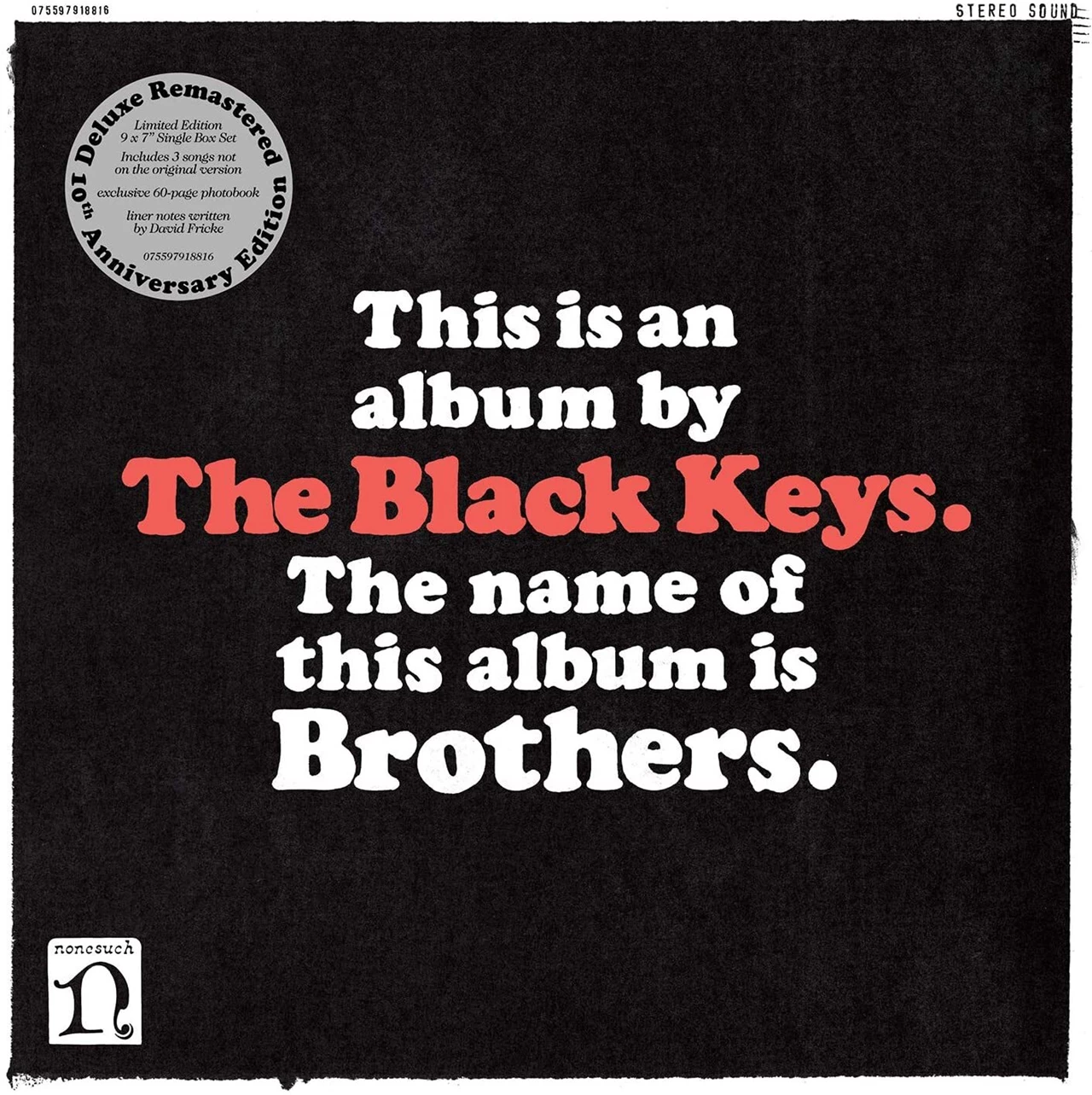
The Black Keys release Brothers (Deluxe Remastered Anniversary Edition), an expanded version of their watershed 2010 multi-platinum, Grammy-winning sixth studio album via Nonesuch Records. To celebrate its tenth anniversary, Brothers is re-released with three added bonus songs: Keep My Name Outta Your Mouth, Black Mud Part II, and Chop and Change. It is available in three formats: a 7” box set, a 2-LP set, and a CD. This is the first in an annual series of archival releases from the band. Brothers, was originally released on May 18th, 2010, was largely recorded at the famous Muscle Shoals Sound Studio in Alabama. It was a career breakthrough for The Black Keys. Although they realised upon their arrival in Muscle Shoals, Alabama in hot and humid August that the studio had seen better days, the band – singer/guitarist Dan Auerbach and drummer Patrick Carney – brought in their own equipment and proceeded. The duo recorded nine of the original Brothers songs in what was now “a remote recording in a historic room that had been gutted”.
The band recorded additional material in other locations: the album song Tighten Up in Brooklyn with Danger Mouse (Brian Burton), several others on Auerbach’s eight-track in his Akron basement, and three in Mark Neill’s home studio in San Diego. Chop and Change and Keep My Name Outta Your Mouth are bonus tracks on this anniversary edition of Brothers. The band then gave the music to Tchad Blake to mix.
The Black Keys have announced a deluxe, 10th Anniversary reissue of their 2010 album “Brothers”. The remastered album will be available in three different formats: CD, 2xLP, and a 7″ box set. The deluxe edition of Brothers arrives December 18th, 2020 in the United States and Canada, and January 1st, 2021 worldwide via Nonesuch. Watch a promotional video for the release below.
‘Brothers’, originally released on May 18th, 2010, was largely recorded at the famous Muscle Shoals Sound Studio in Alabama. It was a career breakthrough for The Black Keys, receiving critical praise and earning three Grammy Awards, for Best Alternative Album, Best Rock Performance, and Best Recording Packaging for Michael Carney’s design. Upon release, Rolling Stone hailed the album ‘a masterpiece’, and Uncut named them ‘one of the best rock ‘n’ roll bands on the planet’.
In addition to the original album, the Brothers reissue will include a 60-page booklet with archival photos, new liner notes written by David Fricke, a limited edition poster, and three bonus singles: “Keep My Name Outta Your Mouth,” “Black Mud Part II,” and “Chop and Change.” The Brothers reissue is the first in an annual series of releases from the Black Keys. Their most recent studio album “Let’s Rock” arrived last year.
Brothers Deluxe Remastered 10th Anniversary Edition will be released in three formats: a 7” box set, a 2-LP set, and a CD. It will include three new bonus songs & a 60-page book photos from the archives. A limited number of autographed copies are available exclusively to members of The Lonely Boys & Girls Club. Further details below. Brothers (Deluxe Remastered Anniversary Edition) 7” Box Set ● Limited edition – only 7500 copies available worldwide ● Nine 7” singles ● New liner notes written by David Fricke ● Three bonus songs ● 60-page book of photos from the archives ● Limited edition poster ● Special heat-sensitive ink on cover Brothers (Deluxe Remastered Anniversary Edition) 2-LP Set ● 140 gram vinyl ● 12” vinyl tip-on gatefold double-pocket album jacket ● New liner notes written by David Fricke ● Three bonus songs ● Insert with photos
Aarhus four-piece Yung have announced their second LP is due out on January 22 on vinyl and digitally via PNKSLM Recordings. The long-awaited follow-up to the post-punks’ 2016 debut, ‘A Youthful Dream’, is preceded by a visual for opening single ‘Above Water’.
Speaking about the track the band, led by Mikkel Holm Silkjær, say:
“For a long time we referred to this song as ‘The Yo La Tengo Song’. Finishing Above Water helped spark a curiosity towards a less obvious approach to songwriting. Originally, the song had a different ending but our friend and producer Neil R. Young swept in with a slick outro, which concluded the song in a big way. Lyrically, the song is an ode to individuals taking a stand against injustice and structures in society which oppose equality. These people often become the voice and the talisman of movements and generations, something that might come at a personal cost, but nonetheless something that makes way for dialog, discussions and hopefully positive change.”
Video by Tobias Holmbeck. Lead single from Yung’s second album Ongoing Dispute, due on January 22 2021 via PNKSLM Recordings on vinyl






 The Fat Angel Sings