Archive for the ‘MUSIC’ Category

Midnight Sister, the Los Angeles-based duo of Juliana Giraffe and Ari Balouzian, are releasing a new album, “Painting the Roses”, on January 15, 2021 via Jagjaguwar. This week they shared another song from it, the glam-sounding “Foxes,” via an Oliver Bernsen-directed video for the single. Midnight Sister – the project of intense creatives Juliana Giraffe and Ari Balouzian – is brought to you by the isolating landscape of the San Fernando Valley – its colours, its diners, its lunatics, its neon lights. Both lifelong residents of this storied valley, Giraffe and Balouzian have only become more inspired by the area’s mythology over the years, its two-faced magical wonderland and tragic circus. And Saturn Over Sunset works almost as an album version of Altman’s Shortcuts, each song a character study of the valley’s odd personae. Giraffe, 23, the daughter of an LA disc jockey, was raised almost exclusively on disco and Bowie. Her lyrics and lyrical melodies, informed very much by her film-making background, were composed gazing out from a tiny retail window on Sunset Boulevard. Her Rear Window-like longing allowed her imagination to run wild and cook up the wild narratives that would fill Balouzian’s compositions. Balouzian, 27, is classically trained and already a go-to arranger for odd-pop names like Tobias Jesso Jr. and Alex Izenberg. Midnight Sister represents a first for both of them. It’s Giraffe’s first time writing and performing music. And it’s Balouzian’s first foray into playing true pop music. 

“The album culminated into what felt like an interesting movie of dramatized characters that were around us for 

Giraffe had this to say about the song in a press release: “The song and video explore the relationship between performer and performance. Dissecting what it means to feel trapped by someone’s/something’s gaze and how the inherent invasive nature of the camera corners the performer through a dance of reality.” When Painting the Roses was announced in October the band shared the first new song from it, “Doctor Says,” 

Painting the Roses also includes “Wednesday Baby,” a new song first shared in September via a video for it. Painting the Roses is the duo’s second album, the follow-up to their 2017-released debut album, Saturn Over Sunset, also released by Jagjaguwar. Midnight Sister’s art-pop would appeal to fans of Broadcast, influential ’60s pioneers such as The United States of America and The Free Design, and Charlie Hilton.

Midnight Sister  ‘Panting the Roses’, out January 15th 2021 on Jagjaguwar Recordings.

See the source image Last week Scottish duo Arab Strap (Aidan Moffat and Malcolm Middleton) announced their first album in 16 years, “As Days Get Dark”, making the announcement in tandem with the release of a new single, “Compersion Pt. 1,” which will be featured on the album. As Days Get Dark will be out on March 5th, 2021 via Rock Action. Frontman Aidan Moffat talks about the meaning of “Compersion Pt. 1” in a press release, where he says that the song “depicts a quest to find the ever-elusive unicorn; to bond fluidly—and safely with the like-minded and adventurous, in the comforting arms of an anonymous hotel…and the stark realization that you never really wanted it.” Speaking on the album, Moffat states, “It’s about hopelessness and darkness, but in a fun way.” Moffat goes on to clarify that the intent for this latest album is not to “recapture the ’90s,” but to capture something new and unexplored for the group. “This album feels like its own new thing to me,” he says. “It’s definitely Arab Strap, but an older and wiser one, and quite probably a better one. I’ve never been interested in making slick records, but the new stuff sounds much fuller, brighter and better because we actually know what we’re doing. I think for a long time we didn’t know how to express what we wanted in a studio.” Nonetheless, he still reaffirms that “we’re still doing what we always do: Malcolm [Middleton] gives me some guitar parts then I’ll fuck about with them and put some drum machines and words over the top.” Bandmate Malcolm Middleton also had a few things to say regarding the album in a press release: “We’ve had enough distance from our earlier work to reappraise and dissect the good and bad elements of what we did. Not many bands get to do this, so it’s great to split up.” For this album, Moffat and Middleton have reconnected with producer Paul Savage. “Paul brings comfort and trust,” says Middleton, “and a sense of continuity.” Middleton makes a final statement regarding the band’s reunion and the new sonic direction they are exploring on the album: “There’s no point getting back together to release mediocrity.” In September, Arab Strap released the single “The Turning of Our Bones,” which was the first song they had released in 15 years and is the album’s opening track. The band’s last album was 2005’s The Last Romance. Scotland’s Arab Strap—the duo of Malcolm Middleton and Aidan Moffat—dissolved amicably in 2006, not long after the release of their album The Last Romance. Their separation lasted for more than a decade, with the pair reuniting on stage for a handful of festival dates in 2016. But September brought “The Turning of Our Bones,” Arab Strap’s first new song in 15 years, and they announced the album with the track “Compersion Pt. 1” later in the year. Moffat has said As Days Get Dark is “about hopelessness and darkness, but in a fun way.” Our new album ‘As Days Get Dark’ will have an indie record shop exclusive pressing of Two Tone (clear + black) colour vinyl. Out 5th March 2021.
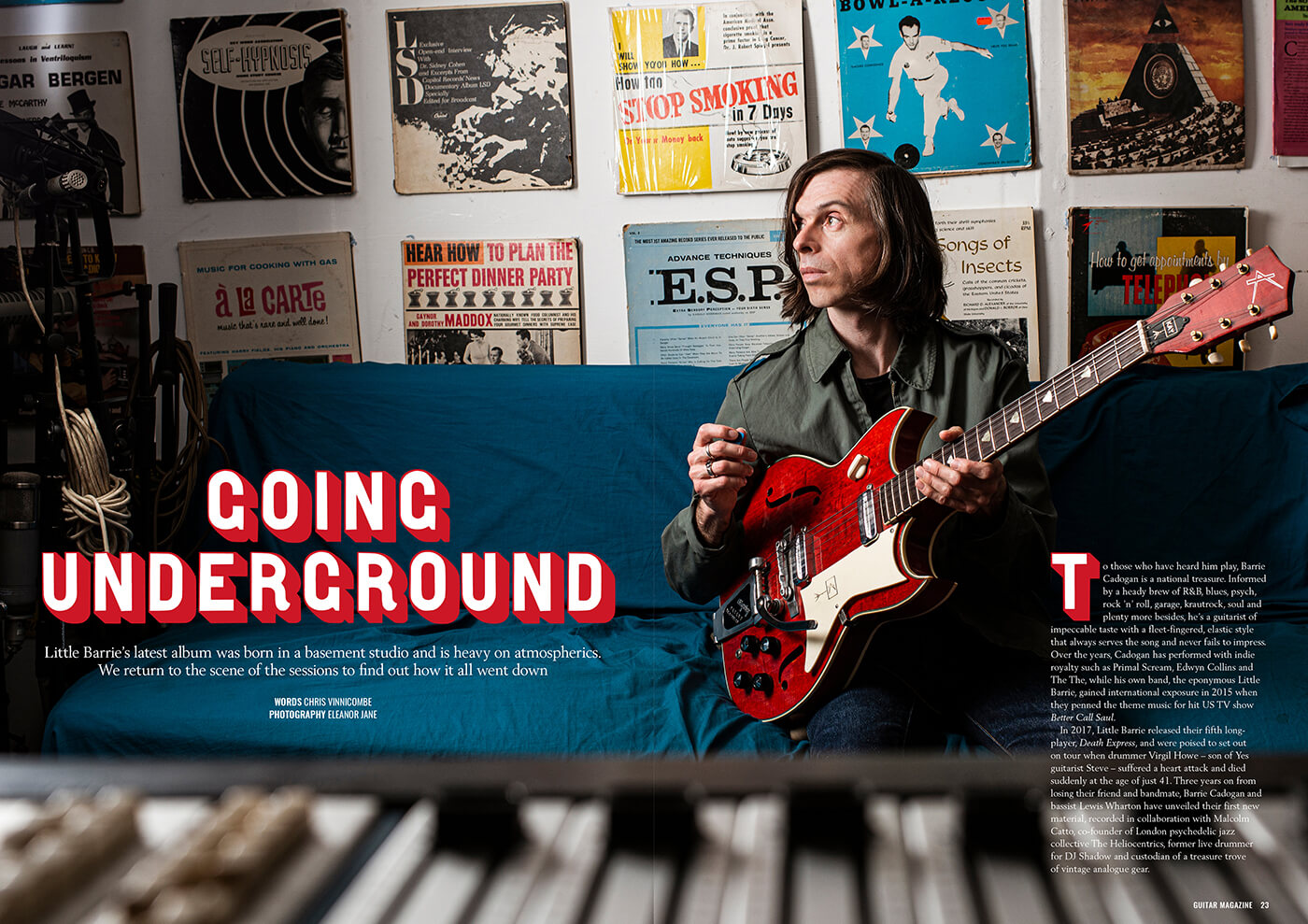
little barrie guitar magazine dps

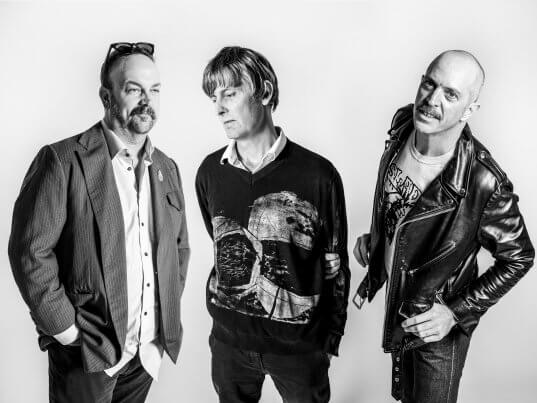
Little Barrie are a London Based Trio. Emerging in 2000 “with Can and The Meters in my head” but wanting “more Chuck Berry thrown in”. Little Barrie have released 5 albums.
Following the passing of Virgil Howe in 2017, The band underwent a healing process in the studio.
With Malcolm Catto, sticksman for The Heliocentrics, the new album ‘Quatermass Seven’ emerged from this emotional exile. 

Born in a Dalston basement, Quatermass Seven by Little Barrie & Malcolm Catto could only have been produced in the colourful streets of sprawling London. Driven by the three contributing musicians’ 25-year plus journey through multiple genres and inspirations, what you hear within its seven tracks is the ‘60s British blues explosion colliding with a mid ‘70s Bronx block party; Haight Ashbury acid rock mashed up with Manchester’s summer of love circa ’88; or a prime slice of UK freakbeat broadcast from New York’s jazz underground, emerging kicking and screaming above London city tower blocks.

This meeting of minds between guitarist Barrie Cadogan, bassist Lewis Wharton and drummer Malcolm Catto represents a re-birth of sorts for Little Barrie, with these their first recordings since 2017’s critically received Death Express album, and the sad and untimely passing of friend and drummer Virgil Howe. Following a difficult period of soul searching for both Barrie and Lewis, they made the decision to record again: knowing they weren’t looking for a replacement for Virgil, or to replicate past glories, alleviated some of this inherent pressure. “I’ve never seen the point in making ‘Death Express’ or ‘Surf Hell’ again, and we said quite clearly to Malcolm that we wanted to do something different”, states Lewis. “I just saw it as me, Barrie and Malcolm running through some ideas – as the mixes evolved and shaped up, it made sense that it became the next Little Barrie record.”

With most tracks recorded live with minimal overdubs, produced by Malcolm at his Quatermass studios in Hackney, The Heliocentrics’ main man brings new flavour to the band’s rhythm section by blending his power behind the drums and his expansive mixing desk skills to take Little Barrie’s music into new territories. Joined by old friend and engineer Seb Lewesly on the boards, you can hear seasoned musicians Cadogan and Wharton more than rise to the challenge, producing something familiar yet unchartered – head music for breakbeat disciples and guitar lovers alike. “Let’s just go in and do some playing and see what happens”, mottos Barrie – “and we ended up with more than we ever intended.”

http://

As upfront as it is subtle, Quatermass Seven pushes past influences towards the contemporary. Telepathy bears ‘After After’, eight minutes of instrumental improvisation, cut live to tape and seeing Barrie’s guitar snake and weave, Catto going deep in the pocket and Wharton deploying a bassline to die for. The multi-layered, defiantly lyrical ‘Steel Drum’ is a gonzo earworm you’ll find hard to shake. Also see the moody bounce of ‘You’re Only You‘, the late night strut of ‘Repeater #2’, or the downbeat, hazy opening verse of ‘Repeater #1’ which suddenly explodes into heavy funk and acid-fried guitar work. Recorded on Catto’s treasure trove of analogue gear, and mastered onto ¼” tape, the overall effect is guitar, bass and drums finding the sweet spot where genres collide.

What Quatermass Seven delivers is a darker, deeper and more expansive set of grooves, layered with frazzled and flawless guitar lines and flowing melodies, as well as pointing toward a future of exciting new musical opportunities. “Still here, so fine, just a little darker state of mind” sings Cadogan on ‘Steel Drum’: words which sum up hope in times of uncertainty, whilst (maybe) unintentionally offering a perfect description of the music contained herein. 

Released October 16th, 2020

Low Cut Connie have released a new video for “Wild Ride,” a track off their latest album, Private Lives. The clip was directed by Sara Fox and pairs the slow-burning song with a sequence of equally smouldering and mysterious visuals. Throughout the clip, Low Cut Connie frontman Adam Weiner roams the streets of New York City while an unnamed woman waits at an empty bar, stares through stained glass at a subway stop, and then, at the end of the clip, lets out an anguished scream in the middle of a street. These sequences are interspersed with shots of grandiose platters of food and items (like telephones and sports trophies) lit on fire.

Adam Weiner, Philly’s patron saint of ass-shakers, let his ambitions run wild on his band’s Private Lives, a 17-song double album that somehow doesn’t drag. Like Low Cut Connie‘s live shows, it’s a sweaty — Weiner would say “schvitzin’” — listen, full of cathartic anthems (“Help Me”), gritty character studies (“Charyse”), and red-faced songs about fucking (“The Fuckin You Get for the Fuckin You Got”). The title track, a raucous collection of dirty secrets, and the piano ballad “Look What They Did” stand as the record’s yin and yang, with Weiner celebrating lovable freaks in the former and lamenting the abandonment of kids in the latter

“We shot this in Brooklyn. It was in the weeks just before quarantine began,” Weiner said in a statement. “There was a dark energy all around us. Sara Fox, the director, put together some fabulous imagery here.”

Low Cut Connie released Private Lives in October, marking the group’s sixth album and first double LP. “I’m obsessed with understanding people’s interior lives,” Weiner said of the record in a statement. “In order to explore that idea, I had to create a flow that went in and out of these characters’ private spheres. There had to be a push and pull between their external and internal worlds. I knew if I was going to pull that off, I was going to have to make a big album.”

“Wild Ride” by Low Cut Connie Music and lyrics by Adam Weiner From the double LP ‘Private Lives’

Muzz have announced details of a new EP, ‘Covers’. The four-track set, which sees the trio of Paul Banks, Josh Kaufman and Matt Barrick reimagine songs by Arthur Russell, Bob Dylan, Mazzy Star and Tracy Chapman, will be released digitally on December 9th.

‘Covers’ is as much an illustration of the bands collective inspirations as it is a sonic testament to their expansive imagination and fluidity as a musical outfit, imbuing the singular classics with a sense of wonder and awe that come together to a short but powerfully holistic set.

Arthur Russell’s ‘Nobody Wants A Lonely Heart’ is deconstructed to its mesmerising foundations, with Banks‘ baritone gliding over Kaufman’s submerged piano and Barrick’s gentle shuffle. Bob Dylan’s ‘Girl From The North Country’ is recast in a cobweb of acoustic guitars, swooning slides and ghostly vocals that slow-burn to a mystical crescendo. Elsewhere, Banks’ invocation of Mazzy Star’s ‘Fade Into You’ is fraught with raw emotion, set to a backdrop of palpitating percussion and arching strings. Tracy Chapman’s ‘For You’ brings the set to a buoyant and moving close, punctuated by fluttering guitar runs, cinematic pads, and Banks’ soulful delivery.

“Nobody Wants a Lonely Heart” · Muzz under exclusive license to Matador Records

This morning we’re releasing the Jim-E Stack remix of Perfume Genius’ “Without You,” taken from the critically acclaimed album ‘Set My Heart On Fire Immediately’. Stack had previously collaborated with Perfume Genius and Empress Of on the single “When I’m With Him,” and also worked with artists including Bon Iver, Caroline Polachek, Haim and more. Stack said of the “Without You” remix, “to my ears a Perfume Genius album always embodies excellence, from the song-writing to the production to the mixing. Every word, note, and sound feels so purposeful while playing its role in each song and in the greater context of the album. I chose to remix ‘Without You,’ because something about it felt timeless and familiar but also grounded and confident. That gave me room to make a completely new instrumental around the vocal.” He went on to say, “even though Mike and I are friends and we’ve worked together in the past, I was admittedly intimidated by the task of remixing ‘Without You.’ Once I found a way to bring the song into my world, I started listening to the remix outside the studio and I knew I had done my thing. I just hoped Mike would want to listen to it too.

Perfume Genius’ new album ‘Set My Heart On Fire Immediately” is out now:

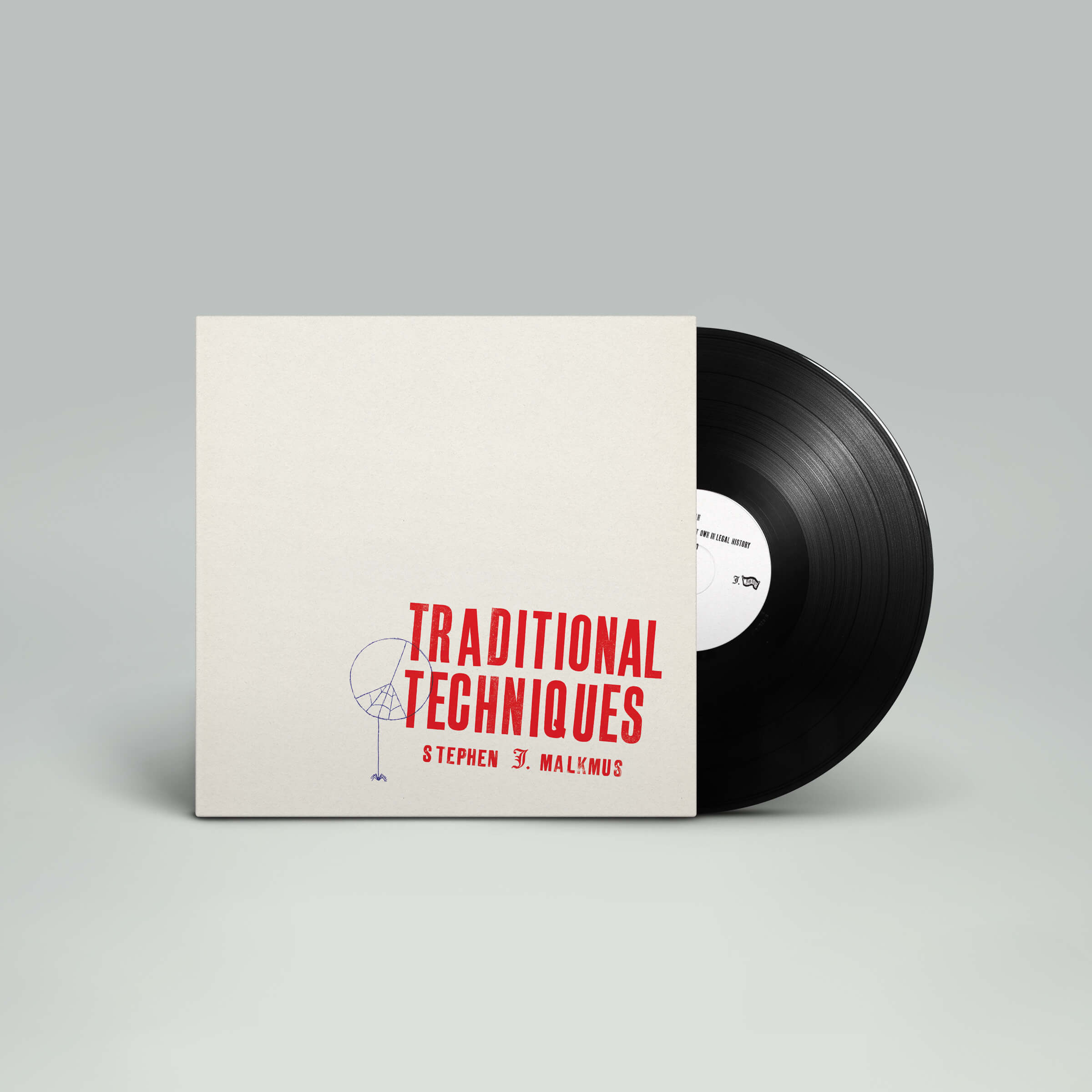
When Stephen Malkmus first arrived on the scene in the early Nineties, as frontman and prime creative force in Pavement, the area of music with which he was associated couldn’t really have been further from the techno-rave sounds of the day. Electronic dance music, then as now, was about posthuman precision, inorganic textures, and hyper-digital clarity. Whereas the lo-fi movement in underground rock championed a messthetic of sloppiness, rough edges, and raw warmth – a hundred exquisitely subtle shades of distortion and abrasion. “Imperfect sound forever” was the rallying cry for a micro-generation of slacker-minded dreamers and misfits.

For his third record in as many years, the sometimes Pavement frontman chills out, unplugs and delivers a record of stoner folk-inspired songs that are among his most direct, affecting to date. For a guy who’s been known for 30 years primarily as a musician who is, at times, too clever for his own good, Malkmus shows real heart here.

While associated with staunch indie rock snobbery, Stephen Malkmus has long dabbled in jam band territory, all the way back to Pavement’s final album, Terror Twilight. (Before? Maybe.) So when he announced Traditional Techniques, his third album in three years, as “stoner folk” it wasn’t really as much of a stretch as Matador may have wanted you to believe. At least not in that way. It is, however, his quietest, most introspective and straight-from-the-heart record he’s ever made.

To call Stephen Malkmus’ Traditional Techniques an “acoustic record” wouldn’t be inaccurate, but it doesn’t quite capture the sonic expanse of this midcareer gem. “ACC Kirtan,” “Xian Man,” and “Brainwashed” unfurl into psychedelic sprawl, while elsewhere Malkmus takes his 12-string toward country-rock, or classic folk, or surrounds it with woodwinds, drums, and string instruments from Africa and the Middle East. Traditional Techniques revels in the gray space between frank and enigmatic, whether exploring love and friendship, or in yarns about propane smugglers or the extremely online. “May the word be spread via cracked emoji,” Malkmus sings on “Shadowbanned” — it’s unclear what exactly that may mean, but like the best, inscrutable Malkmus lines, it rings true.

Stephen presents “Juliefuckingette,” an A-side-worthy B-side off of Traditional Techniques. Additionally, he announces a rescheduled North American tour (See below for the full dates).
As with Traditional Techniques, “Juliefuckingette” is new phase folk music for new phase folks. Malkmus’ wry lyricism unwinds over his 12-string acoustic guitar: “Abolish the fanfiction set // I don’t wanna clean up the logorrhea mess // It’s the last brand standing // You know you wanna kill it but you can’t kill that quite yet.”

Nashville-born indie rocker Sophie Allison reaches deep inside herself with her second album, Color Theory, building on the emotional honesty of her 2018 breakthrough, Clean. Born in 1997, Allison is a proudly Nineties-fueled songwriter, with a little Liz Phair in her guitar and just a touch of R.E.M.’s Michael Stipe in her vocals. (Not to mention the way she sings about “Night Swimming.”) Color Theory has some of the year’s loneliest songs, taking on depression, insecurity, and illness as she admits.  Yet she always keeps you rooting for her to make it.

Soccer Mommy & Friends Singles Series, Vol.4 – on Bandcamp now:

Beabadoobee Fake It Flowers

Bea Kristi, a.k.a. Beabadoobee, was still in her teens when she made this delightful guitar rom-com, the sound of a self-assured bedroom-pop singer-songwriter navigating her way into the outside world. The journey from bedroom-pop hero to bonafide rock star is completed in bruising fashion on the Londoner’s stunning debut album of anthemic slacker rock. Two years ago, Beabadobee released ‘Coffee’, a spindly tale recorded in her bedroom in London. Armed with an acoustic guitar and a love for lo-fi heroes Daniel Johnston and Elliot Smith, its lullaby melodies and sweet lyrics of devotion (“I like it when you hold me tight”) depicted an attempt to abate the roughest of hangovers. The results are fairly unremarkable, a tentative display of the diary entry song-writing the teenager was beginning to explore.

Earlier this year a remix by Canadian lo-fi artist Powfu – in which he samples the twee chorus, brought the song and 20-year-old Beatrice Kristi to a wider audience; it was played a reported 4.1 billion times in March 2020. But the mantra for Bea has changed. No longer satisfied with playing it understated or the idea that her voice should be subdued, she’s got the guitars plugged in, the drums heavy and the influences outrageously blatant.

The timing has been fortuitous. Finding inspiration in the home environment is now commonplace for the foreseeable future, but last year’s gnarly ‘Space Cadet’ EP saw her embrace her inner rock star beyond air guitaring in the bedroom mirror. The unashamed ‘I Wish I Was Stephen Malkmus’ saw her pay her dues to the Pavement frontman, while Sonic Youth got a stylistic look-in (though no name check) on ‘She Plays Bass’ and ‘Are You Sure’. A handful of headline shows – one had enough ticket requests to fill Brixton Academy, not the 150-capacity upstairs room of the London pub in which they were actually held – saw her capitalise on the hype, as did arena support slots with Dirty Hit label mates The 1975.


The songs from that period are frantic, untamed and all the better for it. But ‘Fake It Flowers’ is complete and polished in a way those songs just weren’t. What was once buoyed by unbridled enthusiasm is now mastered by Bea’s restraint she can be loud, but contemplative too. It’s a thrilling debut from Gen-Z’s newest guitar hero, for sure, but also a building block to a career beyond when the rock’n’roll antics wear off.

One of the album’s greatest triumphs is the fact that Bea’s duality rock star-slash-kitchy-introvert  is displayed so explosively is the album’s greatest triumphs. Neither part cedes space to the other; the two sides of her persona stand confidently shoulder-to-shoulder, intimate melodies giving way to choruses that, in another time, would have enraptured the masses live in concert.


Opener ‘Care’ has a dreamy start but that lasts scarcely 20 seconds before a jackhammer of a chorus clatters in. That force similarly decimates ‘Dye It Red’, ‘Worth It’ and, most notably, ‘Charlie Brown’, where the ferocity of Nirvana’s ‘In Utero’ explodes with Bea’s  own unbridled rage – it’s fierce enough to leave Snoopy a shaking, snivelling mess.

To her credit, she’s unafraid to embrace the cliche of being born in the wrong generation. Last year, Bea told NME quite bluntly that she “wants to live in the ‘90s” and why the hell not? The orchestral overtones to the Smashing Pumpkins-sized ‘Sorry’ hark back to a time when rock bands were unafraid of spaffing production budgets, while the grunge-pop chorus of ‘Together’ is Elastica sized chorus for a new generation. To pillage the past for inspiration is not uncommon, but few enjoy their joyride as much as Bea does.

The sonic evolution is bolstered by lyricism that traces her ability to communicate emotions bluntly largely about the ups and downs of romance. Spiteful ripostes run through ‘Further Away’ (“They say the moon’s far away but your brain’s further”), but the make-up on ‘Horen Sarrison’ is sweet in a way that only young love can be, as the lush sounds of Blur’s ‘The Universal’ swell in the background; “You are the smell of pavement after the rain / You are the last empty seat on a train”. On ‘Charlie Brown’ she confronts the periods of self-harm that she endured, towering above but never forgetting those days.

And there are nods to her early era, keeping things lo-fi on ‘Back To Mars’ – a continuation with her creative inspiration of outer-space – and ‘How Was Your Day’. While jarring when plonked next to anthemic rock, this establishes space to detail her song-writing evolution; it’s an ample reminder of the thrill of witnessing emerging artists hone their craft. The scribblings in the margins and on-the-fly adjustments sit proudly to the breakthroughs and failures. Eventually, a full picture of an artist emerges.

The leap from bedroom-dweller to teenage riot instigator has been a swift and fruitful one, and what could be considered derivative is genuine in every sense. Circumstance might dictate that bedroom songwriting is back on the cards for Bea as the slow crawl to the return of live shows continues, but there’s a rock-solid foundation for the years to come.

image

Video of the day: Son Lux - Change Is Everything

Even for a band dedicated to surprise, Son Lux‘s new single “Prophecy“ represents a notable departure from their usual fare. Yet the song’s bright energy and lilting feel bloom like an outgrowth of their ever-expanding practice, providing the clearest evidence to date of the band’s indebtedness to the J Dilla–D’Angelo nexus. The track is from ‘Tomorrows II,’ out December 4th via City Slang, the second album in a far-reaching three-volume body of work culminating in physical editions of all three volumes to be released together in 2021.

Featured on the track is vocalist Nina Moffitt, whose upbringing in church and gospel music instilled a fascination with the timbral range of layered voices. Inspired by electronic manipulation, she employs rounded whistle tones, fraying choral hums, and more to conjure a world of sound largely unexplored by the band until now.

On ‘Tomorrows’, Ryan LottRafiq Bhatia, and Ian Chang train their sights on volatile principles: imbalance, disruption, collision, redefinition. But for all of its instability, ‘Tomorrows’ exploration of breaking points and sustained frictional places is ultimately in service of something rewarding and necessary: the act of questioning, challenging, tearing down and actively rebuilding one’s own identity. 

Arriving at a time of considerable uncertainty in the world, Tomorrows’is ambitious in scope and intent. Born of an active, intentional approach to shaping sound, the music reminds us of the necessity of questioning assumptions, and of sitting with the tension. 

From the start, Son Lux has operated as something akin to a sonic test kitchen. The band strives to question deeply held assumptions about how music is made and re-construct it from a molecular level. What began as a solo project for founder Ryan Lott expanded in 2014, thanks to a kinship with Ian Chang and Rafiq Bhatia too strong to ignore. The trio strengthened their chemistry and honed their collective intuition while creating, releasing, and touring five recordings. A carefully cultivated musical language rooted in curiosity and balancing opposites largely eschews genre and structural conventions. And yet, the band remains audibly indebted to iconoclastic artists in soul, hip-hop, and experimental improvisation who themselves carved new paths forward. Distilling these varied influences, Son Lux searches for equilibrium of raw emotional intimacy and meticulous electronic constructions.

Taken from Son Lux – “Tomorrows II” – Available to stream and download December 4th via City Slang Records