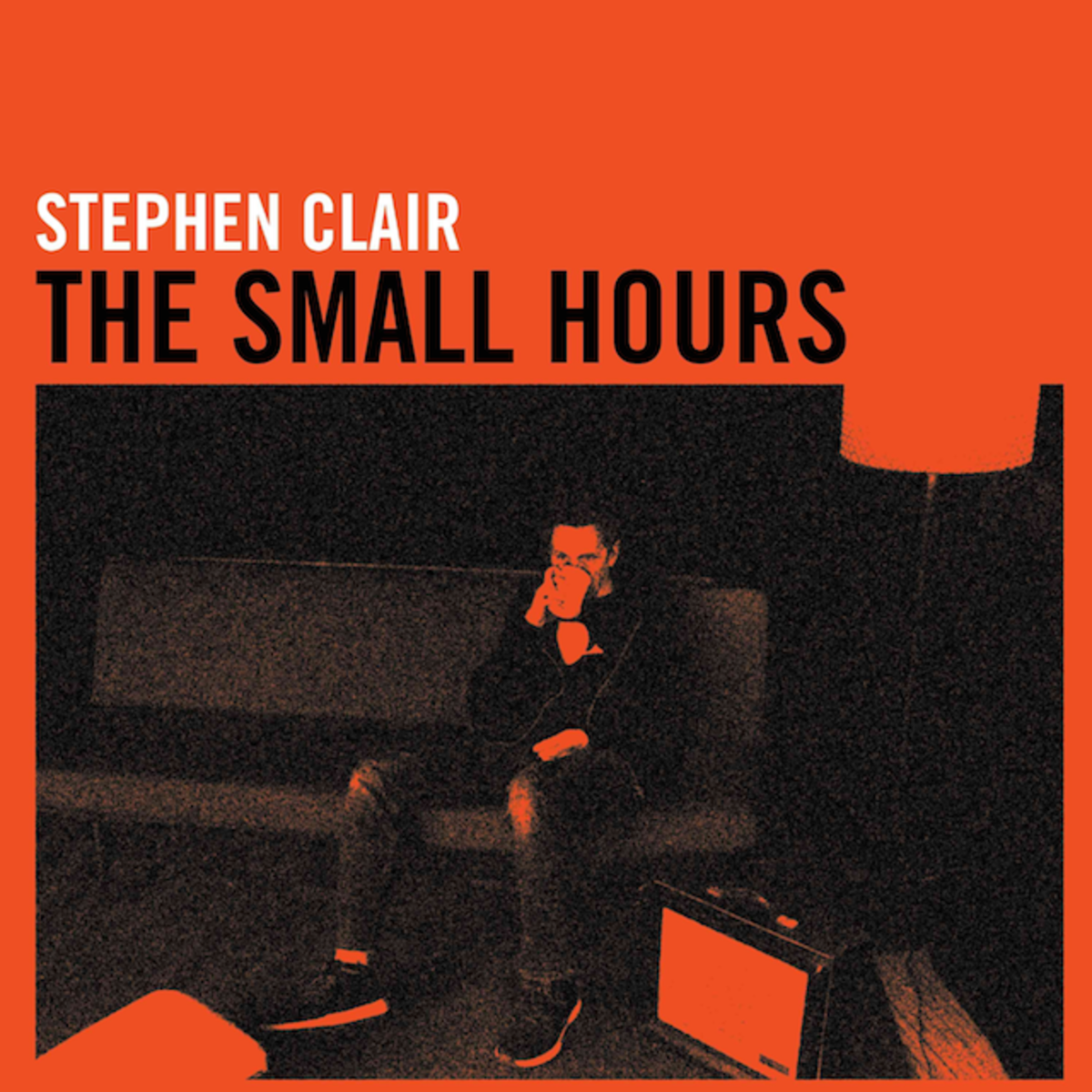
It’s worth losing sleep to stay up late with Stephen Clair and The Small Hours, where shadowy, rough rock ‘n roll noir goes looking for trouble in dingy jazz clubs and country dive bars. Pockets full of literate song writing currency and silvery hooks enable Clair to pay for round after round, as bassist Daria Grace and drummer Aaron Latos accompany him on his lonely walks.
The slice-of-life vignettes they encounter are haunting, as the barfly meditations of “Fate” and the contorted, drawn out existential angst of “Nobody Knows” surface in slow, tense boils. With its light tangle of steely mandolin and deepening sense of isolation, the soft thumping of “Hurricane Coming” warns of a gathering inner storm. In the obsessive “Dorothy,” they glide through a graceful, velvety ballet of Spanish guitar elegance, before darkness gradually washes over a drifting “Marie” and its tale of doomed romance involving a physicist and boxer Jack Dempsey.
A full length album, The Small Hours, which received a lotta love, and we sold some copies of the LP too. In addition to that, I released a couple of homemade ditties, that were pretty direct in- and of-the-moment responses to the times. One of those was Vote For Love, which I guess a few people finally did. The other such song was ‘Welcome To The World Now,’ an ode to us all, written, recorded and released over a weekend in April.
Light hearted moments are found in “Fixing to Fly,” a delightfully sly bit of laidback, sophisticated western swing, and “Pig in a Poke,” an buoyant exercise in tropical, rhythmic strumming. If the latter seems like a fish out of water here, the blinding flash of rough, power-pop yearning “Is This Thing On” fits perfectly, as does the bittersweet roots rock charm of “Come Down.”
“This is the Stephen Clair album [The Small Hours, 2020] we’ve been waiting for. It perfectly displays the power of his songs and his solid-yet-dangerous trio”
This Toronto band’s label debut is an exquisitely passionate work of vintage folk rock that exudes a tingling, calming warmth throughout. based out of Toronto, Little Kid’s Kenny Boothby finds himself inspired by this idea of transfiguration – a complete change of form or appearance into a more beautiful or spiritual state. far-ranging in both its sonic palette and its subject matter, this is a record of unusual depth and clarity from a songwriter who has spent the better part of a decade honing his craft and a lifetime building the perspective his songs so deftly express. these are personal songs that look outward, that seek to tie together the bigness of the world and the smallness of the everyday with both subtlety and humility. this is a must for fans of the band, trace mountains and early wilco.
“one of the best, but highly underrated, Toronto-based acts of the last few years”
humbling, and quietly brilliant An arranging and writing master of contemplative pop returns to mull and muse on religion. Everything Ken puts out is amazing. It’s so hard to pick a favourite track but this is one of the highlights for me. Little Kid’s sound has grown in all the right ways. They perfectly straddle the line of comforting/intimate lofi and rhythmic indie-rock. The whiplash-like transition from ‘Think It Over’ to ‘Missionary’ is like a breath of fresh air every time, and there are lots of these gems within the album, just an amazing, beautiful, haunting album. loved this band since they released logic songs. they hold such a special place in my heart!
Can we talk about how this man is 52 years old? I had no idea. Since he’s only been around for four years, roughly 2016, I thought he was much younger. I’m only saying this as he always gives off the energy of someone younger. Ok onto the music, his third record starts off with “Chocolate Samurai” and about three quarters into the song he says “it’s never too late to achieve your dreams” and I mean it just goes with the age thing. He is beloved in the music world and he’s really doing what he wants to. His music goes in all directions, from roots and funk to rock and blues and even a bit of gospel.
He gets a little help from a few guests on the album, most notably Tank from Tank and the Bangas on the scorching track “I’m So Happy I Cry”. “Your Sex is Overrated” featuring Masa Kohama has Fantastic Negrito doing his best Prince send up, and it works. “King Frustration” speaks to everything happening today for Black Amerircans, not being able to function while worrying about every step taken throughout the day. It’s an angry song that deserves to be played loud through your stereo. If you’re not familiar with him for some reason, please go take a listen to all three of his records, you won’t be disappointed.
Fantastic Negrito: the perfect combination of brilliant performance, brilliant writing, and funky fucking music. This harkens back to the best r&b, funk, soul, and rock-and-roll of the 60sand ‘7s with a 2025 vision.
I came up with the name Fantastic Negrito to give the respect and honour to all of the human lives that lay the very foundation that we all build upon now. So many talented, brave, courageous souls with no names sacrificed their freedom, blood, sweat, tears and lives so that we could stand here and pick from the beautiful garden of Black Roots Music. When I imagined Fantastic Negrito, I was thinking of the greats Robert Johnson, Skip James, Howlin’ Wolf and Charlie Patton these amazing contributors these amazing architects of popular culture.
Cartalk, the project of Los Angeles songwriter and musician Chuck Moore, have been teasing out their debut album, the immaculate “Pass Like Pollen”, for the better part of a year. These singles got some light coverage but steadily built on each other. Every song added another view into their captivating sound. The nine tracks that form Pollen are each vulnerable, exuberant, and gripping in a way that makes their power known mere seconds after pressing play.
One song dropped far in advance, the closing cut, “Sleep,” exemplifies this. Even before Moore’s voice comes in, the tendrils of guitar reaching out foreshadow the crash we all can feel is coming. The song has urgent, anxious energy, and Moore laments “I can’t write songs about you before I sleep / I won’t be so meticulous.” Its pace shakes you, and you feel the emotional resonance of every word viscerally, perhaps as strongly as Moore themselves. Songs like “Car Window” and “Noonday Devil” tap into relatable ideas like the comfort of sitting on floors, and sticking one’s head out of the car window. Neither act is subversive, but go against what’s expected nonetheless.
Pass Like Pollen in a lot of ways feels like the natural successor of Great Grandpa’s Four of Arrows. That is to say that above all else released this year in rock music, it’s the album that most confidently embraces country music’s influence and proudly wraps each note in that flag. Additionally, Moore’s vocals share a certain tone with Great Grandpa’s own Al Menne. The album’s opener, “Arroyo Tunnels” is reposed and eerie. The vast, developed lyricism on display here is a recurring theme throughout. It depicts a long drive and expresses a love for the world it travels and takes comfort in the long drive. This deep attention to and appreciation of detail is tangible in every note.
“Wrestling” has some great riffs and a chorus that will surely get a crowd dancing once we can come back to live events again. “Driveway” is a heavy song about being in a relationship but feeling like it’s over already, basically a shell of what it once was, and it feels like you can see through the other person as if they were a ghost. “A Lesson” is a quick beautiful slow song about learning from every relationship and taking that forward as you move on in life. “Sleep” ends the record on a high note both lyrically and musically. While it might be over, the memories are there forever. I’m so excited for what the future holds for Cartalk as this is quite the debut.
“Pollen” shines as an airing of grievances and self-affirming mantras. Moore isn’t just writing songs with big choruses, though there are plenty of those, they’re building out an expanse for their guitar and band to fill. You can hear the space between each riff, and on a song like “Las Manos,” when the vocals and guitar act as a part of each other, the atmosphere they share becomes overwhelming. That song could be considered the highlight, though, with as many excellent songs as there are here, that title can be argued over. Feeling the guitar swing down as Moore sings “did my honesty scare you?” is exhilarating.
His sound is so unique and recognizable that when you hear the name Joe Walsh, one word is the first to come to mind: Guitarist. Walsh, however, is a superb singer, showman and songwriter. Few examples of these skills are quite as obvious as “But Seriously, Folks…” It’s a tour-de-force released over 40 years ago on May 16th, 1978. It featured his highest-charting solo single in the perfect “Life’s Been Good.” That song contains one of the best lines in music: “I can’t complain, but sometimes I still do.”
Don’t let radio (satellite or terrestrial) define the album by that one song. “But Seriously, Folks…” is 35 minutes of flawless classic rock . It came at a crossroads in music history. The Eagles had completed Hotel California after long, arduous sessions and had crafted a masterpiece. On this Walsh solo album, he had to juggle studio sessions with live dates for “Hotel California”. All of Walsh’s Eagles bandmates appear on the album, as did ex bandmate and drummer BarnstormJoe Vitale. The eight succinct songs on But Seriously, Folks…—and his side gig doing “In the City” for the soundtrack of The Warriors—were a truly creative peak for Joe Walsh.
Maybe too creative a couple of months later, the Eagles went in to record “The Long Run” without a single complete song, actually rerecording “In the City” due to the dearth of new material (and the fact that it’s a great song).
Producer Bill Szymczyk, who did all the latter-day, best-selling Eagles albums after producing Walsh’s James Gang albums years earlier, agrees that “But Seriously, Folks…” is Walsh’s best work outside The Eagles. When recording the album, he had just won Album of the Year at the Grammys and was on his own career high. Recorded in November of ’76 Walsh had opened Bayshore, his studio in Coconut Grove [Florida]. This was one of the first albums done there. The rehearsals we did on the boat. Originally, we were going to do them at my cabin in [the mountains of] North Carolina. But it was January and there was a foot and a half of snow.
We rented a 70-foot boat called The Endless Seas and on January 23rd, 1977, we loaded up a four-track and a set of drums, a couple of guitars, a couple of small consoles. We sailed down to the Florida Keys for a week or 10 days. The idea was basically just to rehearse. Joe got Vitale from Barnstorm. He had also recruited [bassist] Willie Weeks, the first time I’d worked with him. Bill Szymczyk recruited Jay Ferguson for keys, so everybody was getting to know each other.
Amazingly enough, Joe had the songs together. I think he had pretty much all of them. “At the Station” was a Vitale song; he brought that in. We all did “Theme from Boat Weirdos.” “Over and Over,” “Second Hand Store” and “Indian Summer,” [Walsh] had those. As far as “Life’s Been Good” he had the beginning and the ending. The middle section we did months later.
It’s a nice, succinct album. Yeah, really, 35 minutes. It was a joy to make. It didn’t take very long. To this day I still think it’s the peak of his solo work. That’s about it.
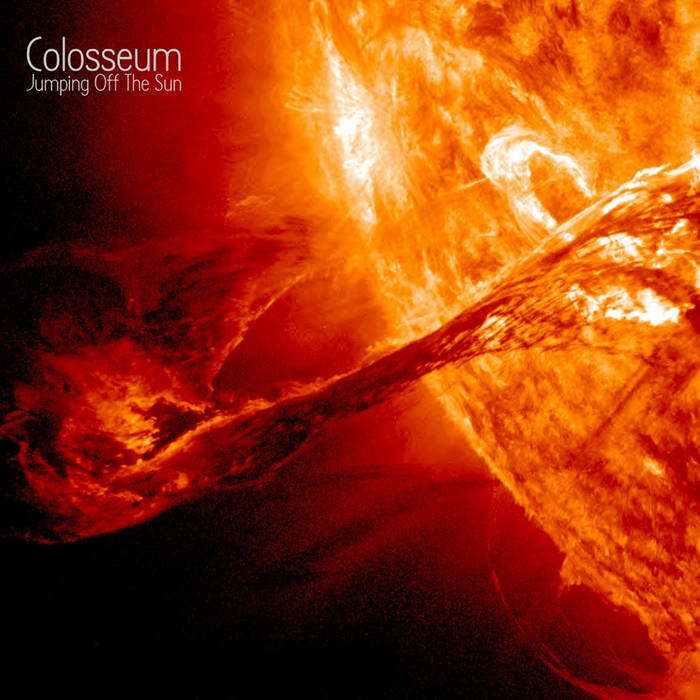
Colosseum was one of the pivotal progressive bands that emerged in the second part of the Sixties. In ’68 the founding members were drummer Jon Hiseman, tenor sax-player Dick Heckstall-Smith and bass player Tony Reeves, later joined by Dave Greenslade (keyboards), Dave Clempson (guitar) and Chris Farlowe (vocals). Their music is a progressive mix of several styles (rock, jazz, blues) with lots of sensational solos and captivating interplay. “Jumping off the Sun” originally recorded late in 1969, with Chris Farlowe’s vocals overdubbed over Dave Clempson’s originals.
This album brings together the best of their radio broadcasts. Comprising both studio and live recordings that have been newly mastered. This album captures the band at the height of its powers with each member providing virtuoso performances throughout.
Originally envisioned as a soundtrack to ‘The Wall’ film, this didactic “band” project became a stand-alone effort when Waters became outraged over England’s involvement in the early-’80s Falkland Islands conflict. By this point, Wright was already out the door, and Gilmour clearly didn’t feel like fighting anymore. He had only one vocal, and a few bursts of guitar brilliance. The rest was Waters, who unleashes a series of searing diatribes on the kind of conflicts that tore his family apart – but without the magisterial musical accompaniment that used to give them flight.
Almost 10 years to the day since the release of The Dark Side Of The Moon, Pink Floyd’s album “The Final Cut” was released. A decade earlier, the material for Dark Side had been worked up thoroughly on the road, and all four band members had writing credits on the record. With The Final Cut, the group – a trio, following the sacking of keyboard player Rick Wright – had become, through default more than by design, a method of carriage for the words and music by de facto leader Roger Waters alone, with session musicians featured heavily throughout its recording.
The album had few discernible hooks, no standout commercial moment, and Floyd never played anything from it live. Initially that didn’t stop the Floyd juggernaut though. Fans worldwide had been waiting three and a half years for a new album, their longest wait to date. And so, on its release in March 1983, The Final Cut became Pink Floyd’s first UK No.1 album since 1975’s Wish You Were Here. Some press gave it the full five stars, and suggested that it might be “art rock’s crowning masterpiece”.
But the juggernaut would soon jackknife. The Final Cut disappeared almost as soon as it arrived, leaving the album, a single and a 19-minute ‘video album’ as its only footprints. There were no promotional appearances, no group publicity photographs, no tour. If the album featured at all in later interviews by both Roger Waters and David Gilmour, it was portrayed as coming from a period of abject misery.
“That’s how it ended up,” Gilmour told David Fricke in 1987. “Very miserable. Even Roger says what a miserable period it was and he was the one who made it entirely miserable, in my opinion.”
“It came and died, really, didn’t it?” says Willie Christie, who shot the album’s cover photo. Christie has great insight into the album and the period. Waters was his brother-in-law, and at the time Christie was living in an outhouse over the garage at Waters’s house in Sheen, “after a relationship had gone south”.
“Because the break-up was on the horizon,” he adds, “I think David was finding it very tough; Roger for different reasons. That was a great shame. David had said publicly that the songs were off-cuts from The Wall. Why regurgitate? I never saw it like that. While it would probably be a perverse fan who would name The Final Cut as their favourite Pink Floyd album, it’s certainly worth a lot more credit than it’s usually given. Yes, the album is the greatest example of high-period megalomaniac that is Roger Waters. However, for all his writing and singing, it needs to be taken as a PinkFloyd release, and not a solo Waters one – it also has some of DaveGilmour’s best guitar solos, and drummer Nick Mason curated some of the best sound effects in Floyd’s career.
‘What have we done to England?’Waters sings on opening track “The Post War Dream”, as a brass band, that most quintessentially British sound, plays out. It locates the album squarely in the post-Falklands-invasion landscape of 1982, while looking back to the World War II beachheads of 1944. As Cliff Jones noted in Echoes: The Stories Behind Every Pink Floyd Song, it was “the most lyrically unequivocal of all Pink Floyd albums”.
Moreover, the album is phenomenally significant in the group’s career. Had it been a far better experience and a bigger seller, it might have allowed PinkFloyd to conclude, or perhaps continue, on a triumphant, cordial high. Instead it left a nagging sense of unfinished business, which led to the split, the commercial triumph of the Gilmour years and the group’s enormous afterlife.
The genesis of The Final Cut is well known. Some of its material dates from five years previously, when Waters came up with the original recording’s of The Wall in the summer of 1978.
He had written around three albums’ worth of material. He was driven in a way that the other band members, who seemed to want to escape Floyd at the time, simply were not.
Pink Floyd as we knew them finished on June 17th, 1981 at London’s Earls Court Arena, when the last of the 31 “The Wall” shows ended. That year’s return to touring was to gather material for the Alan Parker-directed filmed version of The Wall. There was talk of a soundtrack album to the Parker film, but there was hardly a great deal of material: versions of In The Flesh (with and without the question mark) performed by the film’s Pink, Bob Geldof; The Wall out-take When The Tigers Broke Free; and What Shall We Do Now?, which was left off the album.
This project evolved into Spare Bricks, where these tracks were supplemented with additional The Wall off-cuts Your Possible Pasts, One Of The Few, The Hero’s Return and The Final Cut. However, when Argentina invaded the Falklands – the British-ruled islands in the South Atlantic in April 1982 – and UK Prime Minister Margaret Thatcher sent a task force to counteract this, Waters suddenly had his subject matter.
The pointlessness of the ensuing 74-day conflict, resulting in the loss of 907 lives, evoked again the death of Waters’ father Eric in World War II, at Anzio in 1944. Waters relished the merging of the past and the present. He was going to write a modern requiem. And so Spare Bricks became The Final Cut. Its title was a Shakespearean reference to Julius Caesar being stabbed in the back by Brutus: “This was the most unkindest cut of all.”
“The Final Cut in film terminology is the finished article,” Gilmour explained in 1983. “When you stick all the rushes together basically in the right order, you call it the ‘rough cut’, and when you’ve cleaned it up and got it perfect you call it the ‘final cut’. It’s also an expression for a stab in the back, which I think is the way Roger sees the film industry.”
Waters’ had frequent run-ins with director Alan Parker on the making of the film are no secret. It was also clear that the members of Pink Floyd, never the chummiest of groups, were growing ever further apart. The UK premiere of The Wall on July 14th, 1982, at the Empire Theatre in London’s Leicester Square, was the only time the three-man Pink Floyd – no one knew yet that Rick Wright was no longer in the band, with the party line being that he was ‘on holiday’ – were ever seen together in public.
“When The Tigers Broke Free” was issued as a single in July 1982, was full of pathos and huge in its intent. Not since Apples And Oranges, released back in 1967, had so many eyes had been on the chart performance of a Floyd single, Tigers being their first single since Another Brick In The Wall, Part Two in 1979. Tigers, which was fundamentally Waters along with the Pontarddulais Male Voice Choir and an orchestra, was labelled as being from The Final Cut. Ironically, it didn’t make it on to the album until the track listing was re-configured for CD in 2004. Tigers reached only No.39 in the UK chart.
“The relationship was definitely frosty by that stage, So the time that Dave in particular – and Roger were in the studio together, it was frosty. There’s no question about it.” Yet this frostiness made for great art. There was innovation too. Italian-based, Argentine-born (which no doubt would have appealed to Waters’s sense of humour) audio inventor Hugo Zuccarelli had approached the group to try out his new ‘Holophonic’ surround sound that could be recorded on stereo tape. For a group so associated with their audio pioneering, this was a positive boon.
The system used a pair of microphones in the head of a dummy. Zuccarelli played Mason, Gilmour and Waters a demo of a box of matches being shaken that sounded as if it was moving around your head. The group were of one mind to use the system. Mason began to gather the sounds in the Holophonic head (which, as he noted in his Floyd history Inside Out, “answered to the name Ringo”).
He duly recorded Tornado aircraft at RAF Honington, the sounds of cars passing, the wind, and various ticks, tocks, dogs, gulls, steps, shrieks and squawks. On the album, sound effects careened between left and right channels. The missile attack at the start of “Get Your Filthy Hands Off My Desert” is arguably the greatest sound effect on any Pink Floyd record.
Ray Cooper played percussion, Raphael Ravenscroft added saxophone, and on closing track “Two Suns In The Sunset” veteran drummer Andy Newmark took Nick Mason’s place. It took two players to replace Rick Wright: Michael Kamen on piano, and Andy Bown on Hammond organ.
“It was wonderful to work for them in that live situation. It’s rare to meet a rock band that know how to behave,” Bown recalls. “And the Floyd organisation treated the hired guns very well indeed. Recording is different you’re not living with each other in the same way. I remember almost nothing from those sessions. Waters’s exacting attempts at nailing a vocal recording led to the well-reported incident of Kamen doing a Jack Nicholson in The Shining, writing furiously in the control room. When Waters went to investigate what he was doing, he saw that Kamen had written repeatedly: “I must not fuck sheep”. According to Andy Bown, Kamen was “a lovely cuddly bear with a wacky sense of humour”.
“It was obvious Roger was making all the running,” Nick Mason said of a period of recording at Mayfair Studios. “Roger is sometimes credited with enjoying confrontation, but I don’t think that’s the case. I do think Roger is often unaware of just how alarming he can be, and once he sees a confrontation as necessary, he is so grimly committed to winning that he throws everything into the fray – and his everything can be pretty scary… David, on the other hand, may not be so initially alarming, but once decided on a course of action is hard to sway. When his immovable object met Roger’s irresistible force, difficulties were guaranteed to follow.”
“I was in a pretty sorry state,” Waters said. “By the time we had got a quarter of the way into making The Final Cut, I knew I would never make another record with Dave Gilmour or Nick Mason.” Gilmour said in 2000: “There were all sorts of arguments over political issues, and I didn’t share his political views. But I never, never wanted to stand in the way of him expressing the story of The Final Cut. I just didn’t think some of the music was up to it.” After much arguing with Waters, Gilmour surrendered his producer credit on the album – but not his share of producer royalties. He was even to say: “It reached a point that I just had to say: ‘If you need a guitar player, give me a call and I’ll come and do it.’”
In 1983 he said: “I came off the production credits because my ideas of production weren’t the way Roger saw it being.”
“I was just trying to get through it,” Gilmour told me in 2002. “It wasn’t pleasant at all. If it was that unpleasant but the results had been worth it, then I might think about it in a different way. I wouldn’t, actually. I don’t think the results are an awful lot… I mean, a couple of reasonable tracks at best. I did vote for The Fletcher Memorial Home to be on Echoes. I like that. Fletcher, The Gunner’s Dream and the title track are the three reasonable tracks on that.”
Overlaid with Waters’s disgust at the Falklands War, and grieving for the father he never knew, the narrative of The Final Cut focuses on the figure of the teacher from The Wall, who had been a gunner in the war, staring down modern life. The central character of The Wall, Pink, makes an appearance on the title track. Waters is frequently self-referential in his choice of words. For example, ‘quiet desperation’ and ‘dark side’, two most Floydian phrases, are used.
Of the original album’s 12 tracks, The Hero’s Return and The Gunner’s Dream are two of Waters’s finest moments side by side: full-bleed paranoia, with his unlimited capacity for beauty and empathy. The Hero’s Return began life as Teacher, Teacher from The Wall. The band’s demo from January 1979 has a synth drone, with Gilmour on loud slide guitar; here, the hero is haunted by images of the war he can’t discuss with his wife.
On The Gunner’s Dream there’s little guitar but plenty of saxophone, so much a feature of 1973-75 Floyd. Here, as with a lot of the album, Waters’s voice is the lead instrument. The song examines the sudden powerlessness of a situation when confronted by the jackboot. Referencing war poet Rupert Brooke, Waters delivers one of his finest vocal performances. It also introduces the imaginary character Max, an in-joke name for producer Guthrie from the sessions. And the screaming doesn’t stop. A decade and a half after his wails on Careful With That Axe, Eugene, possibly Waters’s career-best bellow is on The Gunner’s Dream, where he howls for a full 20 seconds. Rolling Stone said it contained some of the most “passionate and detailed singing that Waters has ever done”. And it’s certainly there, as he enunciates every vowel as if his life depends on it.
“Not Now John” It’s almost as if, deep into his work on The Final Cut, Waters remembered that satire could be fun (and that music could be exciting). He also seemed to recall that Gilmour was just sitting there on the bench. David makes the most of his game time on the rocking “Not Now John,” ferociously tearing into lyrics that are a head-spinning mix of Waters’ personal and political demons come to life. For those who tut-tut at the song for being boorish, it’s a shame they can’t bask in the pleasures of this buzz bomb, complete with female backing vocalists screaming “fuck all that.”
The Fletcher Memorial Home, where ‘colonial wasters of life and limb’ assemble, delivers another standout moment, with Waters giving tyrants past and present the chance to get together before applying a final solution to them. Gilmour’s solo and Kamen’s beautiful brass arrangement enhance the song’s gravitas.
While the title track is similar to Comfortably Numb in its arrangement, Not Now John is the album’s rocker. It’s a call and response between Gilmour and Waters – one as the jingoistic right winger so celebrated in the early 80s, the other attempting reason. The US, sensing the one song that resembled conventional rock (complete with Gilmour’s ultra-Floyd guitar work), suggested a radio recut, with Gilmour and the backing vocalists singing ‘stuff’ loudly over the song’s obvious use of the word ‘fuck’.
It was issued as a single, accompanied by a Willie Christie-directed video, in May 1983 and scraped into the UK Top 30. Album closer “Two Suns In The Sunset” was inspired by Waters’s recent viewing of the banned docudrama The War Game. In the end the hero drives off and sees a nuclear explosion, a result of someone’s anger spilling over to the point where the button is pushed. He now understands ‘the feelings of the few’. As the explosion comes, Waters suggests: ‘Ashes and diamonds, foe and friend, we were all equal in the end.’
The final track from ‘the original Pink Floyd’ ends with a session sax player, a session drummer, and a producer playing piano. By then it seemed that even Waters had been removed from his own story.
Even designers Hipgnosis, The long-time Pink Floyd collaborators, and cartoonist/illustrator Gerald Scarfe were now surplus to requirements. Scarfe has said he had done a test version of a cover for The Final Cut, but Waters himself oversaw the artwork with graphic design company Artful Dodgers. His brother-in-law, Vogue photographer Willie Christie, was brought in to take the photos for the sleeve. With Christie Waters’s house guest at the time, the pair discussed the concept at length.
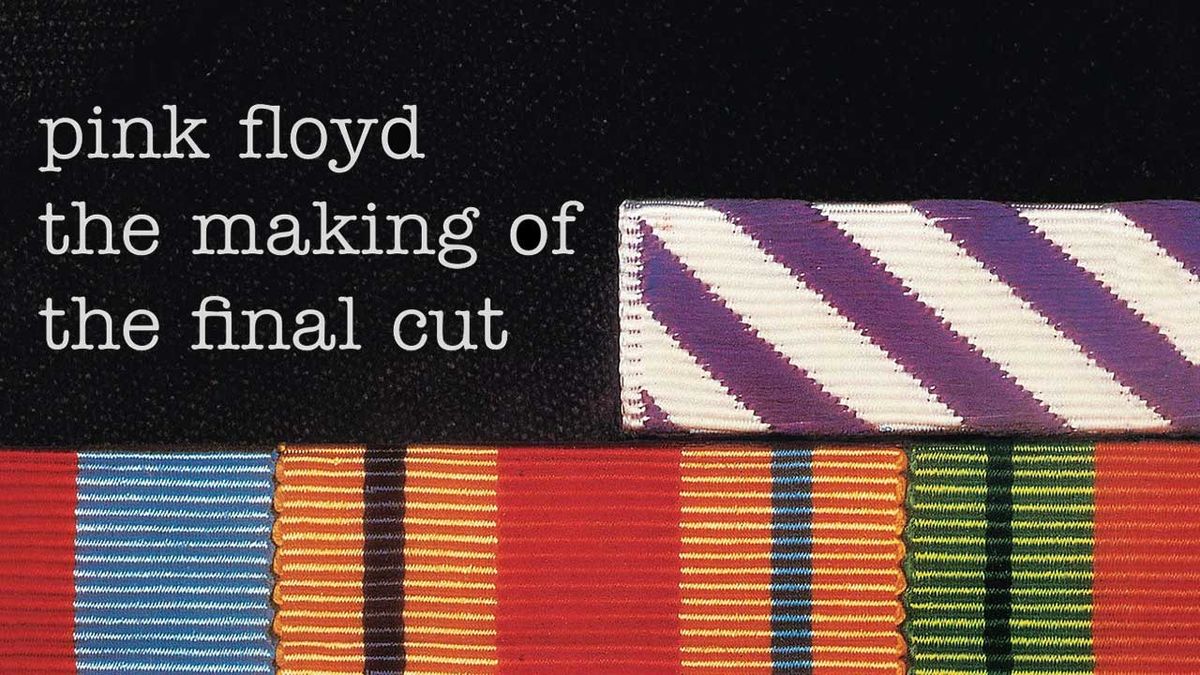
“We were talking about it all the time from conception,” Christie says. “Roger asked me to do the stills. They came out of ideas we had talked about – poppies featured a lot because of the theme of it. I did the stills – the poppies and the strip of medals – in November 1982. The field was near Henley. We needed a field of corn, and I’d done a Vogue shoot down there in 1977. A prop company called Asylum made me up some poppies, as real poppies don’t last.”
Asylum also made two uniforms, complete with the knife in the back. Christie’s assistant, Ian Thomas, modelled the outfit, holding a film canister under his arm. “That was the whole idea of the knife in the back and the film canister,” Christie says. “That [Alan] Parker had stabbed him [Waters] in the back.”
In another shot, Thomas is seen lying dead in the poppy field, watched over by Stewart, the Waters’s pet spaniel. In the gatefold, Thomas can be made out in the distance, while the outstretched hand of a child holds poppies. The sleeve also contains an image for Two Suns In The Sunset, and the Japanese welder for Not Now John which was shot in Christie’s London studio.
Christie recalls showing the group his work in progress: “David hadn’t been involved or consulted. I slightly found myself in the middle. It was a little bit awkward, as I’d been talking to Roger. But David’s a really good bloke, a genius. Gilmour looked at the photographs and then told Christie: “Well actually, the knife wouldn’t go in like that, it would go in sideways, as your rib cage wouldn’t allow it to go in straight, vertical.”
The cover image is a powerful close-up of a serviceman’s lapel, showing a poppy and his medals. The back of the sleeve listed just three members of Pink Floyd. This was the first time the wider world became aware that Rick Wright was no longer a member of the group – and that this was clearly a work ‘by Roger Waters, performed by Pink Floyd’.
It’s difficult now to convey just how exciting the release of The Final Cut was, The critics were, of course, deliciously mixed. Richard Cook wrote in the NME that Waters “picks out the words like a barefoot terminal beachcomber, measuring out a cracked whisper or suddenly bracing itself for a colossal scream… The story is pitched to that exhausting rise and fall: it regales with the obstinacy of an intoxicated, berserk commando.” The review ends with the extremely perceptive comment: “Underneath the whimpering meditation and exasperated cries of rage, it is the old, familiar rock beast: a man who is unhappy in his work.”
A week later, Kurt Loder duly obliged, with a five-star review that included: “This may be art rock’s crowning masterpiece, but it is also something more. With The Final Cut, Pink Floyd caps its career in classic form, and leader Roger Waters – for whom the group has long since become little more than a pseudonym – finally steps out from behind the ‘Wall’ where last we left him.
“The end result is essentially a Roger Waters solo album, and it’s a superlative achievement on several levels. By comparison, in almost every way, The Wall was only a warm-up.”
But not good enough for what Pink Floyd had become in popular perception. As Nick Mason later wrote: “After The Final Cut was finished there were no plans for the future. I have no recollection of any promotion and there was no recollection of any live performances to promote the record.” Had there been a tour to support it, The Final Cut could have been a huge, sustained hit. There’s just something about it, like much art from that strange 1980-83 period in the UK, It could be said that Pink Floyd were the only ones doing what they always did – or at least post-1975 Floyd. But, as said, it wasn’t enough.
The early 80s, unless you lived through them, are very hard to explain. The 60s and 70s seemed clear-cut. When people do think of the 80s, it’s that later flash, brash, wedges-of-money time. We also need to review where Floyd’s 70s peers were by 1983. Led Zeppelin were long gone. Queen were licking their wounds from an ill-advised, all-out assault on disco. Genesis had gone ‘pop’. Yes were, quite by accident, about to reinvent themselves as a techno stadium monster.
Waters his other 1978 concept idea, The Pros And Cons Of Hitch Hiking, done with much of the same team as The Final Cut. (“That was jolly good fun,” Andy Bown recalls. “And terrific musicians to work with. Bloody good album too.”)
In October 1985, Waters issued a High Court application to prevent the Pink Floyd name ever being used again, considering it a ‘spent force’. With that, he finally had the nerve to make the final cut. Gilmour and Mason, however, did not, and the next chapter of Pink Floyd was about to begin, one that would see the band going back to stadiums and making a noise that sounded like the best of Floyd’s albums from 1971-75.
The first single from Jerry Joseph’s forthcoming album “The Beautiful Madness” released back in August 21st, 2020 on Cosmo Sex School/Soundly Music for North America and the rest of the world and décor records for Europe, UK, Australia and New Zealand Single .”One of the greatest live performers I have ever seen and long one of my favourite songwriters, one of the absolute best of our generation.” The Patterson Hood Video features footage of Jerry Joseph and The Stiff Boys (aka Drive-By Truckers) live at the 40 Watt Club in Athens, GA February 15th, 2020.
Jerry takes on the world and does not hold back on it’s state and those running it.
Produced by Patterson Hood and recorded with Drive-By Truckers
I just felt like sharing a song. I’ve been missing the spontaneity of releasing music on a whim. During these slow winter months and after such a slow (and rough) year for everyone– I thought it would give me (and maybe you) something nice to start 2021 with. It is my offering.



%20Full%20Album%20Cover.jpg)



 The Fat Angel Sings