A leading light of the short-lived C-86/anorak movement of the mid-’80s, the BMX Bandits stood at the epicenter of the Scottish pop music scene for over a decade; however, despite helping launch the careers of talents ranging from Teenage Fanclub and Eugenius to the Soup Dragons and Superstar, they never grew beyond the confines of a fervent cult following, though they never gave up making sweet, idiosyncratic pop music. The band was essentially the vehicle of singer/guitarist Duglas T. Stewart, a Bellshill native and onetime member of the Pretty Flowers; he formed the band in 1985, sarcastically selecting the name “BMX Bandits” out of his belief that they would fall apart after only one gig.
Instead, the group became a popular local attraction, and soon signed to Stephen Pastel’s 53rd and 3rd label. Recorded with a line up of Stewart, bassist Sean Dickson, guitarist Jim McCulloch, drummer Willie McArdle, and backing vocalist Billy Wood, the BMX Bandits‘ charming 1986 debut single, “E102,” launched them to the forefront of the C-86 uprising, despite being denied a spot on the NME magazine compilation cassette of naïve jangle pop that gave the movement its name. By the follow-up, “What a Wonderful World,” both McArdle and Dickson had exited, and were replaced by ex-Boy Hairdressers bassist Joe McAlinden and drummer Francis MacDonald; Dickson soon founded his own band, the Soup Dragons, the first of many BMX Bandits spinoffs to eclipse the original group’s success.
Janice Long session 23.06.86
The first BMX Bandits session for long time supporter Janice Long. never before released on vinyl and featuring crazy version of early live favourite “Strawberry Sunday”. Includes free download of original BBC files plus sleeve notes by Duglas – and a set of three postcards.
Songsheet: Strawberry Sunday The Day Before Tomorrow Groovy Good Luck Friend Girl In The Pink T-Shirt
Janice Long session 09.04.87
BMX Bandits’ second BBC session for Janice Long – featuring Jowe Head, Norman Blake and an unreleased cover version of jazz classic “Take 5” with lyrics. Comes with free download of original BBC files and sleeve notes from Duglas – plus a set of three postcards.
Songsheet: Flipper Rosemary Ledingham Figure 4 Take 5
Get both double singles in one go in this package featuring the two BMX Bandits session releases, namely Janice Long 23.06.86 and 09.04.87 – plus all the postcards. It’s the same records just a bit cheaper than buying them separately and save on postage!, Classic BBC radio sessions (and maybe other rare stuff) by artists we like in lovingly curated vinyl packages with exclusivesleeve notes and pics. Coming up: the Jasmine Minks, BMX Bandits, Blueboy, Heavenly, Marine Research and more … and yes, let’s make this precious “How can someone not like BMX Bandits???” Tim Burgess
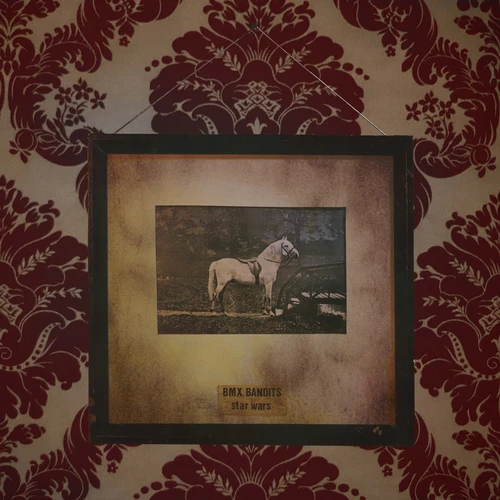
To celebrate the 30th Anniversary of BMX Bandits seminal sophomore LP Star Wars, Past Night From Glasgow will release the remastered album on Vinyl on May 4th (Star Wars Day)
Featuring the classic BMX Bandits line up: Stuart, McAlinden, Blake, Kelly, Keen and MacDonald the album is jam packed full of chiming guitars and catchy choruses not to mention the odd spectacular ballad. The sleeve has been updated (new wallpaper no less) and now features a die cut photo frame with an inner printed horse, how’s that for classy updates?, Rock & roll is not a game for those with innocent hearts. Fortunately, there have been a few people with innocent hearts who have slipped through the cracks and brought a real sense of joy to the music scene. One of them is Jonathan Richman and the other is Duglas Stewart and his BMX Bandits cohorts (including Francis MacDonald, Norman Blake, and Joe McAlinden, amongst others).
Perhaps these artists are not literally innocent, but the music they bring to the table is passive, pure, and carefree, not aggressive or mean spirited in nature. The Bandits, of course, are one of Scotland’s great unsung bands, sharing members with Teenage Fanclub, the Soup Dragons, Superstar, and others, yet steering a clear path of their own with captain Stewart and co-pilot MacDonald at the helm. Stewart’s voice is a strange mix of Mike Love, Lou Reed, and Richman, but works perfectly within the context of the Bandits’ music. With the sweet-voiced McAlinden (later of Superstar) handling lead vocals on a few tracks (and backing vocals throughout), there is a nice balance that saves the album from certain monotony.
Loaded with pop songs galore and beautifully produced by Duncan Cameron and the band, Star Wars is the first in a line of great Bandits albums. From the joyful “Come Clean,” “Students of Life,” “Life Goes On,” and “Do You Really Love Me?” to the heart-tugging “Extraordinary,” there is hardly a wasted moment within earshot. If you can imagine the sheer pop genius of Teenage Fanclub with Mike Love singing lead, then you may have an idea of what you’re in for. And if you could put wide-eyed innocent pop back onto the charts, then BMX Bandits would be superstars.
We are very proud to announce the premiere of “DON’T LOOK BACK NOW” on Thursday 4th February at 8pm EST. Filmed at Union Hall, Brooklyn on October 27th, 2008, the movie features seventeen songs, on which Wesley is accompanied by Robert Lloyd and Chris von Sneidern with invaluable assistance from Deni Bonet and Josh Ritter.
This streaming premiere, which will be on my YouTube channel, Wesley Stace Presents – and for which we will announce the specific URL as soon as we know it – is entirely free to you. Not only that but I will be on hand, with Robert and Chris, to discuss what we’re seeing – in their case, mostly for the first time – and to answer any pertinent questions you may have.
https://www.youtube.com/c/wesleystacepresents The film will then disappear from YouTube entirely: one showing only. However, you can watch the movie whether you have an account or not. “Don’t Look Back Now” is the first ever concert film of me actually singing my own songs. Twelve of the songs were previously released on the bonus CD that came with “Who Was Changed and Who Was Dead“. On 2/5 – which happens to be the next Bandcamp Friday – that album, now the soundtrack to this film, will go on sale at Bandcamp, along with the five bonus tracks included in Don’t Look Back Now.
With purchase of the album, a mere $10, you will also get a free download of the highest resolution version of the movie. So it’s either a 17 song live album with a free movie, or a movie with 12 songs on a CD you already had, but five you didn’t. Think of it how you like. The beautiful poster here is designed by Morgan LeFaye Narkiewicz, with fonts and titles designed for the movie by Stefan G. Bucher.
John Wesley Harding – guitar and vocals Robert Lloyd – mandolin and accordion Chris von Sneidern – guitar and vocals Deni Bonet – violin and vocals Josh Ritter – vocals
Excited to announce the debut solo album from Anna Fox Rochinski – titled “Cherry” – out March 26th known as the front person of psych-folk band Quilt.
Quilt’s Anna Fox Rochinski has announced her debut solo album, “Cherry”, which will be out via Don Giovanni Records. It’s a departure from the folky psych-rock sound you may associate with her. “I lost interest in chord-based guitar music and constructed this record mostly from melodies and beats and bass lines, with guitar as an accessory rather than necessary ingredient,” Anna says, citing Madonna, Can, Midnite Vultures-era Beck, Hungarian guitarist Gabor Szabo, and Robyn’s 1995 debut as influences here.
Anna also says Cherry contains “the most personal stuff I’ve ever written,” describing it as “basically a break up album, but one that documents a time period ranging from the last few dying months of a six-year relationship and straight into the period following, when I was truly on my own for the first time in a very long time. A break up not just with a guy, but with an entire place and an entire life.” The first single is Cherry’s title track, which is definitely new territory for Anna but you can still hear the melodic style she had in Quilt,
Rochinski began writing the record at the end of her tenure in a cottage in the Hudson Valley, and continued writing during the uncomfortable transition out of a stable life she had worked hard to achieve. “This record was written while I was shedding many things that were very precious to me, but I knew I couldn’t keep”. After a few stints on the west coast she ended up in NYC, without intending to stay long, but that is where she ultimately decided to nest, as work on Cherry began.
You can watch the somewhat surreal “Cherry” video, where Anna has the run of some sort of desert resort/retreat, and check out the album.
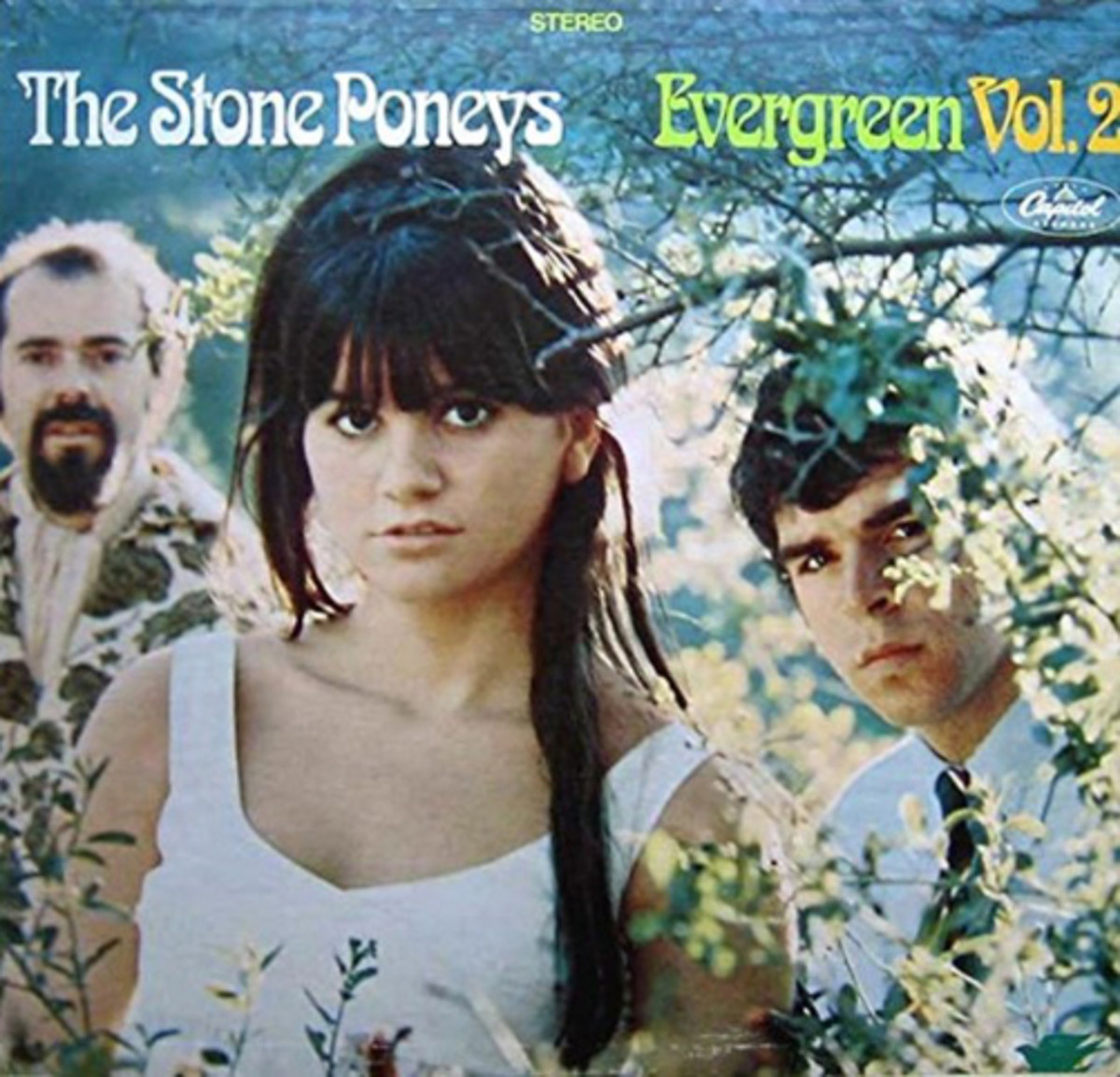
The first time Linda Ronstadt was heard in the Top 40 was in late 1967 with the song “Different Drum,” that Mike Nesmith wrote in 1965 and was first recorded by the bluegrass band TheGreenbriar Boys. Mike offered the song for a Monkees recording, but their management turned it down. The Stone Poneys’ version of “Different Drum” ended up being in the Top 40 at the same time as The Monkees’ “Daydream Believer,” which was written by John Stewart. The flip side of The Stone Poneys’ “Different Drum” was the Pamela Polland composition “I’ve Got to Know.” On this folk rock recording, Linda sang with emotion and power about wanting to know how her boyfriend felt about her, if he was thinking he might leave her and what he said when he talked about her. The Stone Poneys disbanded in 1968. Kenny Edwards, from the trio, returned to playing bass with Linda for her highly successful 1974 album Heart Like a Wheel.
“DESPERADO” (Asylum flip side of “Colorado,” 1974)
The third of three singles from Linda’s debut album on the Asylum label, “Don’t Cry Now”, was the country rock song “Colorado,” written by Rick Roberts, which originally appeared on the self-titled album by The Flying Burrito Brothers in 1971. That quintet included Rick Roberts on guitar along with Sneaky Pete Kleinow on pedal steel guitar, both who also perform on Linda’s slow and gentle version of the song. The flip side was a song that has since become a radio and concert staple, “Desperado,” written by the Eagles’ Don Henley and Glenn Frey, which originally appeared as an album cut on their western concept album of the same name. Linda powerfully delivered the ballad, which is also included on her Live in Hollywood album, released this year from a 1980 concert, where she selected a dozen of her favourite performances.
“LOOK OUT FOR MY LOVE” (Asylum flip side of “I Can’t Let Go,” 1980)
Like her “Don’t Cry Now” album, Linda’s “Mad Love” album also contained three singles. The third was “I Can’t Let Go,” a song that just fell below the U.S. Top 40 in 1966 by The Hollies and was popularized in England the year before by Evie Sands. Chip Taylor : “I wrote the song with my talented and great friend, Al Gorgoni. When I had my album Last Chance out in the 1970s, I performed at The Troubadour club in L.A. and I met Linda. She seemed lovely and sweet. We shared a few words after my show at a backroom table. That’s a nice memory although I wished I said more. I was a bit shy in that setting. I am so pleased that she recorded one of my songs.” This is another song which also appears on this year’s Live in Hollywood album. The flip side of Linda’s powerful version of “I Can’t Let Go,” which she sang with Rosemary Butler and Nicolette Larson, was her electric take on Neil Young’s “Look Out for My Love,” a song that had a primarily acoustic delivery on his 1978 album Comes a Time. While Nicolette Larson provided harmony vocals on Neil Young’s album, Linda handled her own harmonies on her 1980 rendition.
“WINTER LIGHT” (Elektra flip side of “Heartbeats Accelerating,” 1993)
Linda’s 1993 album, “Winter Light”, included a unique spinning musical instrument. Dennis James said, “Linda called me, looking for a harmonica player and asked if I could drive on up to Marin county. Two hours later I had headsets on and began recording tracks for her album, including the single ‘Heartbeats Accelerating.’ She had first heard the ethereal sound of the rubbed glass Harmonica some 15 years before and I was thrilled to play on the record, which led to me appearing on three more of her albums. She has a perfectly pure vision of the exact sounds she seeks, much like a painter who has an intense colourist vision when preparing a palette. Linda extends a marvellous courtesy to her fellow musicians at all times. You always feel that you have a friend beside you.” The flip side of “Heartbeats Accelerating,” written by Anna McGarrigle, was the atmospheric title tune “Winter Light,” which Linda co-wrote and was on par with the new age sound heard from Enya, combined with a spiritually calm escape.
Joey Molland’s first solo record in close to a decade is a collaboration with the talented/wacky producer Mark Hudson, and a very pleasant listen from front to back. It finds Molland (who co-wrote the ten tunes with Hudson) playing up the pop-oriented strengths he first exhibited with Badfinger, and Hudson (who also plays and sings throughout) once again embracing the “Beatlesque mad wizard” guise he displayed during his tenure as Ringo Starr’s producer and musical director. Truth be told, it’s not much of a stretch to imagine Starr singing many of the tunes on “Be True to Yourself”, particularly the inspirational title track (with its oh-so-Beatles ’67 end bit), “This Time,” or the sunny-sounding “Rainy Day Man.” Hudson does a good job of masking some of Molland’s slightly gruff vocalizing by utilizing guests such as Julian Lennon, Jason Scheff and Micky Dolenz to lend some vocal support, while former Wings drummer Steve Holley mans the kit.
The Pete Ham-like vocal affectations on “I Don’t Wanna Be Done With You” and the cute little wink to “No Matter What” at the close of “All I Want to Do” should make the listener smile, as will most of the rest of Be True to Yourself.
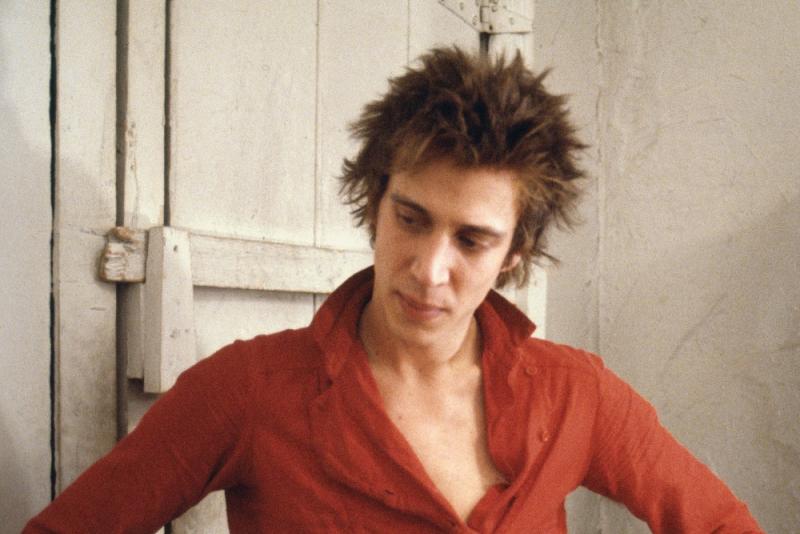
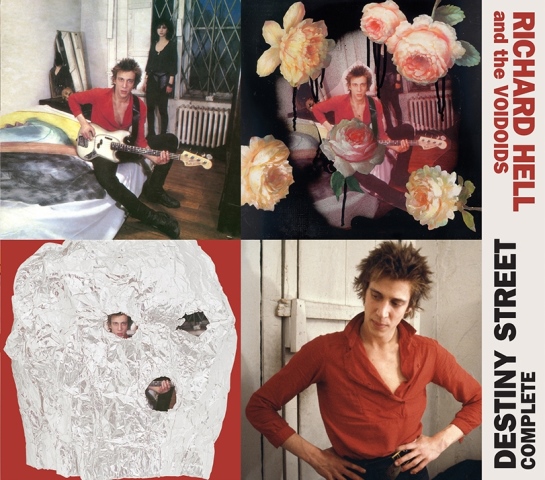
Three plus versions of the same album. It’s ridiculous, but I’m glad.” The first paragraph of Richard Hell’s text in the booklet accompanying “Destiny Street Complete” lays it out. There are, indeed, three versions of his and his band The Voidoids’s album released originally in July 1982 album “Destiny Street” on this double-CD set. It seems excessive but this is a major release of a classic in the making .
Reviews of “Destiny Street” at the time of its release were positive. Creem Magazine said “Hell himself has hit on a style – part Nuggets-era basement rock ‘n roll, part speed-balling protest (not in content, but in attitude) rock, part confrontational CBGB psychodrama – that gives the album its pungent reverberations.” When considering the album, the New York Times frothed “Mr. Hell is the most soulful, emotionally compelling singer to have emerged from punk rock, and his lyrics are in the tradition of Rimbaud and Lautremont.”
Really though, Destiny Street was scrappy, overly short and bulked-out with cover versions and reworked old tracks. There was Dylan’s “Going Going Gone”, The Kinks’s “I Gotta Move” and Them’s “I Can Only Give You Everything”. There were also remakes of “The Kid With the Replaceable Head”, first heard on a single three years earlier, and of “Time”, which had been on an April 1980 EP. New inspiration appeared to be lacking. Destiny Street sounded messy too. Its trebliness was counterbalanced by muddiness. In his text for Destiny Street CompleteHell says “The final mix [of the album] was a morass of trebly multi-guitar sludge.”
Even so and despite its flaws, the original Destiny Street has some power-packed moments. The version of “Going Going Gone” is poignant. “Downtown at Dawn”, “Lowest Common Dominator”,“Staring in Her Eyes” and “Time” are all superb songs, however scrambled they come across.
What’s collected for Destiny Street Complete is the original album and a version titled Destiny Street Repaired, which was issued in 2009. This was created from a cassette of the album’s rhythm tracks which were overdubbed with new guitar solos (by Bill Frisell, Marc Ribot and former Voidoid Ivan Julian) and vocals.
These are on Disc One. On Disc Two is Destiny Street Remixed: a new mix of most the original album fashioned from the three of the four original multi-track master reels (one reel has been lost). The gaps in Destiny Street Remixed are plugged by three tracks from Destiny Street Repaired.
Destiny Street Repaired is a curio, an exercise in post-fact bricolage which is neither a new album or a remake – a half-way house. The new Destiny Street Remixed is aurally more up-front and punchier than the original album but doesn’t alter perceptions about the source album’s creative shortcomings.
Another inescapable problem with the original Destiny Street is that it was released close to five years after the debut Richard Hell & The Voidoids album, October 1977’s Blank Generation. It came too late. The moment had passed. Hell was integral to the New York scene, had been in Television, then The Heartbreakers and first played live with The Voidoids in November 1976. But the forward motion of 1976 and 1977 dissipated, and momentum was lost. Thereafter – fits and starts. Hell should have made a second album in 1978 or 1979, rather than 1982 (Destiny Street was recorded in 1981).
A broad hint at what could have been a more timely second album comes with what follows Destiny Street Remixed on Disc Two. There’s the careening January 1979 UK-only “The Kid With the Replaceable Head” / “I’m Your Man” single , nine demos from July 1979 (three of which are previously unreleased) and a live track from 2004.
The demos open a window into Hell’s pre-Destiny Street world, when he was still being facilitated by former Dr Feelgood road manager and Stiff Records co-founder Jake Riviera. A Hell supporter, Riviera had seen The Heartbreakers in 1976, tried to get the newly band-less Hell to play August 1976’s Mont-de-Marsan punk rock festival with Nick Lowe, issued the “Blank Generation” single on Stiff Records and organised support slots for Hell with Elvis Costello. “The Kid With the Replaceable Head” single was on Riviera’s post-Stiff label Radar. The 1979 demos heard here were made for Riviera and could have become the ground floor of an album, but in his essay Hell says “It was clear by the end of the summer that I wasn’t going to be dependable enough to warrant Jake investing in a full-scale album. So that plan was scrapped.”
Of these nine tracks from 1979 (misleadingly credited as “Destiny Street Demos”), six have been out before: “Don’t Die” and “Time” were on the 1980 Shake label EP mentioned above; “Crack of Dawn”, “Going Going Gone”, “I Lived my Life” and “Ignore That Door” were on the 1984 cassette album R.I.P. In full, the 1979 recordings sound terrific. Coherent, kinetic and spikey, this is wonderful stuff. The previously unheard “Smitten” brings in a Gang Of Four slant. But there was no immediately ensuing album, and Destiny Street arrived three years later.
Anyone with a passing interest in this ever-intriguing figure will need the 1979 demos. They’re as essential as the “The Kid With the Replaceable Head” single. But overall, the thought-provoking Destiny Street Complete says more about Richard Hell’s urge to wrestle with his past than it does about the original Destiny Street album itself.
Hell may have saved the best for last. Disc two of this set also includes Destiny Street Demos, an essential collection of raw early recordings and singles spanning from 1978 to 1980. This stuff smokes, plain and simple; it might even be the best argument for the Voidoids as one of the finest bands to emerge out of NYC during this period. Almost all of Demos has shown up on various collections in the past, but presented as a whole here, it’s as powerful a statement as Hell and co. ever made. Worth the price of admission alone.
Richard Hell, under exclusive license to Omnivore Recordings. Released on: 22nd January 2021
Taking a break from his gig as the drummer for The Posies, multi-talented musician/producer/studio owner Frankie Siragusa “covers and rediscovers” 14 tunes that the Beatles wrote for other artists but never officially released themselves. A similar tack has been taken by numerous combos over the years—Apple Jam, Revolver, Sgt. Pepper’s Band and The Beatnix are a few of ’em—but there is still room for talented, Beatle-loving musicians to put their stamp on these songs.
Siragusa sings lead on six of the songs, including the gorgeous, McCartney-penned rarity “Penina” and a version of “A World Without Love” that glides along with a distinct “I’m Only Sleeping” vibe. Keith Slettedahl (The 88) sings the bulk of the rest and particularly shines on “Goodbye” and “Woman.” (He’s credited with “McCartney vocals.”) Taking one lead vocal each are the Posies’ Ken Stringfellow (on George Harrison’s funky “Sour Milk Sea”) and Roger Joseph Manning Jr. (on the boppy, poppy “I’ll Keep You Satisfied”).
The whole deal was recorded on four tracks and the thing that distinguishes it from other releases of the same ilk is that some modern-sounding instrumental touches are seamlessly incorporated into several of the songs. It’s all just Wonderful.
Half Waif, aka Nandi Rose Plunkett, released her best album yet, “The Caretaker”, last year, and now she’s revealed her first new music of 2021. She has a new 7″ due out February 24th via ANTI-Records, and she’s shared its A-side, the gorgeous, haunting “Orange Blossoms.”
“I wrote ‘Orange Blossoms’ soon after finishing The Caretaker, and in some ways, it feels like the next chapter in that story,” Nandi Rose says. “In the fall of 2019, I found myself taking care of someone close to me who was struggling with addiction, and as a caretaker often does, I internalized that immense pain and took it on as my own. It’s paralyzing, to feel so powerless when trying to help someone you love. The song came out like an incantation, a desperate plea to be rescued from wrestling with everything. But it unfolded into something more resolute as I refocused on the task of taking responsibility for myself and my own life. The song touches on a phrase that kept coming back to me at that time, which was: ‘no one’s going to do it for you.’ You can help and be helped, you can love and be loved, but salvation is your own to seek and claim.”
Kynsey digs deep with her deadpan lyrics, traversing tales of overhearing racist remarks at parties (‘Cold Blue Light’) and the whirlwind of post-break-up emotions (‘Happiness Isn’t A Fixed State’). However, when paired with her sticky, distortion-heavy blend of homemade pop, indie and electronica that echoes ‘Is This It’-era Strokes, it somehow transforms into an uplifting light at the end of the tunnel. The Dublin-based 23-year-old talks her new EP, the Irish music scene and moving beyond Strokes comparisons
Ciara Lindsey is a big fan of The Strokes, but she’ll take any compliments with a pinch of salt. We’re clearly not the first to tell Lindsey, better known as Kynsy, that the opening riff of her latest single ‘Happiness Isn’t a Fixed State’ sounds like something Julian Casablancas would be riding on the coattails of for years. She thanks us, but sticks to her guns.
“I think my melody writing has been influenced by them, which people have picked up on,” the Irish singer-songwriter says. “I try and steer away from comparison, because I have a bit of a fear of complacency. My fundamental goal is to sound as much like myself as possible, not like the Strokes. It’s great! But the goal is to make something completely new.”
The 23-year-old musician is well on her way, making genre-fluid bedroom pop you remind you of all your favourite hitmakers. There’s a bit of Talking Heads, a bit of Saint Vincent, a bit of Bowie and even a touch of Iggy Pop, but even more names crop up when you ask her. Marina and the Diamonds, Charli XCX, Dua Lipa – nothing is off limits. “Being 23 in 2020, everyone’s into a bit of everything,” she says. “There shouldn’t be many boundaries.”
The sense of freedom in Kynsy’s output can be credited to a fairly new sonic curiosity. Feeling her way through her teen years dabbling in acting and writing for the stage, things only clicked into place more recently musically. “The only thing I liked when growing up was The Beatles, because my dad’s a massive fan – but I always considered it ‘dad music’ when I was a teenager.” It took what she describes as “a total teen cliché” for her to take music seriously.
“There was a lot of stuff in the charts like Rihanna and Beyoncé which I liked, but it never really hit home. It wasn’t until l was in that awkward 15-year-old ‘didn’t know what was going on’ phase and was really depressed that my dad was like, ‘Right, here’s David Bowie.’ He could see me needing something to hold onto.”
Having found her tether, Kynsy is now raring to go. This week she releases her debut EP, full of seductive and sultry belters that grapple with tricky post-breakup sadness as much as the discomfort of overhearing racism at a New Year’s Eve party. “I was with my friends and there were these two actors we recognised. We quickly learned they weren’t nice people at all; it was really horrible to overhear someone talking like that, especially when you have a bit of status.” Those racist comments fuel the twisty, contradictory layers of explosive track ‘Cold Blue Light’ . “On this song I’m thinking, ‘I wish the world wasn’t like this, but I really hope we’ll break out and through this.”
That fire is tangible on ‘Happiness Isn’t a Fixed State’, too, where that infectious riff teases a funky bassline and a curious neo-noir tension is always building. “I’m really interested in juxtaposition and contrast and I try to put it in all my lyrics and production – even where I placed the tracks on the EP.” On ‘Things That Don’t Exist’, there’s no single agenda with the songs here; the brooding, romantic indie of ‘Elephant in the Room’ and the shiny and glitchy pop on ‘Dog Videos’ join the first two singles. Lindsey simply describes them as all having this sense of “high energy”, something the world certainly needs right now.










 The Fat Angel Sings