Maple Glider is the project of Lismore-born, Melbourne-based songwriter Tori Zietsch, a brand new face on the scene. She’s also a brand new signing to Pieater, the Melbourne record label home to Big Scary, #1 Dads, Airling, and more.
Zietsch originally rubbed shoulders with the label during their Pie School initiative, where she entered a winning demo and ended up recording a track with label head Tom Iansek and the crew. The single unfortunately never saw the light of day – it was recorded under a two-piece band Zietsch was in at the time which has since folded. The music I create as Maple Glider exists because I write to make sense of my experience, to learn, and because to me, it has always felt like my easiest form of communication. However, it wasn’t to be the end of her story. In 2019 Lansek was enlisted once again to produce and record a series of songs Zietsch had written for her solo project, Maple Glider. “As Tradition” was the first song to be released from that collection of tunes, and you can see why the label wanted to sign her.
My songs centre around the lyrics, exploring intimate themes that are often cathartic to write. I don’t have rules when I make music. I play around, express freely, let go of my expectations, have fun, and stay open
Many of you will know I started working with Pieater last year and it has been the best ever. More recently, I have signed to the incredible Partisan Records to release these songs worldwide. I am so grateful to be working with such a hard working and passionate group of people!!! I want to say a massive Thank You to everyone who has worked on the release of “Good Thing” and supported it thus far. It is a song very close to my heart and I’m damn lucky to be able to do this.
The Galway band NewDad are going from strength to strength with Steve Lamacq and a BBC 6 Music session already under their belt. ‘I Don’t Recognise You’ is just the latest quality song from the 2020 debutantes.
Watching your nearest and dearest spiral is hard, feeling like no more than a bystander, a morbid spectator that can do little else other than observe. The latest release from NewDad takes a darker turn in its exploration of just that. The opening of ‘I Don’t Recognise You’ wouldn’t be misplaced in a teen movie starring 00’s Kirsten Dunst but it quickly becomes apparent that clear lip-gloss and home-coming queens aren’t the subject matter here. The narrative unfolds at the helm of Julie Dawsons’ tender voice as she poignantly describes the “madness in your eyes” and the resulting confusion, questioning and dolour that comes within this sensitive realm. A heavy subject matter that has been carefully unpacked and meticulously engulfed in the warmth and strength of shining guitar and the undercurrent of bass and burly drums that serve as pillars of support.
Sounding just as good, if not better, than previous releases, they’re well and truly immersed in tinges of shoegaze and fuzzy-alt-rock goodness. Galway’s NewDad have courageously ventured to tackle something heartier, which serves twofold as a beautiful track and subtle reminder to check-in on the ones you love.
Taking their shoegaze with a sprinkling of dark pop sugar, NewDad’s moody, hip-swinging guitarwork is the product of a group of pals who are allowing themselves to follow their musical nose without paying too much attention to trends. It’ll be to their benefit – this sort of effortless cool can’t be bought.
William The Conqueror have paid their damn dues. Like the sportsman cutting chipped teeth in the lower leagues before shooting to the very top, this band have lugged all the amps, placated the in-house sound guy for an easier life, their nails dirty, their hair unkempt. Enough. Naming yourself after one of British history’s most pivotal figures is a bold move, but then William The Conqueror could scarcely be accused of lacking ambition.
A group whose literary flair and in-depth musicality marks them out from the crowd, the three-piece set about constructing their new album last year.
Except it’s never enough, because despite their slinky, swampy, razor-sharp, blues-drenched, guitar thrashed alt. rock songs that form new album, Maverick Thinker and suggest that the door is opening for bigger rooms and broader audiences, it’s those sticky basement bar stages where the songs have always shed a skin and come alive. The record put the three piece behind the glass at Sound City Studios in LA, treading the same carpet as the likes of Nirvana, Johnny Cash, Neil Young, and Fleetwood Mac, and they might well have inhaled the spirit of them all.
William The Conqueror’s protagonist is Ruarri Joseph who knows his way around a melody and a verse. Joseph’s wryness suggests life just ain’t plain sailin’ and he fizzes that sigh and lament into something that breathes heavy with heart and with soul.
Pieced together as the world seemed to collapse, ‘Maverick Thinker’ is shot through with a don’t-look-back attitude, imbuing each song with a potent form of energy.
William The Conqueror began when Ruarri Joseph, a singer/songwriter in his own right, decided to retire his solo career after catching a glimpse of his own tour poster and realising the picture before him didn’t really represent reality. ‘It just seemed totally alien to me,’ he admits. ‘It didn’t seem like anything I’d done necessarily spoke of who I was.’
Soon after, he began experimenting with bassist, Naomi Holmes, and drummer, Harry Harding, examining themes from his childhood through the lens of a teenager named William. Starting out with secret gigs, Joseph emphasises the importance of playing those small venues and going back to their roots. ‘That was the cool thing about scrapping being a solo artist and starting completely from scratch, and building from the bottom all the way up. You’ve got no one looking over your shoulder. It takes away the insecurities I suppose.’
After their debut album Proud Disturber of the Peace, the band worked with esteemed producer, Ethan Johns, for their follow up, Bleeding on The Soundtrack, and recently signed to Chrysalis Records. Initially planning to make their latest release, Maverick Thinker, in a home studio, they were later persuaded to make a trip to Sound City Studios. The intention being to immerse themselves in the vibrant musical culture and artistic scene of Los Angeles, but, instead, found themselves in a ghost town as the pandemic hit.
Despite the strange circumstances, William the Conqueror continued with their work. The album was self-produced by the band along with recording engineer, Joseph Lorge, who also, after the band were forced to fly home early, played the guitar solo for the title track. ‘Having an engineer you can trust, you can focus everything about yourself on the performance. He knew the studio inside out.’ Though the location may have changed, they took their customary recording approach of tracking live, capturing the spirit and integrity of their shows without losing themselves in the production.
For a three-piece, William the Conqueror live up to their name and fill an incredible amount of space – commanding your attention with the depth and vitality of a much larger outfit. ‘It was an economical thing to begin with,’ says Joseph. ‘I have this thing about working in threes. I like the format.’ So far, Joseph hasn’t been tempted into arranging beyond their current numbers, with the recorded output staying mainly faithful to their on-stage sound. ‘There’s something quite nice about some kind of creative restriction,’ he says – ‘it makes you think outside the box.’
‘Working in threes is always nice – a little treble approach with a three-piece band. I had the idea of a trilogy in my head – a child, father, mother kind of thing. Then I read something by Herman Hesse about the three stages of development in life being innocence, disillusionment, and faith – the idea, that we all go through that kind of journey.’
When it comes to song writing, Joseph takes a more relaxed approach which is evident in his colloquial vocal tone and conversational manner. ‘My favourite kind of writing is the stuff where you’re not really aware of what it is that’s going down on the paper at the time.’ The band’s recent single, Move On, was written in this way. ‘It came from the idea of being overwhelmed – drowning in ideas and not knowing where to begin.’ Together, with a roving bassline and restless high hats, the imagery depicts twists in the roads and towns by the coast. It was a retrospective realisation that the song was about a hitchhiking trip his mother had embarked on in her youth.
Maverick Thinker’s second single, Jesus Died a Young Man, is an ode to some of Joseph’s early religious experiences and features staggered guitars and a mantra-like chorus that wouldn’t feel out of place at a faith healer show. Joseph’s vocals are dry and almost conversational – culminating in an exasperated wail, amidst the pounding rhythm section. ‘I was quite lost and looking for something to show me the way out of curiosity. Had I encountered a really good teacher, I probably would have fallen for it because of that charlatanism – drunk on the spirit, hands in the air kind of stuff,’ he says. ‘There’s something particularly sinister about televised evangelists – it’s a sort of next-level possession.’ Accompanied by a video featuring a channel flickering between swaggering televangelists, news channels and predatory nature clips, there’s a definite cynicism and an unsettling air.
As well as writing, recording and releasing music, Joseph has also authored an accompanying novel as well as producing a podcast adaptation. ‘The music and the book – they fit together. If you read the book and listen to the record, you can hear things crossing over.’
Joseph has been keeping himself busy during lockdown. When not writing songs, you can witness his other creative efforts through the band’s latest music videos including Wake Up – made entirely of 1920s horror movie footage. ‘That’s what you have to do when you’ve not got a budget for a music video.
It’s been 15 years since Scottish duo Arab Strap released an album — 2005’s The Last Romance — but Aidan Moffat and Malcolm Middleton have picked up right where they left off for As Days Get Dark. Quite literally. For a band that traffics in sad, lonely people living mundane lives, it’s almost like you can see the discolored dent in the sofa made by the same characters from their debut single “The First Big Weekend,” who’ve just been sitting there doing nothing for a decade and a half.
Well, almost nothing. Moffat still paints lurid portraits of sex, drugs and rock n’ roll, just ones set in neighbourhood pubs, and shitty apartments (sorry, flats) with florescent lighting and drop-ceilings. “It’s about hopelessness and darkness, ” Moffat says. “But in a fun way.” If you know what he means,As Days Get Dark does not disappoint. The scene is set with opening track “The Turning of Our Bones,” a tale of “resurrection and shagging” that is clearly about the band (and also shagging): “I don’t give a fuck about the past, our glory days gone by / all I care about right now is that wee mole inside your thigh.” Moffat’s voice has dropped an octave in the last 15 years, and his thick accented delivery, somewhere between a growl and a whisper, is in full sex machine mode, set against a sleek, sultry mix of drum machines, synths and dark guitar lines.
Moffat and Middleton, working with regular collaborator Paul Savage, luxuriate in this mode for much of As Days Get Dark, making one of their richest sounding records, and bringing a lush faded glamour to these stories about “what people turn to in times of need, and how they can hide in the night.” Nowhere is this theme more apparent than on “Another Clockwork Day” where a man staves off boredom by masturbating while his partner sleeps — he’s given up on porn, though, and has turned to “folders within folders” of unnamed digital photos from their past. Depressing, yes, as he flips through IMGs, but the song also manages to push complex nostalgia buttons too.
Another vivid highlight is “Kebabylon,” with sweeping strings and soaring saxophones, that makes obvious but effective metaphors out of a late-night street-sweeper crew cleaning the gutters of a bar-crowded neighbourhood: “And you’re already dreaming as I claw up your condom, as your syringe cracks underneath my boot / you’ve crashed on the couch, passed out on the porch, such a lover, such a liar, such a brute.” Also great: “Here Comes Comus!” prowls like peak Sisters of Mercy (big gloomy guitars, bigger drum machines) as Moffat faces “nocturnal excess and my inability to ever refuse him”; and “Fable of the Urban Fox” that shines a light on the racist treatment of immigrants against backing that somehow successfully splits the difference between celtic folk and funky disco.
his is an older, wiser and more weary Arab Strap. There are still rough edges, seedy corners and shocking words, but Moffat and Middleton are more comfortable in their skin and still have something to say. As Days Get Dark is not just a skillful return, it’s also one of their best-ever records.
It’s about hopelessness and darkness,” says Aidan Moffat. “But in a fun way.” Arab Strap are back!
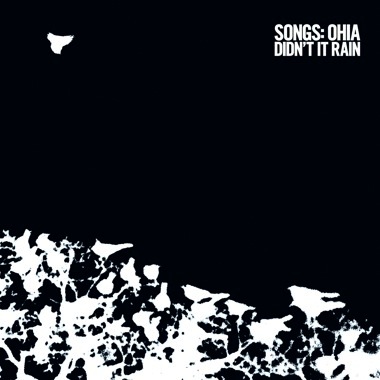
Songs Ohia – Didn’t It Rain (Reissue): In 1996, Chris and Ben Swanson’s upstart label Secretly Canadian issued the One Pronunciation of Glory 7” and made Jason Molina a recording artist. Six years later, the brothers released “Didn’t It Rain”, a masterpiece tour of darkness and despair lit only by the light of Molina’s lantern and that ever-present Blue Chicago Moon. This month’s reissue would be essential in any context, but with the gray having already claimed its space over Molina’s midwest, it almost sounds like Didn’t It Rain was pulled straight from the sky.
Didn’t It Rain is Jason Molina’s first perfect record. Recorded live in a single room, with no overdubs and musicians creating their parts on the fly, the overall approach to the recording was nothing new for Molina. But something in the air and execution of Didn’t It Rain clearly sets it apart from his existing body of work. His albums had always been full of space, but never had Molina sculpted the space as masterfully as he does on Didn’t It Rain.
Never has a Songs: Ohia album’s process been so integral to its overall feel as is the case with “Didn’t It Rain”, the band’s sixth proper full-length. The album, like the working class South Philadelphia neighbourhood in which it was birthed, has a real used goods kinda feel to it. Engineer Edan Cohen employed what some may consider “old-fashioned” recording techniques — the entire album was recorded live with no overdubs, the full band playing in one room with the players always within arms’ reach of one another; singers Jason Molina, Jennie Benford and Jim Krewson (the latter two of Jim & Jennie And The Pinetops) sharing microphones singing live together, sometimes sitting in chairs, sometimes standing. The result is a sound which resembles the warmth and personality of the classic Muscle Shoals Sound recordings of the early- to mid-70s: Willie Nelson’s Phases & Stages, the Rolling Stones’ “Wild Horses”, and others by Aretha Franklin, Boz Scaggs, Bob Seger, Lynyrd Skynyrd and Wilson Pickett.
Inspired by the Mahalia Jackson song of the same name, the title track is a beautiful song about the shifting tides of life and the old cycle of “a lot of shit going down before shit clears up”. It’s a damn fine place to start an album that seems in no hurry whatsoever to make a universal statement, instead perfectly content to walk its own path toward resolution. And damn if Songs: Ohia principal songwriter Jason Molina hasn’t gone and created a record that is even more intensely personal and healing than any of his previous works. Neil Young had his After The Goldrush, this is Molina’s “Didn’t It Rain”.
Indeed, this is the album with which Molina really leaves his mark as a serious songwriter and artist. On 1999’s genre-bending Ghost Tropic full-length, Songs: Ohia made it clear that it could make a cohesive album that took its listener on a journey from front to back. Its dislocated feel set a haunting tone, and its largely instrumental and drone-like quality was the process of the Ohia eluding itself and its own tendencies, searching for the underside of its roots freshly yanked. With “Didn’t It Rain”, Molina & Co. return to the beauty of the song form and offer up a startlingly soulful and introspective song cycle in which Molina — accepting a comfortable degree of anonymity amongst the other players — meditates on what it means to feel rooted again (in the city of Chicago, where he’s called home for the past three years), sounding more sturdy at his core than ever.
“It’s where Molina felt the need to contract himself to a pinpoint, gathering all his energy into a lonesome quantum, before unleashing the wholehearted force of Magnolia Electric Co. He couldn’t have known what was to come, including some of his best work and worst times, but it’s obvious this is the sound of Molina standing on the brink of something. He didn’t seem to know quite what yet, and that stark uncertainty imbues Didn’t It Rain with a sickening yet heroic alchemy: the ability to make smallness and helplessness feel somehow brave”
On this day in 2002, Songs: Ohia’s ‘Didn’t It Rain’ was released on Secretly Canadian.
Founded in 1987 by Stephen Lawrie, The Telescopes embody transcending expressions, creating intriguing threads connecting the audience to the divine where the listener emerges from the experience uplifted, soul wrung free of impurities. Through unorthodox methods of sonic exploration, the inexpressible becomes expressed with unexpected colours and textures, submersing the psyche and senses into intangible cosmic translucence. Highly influential and experimental, The Telescopes’ discography spans 3 decades of revolutionary inventiveness, making a flow of inspiration possessing timeless depth. Originally released in 2002 on Double Agent Records, “Third Wave” heralded the return of The Telescopes after a 10 year hiatus.
‘Third Wave’ saw The Telescopes return to the studio for the first time in a decade in 2002, and offered an exploratory take on their shoegazing space rock sound. 19 years later in 2021, Weisskalt Records are delighted to present the long awaited and oft requested Third Wave reissue featuring new album art, another testament to its long abiding resonance and relevance. To this day, The Telescopes remain an enigmatic entity, continually pushing the boundaries of sonic possibility.
Downtempo, electronic music, ambient, drone rock, jazz, and experimental rock are just a few genre labels which get thrown around when fans talk about this musical left-turn. It retains the heady psychedelia of ‘The Telescopes’ but flips the instrumentation and tone on its head to offer a unique listen.
With Lawrie’s innovative experimentation of computer technology (contemporary at the time) amongst other influences outside of the formal music studio environment, the consequence is an album exquisitely divergent from its predecessors. 19 years later in 2021, Weisskalt Records is delighted to present the long awaited and oft requested “Third Wave” reissue featuring new album art, another testament to its long abiding resonance and relevance. To this day, The Telescopes remain an enigmatic entity, continually pushing the boundaries of sonic possibility.
Lawrie and co’s latest incarnation is a more brooding affair, mixing up drum machines, vocoders, and cellos in a decidedly 21st century manner. An odd, but by no means unwelcome, return. david sheppard – Q magazine
a very trippy agenda. george parsons – dream magazine #3
cool, hazy hallucinations – the perfect prescription for too much life. james nelms – sonic space magazine
Ida Mae is Christopher Turpin and Stephanie Jean Turpin this Sweltering, soul-moving guitar work rumbles through “Click Click Domino,” a new song from Nashville/London duo Ida Mae. And you can thank prolific guitarist Marcus King for such raw, musical velocity. The riff coursing through the song calls to the work of “one of our favourite guitar players,” a musician named Pop Staples. The initial inspiration “slowly morphed into something that in my mind almost echoed moments of Peter Green’s Fleetwood Mac,” Ida Mae says. “It kicked up a gear when Marcus came over, and we stood side by side, soloing call-and-response guitar lines over the outro. The attitude of his playing was perfect.”
Lyrically, the song rooted itself in the sort of “knee jerk” culture that permeates much of social media, and the world, at large, these days. The duo also drew upon “concerns surrounding social engineering, the lack of emotional connection, and [how] physical disconnection gets to all of us. We all know how easy it is to falsify an image, be it in fashion, politics, or any aspect of your everyday, and in a lot of people’s lives it has become a necessity to play into it.”
Most known as frontman of The Marcus King Band, King also shares his thoughts on the collaboration—harkening back to one warm summer evening in Nashville while sipping a tumbler of whiskey. “I listened through the track and was immediately floored by the raw nature of the recording,” he says, “the intensity and the undeniable, delightfully British rock sound I had grown up being captured. I’m honoured to have played on this track.”
Ida Mae’s forthcoming Click Click Domino comes after a wave of critical and fan success surrounding their 2019 debut, Chasing Lights, and the follow-up, 2020’s five-song EP, Raining for You. The album weaves a patchwork of emotion, ranging from uncertainty and regret to overwhelming loneliness, while also hitting upon a brash, toothy mix of soul, British folk music, and classic rock ‘n roll.
Written by Christopher Turpin and Stephanie Jean Turpin
Click Click Domino Musicians: Chris Turpin: vocals, programming, electric lead guitar, tin can, washboard Stephanie Jean: vocals, synthesizer, finger clicks, synthesizer bass Nick Pini: electric bass Marcus King: featured electric guitar Ethan Johns: Drums
Released on Wednesday (March 3rd), the track serves as the title to the duo’s sophomore record, set to drop July 16th via Thirty Tigers.
Elephants and Dogs is a new solo project from Toronto based artist Joe Narducci of the band Jimbo. “You Won’t be Seeing Me Around”, (lead track from an e.p.) gifts us a big chunk of highly catchy, gossamer light dream pop.
It floats high on a total ear-worm of a riff chased along by a hazy synth line. Perfect for lying on the grass staring up at the sky as spring finally arrives in the Western Hemisphere.
I’m picking up vague traces of Smashing Pumpkins if Billy Corgan took the unlikely step of taking himself less seriously and let the music drift into our consciousness. In a word: dreamy. Led by Joe Narducci of Toronto, Elephants and Dogs is a syrupy trip of saturated melodies and chill dream pop arrangements.
And don’t worry, no animals were harmed in the making of this e.p. Released March 5th, 2021, by Look Up Records
I just felt like sharing a song. I’ve been missing the spontaneity of releasing music on a whim. During these slow winter months and after such a slow (and rough) year for everyone– I thought it would give me (and maybe you) something nice to start 2021 with. It is my offering. Beautiful and honest, wisely minimal lyrics without trying too hard but also still being confidently vulnerable enough to be honest, definitely uniquely ethereal and with delicate yet quietly powerful and raw vocals. The chorus section is perfectly executed artistic beauty…such delicate and feminine vocals with a really unique twist of sound that more than satisfies the intrigue built up by the rest of the song. Beautiful. Glad to stumble upon this gem.
Katie Crutchfield’s southern roots are undeniable. The name of her solo musical project Waxahatchee comes from a creek not far from her childhood home in Alabama and seems to represent both where she came from and where she’s going. These are Katie’s 2018 re-recordings of some of her favourite songs by Great Thunder, a previous band of hers that is now dormant.
Katie Crutchfield knows her way around a rock album. In 2009, three years before the first Waxahatchee record, Crutchfield and her twin sister Allison released their first works as P.S. Eliot, a punk outfit they formed in Birmingham, Ala., their hometown. In 2016, they released a collection of other lost P.S. Eliot tunes, a wild, searing conglomeration of 50 rock songs and coinciding demos that sing of fleeing the South and pay homage to Sleater-Kinney.
On the heels of last year’s critically acclaimed Out in the Storm, Crutchfield found herself looking to take a sharp turn away from the more rock-oriented influences of her recent records towards her more folk and country roots. “I would say that it is a complete 180 from the last record: super stripped-down, quiet, and with me performing solo, it’s a throwback to how I started,” writes Crutchfield. “Overall, the EP is a warm, kind of vibey recording.”
Katie would take a softer approach on her first Waxahatchee releases before returning again to rock and punk on her 2017 master work, Out in the Storm. But rather than release Storm b-sides or tarry further down a road to rock ‘n’ roll, Crutchfield slips back into her folk roots on “Great Thunder”, an EP so calculated in its quietness you wouldn’t dare utter a word during its slow-burning 17 minutes. Great Thunder is actually a reimagining of songs Crutchfield wrote while recording with an experimental-rock project of the same name, and while working on those early Waxahatchee releases, Cerulean Salt and Ivy Tripp, which certainly have more in common with this EP than Out in the Storm. On Great Thunder, Crutchfield swaps electric guitar and thundering drums for a single piano and the occasional acoustic guitar, turning all attention to her voice and lyrics.
You sense that following the loud success of Storm, this is really the EP Crutchfield wanted to make. It’s intimate and untarnished by production of any kind. It’s uplifting, spiritual and anti-chaotic, just what the doctor ordered in a year defined by mayhem. Crutchfield probably isn’t shelving her electric guitar forever, but, for now, her piano, voice and soul-bearing words are more than enough to keep us content.




 The Fat Angel Sings