Andrew Bird and Lucius were among a slew of high-profile acts who contributed to the recently released track-by-track covers album I’ll Be Your Mirror: A Tribute to The Velvet Underground & Nico, and now they have shared an intimate live recording of their take on “Venus in Furs”,
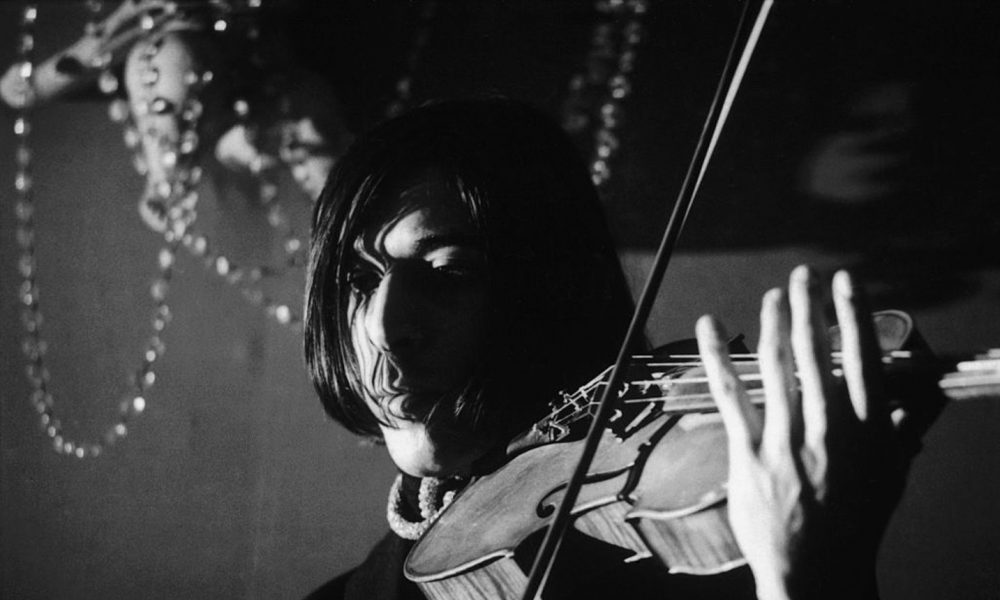
“Venus in Furs” wouldn’t be complete without John Cale’s iconic viola solo, so it makes sense that Bird — who’s a bit of a violin legend in his own right would put his own spin on the track, using loop pedals to fill out the live performance as he then plucks the four-stringed instrument like a banjo alongside Lucius’ flawless vocal harmonies. Though nobody could compete with Lou Reed and company, this is one cover that rivals its original.
“Venus In Furs” got another recent at-home cover from Toyah as part of her “Sunday Lunch” YouTube series with husband Robert Fripp.
“I’ll Be Your Mirror” also includes Kurt Vile & The Violators’ rendition of “Run Run Run,” Iggy Pop and Matt Sweetney’s version of “European Son,”Courtney Barnett’s take on “I’ll Be Your Mirror,” The National’s Matt Berninger covering “I’mWaiting for the Man,” and Sharon Van Etten’s “Femme Fatale” with Angel Olsen.
Also in VU news, The Velvet Underground: A Documentary Film By Todd Haynes – Music From The Motion Picture Soundtrack, a 2CD and digital soundtrack that features both well-known and rare Velvet Underground tracks, was also released on October 15th, 2021 via Republic Records/UMe.
Curated by the documentary’s director, Todd Haynes, and music supervisor Randall Poster, the album is the official soundtrack for the critically acclaimed Apple Original documentary, The Velvet Underground, which was released in theatre’s and premiere globally Friday, October 15th on Apple TV+.
Music From The Motion Picture Soundtrack also features tracks by artists who influenced The Velvet Underground including a live version of “Road Runner” by Bo Diddley; “The Wind,” a doo-wop classic by The Diablos featuring Nolan Strong; and the previously unpublished La Monte Young composition, “17 XII 63 NYC The Fire Is A Mirror (excerpt),” performed by The Theatre of Eternal Music.
Andrew Bird & Lucius perform The Velvet Underground’s “Venus In Furs” live Listen to “I’ll Be Your Mirror: A Tribute To The Velvet Underground & Nico”
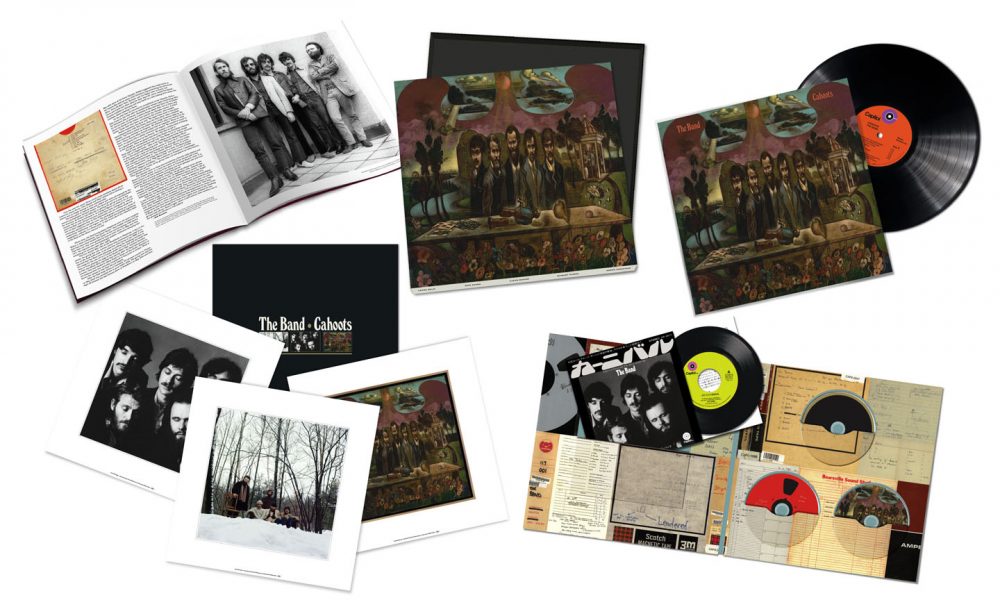
On December 10th, Capitol/UMe will celebrate the 50th anniversary of The Band’s classic fourth album, “Cahoots”, with an assembly of newly remixed, remastered and expanded 50th Anniversary Edition packages, including a multi-format Super Deluxe 2CD/Blu-ray/1LP/7-inch vinyl box set along with digital, 2CD, 180-gram half-speed-mastered black vinyl and limited-edition 180-gram black vinyl packages.
All the Anniversary Edition releases were overseen by principal songwriter Robbie Robertson and sport a new stereo mix by Bob Clearmountain from the original multi-track masters. The box set, CD and digital configurations boast a bevy of unreleased recordings, including Live at the Olympia Theatre, Paris, May 1971, a rousing bootleg partial concert consisting of 11 tracks culled from the initial throes of a European tour that found The Band perched at the top of their live game; and early and alternate versions of “Endless Highway” and “When I Paint My Masterpiece” along with six other early takes, outtakes, instrumentals, and stripped-down mixes.
Exclusively for this box set, Clearmountain has also created new Dolby Atmos and 5.1 surround-sound mixes of both Cahoots and four bonus tracks, presented in high resolution on Blu-ray, alongside the new stereo mix. Every new audio mix has been mastered by Adam Ayan at Gateway Mastering.
The lift-top box set also includes an exclusive reproduction of the Japanese pressing of The Band’s 1971 7-inch vinyl single for “Life Is A Carnival” b/w “The Moon Struck One” in their new stereo mixes; a 20-page booklet with new notes by Robbie Robertson and extensive insider liner notes by Rob Bowman; three classic photo lithographs, one each by Barry Feinstein, Richard Avedon (his infamous eyes-closed group portrait from the back cover) and noted New York artist/illustrator Gilbert Stone (who painted the still stunning stretched-out portrait of The Band on the album’s front cover); plus a wealth of additional material and other historical data from the original recordings sessions. The limited-edition 180-gram black vinyl release that features a tip-on jacket also contains a photo lithograph by Barrie Wentzell that’s unique to the package.
When The Band pulled into the unfinished Bearsville Sounds Studios in Bearsville, New York in early 1971 to record “Cahoots”, their fourth studio album in as many years, they were still basking in the success of and acclaim for their first three history-making records.
The Band’s landmark debut album, July 1968’s “Music From Big Pink“, drew inspiration from the American roots music melting pot of country, blues, R&B, gospel, soul, rockabilly, the honking tenor sax tradition, hymns, funeral dirges, brass band music, folk and good ol’ rock ’n’ roll to foment a timeless new style that forever changed the course of popular music.
When they released their seminal eponymous second album, The Band, the following year in September 1969 – or “The Brown Album,” as it would lovingly be called – not much more was known about the reclusive group. Even so, August 1970’s “Stage Fright”, recorded over 12 days on the stage of the Woodstock Playhouse in upstate New York, cemented the fulfilled promise of those initial back-to-back albums that solidified The Band as one of the most exciting and revolutionary groups of the late 1960s, who were able to carry their avowed excellence directly into the 1970s without interruption.
Indeed, The Band, made up of four Canadians and one American, was still purposefully shrouded in mystery at the turn of the decade, allowing for listeners and the music press to let their imaginations run afield about who these men were and what this music was that sounded unlike anything else happening as the psychedelic ‘60s officially wound down.
Dressed like 19th century fire-and-brimstone preachers and singing rustic, sepia-toned songs about America and the deep south, The Band – Garth Hudson (keyboards, accordion, horns), Levon Helm (drums, vocals, mandolin, guitar), Richard Manuel (keyboards, vocals, drums), Rick Danko (bass, vocals) and Robbie Robertson (guitar, piano, vocals) – was still somewhat enigmatic as the ‘70s began to unfold and unravel around them, but there’s no denying how The Band was able to forge such an ineradicable impact on the music scene at large heretofore unmatched by any group that came before them, or since.
The Band celebrates the 50th Anniversary of their fourth studio album “Cahoots” with an all-new remix and remaster by Bob Clearmountain. Get Cahoots: https://TheBand.lnk.to/Cahoots50thID. The Super Deluxe Box includes the new stereo mix, bonus tracks and a previously unreleased bootleg concert at Olympia Theatre, Paris 1971, on 2 CDs. Also included, is a surround-sound mix of the album on Blu-ray, a 180g half-speed master LP, a 7” single, booklet, all-new liner notes and collectable lithographs.
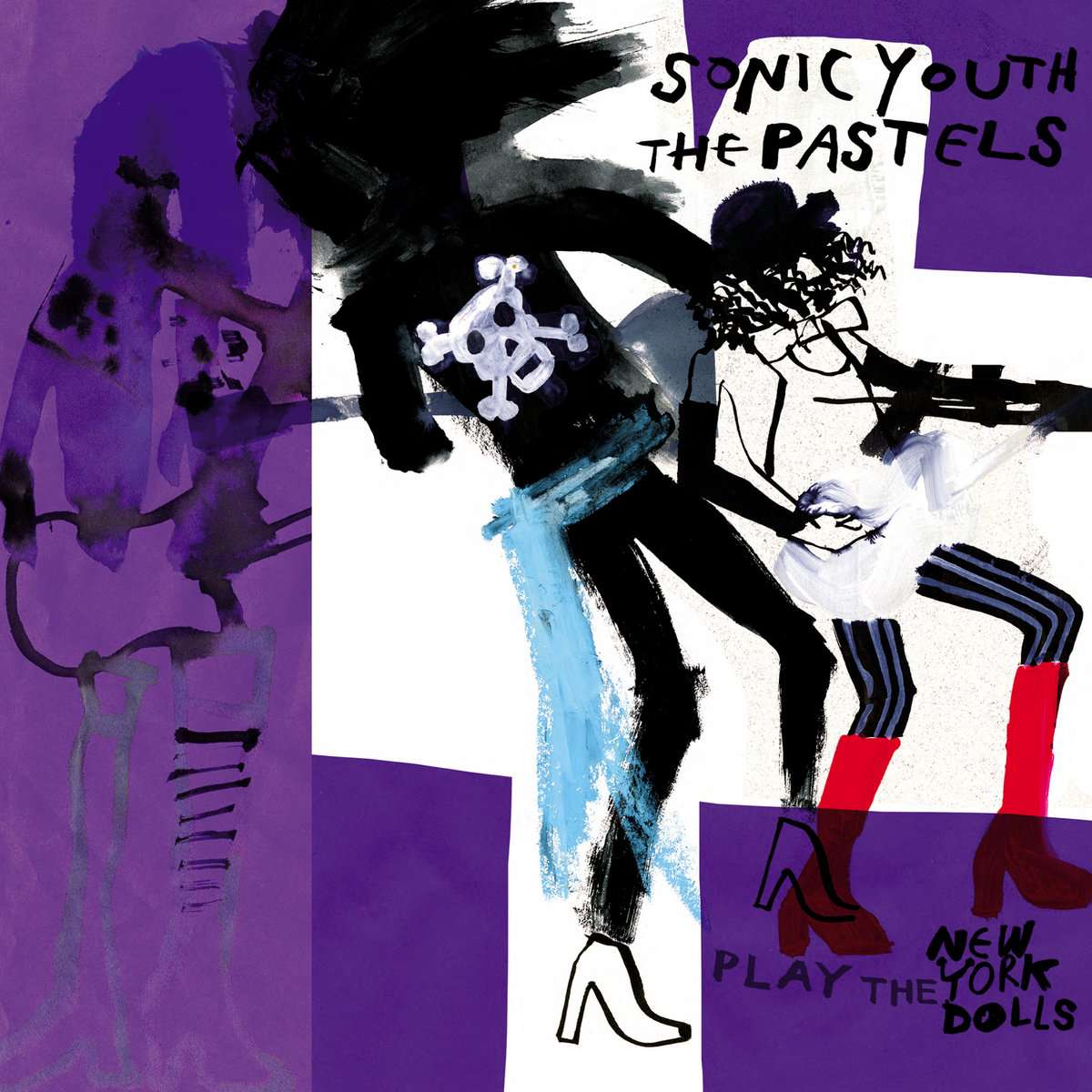
Sonic Youth have a new split-7″ with Glaswegian indie legends The Pastels featuring previously released covers of New York Dolls‘ songs. The Pastels’ cover of “Lonely Planet Boy” dates from 1987 and was originally appeared on their Comin’ Through EP, and Sonic Youth’s cover of “Personality Crisis” was originally released as a 7″ via Sassy Magazine in 1990, and later appeared on the 1993 Whores Moaning EP and the deluxe edition of “Dirty“.
The cover art for this split-7″ was designed by Annabel Wright and it’s due out November 5th via Glass Modern. Preorder yours from the North American or European store, and you can listen to both covers below.
The music we love passes from one generation to the next and the New York Dolls will always be a group to celebrate. Both Sonic Youth and The Pastels are not only fans but covered two of their most iconic songs a few years apart, in 1987 (The Pastels – Lonely Planet Boy) and 1992 (Sonic Youth – Personality Crisis). Glass Modern is really thrilled to bring these two fantastic versions together in a limited edition split 7” single with Annabel Wright cover art. New York Dolls forever.
An early touchstone for The Pastels was New York Dolls amazing Old Grey Whistle Test appearance which Brian had on Beta tape along with other select choices which he liked to share as the mood took him. A few years later, in 1987, we decided to cover their broken ballad, “Lonely Planet Boy” on our Comin’ Through 12”. This of course came out on Glass Records. Glass is happily now back in business as Glass Modern and when the owner, Dave Barker, suggested we might release it as part of a NewYork Dolls tribute we were into the idea – particularly as he wanted to pair it with Sonic Youth’s “Personality Crisis” which we love. Unfortunately the master tape was missing, although we had the multi-track which we worked on with Paul Savage at Chem 19, going for something very close to the original. This is now coming out on November 5th as a 7” on purple vinyl with a fab Annabel Wright cover and is available on presale from Monorail Music and other reliable sources.
Glass Modern is a new imprint of Glass Records, for new recordings and a choice selection of Ltd Edition reissues on CD, Vinyl & downloads.
Back when Jesse Malin was only 12, he formed one of the first-ever New York hardcore bands, Heart Attack, and in 1981 they put out their debut 7″, “God Is Dead“, on the Damaged Goods fanzine label. The band was short-lived but they left an impact, and the long-out-of-print “God Is Dead” had been bootlegged for years. Now, it’s getting its first-ever official reissue, via Malin and Don DiLego’s Velvet Elk label. We’ve teamed up with Malin on an exclusive white vinyl variant, limited to just 250 copies and available exclusively in our stores.
“The “God Is Dead” EP is the first record I ever put out,” Jesse tells us. “We were a trio and failed the auditions at CBGB We were too late. They told us ‘all that punk rock was over,’ and that we should try something new, like rockabilly or new romantic. I wasn’t going to dress up like a pirate. I started to walk further east and saw fliers on the street posts, for bands like The Stimulators and Bad Brains and the False Prophets. I started to get this idea that there was something else out there.”
“We got inspired by seeing the Bad Brains. Everything got faster. Our guitarist Jack Flannigan started listening to Ramones records on the faster speed. He then went on to form The Mob, the fastest band on the scene. We wanted something that spoke to us during our time. It was our generation. It was the early days of hardcore.”
“We started to check out clubs on Avenue A, which was a scary, blown-out neighborhood. Somehow, without cell phones and the internet, we all found each other on an East Village corner. We came from all boroughs in the New York area and the tri-state. Tours were booked on stolen credit cards that you bought in Times Square. You bought a used van, built a loft in the back, and went across the country.”
“I’ll never forget the summer of ’81 when we first heard this record on the radio,” Jesse continues. “I’m really happy to see this EP get a re-release 40 years later. I’m very grateful to still be making music. As much as the world changes, some things remain the same—waiting for the van to come, writing a set list, getting the jitters before you go on, putting your boots on tight, and playing every show like you have a gun at your back.”
If you’ve never heard “God Is Dead“, it’s a great and perhaps slightly-underrated example of early hardcore, and it still rips today.
Another amazing release from the official Jimi Hendrix “bootleg label” Dagger Records, this raw, direct to two-track, live recording from the Olympia Theatre in Paris was captured for French national radio and documents the Experience’s triumphant return to France almost one year from the date of their 1966 debut. Recorded on October 9th, 1967, The Experience were in top form, roaring out of the gate with “Stone Free,” and following with vibrant renditions of “Hey Joe,” “Fire,” “The Wind Cries Mary” and “Catfish Blues.” “Rock Me Baby” and a compact “Red House” prefaced a grinding, muscular take of “Purple Haze,” followed by “Wild Thing,” replete with a rousing, tongue-in-cheek lead vocal that emphatically closed the show.
The Hendrix family’s bootleg label, Dagger, carries on with its unending catalogue of studio and raw live rarities—this time a red-and-blue swirled vinyl, direct-to-two-track recording from Paris’ Olympia Theatre. Captured just one fast, furious year after their 1966 debut, you can feel the trio’s still-fresh frenzy on the punched-up dirtball rock.
Released for RSD Black Friday on red and blue mixed vinyl.
Gene Clark American singer-songwriter and responsible for The Byrds’ greatest hits, including “I’ll Feel A Whole Lot Better”, “She Don’t Care About Time”, “Eight Miles High” and “Set You Free This Time”. After making music in several group formations furthermore with The Gosdin Brothers, Doug Dillard, Carla Olson and recording several albums with members of The Byrds over the years, Clark embarked on a solo career that encompassed heavily orchestrated treasures like “No Other” and folk-focused “White Light”. Through it all and in every setting, Clark’s clear and true vocals, his poetic turns of phrase, and his skill at weaving melancholy melodies never wavered. His body of work is impressive and, long after his passing in 1991, has remained influential to each new generation of pop artists who followed in his wake.
To honour his legacy and the impressive repertoire he left behind, Music On Vinyl proudly presents the new Collected compilation album in collaboration with Universal Music. Collected is a compilation featuring Gene Clark’s greatest songs and is a career-spanning 2LP including tracks by The Byrds and with The Gosdin Brothers, Carla Olson and his other collaborations
Clark would go on to record three more albums: Two Sides to Every Story (1977), Firebyrd (1984)—reissued posthumously in 1995 as This Byrd Has Flown, featuring additional tracks—and So Rebellious a Lover (1987), with Carla Olson.
2021 marks 30 years since the passing of folk-rock pioneer and co-founder of the Byrds (formed in 1964), Gene Clark. Clark was a key figure in the brief, but influential early period of the Byrds, who played a significant role in the expansive and electrified “pop” turn of folk music in the mid-1960s. He also had an intriguing solo career in its own right, before his life was tragically cut short.
Harold Eugene Clark was born in the small, working-class town of Tipton, Missouri, November 17th, 1944, the third of 13 children. In 1949, the Clark family moved to Kansas City, Missouri, living much of the time in abject poverty.
However, in 1954, Clark’s parents saved enough money to purchase a television, through which the young Clark would be introduced to Elvis Presley. Besotted by Presley, Clark developed a deep interest in the music. His father subsequently introduced him to Hank Williams and taught him to play the mandolin, harmonica and guitar. He began writing songs as early as nine years old—his first song being, “Big Chief Hole in Pants.”
Clark would go on to play in many aspiring folk groups in the early 1960s, including most prominently Michael Crowley’s theSurf Riders and later the New Christy Minstrels led by Randy Sparks. Clark played and worked as a backing-vocalist for two albums with the New Christy Minstrels, before leaving the band in early 1964, disillusioned with the musical approach.
Like many musicians of the time, a major turning point came in 1964 when Clark came across the Beatles’ songs “She Loves You” and “I Want to Hold Your Hand” on a jukebox while in Canada. Clark found his calling, saying, “I knew, I knew, that this was the future, this was where music was going and … I wanted to be a part of it.”
Clark moved to Los Angeles where he met fellow folk musician and Beatles-convert Jim (later Roger) McGuinn at the Troubadour Club. In early 1964, McGuinn and Clark worked together as a Peter and Gordon-type duo, but began to assemble a band—once David Crosby was recruited—known as the Jet Set. Soon after, Chris Hillman and Michael Clarke would join the trio on bass guitar and drums, respectively.
Initially playing under the name the Beefeaters, the young musicians released two singles, “Please Let Me Love You” and “Don’t Be Long” in October 1964. One month later, the band’s manager, Jim Dickson, got the band an audition with Columbia Records, where they signed as the Byrds and would soon be billed as “America’s Beatles.”
The Byrds became, in fact, a key element in the early flourishing of the “folk-rock” sound. They essentially bridged the electrifying pop studio sound of the Beatles with, literally at times, the lyrics and “edge” of Bob Dylan and other folk musicians. McGuinn’s “jangly” 12-string guitar melodies, coupled with Clark and Crosby’s expansive harmonizing, had very little precedent in popular music to that point. The band’s impact would help shape the direction of “folk rock” for at least the next decade.
Clark played a leading part on the band’s two 1965 albums, Mr. Tambourine Man and Turn! Turn! Turn! with his superlative compositions and emotionally alluring voice. Clark wrote or co-wrote many of the Byrds’ best-known originals from their first three albums, including “I’ll Feel a Whole Lot Better,” “Set You Free This Time” and “Eight Miles High.” At a time when the Vietnam War was raging, with antiwar and civil rights protests erupting across the US, Clark focused on intimate matters. His lyrics placed emphasis on personal reflection, reconciliation and relationships. He was also capable of writing moving songs about heartache, such as the band’s “Here Without You,” set to its signature “cascading” sound.
Notwithstanding the tremendous success of “Mr. Tambourine Man,” which peaked at Number 1 on the singles charts in 1965 in the US, United Kingdom and Ireland, and Number 2 in Canada, Clark would abruptly leave the band in February 1966, prior to the release of “Eight Miles High,” featured on “Fifth Dimension” (1966), ostensibly over his fear of flying. Clark, who had witnessed a fatal airplane crash as a youth, experienced a panic attack on a plane bound for New York, resulting in his refusal to take the flight. In effect, Clark’s exit from the plane represented his departure from the Byrds, with McGuinn telling him, “If you can’t fly, you can’t be a Byrd [bird].”
Interviewed in 1991 just days after Clark’s death, Hillman said, “We lost Gene the other day. It doesn’t matter how or why. He’s just gone. I think we lost Gene in 1967. … At one time he was the power in the Byrds, not McGuinn, not Crosby—it was Gene who would bust through the stage curtain banging on a tambourine coming on like a young Prince Valiant.”
The limited edition of Gene Clark – Collected includes an exclusive third bonus LP, which won’t be included with the regular 2LP edition. The bonus LP features “So You Say You Lost Your Baby (Acoustic Demo)” with The Gosdin Brothers, “Lyin’ Down The Middle” as Dillard & Clark, “Del Gato (Live)” and “Changes” with Carla Olson, “I Pity The Poor Immigrant”, “Stand By Me” and alternative versions of “One In A Hundred” and “She’s The Kind Of Girl” amongst others.
This 3LP edition of Gene Clark – “Collected” is available as a limited edition of 3000 individually numbered copies and includes a 4-page insert with liner notes and photos.
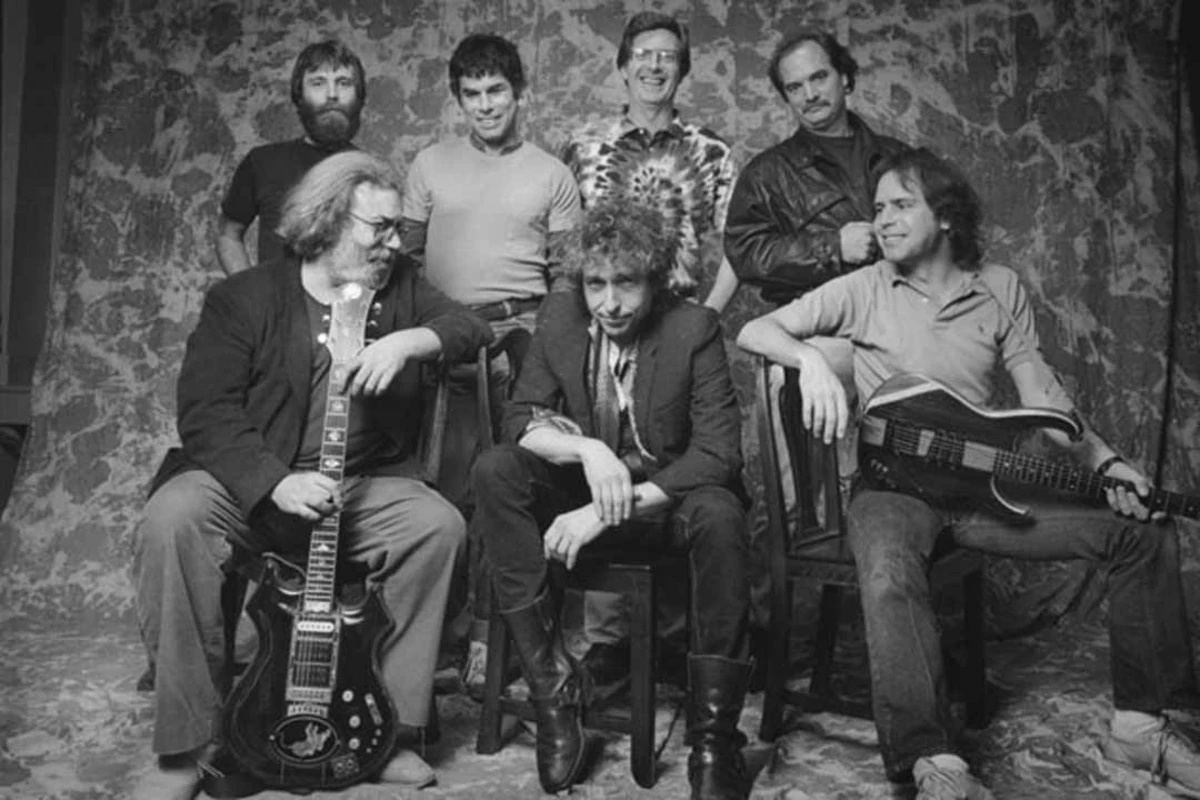
While you can put ten Deadheads in a room and end up with 12 opinions, there’s one thing most fans agree on: the 1987 tour the Grateful Dead did with Bob Dylan was not their best. The period presented somewhat of a low point—performance-wise—for each act. The Dead, however, were devoted Dylan followers dating back to their 60s roots, so who were they to deny their hero when he asked to join up with them for a stadium tour?
Sure, BobDylan may not have been in his best fighting shape, and it’s not like the Grateful Dead needed him to sell tickets, but this was a once-in-a-lifetime opportunity for a band that had already at that point played Woodstock, at the Great Pyramid of Giza, and would later that summer score their first Billboard Number 1 with the album “Touch of Grey”.
Yet, while many agree that the tour—later cataloged on the official live album, “Dylan & The Dead”, released in 1989—was not the strongest, those willing to do a little digging can find diamonds in the rough. With Jerry Garcia still relatively on the mend off his diabetic coma in 1986, the frontman was re-entering performances with fresh vigour as the band steadily moved toward what would prove to be a late-career peak through the end of the 1980s.
Though the 1987 joint tour may not be the most enjoyable to listen to, these concerts served as a catalyst for something great both from the Dead as well as Dylan, who would emerge in 1989 with possibly his best and most well-received album of the decade, “Oh Mercy”. That is why it was exciting to see a new Dylan and the Dead bootleg quietly uploaded to Bob’s YouTube channel this week, entitled “Honky Tonk Lagoon“.
A shared characteristic of both Bob Dylan and the Grateful Dead is the massive amount of bootlegs in each others catalogue. From Dylan’s “The Basement Tapes” to the Grateful Dead’s “Dick’s Picks” series, there exist massive amounts of unofficial-official content. Though audience recordings of Bob Dylan and the Grateful Dead’s July 17th, 1987 concert at Autzen Stadium in Eugene, OR have existed for years, the audio uploaded to Dylan’s YouTube page on October 15th represents a sizable improvement in quality as it was taken from a KLCC broadcast of the concert.
Since it was released through the Dylan channel, Honky Tonk Lagoonfeatures only performances of Bob’s originals with the Grateful Dead as his backing band. The Dead are tight on the uptempo blues of “Maggie’s Farm” that starts the collection while the singer is best described as someone doing a bad impression of Bob Dylan.
As is to be expected from shows on the 1987 joint tour, not every song is a winner. The Dead make the most of newer compositions like “Dead Man Dead Man”, which Jerry imbues with a bit of “West L.A. Fadeaway” energy, and Brent Mydland is given the space to shine on “Watching The River Flow”. The gems come as the Grateful Dead get to take on the Dylan songs they’ve co-opted into their own songbooks long ago, like “Ballad of a Thin Man”, “All Along The Watchtower”, “It’sAll Over Now, Baby Blue”, or the Jerry Garcia Band staple “Tangled Up In Blue”.
Though there aren’t any extensive jams, the result is a humbling documentation of a band prostrating itself before its almighty. The excesses of the Grateful Dead were poised to destroy the group by the mid-1980s, resulting in Jerry’s diabetic coma that forced him to have to relearn the guitar. Though they were the ones filling the stadiums, these shows relegated the Grateful Dead to simply being Bob Dylan’s backing band. An experience like that no doubt painted the bright lights of the stage in a different hue, and it’s likely no coincidence that the Dead went on to experience their most profound period of commercial and critical success while also playing their strongest shows of the entire decade soon thereafter.
Just as Dylan & The Dead is meant to be appreciated as a cultural antiquity rather than a document of peak performance, so too is Honky Tonk Lagoonmeant to be enjoyed for the effect it had on the Grateful Dead.
In the years between 2018’s Bambiand LP3,Minneapolis’ Hippo Campus – made up of vocalist guitarists Jake Luppen and Nathan Stocker, drummer Whistler Allen, bassist Zach Sutton, and trumpeter DeCarlo Jackson – has grown up and into itself. Although the five-piece has been friends since middle school and put out a number of studio releases since its inception, it’s the new record, “LP3″, that’s the most honest portrait of who Hippo Campus is.
After a short hiatus, Saint Paul’sHippo Campus return with a third studio album that marks a subtle but important shift in direction. The puppyish indie-pop energy of their first two records ‘Landmark’ and ‘Bambi’ (released just eighteen months apart) is more subdued and controlled on ‘LP3’, taking a backseat to a more mature exploration of individual and collective identity.
“LP3″ is, their strongest and most complete work yet – a freshly-inked portrait excavating young adulthood and identity and, more importantly, how that personal identity fits into a larger camaraderie. It looks at how growing up can just feel like something that’s always moving past you when you’re trying to grab a hold of it; it’s a push-and-pull of letting go or holding tighter – and figuring out what matters the most. Through cinematic, sonic clarity, “LP3″ is a sweeping account of courage and tenacity; tender-hearted stumbling that leads you on the right path after all.
After the release of their acclaimed second studio album “Drunk Tank Pink“, Shame has announced “Drunk Tank Pink (Deluxe Edition)” out November 19th. The Deluxe Edition is a double LP of the band’s second studio record accompanied by early demos. Those residing in the UK/EU can pre-order the album now on crystal clear vinyl at the Secretly Store.
“Drunk Tank Pink” confirms Shame’s status as one of the most exciting bands at the forefront of British music.” – NME
There are moments on “Drunk Tank Pink” where you almost have to reach for the sleeve to check this is the same band who made 2018’s Songs Of Praise. Such is the jump Shame have made from the riotous post-punk of their debut to the sprawling adventurism and twitching anxieties laid out here. The South Londoner’s blood and guts spirit, that wink and grin of devious charm, is still present, it’s just that it’s grown into something bigger, something deeper, more ambitious and unflinchingly honest.
To understand this creative leap you need to first understand the journey shame undertook to get here. From their beginnings as wide-eyed teenagers taken under the decrepit wing of The Fat White Family to becoming the most celebrated new band in Britain and their subsequent crash back down to earth.
It’s no exaggeration to say the members of Shame have spent their entire adult life on the road. A wild-eyed tour of duty marked by glorious music and damaged psyches, when it eventually careered to a stop the band were parachuted back into home territory. Shell shocked, dislocated and grasping for some semblance of self.
Shame’s previous bases – the notorious den of iniquity that was The Queens Head pub, the musical petri dish of Brixton’sWindmill – were either gentrified into obsolescence or no longer viable as an HQ. Sometimes home just isn’t home anymore. Or at least it’s not the way you remember it.
To cope, guitarist Sean Coyle-Smith barricaded himself in his bedroom. Barely leaving the house and instead obsessively deconstructing his very approach to playing and making music, he picked apart the threads of the music he was devouring (Talking Heads, Nigerian High Life, the dry funk of ESG, Talk Talk…) and created work infused with panic and crackling intensity.
“For this album I was so bored of playing guitar,” he recalls, “the thought of even playing it was mind-numbing. So I started to write and experiment in all these alternative tunings and not write or play in a conventional ‘rock’ way.”
Frontman Charlie Steen, meanwhile, took a different tac and attempted to party his way out of psychosis. “When you’re exposed to all of that for the first time you think you’re fucking indestructible,” he notes. “After a few years you reach a point where you realise everyone need a bath and a good night’s sleep sometimes.”
An intense bout of waking fever-dreams convinced Steen that self medicating his demons wasn’t a very healthy plan of action and it was probably time to stop and take a look inward. Shame had always been about exposure – be that the rogues’ gallery of characters they drew inspiration from or the cornucopia of joy to be had from simply being in a band – this time, however, they were exposed to themselves.“You become very aware of yourself and when all of the music stops, you’re left with the silence,” reflects Steen. “And that silence is a lot of what this record is about.”
Pass along the plant-strewn corridor leading into Steen and Coyle-Smith’s shared living space in South East London and hidden away to your left is a dank, brown curtain. Pull it back and open the door… welcome to the womb.
More of a cupboard than a room (it used to house the washing machine until they lugged it outside and put a bed in) and painted floor to ceiling in the specific shade of pink used to calm down drunk tank inmates, the womb is where Steen cocooned himself away to reflect and write. Scraping and shaking lyrics out of himself that – through the prism of his own surrealistic dreams – addressed the psychological toll life in the band had taken on him. The disintegration of his relationship, the loss of a sense of self and the growing identity crisis both the band and an entire generation were feeling.
“The common theme when I was catching up with my mates was this identity crisis everyone was having,” reflects Steen. “No one knows what the fuck is going on.”
“It didn’t matter that we’d just come back off tour thinking, ‘How do we deal with reality?!?’” agrees Coyle-Smith. “I had mates that were working in a pub and they were also like, ‘How do I deal with reality?!?’ Everyone was going through it.”
The genius of Drunk Tank Pink is how these lyrical themes dovetail with the music. Opener “Alphabet” dissects the premise of performance over a siren call of nervous, jerking guitars, its chorus thrown out like a beer bottle across a mosh pit. “Nigel Hitter”, meanwhile, turns the mundanity of routine into something spectacular via a disjointed jigsaw of syncopated rhythms and broken wristed punk funk.
Bassist Josh Finerty had begun to record the band’s divergent ideas at home in South London which were then fleshed out in a writing trip in the Scottish highlands with electronic artist Makeness, before sessions in La Frette studios in France with Arctic Monkeys producer James Ford. The result is an enormous expansion of Shame’s sonic arsenal.
Songs spin off and lurch into unexpected directions throughout here, be it “March Day”’s escalating aural panic attack or the shapeshifting darkness of “Snow Day”. There’s a Berlin era Bowie beauty to the lovelorn “Human For A Minute” while closer “Station Wagon” weaves from a downbeat mooch into a souring, soul-lifting climax in which Steen elevates himself beyond the clouds and into the heavens. Or at least that’s what it sounds like.
“No that’s about Elton John,” laughs Steen. “I read somewhere about him being so cracked out that he told his PA to move a cloud that was blocking the sun. I just thought that was the greatest, Shakespearean expression of ego. Humour is a massive part of this band. We’re not some French existential act where everything is actually sad. There’s light in it as well.”
Shame, Drunk Tank Pink (Deluxe Edition) out November 19th via Dead Oceans
Another artist in the midst of a breakthrough 2021, Arizona-born, Nashville-based singer/songwriter Joy Oladokun will share the famed Ryman Auditorium stage with Jason Isbell & The 400 Unit the night before her Sunday afternoon Shaky Knees set, with her first-ever headlining tour to follow in the spring. Inspired to pick up a guitar at age 10 after seeing a Black woman (the great Tracy Chapman) play for the first time, Oladokun made her major-label debut over the summer with “In Defense Of My Own Happiness”, a sweeping, yet intimate collection of soulful folk-pop songs that features collaborations with Maren Morris(“Bigger Man”), Jensen McRae (“wish you the best”), and Penny & Sparrow(“heaven from here”). Oladokun—aka “the trap Tracy Chapman,” as her Twitter bio reads—makes powerfully emotional music, but is quickly becoming known for her funny and engaging stage presence.
Joy Oladokun has released her inaugural Spotify Singles recordings, including a re-work of her original song “Sunday” as well as a cover of Bonnie Raitt’s classic “I Can’t Make You Love Me,” featuring the inimitable Jason Isbell.
Oladokun also recently released a special deluxe edition, “in defense of my own happiness (complete)“, which includes all 14 tracks from her major label debut, and ten additional songs from her self-released 2020 record, “in defense of my own happiness (the beginnings)”.
Joy’s new rendition of “Sunday” is a soulful and raw rendition of the emotional original, a deeply personal meditation on religion, sexuality, and acceptance. Her cover of Bonnie Raitt’s “I Can’t Make You Love Me” moves at a lilting pace before Isbell (Joy’s tourmate for a run of shows last month) comes through with an Earth-shaking guitar solo.
Says Joy: “I’ve been a rabid consumer of Spotify Singles since their inception. Being asked to do one was a dream come true and I wanted to bring in the best crew. I asked Jason Isbell to play guitar on the Bonnie Raitt cover and he absolutely smashed the energy and emotion of what I was trying to do. So excited to have these out in the world.”
Joy Oladokun (born 1992 ) is an American singer-songwriter. Oladokun’s music spans the genres of folk, R&B, rock, and pop and is influenced by her identity as a queer woman of colour. She has released three studio albums; Carry (2016), In Defense of My Own Happiness (The Beginnings) (2020), and In Defense of My Own Happiness (2021).
With a guitar in hand, baseball cap over her eyes, and hooded sweatshirt loose, a woman sings with all of the poetry, pain, passion, and power her soul can muster. she is a new kind of american troubadour. she is Joy Oladokun. the Delaware-born, Arizona-raised, and Nashville-based Nigerian-American singer, songwriter, and producer projects unfiltered spirit over stark piano and delicate guitar. after attracting acclaim from vogue, npr, and american songwriter, her words arrive at a time right when we need them the most.
“Words are such a powerful tool,” she states. “I remember all of the best and worst things anyone has ever said to me. I love and respect the ability of words to touch on the physical realm. I’m very intentional with my words. I’m grateful and try to be as encouraging as I can, because I’ve been in situations where that has not been the case and it’s hurt me or others. people are traumatized by words or uplifted and encouraged to change their lives and careers by them.”
Her dad’s record collection included hundreds of titles, and he introduced Joy to everyone from Phil Collins, Peter Gabriel, and King Sunny Adé to Conway Twitty and Johnny Cash. as mom and dad stressed academics, she wasn’t allowed to watch tv on weekdays. But on saturday, they would “either rent a movie from blockbuster or watch the thousands of hours of concert and music video footage dad had recorded since coming to the states.” one afternoon, she witnessed Tracy Chapman pay homage to Nelson Mandela during his 70th birthday tribute at Wembley arena.
“When you listen to me, I want you to feel like you’ve taken an emotional shower,” she leaves off. “that’s what I’m trying to accomplish for myself. To me, music is a vehicle of catharsis. I write a lot of sad songs, but I always push for a sliver of a silver lining or glimmer of hope it could be better. that’s why I’m writing in the first place. I want you to be changed when you hear me, and not because I’m special, but because I make music with the intention to change myself.”







 The Fat Angel Sings