Archive for the ‘CLASSIC ALBUMS’ Category

RyanAdams

“As the alt-folk hero’s 14th studio album, Ryan Adams‘ self-titled effort is the longest he’s ever taken with just three years. It is more than worth the wait, singularly containing all that’s great about his unique material – vivid and reflective poetry, blistering open-road Americana and folk so sweet it’ll rot your teeth. Arguably this is his best album since Gold, the likes of ‘Kim’, ‘Stay With Me’ and ‘Gimme Something Good’ mark the former Whiskeytown man on his finest form, delving into an arena-ready realm of rock .


Alt-country, alt-pop, punk, rock, metal, blues, transformative covers, soundtrack-ready anthems— you never know what you’re gonna get with Ryan Adams, one of music’s most unpredictable polymaths. On this self-titled project, he settles into his sweet spot, like a power hitter waiting for a waist-high fastball down the middle, and goes yard. The album kicks off with a potent one-two combo: “Gimme Something Good,” with sharp, bluesy riffs and a vintage Tom Petty vibe (bolstered by founding Heartbreakers member Benmont Tench’s soulful organ), followed by the sparse, plaintive “Kim,” with Adams at his heartbroken best. As a singer/songwriter, he’s always put equal emphasis on both sides of the craft, with a knack for fashioning hooks you can’t easily shake off. Note the magic in the simplicity of “Am I Safe,” a melancholy strummer with a dark underbelly (“It’s complicated/I just don’t love you anymore/I just want to sit here and watch it burn”). Adams deserves a place among the best American songsmiths, in the tradition of Dylan and Springsteen. Maybe his genre-hopping makes him tough to pin down, or his mercurial personality leaves him feeling unknowable, hard to define. Of course, it’s the music that matters. Let this album stand as yet more evidence that he’s one of the greats

Afghan-Whigs-Do-To-The-Beast

Sixteen years after their last proper release, it seems more ludicrous than ever to lump the Afghan Whigs in with any grunge movement, surprising events that have helped define this band’s reunion. Never mind youthful energies — the Afghan Whigs have always pursued the kinds of qualities that needn’t necessarily diminish with age, like a visual flair courted both onstage and off , plus the iconic album covers for Congregation and Gentlemen.

“Do to the Beast“ finds the group still boasting a surplus of panache; witness visual artist Amanda Demme’s wonderful cover photo of what appears to be a shirtless man giving himself a double-fisted cocaine facial. Likewise, lead vocalist Greg Dulli’s dark obsessions and predatory narrators manage to sound as erotically entrancing as he pushes 50 as they did when he was courting 25,

The songs are unstoppable … sixteen years is a long long time to wait, and to release a collection as instantly vital as this takes my breath away. What an album.” I love this video too.

http://

Leeds-based fuzz-rockers Menace Beach have been floating around here and there throughout 2014, steadily building up a reputation that that has led to their debut LP “Ratworld “– which has been released today via Memphis Industries the band will be playing instore  20th January – Nottingham, Rough Trade (Instore)

Menace Beach, who we know as Ryan Needham (vocals/guitar) and Liza Violet (vocals/guitar/synths), Nestor Matthews (Drums), Matt Spalding (Bass) and Hookworms’ very MJ (guitar) on guitar who also produced the record:

See the source image

Once upon a time there was a radio station like no other. For more than a decade starting in 1968, The JIVE 95, led by its patriarch Tom Donahue, fueled the flames of creative freedom on the airwaves and produced some of the most incredible, inspiring, outrageous radio ever broadcast. This site is dedicated to the spirit and memories of this most extraordinary station.

Throughout the 1970s, Ry Cooder released a series of Records albums that showcased his guitar work, initially on the Reprise Records label, before being reassigned to the main Warners label along with many of Reprise’s artists when the company retired the imprint. Cooder explored bygone musical genres and found old-time recordings which he then personalized and updated. Thus, on his breakthrough album, Into the Purple Valley, he chose unusual instrumentations and arrangements of blues, gospel, calypso, and country songs (giving a tempo change to the cowboy ballad “Billy the Kid”).

See the source image

This recording from KSAN’s broadcast series, captured at the Record Plant in Sausalito, California, 1974 is essentially a solo acoustic show with Ry Cooder, although longtime associates Jim Dickinson and Jim Keltner participate on bass and drums, respectively. Ry Cooder was promoting his third solo album, ‘Paradise and Lunch,’ which most critics still regard as among his best LP to date. Among the highlights from this Record Plant session are ‘Police Dog Blues,’ ‘F.D.R. in Trinidad,’ ‘If Walls Could Talk,’ ‘Billy The Kid,’ and ‘Comin’ In On a Wing and a Prayer,’ which he dedicated to then-President Nixon for his mishandling of the Vietnam War. Ironically, less than four weeks after this recording was made, Nixon resigned from his presidency. Now available at Amazon

Ry Cooder remains one of the very few studio icons who has gained the reputation as a “musician’s musician.” This recording from KSAN’s broadcast series, captured at the Record Plant in Sausalito, California, is essentially a solo acoustic show with Cooder, although longtime associates Jim Dickinson and Jim Keltner participate on bass and drums, respectively. He performs a wide spectrum of material that includes covers and originals from his then-current and previous Reprise albums. Whether it’s a Depression-era styled blues classic, such as “Police Dog Blues,” or Little Miton’s “If The Walls Could Talk,” Cooder is a master at the craft of blending smooth vocals and tasteful guitar licks around a compelling storyline song. If you don’t love the characters he sings about, you are bound to love his true musicianship, which has graced hundreds of recordings by the likes of James Taylor and The Rolling Stones.

Ry Cooder – guitars, vocals, mandolin; Russ Titelman – bass; Jim Keltner – percussion, drums; Milt Holland – percussion, drums; Bobby King – backing vocals; Gene Mumford – backing vocals; Cliff Givens – backing vocals

No photo description available.


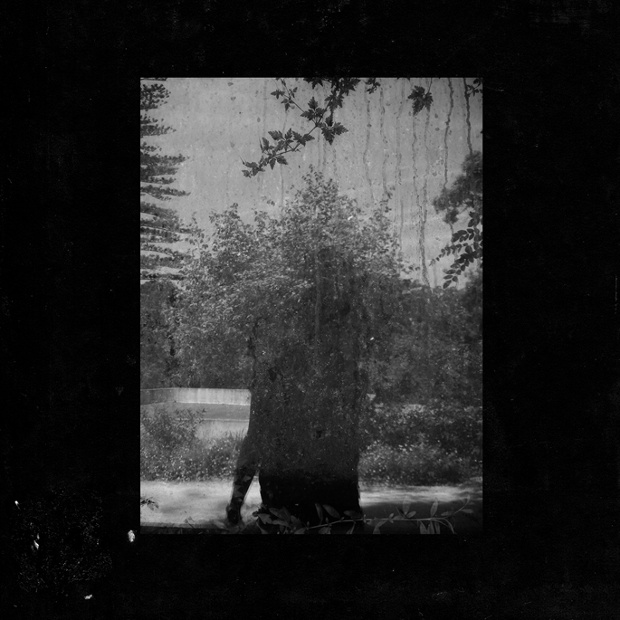
grouper

The ambient US musician’s 10th studio album is “the most heartbreaking and beautiful record of the year by a country mile…”. The album was recorded very simply with a portable stereo microphone next to an upright piano, and even includes a beep from a microwave picked up accidentally. Liz Harris, from Portland Oregon, however, is unlikely to share any of these piscatorial characteristics but the music on her new album ‘Ruins’ does indeed
have more than a little flavour of cimmerian subaquatic mystery about it.

This collection could not, in any terms, be considered “easy listening”. Ms Harris has a disctinctive vision which bares some resemblance to the spectral landscapes conjured by Austrian singer/songwriter Anja Plaschg (aka Soap & Skin) and listening to these eight compositions is among the most unsettling musical experiences I have had this year.

Following an enigmactic introduction, which consists of little more than
a faint heartbeat and what seems, to my hairy ears, to be a few croaks
from a wayward crow, the first song in the set, ‘Clearing’, an arrangement
for voice and piano, unfolds so quietly that it is almost impossible to
discern the half-whispered words but the fragile melody is quite beautiful
in its own way and the sum effect of the piece is strangely captivating.


http://

Craig Finn and Co. are joined by the excellent Steve Selvidge (who came along on the support tour for 2010’s introspective Heaven Is Whenever), and twin-attack guitars are suddenly the going thing once again. The Hold Steady continues to grow up in public, but where Heaven was the sound of a group figuring out how to transition from bar-band woodshedding into the complexity of middle age, privately and professionally, “Teeth Dreams” will likely be seen in hindsight as the point where the band members considered various paths, then said, “Fuck it,” and kicked a new one for themselves, retaining their youthful power while articulating the lessons of age. The group’s sixth album is as rewardingly energetic in places as anything it’s ever recorded (see “Spinners” and the barreling “Big Cig”), but it’s also the most literate and lyrically expressive album in its catalog to date, which is saying a hell of a lot for aband that started and stayed brainy without slipping into precious.

teethdreams

The Hold Steady could likely keep making “Hold Steady albums” for as long as it wanted to—the formula works—but the group is still heading new and interesting places. The fact that it’s consistently been one of the smartest American bands of the past decade makes that journey all the more impressive.

The new album from the Swedish Indie Folk sisters Klara and Johanna Söderberg delivers on the promise of the incredible “The Lion’s Roar” and then some. with their third released album. That album’s producer, Mike Mogis, returns for “Stay Gold” — and brings a 13-piece orchestra to fittingly and flawlessly support the sisters’ soaring, airy vocals.Mike Mogis, who worked on the band’s previous album, The Lion’s Roar. The album was released in June 2014 in mainland Europe and the following week elsewhere.

According to an interview in Swedish TV webpage, the album is more about their own lives than their previous ones. “That one has to learn appreciate what is and that all flows, that nothing stays “Stay Gold” introduced new elements to First Aid Kit’s music, such as a 13-piece orchestra. Their previous albums had been produced in such a way that would allow the band to perform with 3 people on stage, however these limitations have been lifted to give the band a bigger, more fulfilling sound.

The album has been well received by most music critics, noted that the album is “noticeably more expansive than any of their previous work”, and “has a rich texture of classic country instrumentation and stirring string arrangements, matching their soaring vocal melodies. The larger sound that came from the band utilising more instruments, as well as the sister’s “new-found, beefed up timbres”. It also described the album as poised to knock you for six this summer, aimed at cracking the United States, making the kind of wide-eyed, ‘70s-tinged folk-rock that thrives on soaring vocals, warm harmonies, big choruses, and heart-on-sleeve lyrics.

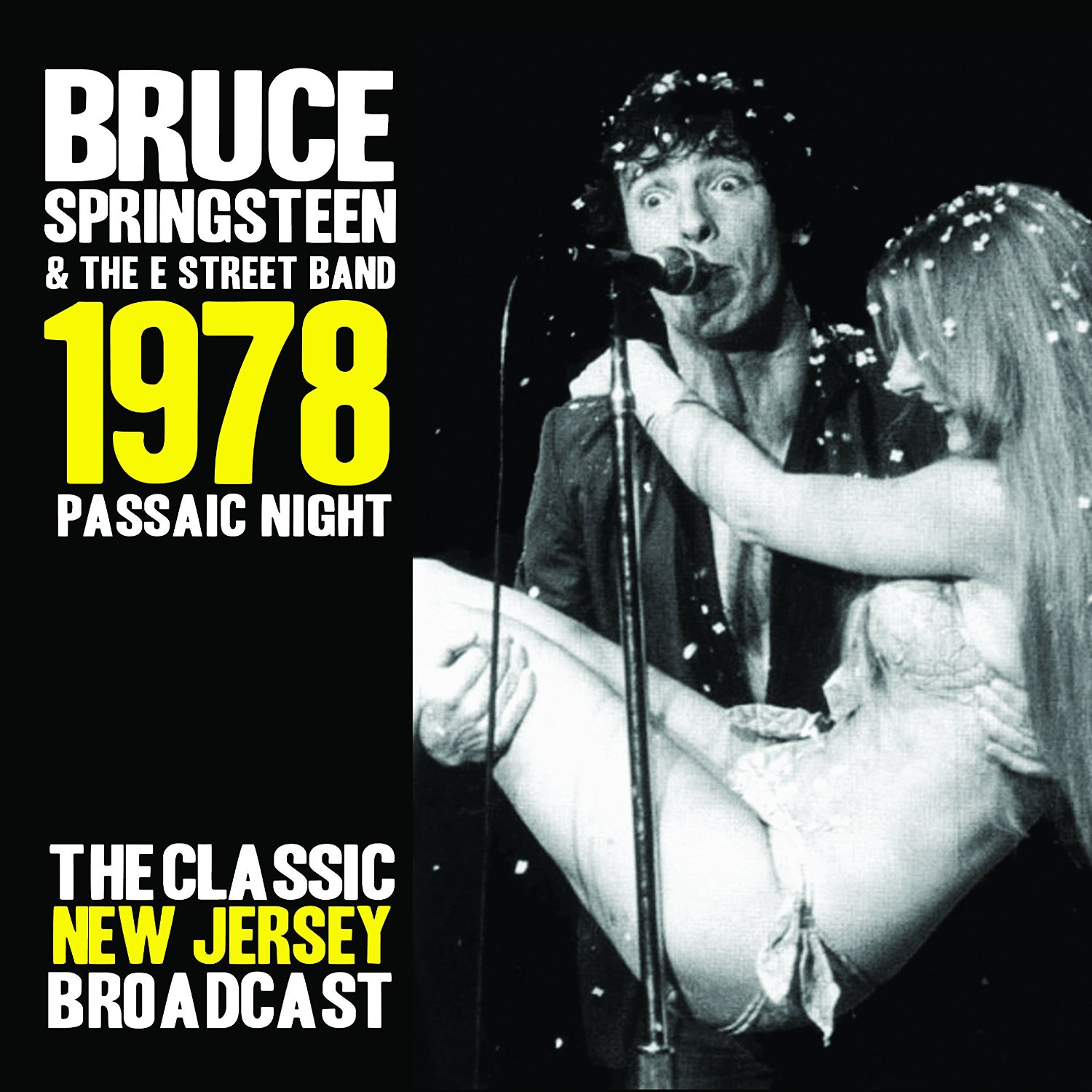
brucepassiac

Bruce Springsteen has played over a thousand shows across the last four decades, nearly all of which will live forever in the hearts and memories of the fans who attended. However, there are a handful of shows that are so well-known and legendary that they are referred to simply by one name: Agora, Passaic, and Winterland. These shows have become part of a Springsteen fans vernacular and used as a point of reference when discussing just about every aspect of Bruces career. These abbreviations of course refer to the following concerts Bruce Springsteen and the E. Street Band performed in the wake of the Darkness album in 1978. Agora: The Agora Ballroom, Cleveland, OH, August 9, 1978; Passaic: Capitol Theatre, Passaic, NJ, September 19, 1978; Winterland: The Winterland Ballroom, San Francisco, CA, December 15, 1978.

In addition to all being from the same tour, they were also all broadcast live on the radio. And they were transmitted through the surrounding areas the Agora show was heard throughout the Mid West; Passiac was heard up and down the Northeast, and Winterland was broadcast in Northern California up through Seattle, Washington – indeed all areas that had supported Bruce in the first five years of his recording career, and through extended time between the Born to Run album and its 1978 follow-up, Darkness on the Edge of Town.

The show presented on this 3 CD set, as performed in Passaic, New Jersey, on September 19th 1978, is perhaps the best of the bunch. Played on the first night of a 3 date run at the Capitol Theatre, it was the night before Bruces birthday on the 20th, and the party mood had begun now available through Amazon.

http://

Florida teenager Malcom Lacey, who uses the recording alias Arrange, is an album providing at least one answer to the question, “Where next for chillwave?” It uses some of the tones, drones and textures of glo-fi for a suite of songs – some instrumental and others featuring a barely audible moan that we shall for the purposes of this article call “vocals” – that appear to demonstrate what happens when one human being terminates a close personal, and possibly even sexual, relationship with another. See, “Plantation” is a breakup record. And in this particular regard, it makes Beck’s Sea Change sound like U2’s Rattle and Hum. For that matter, it makes Bruce Springsteen’s Tunnel of Love sound like Bruce Springsteen’s Born to Run. It is utterly bereft of hope, although that could just be us, projecting.

That Lacey is a teenager is even more remarkable. He has made a terrifically listenable album, albeit a terminally sombre one, which is a work of such sustained sorrow you start to worry about his mental health. Give us a good old-fashioned delinquent, degenerate teen any day. It’s these quiet ones that scare us. Of course, the idea that this is a breakup album is largely supposition, dictated by the general mood of Plantation – think REM’s Michael Stipe circa Murmur, making a solo album with the Conor Oberst/Bright Eyes of Digital Ash In a Digital Urn – and the odd lyric. Like the few snatches that you can just about make out on the single When’d You Find Me? (perhaps a black joke in itself, on which Lacey sings: “Goddamn these thoughts, and goddamn these people that remind me of him …” Probably not. It’ll be love, or the loss/lack of same.

Plantation is pretty relentless. Opening track In Old Theaters is piano pop, only really dour, like a suicidal Ben Folds. On Tiny Little Boy the music is so drained of anything resembling light, even the drums seem depressed. On Turnpike, Lacey, croaking now, declares, “I’ve been burning away”, over just enough piano notes to communicate his pain. It’s on Tearing Up Old Asphalt you realise it isn’t just maudlin self-pity fuelling this record, it’s what the late, great music writer Ian MacDonald described as “tragic angst”: this is like intruding on someone’s private grief. Not for the faint-hearted, but perfect for the heartbroken.

http://

Two years after the critical success of her breakout second album, “Indestructible Machine”, Lydia Loveless emerges from the trenches of hometown Columbus, OH with the gloves off and brimming with confidence on Somewhere Else. While her previous album was described as “hillbilly punk with a honky-tonk heart” (Uncut), this one can’t be so quickly shoehorned into neat categorical cubbyholes. No, things are different this time around—Loveless and her band have collectively dismissed the genre blinders and sonic boundaries that come from playing it from a safe,familiar place.
http://

Writing from this new-found place of conviction, Lydia crafted 10 songs that are stark in their honesty, self-examination,and openness. Somewhere Else is more elemental than any of Loveless’s previous material; it’s about longing for the other, whether that’s something emotional, physical, or mental, all anchored by her arresting voice that sounds beyond her years. Creatively speaking, if Indestructible Machine was an all-night bender, Somewhere Else is the forlorn twilight of the next day, when that creeping nostalgia has you looking back for someone, something, or just… anything.

Blessed with a commanding, blast-it-to-the-back-of-the-room voice, the 23-year-old Lydia Loveless was raised on a family farm in Coshocton, Ohio—a small weird town with nothing to do but make music. With a dad who owned a country music bar, Loveless often woke up with a house full of touring musicians scattered on couches and floors.

When she got older, in the time-honored traditions of teenage rebellion, she turned her back on these roots, moved to the city (Columbus, OH) and immersed herself in the punk scene, soaking up the musical and attitudinal influences of everyone from Charles Bukowski to Richard Hell to Hank III.