Not for the first time do we see Kingdom of the Holy Sun as a Featured Artist. This is the second time featured on here. The Seattle Psych band feature on this week with tracks from their upcoming album At The Gates Of Dawn. The bands latest offering is pure Club A Go Go beat influenced by bands like The Doors, The Seeds, 13th Floor Elevators and Electric Prunes. This album is up their with recent neo psych bands also coming out of America like The Spyrals, Night Beats and Black Angels. The band have gone in a different direction since their earlier releases. At The Gates Of Dawn is a nice upbeat garage album, the band use the full array of sounds and effects available to them, nice fuzzy tones, wha-wha and jangling guitars, lovely harmonies in the Byrd’s style with swirling electric piano riff’s accompanied by some solid beat drumming. At the Gates of Dawn is another quality psych album coming out of the ever blossoming scene.
Empty Cellar Records is proud to release the newest album by Magic Trick,“Other Man’s Blues”. This offering from the band finds songwriter, Tim Cohen at a crossroads. It was written and recorded during a year that split his time between two lives, in two worlds. The newer of these worlds was on a horse ranch in the northern Arizona desert where he and his partner spent their first year with their newborn daughter. The other was the music world. The latter took place on the road, on tour with Magic Trick or with the Fresh & Onlys. And in the case of Other Man’s Blues, it took place for one week at Phil Manley’s Lucky Cat Studios in San Francisco.
Tim arrived at the studio with a color-coded composition book of songs he’d been writing while bouncing to and fro. This book would have to suffice in lieu of rehearsal time with the 13 other musicians who appear on the tracks. About half of the tracks feature James Kim on drums, the other half James Barone (Beach House). Alicia Van Heuvel (Aislers Set) and Paul Garcia split time on bass. Joel Robinow (Once and Future Band / Danny James) contributes on keys. Emmett Kelly (The Cairo Gang / The Muggers / The Double) provides a couple stunning guitar solos. There are omnipresent vocal harmonies from Alicia, Noelle Cahill and Anna Hillburg, the latter of whom also plays some trumpet. San Francisco standbys Dylan Edrich, Tom Heyman, and Marc Capelle all contribute. It was a loose, largely improvised affair.
I featured the above album recorded by Various artists in a tribute to gospel and bluesman Blind Willie Johnson “God Don’t Never Change: The Songs of Blind Willie Johnson”, As a musician, Blind Willie Johnson has few peers. Even now through the mists of time and his own lo-fi recordings, his best tracks pulse with apocalyptic power. Listening to them today, it’s easy enough to imagine folks gathering around him on a street corner, stirred as his raspy preaching and keening guitar hit them in their souls.
Seminal gospel-blues artist Blind Willie Johnson is regarded as one of the greatest bottleneck slide guitarists. Yet the Texas street-corner evangelist is known as much for the his powerful and fervent gruff voice as he is for his ability as a guitarist. He most often sang in a rough, bass voice (only occasionally delivering in his natural tenor) with a volume meant to be heard over the sounds of the streets. Johnson only recorded a total of 30 songs during a three-year period and many of these became classics of the gospel-blues, including “Jesus Make up My Dying Bed,” “God Don’t Never Change,” and his most famous, “Dark Was the Night — Cold Was the Ground.”
And now, seventy-one years after he died, the gospel-blues great has been nominated for two Grammys.
The nominations are for the above album God Don’t Never Change, a widely praised tribute album of his tunes reinterpreted by the likes of Tom Waits, Rickie Lee Jones, Derek Trucks and Susan Tedeschi, and Lucinda Williams.
They’re just the latest to sign onto the long list of Blind Willie Johnson’s admirers. Countless others—including Robert Johnson, Howlin’ Wolf, Reverend Gary Davis, Bob Dylan, Taj Mahal, Ry Cooder, Eric Clapton, the Blues Project, the Grateful Dead, Led Zeppelin, and Captain Beefheart have been inspired by his potent musical mix of godly lyrics and the blues’ visceral impact.
Blind Willie Johnson was born in 1897 to a sharecropper and his wife in a small town near Waco, Texas, he grew up attending the Baptist church among the most music-driven fundamentalist Protestant sects. Baptist choirs and congregations took an otherworldly “unison moaning” approach to hymns that, to the un-devout, can seem sexual as hell.
The feeling of rapture shaking his Baptist church is one likely reason the boy wanted to become a preacher. And the cigar-box guitar his father gave him when he was five set him on the road toward becoming a gospel-blues street musician. It was around this time that the young Willie went blind. Depending on who you believe, either he tried staring at a 1905 partial eclipse and suffered the consequences, or his stepmother threw lye water mixed with Caustic Soda at his father when he attacked her because she was playing around with other men, and some of it hit the boy’s face.
As blues historian Samuel Charters is the main reason we know as much about Johnson as we do put it in his liner notes for the Roots and Blues series Complete Recordings of Willie Johnson, “Singing and begging are about the only two ways a blind man can make a living in farm country.”
By his teens, Johnson was an itinerant performer who worked city streets and burgeoning Christian Conventions with a fiery panache. He honed the ferocious preaching-singing delivery out of the Baptist church that he’d also heard other street preachers use. And he developed his deft, multifaceted slide-guitar attack, mostly tuning his Stella to open-D. For recordings, at least, he wielded a knife as a slide, finessing his unparalleled dexterity to double his vocals, play call-and-response, or bristle with edgy rhythms. Over the years, Johnson played guitar most often in an open D tuning, picking single-note melodies, while using his slide and strumming a bass line with his thumb. He was, however, known to play in a different tuning and without the slide on a few rare occasions. Regardless of his excellent blues technique and sound, Johnson didn’t want to be a bluesman, for he was a passionate believer in the Bible. So, he began singing the gospel and interpreting Negro spirituals.
By 1927, Johnson had built a big enough regional reputation to interest Columbia Records‘ “race records” scouts. Race records by black artists were aimed primarily at the 1.6 million black emigrants fleeing the rural South for the urban North and the (often unfulfilled) promise of better jobs and living conditions. (This modern-day Exodus was immortalized in painter Jacob Lawrence’s famed Migration series.) For them, race records brought the nostalgic sounds of home. Later, they became invaluable documents tracing the development of blues and roots music.
For black artists, cutting race records offered cash upfront but no royalties. They served as over-the-airwaves ads, hopefully paying off in bigger earnings on the streets and stages. Columbia rated Johnson’s popularity highly enough to pay him $50 per “usable” side—above the norm, and several times the $10-15 Robert Johnson would get for his recordings a decade later, during the Great Depression.
https://www.youtube.com/watch?v=t5HaHVKRouo
The label’s bet paid off: his debut single “Jesus Make Up My Dying Bed b/w I Know His Blood Can Make Me Whole outsold their leading race records star, Bessie Smith. Over the next three years, he’d cut 30 tracks in Texas and Louisiana hotel rooms.
But the Depression dropped the bottom out of that market. Johnson’s three-year career as a recording star ended abruptly in 1930, though he continued to perform on the streets of Texas towns and cities into the 1940s. By 1945, he had his own church, the House of Prayer in Beaumont.
Despite the fact that Johnson did not record after 1930, he continued to perform on the Texas streets during the ’30s and ’40s. Unfortunately, in 1947, the Johnsons home burned to the ground. Unable to afford repairs, he lived in the wreckage until he contracted malarial fever from exposure. His second wife told Charters no hospital would admit him—either because he was black, or because he was blind. He caught pneumonia shortly thereafter and died in the ashes of his former home approximately one week after it was destroyed. His second wife Angeline went on to work as a nurse during the 1950s.
His second wife told Charters no hospital would admit him—either because he was black, or because he was blind. When he died that September, his death certificate listed syphilis as a contributing factor to his demise.
Maybe the travelling preacher-musician found women besides his wives for company on the road. He’d be far from alone among gospel singers, whose history is ironically checkered with sexual scandals.
Whatever Johnson’s human foibles, one story suggests the effects he could have.
In December 1929, in front of the New Orleans Customs House, Johnson delivered a performance of “If I Had MyWay” . The song, which would become a much-covered classic, narrates the tale of Samson and Delilah, and turns on the refrain, “If I had my way, I would tear this building down.” Apparently Johnson’s intensity so moved the crowd—and so frightened the cops—that he was arrested for inciting a riot.
This chilling track, inducted into the Grammy Hall of Fame in 2011, marks a pinnacle of Blind Willie Johnson’s art. His keening guitar and wordless moans pulse with imminent fear and dread the Pale Rider of the Apocalypse as a blind black guy armed with a guitar. In 1977, astrophysicist Carl Sagan’s NASA team included it among the 27 pieces of music on the Voyager probe’s Golden Record, intended to help extraterrestrials understand who we are.
Ry Cooder has always named Johnson as a foundational influence. You can hear it any time he plays guitar, but especially on the soundtrack for Paris Texas, where he channels Blind Willie with an eerie timelessness that’ll make your scalp crawl.
Jesus Is A Dying Bed Maker
Blind Willie Johnson was far from the first to play a version of this, which can be traced back to Isaac Watts’ famed 1707 hymnal. Charley Patton, Father of the Delta Blues, was hardly a religious paragon, but included this variant song in his repertory.
Bob Dylan’s 1962 debut album included a version patterned on White’s; the liner notes claim he used his girlfriend’s lipstick to play slide.
Led Zeppelin did—what else?!—an 11-minute version, for which they—what else?!—claimed writing credit.
Irma Thomas, The Soul Queen of New Orleans, had her first hit, Time Is On My Side, immediately covered by the Rolling Stones. By this time, her already rich vocals matured to even richer depths.
Deeply studied in roots music, Tom Waits has transformed it into something all his own. John The Revelator.
https://www.youtube.com/watch?v=Z0ZFV3wCTi4
Son House was a young preacher who hated the blues as “devil’s music,” started drinking and whoring and playing bottleneck guitar, and then served time at Parchman Farm for murder. He became the musical link between his friend Charley Patton and younger bluesmen Robert Johnson and Muddy Waters.
https://www.youtube.com/watch?v=uPmacnYVb6A
Nick Cave’s dark outlook chimed with the blues, thanks to the idiosyncratic Hal Willner, who produced this live performance. of John the Revelator. Here Tom Waits mixes the blues, ghostly choirs, and typically bizarre sounds
Nick Cave singing ‘John the Revelator’ by Blind Willie Johnson. This is from one of the classic Hal Willner concerts that took place in 1999 and 2001. This can be found on The Harry Smith Project: The Anthology of American Folk Music Revisited box set
Taj Mahal, an amazingly wide-ranging, versatile musician, was a key mover in the 1960s folk revival, along with his former Rising Sons bandmate Ry Cooder.
Reverend Gary Davis started as a street performer and rose to become a leading light of the 1960s folk revival—and arguably Johnson’s greatest interpreter. His ferocious fingerpicking and gruff vocals sport an engaging looseness that belies their complex interaction. He switched back and forth between preaching and salacious blues with apparent impunity.
Blind Willie Johnson’s “mother’s” became “motherless” in most subsequent versions.
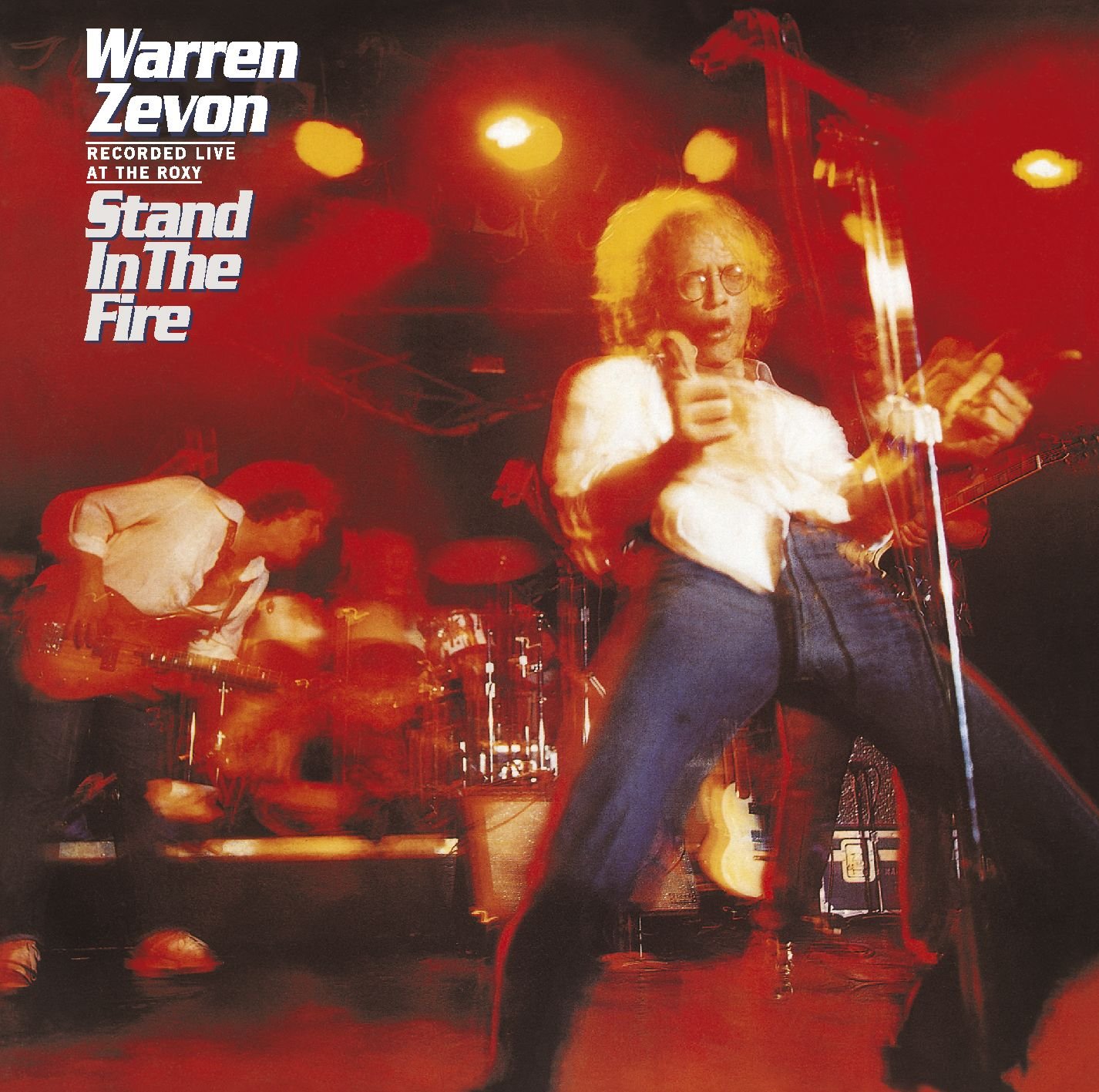
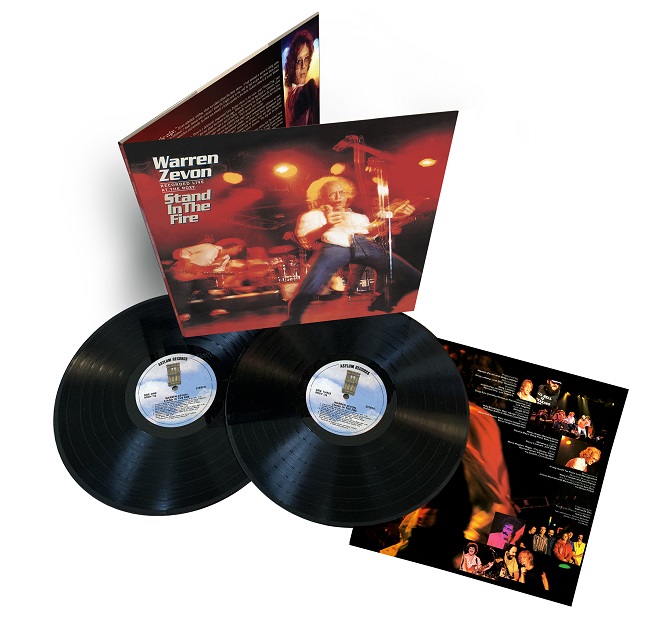
Get ready to howl! Run Out Groove has announced its latest fan-voted release, and it’s from the late singer-songwriter Warren Zevon. The label will press a limited and numbered Deluxe Edition of Zevon’s live album “Stand in the Fire – Recorded Live at The Roxy” in a generously expanded format. The original LP was originally released at the tail end of 1980 and was recorded over a five-night stand in August of that year at the famed West Hollywood venue. It boasted ten tracks – including mordant favourites “Werewolves of London,” “Poor, Poor Pitiful Me,” “Lawyers, Guns, and Money” and “Excitable Boy” – and the 2007 CD reissue added four more including “Hasten Down the Wind.” Now, RUG will not only carry over those four additional cuts in their vinyl debut but will also add six previously unreleased bonus tracks including “Roland, The Headless Thompson Gunner,” “Bad Luck Streak in Dancing School,” “Gorilla, You’re a Desperado,” “Night Time in the Switching Yard,” an alternate version of “The Sin,” and a cover of Allen Toussaint’s “A Certain Girl.”
The double-vinyl set will be cut to lacquer and will feature previously unseen photos and deluxe packaging in the Run Out Groove tradition; it will be pressed on 180-gram heavyweight black vinyl. Stand in the Fire is available for pre-order until October 8th, at which time it will be pressed to the quantity ordered. Members of the band Boulder (signed to Elektra Records, sister imprint of Zevon’s home of Asylum Records) supported the iconoclastic, much-missed songwriter on a strong setlist (which boasted new songs “The Sin” and the title track). Stand in the Fire has always been an integral part of the Zevon discography; with these six new cuts, this release should prove definitive.
As always, with the announcement of a new ROG title comes the opportunity to vote for the next one. These are your choices, and voting is open now at Run Out Groove’s website. All descriptions below have been provided by the label.
For much of his career, Warren Zevon particular brand of genius relied on A-list Los Angeles session pros and friends like Jackson Browne Linda Rondstadt and Neil Young to help out on his records. But for his first live album, 1980’s “Stand in the Fire”, he called in a group comprised mostly of comparative amateurs.
He enlisted Boulder, a Colorado bar band that had been signed to Zevon’s record label, Elektra Records, and whose debut included a cover of his “Join Me in L.A.”Boulder—who already did some of his songs. After auditioning them solely by running them through Chuck Berry’s classic “Johnny B. Goode,” Zevon hired them and brought along studio ace David Landau to play lead guitar. They then hit the road together for the Dog Ate the Part We Didn’t Like tour.
Released on December. 26th, 1980, Stand in the Fire was culled from performances recorded during a multi-night stand at Los Angeles’ Roxy in West Hollywood. It’s the most full-blooded rock ‘n’ roll Zevon ever released fully capturing the bar-band flavor of the performances, with two strong new songs “Stand In The Fire” and “The Sin” joining Zevon’s mix of sentimental and sardonic tunes . His earlier albums — great as they are — suffer from the genteel production techniques of the day, but he’s positively unleashed here. The whole thing threatens to come apart on a few occasions, but Zevon manages to hold it all together. “Excitable Boy, Werewolves Of London” with an aside about Brian DePalma, and a powerful version of “Mohammed Radio”. It helps that he’s egged on by Boulder, who bring out the savage wit of such Zevon favorites as “Excitable Boy,”“Poor Poor Pitiful Me” and, especially, “Lawyers, Guns and Money.” with a rewritten verse to reflect the Iranian hostage situation — is particularly powerful, and “Jeannie Needs a Shooter” and “I’ll Sleep When I’m Dead” are beautifully bludgeoned within an inch of their lives.
Must-hear tracks are the medley of Bo Diddleys A Gunslinger and Bo Diddley , which closed the original vinyl version, let Zevon get downright guttural in his homage to a rock ‘n’ roll hero.
Zevon throws no small degree of spontaneity into the equation. He ad libs some new lyrics in “Werewolves ofLondon” to take jabs at friends (“And he’s looking for James Taylor,” “I saw Jackson Browne walking slow down the avenue / You know, his heart is perfect”) and, at the end of “Poor Poor Pitiful Me,” calls out his road manager and best friend George “Gorilla” Gruel: “Gorilla, get up and dance. Get up and dance or I’ll kill you. And I got the means!”
Despite its standing among Zevon fans, Stand in the Fire wasn’t released on CD when the rest of his catalog hit the format. Instead, it was delayed until 2007. But it was worth the wait: Four additional songs from the shows (“Johnny Strikes Up the Band,” “Play It All Night Long” and solo piano renditions of “Frank and Jesse James” and “Hasten Down the Wind”) were added to the mix.
The album was originally dedicated to Martin Scorsese, and it’s a bit ironic considering the live record basically disappeared but around half a decade later Scorsese’s use of the original studio version of “Werewolves of London” in The Color of Money (one of the masters all-time great music in film moments) added some needed bite to Zevon’s name .
The Rolling Thunder Revue started off 40 years ago on October 30th, 1975, and continued into the middle of 1976. Even by Bob Dylan standards, there was a lot of shape shifting in the mid-’70s. His 1975-76 Rolling ThunderRevue cavalcade tour teamed him with such come-and-go fellow travelers as Joan Baez, Allen Ginsberg, Roger McGuinn, Mick Ronson and a young T Bone Burnett, among many others. (See the oddball film ‘Renaldo & Clara,’ preferably the full four-hour version, to get some sense of it.)
Other artists involved in The Rolling Thunder Revue 1975 1976 Bob Dylan Joan Baez Roger McGuinn Ramblin’ Jack Elliott Joni MitchellMick Ronson Allen Ginsberg Gordon Lightfoot Mimi Fariña T-Bone Burnett Rob Stoner Ronee Blakley
The 3 best all time Bob Dylan live officially released concert albums are obviously “Hard Rain”, “Bob Dylan Live1966, The “Royal Albert Hall” Concert” & “Bob Dylan Live 1975, The Rolling Thunder Revue”. They are all brilliant. Today “Hard Rain” is among the best of the lot.
Hard Rain is a live album by American singer-songwriter Bob Dylan, released on September 13th, 1976 by Columbia Records. The album was recorded during the second leg of the Rolling Thunder Revue.
The album was partly recorded on May 23rd, 1976, during a concert at Hughes Stadium in Fort Collins, Colorado; the penultimate show of the tour, the concert was also filmed and later broadcast by NBC as a one-hour television special in September. (Hard Rain’s release coincided with this broadcast). Four tracks from the album (“I Threw It All Away,” “Stuck inside of Mobile with the Memphis Blues Again,” “Oh, Sister,” and “Lay, Lady, Lay”) were recorded on May 16th, 1976 in Fort Worth, Texas. Neither the album nor the television special was well received at the time. It was outdoors, it rained, and when it aired in September of that year, much-hyped, it was not so well received. Though it had its moments, it was kind of glum. But the concurrent album of the same title? What was glum on TV was raging on vinyl.
“Although the band has been playing together longer, the charm has gone out of their exchanges,” writes music critic Tim Riley. “Hard Rain…seemed to come at a time when the Rolling Thunder Revue, so joyful and electrifying in its first performances, had just plain run out of steam,” wrote Janet Maslin, then a music critic for Rolling Stone. In his mixed review for Hard Rain, Robert Christgau criticized the Rolling Thunder Revue as “folkies whose idea of rock and roll is rock and roll clichés.”
The album received an awful lot bad criticism upon its release, and surprisingly still does. To my ears it has always sounded amazing. Listening to other bootlegs from Rolling thunder 2 & watching the Hard Rain movie (and outtakes), one could easily wish that more songs had been included, and he’d put out a double album. But it is what it is, and it’s incredible. it still sounds fresh & wonderful today.
Hindsight shows that this album introduces the ragged, postmodern Bob Dylan, right from the grungy instrumental ground-pawing ahead of the start of the first number. Moreover the running order now seems surprisingly well thought out. It represents, too, the late phase of the historic Rolling Thunder Revue tour and captures the distinctive, bare-wired sound of Dylan’s existential gypsy band. Stand-out track is ‘Idiot Wind’, which, as Dylan grows ever more engaged, bursts open and pours out its brilliant venom.
Some ’60s faves like “Stuck Inside Of Mobile With The Memphis Blues Again” and newer songs “ShelterFrom The Storm” all get some rough treatment—-gaining fierce intensity amid what sounds like some stormy conditions involving not just the weather, but the participants. Think of it as Dylan’s punk album.
Must-hear: The album opens with “Maggies Farm” as if influenced by the New York Dolls, roaring and messy, powered by Mick Ronson’s strutting glam-metal guitar lines. And a 10-plus minute “Idiot Wind” closes it on an even messier note, compellingly so.
The last three songs on the album (“You’re a Big Girl Now,” “I Threw It All Away,” and “Idiot Wind”) are as powerful and exciting as anything Dylan has done (comparable, for instance, to the May 1966 versions of “Ballad of a Thin Man” and “Like a Rolling Stone”). As phenomenal as every aspect of each of these performances is, the unique orchestration of guitars, keyboards, violin, drums and voice on “Big Girl” must be singled out for particular praise. Stoner’s bass-playing while Dylan sings “Down the highway, down the tracks, down the road to ecstacy” on “Idiot Wind” will have a special place in my heart as long as I live.
Track listing
Side one
“Maggie’s Farm” – 5:23
“One Too Many Mornings” – 3:47
“Stuck Inside of Mobile with the Memphis Blues Again” – 6:01
“Oh, Sister” (Dylan, Jacques Levy) – 5:08
“Lay Lady Lay” – 4:47 Side two
“Shelter from the Storm” – 5:29
“You’re a Big Girl Now” – 7:01
“I Threw It All Away” – 3:18
“Idiot Wind” – 10:21 Personnel
Bob Dylan – vocals, guitar, production
Additional musicians
Gary Burke – drums
T-Bone Burnett – guitar, piano
David Mansfield – guitar
Scarlet Rivera – strings
Mick Ronson – guitar
Steven Soles – guitar, background vocals
Rob Stoner – Bass, background vocals
Howard Wyeth – drums, piano
Robert Chaney is an American performing artist, heir to the songwriting traditional style of Townes Van Zandt, Hank Williams, and Judee Sill. His Highly anticipated ten track debut album Cracked Picture Frames . Written in the bleached out swamps of South Florida and recorded in London, ‘Cracked Picture Frames’ is a hard-core and stripped-down survey of ballads, blood, and bone song after song stuns the listener. The album is “Sharp, intelligent, thoughtful and moving.”
Produced and recorded by Ken Brake at Regal Lane Studio, London
Its an impressive debut – it has the sensibilities of a bygone era without sounding out of date.
There’s very few artists these days that will get you thinking in the likes of Woodie Guthrie, Bob Dylan, Billy Bragg, or any of the other great folk artists of the past (and present). But Robert Chaney is definitely one of those. Right there with Vikesh Kapoor and Luke Redfield, a few other modern troubadours carrying the torch today.
The Jam at Reading University, playing material from their breakthrough album ‘All Mod Cons’, was The Jam’s first live appearance of 1979, and found the band in a radically different place to their showcase at the Music Machine 12 months before. In that time, their third album, ‘All Mod Cons’, had been released to critical acclaim, and their status as one of the New Wave’s most musically substantial and exciting bands had been secured. And PaulWeller was still only 20 years old…
A Music Machine show from 1978, featuring most of the 2nd album – ‘This Is The Modern World’. The show was The Jam’s sixth live show of the year and one of four low-key shows in the capital to fanfare their new ‘News Of The World’ single under the banner ‘The London Blitz’.
Continuing The Jam exclusive live vinyl releases, we now have the concert from London’s 100 Club September 1977 for you, this is a double LP on 180g heavyweight vinyl and very limited.
Double LP packaged in exceptionally stylish gatefold sleeve with printed inner bags.
Re-mastered at Abbey Road and pressed on heavyweight vinyl.
Includes period photos and rare memorabilia.
Featuring stunning live versions of all the band’s classic hits and favourites.
Consider, of the two bands that came from Massachusetts that formed in the mid-’80s, broke up for more than a decade, reunited and began releasing new music in the aughts. One of these groups has grown more vital, even louder with time, while the other has shown steady, middle-aged decline. Perhaps it’s the fact that the best Pixies music was so tied to Black Francis’ youthful, unhinged shriek, now significantly diminished with age. Meanwhile, J Mascis’ creaky Dylan-meets-Young affect has been immune to the ravages of time. Perhaps you can point to the Pixies losing Kim Deal, while Dinosaur Jr’s original rhythm section of Murph and Barlow remains a formidable, tightly coupled force. Of course, having an idiot-savant guitar god in your band doesn’t hurt either. One is reminded that former guitar deity Eric Clapton descended into milquetoast-y irrelevance in his 50s, while Give A Glimpse Of What Yer Not still hears Mascis as a purveyor of fireworks displays that would put the Zambellis to shame. In short, on its 11th LP, Dinosaur Jr does what it has done best for the past 30-plus years, which is to remind us of the life-giving force of guitar, bass, drums and scary-big stack of Marshall amps.
I feel like I’ve been waiting for a new Melody Pool album for far too long. But do you know what? Now that I have “Deep Dark Savage Heart” I can honestly say it was worth the wait. Melody Pool is seriously one of the finest young singer songwriters in Australia The melodies are complex, her lyrics are layered and each song is just so perfectly crafted and presented. If you listen to “Deep Dark Savage Heart” from start to finish – and trust us, you should and will listen over again, prepare to be transported by Pool’s liquid velvet voice. “Black Dog” is among the standout track’s but it’s a highlight in an album full of highlights – every song is worth revisiting over and over again.
Melody moved to Melbourne from Kurri Kurri NSW, her first time living away from home. She also toured with The Milk Carton Kids through Europe and performed two massive shows supporting the Eagles, before returning to Nashville to make Deep Dark Savage Heart with producer Brad Jones, an American who has worked with several Australian
Beth Wawerna wrote the songs on Get Off during one of the most trying periods of her life. She was taking care of her father, who was dying of cancer, and after he passed, her anguish overwhelmed her. She slipped into depression and dealt with her feelings by writing the songs that make up this album. The music is rock, but it’s played with a restrained intensity that honors the emotional force of the lyrics. Wawerna uses the phrasing of a jazz singer, drawing out her vowels and inserting her words into the melodies before, after and against the rhythm. This almost somnambulant approach intensifies the lyrics’ emotional effect. The poignant melodies she crafted with guitarist Clint Newman reverberate on a deep level, and like all great songs, they sound like something you’ve heard all your life, even though you know you’re hearing it for the first time. “Passing Phase,” a mid-tempo tune that suggests New Order playing California surf-guitar licks, deals with the feelings of alienation that allow us to engage in self-destructive behavior, while “Bitter Filth” is a violent, aggressive, Clash-like punk tune that expresses the anger that’s often at the heart of grief and remorse.