Nandi Rose Plunkett writes, records and performs under the name Half Waif. Her music is deeply personal and engaging, reflecting her lifelong endeavor to reconcile a sense of place. Raised against the bucolic backdrop of Williamstown, Massachusetts, Nandi was the daughter of an Indian refugee mother and an American father of Irish/Swiss descent.
“My mood is a pendulum/ I don’t think you could handle it,” sings Nandi Rose Plunkett, the synth songwriter known as Half Waif, early on “Severed Logic,” her new EP’s opening number. After, a second-hand-like ticking gives way to a swell of choppy, hollow-sounding beats. It’s a gorgeous moment, the first of many on the six-song form/a, which drops this week on Cascine Records and is debuting below in full. Plunkett, who also plays with the hyper-literary alt-country band Pinegrove, has a gifted ear for loops that sound huge but still feel like they were cut by hand, and each of these tracks unfurls like a slow-motion power ballad. The textures are immersive, and the lyrics are self-reflective. “And you have been patient through every storm/ Forgive me my baby but what’s one more?” she sings on “Cerulean,” her doubled-up vocals glowing like a lit match in a dark room.
“I set out to record form/a on my own, wanting this EP to be a record of what my moods sound like, if I could pull them out of my insides and amplify them,” said Plunkett. “This collection of songs is a look into how those moods affect my relationships, how they take me on journeys through my past, how they transport me into meditations on life and death.”
Conor Oberst has shared a new music video for “Till St. Dymphna Kicks Us Out,” which was filmed at the very same bar in Manhattan’s East Village that inspired the song. Its director, Greg Marinaccio, also directed Conor’s “You Are Your Mother’s Child” video.
Conor Oberst will release a new album, “Salutations”, on Nonesuch Records, on March 17th, 2017. The album is a companion piece to 2016’s lauded Ruminations.
With The Felice Brothers as his backing band, Oberst will tour in support of Salutations beginning March 9th in his hometown of Omaha, with stops at LA’s Greek Theater in May and then Celebrate Brooklyn Festival in July (full schedule below). Oberst has partnered with Plus 1 so that $1 from every ticket sold on US headline dates will go to Planned Parenthood and their work delivering vital reproductive health care, sex education, and information to millions of women, men, and young people in the US and worldwide.
18 London, UK @ Koko tickets *
20 Brecon Beacons, UK @ Green Man Festival tickets
Marika Hackman’s forthcoming album “I’m Not Your Man” features a striking cover created by artist Tristan Pigott.
Hackman asked Pigott to paint a group portrait of everyone who was closely involved in making the album. “That was really important to me … everyone came together to make this,” she says. The singer-songwriter is pictured standing in a messy kitchen alongside Juliette Jackson, Soph Nathan, Celia Archer and Fern Ford from the band TheBig Moon. Producer Charlie Andrews’ face appears on passport photos on a wooden dining table.
Pigott’s painting is filled with references to tracks from the record as well as recurring themes in his own work. Cucumbers often appear in his art and he is fascinated with images of dying and decaying plants. Sliced apples and cigarette butts refer to song titles and a portrait of Hackman’s friend Gina appears in the pages of a magazine – a reference to the track Gina’s World.
The layout of the portrait reflects the recording process: Archer and Fern played bass and drums in one room while Hackman and Nathan played guitar in another. “We had two rooms and a window in between so we could see each other,” explains Hackman.
There are also references to the cover of Hackman’s previous album We Slept At Last. A painting on the wall inspired by Tracey Emin’s famous artwork My Bed features the same mattress and colour scheme used on the album’s cover.
Alongside this, there are phallic symbols, smiley faces and images alluding to key themes on the album. Dirty dishes represent a rejection of domestic ideals and a detailed postcard on the floor juxtaposed with a simplistic view from a window represent how “we’d rather be looking at the world through a glamourised perspective [ie on social media] than acknowledging reality” – a theme prevalent in the track blahblahblah, says Hackman.
It’s a striking image and a highly detailed one. While most solo artists opt for an image of themselves on their album covers, Hackman’s artwork reflects the idea of an album as a collaborative process. Pigott’s surreal scene offers a window into both Hackman’s world and his and hidden references reward repeat viewing.
“There’s a lot of stuff in there which I think is really fun. It was fun to think of and when I’m looking at record sleeves, that’s what I want to look for and discover. It’s a much more exciting prospect than taking a picture of my face and putting it on the cover,” says Hackman.
Hackman met Pigott at a party and says she “fell in love” with his work. “It’s so incredibly detailed but not everything is quite right,” she says. “Sometimes eyes are slightly off or colours are quite flat … and it creates this really weird illustrative world that also has a sense of the hyperreal. I love that sense of playing with perspective.”
Pigott worked from lyrics and Hackman’s initial concept but also added several ideas of his own, creating the painting while the album was being recorded. “The reason I chose Tristan is because I love his work, so I have to be very respectful of that. I don’t want to stand there and say, ‘do it this way’,” says Hackman. Hackman discussed the initial concept with Pigott and had a look at early sketches but didn’t see the final painting until it was complete.
“He worked out what would be best visually, whereas I was just thinking about everything we’d need to get on [the cover]. We got the layout together and spoke about colour concepts and things like that, but he very much led that side of it and always very much got it right in my mind.”
Todd Rundgren had seemed to be on the verge of something big since the late ’60s. But something always got in the way of that next step. His band Nazz released three albums that never climbed beyond cult status. And his production work — starting a long career that’s included albums for Badfinger, Grand Funk, Meat Loaf, Patti Smith and XTC, among others — was just now getting started after being sprinkled with behind-the-scenes engineering gigs on records by the Band, plus an aborted attempt to make a Janis Joplin LP.
Then in late 1971 he began work on his third album, and the one that would make him a star: Something / Anything? a double album. Three quarters of the album was recorded in the studio with Rundgren playing all instruments and singing all vocals, as well as being the producer.
He did it by pretty much rearranging his past. He went solo — almost entirely solo — writing, recording and playing most of the double album by himself. And with all those tricks he picked up with all that studio time, he was able to effortlessly craft a masterpiece of technical wizardry, blue-eyed soul and some hints of the experimental path his career would take over the next few years. Todd Rundgren began recording “Something / Anything?” in Los Angeles, working in a studio by himself, layering instruments — starting with drums — one by one until the songs were finished. The whirlwind sessions yielded some of his best songs, including album opener “I Saw the Light,” “It Wouldn’t Have Made Any Difference” and “Couldn’t I Just Tell You.”
An earthquake hit L.A. after Rundgren had enough material recorded for a double album, but he returned to his home in New York and wanted to lay down more songs, these in the form of live jam sessions with musicians he didn’t know. The task of assembling the players — including guitarist Rick Derringer, Blood, Sweat and Tears co-founder Randy Brecker and some members of the Paul Butterfield Blues Band — went to keyboardist MoogyKingman, who would later form the more prog-minded Utopia with Rundgren.
The results were pared down to Something / Anything?‘s fourth side, 25 minutes of songs like “Slut” a track that included ’60s-era snippets of Rundgren’s early bands covering “Money (That’s What I Want)” and “Messin’ With the Kid” and, best of all, a power-pop update of “Hello It’s Me,” a song from Rundgren’s Nazz days that was originally recorded as a mournful dirge. The reworked song was released as a single and hit No. 5, his only Top 10.
It’s the centerpiece of Something / Anything?, along with the LP’s fourth side. The album was shaped by Rundgren’s unhappiness working with other people, but was partly defined by the full-band workouts that end the record. Either way, it served its purpose. Rundgren, the producer who had in a hand in crafting other artists’ hit records, was now a hit-making solo artist himself.
The album made it to the middle of the charts after its release in February 1972. It was Rundgren’s highest charting LP and his biggest seller. More important, though, it opened up a creative period that produced two more great albums over the next couple of years: 1973’s A Wizard, a True Star and the following year’s Todd, both way more experimental than the pop-leaning Something / Anything?, his undeniable piece of classic music.
The Antlers frontman Peter Silberman’s forthcoming solo debut “Impermanence” promises to be great self-care music—a previously released single “New York” dealt with Silberman’s sensory overload, while the track “Ahimsa” touches on emotional overload. Behind an ambient guitar , Silberman echoes the mantra, “No violence today.” Silberman explains the song’s meaning and value in a statement, saying:
Ahimsa usually translates from Sanskrit as “non-harming”, which I take to mean practicing a non-violent attitude toward others and myself. I wrote the song as a personal encouragement to cultivate that awareness whenever possible, to be less knee-jerk reactive, to snap to fewer judgments, and above all, to be patient. I need this reminder often. “Ahimsa” is also my ridiculous wish: for a unanimous period of calm and safety, for one whole day of peace. I mostly think this is an impossible goal.
But I hold on to some small hope that it can be reached by an incredibly long road,walked with microscopic steps, by creating harmonious moments and stringing them together, one-by-one, over the course of many lifetimes.
Impermanence will be released by Anti Records on February. 24th. Listen to “Ahimsa” below,also check out Silberman’s upcoming tour dates.
There’s a reason Paul Weller is so respected by his fans despite his shifts in musical styles over the years. Weller follows his heart and his tunes stay true to the times and his age. I first heard him in 1977, when I saw the band at Rebeccas nightclub in Birmingham , A few weeks laterI bought a 45 and later an album, each called “In The City”, by The Jam. Inspired by The Who, the music of The Jam was infused with urgency and melody. Then Weller wanted more from music and began The Style Council with a bit of R&B, ballads and even jazz. For nearly 25 years, Paul Weller has been recording under his own name. Now he has new songs for us all and an album called Saturns Pattern. Here at the Tiny Desk he brings this humble collection of songs acoustically and includes a tune from what may be his best known record, his 1995 album Stanley Road. It’s a pretty heartwarming moment especially for longtime followers of his shifting but consistent quality music.
Set List
“Dusk Til Dawn”
“I’m Where I Should Be”
“Out of the Sinking”
“Going My Way”
Punk rock to new wave, British folk to deep funk, New York garage style to heavy soul; for over four decades PaulWeller has done it all. He’s fronted two bands: The Style Council and The Jam, and embarked on a long solo career that’s been every bit as inventive. His latest album is called Saturns Pattern (without the apostrophe for aesthetic reasons). The record is adventurous, tight and of course, it rocks.
In addition to his latest album, Weller has also released a book of photographs taken by Lawrence Watson; the book is called Into Tomorrow, named after his 1992 album. The photos follow Weller through his 20 year solo career, with hand-written captions.
Today the man known to British rock fans worldwide as The Modfather talks about how and when you realize you’ve written a great song; how kids today (specifically his own—he has seven) don’t appreciate really loud music; and threatens host John Schaefer with a fashion makeover.
Paul Weller says he’s written three perfect songs in his career:
“Wings of Speed” from Stanley Road: “Strange Town” with The Jam:”Going My Way” on Saturns Pattern
Ryan Adams is preparing a limited-edition version of his upcoming latest album, “Prisoner”, which will come with a host of special, seriously unusual extras. Pre-orders for the “Prisoner: End of the World” box are available now for Adams’ Mystery Box email list subscribers (and here on Jan. 25 for the general public), with both in line to receive a digital copy of the album when it drops on February. 17th
So, what do you get for your $150? For starters you’ll unpack 12 7-inch records — one for each of the dozen songs on Prisoner backed with 17 previously unreleased B-sides and all pressed on different colored vinyl and with their own unique cover art. But wait, there’s more! Prisoner is Ryan Adams‘ first album of new material since 2014’s self-titled set and the follow-up to 2015’s cover of Taylor Swift’s 1989 album.
The set also comes with a 2-D playset featuring action figures of Adams and his band, complete with working lights and sound, amps, arcade games, cats and guitar pedal boards. Upping the ante, 12 randomly selected copies of the box will also include a one-of-a-kind solo acoustic 7-inch singles of a Prisoner track recorded at Electric Lady Studios’ legendary Voice-O-Graph. According to a release announcing the set, there will only be one production run of the box, with only one per customer.
Thanks to their just-released album, “About U”, and Tiesto’s remix of their hit single, “Winterbreak,” you might have already heard of dark pop trio MUNA. Formed in 2013 by vocalist Katie Gavin and guitarists NaomiMcPherson and Josette Maskin while students at the University of Southern California, the group hopes to relay a message of inclusivity and acceptance through their music, which they take complete ownership of. “We started this band to be a representation of queer women who create something that is self-contained,” says Katie, who, like Josette, graduated from their college’s Popular Music program. “We write and produce all of our own songs and want to show other people that they can do the same thing.
Although she majored in African American studies and English, Naomi, who comes from a family of musicians, is also the brains behind the group’s graphic design needs and artwork, all while serving as its main producer. The first song she ever produced entirely by herself, “Promise,” appeared on MUNA’s debut EP, Loudspeaker, which was released last year. “I originally wanted to be a professor but when I met Katie and Josette, everything changed,” says Naomi. “They brought out the part of me that always wanted this subconsciously.” The band coins Loudspeaker as the project that defined they year they were making everything real. “Each of the four songs on it has so much meaning in terms of representing ways in which we grew as a band,” says Katie. “It also allowed us to really use music as a conversation starter,” she continues. “For example, I wrote the song ‘Loudspeaker’ for survivors of sexual violence.” The band was able to see just how big of an impact their music had on their fans firsthand when they toured after releasing the EP, and said the opportunity to travel together as best friends and watch one another shine as musicians was nothing short of humbling.
Now, about to embark on another tour throughout North America to promote their freshman album, MUNA are poised to make their mark as the headstrong and cathartic act that pop music needs. “When our fans remind us that what we’re doing has a positive effect on their lives, it’s the most amazing thing,” says Josette. “We hope that we encourage others to create and share their stories,” adds Katie. “Right now, there’s a lot of fear in the world, and fear can lead to silence. So it’s a really important time for us to be doing that.” Sing it loud.
Valley Queen comes from the Neil Young school of great music. The LA outfit has been around for fewer than five years, though listening to their music, you might think your vinyl-junkie friend picked one of their records out of a pile next to Fleetwood Mac and Hendrix. They have a classic Southern grit that makes you crave a sweet tea. They have defined their sound with a bluesy twang on guitar, driving thump on bass, and a soulful Southern vocal in their singer. The latest tease of the band’s long awaited debut album portends the Los Angeles quartet finally realizing their full potential. They’ve never sounded better than they do on “In My Place” — especially vocalist Natalie Carol, has a real powerful voice, and the band’s folk pop has gained comparisons to Fleetwood Mac .She wrestles with the wreckage of her faith and self-perception while anxiously considering her own youth “floating on great expectations” and “choking on grand illusions.”
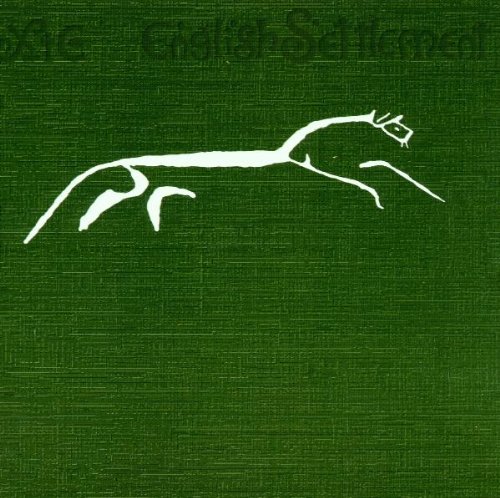
XTC released their fifth studio record, the double album “English Settlement”, on February 12th, 1982. When compared to the band’s previous record, 1980’s Black Sea or the 1979’s post-punk milestone Drums & Wires “English Settlement” is less frantic and more deliberate-sounding. The album spawned three UK singles: “SensesWorking Overtime” “Ball And Chain” and “No Thugs in Our House”. Partridge and Moulding write brilliant, thought provoking, intelligent songs bundled up in the most enthralling, original and enduring arrangements of pop music you could imagine. Partridge as a purveyor of perfect pop must be up there with the very best, his songs are funny, touching, and impossibly catchy. For me this is his and the rest of the band (particularly Moulding)’s best work, and what’s more it’s a double album.
This translates to music that’s stubbornly in between genres and resists pigeonholing. Take the first two songs on the album, “Runaways” and “Ball and Chain.” The former boasts slippery grooves and haunted, stair-step harmonies; the latter is one of XTC’s best songs, a biting condemnation of destructive forward progress (“Motorways and office blocks / They’re standing on the spot where stood a home”) burnished with majestic keyboards and a roller coaster-caliber melody.
Elsewhere, the pastoral “Yacht Dance” feels like a precursor to 1986’s “Skylarking” “All of a Sudden (It’s TooLate)” merges burnished guitars with soulful bass slinkyness and the sharp-angled “Leisure” is a lurching, caterwauling mod-pop. “It’s Nearly Africa,” meanwhile, features rhythms that resemble a muted version of Adam and the Ants’ “Burundi Beat” style, while “Fly On The Wall” harkens to XTC’s buzzing synthpunk days and “Down in the Cockpit” is full-on ska-pop.
English Settlement was firmly new wave, in the sense that it felt like a new beginning not just for XTC, but for the genres the band shepherded and embraced. “I’m becoming much less interested in music and much more in words,” Partridge said in 1982. “And I think it’s beginning to show. On this album, there are a lot of words per track, if you see what I mean. Also, much simpler forms of music appeal to me—I think the music’s getting simpler as the years go by, and this is not a desire to say, ‘Hey, let’s make some money.’ It’s just that I’m trying to simplify the music and be more effective with less.”
One such song is the raucous “No Thugs In Our House,” an intricate song driven by “a desire to write this rather old-fashioned/modern morality tale,” Partridge said in Complicated Game: Inside the Songs of XTC. Featuring a cast of characters including a pair of ignorant parents, a policeman and a deceptively innocent teenager named Graham, who “slept on/Dreaming of a world where he could do/Just what he wanted to”—the song is a piece of trenchant societal commentary.
“At the time it was written, there was an awful lot of awareness of the National Front in England—we’d done at least one Rock Against Racism festival by that time—and at that point in England, there was an awful lot of anti-right kind of feeling, because it seemed like they were growing in prominence,” Partridge continued. “It was probably more to do with the paranoia of the time rather than their actual prominence, if you know what I mean.”
Other songs were more explicit about their political stance. The breezy, tropical-sounding “Melt The Guns,” for example, is an indictment of trigger-happy American foreign policy and a call for gun control (“Melt the guns and never more to fire them”). (In an abstract way, the music is also a complement to the 1975’s “UGH!”) And “KnuckleDown” is an earnest, anti-racism song: ” So put aside the hoodoo and some of the voodoo/About people being different/They’re not so different.”
“I think it’s our most English record,” Partridge has said “That’s why it has that title, you see. It’s kind of an ambiguous title. [In fact], the British cover is an embossed prehistoric hill carving of a horse—literally a kind of Iron Age advertisement for an English settlement that was on top of the hill when the first settlers came to England.
“And it’s us living here, settling here,” he adds, “and also the settling of viewpoints, when two people have a disagreement or a different view and they get something settled.”
English Settlement also contained XTC’s biggest U.K. chart hit, “Senses Working Overtime,” which reached No. 10 on the charts. It was “the obvious choice for the single, And I must admit, I was trying to write a single when I wrote it. I knew it was going to be a single when we recorded it, but I wasn’t too embarrassed about it being crass, because it wasn’t.”
Meanwhile, “Jason and the Argonauts”—a whimsical song about the overwhelming abundance of riches encountered during world travels—arrived as Partridge had decided he was done with the road life, despite the fact XTC had moved up the ranks to headlining bands that traveled in a bus. “This [song] was written from a perspective where I knew I didn’t want to tour, I knew I was not enjoying the treadmill. I was beginning to feel really like a prisoner.
“I did actually spend quite a bit of time in the studio trying this concept out on the others—getting them one at a time and saying to them, ‘What do you think about not touring this album?’” he added. “Just testing the depths, you know. But the universal message was, ‘Oh, it’ll be great! Let’s get out there.’”
However, Partridge was indeed done with live shows. In May 1982, the band’s U.S. tour was scrapped after he collapsed before a Hollywood Palladium show, due to what Creem Magazine reported at the time as “complete mental and physical exhaustion.” In reality, it was crippling stage fright, as Partridge interviewed in 1989.
“I was forced by the manager to feign physical illness so promoters wouldn’t have my legs broken,” he said. “The only good thing about touring was that for an hour you had a good sweat and a jump around. It was like a high-decibel sauna. But when I started to get stage fright, that ended it.” English Settlement was also the last XTC album recorded while Terry Chambers was still a full member, although Chambers did appear on a few tracks of Mummer . The band’s retirement from the road, caused by Partridge’s nervous breakdown, meant that he could no longer make money as the band’s drummer, only as a guest performer.
Still, English Settlement became XTC’s highest-charting LP for years .English Settlement has become one of XTC’s most enduring releases—a record with much to explore and messages that feel enduring and resonant today.
Dave Gregory – electric 12-string guitar, electric guitars, nylon-string Spanish guitar, semi-acoustic electric 12-string guitar, Prophet V, mini-Korg, backing vocals, percussion, piano